-
Ed tech
Inspiration
As a student, I saw how we waste hours searching for the right resources on YouTube. This 'Resource Overload' and the lack of a personal mentor inspired me to build EduSync AI—to give every student a smart, real-time roadmap for success."
What it does
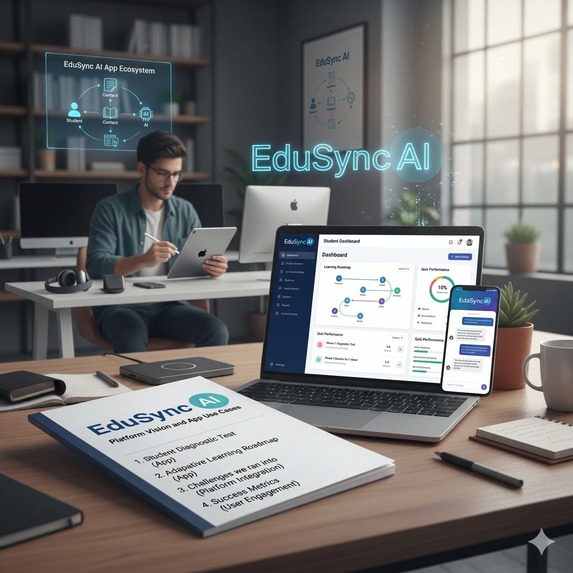
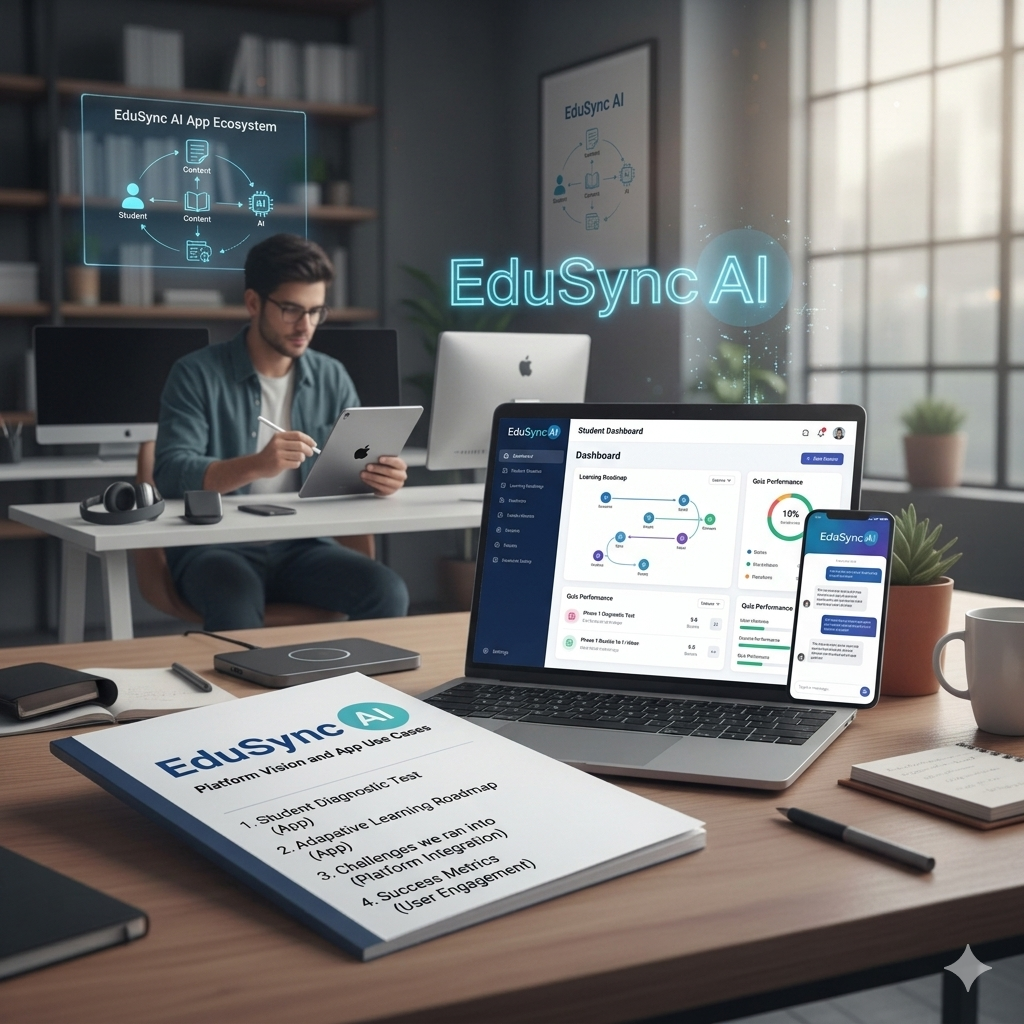
EduSync AI simplifies the learning process for students overwhelmed by too much information. It assesses a student's current knowledge through an AI diagnostic test and generates a Personalized Dynamic Roadmap. Unlike static courses, it updates in real-time based on quiz scores and curates the best educational resources from the web, acting as a 24/7 personal academic mentor.
How we built it
We used a modern and scalable tech stack to ensure practicality: Frontend: Developed with React.js to create a responsive and interactive user dashboard. Backend: Powered by Python to handle data logic and user progress tracking. AI Engine: Integrated Google Gemini API for natural language processing, intelligent content curation, and adaptive roadmap generation. Platform: Developed and tested using Replit for rapid prototyping.
Challenges we ran into
One of the biggest challenges was creating an algorithm that could accurately adapt the roadmap without confusing the user. Mapping thousands of diverse YouTube videos and notes into a structured academic syllabus required complex prompt engineering. We also faced hurdles in ensuring low-latency responses from the AI to keep the user experience smooth.
Accomplishments that we're proud of
We successfully built a functional prototype that can generate a custom study plan in seconds. We are proud of integrating a live AI Feedback Loop where the system actually "learns" the student's behavior. Achieving a professional-grade UI/UX that works seamlessly on mobile devices was also a significant win for our team.
What we learned
Through this project, we deepened our understanding of API integration and Prompt Engineering. We learned how to balance "Technical Complexity" with "User Experience"—ensuring the AI is powerful but the interface remains simple. Most importantly, we learned the importance of Iterative Development based on real student needs.
What's next for EduSync AI
Our next step is to introduce "Peer-to-Peer AI Study Groups," where students with similar roadmaps can collaborate. We also plan to add Offline Support using lightweight models so students in low-internet areas can still access their plans. Finally, we aim to partner with local institutions to pilot EduSync AI in real classrooms
Built With
- css3
- html5
- jason
- javascript
- phython


Log in or sign up for Devpost to join the conversation.