-
LOGO INTRO TO APP
-
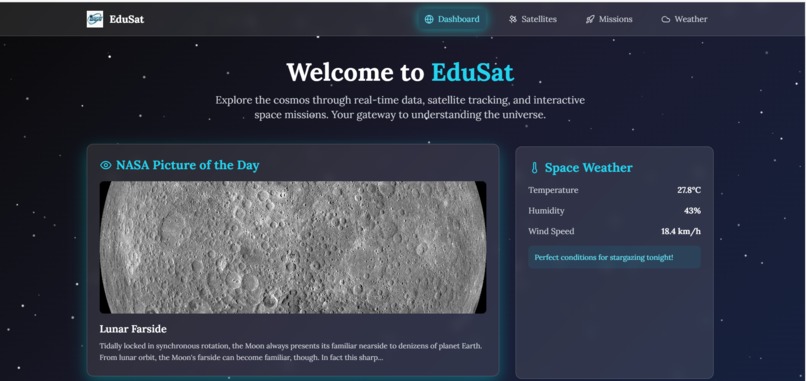
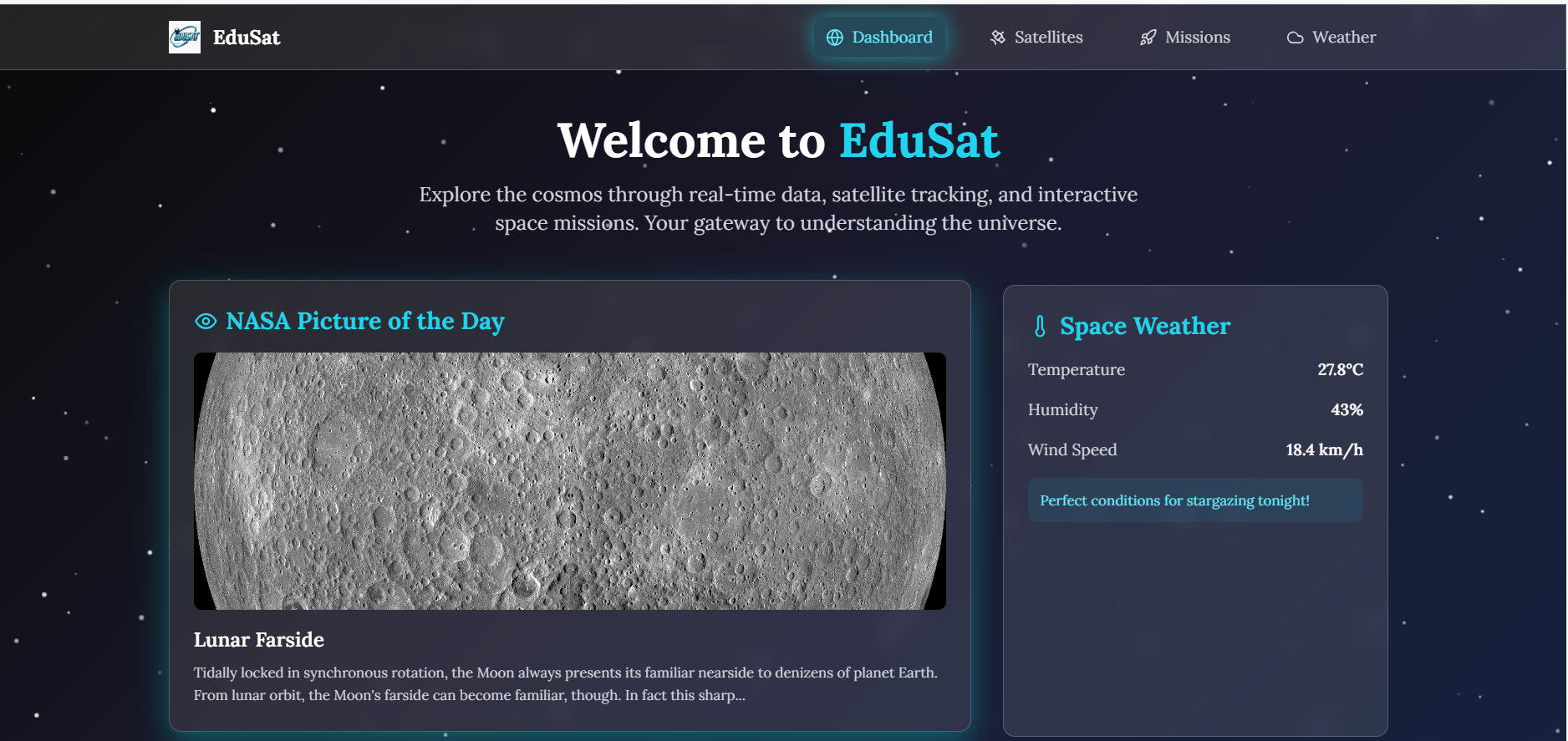
MAIN PAGE
-
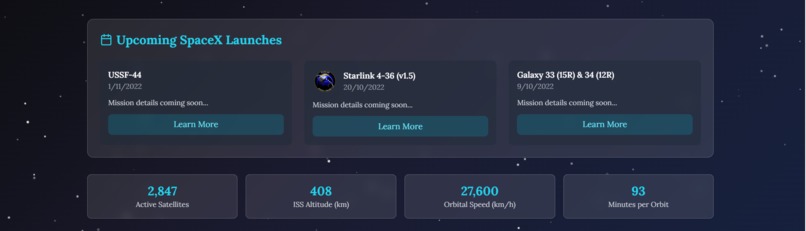
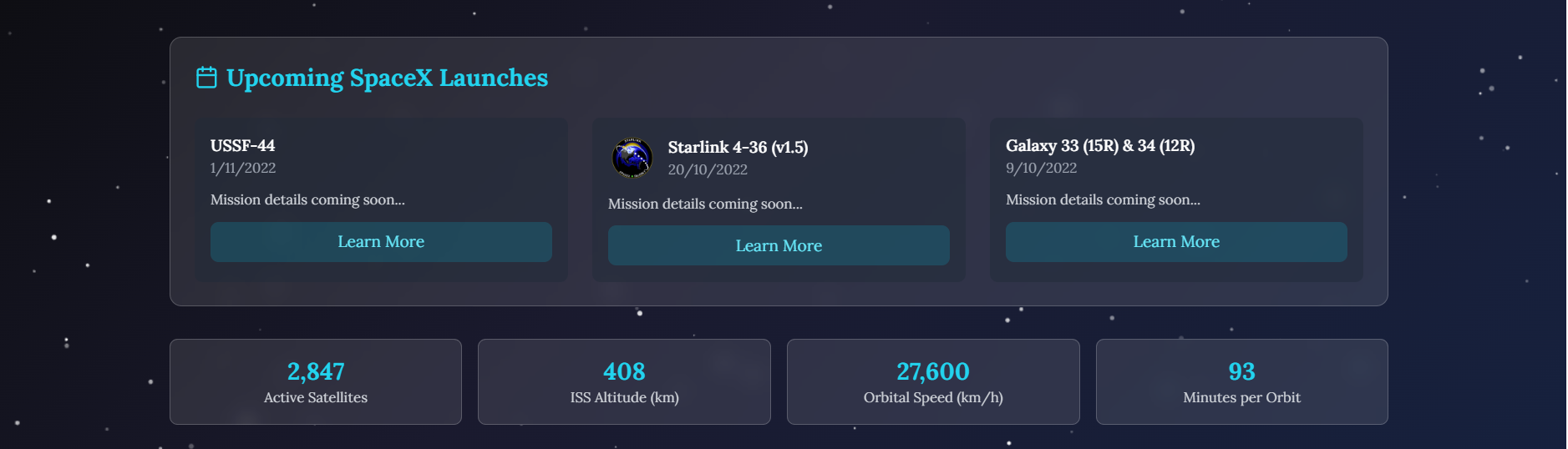
UPCOMING
-
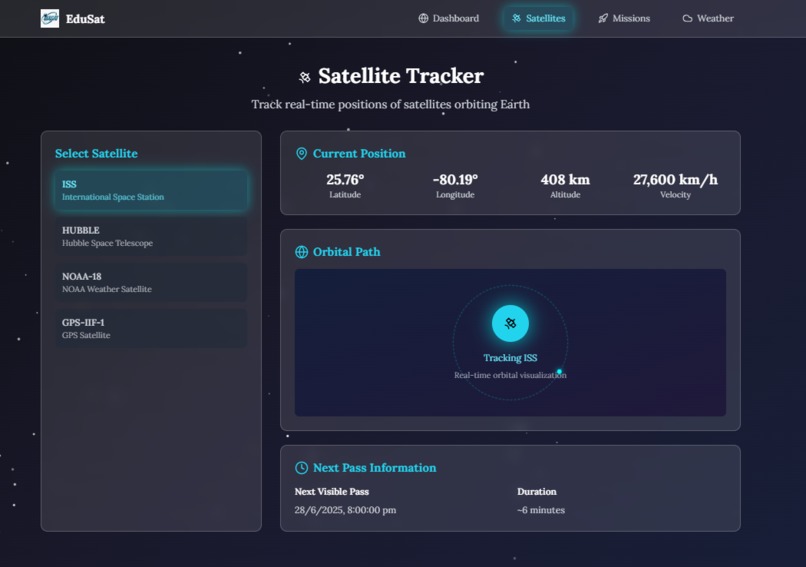
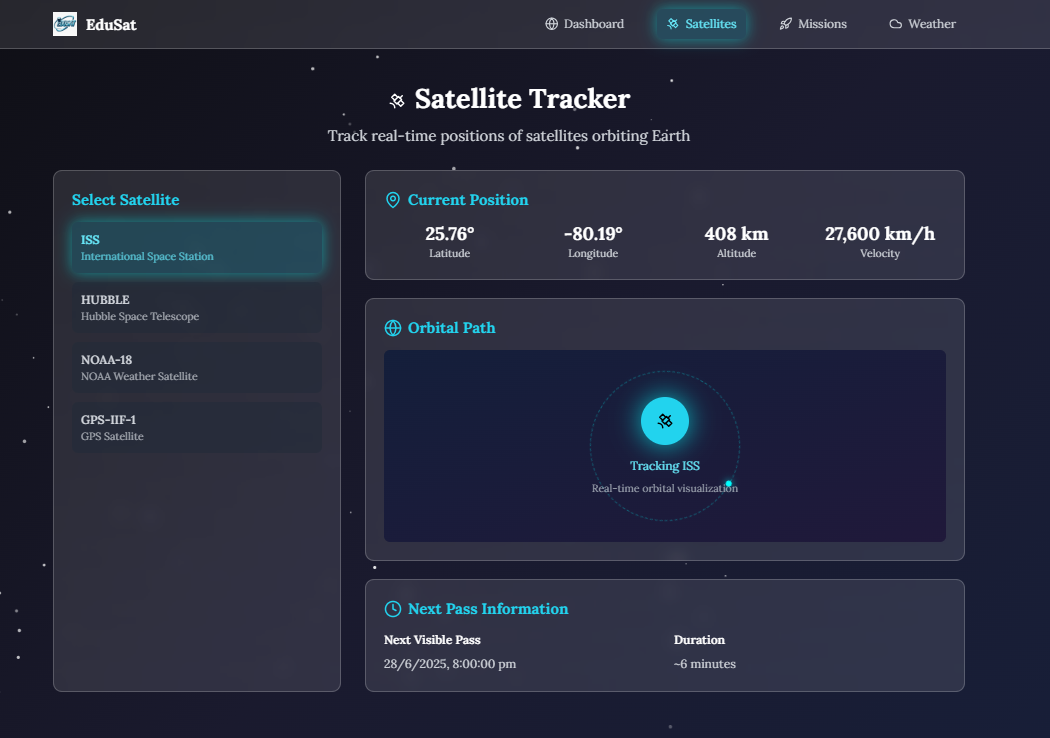
SATELLITE
-
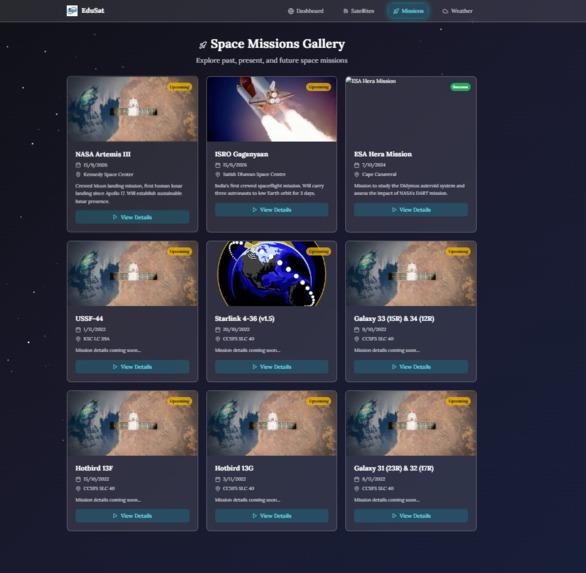
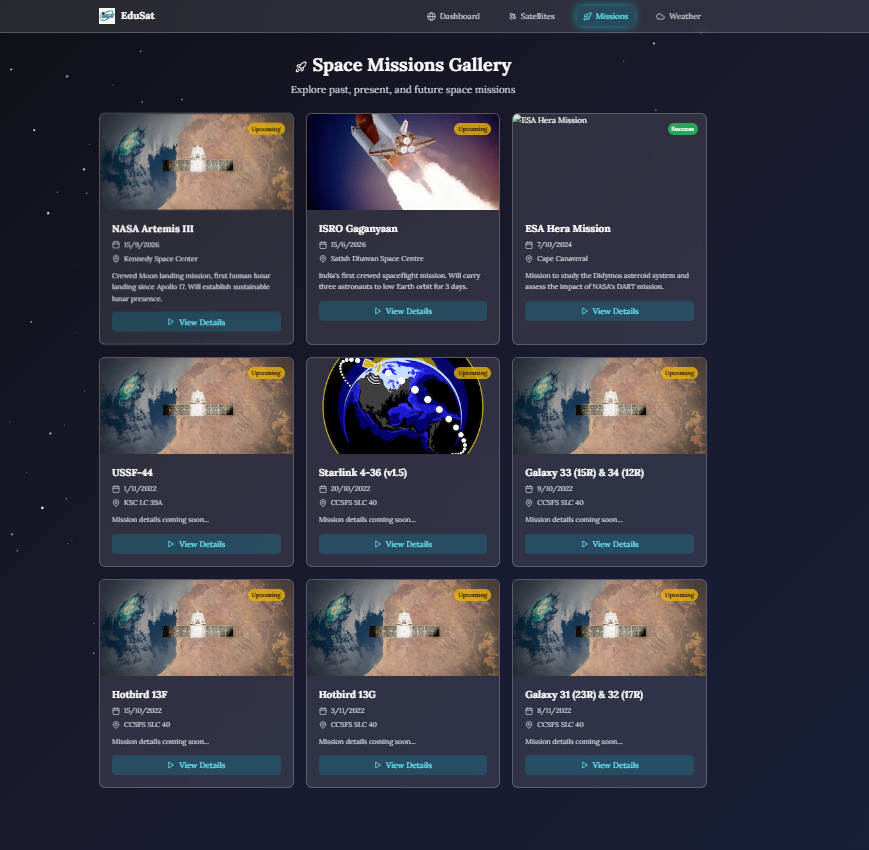
MISSIONS
-
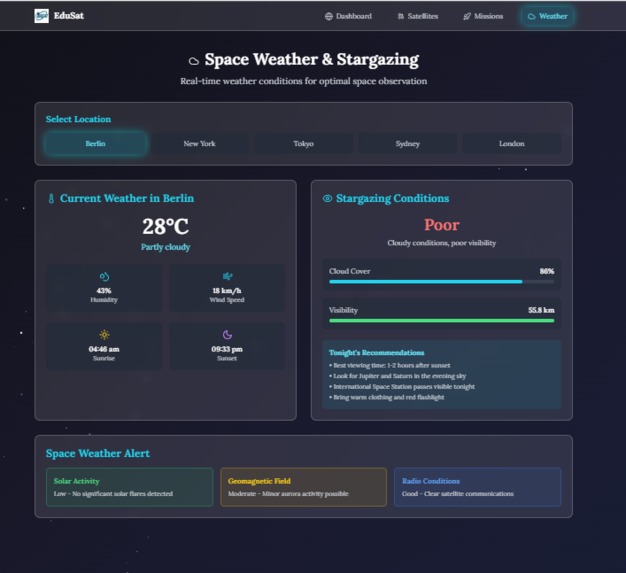
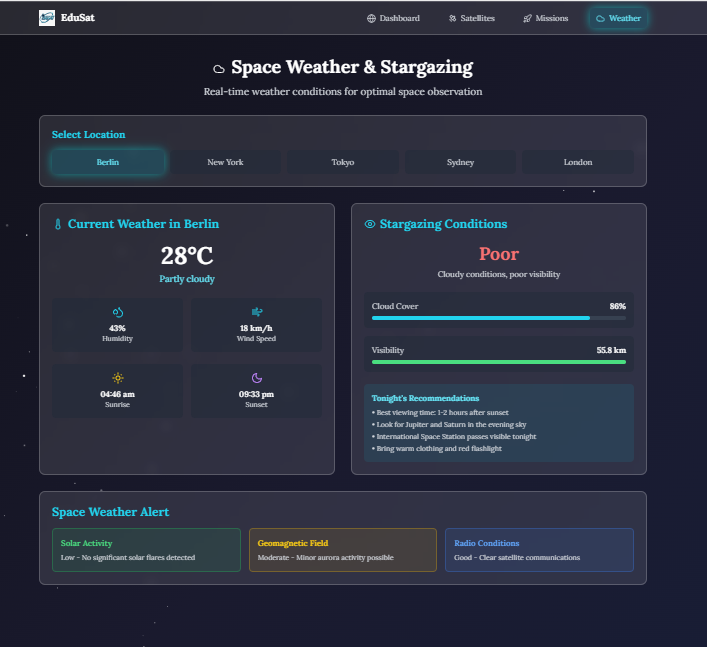
WEATHER
Inspiration
Space exploration has always captured the imagination of humankind, but it often feels out of reach or too complex for students to engage with. We wanted to build something that makes space exciting, interactive, and educational, connecting real-time data from satellites, Mars weather, and rocket launches to a single platform where anyone can experience the wonders of the universe.
What it does
EduSat is an interactive space education platform that:
- Displays real-time satellite tracking with orbit visualizations.
- Shows live data from the NASA Astronomy Picture of the Day, Mars weather, and upcoming SpaceX launches.
- Offers a mission explorer with details on active and upcoming space missions like Artemis III and Gaganyaan.
- Includes an educational Skywatch Panel showing local stargazing conditions.
- Features a Mission Builder Game where students can simulate launching a satellite into orbit.
- Supports multiple languages for global accessibility.
How we built it
- Frontend: React + TypeScript + TailwindCSS for modern, responsive UI.
- Animations: Framer Motion and Lottie for dynamic logo and cosmic effects.
- Backend/APIs: Live data from NASA APOD, SpaceX, Open Meteo, and Celestrak Skyfield.
- Visualization: Pre-rendered orbit animations with Skyfield Python library.
- Hosting: Deployed using Bolt.new for instant previews and live demos.
- Design: Figma mockups and After Effects animations to plan a polished user experience.
Challenges we ran into
- API rate limits: Coordinating multiple real-time API calls without exceeding usage quotas.
- Accurate satellite visualization: Parsing TLE data from Celestrak and calculating orbits in a way that looked great and matched real data.
- Cross-device performance: Ensuring animations and data rendering were smooth on desktop and mobile.
- Time constraints: Building a complex, data-heavy interactive experience within the hackathon timeline.
Accomplishments that we're proud of
- Integrated four major space APIs (NASA, SpaceX, Open Meteo, Celestrak) with real-time updates.
- Created a fully animated, immersive UI that feels like a professional educational product.
- Developed a Mission Builder Game that simulates satellite launches interactively.
- Added a multi-language system, expanding accessibility to students worldwide.
- Built a project that makes space exploration engaging and approachable for anyone.
What we learned
- How to work with real-time satellite and weather data, including decoding TLEs and interpreting weather codes.
- Importance of performance optimization for data-heavy apps with animations.
- Advanced UI/UX practices like Lottie animations, cosmic particle effects, and responsive layouts.
- Effective use of API integration strategies and error handling in live-data environments.
- Collaboration, iterative testing, and refining based on feedback during development.
What's next for EDUSAT
- Add augmented reality (AR) overlays so students can see satellites or planets in the sky through their phone cameras.
- Integrate more planetary data, such as Jupiter or Saturn moons exploration.
- Expand the Mission Builder Game to include budget management and mission planning scenarios.
- Launch a community hub where teachers and students can share observations and ask questions.
- Create a mobile app version for offline exploration and learning.
Built With
- after-effects
- bolt.new
- celestrak-skyfield
- figma
- framer-motion
- lottie
- nasa-api
- open-meteo-api
- python
- react
- spacex-api
- tailwindcss
- typescript
- vite

Log in or sign up for Devpost to join the conversation.