-
-
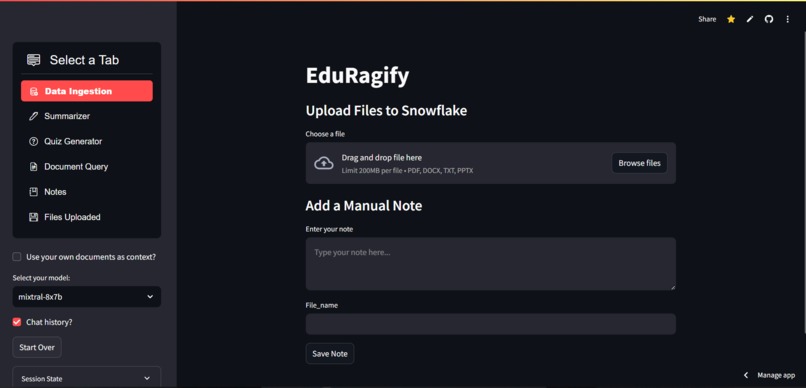
Homepage
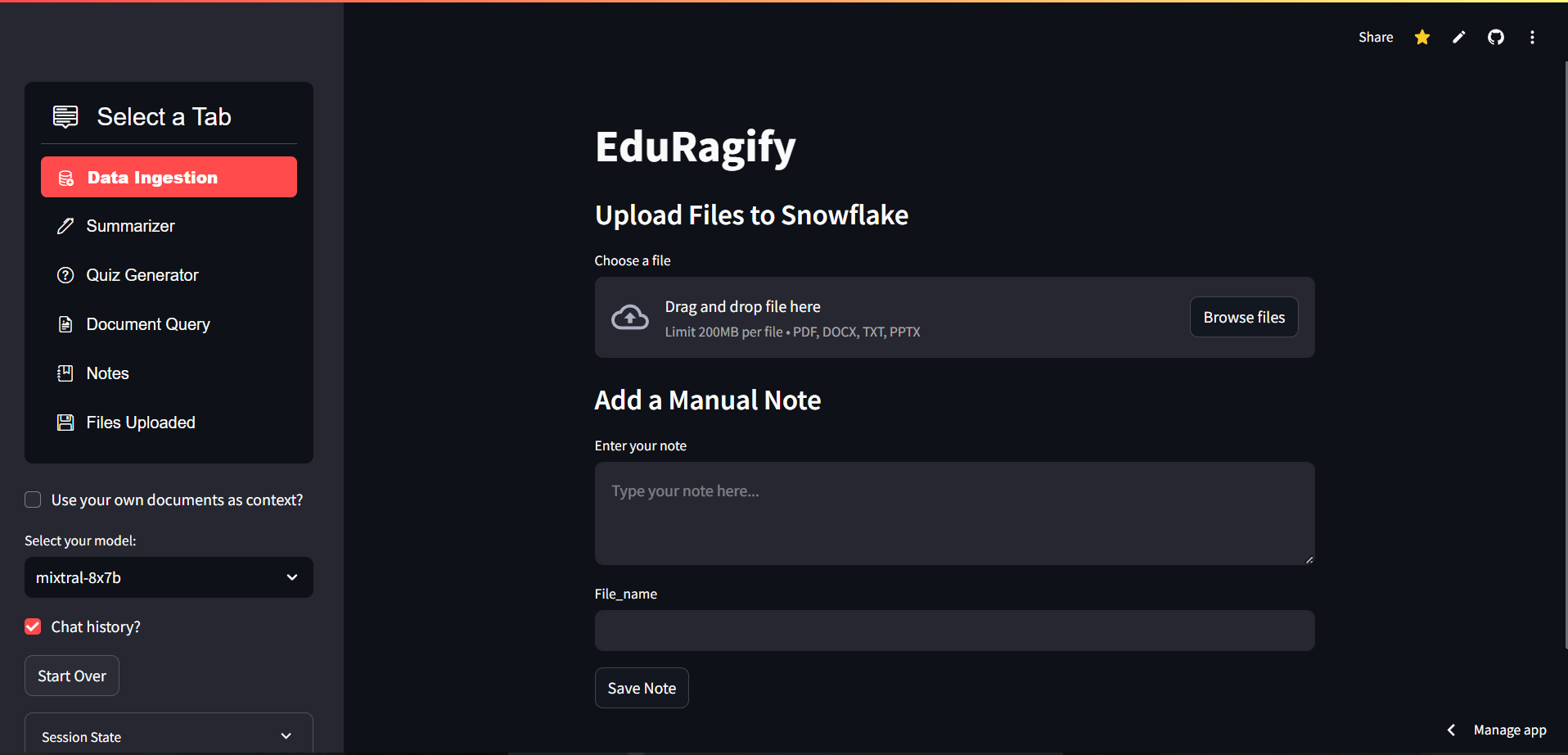
Inspiration
The idea for our Study Assistant project stemmed from the challenges students face in managing, understanding, and revising vast amounts of study material. By leveraging cutting-edge AI technology, we aim to make studying smarter, more efficient, and interactive, empowering learners to excel academically with ease
What it does
Our platform serves as a comprehensive study assistant. It:
• Generates summaries: Simplifies complex material into concise, understandable content.
• Creates quizzes: Helps users test their understanding with tailored questions.
• Provides Q&A: Users can ask questions directly from their uploaded material or notes.
• Takes and queries notes: Users can jot down notes and later query them for specific information.
This holistic approach ensures learners have everything they need to succeed in one place.
Technology Behind
Data Ingestion
• Cortex: Cortex’s parse document function's capability in handling complex file structures led to the adoption of it, enabling fine-grained extraction, including tables, headers, and annotations.
• Data Chunking for Processing: Material is split into manageable chunks to ensure smooth processing. A sliding window approach is applied for overlapping chunks, maintaining context across segments.'
• Cortex Table Storage: Processed data chunks are stored in a Cortex table. This storage is the backbone of our search and retrieval system, supporting indexing, semantic connections, and efficient queries.
Retrieval Process
• Dynamic Query Rephrasing: User queries are analyzed and rephrased to address ambiguities, ensuring precise retrieval.
• Filter Application: Users can apply filters like file name or topic to refine results further.
• Metadata + Semantic Search: Cortex combines metadata filtering with semantic search to identify and rank the most relevant chunks of material.
• Top Content Retrieval: The system retrieves the most relevant chunks along with associated metadata like page numbers and section headers.
AI-Powered Response Generation:
• Mistral-Large-2 Model: Advanced natural language processing using the Mistral-Large-2 model generates detailed, accurate responses from the retrieved materials. • Response Context: Users are provided with context, such as file names, section headings, or timestamps, for easy navigation to source materials.
Challenges we ran into
• Designing a summarization algorithm that captures key concepts without losing context. • Ensuring quiz questions are meaningful, diverse, and aligned with the content. • Optimizing the model to handle large and diverse study materials efficiently. • Balancing simplicity with functionality in the user interface to cater to a broad audience.
Accomplishments that we're proud of
• Successfully implementing an AI-powered tool that simplifies studying while maintaining high accuracy. • Seamlessly combining multiple features like summarization, Q&A, and note management into a single platform. • Building an intuitive, stress-free user experience that adapts to individual learning needs. • Successful deployment on streamlit.
What's next for EduRAGify
• Multilingual Support: Expanding to cater to non-English speakers and global learners. • Enhanced Personalization: Using adaptive learning techniques to tailor content to individual user needs. • Collaboration Tools: Adding features like shared notes and group study functionalities. • Real-World Testing: Collaborating with educators and students to test and refine the platform for real-world scenarios.
This project is just the beginning of transforming how students interact with their study material. We aim to make learning accessible, effective, and enjoyable for everyone.
Built With
- cortex-search
- mistral
- python
- snowflake
- streamlit


Log in or sign up for Devpost to join the conversation.