-
-
EduQuest logo
-
High-fidelity screen
Inspiration
In this unprecedented time, if information access is completely reliant on internet access, the gap between more and less privileged students will be widened drastically. EduQuest covers a major chunk of the google search process - and hence data usage, so students can continue their self-learning and networking even if the internet is not readily available to them.
What It Does
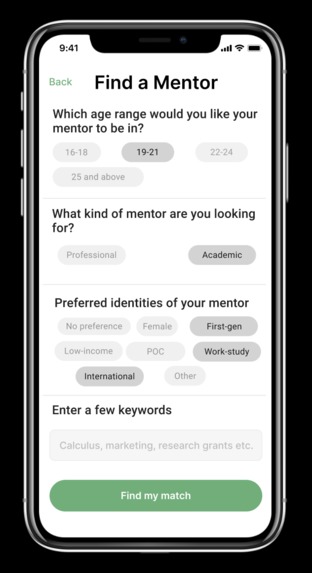
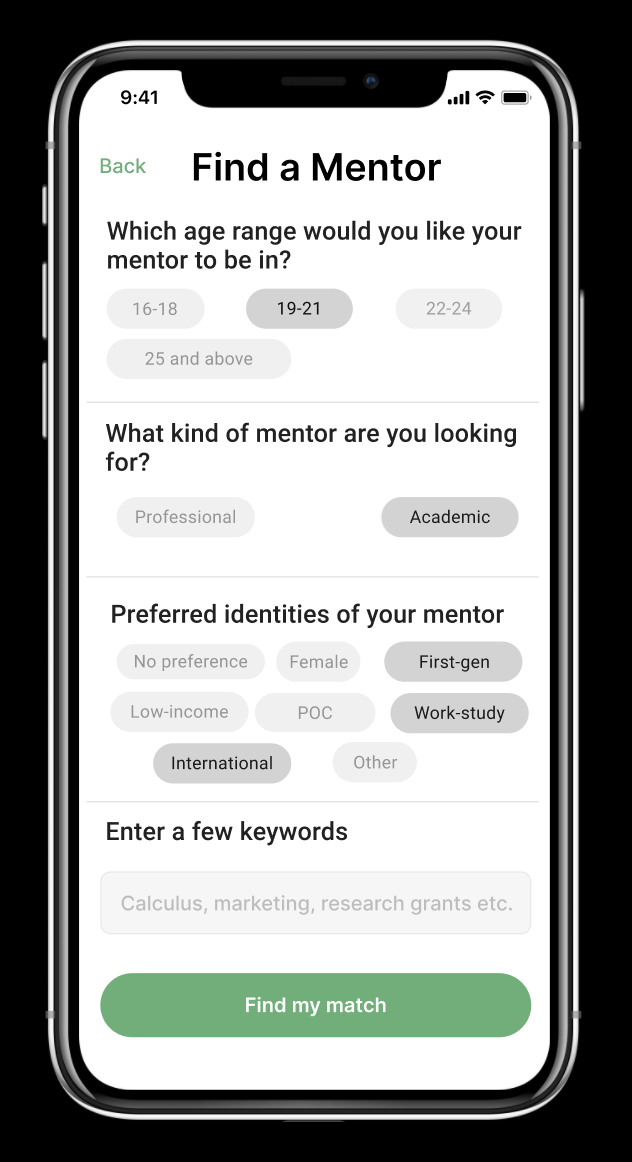
The student registers with EduQuest and provides personal information for verification, as well as their phone number. After their identity is verified, they will be able to submit requests through the app when an internet connection is available. The requests can be on one of three categories of information: learning resources, mentors, and opportunities. For example, learning resources requests can inform a student about specific videos online for a specific topic or sources of online or hardcopy textbooks or practice books. The mentor category matches the student with a registered mentor with matching preferences that could advise them on their learning journey such as tips for juggling work and studying, how to apply for scholarships, etc. Under the opportunities categories, students can apply filters to find internships, organisations, or events that they are eligible to get involved in. After a few hours of searching done by the algorithm from the database, the result is sent as a text to the student's phone number, so they can receive it regardless of whether they have internet access at the time. The tool saves a lot of googling time and hence data that will otherwise be used.
How We Built It
We started exploring the problem space by reading dozens of links and noting salient descriptions of problems and solutions. We then started brainstorming on Miro by jotting down ideas on rows of stickies - first row for raw ideas, and the rows below that for each other to add on improvements and ask questions. We then categorised our stickies according to their main ideas, and arranged the main ideas on a prioritization matrix to decide which idea is most tangible for us to prototype in a short period of time.
We eventually settled with the request information function within the application and settled on four main features for the request function: EduQuest connection points, learning resources, mentor matching, and extracurricular opportunities.
We then moved into Figma for prototyping, making wireframes for each of the three choices as well as the login page and confirmation pages.
Challenges We Ran Into
In designing EduQuest, the principal challenge our team had to go through was to consider internet data usage and keep it to the minimum while still being able to include features that can sustain the efficiency in the midst of remote learning. We thought that text and downloadable packages of resources that can be accessed offline are good starting points.
As a team, we also ran into issues when we were on different understandings of the app, and needed to communicate our ideas and showcase our work frequently through zoom, google docs, and slack in order to make sure we’re on the same page.
Accomplishments That We're Proud of
The fact that we were able to go from identifying the problem to developing a workflow within a day despite having no experience in UI design!
What we Learned
Ideate is one of the many opportunities where the experience has emphasized to us the growing value of creators who can recognize technology as a tool that transforms social issues to social improvements. The mobile platform may be modest in concept, yet in communities with limited access to the Internet, it creates quite an impact as it helps cohesively in reducing the effects of the digital divide.
We would not have been able to formulate such functions for a mobile application if it were not for the framework explained in the talk of design thinking. Aside from the enthusiasm of working for solutions with people from across the world, understanding further about design thinking is one of the many key takeaways we have as a team that is composed of mostly beginners. Having been introduced to the process, we firmly believe that we can integrate this way of approaching problems and developing solutions in future endeavors. The structure provided by the process of design thinking did not limit us with the ideas we have but rather it created a ‘pathway’ in which we can sift through individual suggestions and expound from these.
What's Next for EduQuest
In order for EduQuest to be functional, we will have to establish extensive databases of learning resources in all languages, devise an algorithm to filter and make them downloadable through a link based on the requests submitted, establish a network of "connection sites" by actively engaging with businesses and community centers, and to establish a mentor base by recruiting students from all over the world - a lot to be done!
Built With
- figma


Log in or sign up for Devpost to join the conversation.