Inspiration
We started this project with a simple thought: not every student has access to a personal tutor. Some students can afford extra classes and one-to-one guidance, while others have to study on their own. We wanted to build something that could give students that personal support. Instead of creating another chatbot that simply answers questions, we wanted to create an AI companion that could understand where a student is struggling, help them improve, and change the learning plan based on their progress. That idea became EduPilot AI.
What it does
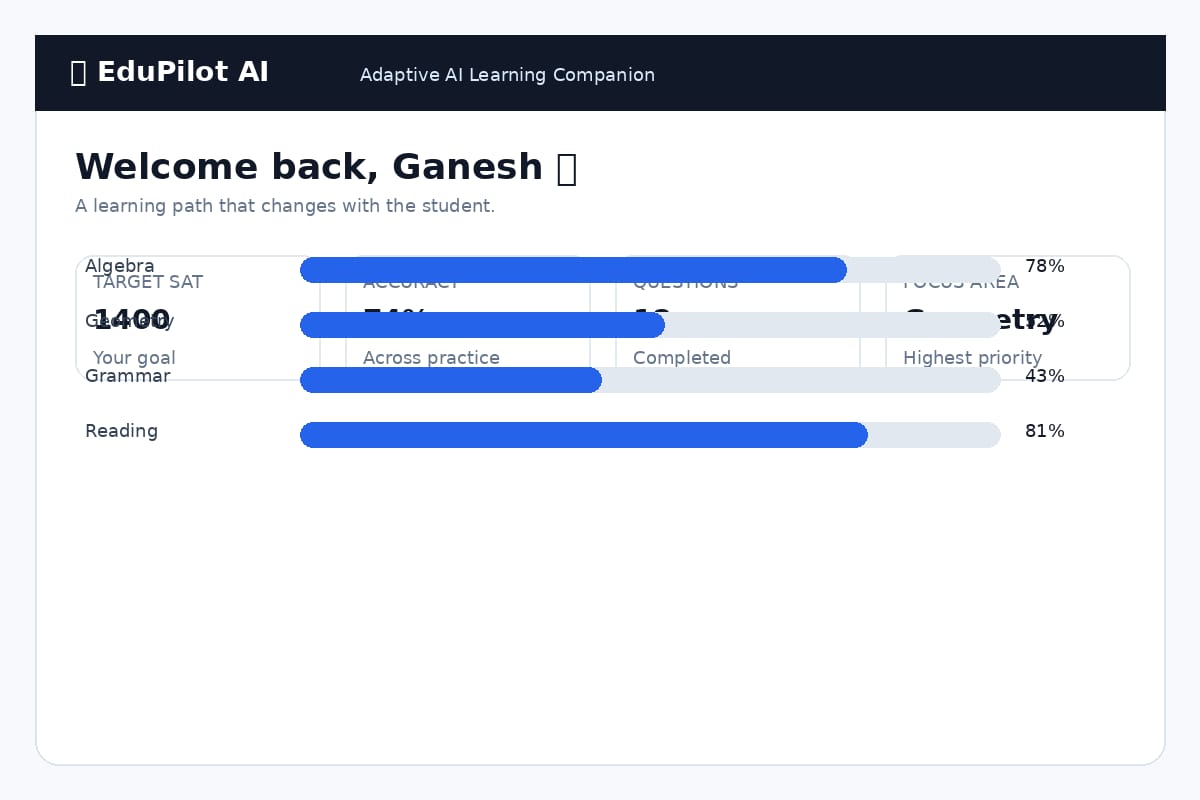
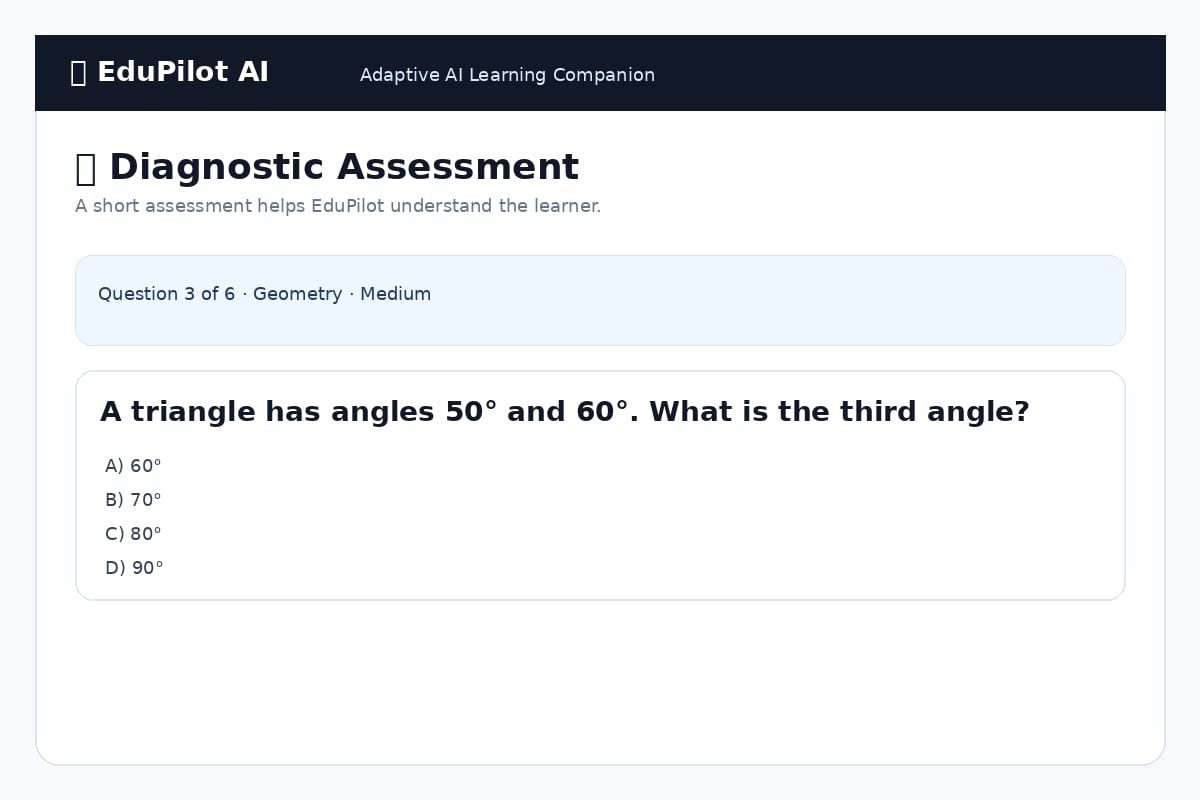
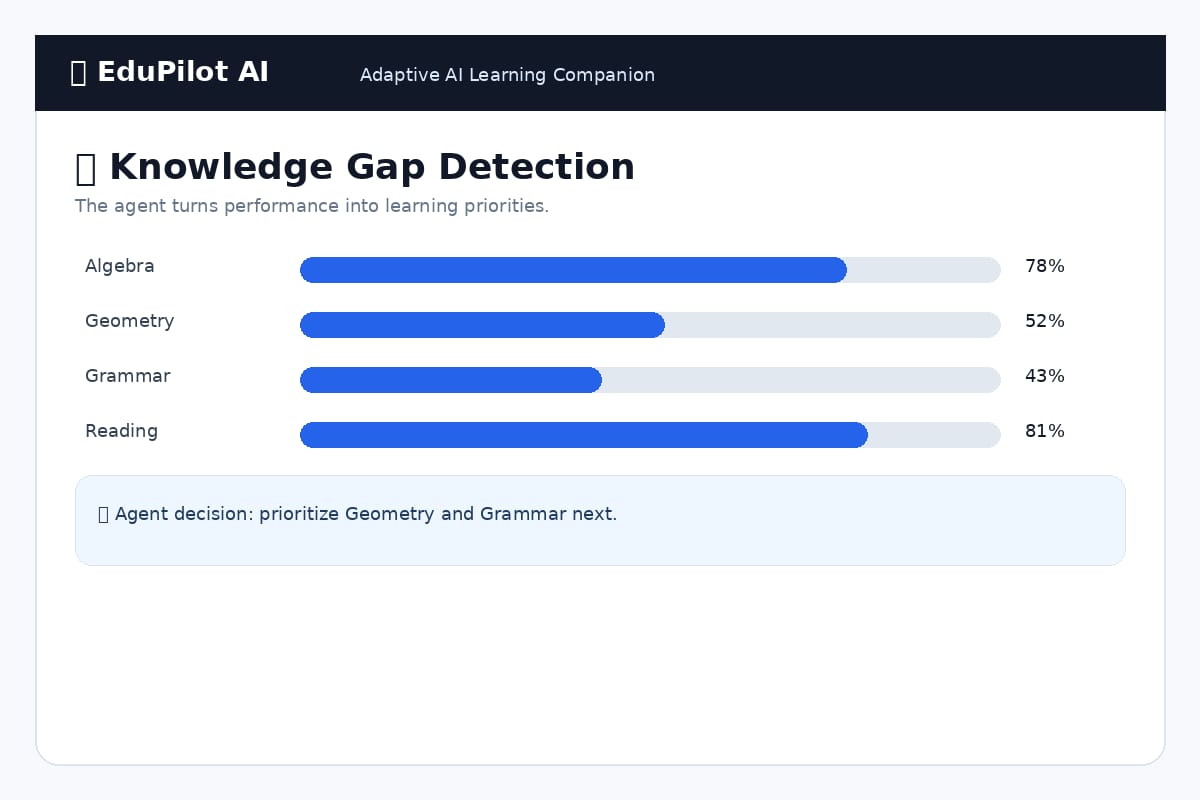
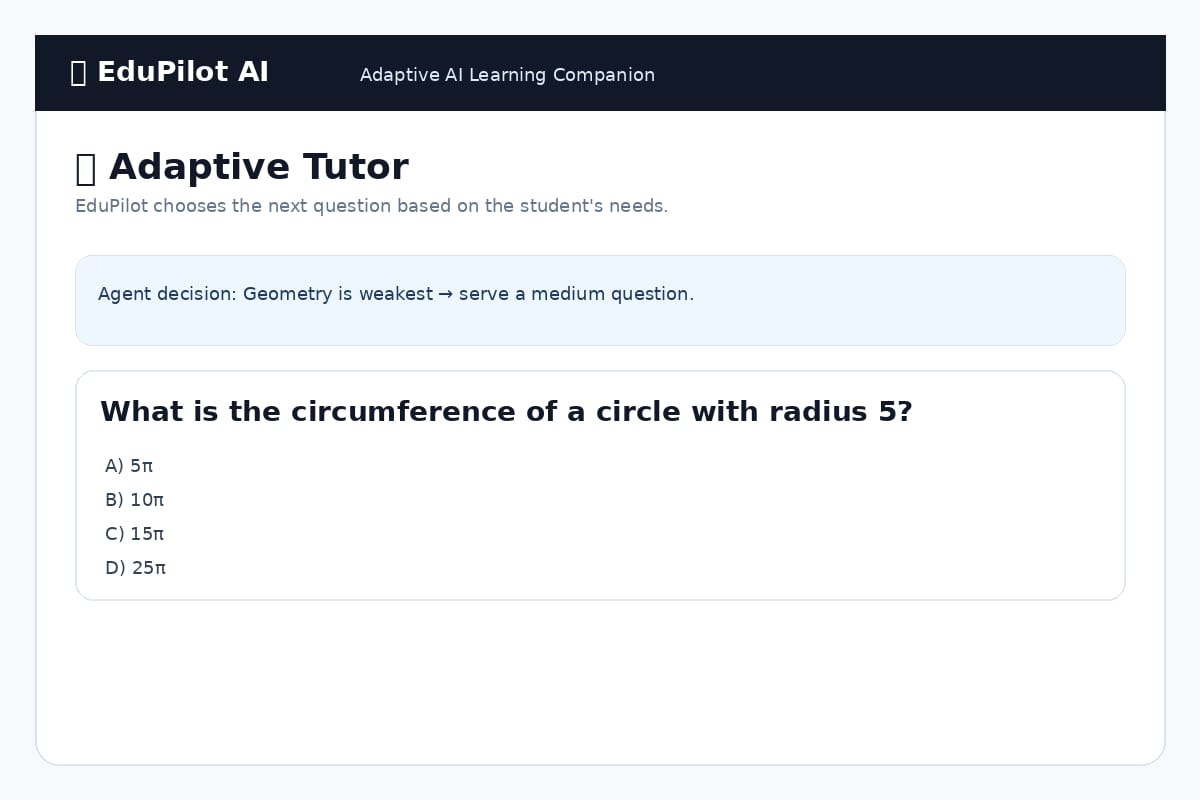
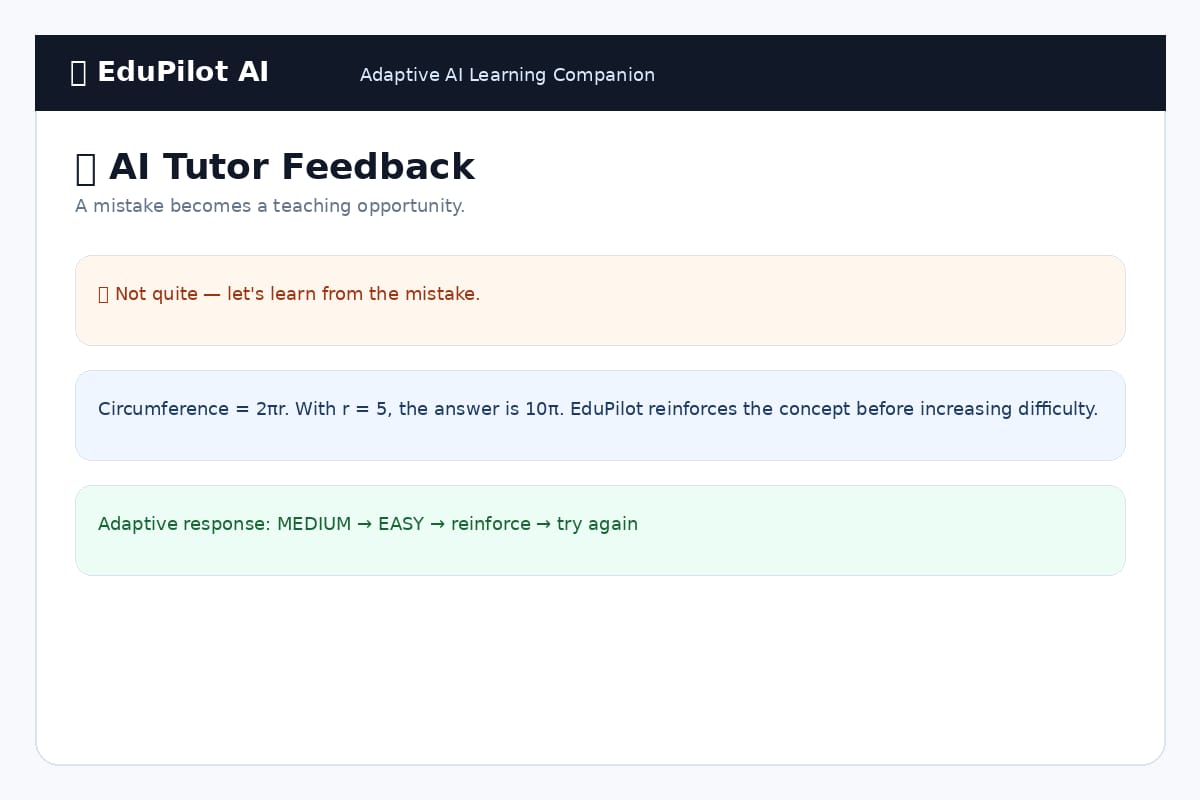
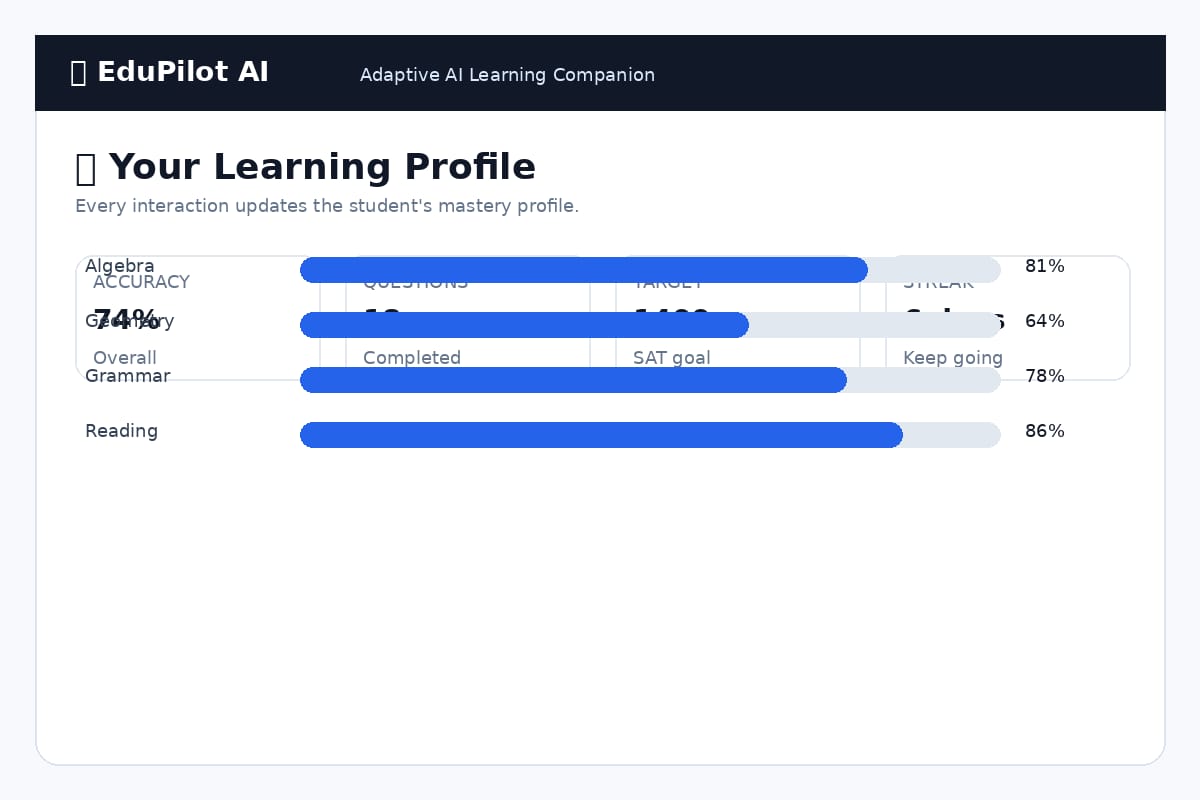
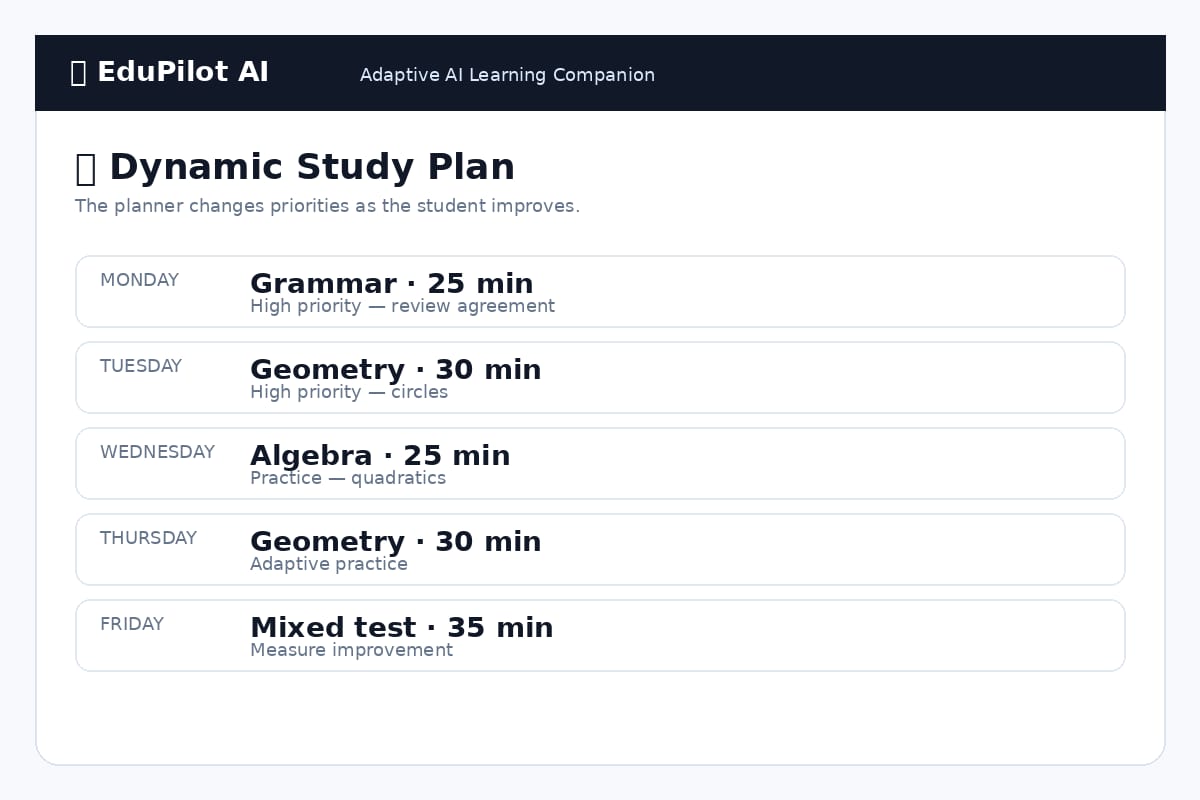
EduPilot AI is an adaptive learning agent designed to help students prepare for the SAT in a more personalized way. The student first takes a short diagnostic test. EduPilot then looks at their answers and identifies their weaker areas. From there, it can: 🎯 Identify the student's strengths and weaknesses 🧠 Find topics where the student needs more practice 🤖 Choose questions based on the student's current level 📚 Explain mistakes in a simple, step-by-step way 📈 Track progress and topic-wise mastery 📅 Create a personalized study plan 🔄 Increase or decrease question difficulty depending on performance For example, if a student keeps making mistakes in Geometry, EduPilot gives more Geometry practice. Once the student starts improving, it can increase the difficulty and focus more on other weak areas. So instead of the student asking, "What should I study next?", EduPilot can make that decision for them.
How we built it
We built the project using Python and Streamlit and divided the system into different agents, with each agent handling a specific part of the learning process. We created: Diagnostic Agent – looks at test performance and identifies weak areas. Adaptive Agent – decides what question the student should get next. Tutor Agent – explains answers and helps students understand their mistakes. Planner Agent – creates a study plan based on the student's progress. Mastery Model – uses machine learning to estimate how well a student understands a topic. Student Profile – keeps track of attempts, accuracy, topics, and progress. The basic learning cycle is: Test → Find Weakness → Practice → Learn From Mistakes → Adapt → Repeat We also added optional LLM support so the explanations can be more natural and personalized
Challenges we ran into
One of the biggest challenges was making EduPilot behave like an agent instead of just a chatbot. It is easy for an AI to answer a question. The harder part is deciding what the student actually needs next. We had to think about questions like: Should the next question be easier or harder? Is the student struggling with the topic or just making a small mistake? When should the AI revisit an old topic? When should it move on to something new? How should the student's progress affect their future study plan? Another challenge was keeping the project realistic within the time available for a hackathon. There are so many features we wanted to add, but we decided to focus on building one complete experience that actually works.
Accomplishments that we're proud of
We are especially proud that EduPilot is not just a chat window with an AI behind it. We built a complete learning flow where the student's previous performance affects what happens next. Some things we're proud of include: 🧠 Building a system that identifies weak topics 🤖 Creating different agents for different learning tasks 🎯 Making question difficulty adapt to the student 📈 Tracking topic-wise progress 📅 Automatically creating a personalized study plan 🧪 Adding a machine-learning component for mastery prediction 💬 Supporting AI-powered explanations 🌍 Keeping underserved students at the center of the idea The biggest achievement for us is seeing the system actually change its behavior based on the student.
What we learned
This project taught us that building an AI agent is very different from simply building a chatbot. A chatbot mainly responds. An agent needs to observe what is happening, make a decision, take an action, and use the result to decide what to do next. We learned a lot about: AI agents and agent-based architecture Adaptive learning Machine learning Personalized recommendations Student progress tracking LLM integration Building interactive applications with Python and Streamlit But our biggest takeaway was that personalization isn't just about giving a student a personalized answer. It's about changing the entire learning experience based on that student's needs.
What's next for EduPilot AI
This is only the beginning of what we want EduPilot to become. In the future, we would like to add: 🌐 Support for multiple languages such as Hindi and Marathi 📴 Offline and low-bandwidth learning 🎙️ Voice-based tutoring 📱 A mobile-friendly application 👩🏫 A dashboard for teachers and mentors 🧠 Better models for understanding exactly why a student makes a mistake 📊 More accurate performance and score prediction 📚 Larger and better-verified question banks 🎓 Support for subjects and exams beyond the SAT Our long-term goal is simple: make personalized learning accessible to students who may not have access to a personal tutor.
Built With
- adaptivelearning
- aiagents
- artificialintelligence
- edtech
- generativeai
- machine-learning
- openai
- personalisedlearning
- python
- streamlit

Log in or sign up for Devpost to join the conversation.