-
-
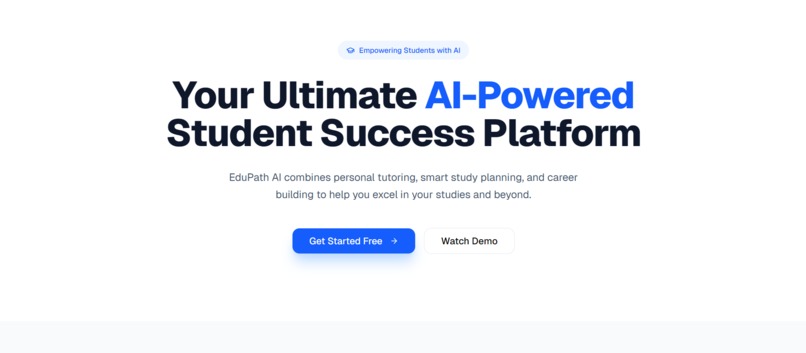
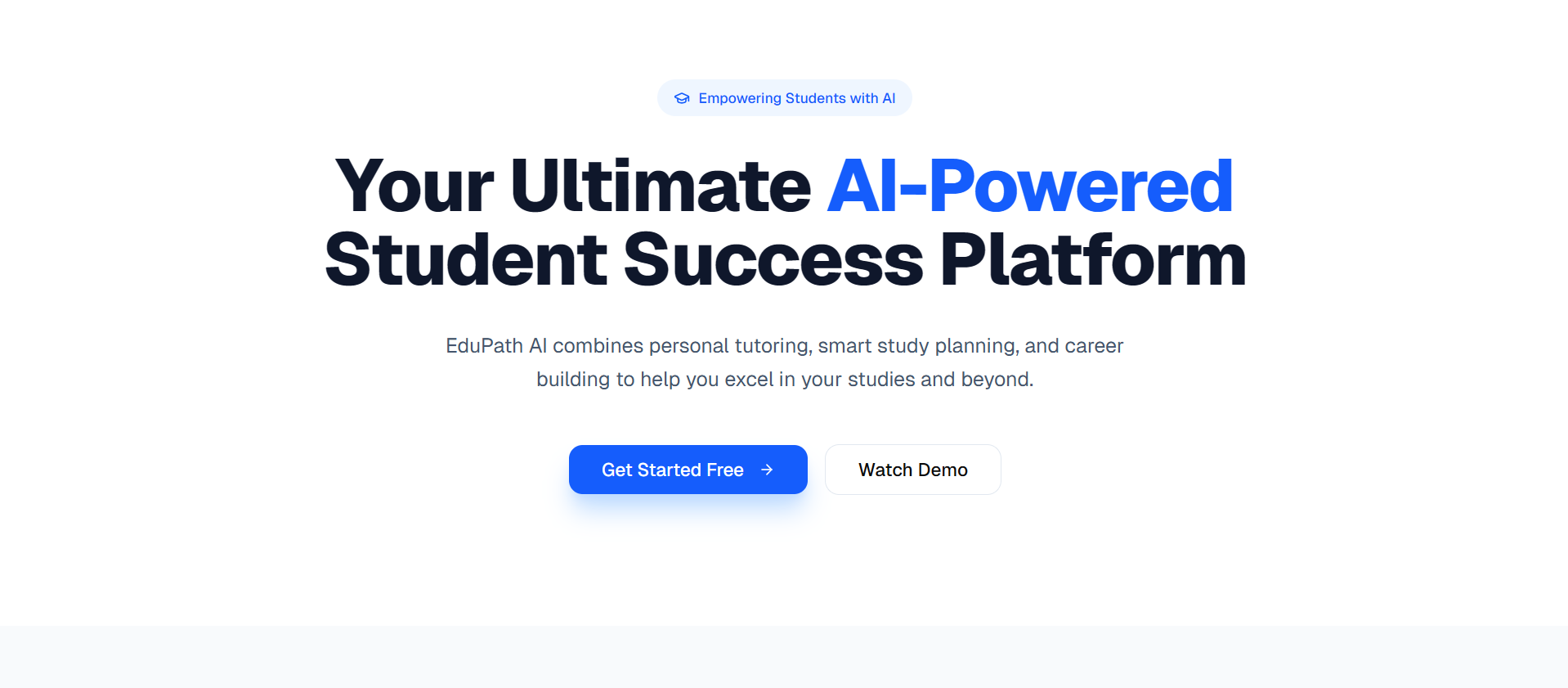
starting page
-
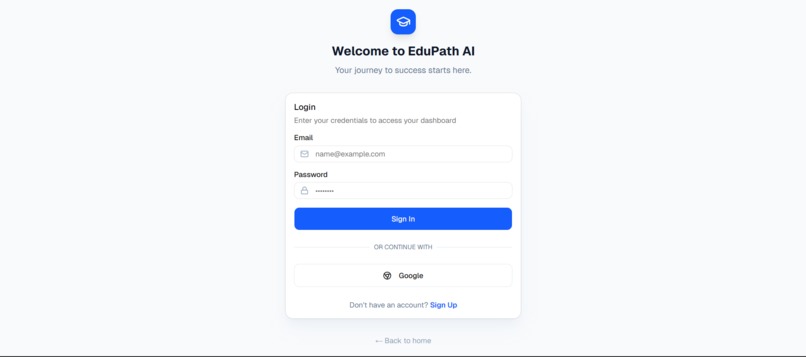
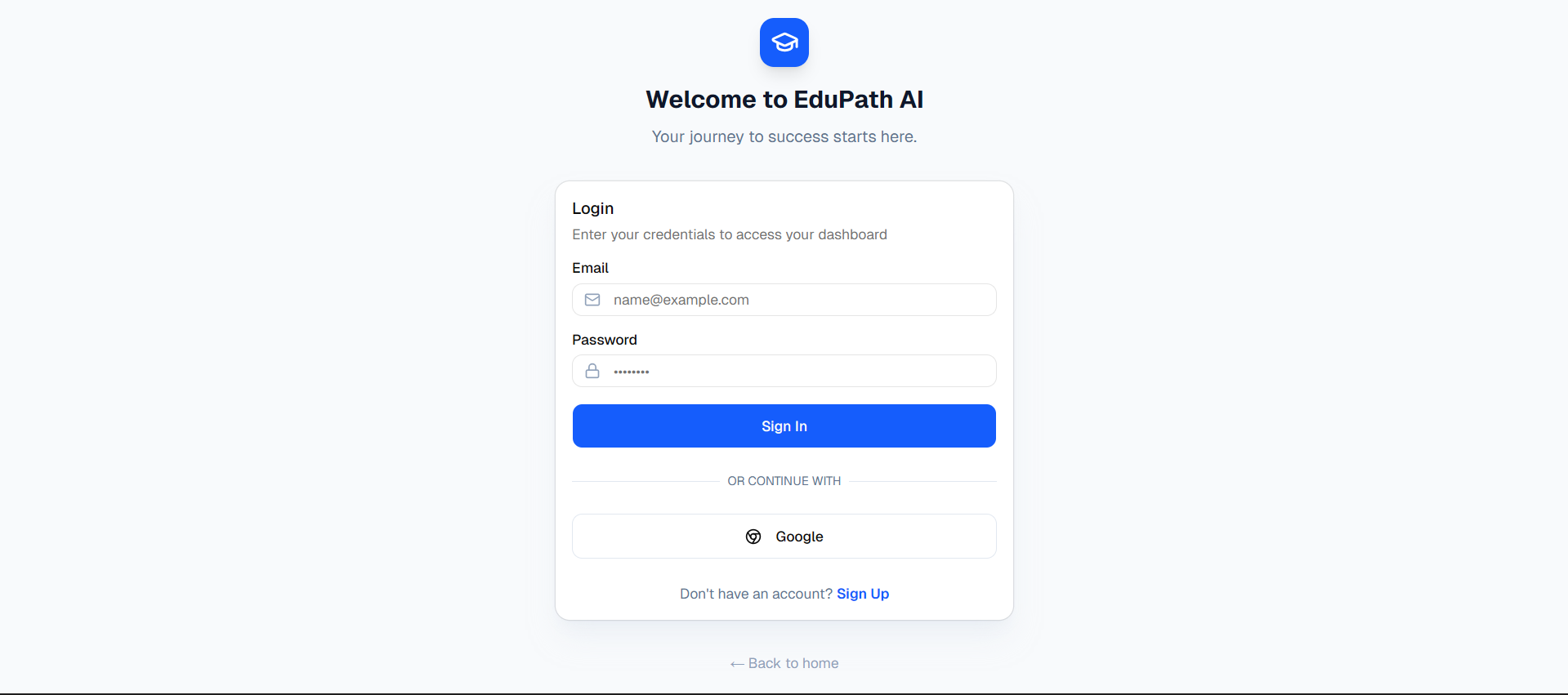
login page
-
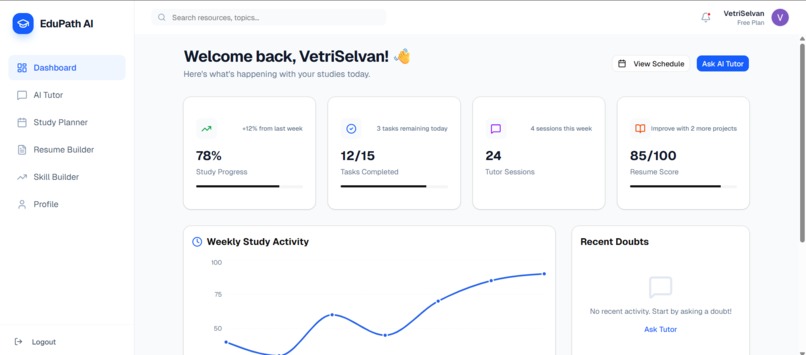
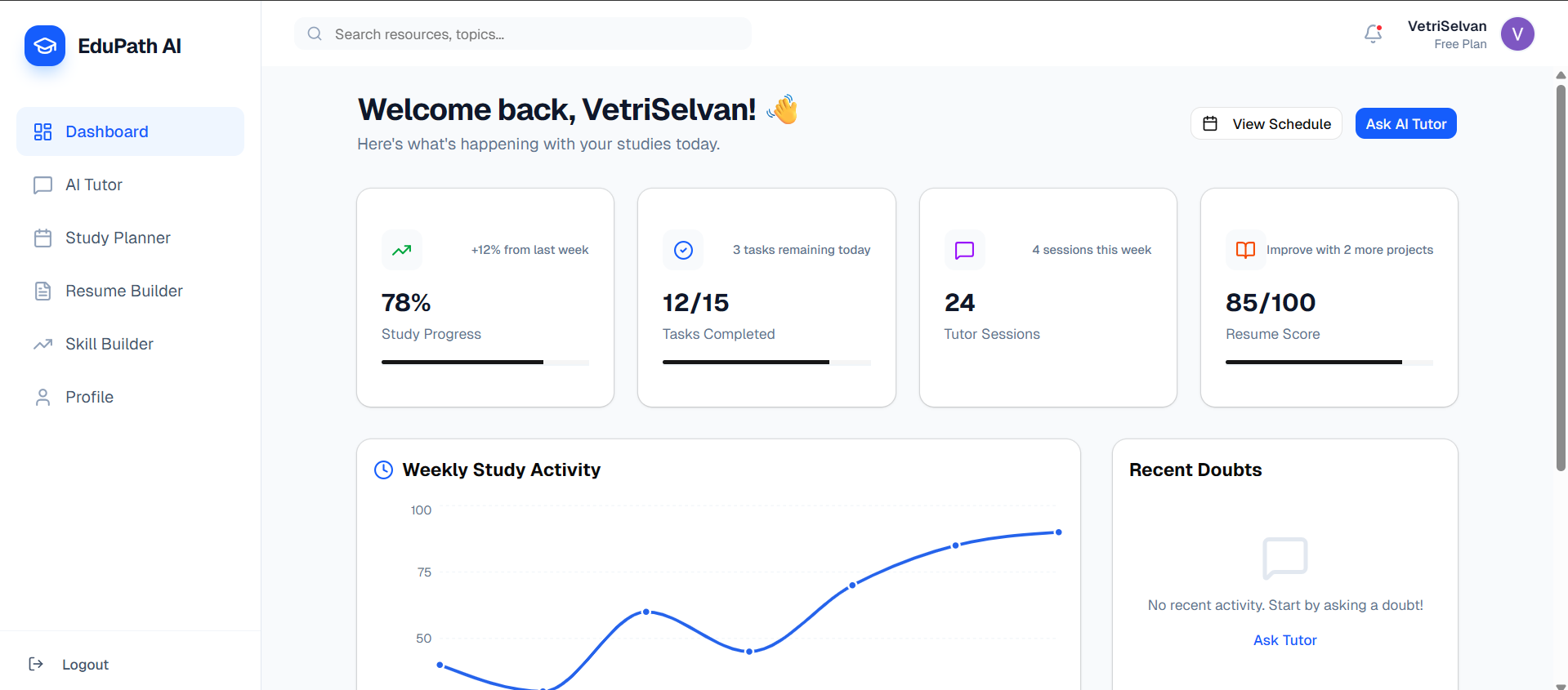
first dashboard
-
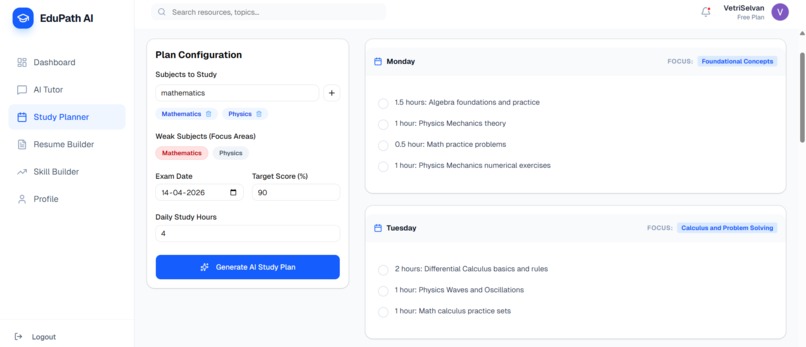
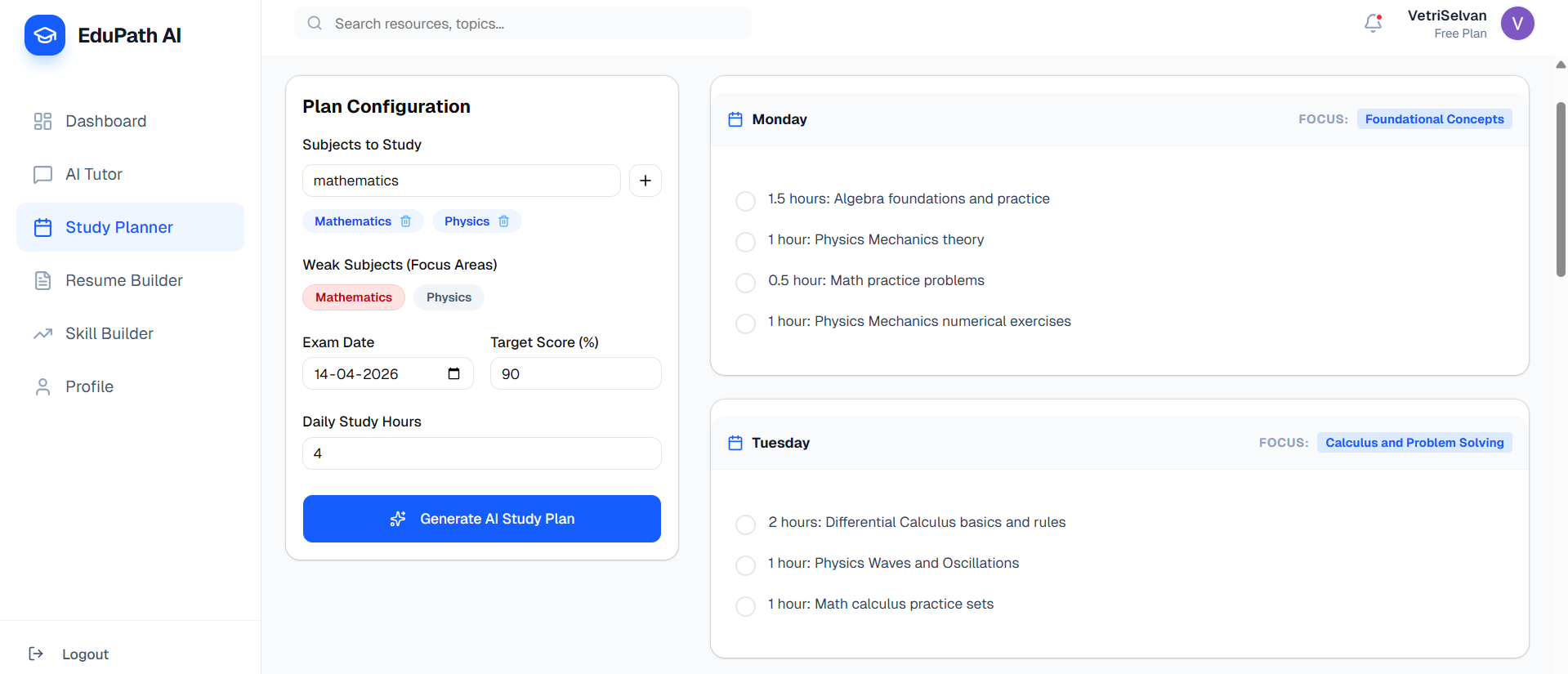
study planner dashboard
-
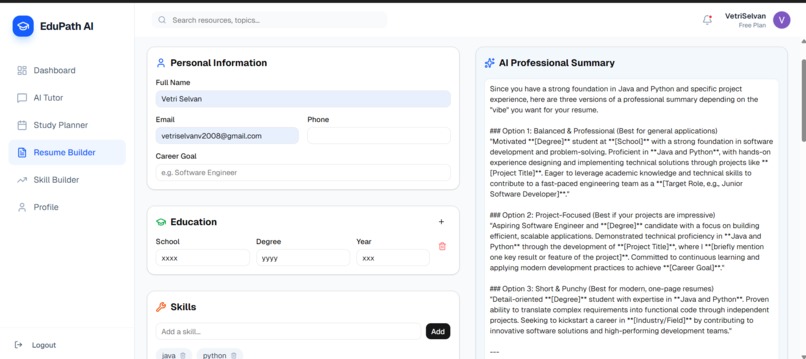
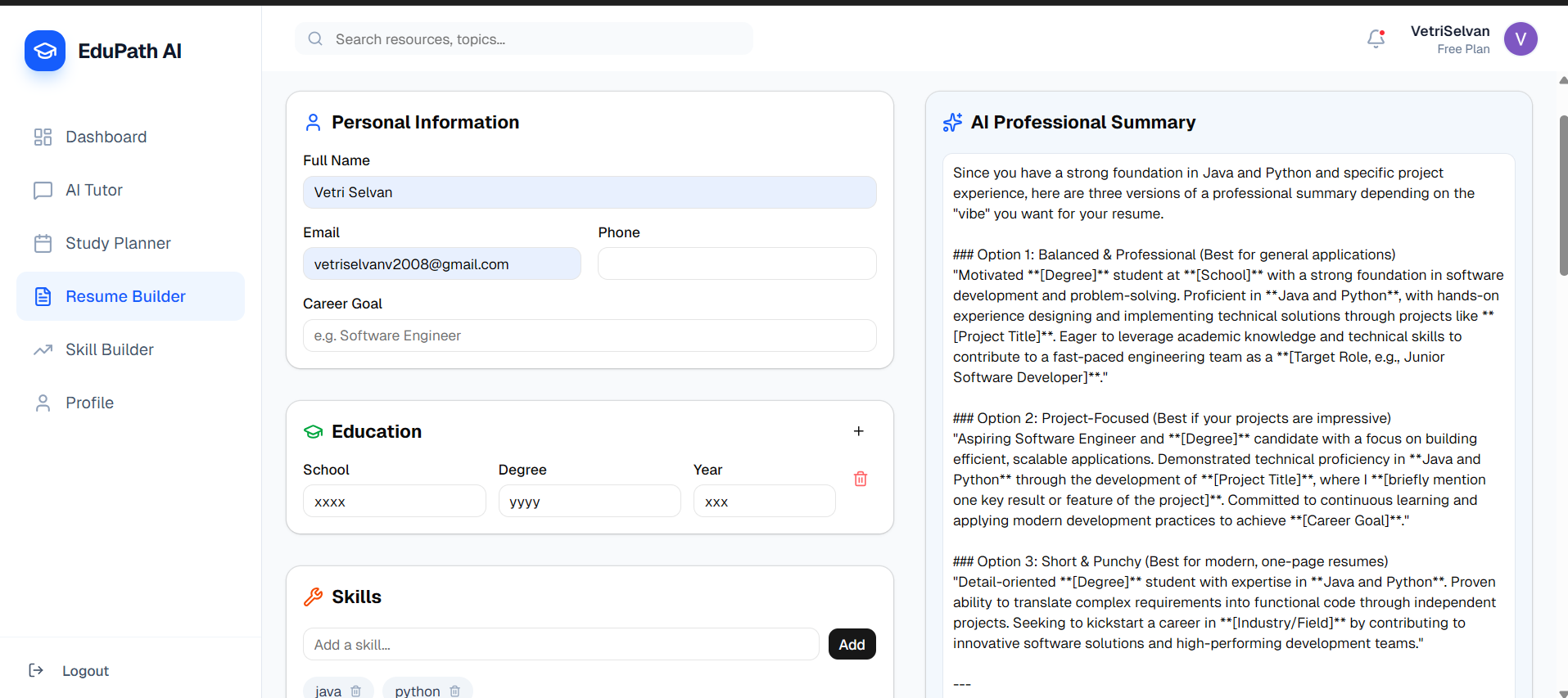
resume builder dashboard
-
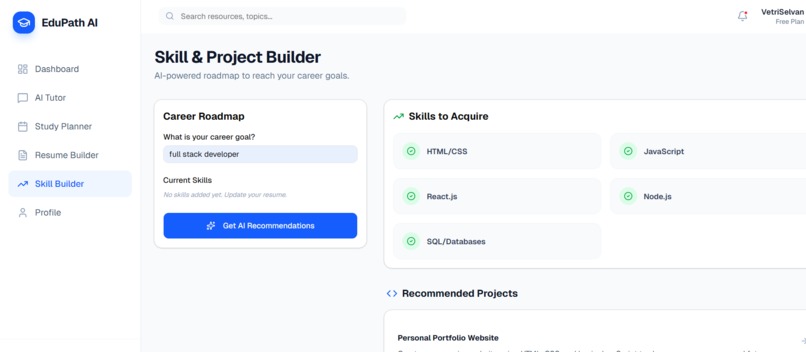
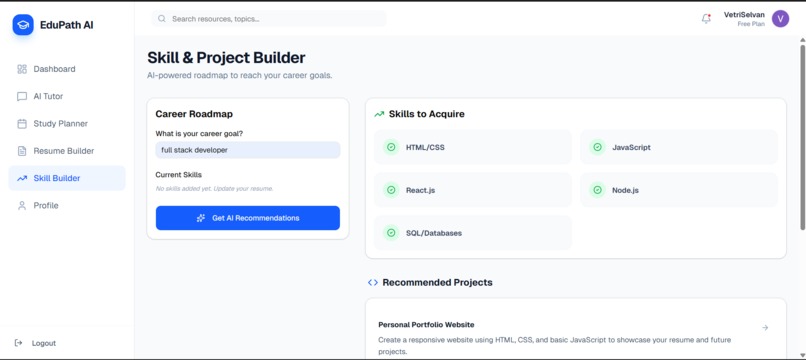
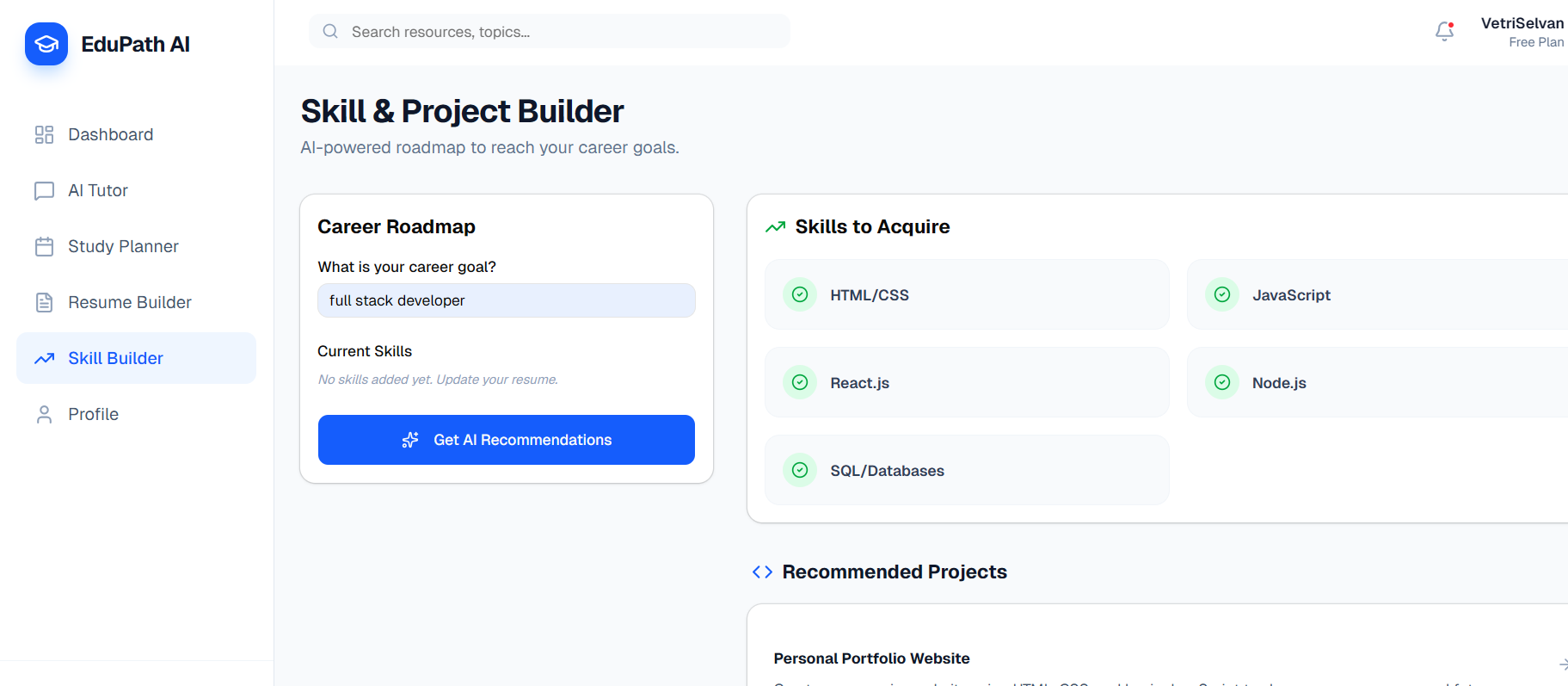
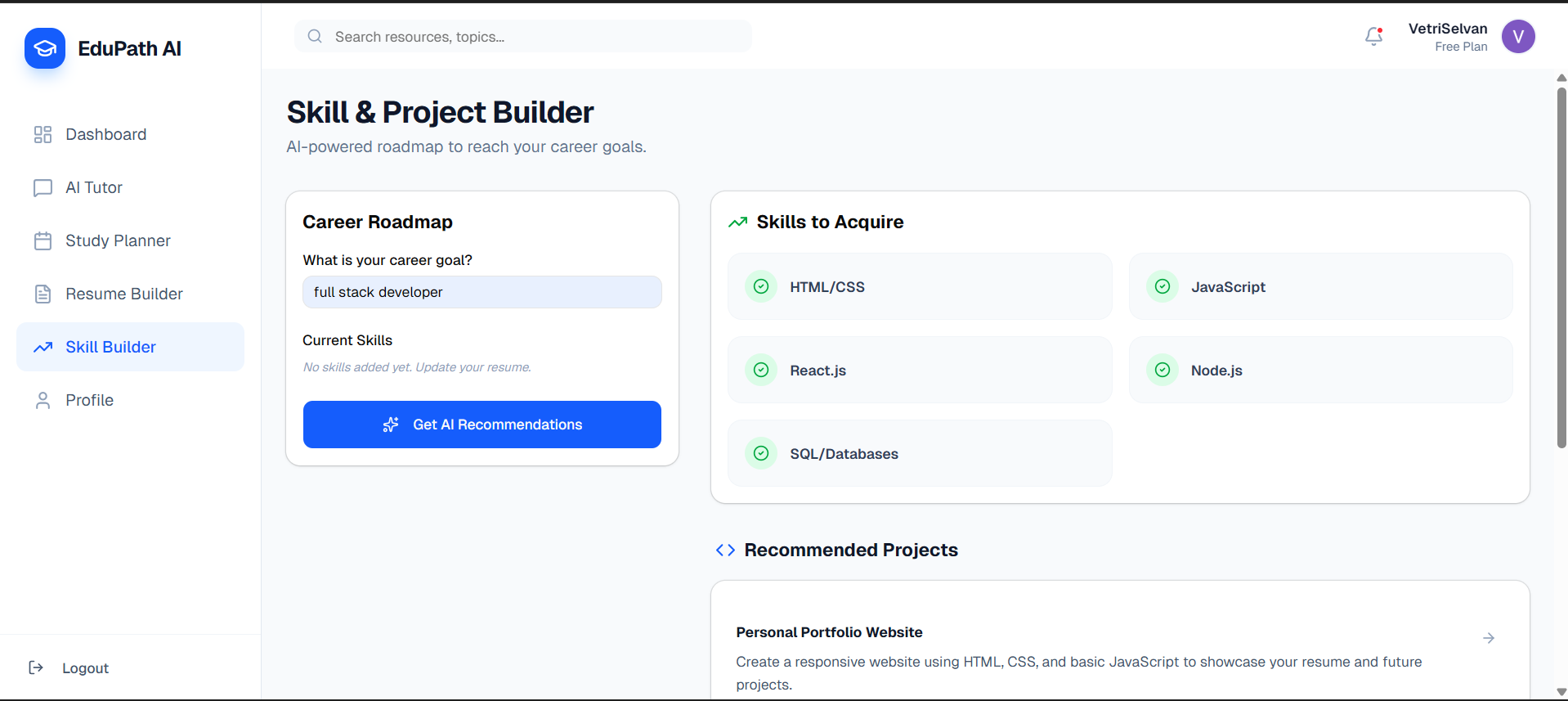
skill builder dashboard
-
-
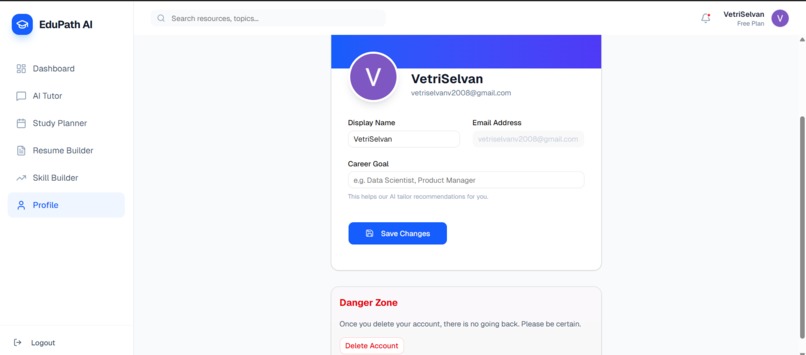
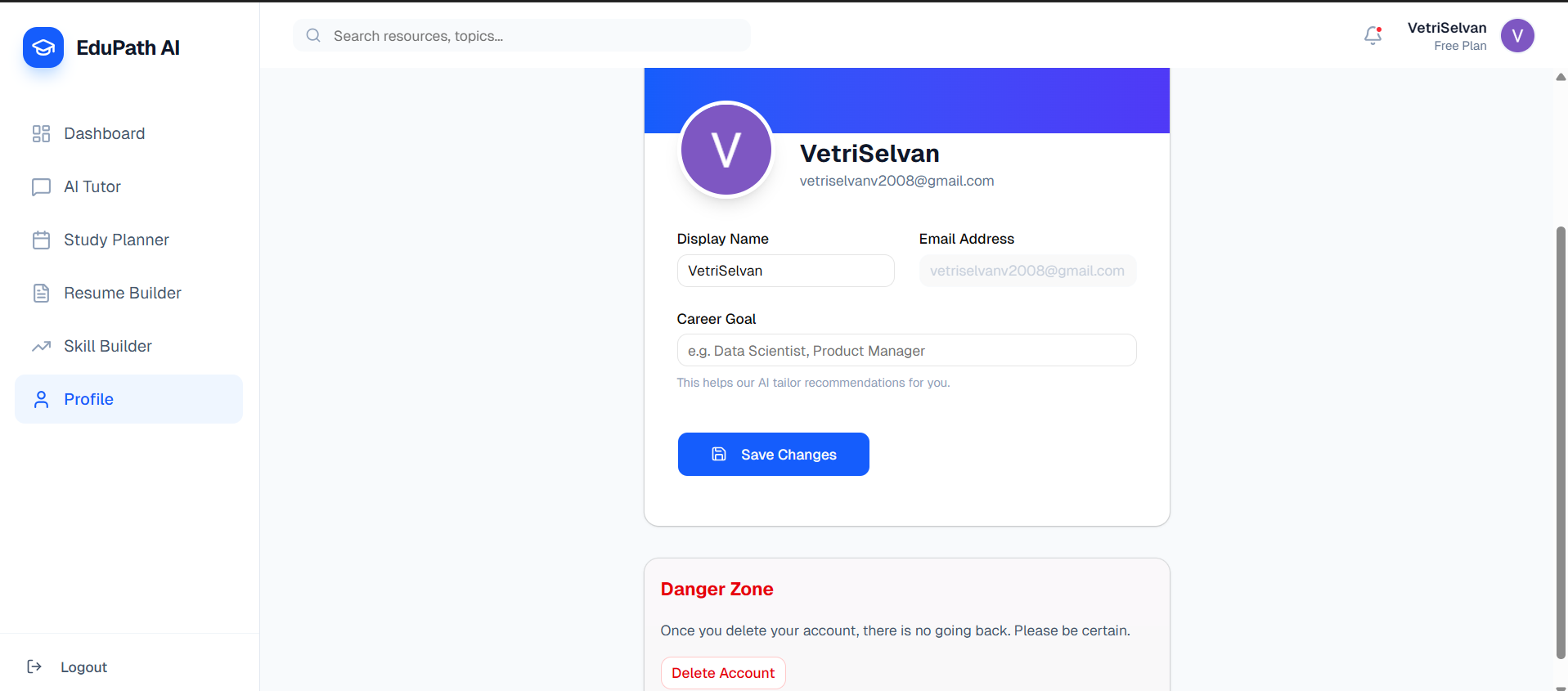
profile page
-
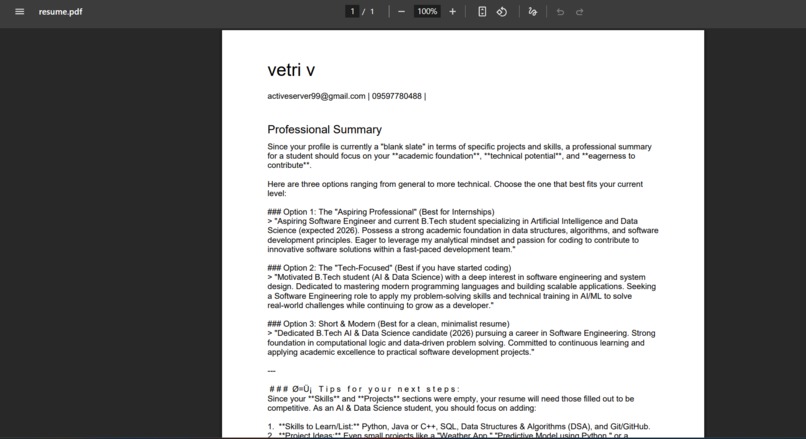
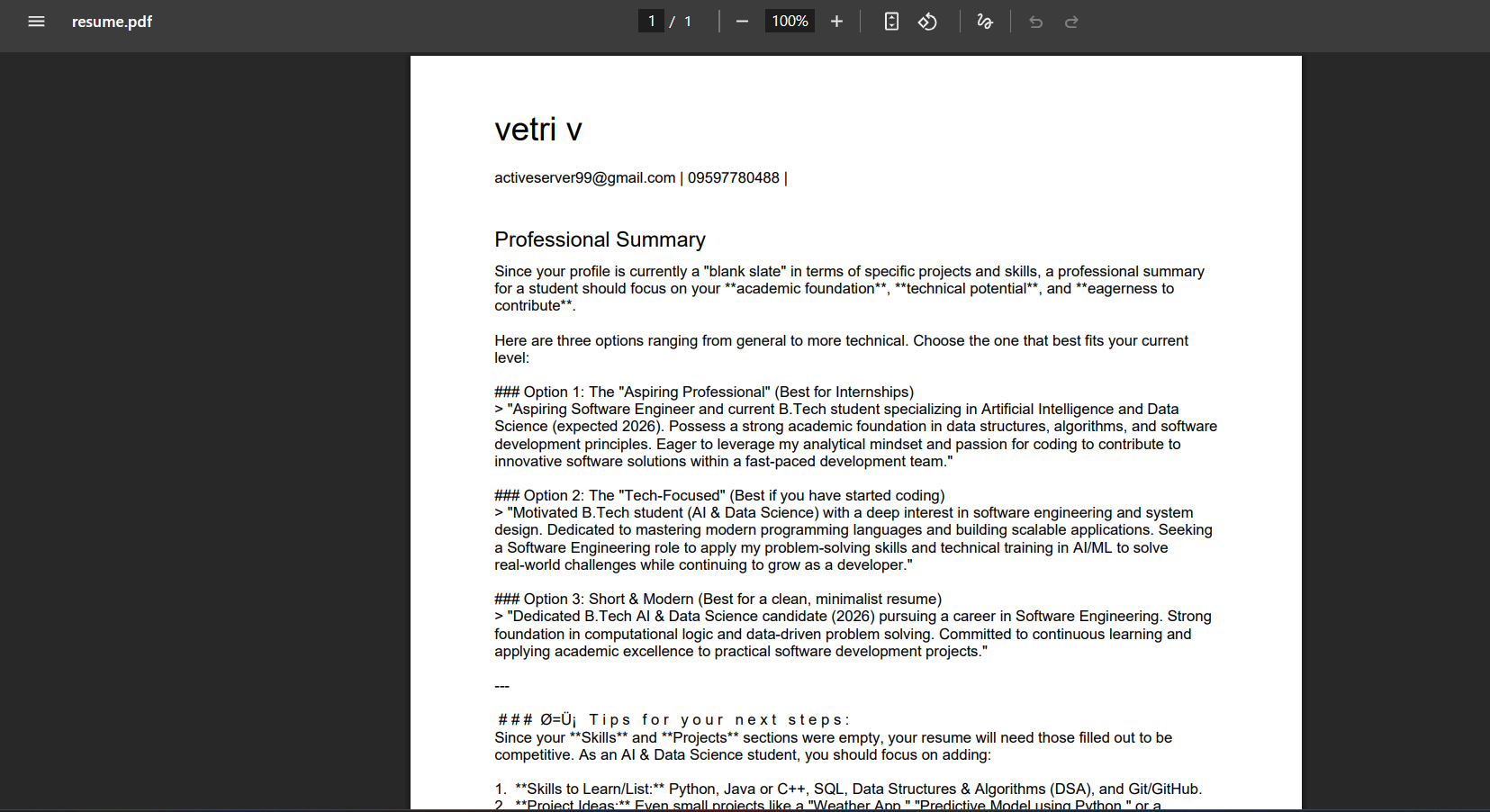
resume pdf
EduPath AI – About the Project
Inspiration
In today’s education system, many students struggle due to three major challenges: lack of personalized guidance, poor study planning, and limited awareness of career-ready skills. While there are multiple tools available for each of these problems, there is no single unified platform that solves all of them together.
EduPath AI was inspired by the idea of creating a one-stop intelligent assistant that supports students throughout their academic journey — from understanding concepts to planning studies and preparing for their careers.
What We Learned
During the development of EduPath AI, we gained hands-on experience in:
- Building scalable full-stack web applications using modern frameworks
- Integrating AI APIs (Gemini) for real-time intelligent responses
- Designing user-friendly and responsive interfaces
- Structuring modular components and reusable code
- Handling real-world challenges like API errors, performance issues, and state management
We also learned how AI can be used effectively to solve real-world educational problems.
How We Built the Project
EduPath AI was built as a modern web application using the following technologies:
- Frontend: Next.js, TypeScript, Tailwind CSS
- Backend: Next.js API routes / Node.js
- Database: MongoDB (or Firebase for scalability)
- AI Integration: Gemini API for intelligent responses
Core Modules
AI Personal Tutor
- Accepts student questions
- Generates simple explanations, summaries, and quiz questions
Smart Study Planner
- Takes inputs like subjects, exam date, and weak areas
- Generates a personalized study schedule
Resume & Skill Builder
- Creates professional resumes
- Suggests missing skills and project ideas based on career goals
Mathematical Logic (Study Planning)
The study planner allocates time dynamically based on subject priority:
Let:
- $T$ = total available study time
- $W_i$ = weight (importance) of subject $i$
- $n$ = number of subjects
Then time allocated per subject:
$$ Time_i = \frac{W_i}{\sum_{k=1}^{n} W_k} \times T $$
This ensures that weaker or more important subjects receive more focus.
Challenges We Faced
- Handling API rate limits and response delays from AI services
- Designing a clean and intuitive UI for multiple modules
- Managing state and data flow between different components
- Setting up and connecting databases efficiently
- Ensuring smooth integration between frontend, backend, and AI
Despite these challenges, we were able to build a functional and scalable prototype.
Conclusion
EduPath AI demonstrates how artificial intelligence can transform education by making it more personalized, structured, and career-oriented. It has the potential to support students from diverse backgrounds and improve their learning outcomes significantly.
Built With
- api
- css
- for
- gemini
- index.html
- intelligent
- next.js
- node.js
- responses
- routes
- tailwind
- typescript


Log in or sign up for Devpost to join the conversation.