-
-
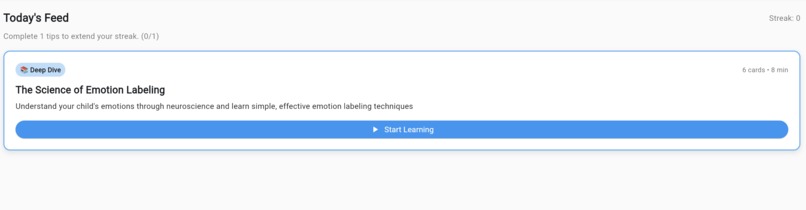
Start reading
-
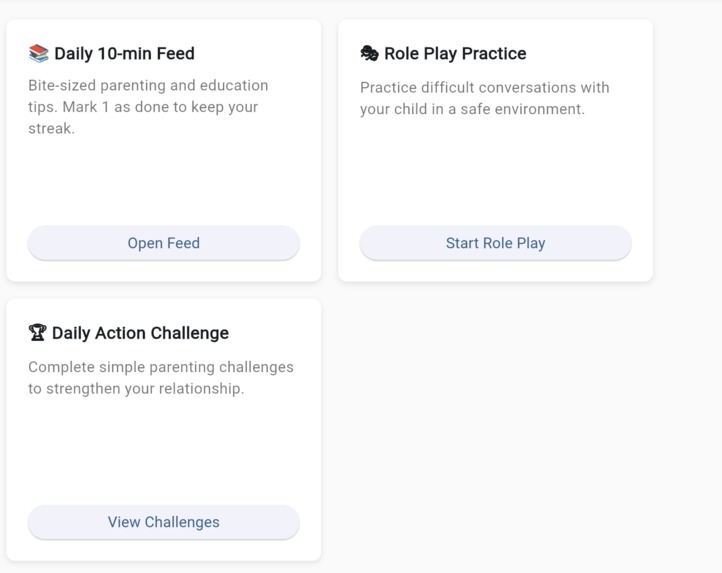
Main page
-
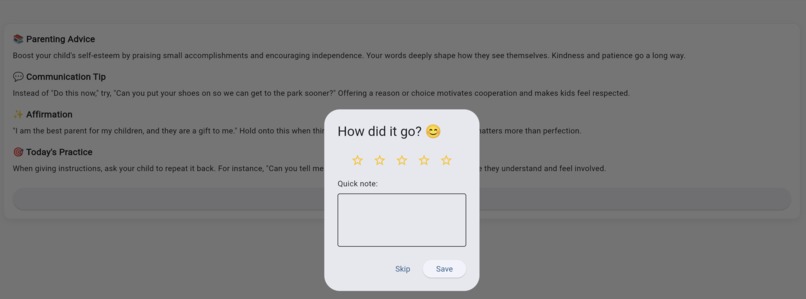
Daily action
-
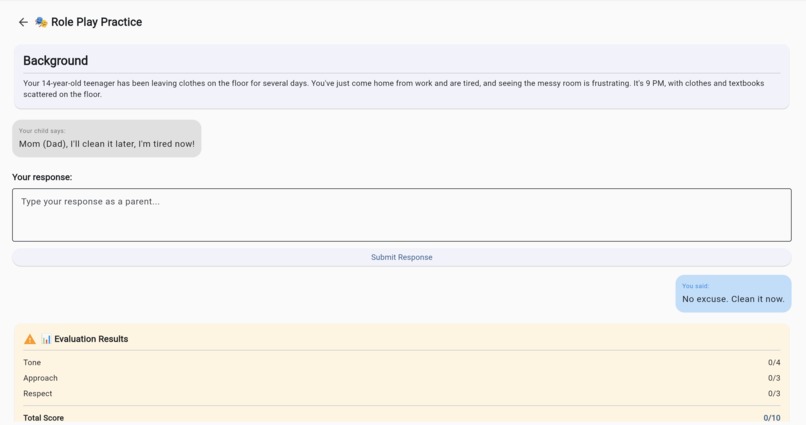
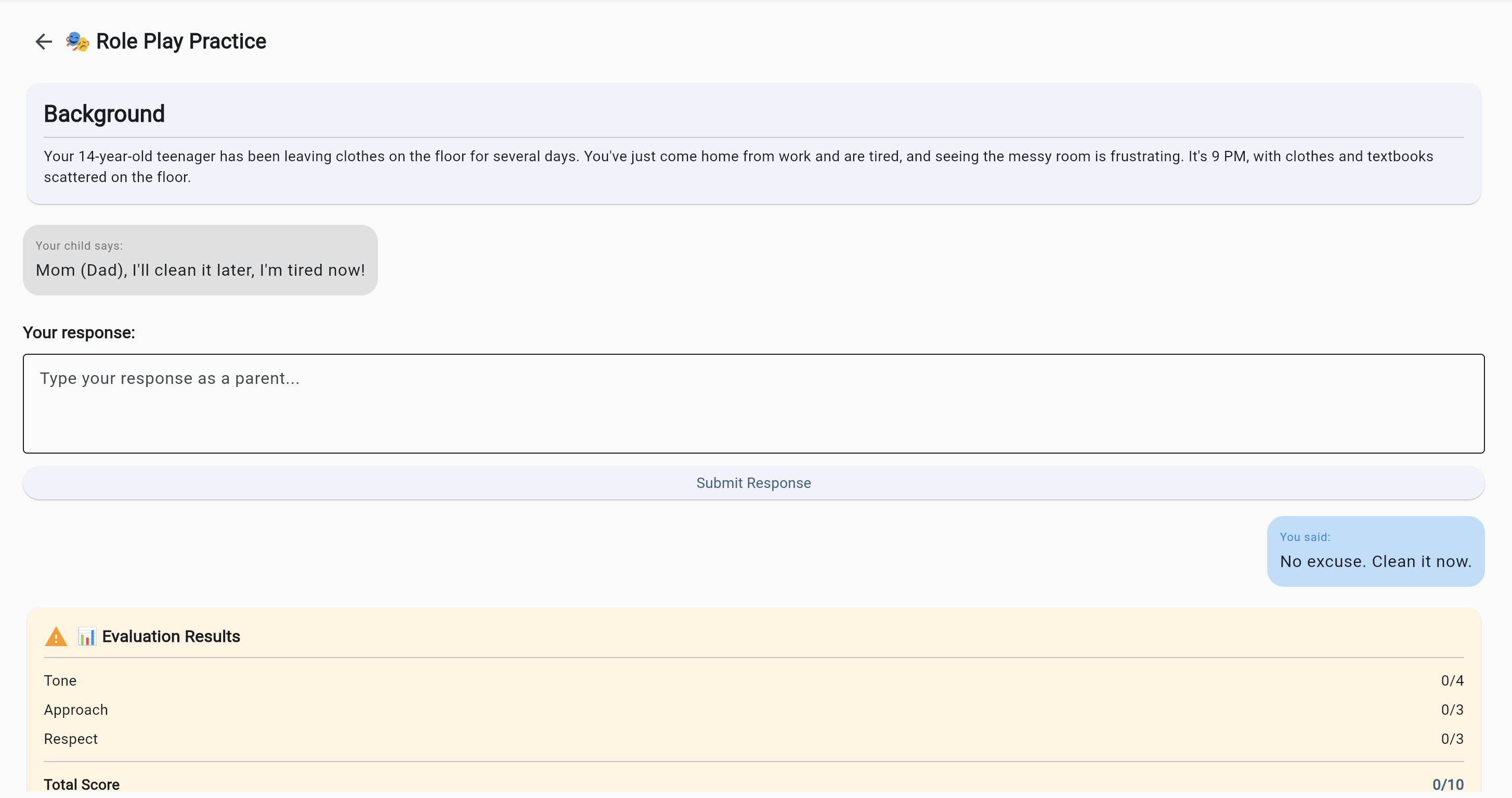
Role play
-
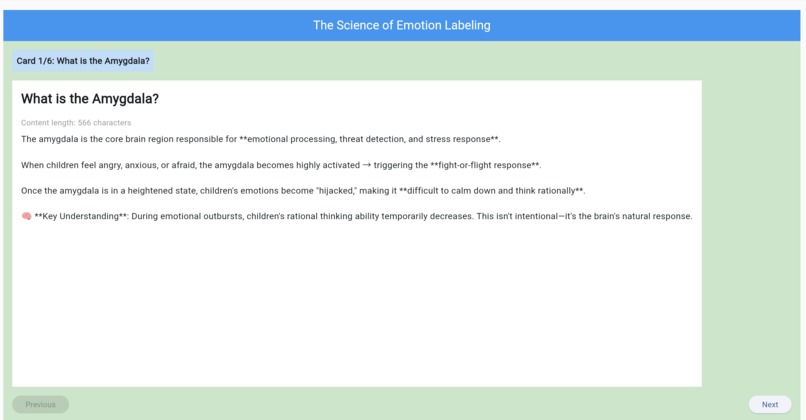
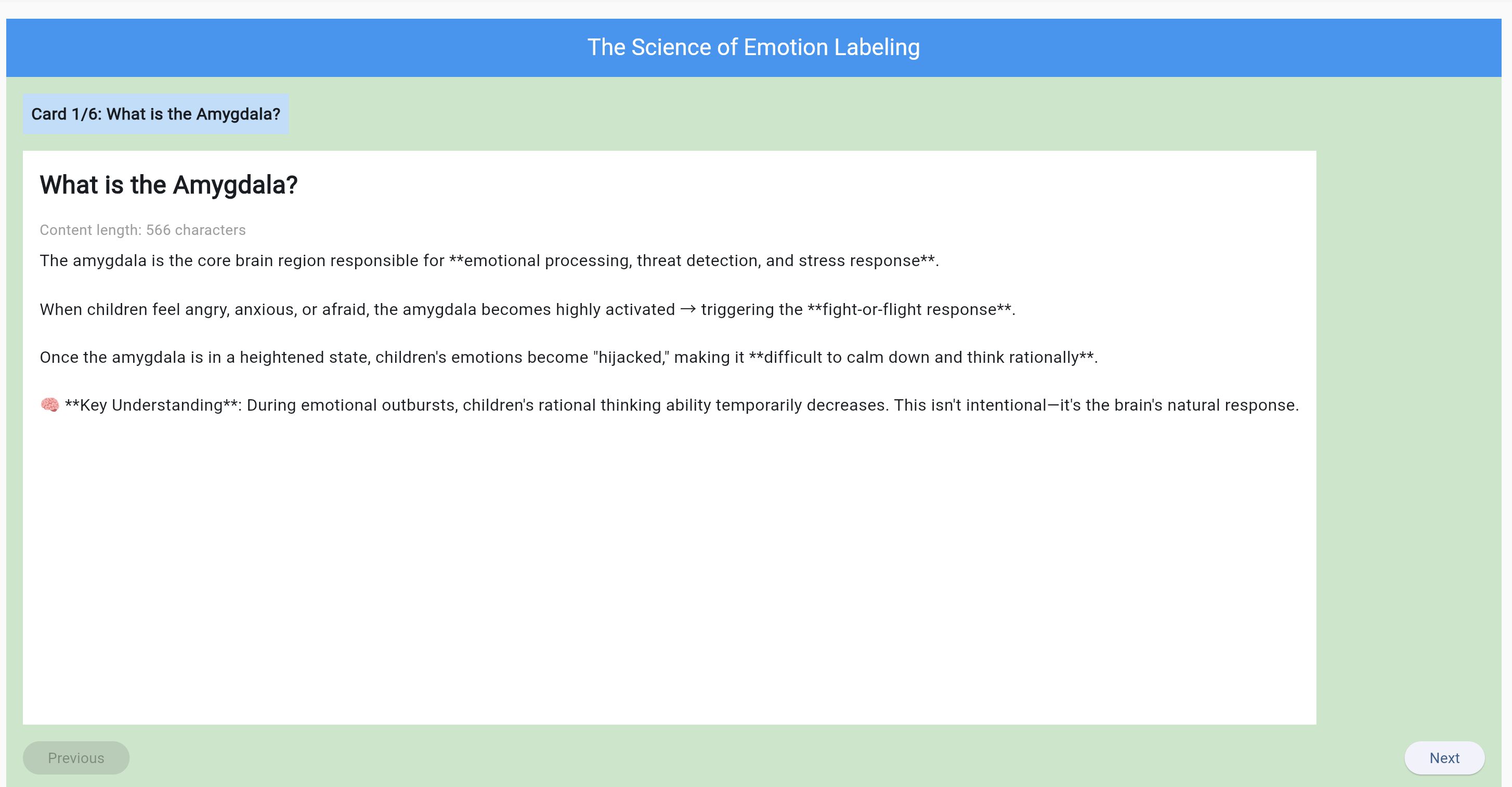
Card stack of daily feed
Inspiration
In Hong Kong, students grow up under immense academic and social pressure. Parents want to support their children but often struggle with communication and emotional connection. Parenting resources exist and are valuable, but they can feel overwhelming, hard to access in the moment, or difficult to translate into real-life practice. EduParent was born from the idea that parents need small, structured steps to grow: a way to gain knowledge, practice safely, and then apply it meaningfully at home.
What it does
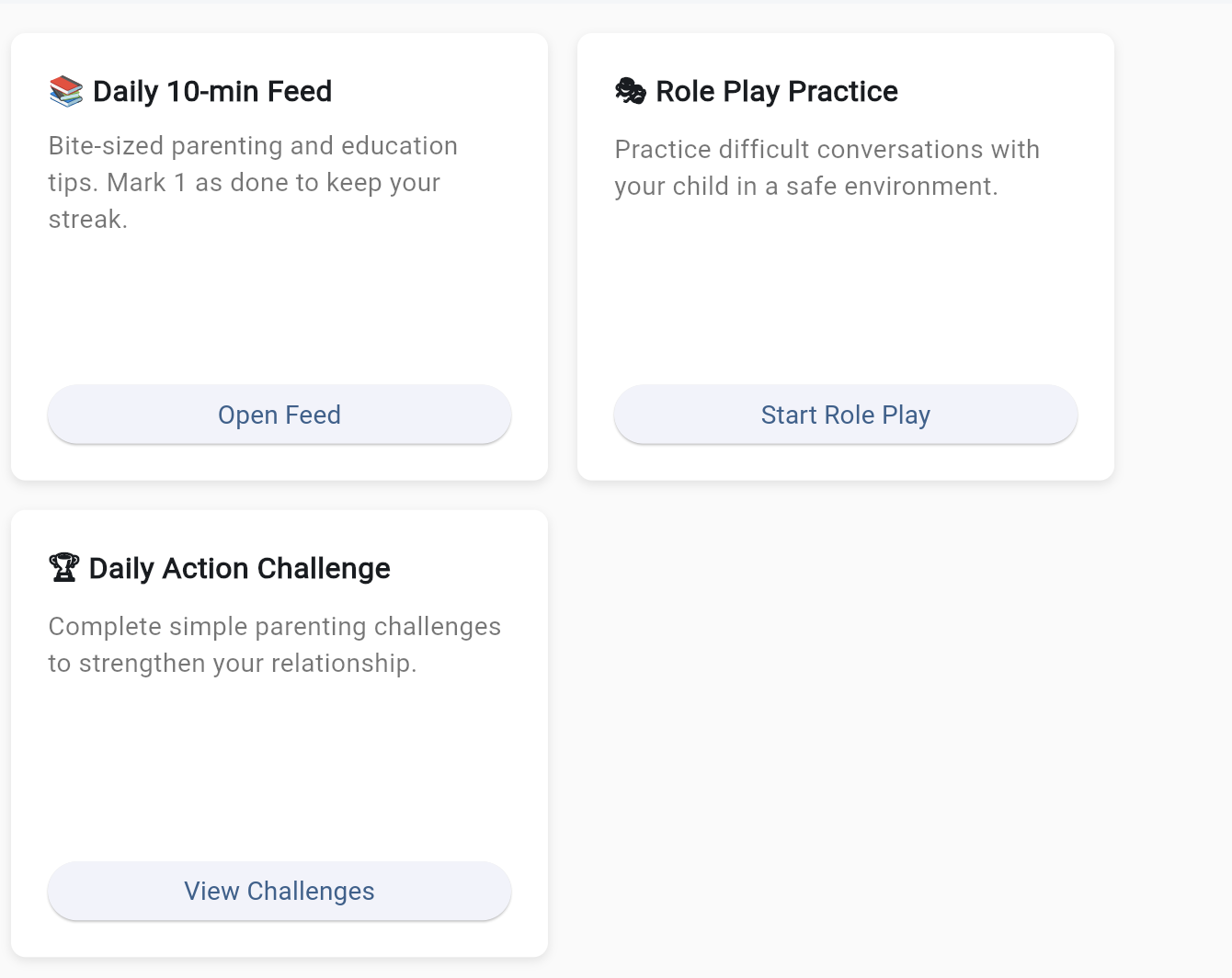
EduParent empowers parents through three core features:
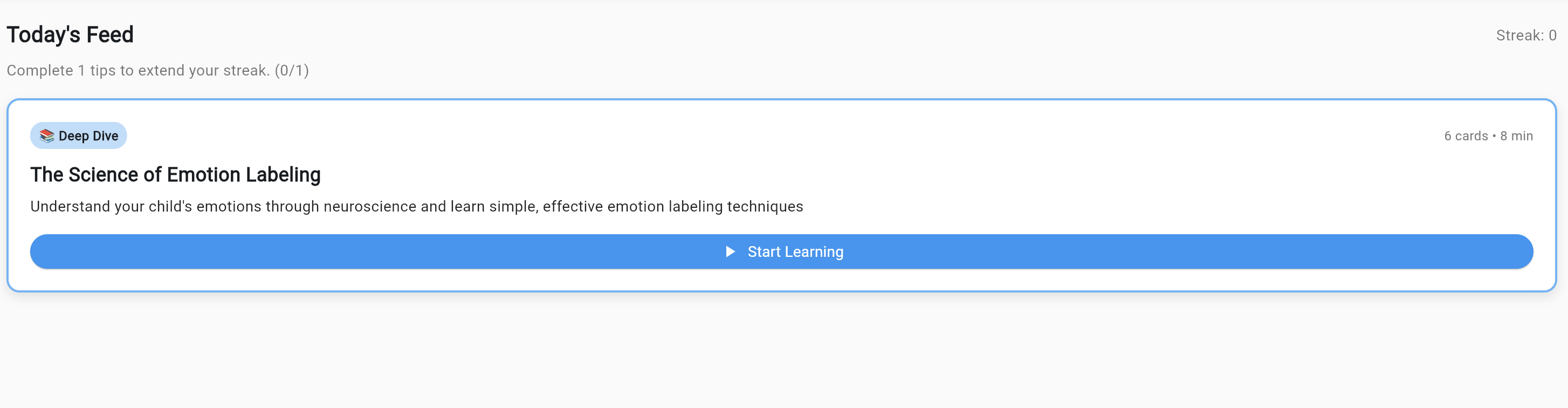
- Daily Bite-Size Knowledge – Short, practical parenting insights that fit into busy lives and help parents learn consistently.
- Role Play Practice – An AI-powered conversation simulator where parents can practice communication scenarios with realistic child responses.
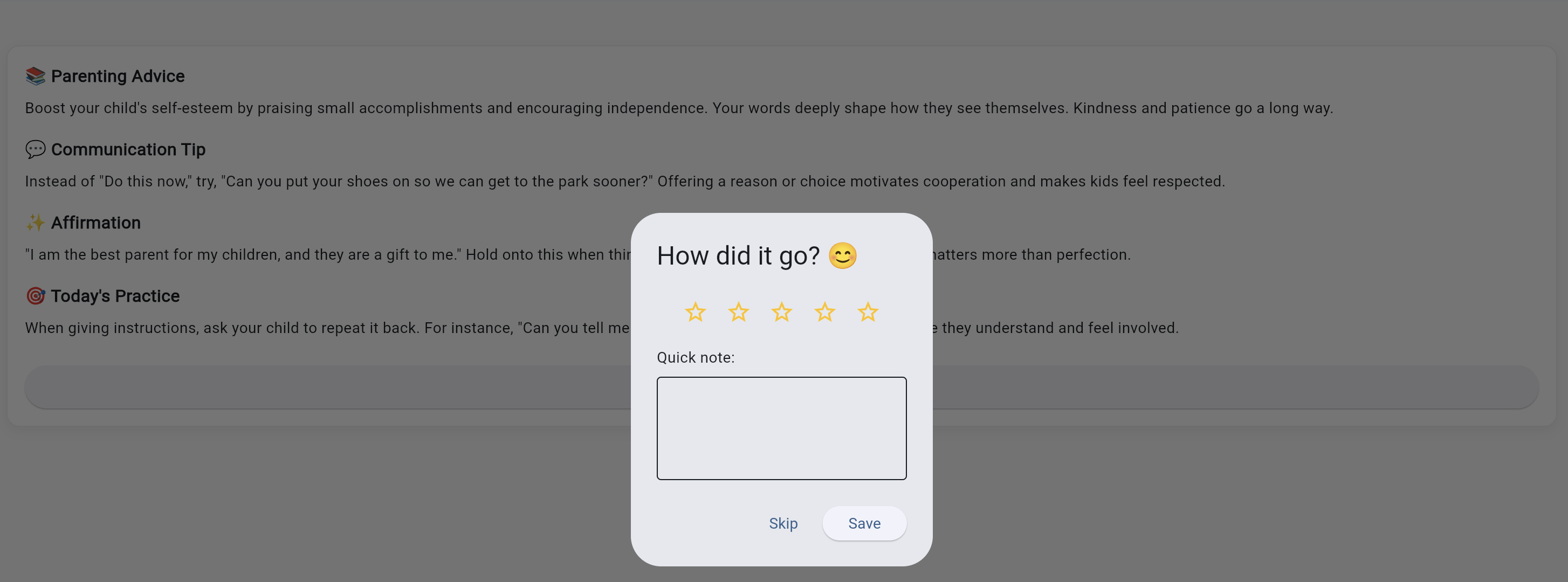
- Real-Life Action Challenges – Small, guided tasks that encourage parents to apply what they’ve learned with their children.
By combining learning, practice, and action, EduParent makes it easier for parents to strengthen their communication and relationships step by step.
How we built it
- Frontend: Flutter app deployed on AWS S3 for accessibility and scalability.
- Backend: Python/FastAPI service running with AWS Lambda and API Gateway.
- AI Roleplay Engine: Built with Pydantic-AI and integrated with AWS Bedrock (DeepSeek API) to generate realistic, supportive roleplay experiences.
- Database: PostgreSQL for storing user data.
Challenges we ran into
The biggest challenges were:
- Lack of prior app-building experience – learning frontend development in Flutter and connecting it with the backend on AWS.
- Front–backend communication – ensuring smooth integration between the Flutter app, backend service, and database.
- Feature brainstorming – defining which core features (knowledge, role play, action challenges) would create the most impact within limited time.
Accomplishments that we're proud of
- Built a working Flutter app deployed on AWS, despite being new to frontend development.
- Integrated AI-driven roleplay into a parenting context, showing its potential for real-world social challenges.
- Designed a unique framework combining knowledge, practice, and action, not just theory.
What we learned
- Scoping and prioritization: We learned how important it is to break down a big idea into a few core features. Focusing on daily knowledge, role play, and action challenges kept the project achievable while still meaningful.
- Full-stack development: We gained hands-on experience building a full-stack app from scratch, connecting a Flutter frontend with a Python/FastAPI backend and a PostgreSQL database.
- AI development workflow: Working closely with the newest AI development tools — from project planning to code completion and debugging — gave us a deeper understanding of both their power and their limitations.
What's next for EduParent
- Richer roleplay: Expand the roleplay feature with more realistic, well-crafted scenarios and refine AI responses so interactions feel natural and supportive.
- More daily content: Add additional bite-size lessons and action challenges to cover a wider range of parenting situations.
- Real-world testing: Share the app with parents in our personal networks to gather feedback and validate the approach in real-life use.
- Personalization: Gradually improve how the app adapts to different family needs, such as children’s ages and communication styles.

Log in or sign up for Devpost to join the conversation.