-
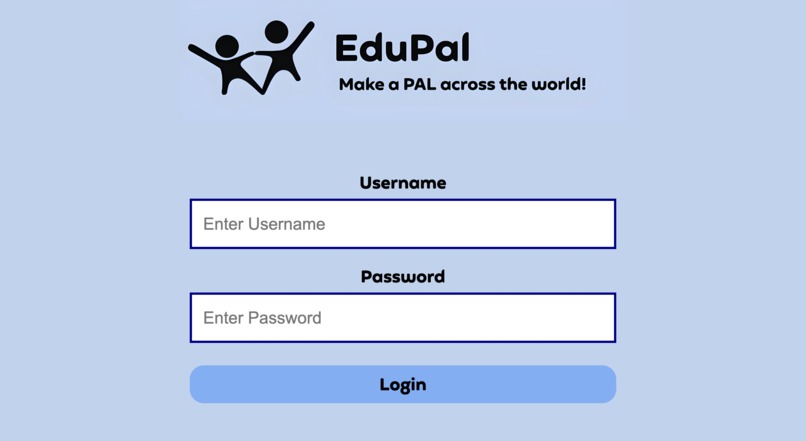
Login page. Server handles successful/failed login attempts.
-
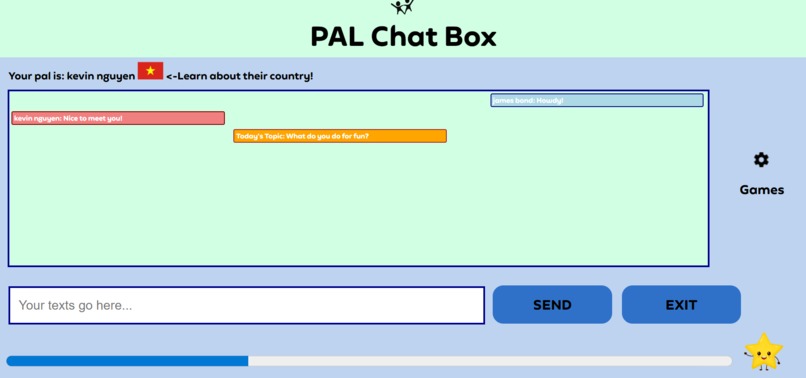
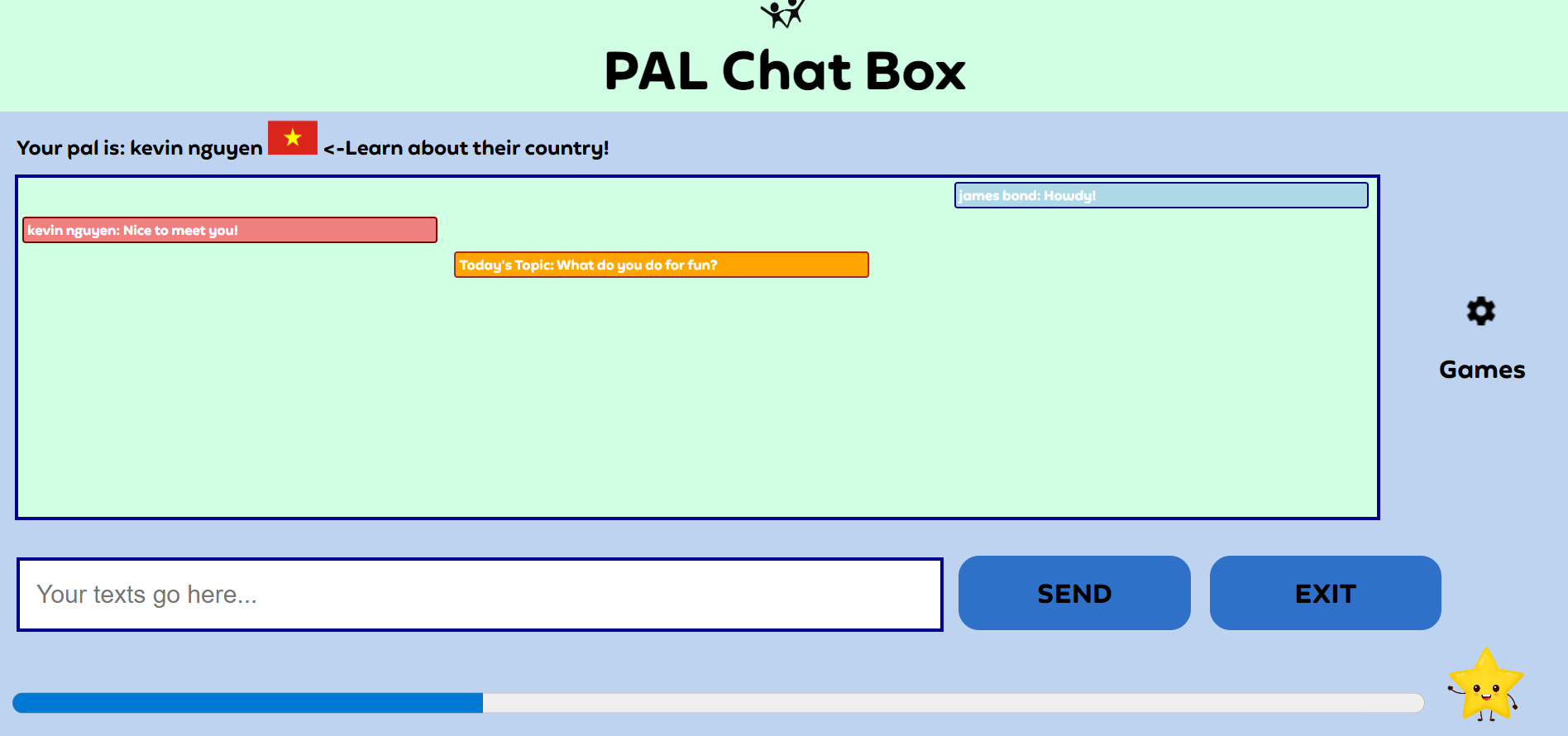
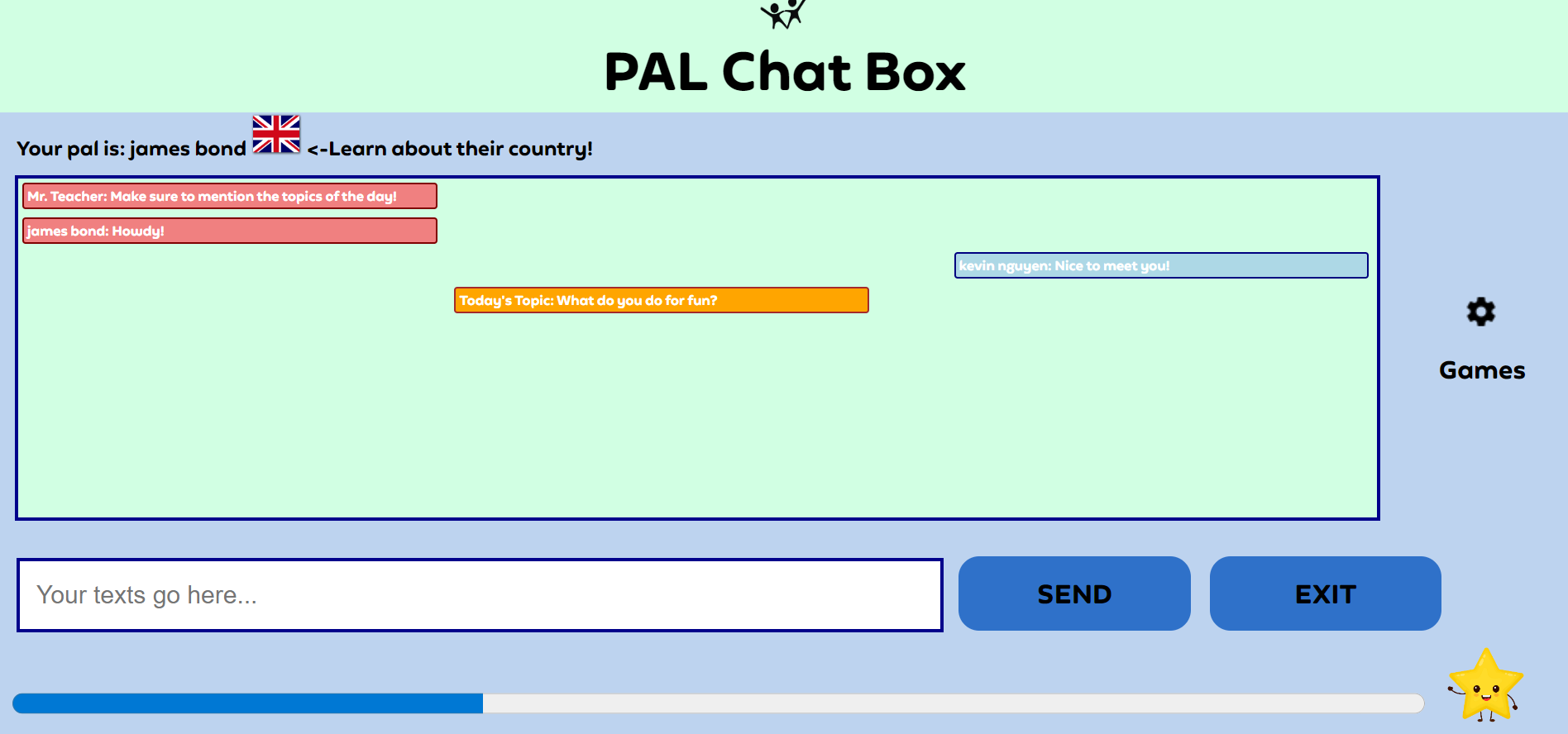
Chat from James Bond's perspective
-
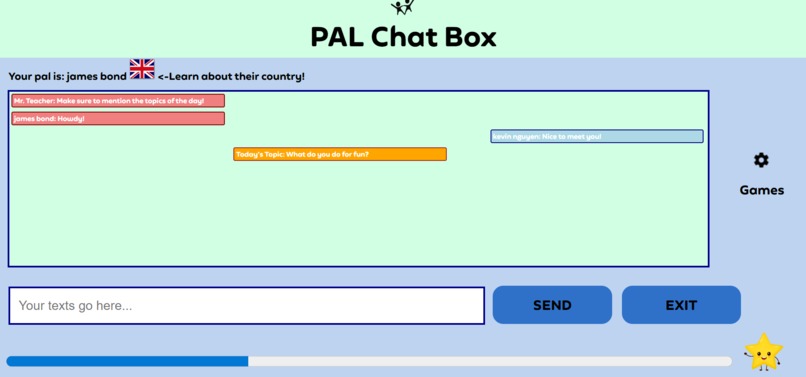
Chat from Kevin Nguyen's perspective
Inspiration
The first pen pal program began in 1936, as a way for students from different parts of the world to connect and learn about each other’s cultures. The almost century-old program has surprisingly gone through no major changes. This is what led us to create EduPal.
What it does
EduPal utilizes modern design concepts and habit formation methods to provide a fun and engaging experience to today’s students. Our goal is to promote global interconnectedness and diversify learning modes in today’s educational climate. The first iteration uses a chatbox interface to facilitate communication. Users can send messages to their "partners" and learn about each other. Each day a new message will be sent to each user prompting them to talk about the topic of the day.
How we built it
We built it using HTML, CSS, JavaScript, and node.js (express + socket.io). The user loads up the HTML page, which uses socket.io to communicate with the server to login.
Challenges we ran into
We had to decide whether to save separate message logs for each user or to share one log between two students. We opted for the separate approach because it allows personalized instructor feedback. We had trouble formatting our message log chat bubbles, especially with regards to left-right alignment. Because we used chat bubbles as opposed to a terminal style chat, we had to store the chat as an array of messages instead of just a string.
Accomplishments that we're proud of
We created a user interface that connects people across the world.
What we learned
Three members of our group were unfamiliar with javascript prior to the project. By the end, everyone had a grasp of how javascript was used to send information between the server and the client as well as modify the HTML page.
What's next for EduPal
Games, an administrator portal that could randomize partners, and more educational resources would all be great ways to enhance EduPal.

Log in or sign up for Devpost to join the conversation.