-
-
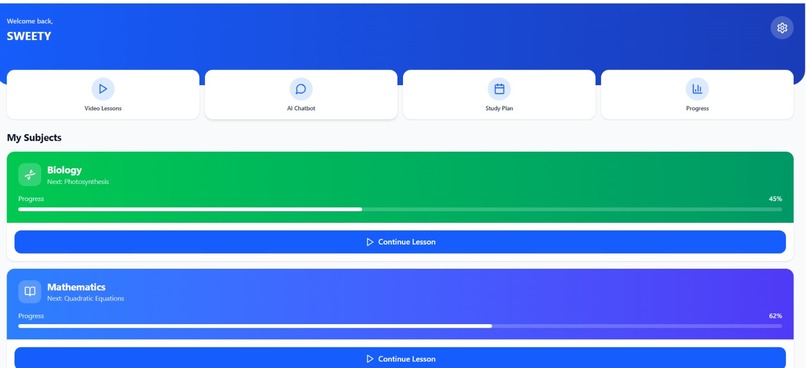
Dashboard of prototype
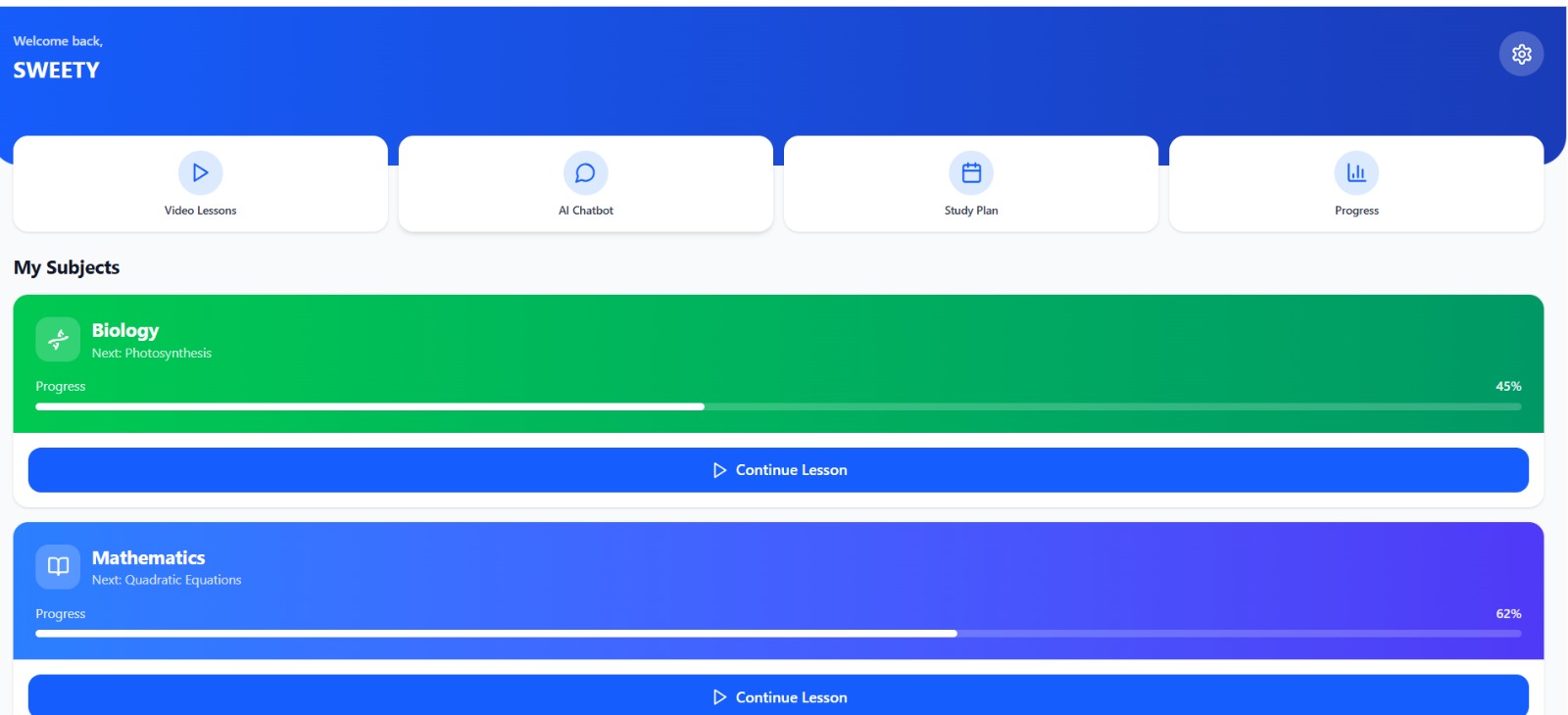
Inspiration
We were inspired by the challenges faced by students in traditional classrooms, especially rural, non-English speaking, and differently-abled learners. Many students struggle with English-only textbooks, fast-paced teaching methods, and limited individual attention from teachers. We wanted to create a solution that makes learning inclusive, personalized, and accessible for everyone using Artificial Intelligence and modern technology.
What it does
EduNity is an AI-powered personalized learning app that provides education in regional languages with voice-based interaction. It converts textbook lessons into interactive videos and real-life examples to improve understanding. The app generates personalized daily study plans based on a student’s weak areas, exam schedule, and available time. It also includes an AI chatbot for instant doubt clarification and gamification features like quizzes, levels, and rewards to keep students motivated. The platform is designed to support students with disabilities through voice interaction and simplified content delivery.
How we built it
We built EduNity using AI and machine learning models for content generation, language translation, and student performance analysis. Natural Language Processing (NLP) was used for multilingual support and voice-based interaction. A recommendation system was developed to create personalized learning paths. The mobile application was designed with an accessible, student-friendly user interface, focusing on large buttons, voice input, and clear visual elements for better usability. We integrated quizzes, chatbot functionality, and performance tracking modules into a single platform.
Challenges we ran into
One of the major challenges was converting textbook content into simple, engaging, and accurate AI-generated videos and explanations. Supporting multiple regional languages with voice input and output required careful handling of speech recognition and translation accuracy. Designing the system to be accessible for students with disabilities while keeping the app simple and lightweight was also challenging. Ensuring personalized recommendations based on limited user data in the initial stage was another difficulty.
Accomplishments that we’re proud of
We successfully developed a prototype that delivers personalized learning in regional languages with voice-based interaction. The system can generate daily study plans, explain concepts using real-life examples, and provide instant doubt clarification through an AI chatbot. We also integrated gamification and performance tracking, making the learning process engaging and motivating. Most importantly, we created a solution that supports inclusive education for rural and differently-abled students.
What we learned
Through this project, we learned how to apply AI and machine learning techniques to solve real-world education problems. We gained experience in multilingual NLP, voice technologies, recommendation systems, and user-centered app design. We also understood the importance of accessibility, personalization, and simplicity when building educational technology for diverse users.
What’s next for EduNity
In the future, we plan to expand EduNity by adding more regional languages and improving voice recognition accuracy. We aim to introduce offline learning support for low-internet areas and advanced analytics for teachers and parents. We also plan to integrate adaptive assessments, emotional learning support, and better accessibility features for visually and hearing-impaired students. Our long-term goal is to make EduNity a complete AI-powered learning companion for students across different educational levels.


Log in or sign up for Devpost to join the conversation.