-
-
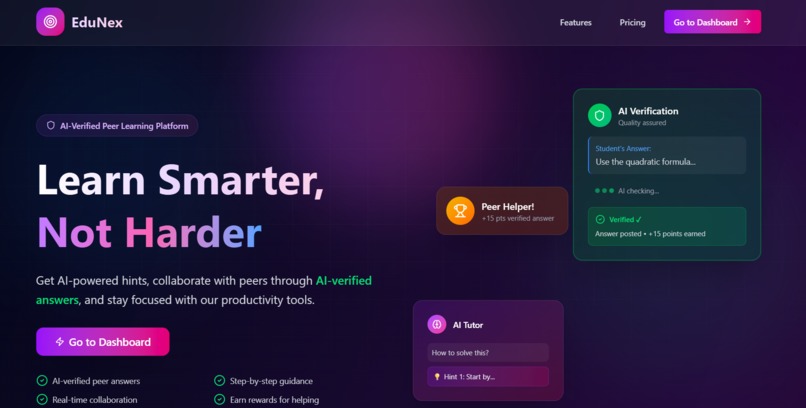
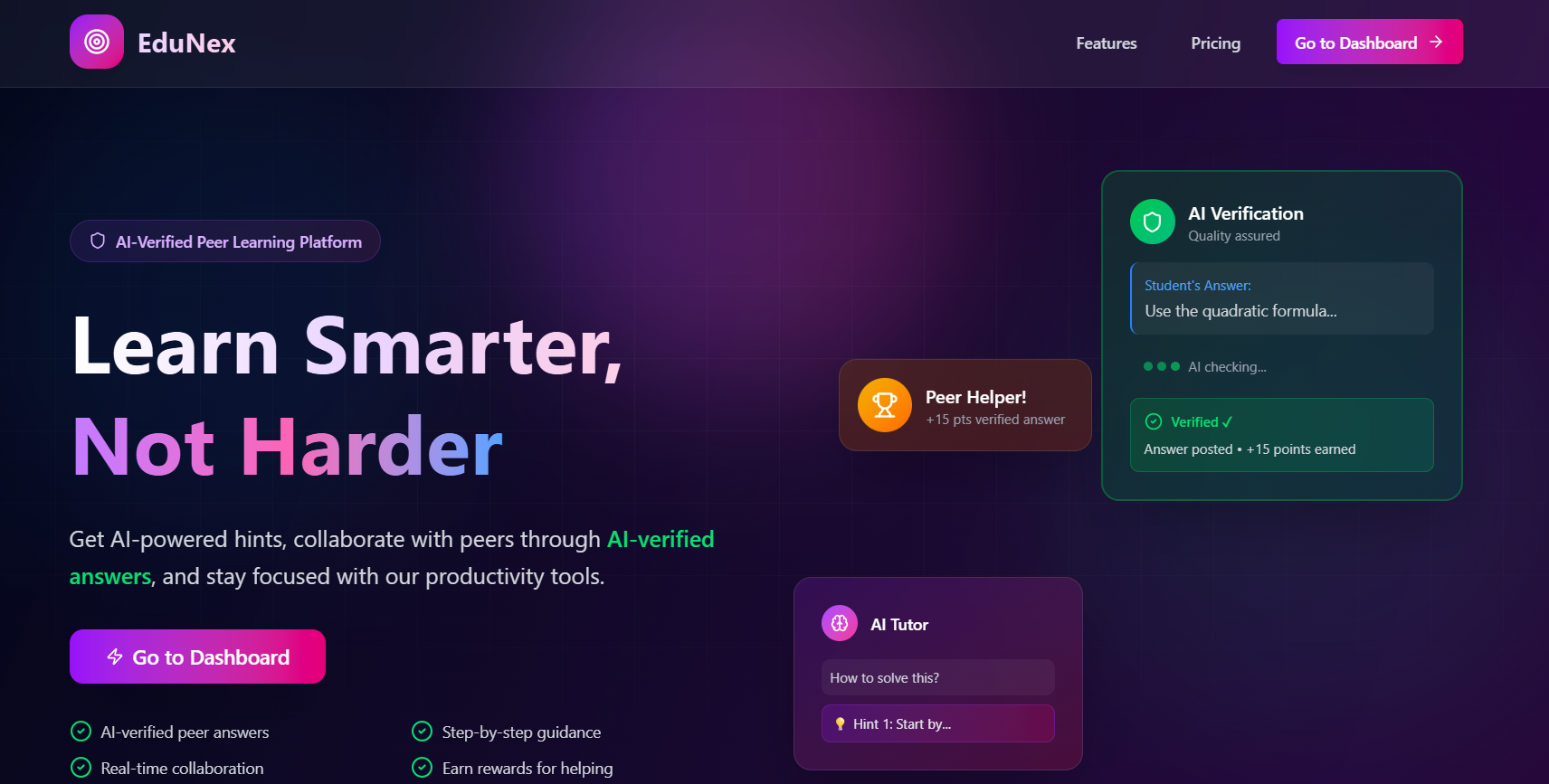
This is the landing Page of Edunex
-
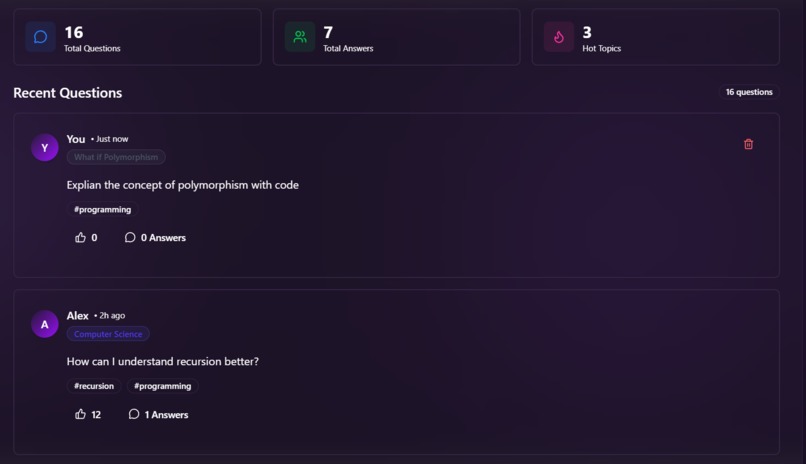
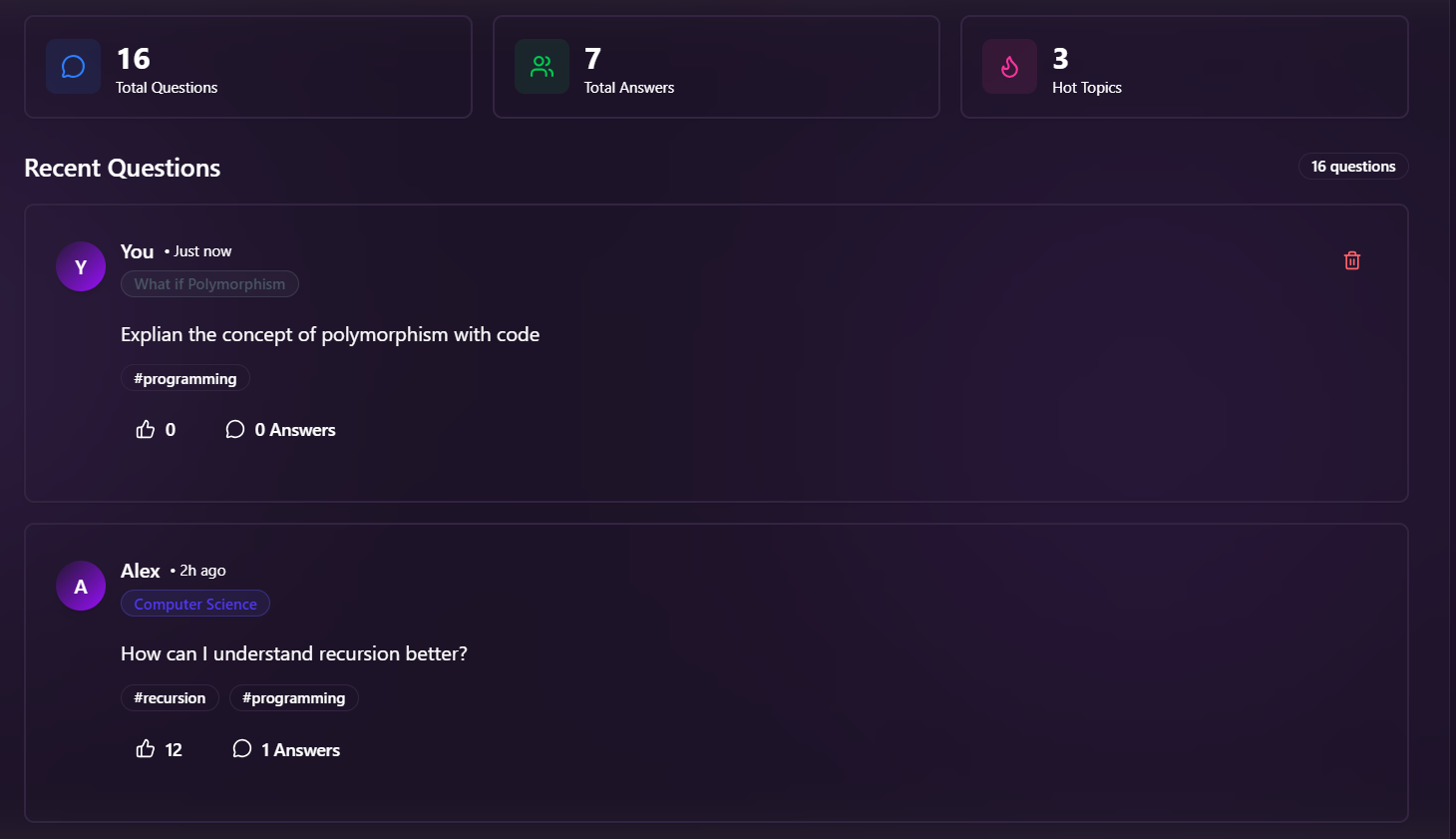
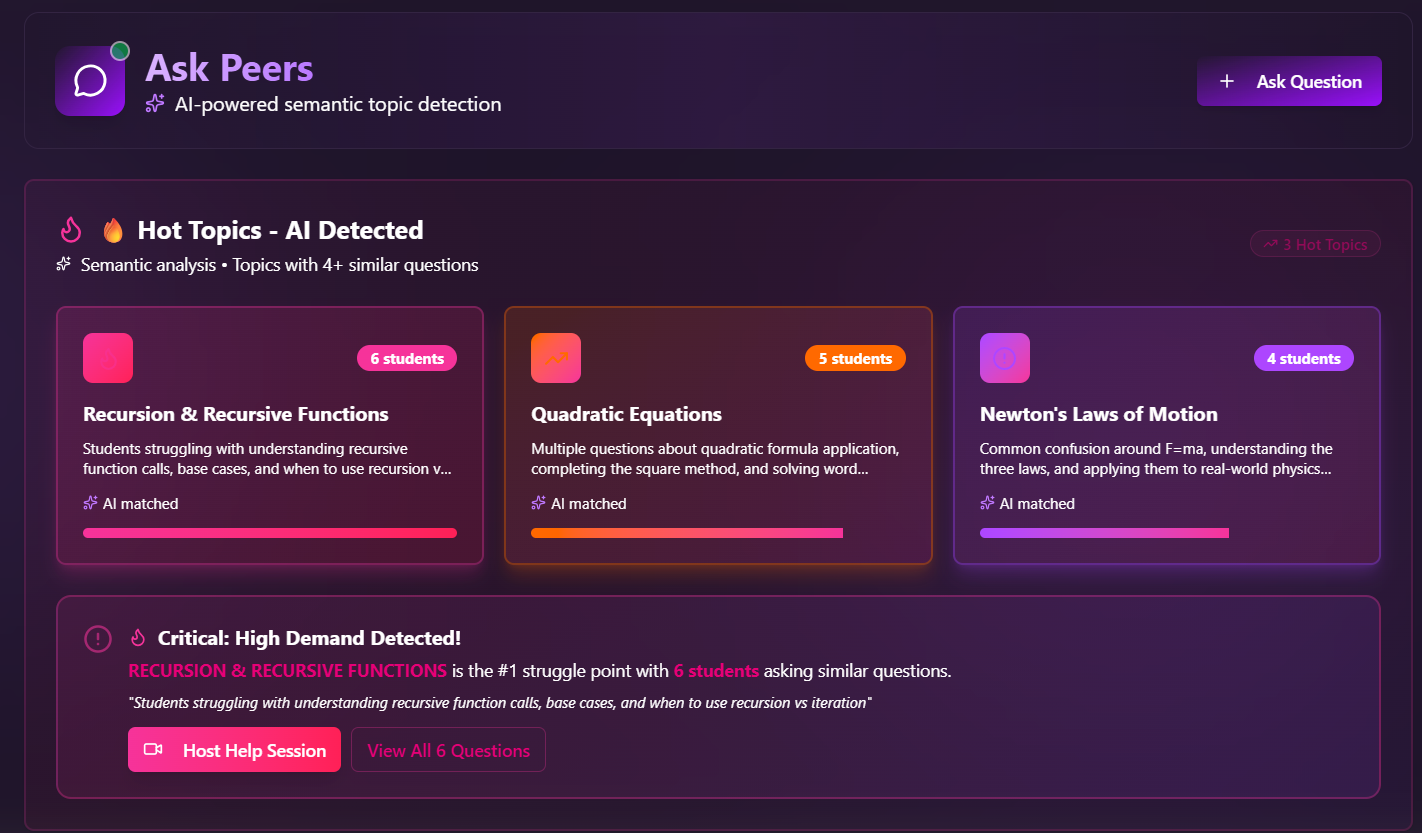
Questions asked by students and self posted question
-
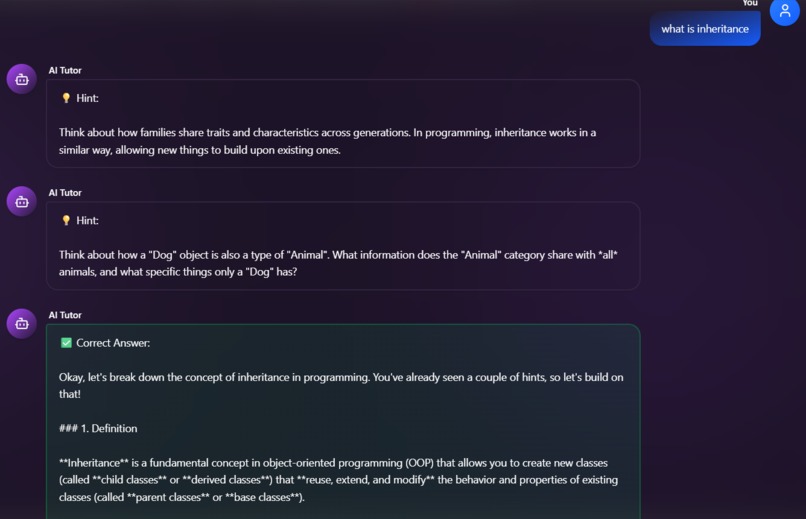
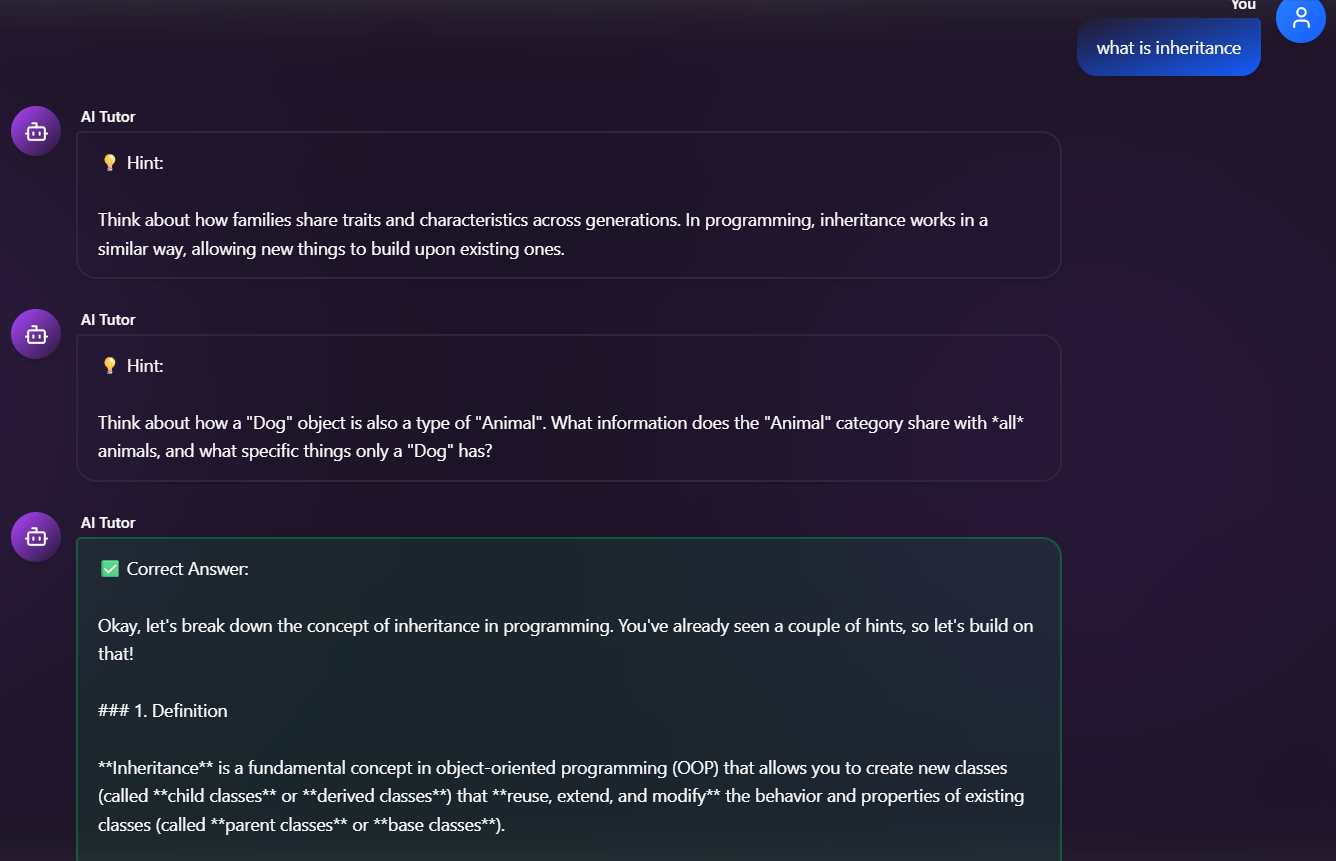
Ai chat where the ai instead of giving direct answers gives hints to reach to that answer and finally the correct answer
-
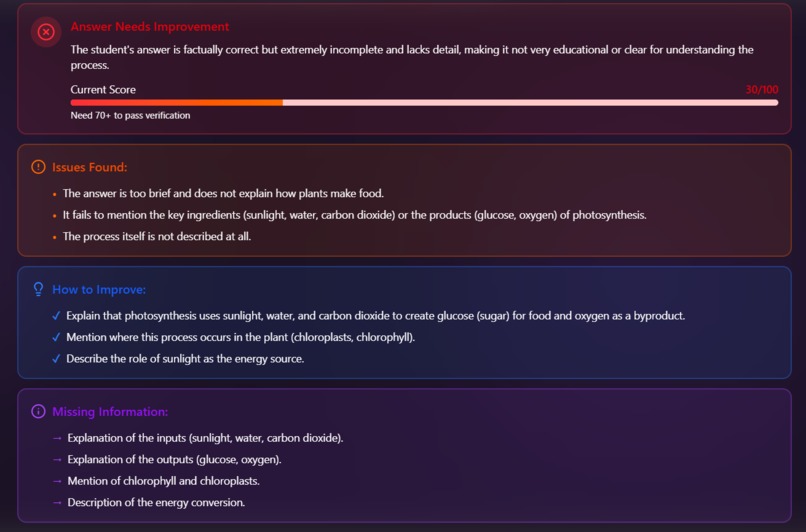
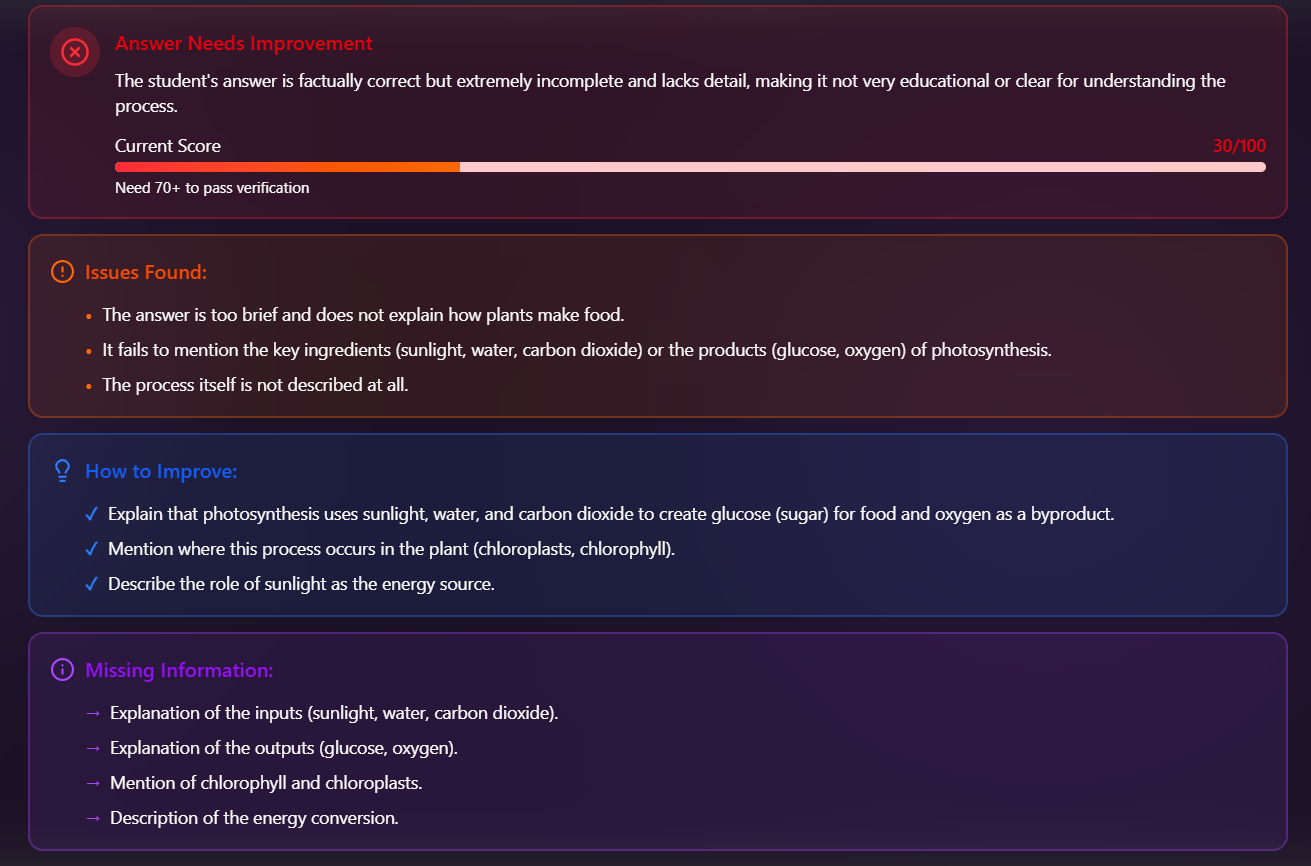
Ai insights on the help peer section while answering to someone's question so that the other one gets fully correct verified answer only
-
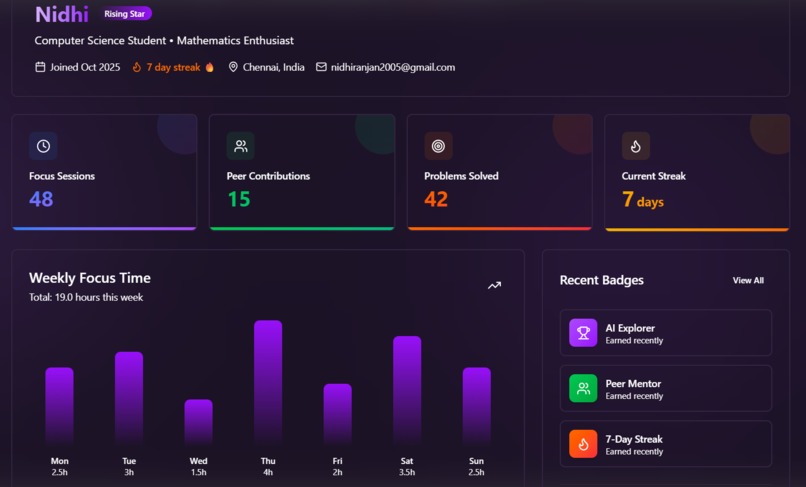
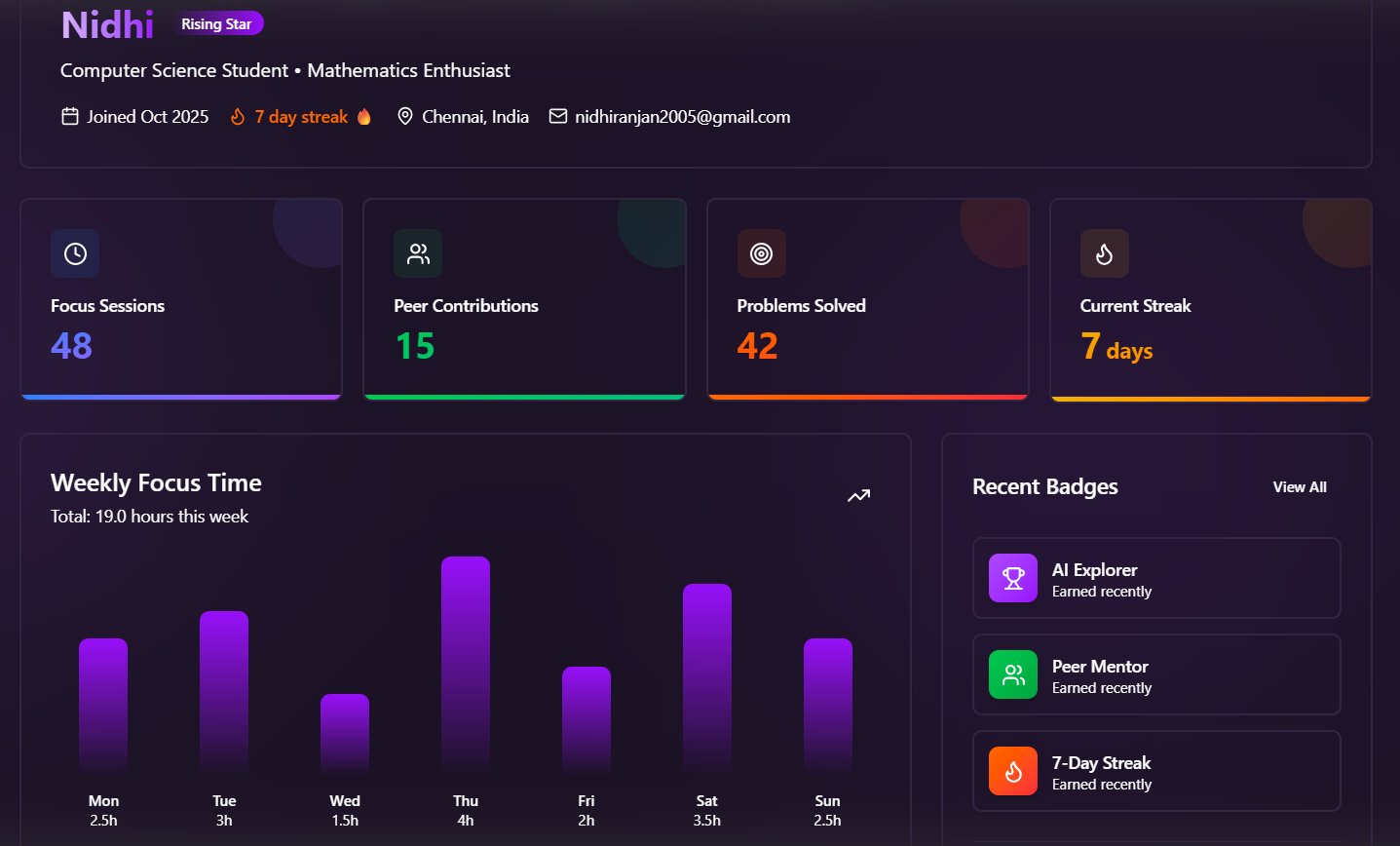
Profile overview
-
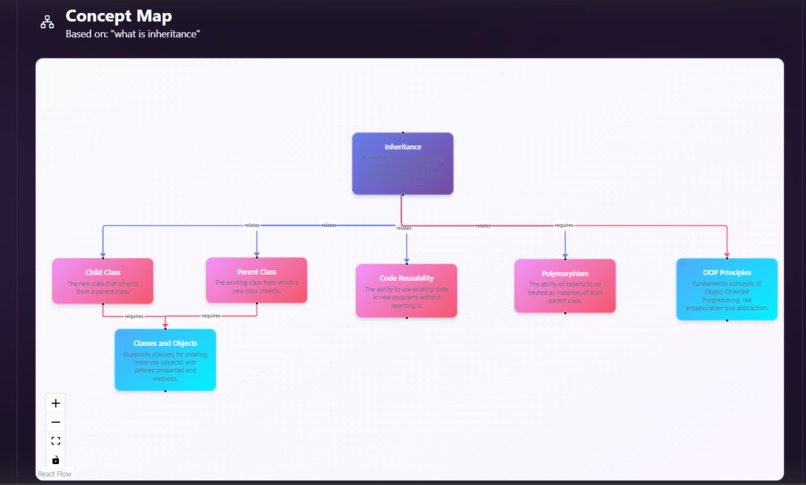
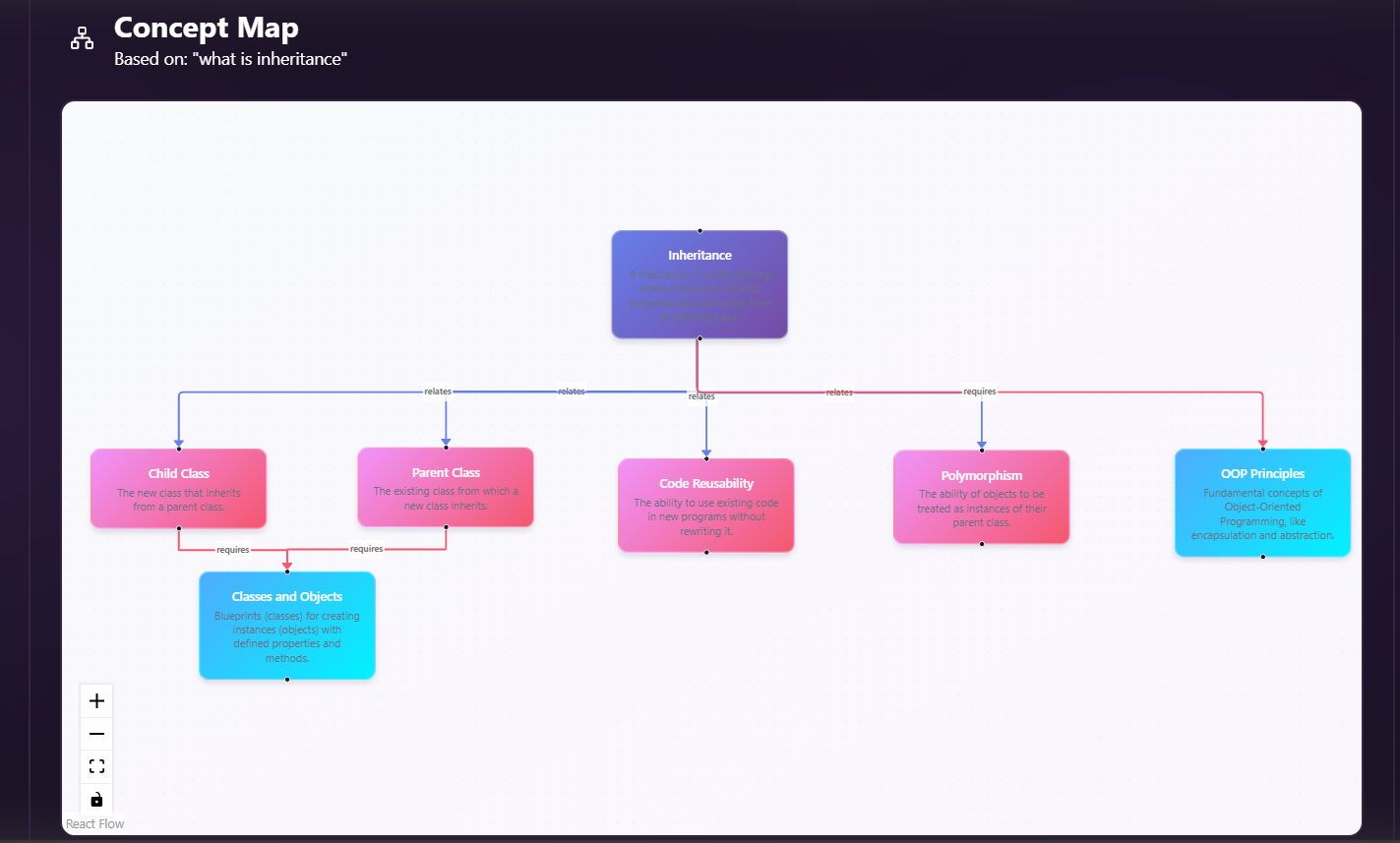
A concept mind map to make the topic more understandable from the chat inputs
-
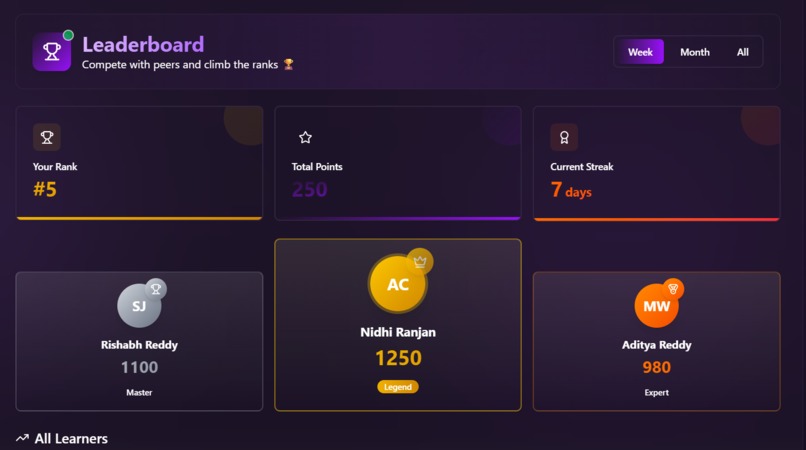
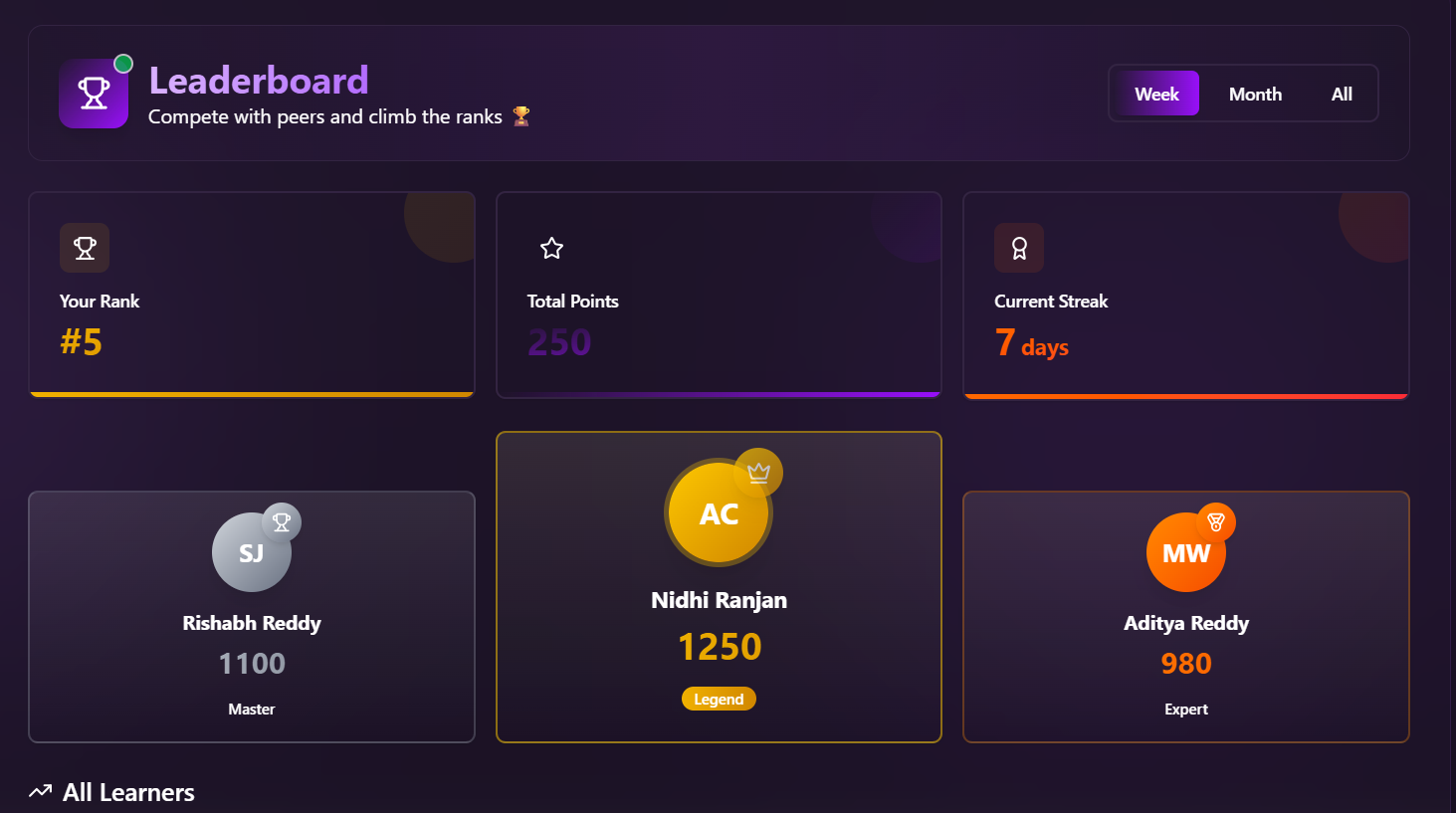
Gamified Leaderboard streak
-
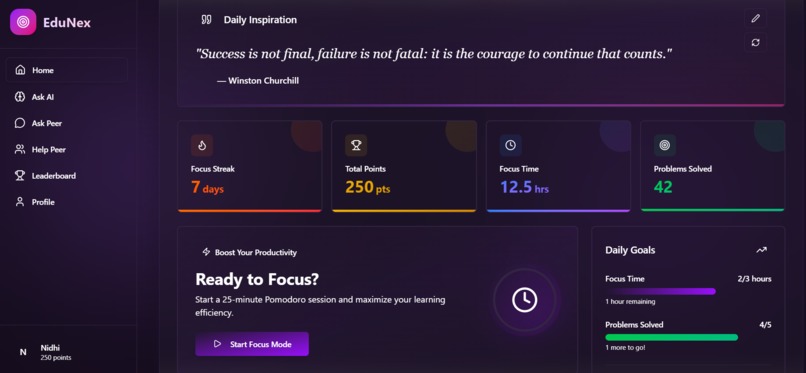
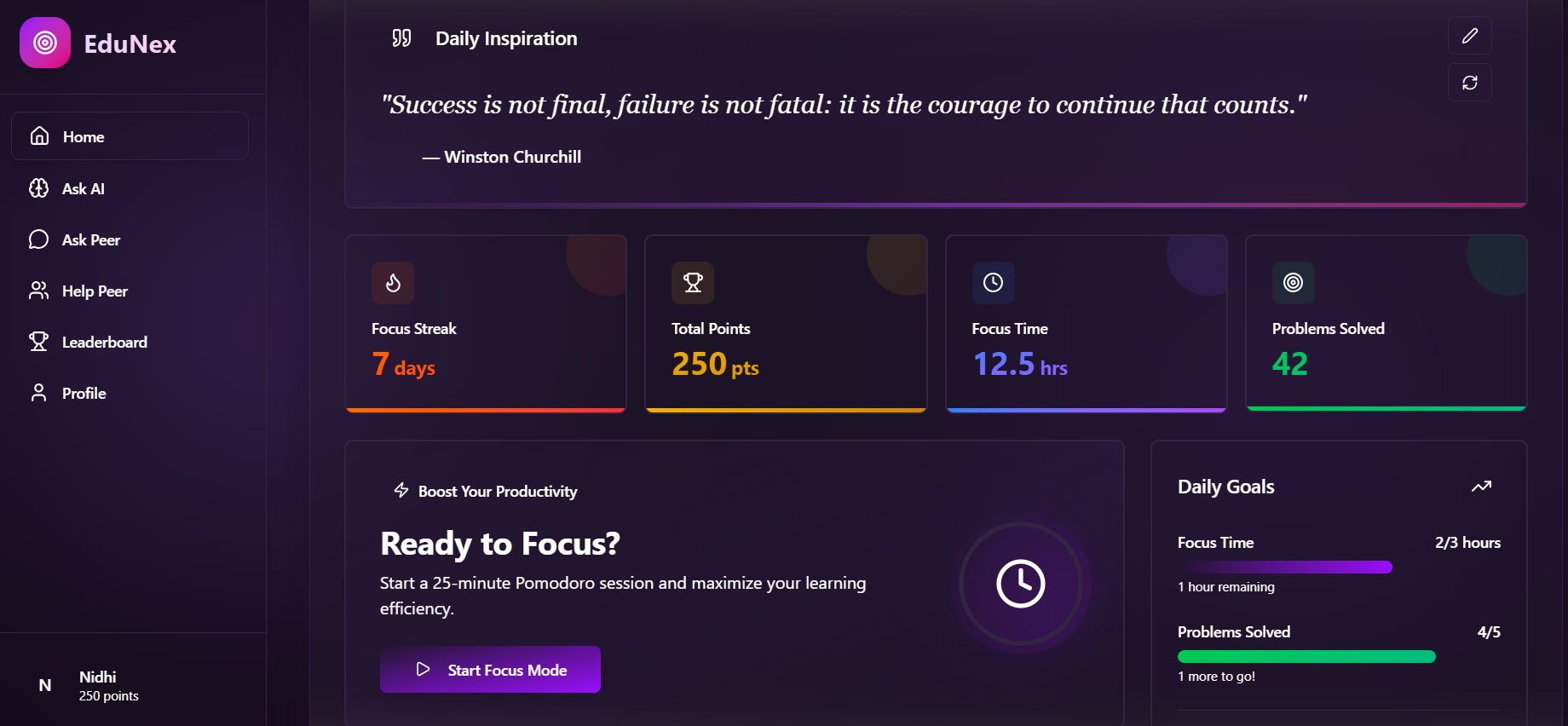
Dashboard with costomizable qoute to keep you motivated and focus mode counting your distractions
-
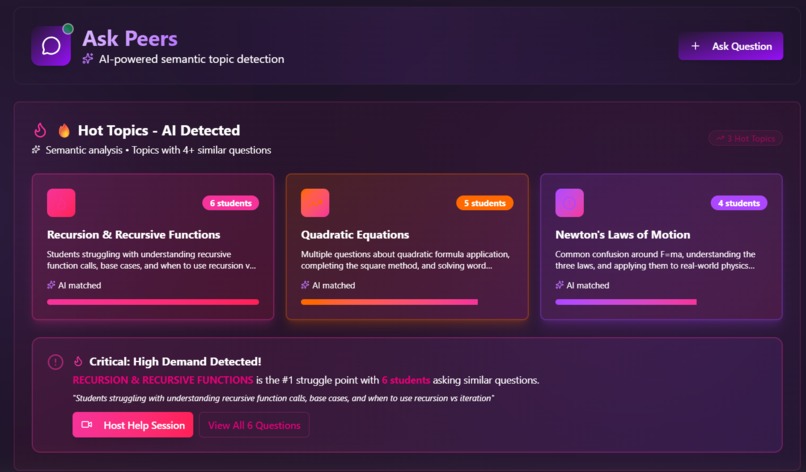
The trending questions mostly asked by the students
Inspiration
With the increasing availability of AI tools in education, learning has become faster but often more passive. Many students rely on instant AI-generated answers, which can weaken conceptual understanding and independent thinking. At the same time, traditional discussion forums lack proper answer validation, engagement, and learning guidance.
EduNex was inspired by the need to create a balanced learning environment where AI supports students without replacing peer interaction, critical thinking, or focused study habits.
What it does
EduNex is an AI-assisted student collaboration platform that enables learners to:
- Post academic questions and answer peers
- Receive AI-assisted verification of answers to improve quality
- Get AI-generated hints instead of direct solutions
- Visualize concepts using AI-generated mind maps
- Participate in distraction-tracking study sessions
- Engage through gamified leaderboards and progress metrics
The platform promotes collaborative, concept-driven learning while maintaining academic responsibility.
How we built it
EduNex was built using a full-stack web architecture:
- Frontend: React.js with Tailwind CSS for a responsive and interactive user interface
- Backend: Node.js and Express.js to manage APIs, Clerk for authentication, and platform logic
- Database: MongoDB for storing users, questions, answers, study sessions, and engagement data
- AI Integration: Gemini API for answer verification, hint generation, and mind-map creation
The system follows a client–server architecture, with AI services integrated as modular components to ensure scalability and controlled AI usage.
Challenges we ran into
- Designing AI responses that guide learning without revealing full answers
- Maintaining balance between human answers and AI verification
- Structuring mind-map outputs in a meaningful and readable format
- Implementing distraction tracking without being intrusive
- Ensuring engagement features motivate learning rather than competition alone
Accomplishments that we're proud of
- Successfully integrated AI verification without replacing peer learning
- Implemented hint-based AI assistance to encourage independent thinking
- Built distraction-aware study sessions focused on learning discipline
- Created a clean, scalable full-stack architecture
- Designed an engaging yet academically responsible learning platform
What we learned
- Responsible AI design is more challenging than direct AI automation
- Guided assistance leads to better learning outcomes than instant answers
- Gamification must be carefully aligned with educational goals
- AI verification can improve content quality without removing human effort
- Building educational platforms requires both technical and behavioral understanding
What's next for EduNex
- Personalized learning analytics and progress insights
- Adaptive hint difficulty based on learner performance
- Topic-wise misconception detection
- Classroom and institutional deployment support
- Evaluation of learning outcomes through data-driven analysis
Built With
- and-study-sessions-**gemini-api**-?-ai-powered-answer-verification
- answers
- clerk
- express.js
- geminiaapi
- git
- github
- hint-generation
- javascript
- mongodb
- node.js
- questions
- react.js
- tailwindcss


Log in or sign up for Devpost to join the conversation.