-
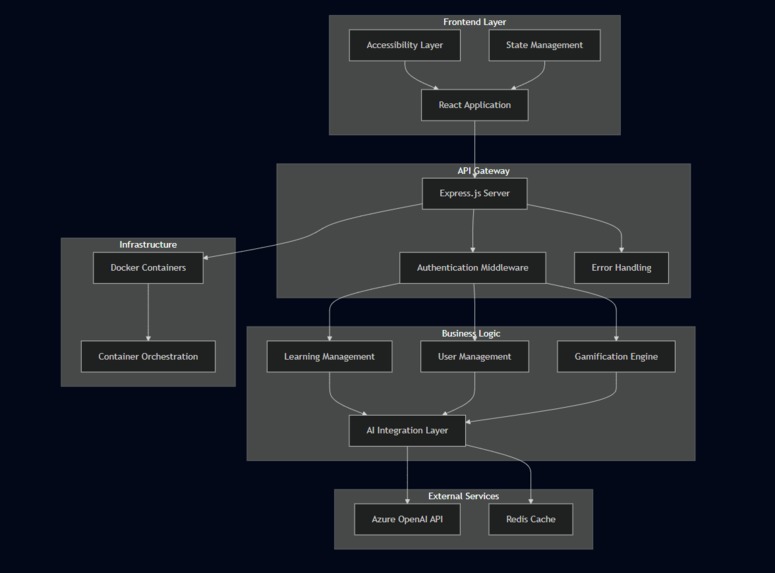
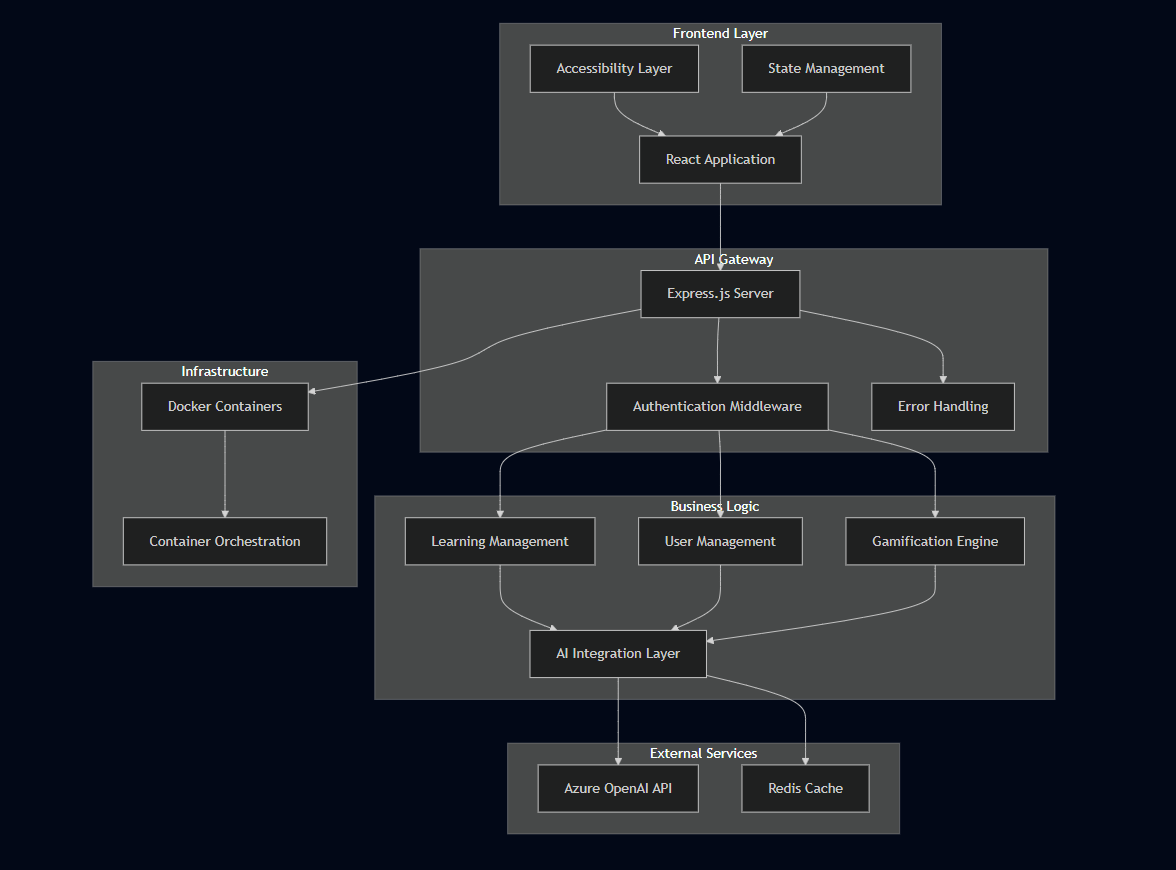
Architecture of my project
Inspiration
The inspiration for EduMind AI came from witnessing the growing educational inequality and accessibility challenges faced by millions of students worldwide. During the pandemic, we saw how traditional one-size-fits-all education failed many learners with different needs, learning styles, and abilities.
We were particularly moved by stories of students with learning disabilities struggling with inaccessible content, teachers overwhelmed with large class sizes unable to provide individual attention, and the mental health crisis among students lacking proper wellness support.
Our vision: Create an AI-powered educational companion that adapts to each learner's unique needs, provides comprehensive accessibility features, and promotes both academic success and mental wellness - making quality education truly inclusive and personalized for everyone.
What it does
EduMind AI is a comprehensive, AI-powered learning platform that revolutionizes education through personalization, accessibility, and wellness integration:
1) AI-Powered Personalization Adaptive Learning Paths: Azure OpenAI analyzes learning patterns and adjusts content difficulty, presentation style, and pacing in real-time Intelligent Tutoring: 24/7 AI tutor provides personalized explanations, generates custom practice problems, and offers step-by-step guidance Content Generation: Automatically creates quizzes, summaries, and study materials tailored to individual learning styles 2) Comprehensive Accessibility Screen Reader Compatibility: Full ARIA support and semantic HTML for visually impaired users Keyboard Navigation: Complete keyboard accessibility without mouse dependency Visual Accessibility: High contrast themes, adjustable font sizes, and dyslexia-friendly fonts Multi-Modal Learning: Audio descriptions, visual cues, and interactive elements for different learning needs 3) Gamified Learning Experience Achievement System: Earn badges, points, and unlock new content through progress milestones Interactive Challenges: Engaging quizzes and activities that make learning fun and competitive Progress Visualization: Beautiful dashboards showing learning streaks, skill development, and goal completion 4) Student Wellness Integration Mood Tracking: Daily wellness check-ins with AI-powered insights and recommendations Smart Break Reminders: Prevents burnout with personalized study break suggestions Mental Health Support: Resources and AI-guided breathing exercises for stress management 5) Advanced Teacher Tools AI Content Generator: Creates lesson plans, assignments, and assessments with one click Student Analytics: Deep insights into individual and class-wide performance patterns Accessibility Compliance: Automatically ensures all content meets WCAG 2.1 AA standards
How we built it
Frontend: React.js with modern hooks, Context API for state management, Tailwind CSS for responsive design, and comprehensive accessibility features
Backend: Node.js with Express.js, implementing RESTful APIs, JWT authentication, and middleware for security and validation
Database: PostgreSQL with Prisma ORM for robust data modeling, featuring 15+ interconnected models for users, courses, progress tracking, achievements, and wellness data
AI Integration: Azure OpenAI API for intelligent tutoring, content generation, and personalized learning recommendations
Infrastructure: Docker containerization with Docker Compose for orchestrating PostgreSQL, Redis, and application services
Challenges we ran into
- Azure OpenAI Integration Complexity Challenge: Implementing context-aware AI conversations that maintain learning history and adapt to individual student needs Solution: Developed a sophisticated prompt engineering system that includes user learning history, preferences, and current context in every AI request
- Comprehensive Accessibility Implementation Challenge: Ensuring WCAG 2.1 AA compliance across all interactive components while maintaining modern UI/UX Solution: Built custom accessible components from scratch, implemented comprehensive keyboard navigation, and conducted extensive testing with screen readers
- Real-time Data Synchronization Challenge: Keeping learning progress, AI conversations, and wellness data synchronized across multiple user sessions Solution: Implemented optimistic updates with Redux-like state management and robust error handling for offline scenarios
- Database Performance Optimization Challenge: Complex relational queries for personalized learning paths and progress analytics Solution: Utilized Prisma's advanced query optimization, database indexing, and implemented Redis caching for frequently accessed data
- Docker Containerization Issues Challenge: Coordinating PostgreSQL initialization, Prisma migrations, and application startup in correct sequence Solution: Implemented proper dependency management, health checks, and initialization scripts in Docker Compose
Accomplishments that we're proud of
1) Full-Stack Mastery: Built a production-ready application with modern tech stack (React, Node.js, PostgreSQL, Docker) AI Integration: Successfully integrated Azure OpenAI for intelligent, context-aware educational assistance Database Architecture: Designed and implemented a comprehensive 15-model database schema supporting complex educational workflows 2) Accessibility Leadership WCAG 2.1 AA Compliance: Achieved comprehensive accessibility across all components Universal Design: Created an interface that's truly usable by everyone, regardless of abilities Screen Reader Excellence: Implemented perfect semantic HTML and ARIA support 3) Innovation in EdTech Multi-Track Approach: Successfully addressed 4 out of 5 hackathon tracks (AI in Education, Learning Accessibility, Gamified Education, Student Wellness) Holistic Solution: Combined learning, wellness, and accessibility in one cohesive platform Scalable Architecture: Built foundation for millions of users with proper database design and containerization
What we learned
Azure OpenAI's potential for personalized education is enormous, but requires careful prompt engineering and context management The importance of maintaining conversation history and learning context for effective AI tutoring Ethical considerations around AI in education, including bias prevention and privacy protection Accessibility isn't an afterthought - it must be built into the foundation of every component Screen readers and keyboard navigation require deep understanding of semantic HTML and ARIA standards Accessible design often leads to better UX for all users, not just those with disabilities
What's next for edumind ai
Full-Stack Mastery: Built a production-ready application with modern tech stack (React, Node.js, PostgreSQL, Docker) AI Integration: Successfully integrated Azure OpenAI for intelligent, context-aware educational assistance Database Architecture: Designed and implemented a comprehensive 15-model database schema supporting complex educational workflows 1) Accessibility Leadership WCAG 2.1 AA Compliance: Achieved comprehensive accessibility across all components Universal Design: Created an interface that's truly usable by everyone, regardless of abilities Screen Reader Excellence: Implemented perfect semantic HTML and ARIA support 2) Innovation in EdTech Multi-Track Approach: Successfully addressed 4 out of 5 hackathon tracks (AI in Education, Learning Accessibility, Gamified Education, Student Wellness) Holistic Solution: Combined learning, wellness, and accessibility in one cohesive platform Scalable Architecture: Built foundation for millions of users with proper database design and containerization

Log in or sign up for Devpost to join the conversation.