-
-
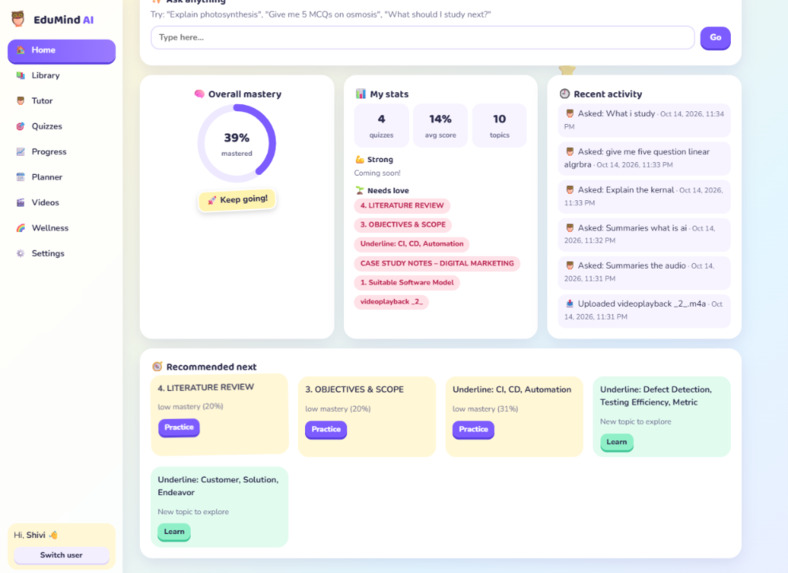
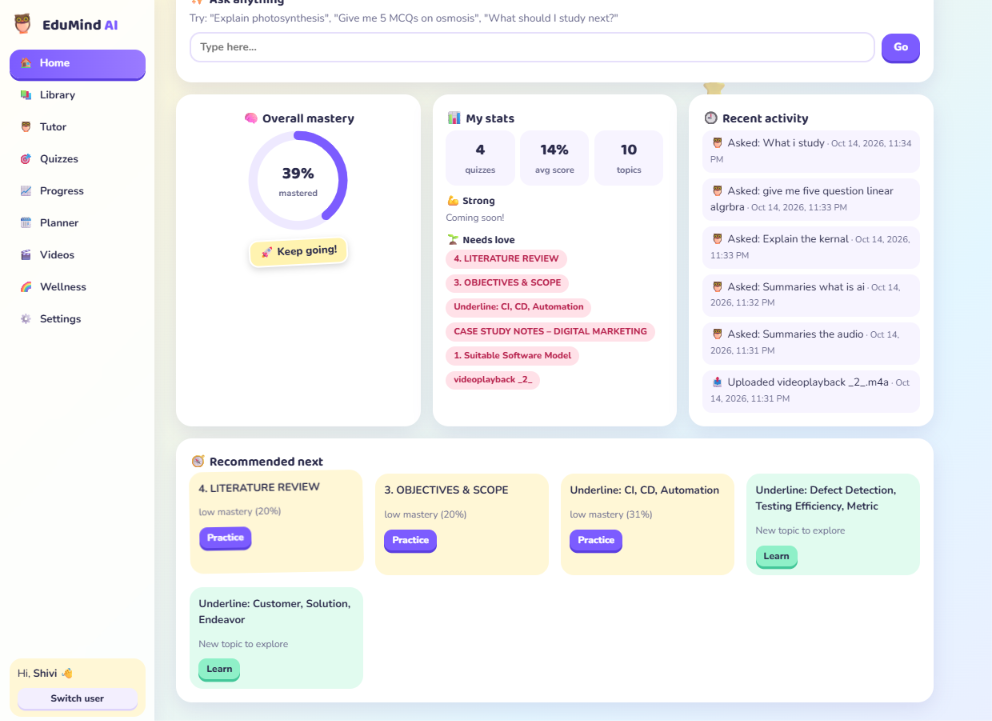
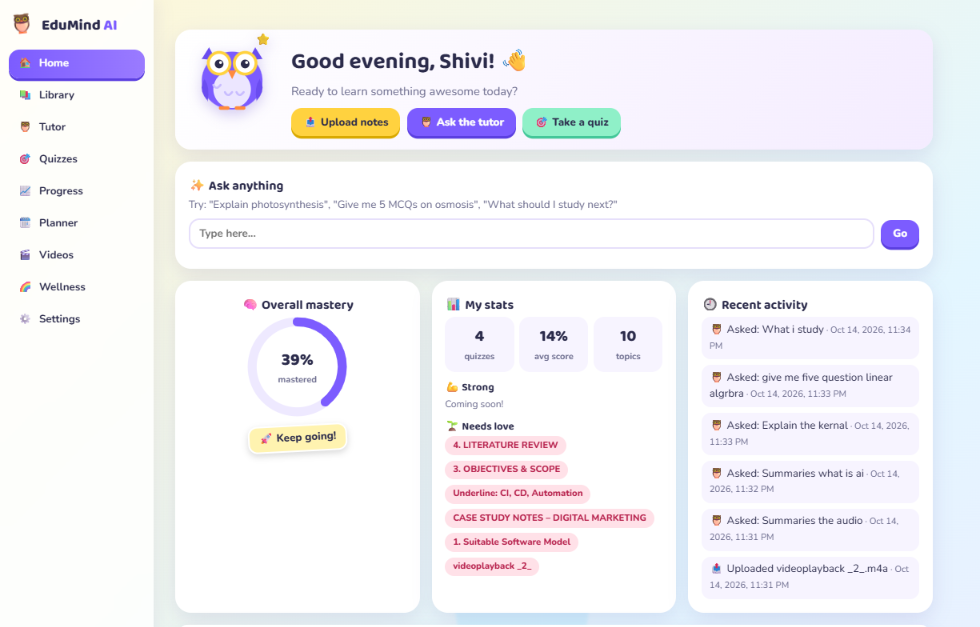
The central hub after logging in. It provides a snapshot of the user's learning status
-
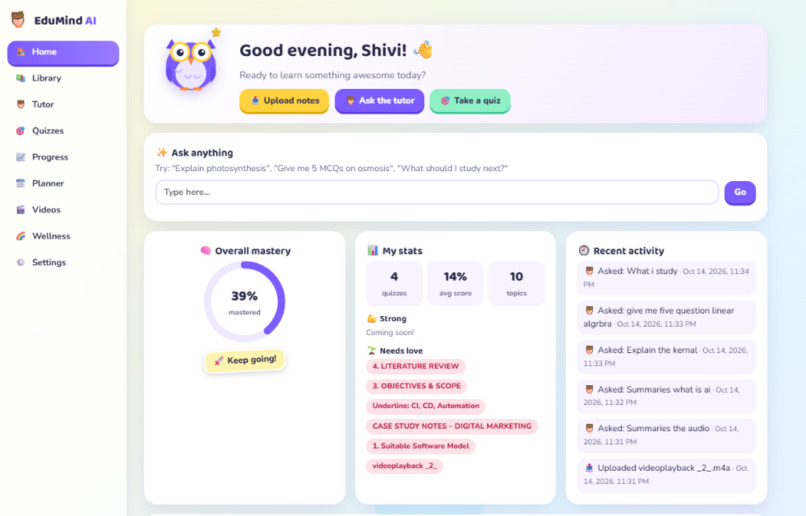
home page where you can see all your work what you study
-
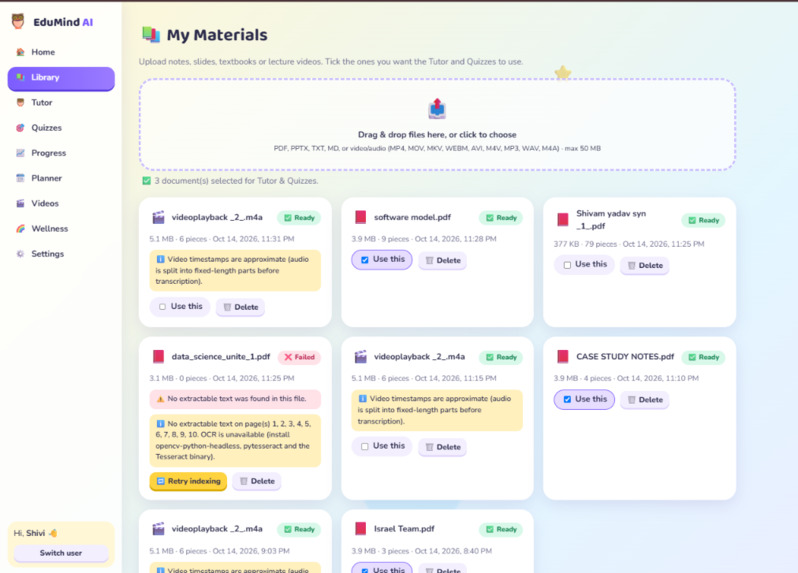
A dedicated section for video and audio learning materials.
-
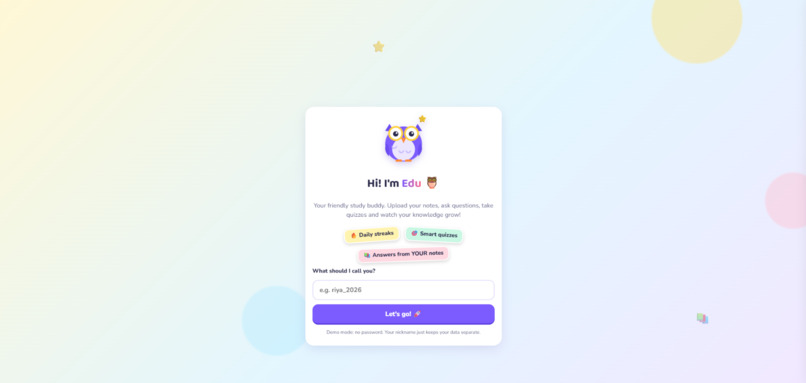
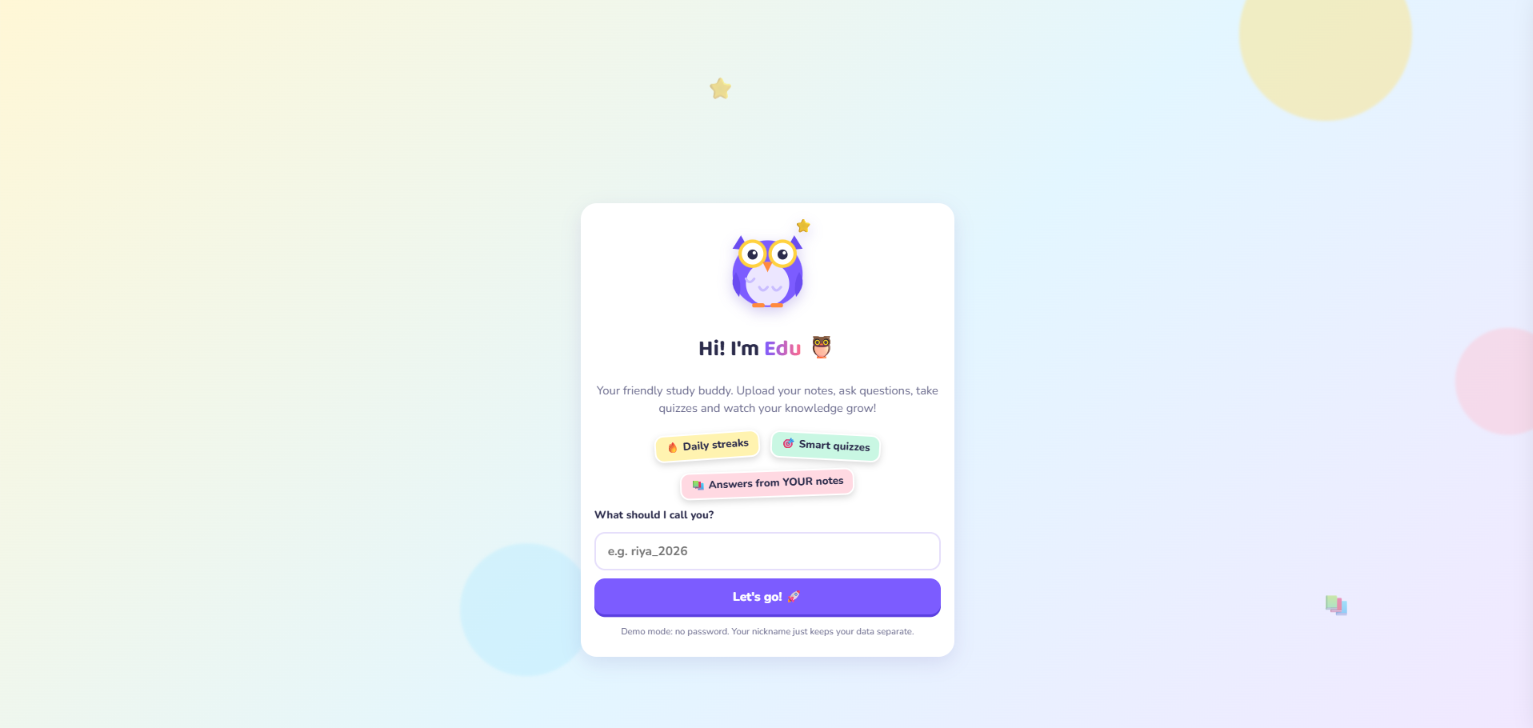
Frant page you can write your name
-
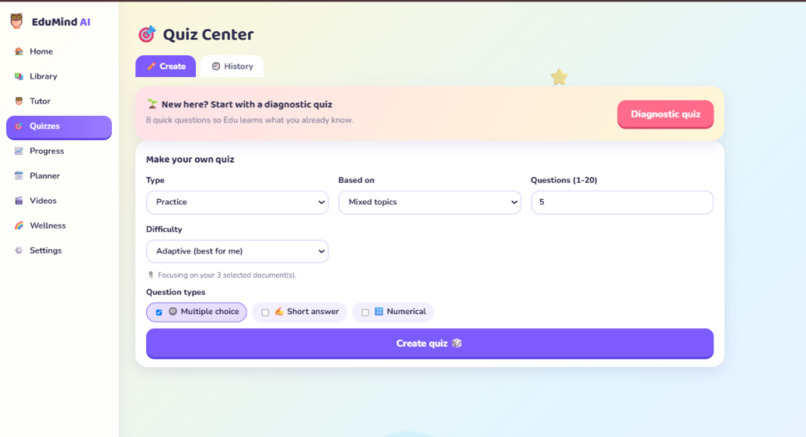
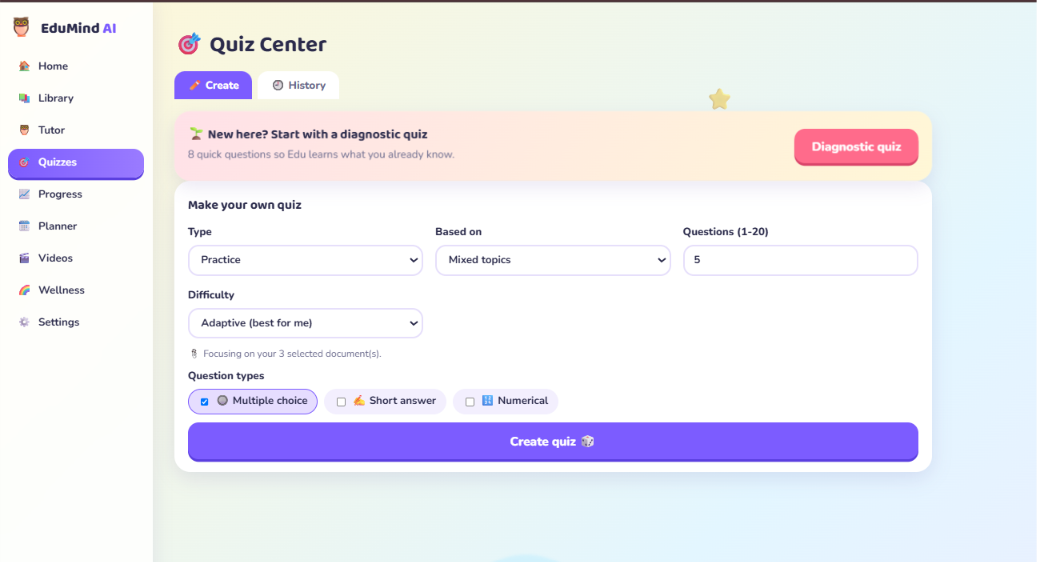
A tool for testing knowledge.
-
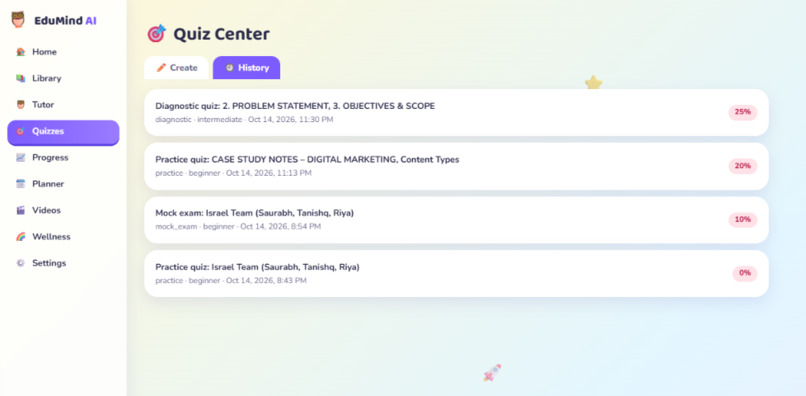
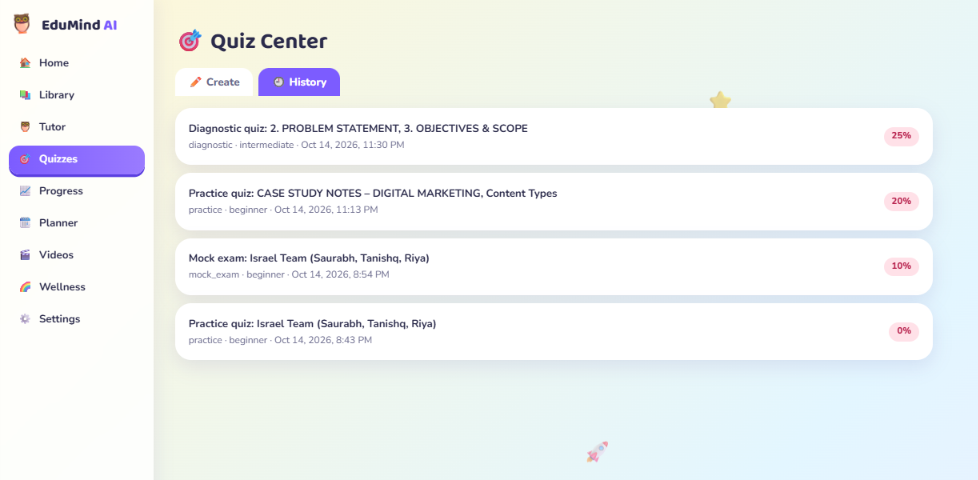
record your history
-
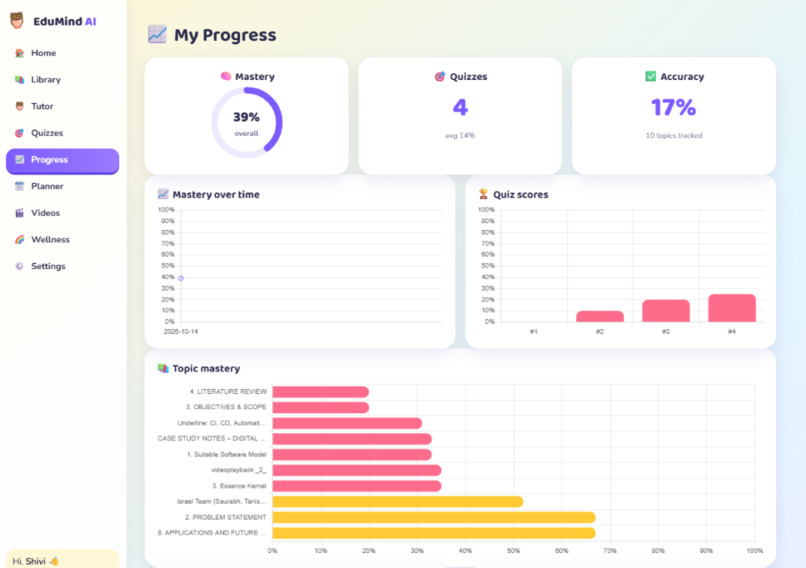
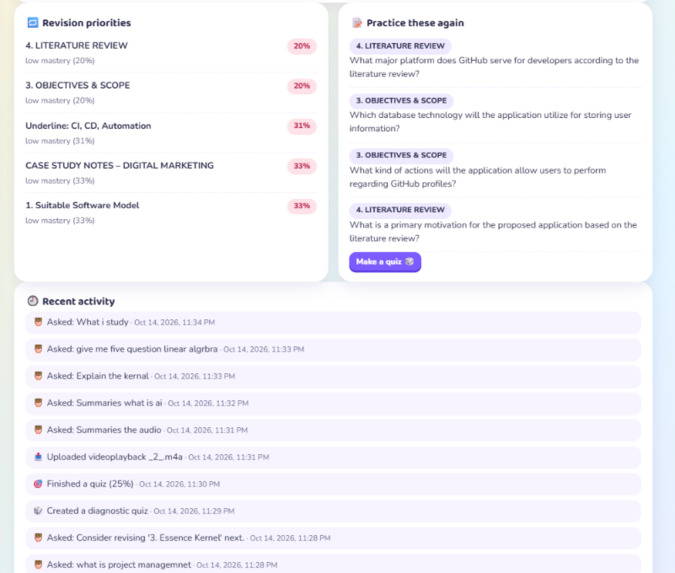
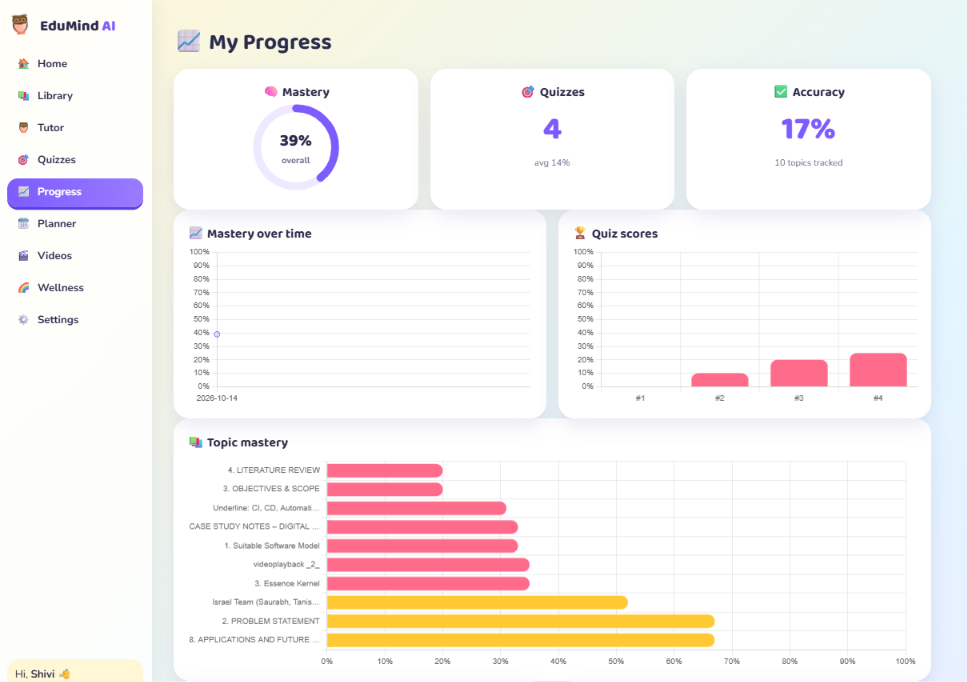
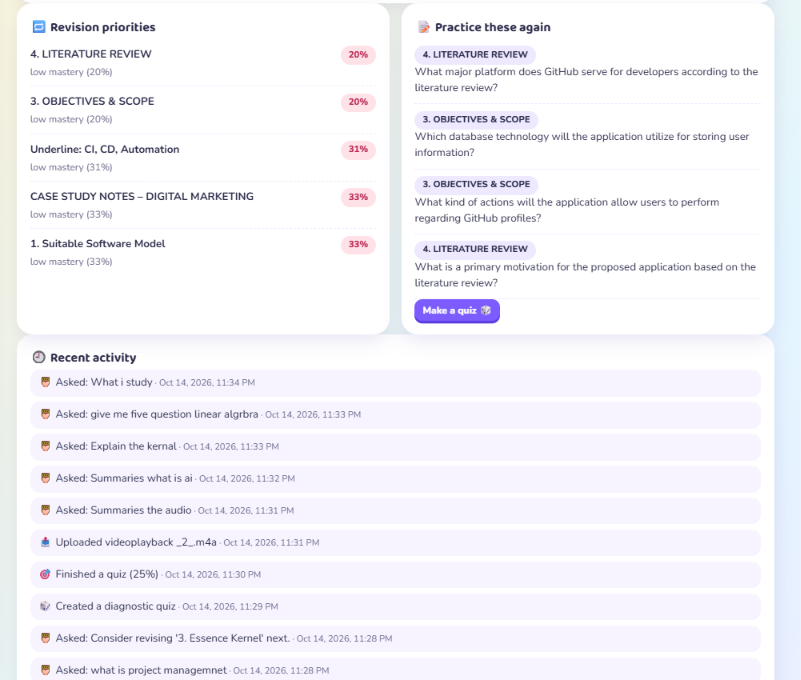
Detailed analytics on learning performance
-
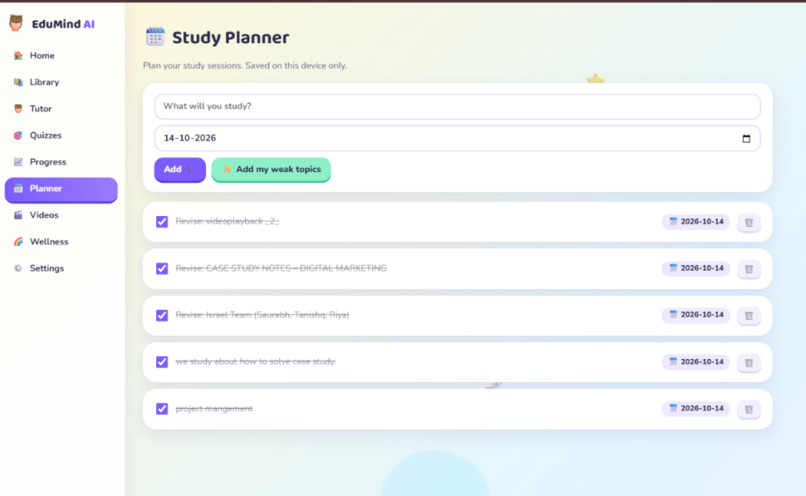
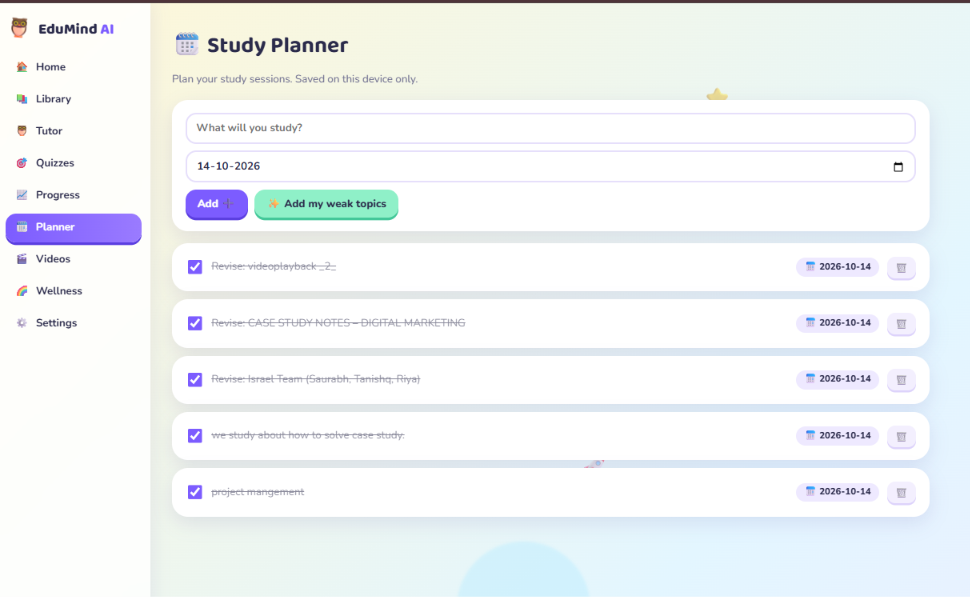
A task management tool for scheduling study sessions.
-
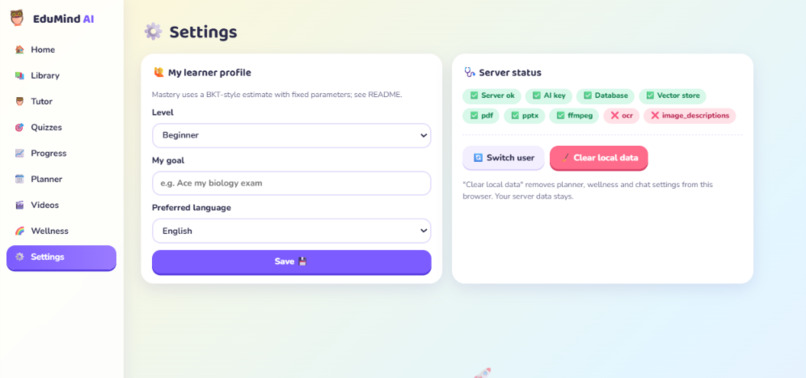
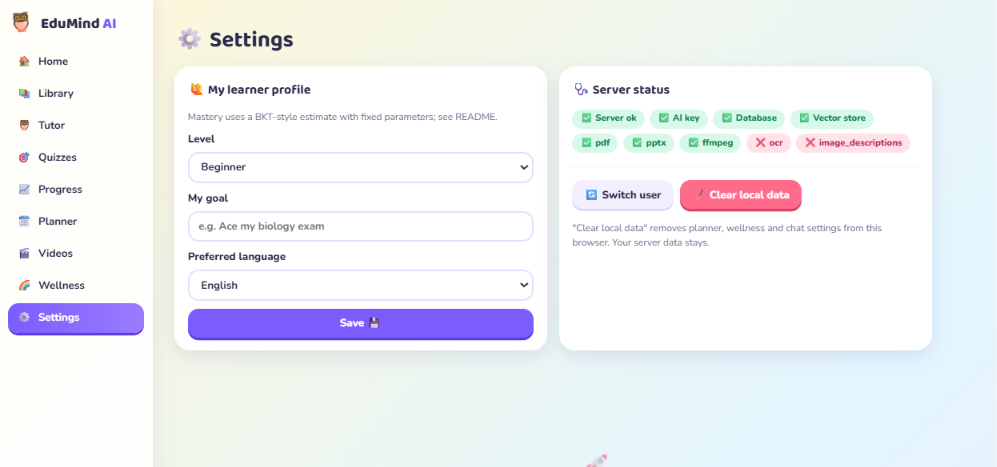
User configuration and system status.
-
-
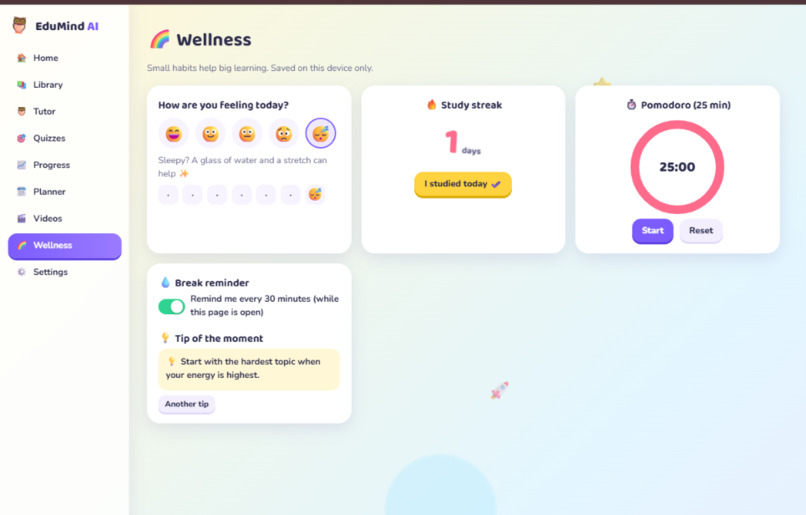
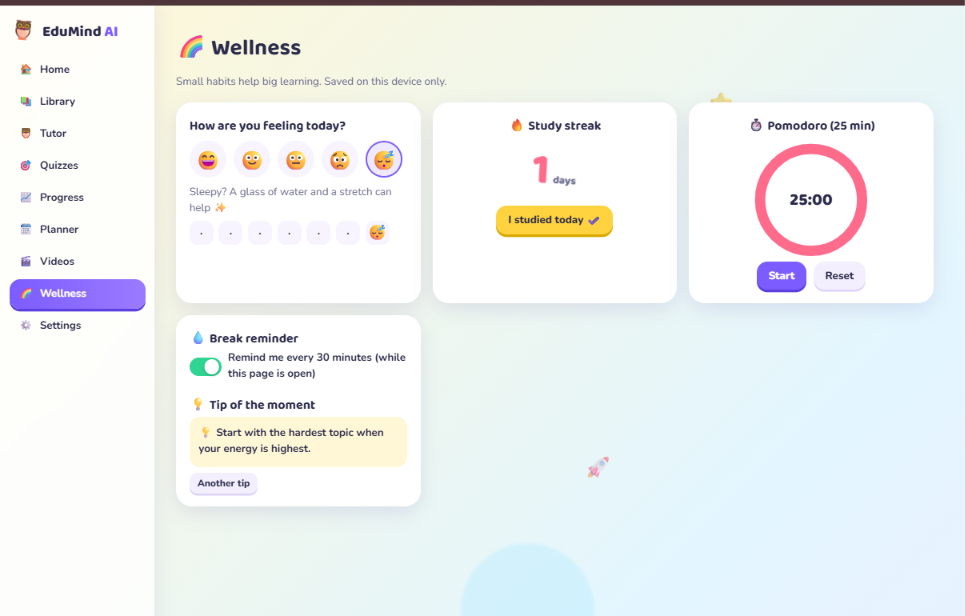
A section focused on student well-being and focus.
-
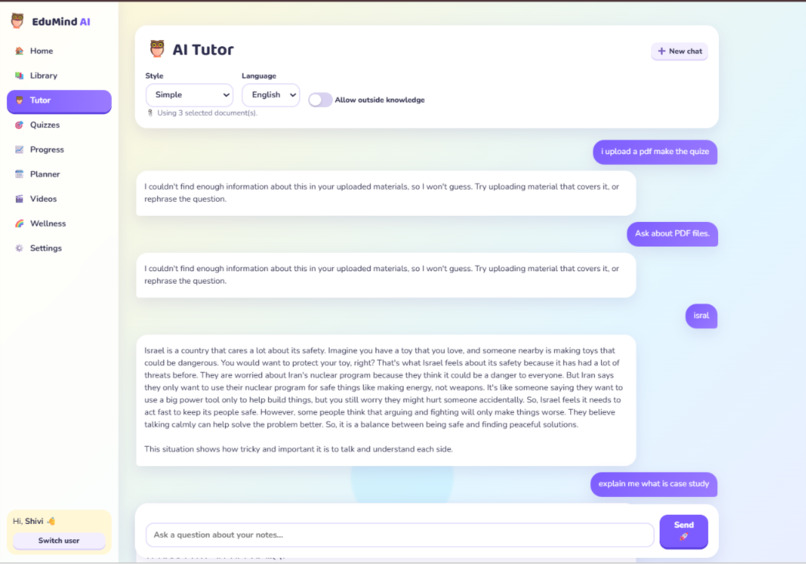
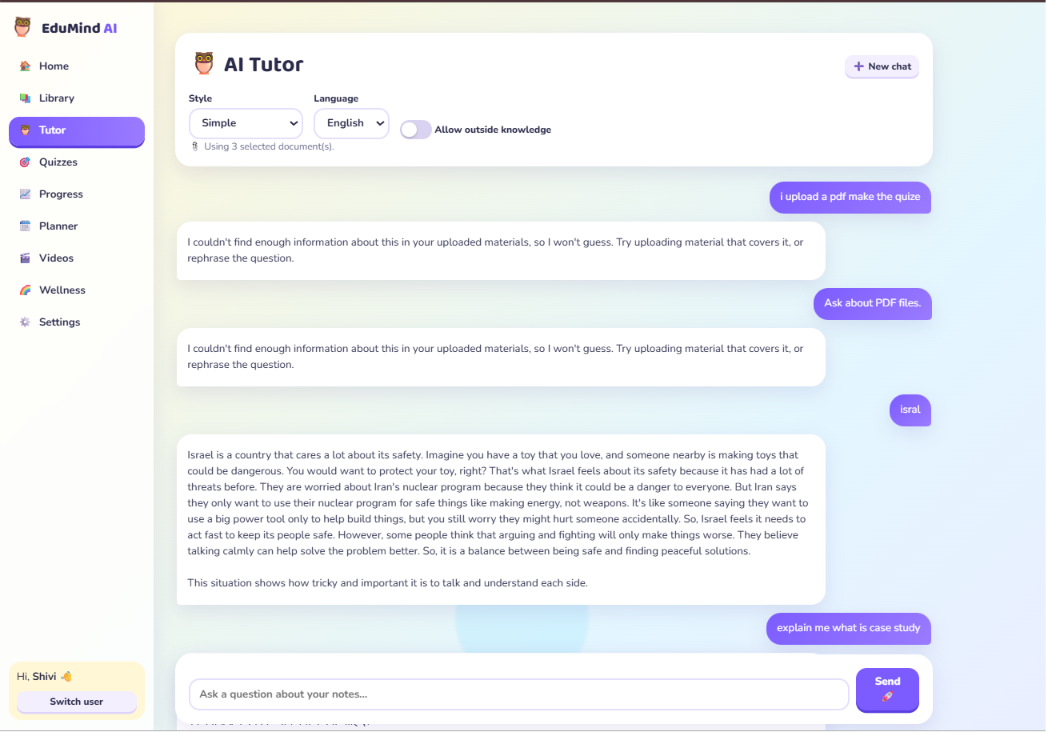
A conversational AI interface for studying.
Inspiration
Students learn from notes, textbooks, presentations, and lecture recordings, but general AI chatbots can provide incorrect answers without showing reliable sources. Meanwhile, every student learns at a different pace, yet most study tools offer the same experience to everyone.
I wanted to build a learning companion that prioritizes trustworthy answers, explains concepts using students' own study materials, acknowledges when information is missing, and helps learners identify what to study next.
What It Does
EduMind AI is an AI-powered tutoring and adaptive learning platform that brings learning, practice, and study planning into one place.
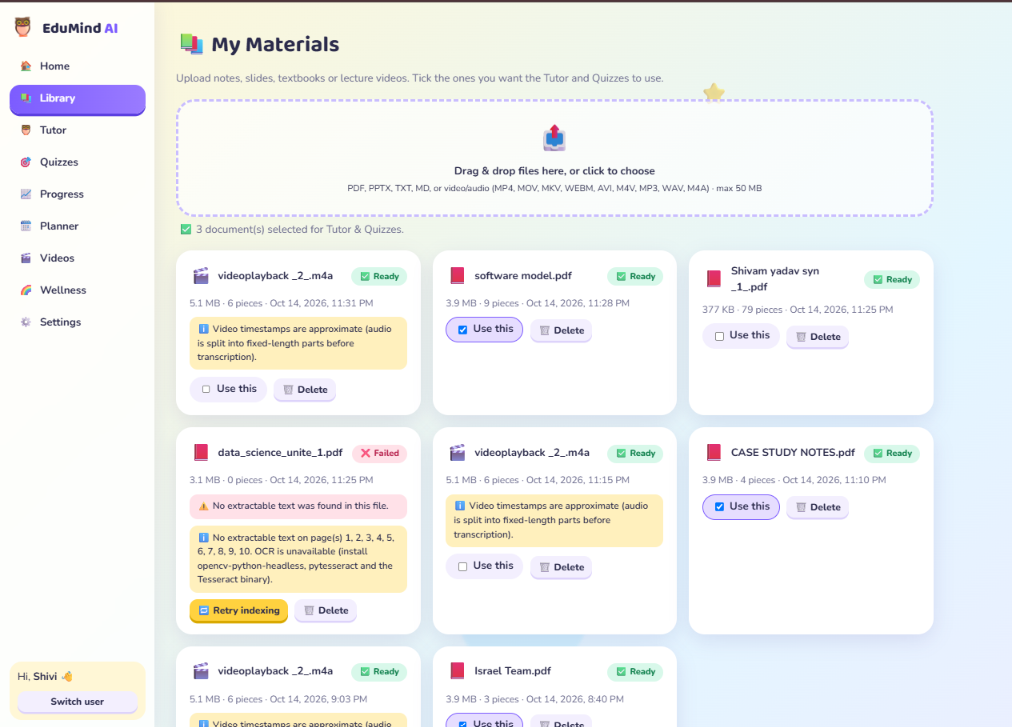
Knowledge Library: Upload study documents and learning materials for easier access and retrieval.
AI Tutor: Ask questions and receive explanations grounded in available study materials, with source references where supported.
Video Learning: Organize and access educational video content.
Interactive Quizzes: Practice concepts and assess understanding through questions and feedback.
Adaptive Learning: Use quiz performance to identify stronger and weaker topics and guide revision.
Progress Dashboard: Review learning activity, quiz performance, and progress.
Study Planner: Organize study goals and learning schedules.
Health and Wellness Planner: Support healthier study routines with wellness features.
My goal is to make studying more structured, interactive, and student-friendly.
How We Built It
EduMind AI uses Python, Flask, and FastAPI to separate the user interface from the backend.
Flask: Serves the frontend and communicates with the backend through API requests.
FastAPI: Handles backend endpoints and application logic.
AI integration: The project includes OpenAI API dependencies for AI-powered functionality.
Knowledge storage: ChromaDB supports vector-based retrieval capabilities, while SQLAlchemy supports structured database operations.
Modular architecture: The backend is organized into agents, services, API routes, and configuration modules to make the application easier to maintain and extend.
Frontend technologies: HTML, CSS, and JavaScript create the student-facing interface.
This architecture provides a foundation for combining AI-assisted learning, study resources, assessments, and progress tracking in one application.
Challenges We Faced
One of the main challenges was connecting the frontend and backend reliably. Setting up separate Python environments, installing dependencies, configuring API communication, and organizing the code into reusable modules required careful troubleshooting.
I also learned that adding AI capabilities is not just about connecting an API. A reliable learning platform must handle missing information, errors, configuration issues, and limitations in its underlying tools.
Testing the application locally helped me resolve integration issues and improve the overall project structure.
Accomplishments We're Proud Of
Bringing multiple student learning tools together in one platform.
Building a separate frontend and backend that communicate through APIs.
Organizing the backend into modular components.
Creating a foundation for AI-assisted tutoring and knowledge retrieval.
Combining study organization, quizzes, progress tracking, and wellness features in a student-focused application.
What We Learned
Building EduMind AI strengthened my understanding of full-stack development, API integration, Python environment management, modular backend design, and AI application architecture.
I also learned the importance of testing individual components, protecting API keys, managing dependencies, and being transparent about the limitations of AI-generated answers.
What's Next for EduMind AI
Improve source-grounded tutoring and answer verification.
Expand support for different learning materials and media formats.
Strengthen adaptive quizzes and personalized revision recommendations.
Improve progress analytics and study planning.
Enhance the interface for mobile devices and accessibility.
Add secure user accounts and persistent learner profiles.
Built With
- and
- chromadb
- css
- fastapi
- flask
- html
- javascript
- openai-api
- pydantic
- python
- sqlalchemy
- uvicorn


Log in or sign up for Devpost to join the conversation.