-
-
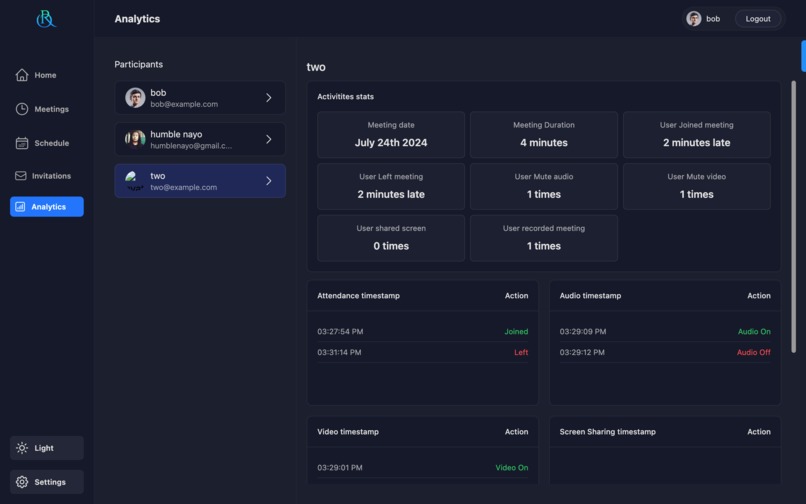
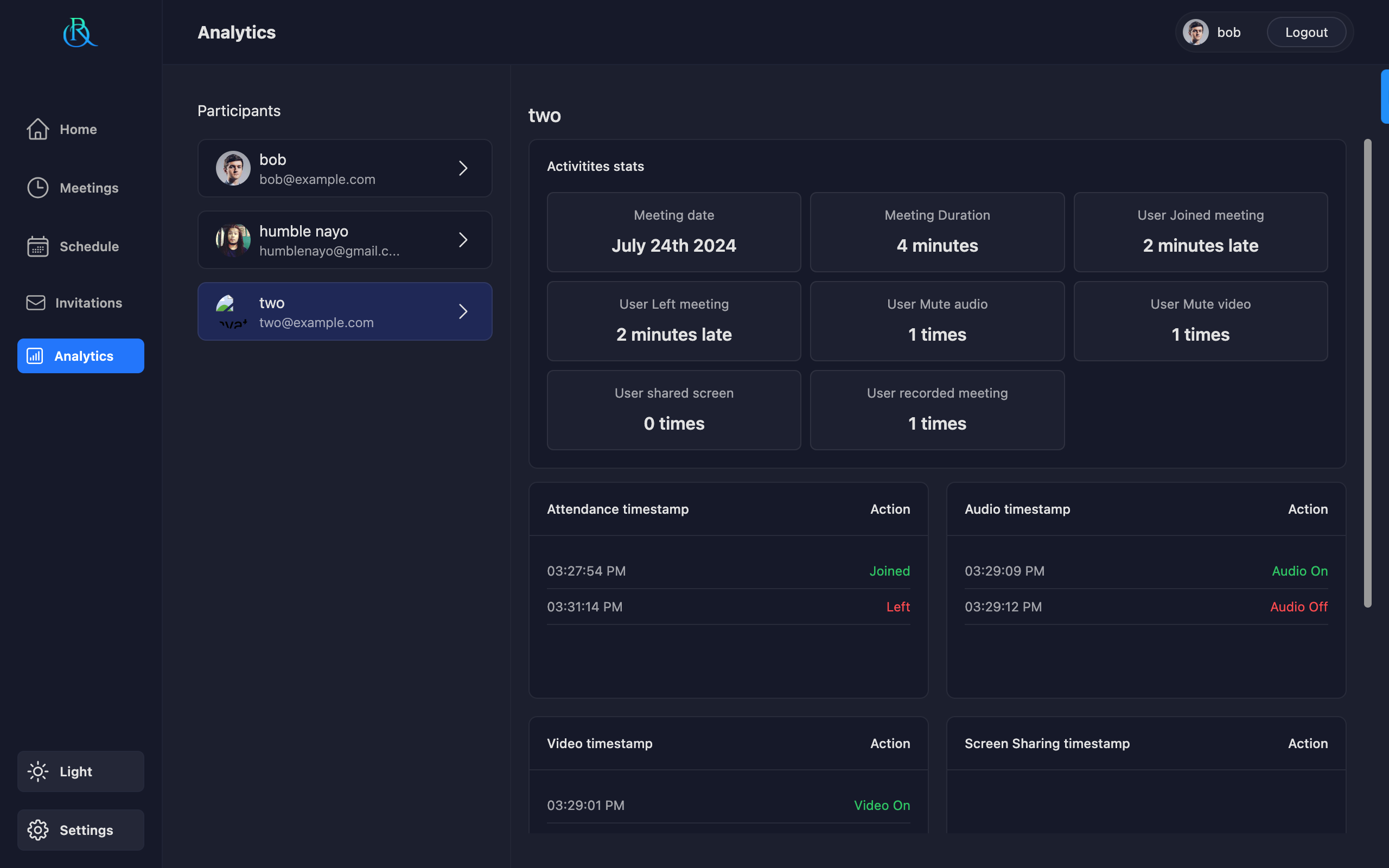
Analytics page
-
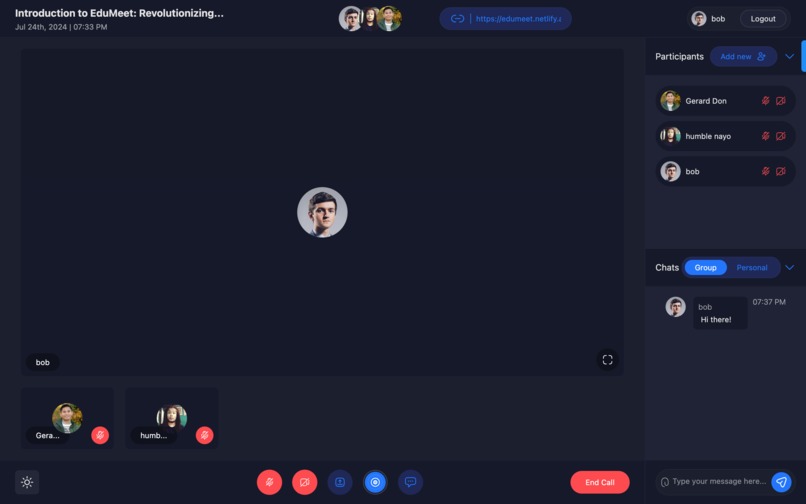
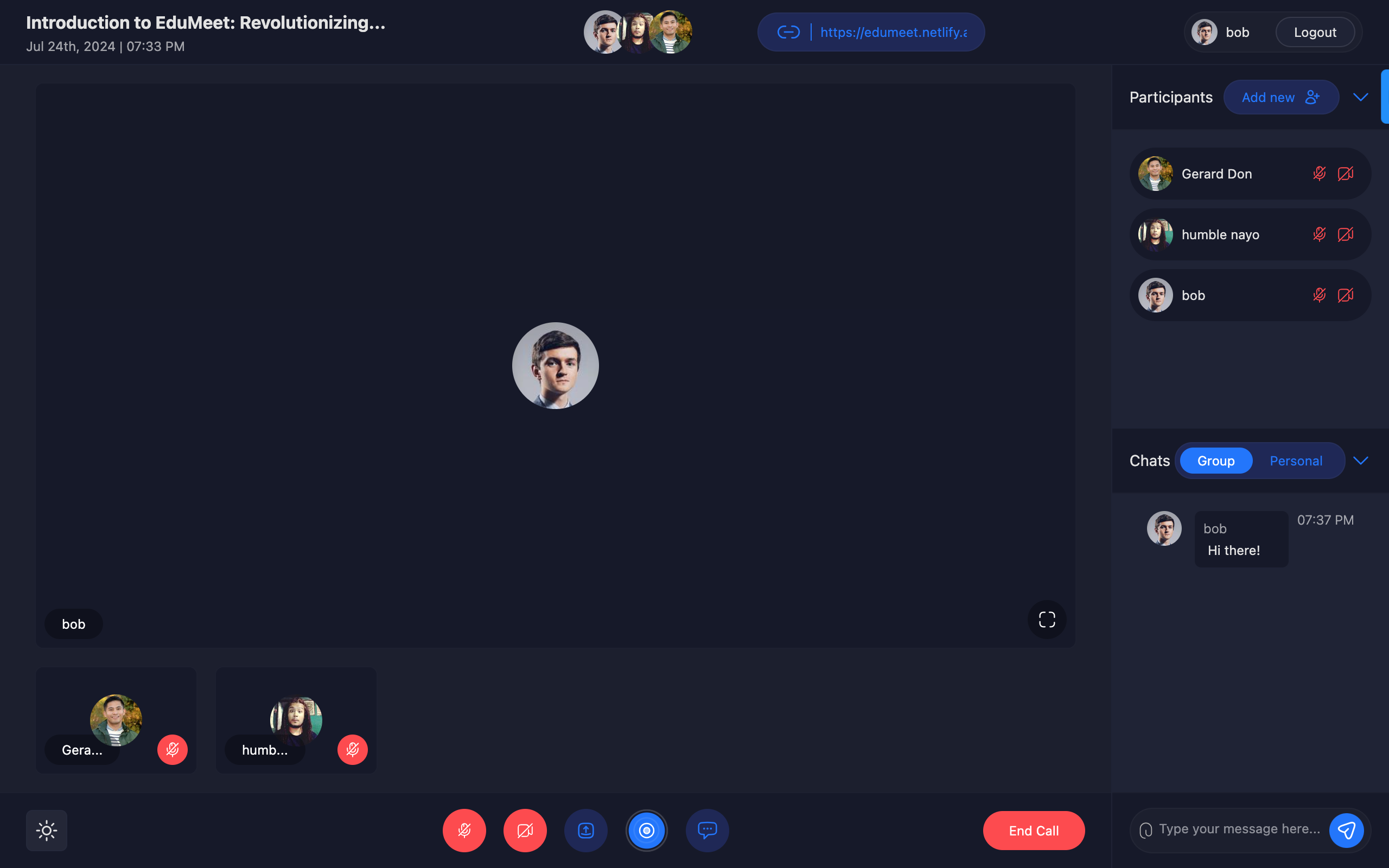
Meeting room page
-
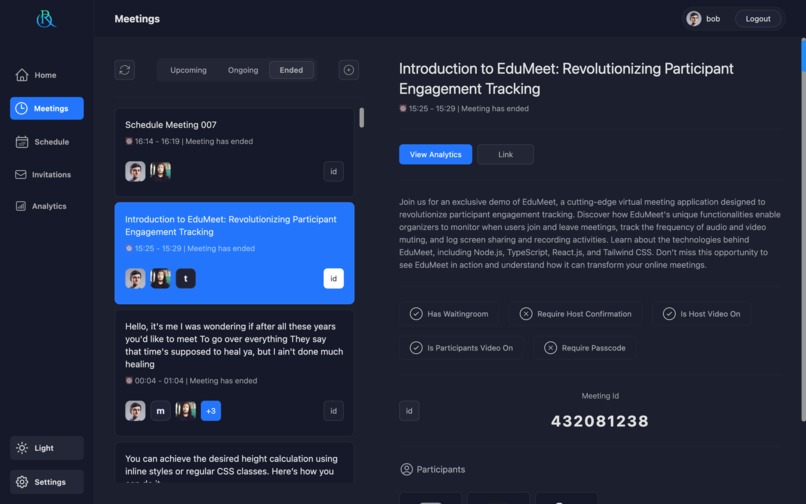
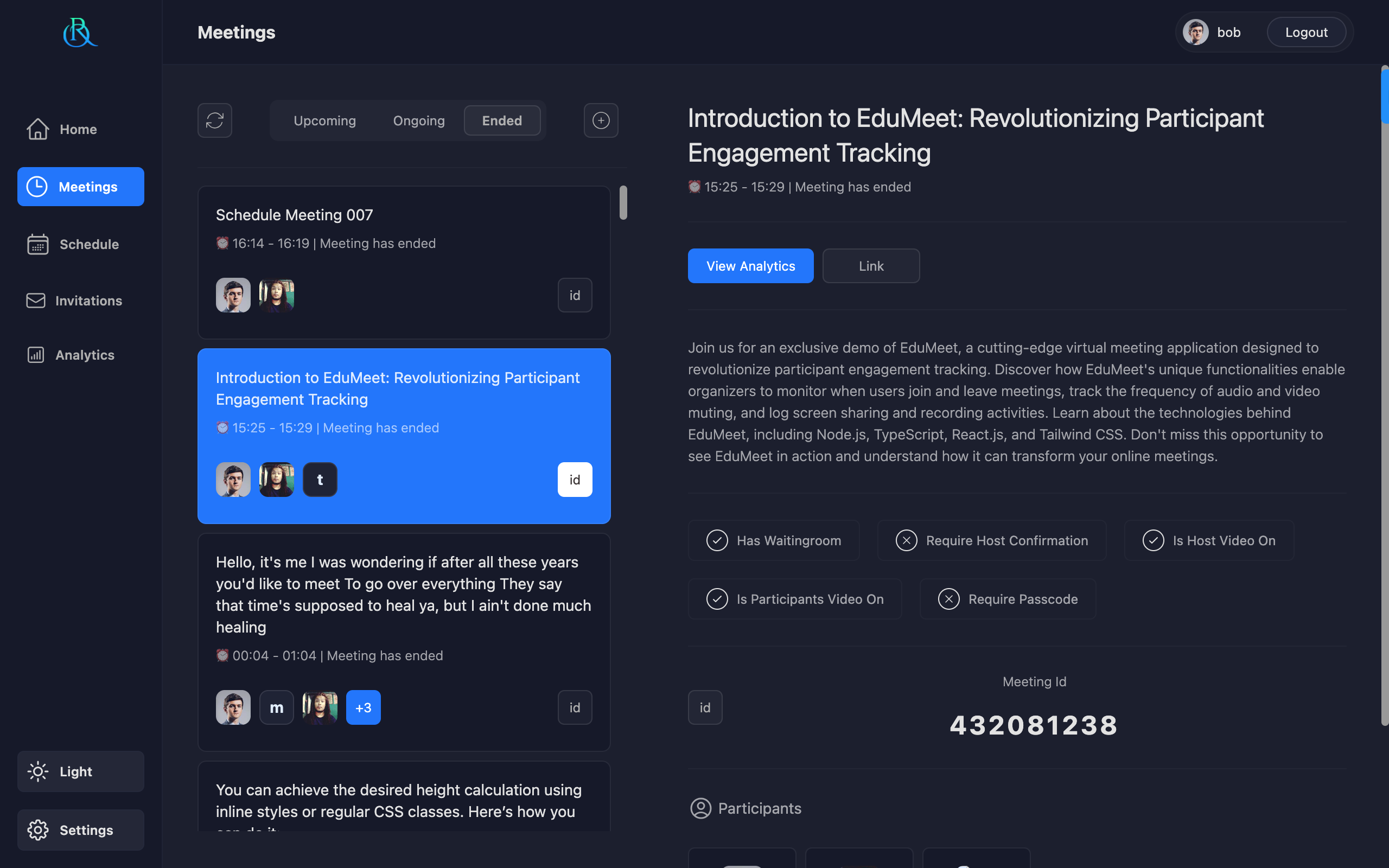
Mettings & Details page
-
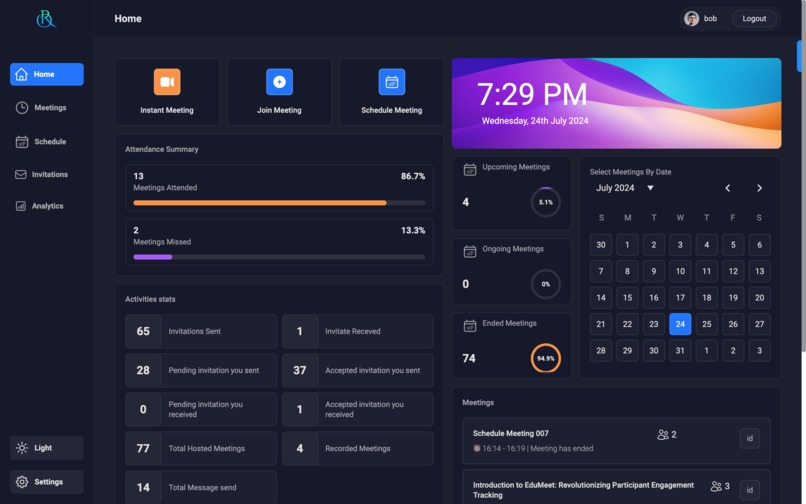
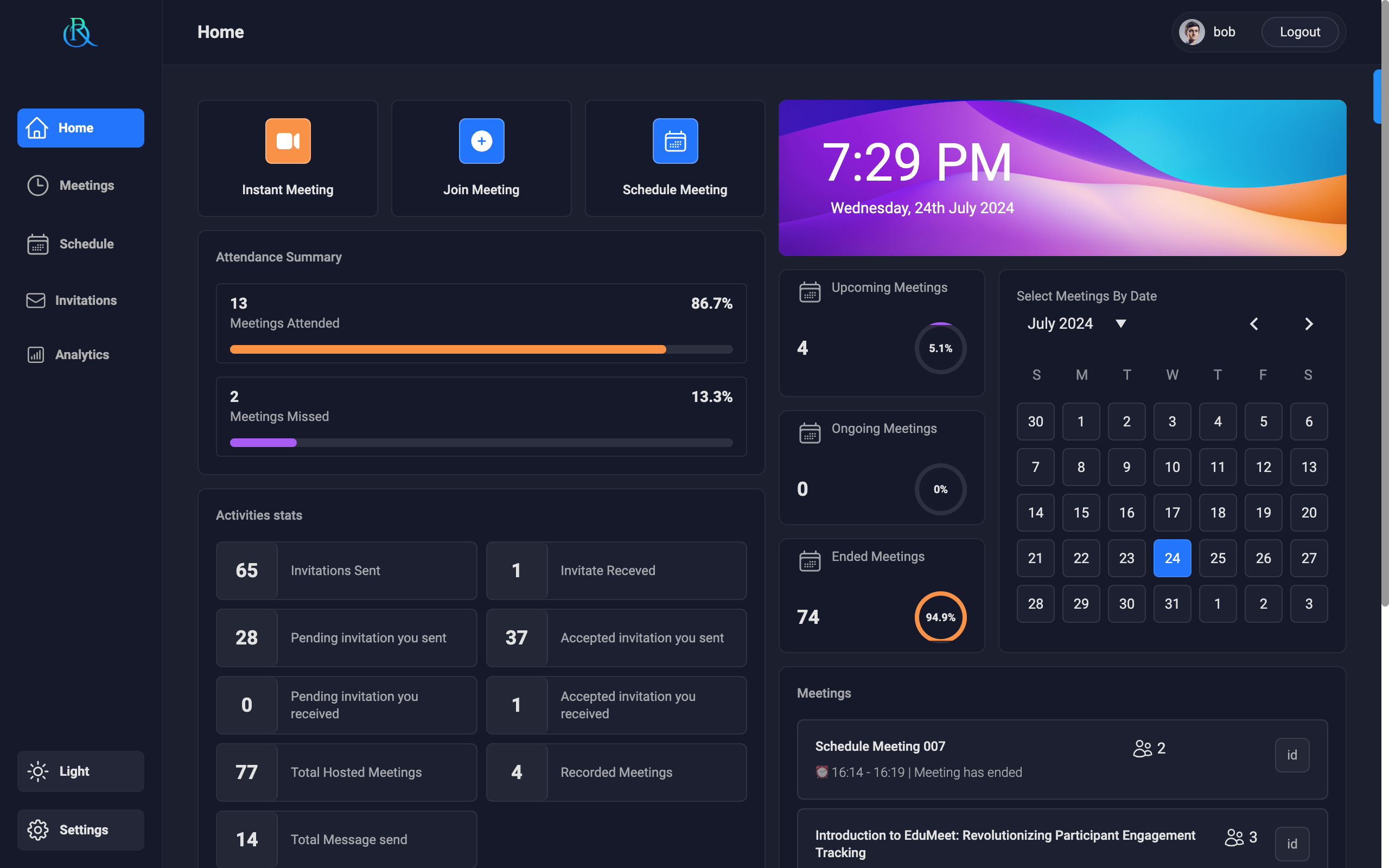
Home page
Inspiration
The inspiration for EduMeet came from personal experiences in online classes where student engagement was crucial for progression. Existing platforms lacked the ability to fully monitor participant activities, leading to situations where students could appear present without truly engaging. This gap motivated the creation of EduMeet, a solution designed to provide comprehensive tracking of participant engagement.
What it does
EduMeet is a virtual meeting application that offers unique functionalities to monitor participant engagement. Key features include:
- Tracking when users join and leave meetings
- Monitoring the frequency of muting video or audio
- Logging screen-sharing activities
- Recording meeting sessions These features and others provide organizers with detailed insights into participant behavior, ensuring more effective and accountable online meetings.
How we built it
EduMeet was built using a robust tech stack:
- Node.js: For the backend server, ensuring scalable and efficient performance
- React.js: For the frontend, providing a dynamic and responsive user interface
- TypeScript: To ensure type safety and enhance code quality
- Tailwind CSS: For styling, enabling rapid and consistent UI development
- MongoDB: For the database, offering flexible and scalable data storage
Challenges we ran into
Developing EduMeet presented several challenges, including:
- Handling multiple peers streaming at once, ensuring smooth and uninterrupted video and audio.
- Managing recordings for devices that bubble errors for MediaStream permission.
- Designing a database architecture that meets project requirements and supports seamless interactions.
- Ensuring real-time updates without compromising performance.
- Designing an intuitive user interface that balances functionality with ease of use.
Accomplishments that we're proud of
We are proud to have developed a fully functional and innovative platform that addresses a significant gap in existing virtual meeting applications. Key accomplishments include:
- Successfully integrating comprehensive participant tracking features
- Building a seamless and responsive user interface
- Deploying the application and managing server response challenges
What we learned
Throughout the development of EduMeet, we gained valuable insights and learned important lessons:
- Managing multiple peers streaming simultaneously provided insights into optimizing performance and ensuring stability under load.
- Designing a database architecture that supports multiple interactions and real-time tracking was challenging but crucial for meeting project requirements.
- We learned effective strategies for managing real-time updates and notifications to ensure smooth performance.
What's next for EduMeet
The journey for EduMeet is just beginning. Future plans include:
- Adding more detailed analytics and reporting capabilities.
- Adding integrations with popular calendar and communication tools.
- a feature to provide access to chat messages after meetings have ended.
- Integrating AI models for face recognition to monitor user focus during meetings.
- Continuously refining the user interface based on feedback and evolving user needs.
- Expanding the platform to support larger meetings and webinars.


Log in or sign up for Devpost to join the conversation.