-
-
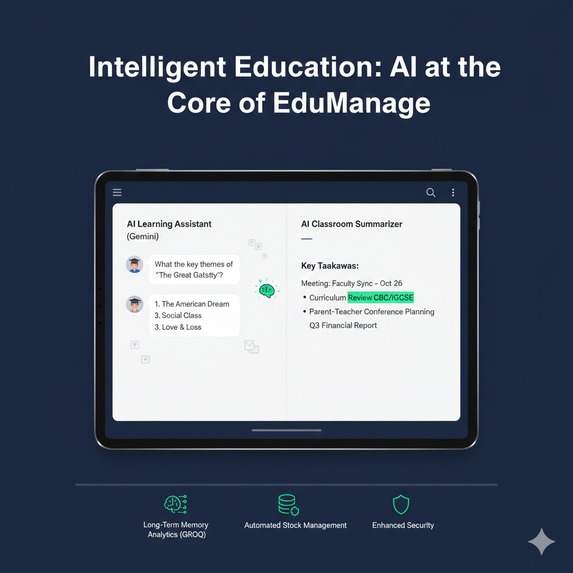
Solution
-

Pricing
-

Logo
-

Market Strtegy
-
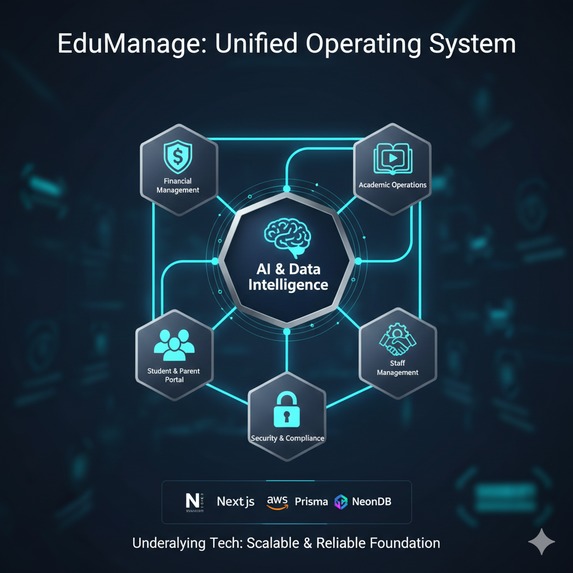
EduManage: Next-Gen Elite system
-
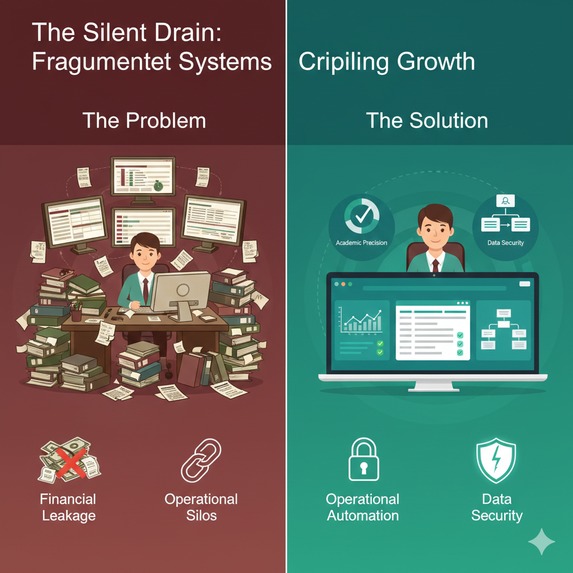
Problem




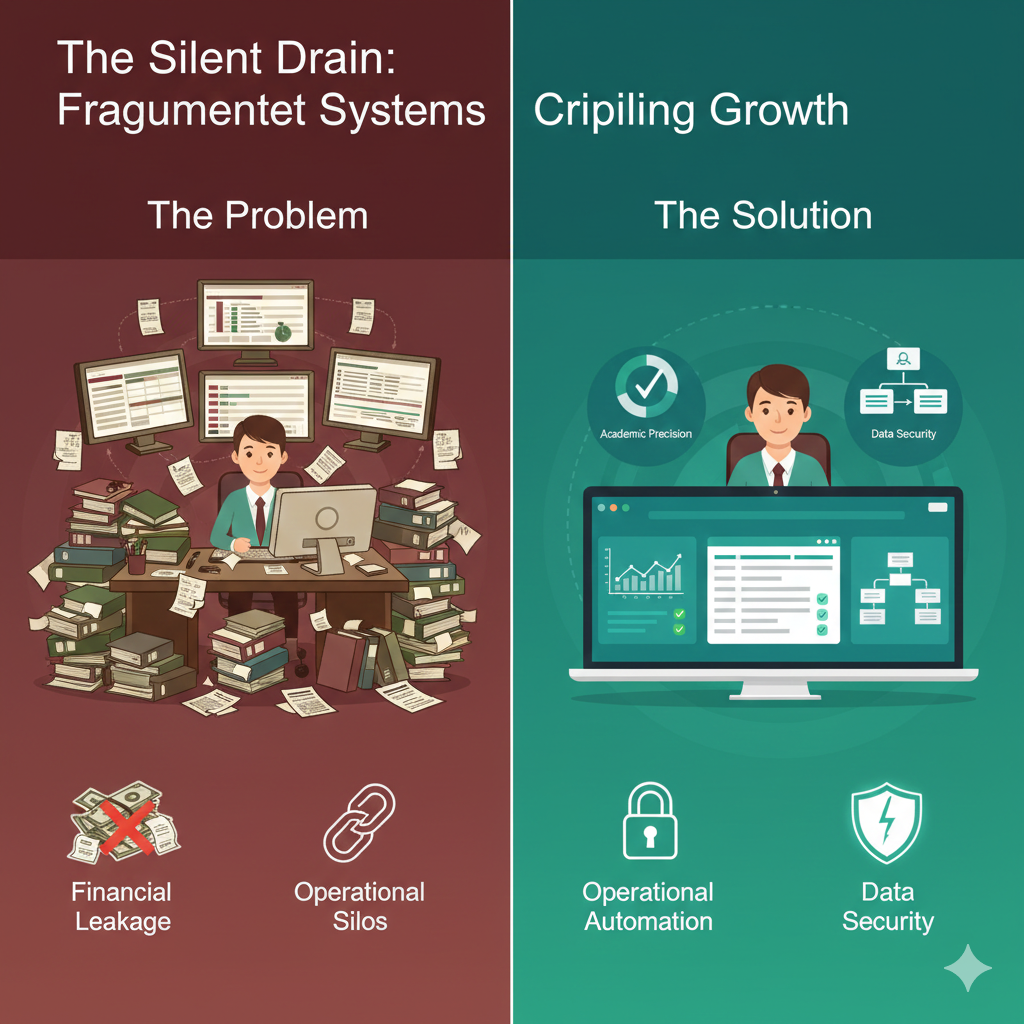
About the Project Inspiration: The inspiration for EduManage stems from the operational fragmentation often seen in elite educational institutions in Kenya and East Africa. Many schools struggle to balance modern curriculum standards (CBC and IGCSE) with complex financial tracking and student performance monitoring. We set out to build a "pilot’s cockpit" for school administrators—moving from guesswork to architectural clarity.
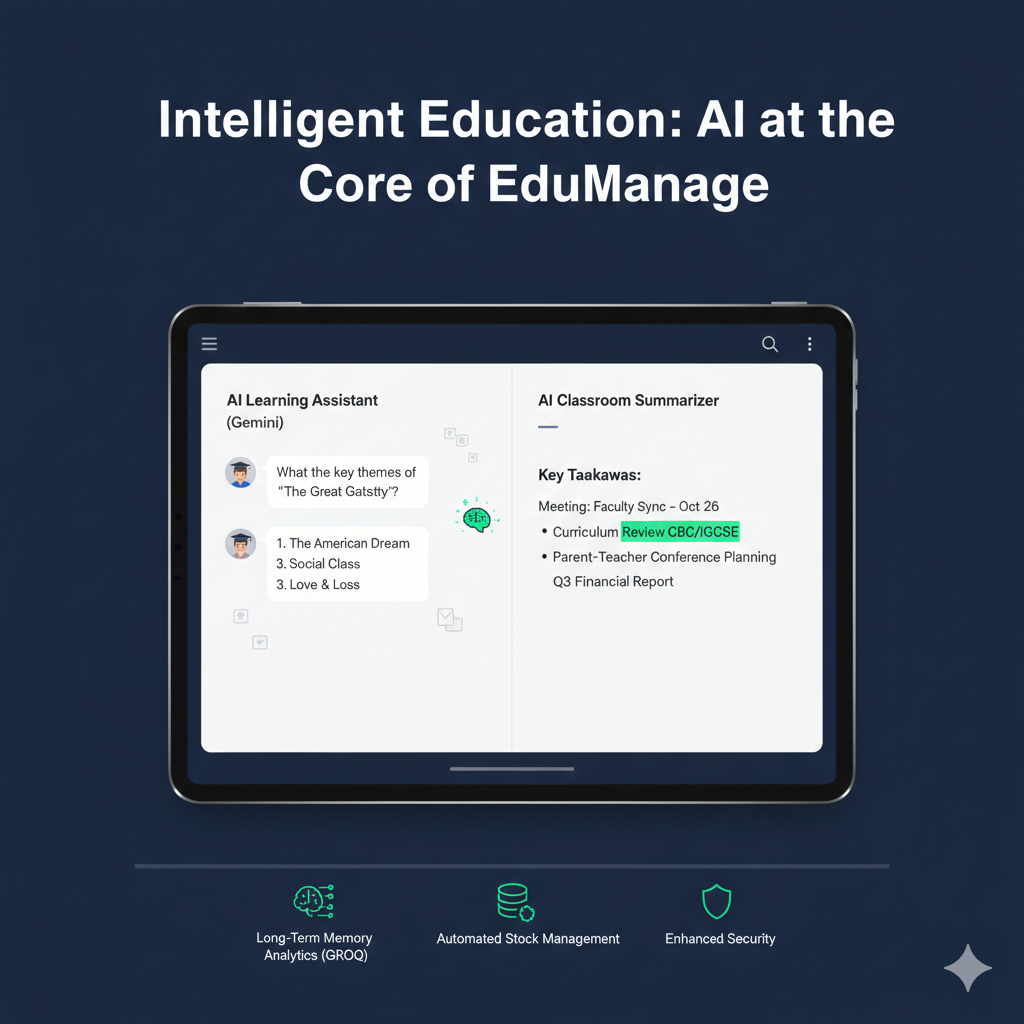
How we built it: We adopted the BMAD (Blueprint, Model, Automate, Deploy) methodology. The system utilizes a modular architecture built on Next.js and NestJS, ensuring high scalability. We integrated Gemini AI for deep data reasoning, such as the AI Meeting Note Taker and AI Classroom Summarizer, and utilized GROQ for high-speed querying of academic records to generate visual progress trends.
Challenges we faced: Ensuring robust security for financial data (Mpesa/Stripe) while maintaining a seamless user experience was a primary challenge. We addressed this by implementing a strict Role-Based Access Control (RBAC) system and comprehensive end-to-end testing for payment callbacks.
What we learned: We learned the power of "Long-Term Memory" in SaaS—by maintaining detailed academic and transaction history, we could provide insights that weren't possible with traditional database structures.
Built With
- clerk-(auth)-infrastructure:-gcp
- event-driven
- frameworks:-nestjs-(backend)
- groq-(data-querying)-database-&-persistence:-neon-postgresql
- inngest
- next.js-(frontend)
- prisma-orm
- sanity-cms-(resource-management)-integrations:-mpesa-daraja-api
- shadcn/ui-ai/ml:-google-gemini-api-(summarization/intelligence)
- stream.io-(video/messaging)
- stripe
- tailwind-css
- vercel

Log in or sign up for Devpost to join the conversation.