-
-
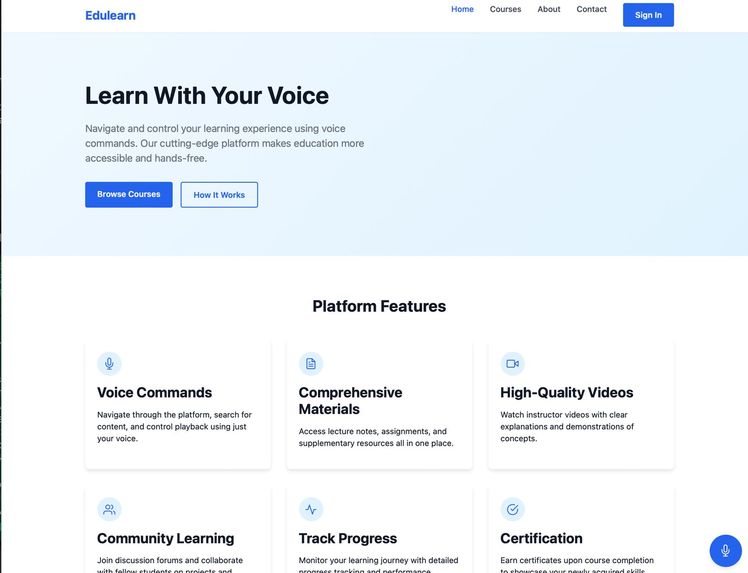
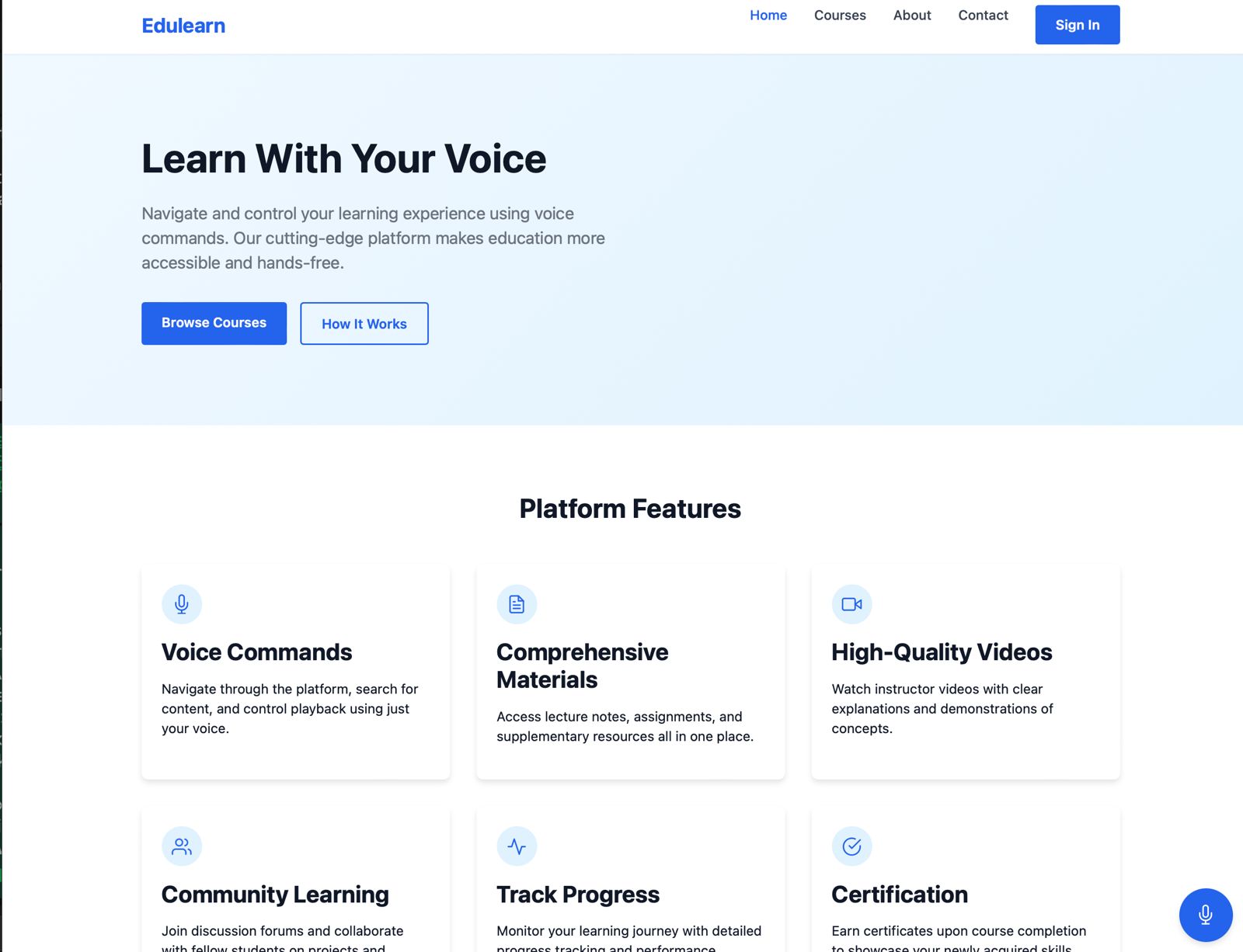
Home page highlights voice-controlled learning, platform features, and easy access to browse courses or learn more.
-
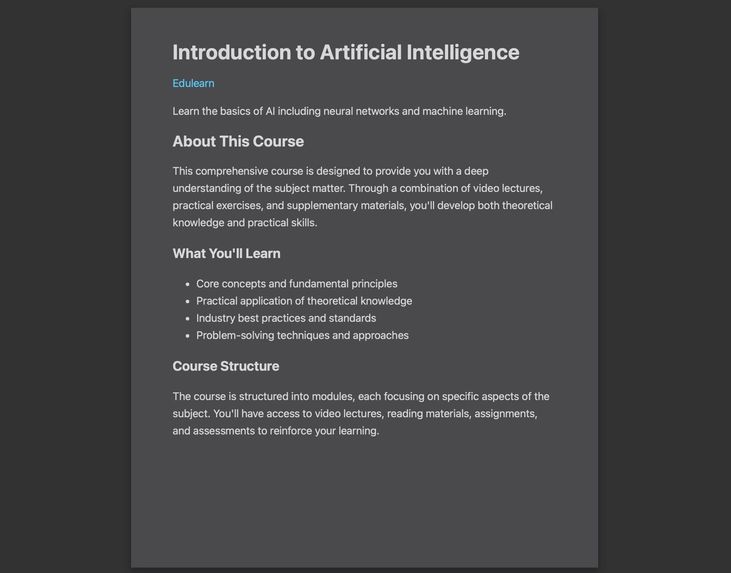
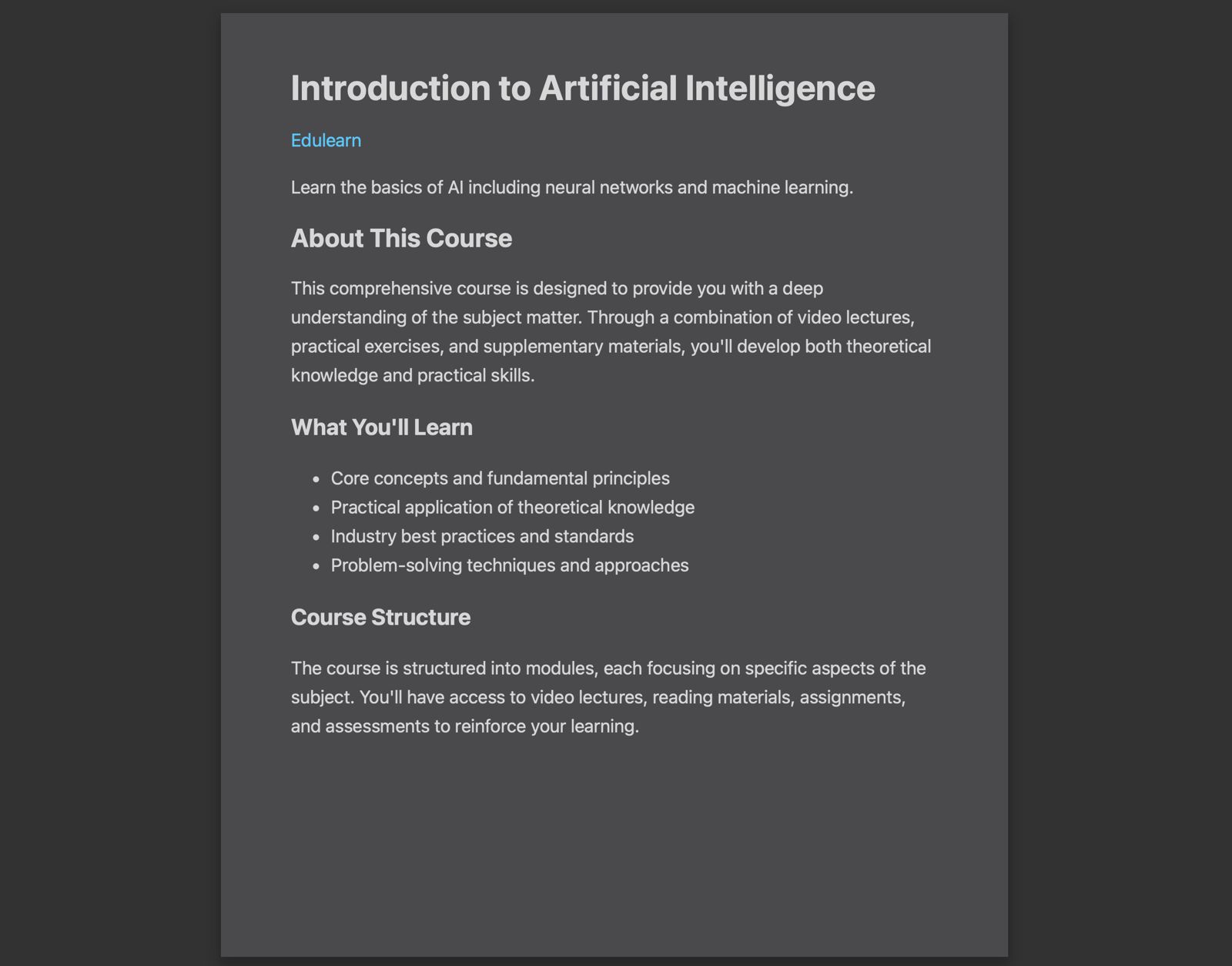
AI course detail page shows course outline, learning goals, and structured content for Introduction to Artificial Intelligence.
-
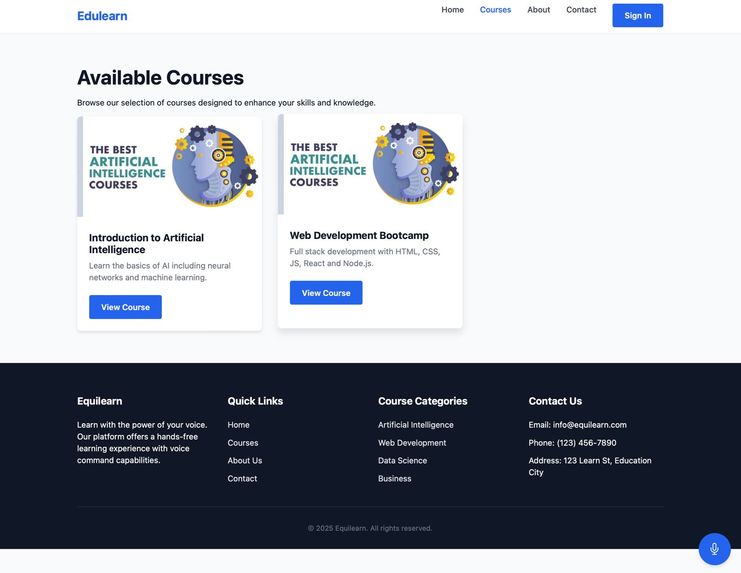
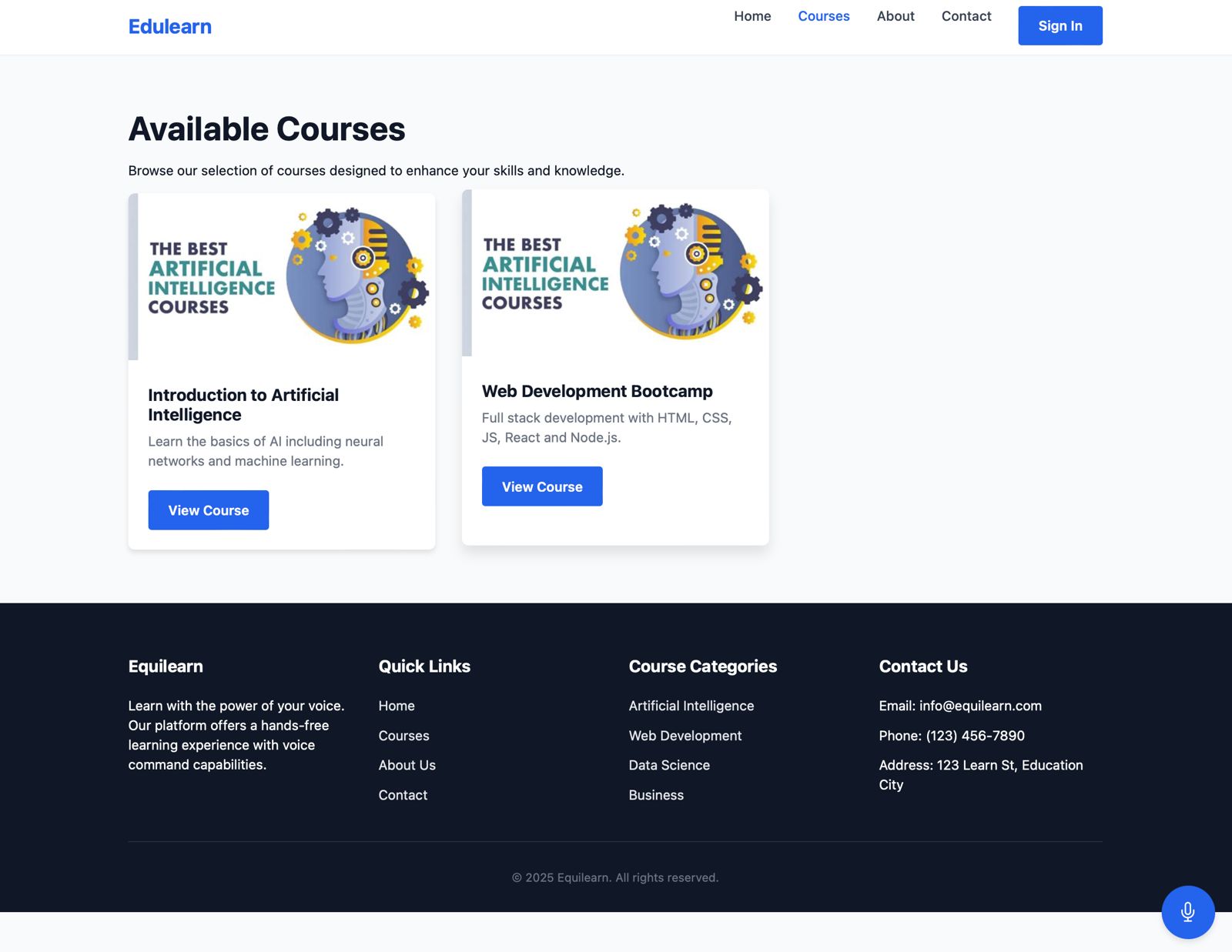
Courses page displays available course cards for AI and Web Development with descriptions and “View Course” options.
-
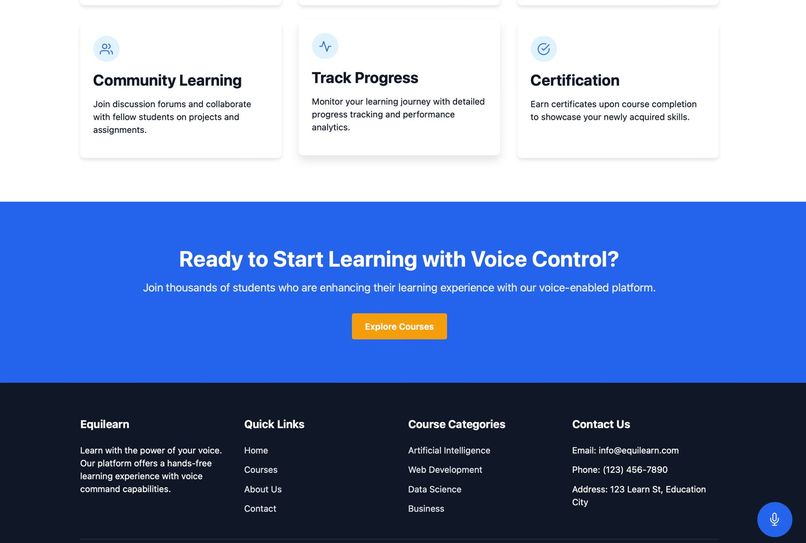
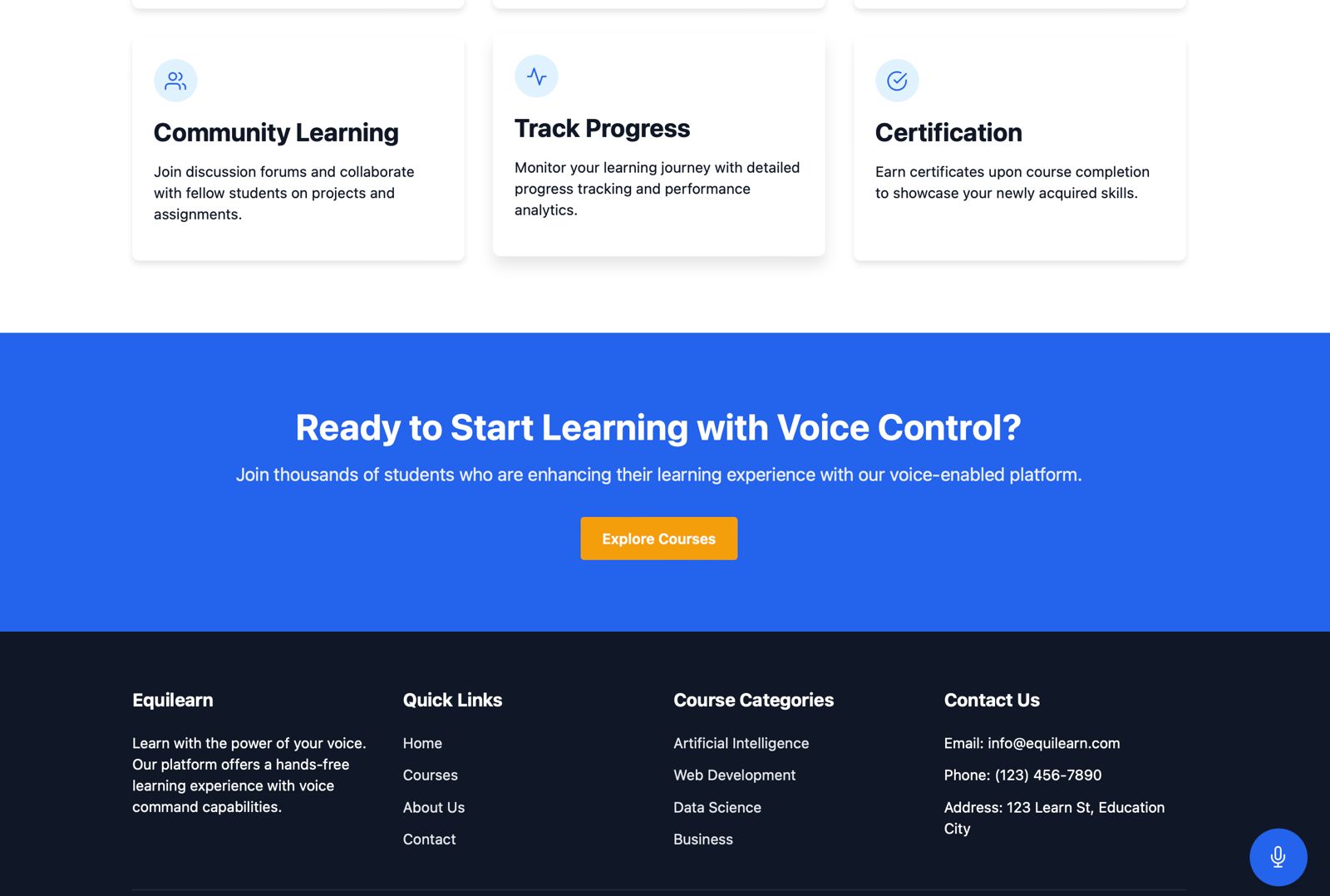
Footer section offers links, categories, contact info, and a summary emphasizing hands-free, voice-enabled learning.
-
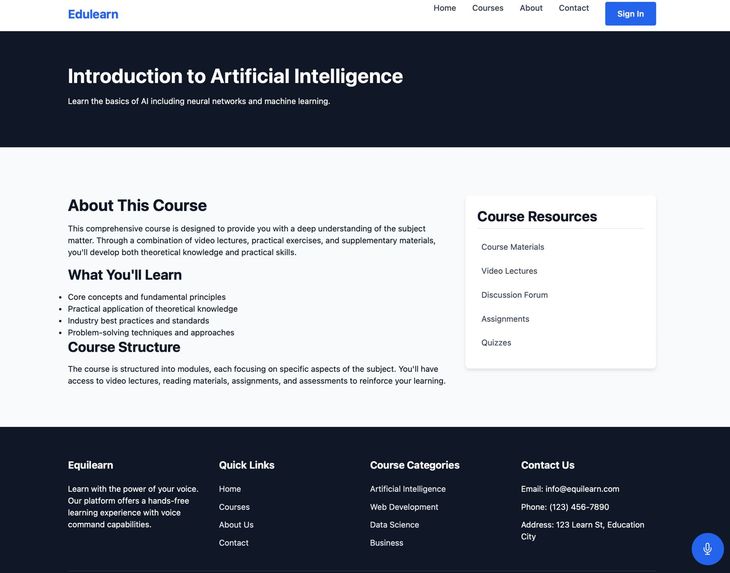
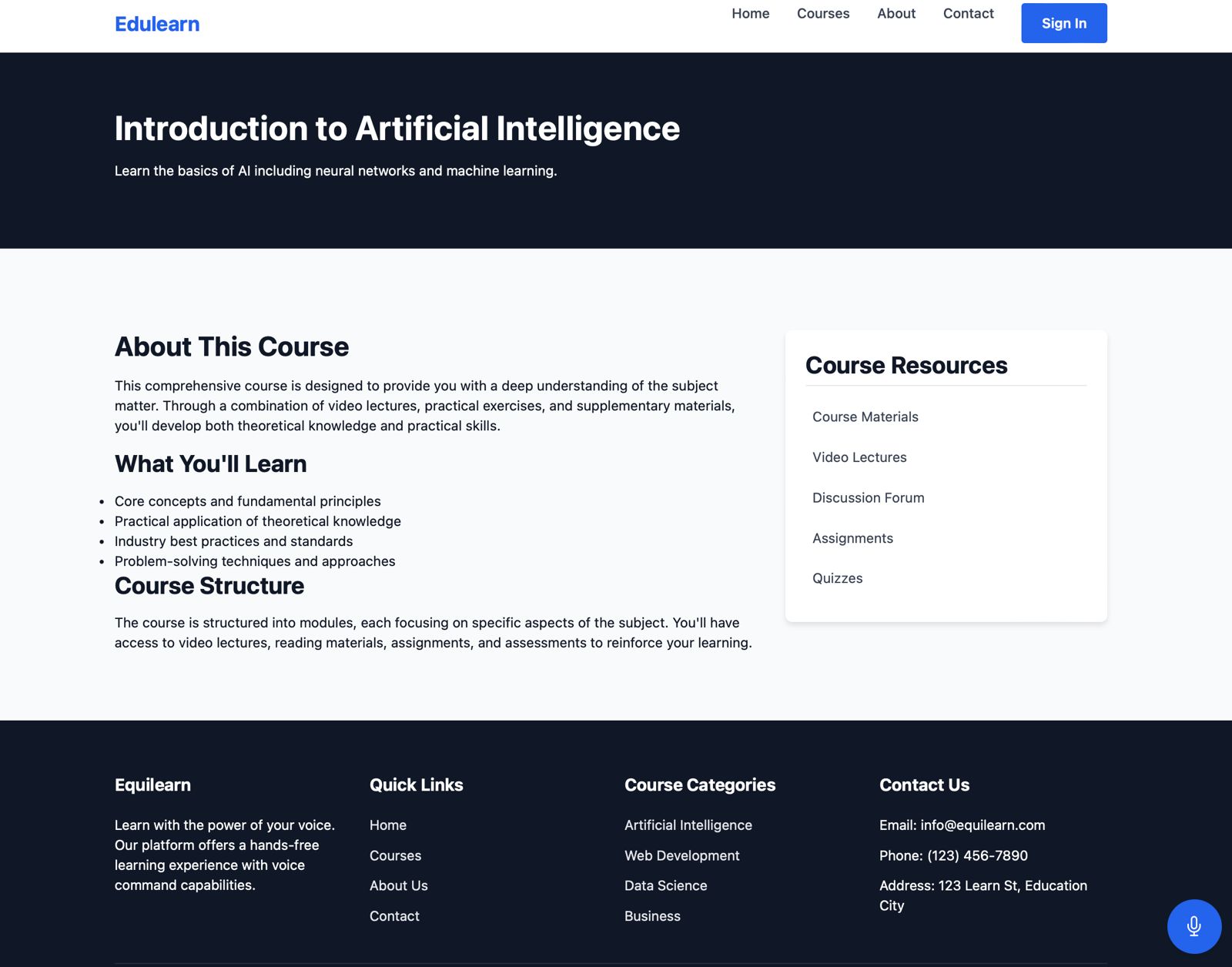
Course Overview page presents AI course description, learning objectives, structure, and quick links to resources.
-
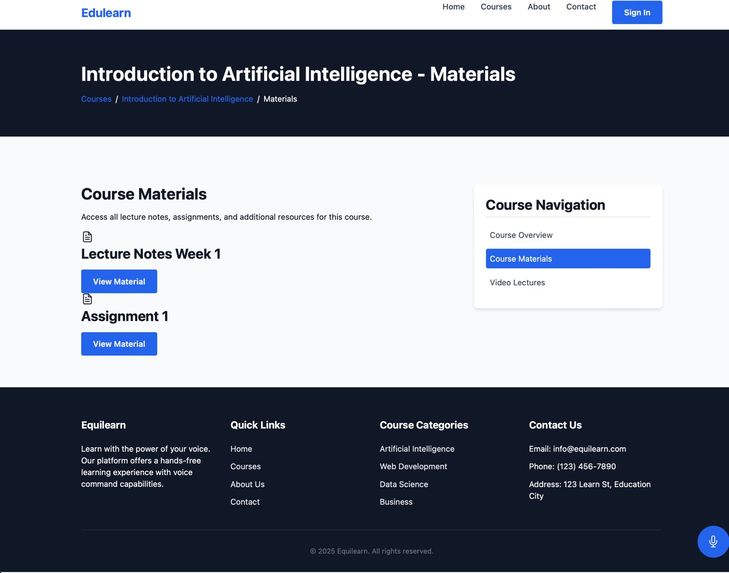
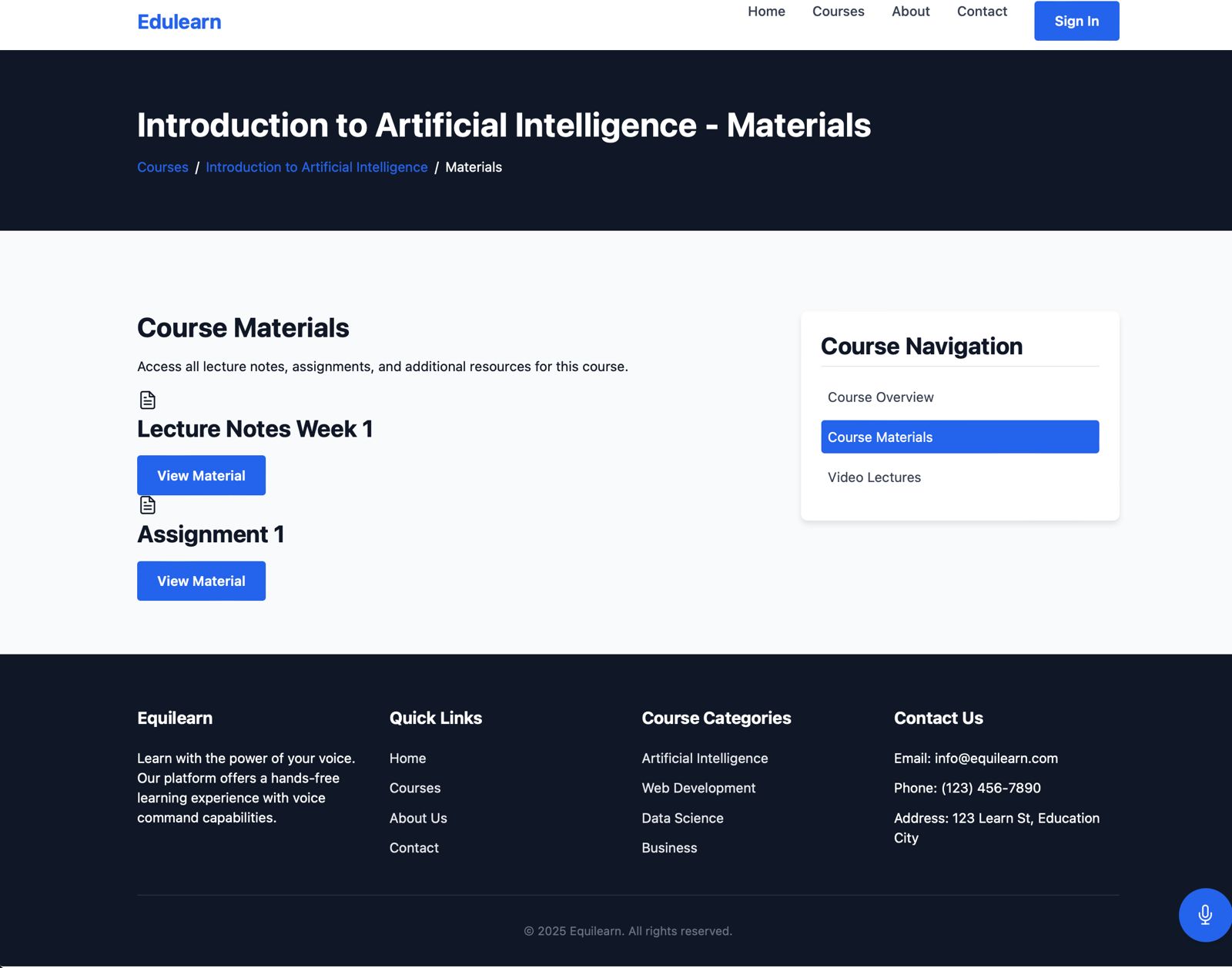
Course Materials page lists lecture notes and assignments for AI, with simple navigation to view or download resources.
-
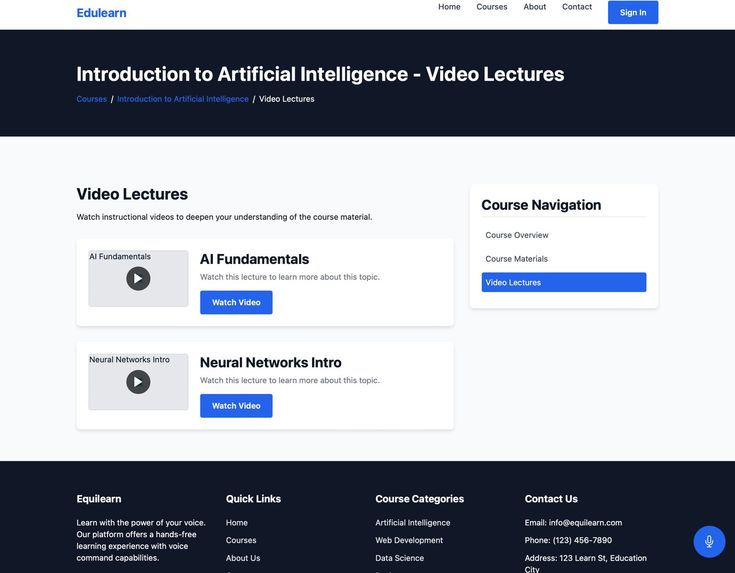
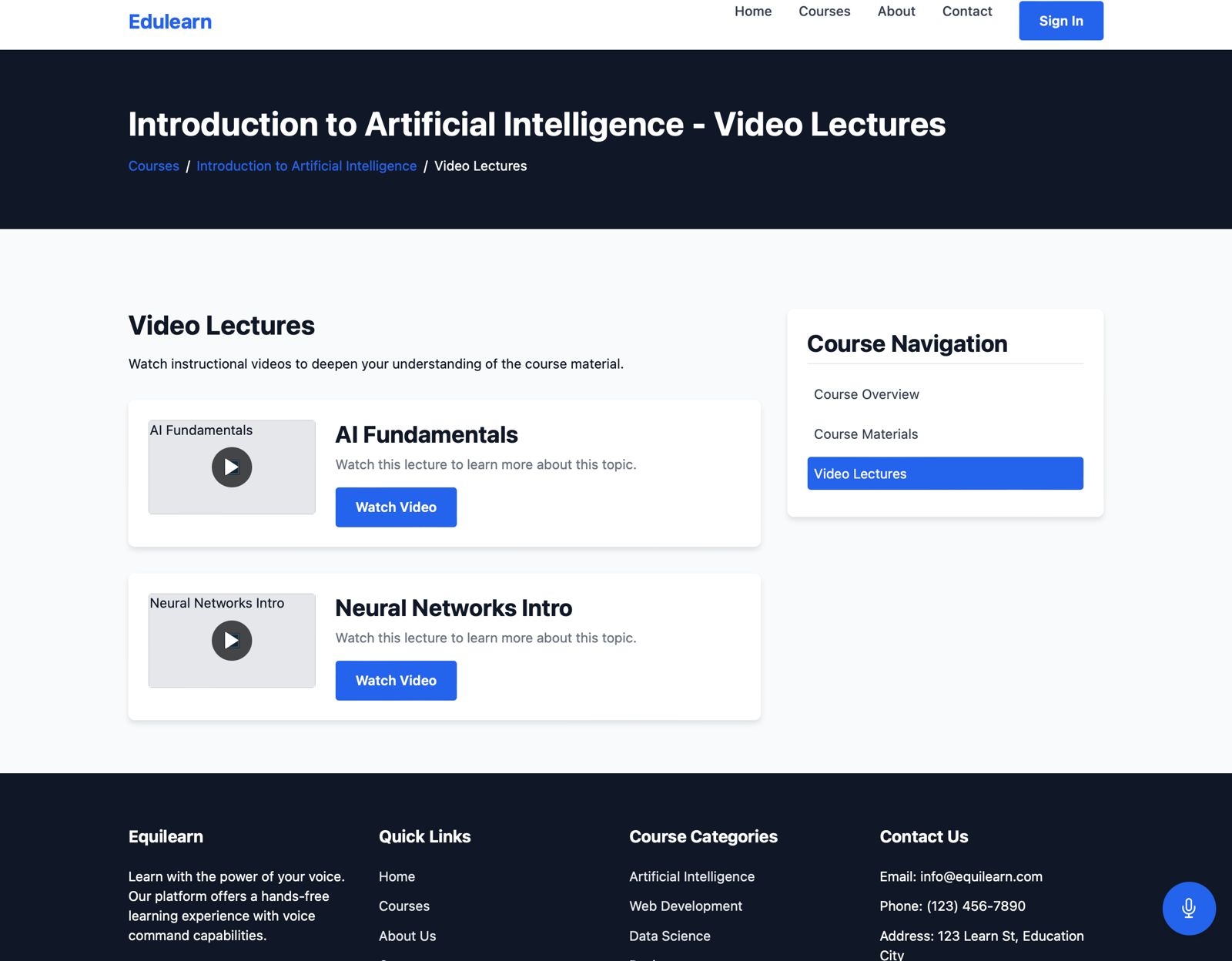
Video Lectures page offers easy access to AI video lessons, allowing users to play lectures and navigate course sections.
-
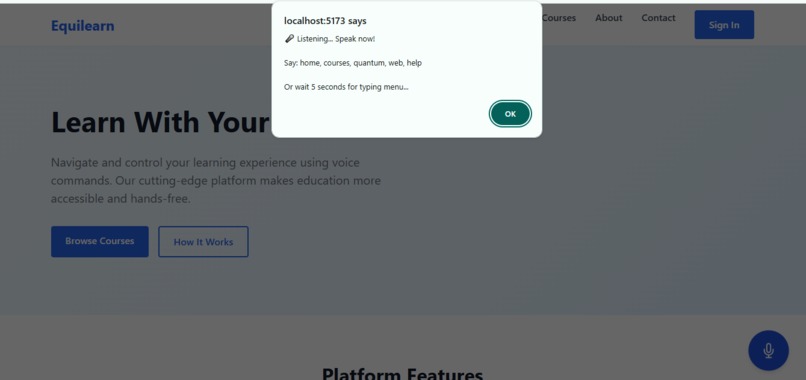
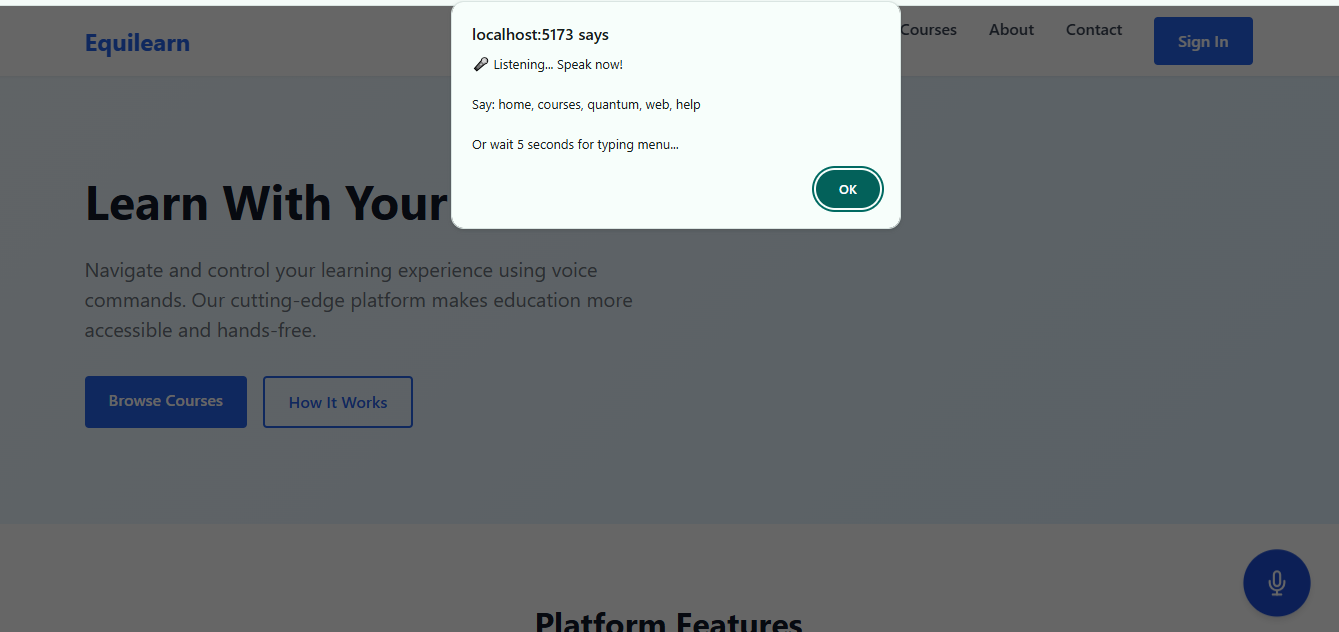
Popup prompts user to speak; lists voice commands available to navigate platform hands-free
-
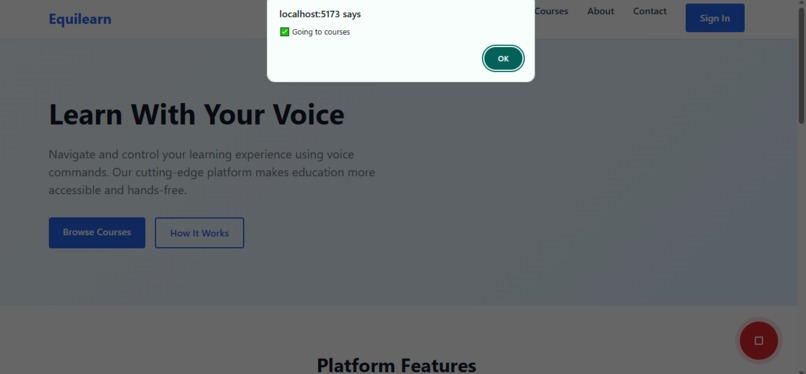
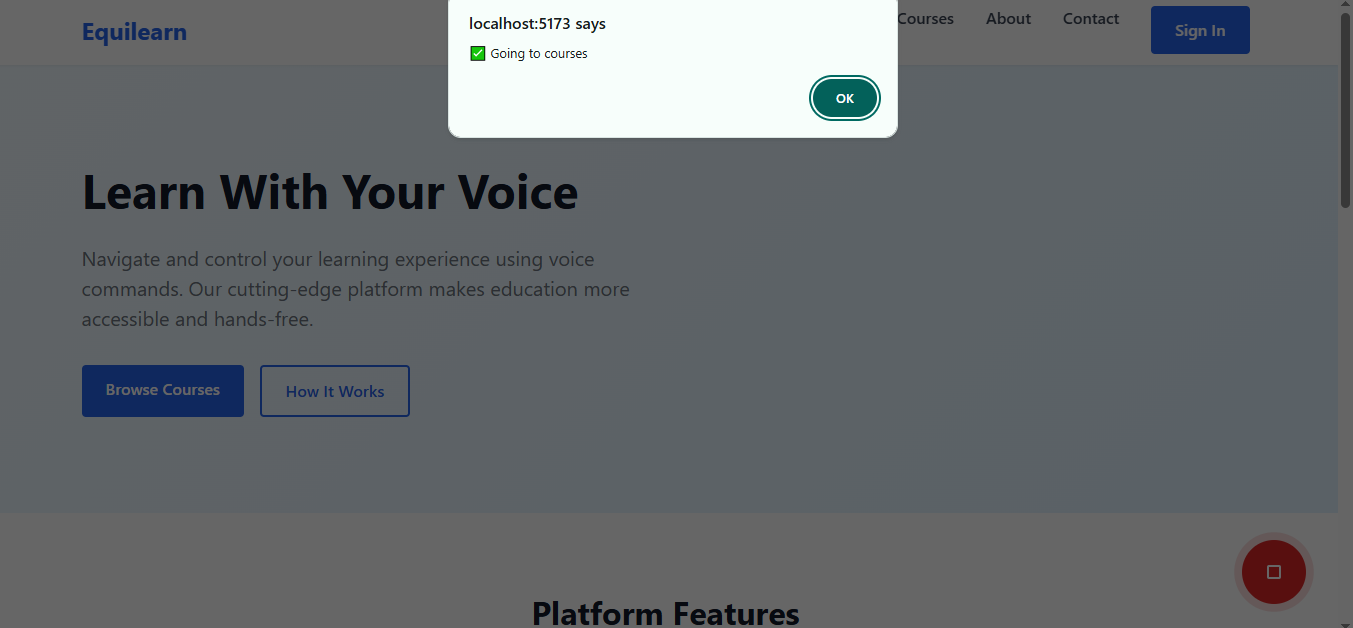
Popup confirms voice command recognized and shows "Going to courses" message for accessibility navigation.
-
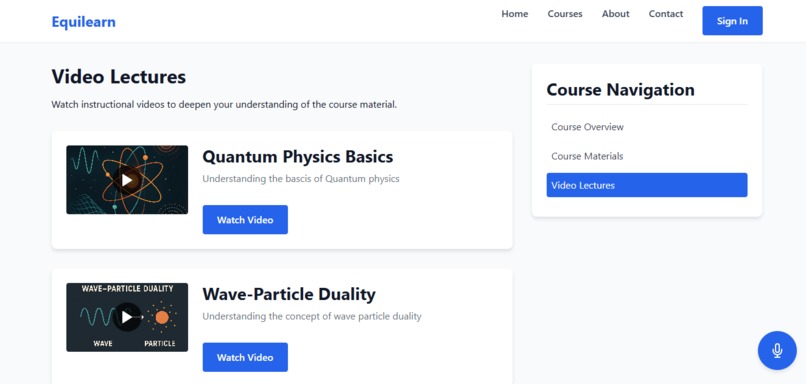
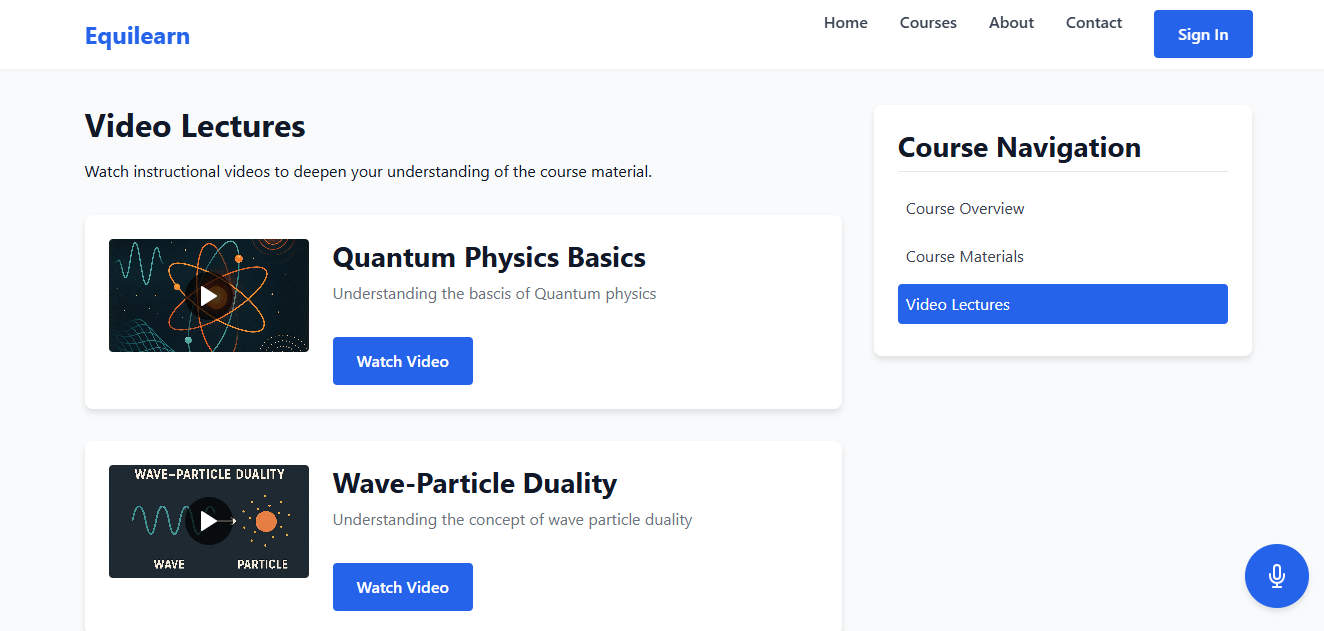
Video Lectures page shows quantum physics lessons; users can watch topic videos and use course navigation menu
Inspiration
EduLearn was inspired by the need to create a truly inclusive digital learning environment after recognizing how current e-learning platforms marginalize visually and hearing-impaired students. The project aims to break barriers by making accessible education a right, not a privilege, reflecting a commitment to equal opportunity and empathy-driven technology.
What it does
EduLearn is an AI-powered, web-based e-learning platform designed for learners of all abilities. It delivers:
Role-based access for tutors, students, and admins.
Real-time assistive features: screen reader support, voice command navigation, text-to-speech for visually impaired, real-time subtitles, video transcripts, and sign language for hearing-impaired learners.
Tools for creating courses, conducting live classes, and moderating content—all optimized for accessibility.
How we built it
Frontend: Developed in React.js with accessibility-first UI, voice and screen reader integrations.
Backend: Implemented with FastAPI, enabling robust REST APIs and seamless AI/ML module integration.
Database: MongoDB for flexible, personalized NoSQL schema storage.
Assistive Technologies: Integrated Web Speech API, Whisper AI for voice/text solutions, WebSockets for real-time features, and Mediapipe for gesture/sign language support.
Challenges we ran into
Ensuring real-time responsiveness and effective assistive tech without sacrificing platform scalability or stability proved difficult.
Achieving seamless compatibility for accessibility tools—like screen readers and voice navigation—across devices required extensive backend/frontend synchronization and testing.
Integrating accurate, AI-powered captioning and sign language translation introduced technical complexity, model fine-tuning, and latency issues.
Accomplishments that we're proud of Developed a scalable, accessibility-first platform capable of real-time assistive features for both visually and hearing-impaired users.
Successfully embedded role-based learning and adaptive, multi-sensory engagement into the e-learning experience.
Built a modular, future-ready system that lays the foundation for advanced AI-driven personalizations and next-gen gesture controls.
What we learned The journey demonstrated that accessibility and inclusivity demand deep empathy, continuous user feedback, and robust technical solutions. Understanding diverse user needs refined our approach—and reinforced that universal design transforms not just platforms, but lives.
What's next for Edulearn Expanding gesture and sign language interpretation with advanced Mediapipe models and richer AI features.
Enabling deeper user personalization through adaptive learning analytics and feedback loops.
Integrating broader language support and scaling the platform for institutions worldwide, ensuring no learner gets left behind regardless of ability.
Built With
- ai
- api
- fastapi
- mongodb
- react.js
- speech
- web
- websockets
- whisper

Log in or sign up for Devpost to join the conversation.