-
-
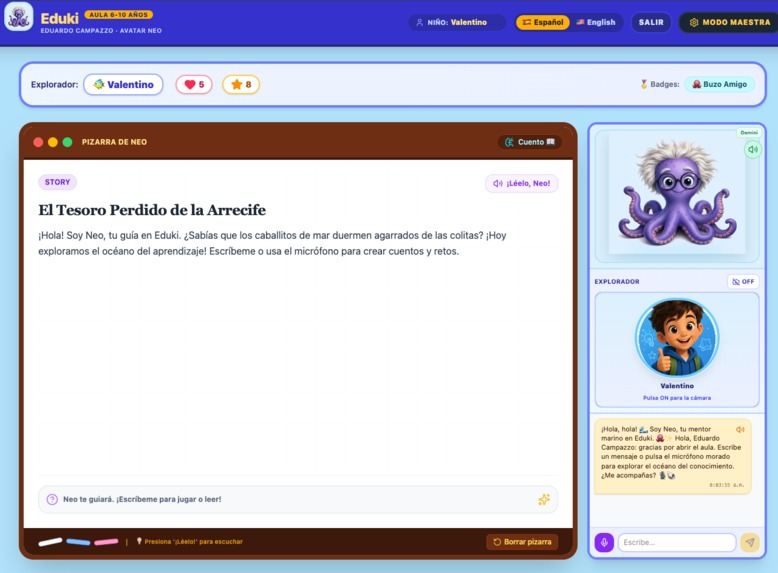
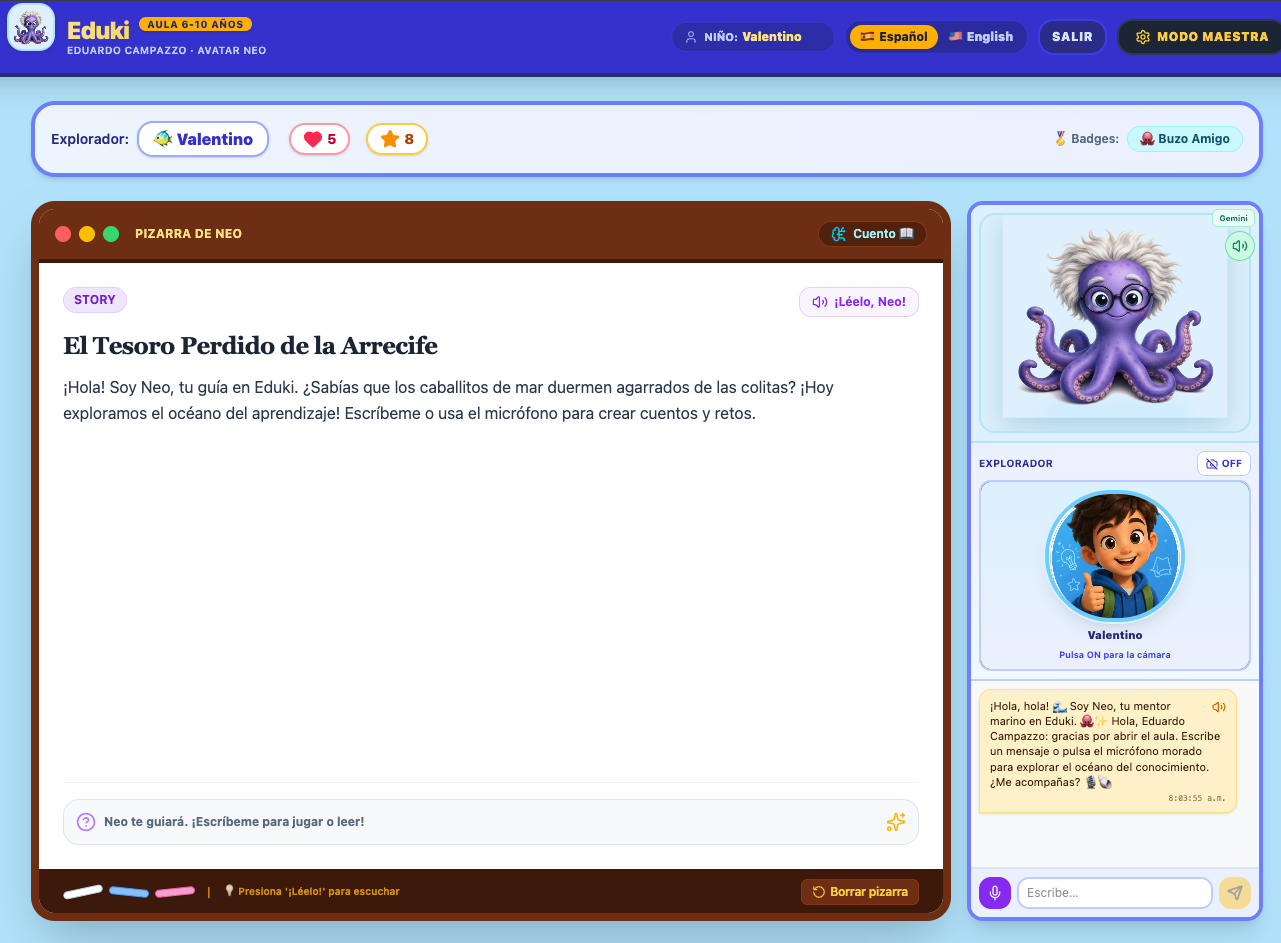
User interface of the EDUKI.ar educational platform with AI
-
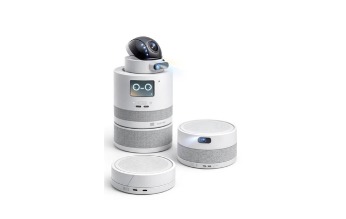
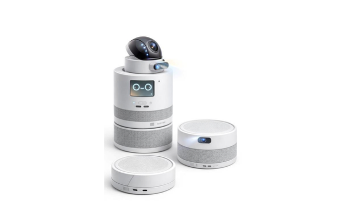
Classroom teaching assistant, mini computer, mini projector, camera, and sound system. In development.
EDUKI – AI Classroom Study Assistant for Primary Schools
Inspiration
EDUKI was born from a simple but urgent question:
What if every child could have access to personalized educational support inside and outside the classroom?
In many schools, especially in emerging regions, teachers face overcrowded classrooms, limited time for individualized attention, and growing technological gaps between students. At the same time, artificial intelligence is advancing rapidly, but most educational tools still operate as passive platforms rather than active learning companions.
We wanted to build something different.
EDUKI was inspired by the idea that AI should not replace teachers — it should empower them. The project combines AI-native educational assistance, classroom interaction, and accessible hardware to create a more engaging, adaptive, and human-centered learning experience for primary school students.
Our vision is to transform AI from a productivity tool into a true educational companion.
What We Built
EDUKI is an AI-native classroom study assistant designed for primary education.
The platform combines:
- An AI-powered conversational assistant
- Classroom-oriented educational workflows
- Personalized learning experiences
- Teacher support tools
- Friendly child-centered interaction design
- Smart educational hardware integration
The system allows students to:
- Ask questions naturally
- Receive age-appropriate explanations
- Practice subjects interactively
- Reinforce classroom content
- Stay engaged through gamified experiences
At the same time, EDUKI helps teachers by:
- Reducing repetitive support tasks
- Assisting with personalized guidance
- Providing learning insights
- Supporting differentiated instruction
The project integrates AI directly into the educational workflow rather than treating it as an external add-on.
Development Phases
The first stage of EDUKI focuses on a web-based AI educational platform designed to validate conversational learning workflows, teacher support tools, and personalized educational experiences in real classroom environments.
In the second stage, EDUKI will progressively integrate with the modular AI hardware ecosystem currently under development, including:
- A central AI-powered classroom unit
- Ambient classroom speaker modules
- Omnidirectional microphone arrays
- Interactive projection capabilities
- Edge AI processing infrastructure
This phased approach allows us to validate educational impact and user adoption early through scalable web technologies, while progressively evolving toward a fully integrated AI-native classroom assistant platform combining software, cloud intelligence, and dedicated educational hardware.
How We Built It
EDUKI was developed as an AI-native system using modern cloud and AI technologies.
Core Technologies
- Gemini API for conversational intelligence
- Google Cloud infrastructure
- React Native and web technologies
- Supabase backend services
- AI-driven educational workflows
- Real-time interaction architecture
The platform was designed around the concept of continuous AI-assisted operation.
Instead of a static chatbot, EDUKI acts as a dynamic educational layer capable of adapting responses, generating explanations, guiding exercises, and supporting classroom interaction in real time.
The user experience was intentionally designed to feel approachable and emotionally safe for children. This is why we created a friendly octopus-style avatar and conversational interaction model focused on curiosity, encouragement, and exploration.
AI-Native Operations
AI is not simply embedded into EDUKI — it operates the experience itself.
The system uses AI to:
- Personalize learning interactions
- Adapt explanations to student age and context
- Generate guided educational support
- Assist teachers with educational workflows
- Analyze interaction patterns
- Support student engagement dynamically
This approach aligns with the idea of an AI-native educational platform rather than a traditional educational app with AI features added later.
Challenges We Faced
One of the biggest challenges was balancing technological sophistication with simplicity for children.
Building AI for adults is relatively straightforward compared to designing AI interactions for young students. Every interface decision had to prioritize:
- clarity,
- emotional safety,
- simplicity,
- and accessibility.
Another challenge was ensuring that AI remained supportive rather than distracting inside the classroom environment. We focused heavily on creating interactions that reinforce learning objectives instead of competing for attention.
From a technical perspective, integrating conversational AI with real-time educational workflows while maintaining low latency and scalable infrastructure was also a significant challenge.
Future Vision
Our long-term goal is to make EDUKI accessible to schools and communities that currently lack access to personalized educational support.
We envision a future where every classroom can benefit from AI-assisted learning regardless of geographic or economic limitations.
Future phases will integrate AI-native educational hardware, edge AI processing, classroom sensing technologies, and multimodal interaction systems to create a fully integrated intelligent classroom assistant ecosystem.
EDUKI is not only a study assistant.
It is an attempt to redefine how children interact with knowledge in the AI era.
Built With
- agents
- api
- apis
- app
- conversational
- educational
- engineering
- expo.io
- gemini
- javascript
- mobile
- native
- node.js
- platform
- postgresql
- prompt
- react
- react.js
- real-time
- responsive
- supabase
- typescript
- ux/ui

Log in or sign up for Devpost to join the conversation.