About the Project
Inspiration
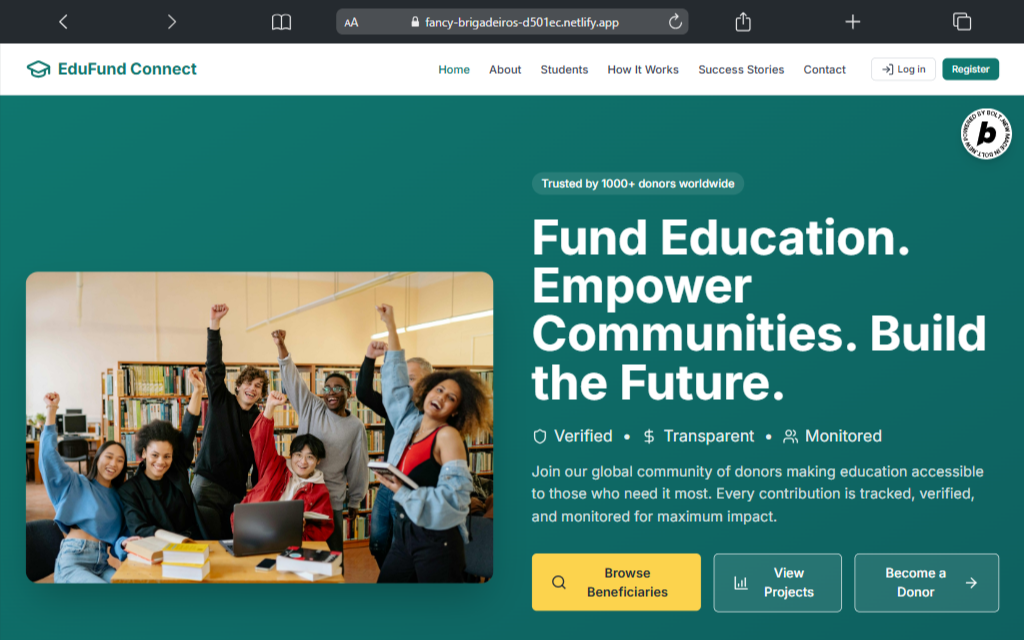
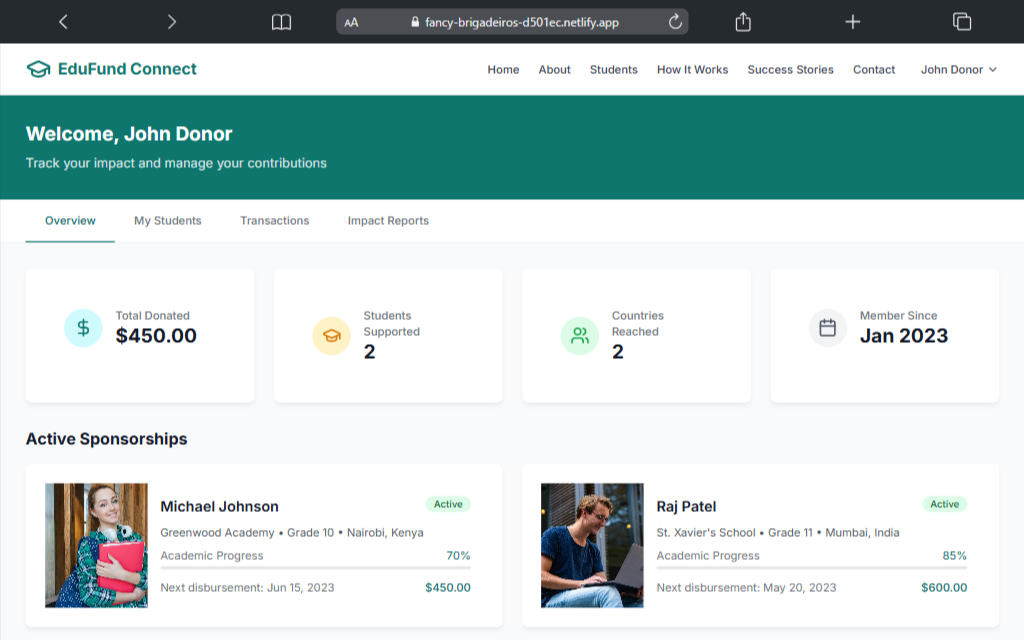
I set out to build a platform that bridges the gap between students and supporters by offering a transparent, data-driven experience. After seeing how many worthy students struggled to access resources—and how donors wanted real-time visibility into impact—I realized that a modern web application, combining real-time metrics with a polished UI, could make all the difference.
Problem (especially in Africa)
- Underfunded schools and students: Many families can’t afford tuition, books, or supplies, leaving large numbers of children out of the classroom.
- Opaque funding channels: Traditional scholarship programs often lack clear tracking, so donors can’t see if funds actually reach students.
- Delayed disbursements: Bureaucratic processes can hold up payments for months, causing students to drop out mid-term.
- Lack of local monitoring: Without on-the-ground verification, funds may be misallocated or misused before ever reaching the intended beneficiary.
What I Learned
- Scalable state management with React Context and custom hooks to keep components lean and predictable.
- Type-safe API integration using Supabase’s auto-generated TypeScript types, which dramatically reduced runtime errors.
- Internationalization workflows with i18next, enabling the site to support multiple locales without duplicating code.
- No-code hosting & deployment by leveraging Bolt New’s Git-connected UI for zero-maintenance build pipelines.
How I Built This
- Bootstrapped the frontend with Vite + React + TypeScript for lightning-fast hot reloads and modern ES module support.
- Styled exclusively with Tailwind CSS utility classes to ensure a consistent, responsive design without wrestling with custom CSS.
- Managed data and authentication via Supabase’s dashboard—using its Postgres database, Auth API, and Realtime subscriptions—so I didn’t have to script any backend infrastructure.
- Integrated Stripe Elements for secure, PCI-compliant payments, and Firebase Cloud Messaging for push notifications—all configured through their web consoles.
- Deployed the app on Bolt New (the official hackathon organizer’s no-code platform): I simply connected my Git repo, defined environment variables, and Bolt handled building, previewing, and production releases.
Solution with EduFund Connect
- Transparent dashboards show donors exactly when and how much was disbursed at each stage of a student’s journey.
- Staged disbursement logic releases funds only when students meet predefined milestones (e.g., enrollment confirmation, exam completion).
- Independent verifiers (local NGOs or community volunteers) can upload photos or reports, which trigger automated status updates.
- Real-time notifications ensure stakeholders are alerted immediately on payments, milestone achievements, or flagged issues.
- Mobile-first design and multi-language support make the platform accessible even in low-bandwidth or non-English environments.
Challenges Faced
- Real-time monitoring: Tuning Supabase Realtime channels to only push necessary events, avoiding UI thrashing under heavy update loads.
- Auth guard edge cases: Handling token expiry gracefully required building a silent refresh mechanism to keep users logged in without interrupting their workflow.
- Responsive layouts: Crafting a dashboard that worked equally well on mobile and desktop took several rounds of tweaking Tailwind’s breakpoint utilities.
Built With
- Frameworks & Languages: React, TypeScript, Vite
- Styling: Tailwind CSS
- Database & Auth: Supabase (Postgres, Auth, Realtime)
- Payments: Stripe Elements
- Notifications: Firebase Cloud Messaging
- Deployment: Bolt New (no-code platform & hackathon organizer)
- Utilities: i18next (i18n), React Router, Context API, custom React hooks


Log in or sign up for Devpost to join the conversation.