-
-
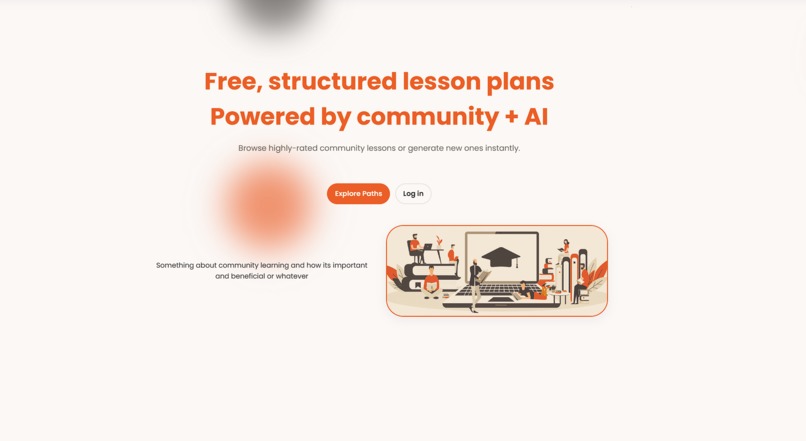
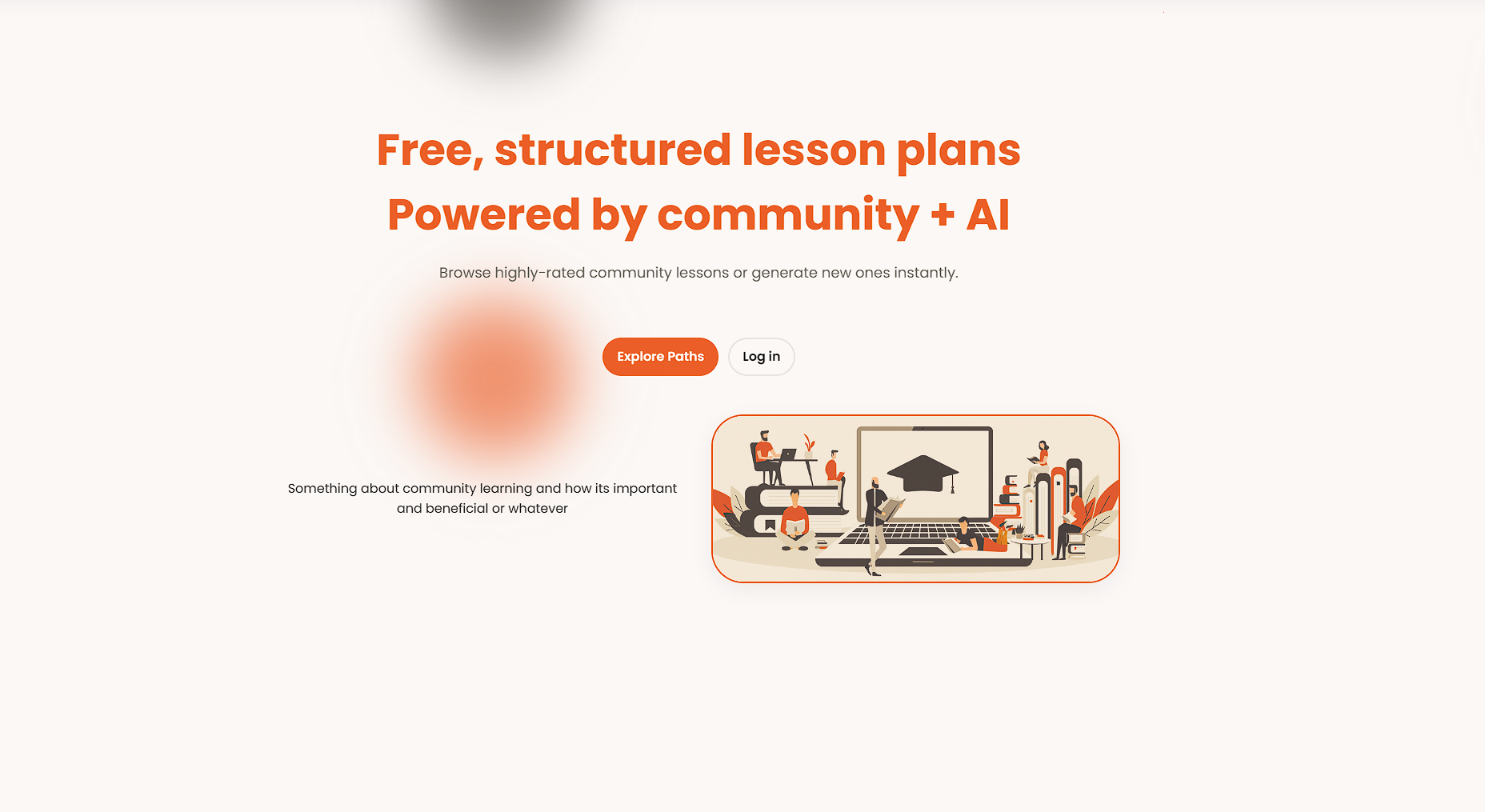
EduFlash Home Page
-
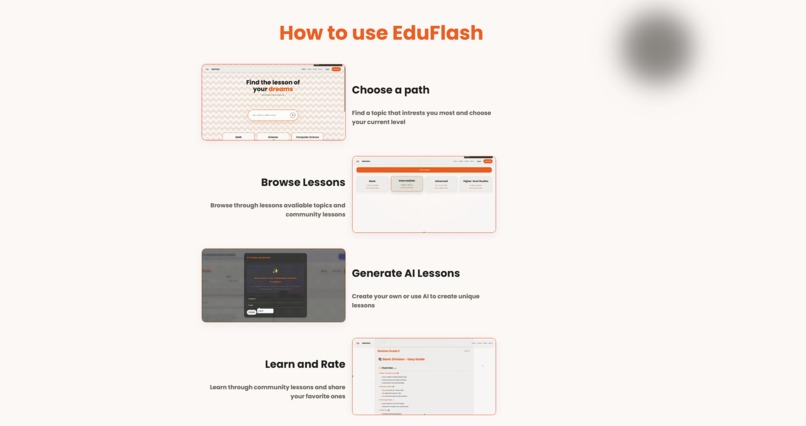
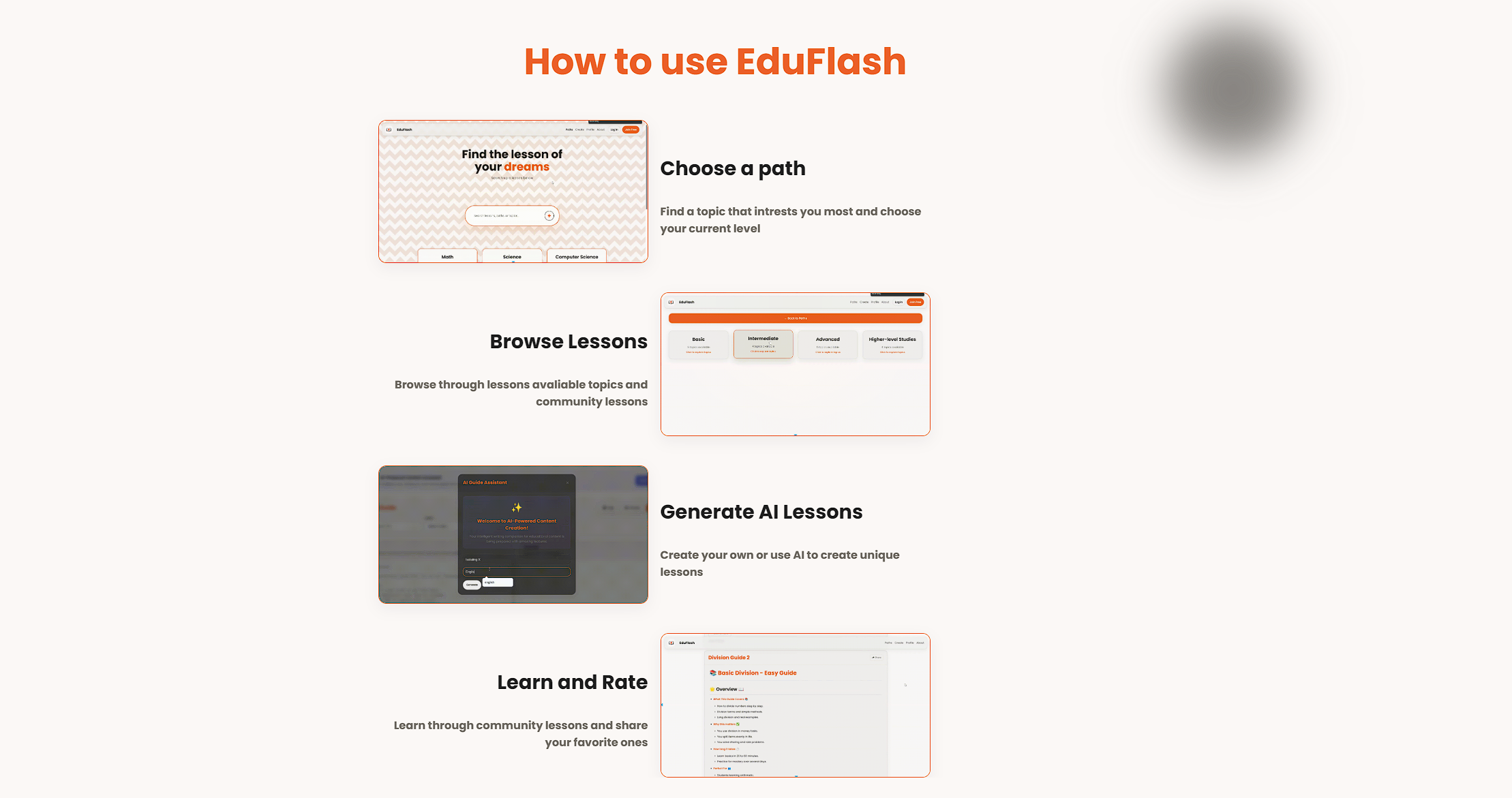
EduFlash Tutorial
-
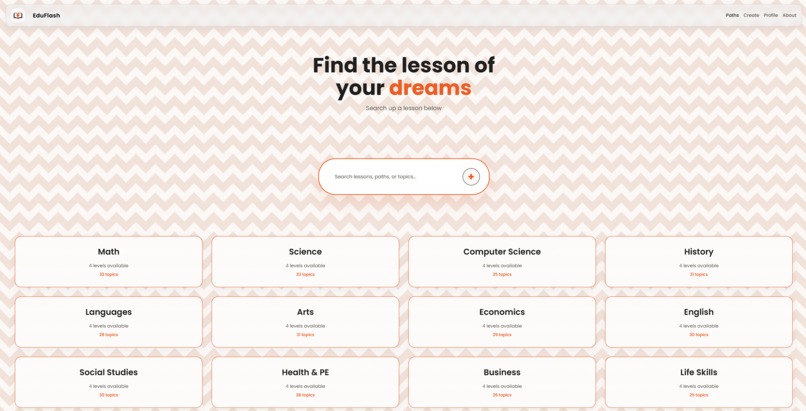
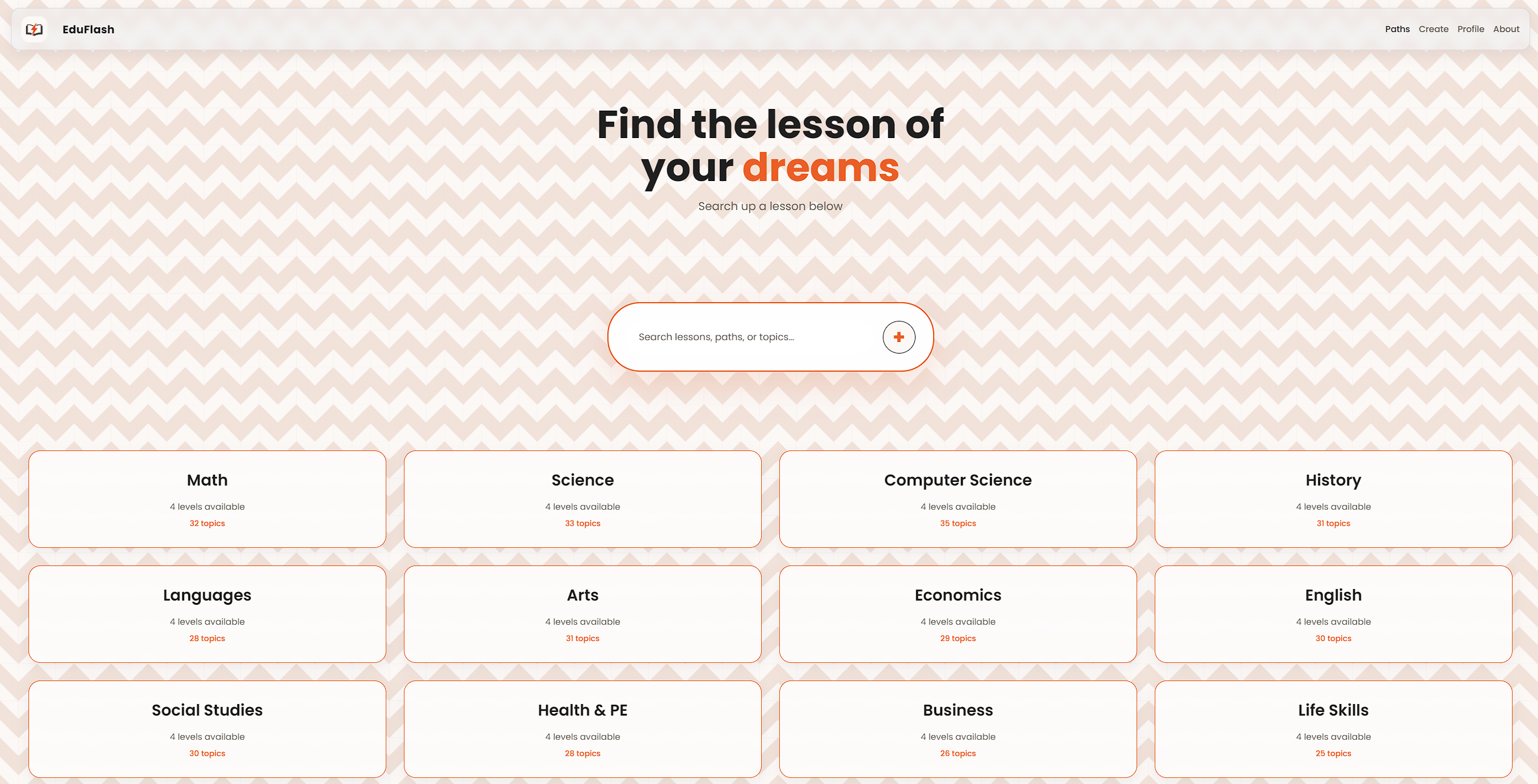
EduFlash Paths Page
-
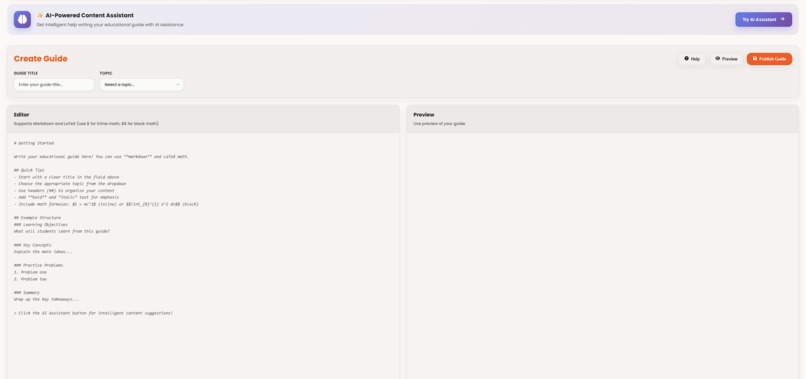
EduFlash Create Page

Inspiration
Many students, especially those who are first generation and low-income, struggle to find reliable, affordable and well-structured education resources. According to UNICEF, many of these problems arise due to a lack of trained teachers and inadequate education material.
What if it didn't have to be this way? That is why we created EduFlash. With careful planning, we built a community-powered library of lesson plans and guides. It ensures that anyone with a basic internet access can learn, contribute, and grow.
We felt that this process would remove barriers, foster development, and keep education alive as long as the community remained alive.
What it does
EduFlash is a community-powered library of educational resources where anyone with internet access can learn, share, and create lesson plans. Unlike traditional platforms, EduFlash empowers students, educators, and community members to upload their own guides, give feedback, and verify accuracy through ratings, discussions, and a trust factor system.
It provides structured learning paths, secure logins, guide creation, and AI-assisted guide creation. Guides can also be created in any language. All of this is designed to keep education free, reliable, and accessible. Because our project is community driven and open-sourced, Eduflash ensures that the platform can be sustained indefinitely, as long as there is a community supporting it and uploading content. It creates a lasting hub of knowledge for those around the world.
How we built it
We challenged ourselves to build this platform using vanilla JavaScript. This not only made our project smaller (and therefore more accessible), but it also makes it more efficient and doesn't rely on a strong internet connection. We also used Flask from Python as our development server to run the backend. We used Postgres for our database because it is fast and widely used in the tech-industry. We hosted our site on AWS due to the countless features and wide usage throughout the field.
Challenges we ran into
One of our biggest challenges was time management. We set out to build an ambitious project with many moving parts, and balancing scope with the limited time available pushed us to work smarter, prioritize features, and adapt quickly.
Another major challenge was integrating multiple technologies (HTML, CSS, JavaScript, Python, Postgres, and AWS) into a unified system. Ensuring everything connected securely and functioned smoothly under tight deadlines tested our ability to troubleshoot and learn on the fly.
Accomplishments that we're proud of
We are proud of the care and intentionality we put into shaping our idea, taking the time to reflect on whom this project impacts and how it can make a real difference. We’re also proud of the growth we achieved since our last hackathon, strengthening our frontend design skills, building a cleaner and more structured backend, and gaining valuable experience in integrating multiple technologies into a cohesive platform. Finally, we are also proud of the collaboration and teamwork we displayed in this hackathon. We set strict guidelines to stay on task and set deadlines on different tasks we wrote down in Jira. We were able to overcome conflicts, conquer challenges, and turn an ambitious idea into a reality.
What we learned
We learned that it’s often best to build on what we already know, leveraging familiar tools and skills to move faster and more effectively. We also discovered how critical time management is in a hackathon setting, since prioritizing and planning directly shape what can realistically be accomplished. Finally, we learned the value of collaboration and adaptability, as working together and staying flexible allowed us to overcome challenges and keep pushing forward.
What's next for Eduflash
Our vision is to create a homely oasis for learning that will continue to grow alongside the people who use it. This project holds a living community, where lessons and ideas will continue to expand all around the world and for many years to come.
Our goal is not just to build a platform, but to foster an ecosystem that will thrive on its own to provide countless people an education that remains free and accessible to all. We are committed to carrying this vision forward indefinitely, developing a strong community that will continue to shape the future of learning.

Log in or sign up for Devpost to join the conversation.