Inspiration
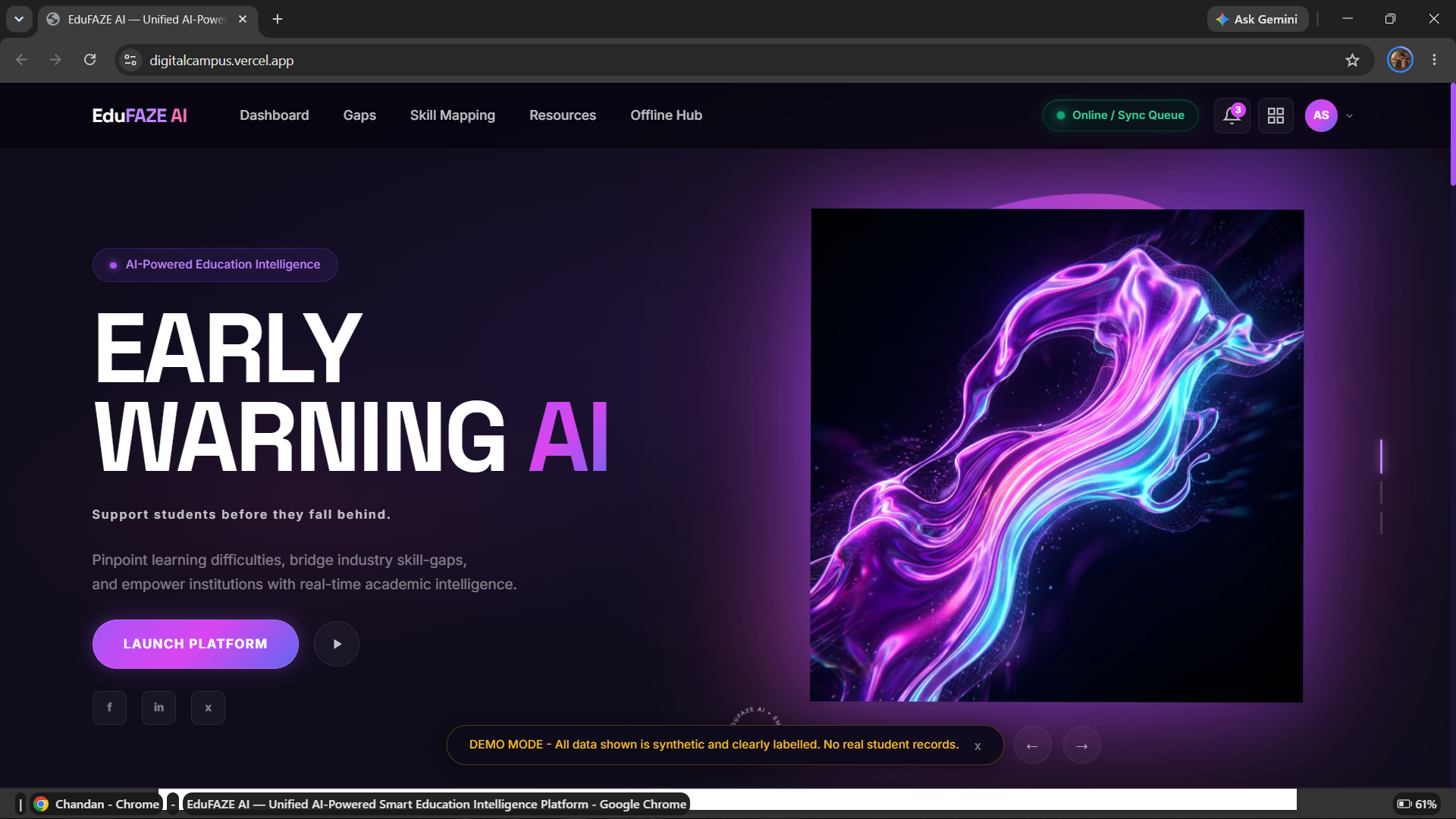
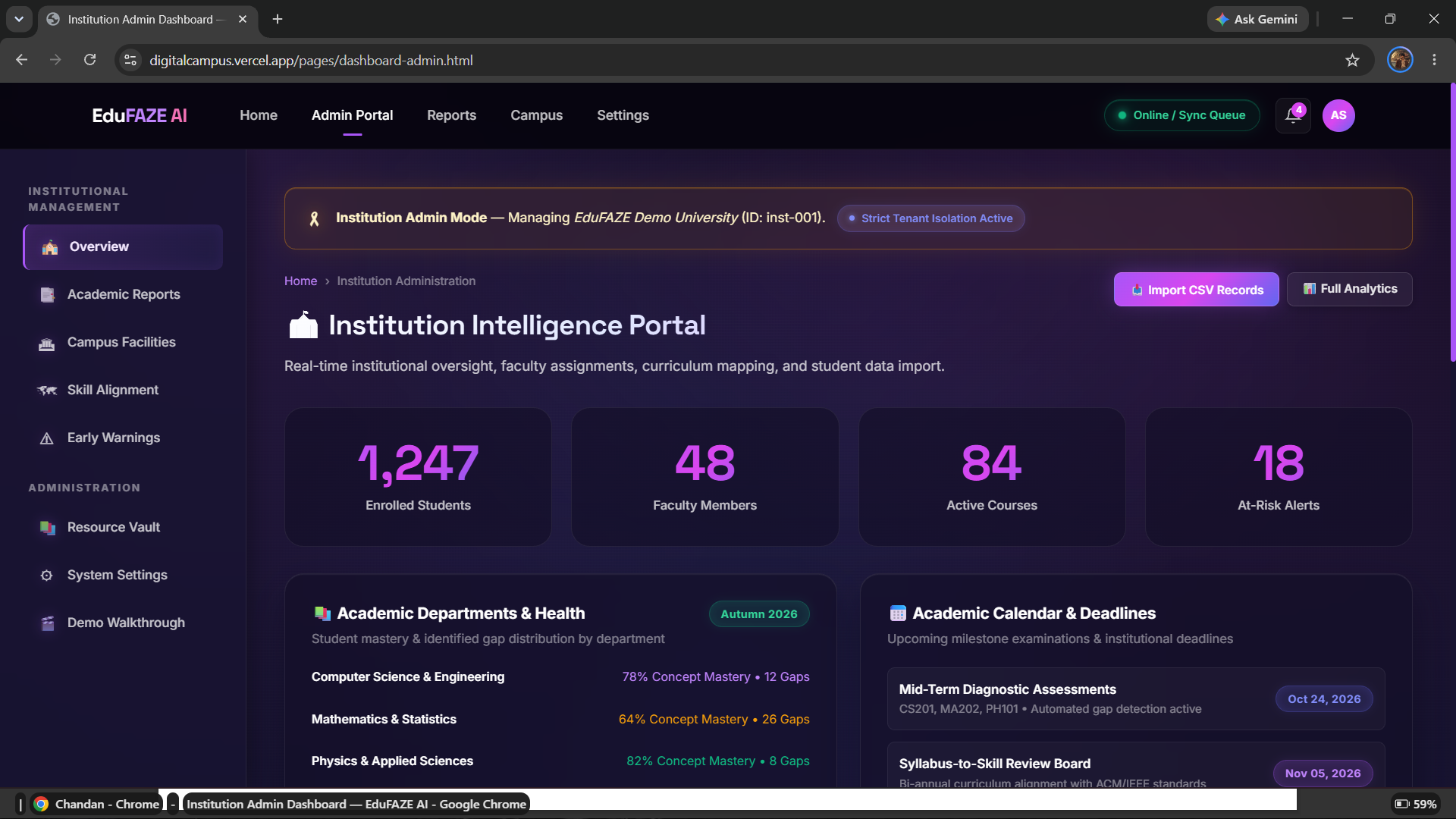
Every student learns differently, but traditional education often treats everyone the same. We created EduPulse AI to help identify students’ learning gaps, provide personalized learning resources, and track their improvement through AI.
What it does
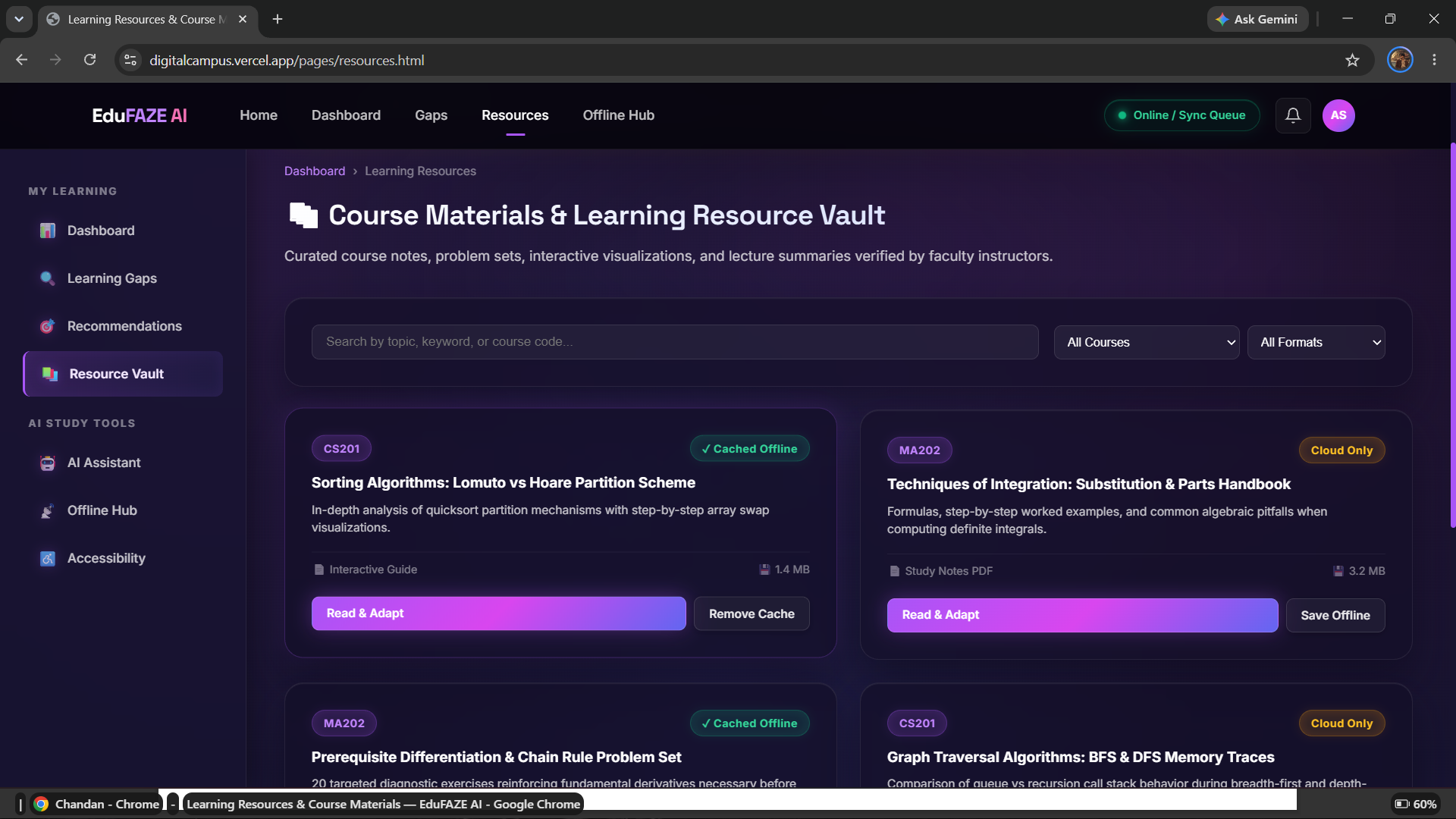
- Identifies learning gaps: Analyzes students’ quiz answers to find topics they haven't understood well.
- Personalizes learning: Suggests suitable study materials, explanations, and practice questions based on each student's needs.
- Tracks progress: Gives students follow-up quizzes to check whether they have improved.
- Supports teachers: Helps teachers identify common learning difficulties and decide which topics need more attention.
How we built it
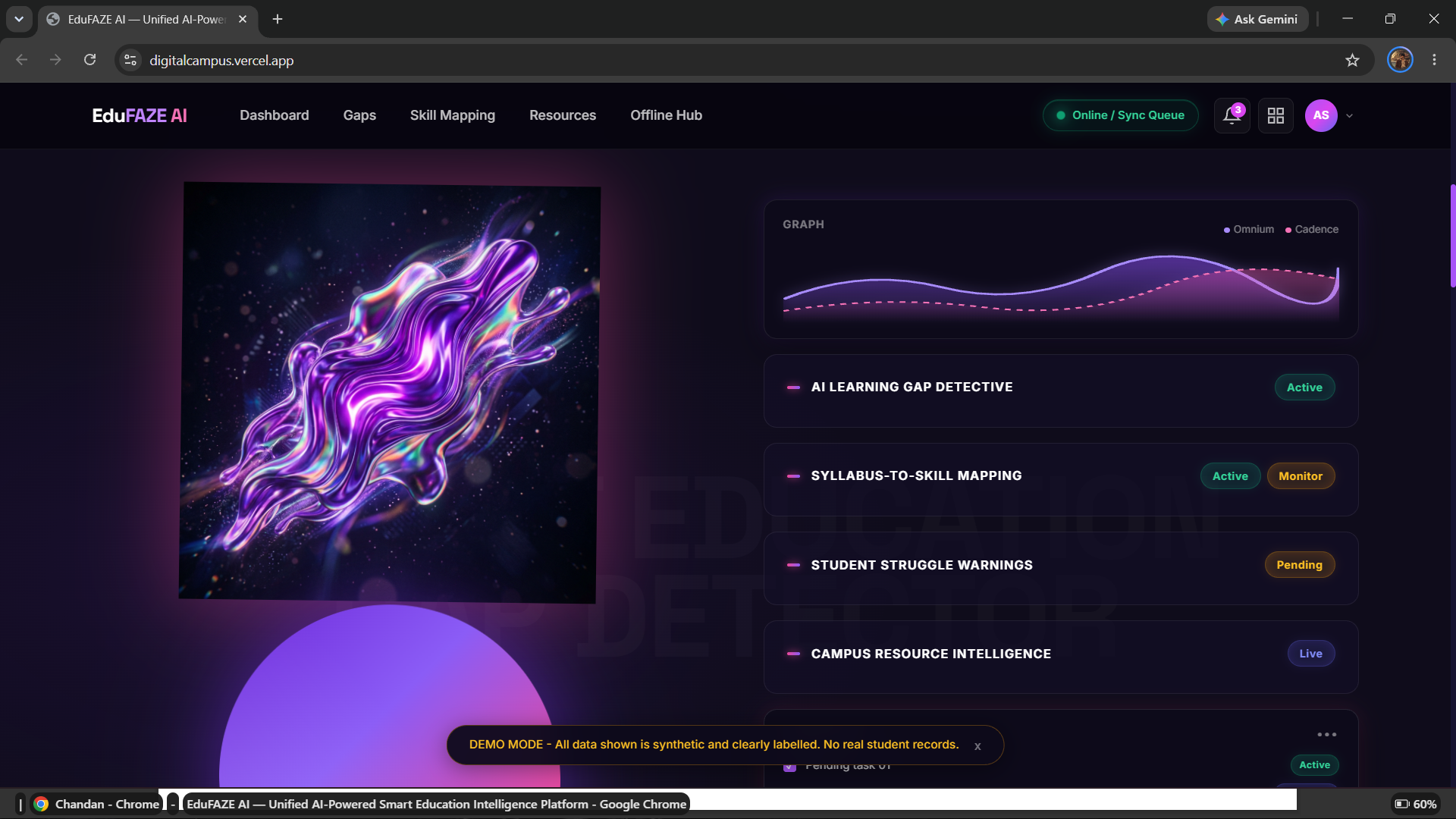
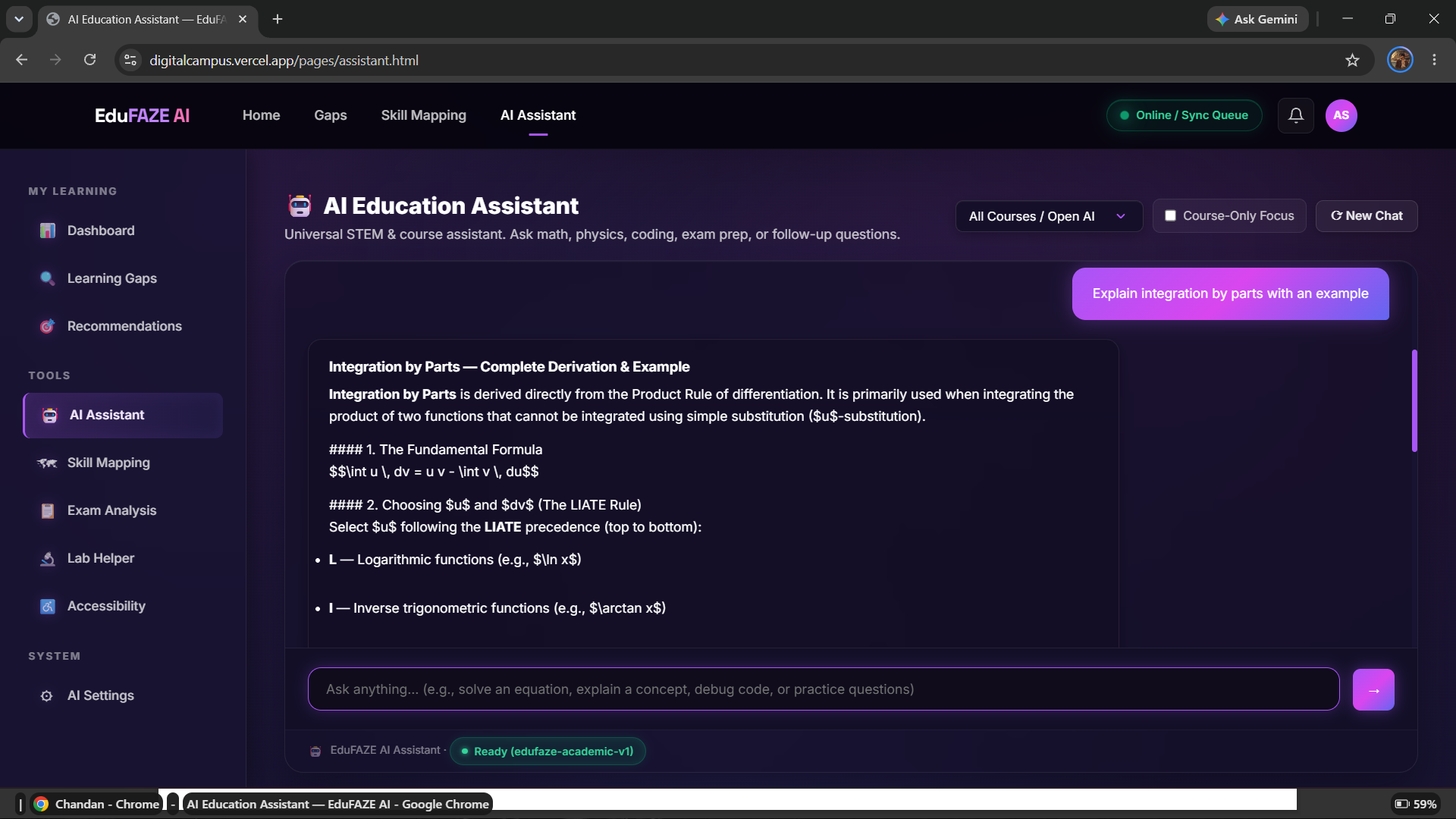
We built EduPulse AI (EduFaze AI) using HTML, CSS, and JavaScript to create an interactive education platform. We used Node.js for the backend and integrated the Google Gemini API to power the AI educational assistant. The platform analyzes quiz performance, identifies students’ learning gaps, recommends personalized study materials, and tracks their progress through dashboards.
Challenges we ran into
- AI integration: Connecting the Gemini API to the education platform.
- Learning-gap detection: Identifying students’ weak topics from their quiz performance.
- Personalization: Providing suitable learning recommendations for different students.
- Data management: Organizing student performance and displaying it clearly on dashboards.
- Testing: Ensuring the features work smoothly and handling API or network errors.
Accomplishments that we're proud of
- Built EduPulse AI: Developed an AI-powered educational platform to support personalized learning.
- AI Integration: Connected the Gemini API to provide an intelligent educational assistant.
- Learning Gap Detection: Designed features to identify students’ weak areas and recommend improvements.
- User-Friendly Interface: Created dashboards to make learning progress easier to understand.
- Real-World Impact: Focused on helping students learn more effectively and enabling teachers to support struggling students
What we learned
- AI Integration: Learned how to integrate the Google Gemini API into a web application.
- Web Development: Improved our skills in HTML, CSS, JavaScript, and Node.js.
- Problem-Solving: Learned how to identify real-world educational problems and develop practical solutions.
- Teamwork: Improved collaboration, communication, and task management.
- Testing and Debugging: Learned to identify errors and improve application performance.
- Personalized Learning: Understood how AI can help identify students’ learning gaps and recommend suitable study materials.
What's next for EDUfaze AI
- Advanced AI Personalization: Provide customized study plans based on each student’s strengths and weaknesses.
- Real-Time Teacher Alerts: Notify teachers when students show signs of falling behind.
- Performance Analytics: Track student progress and predict learning difficulties early.
- Multilingual Support: Make learning accessible in Kannada, Hindi, and other languages.
- Mobile App & Offline Learning: Enable students to learn anytime, even with limited internet access.
- Real-World Deployment: Test EDUfaze AI with students and teachers to improve its effectiveness.
Built With
- and-cachestorage-development-tools:-visual-studio-code
- built-with-?-edufaze-ai-frontend:-html5
- css3
- javascript-backend:-node.js-ai-integration:-google-gemini-api-deployment:-vercel-browser-technologies:-session-storage
- service-workers

Log in or sign up for Devpost to join the conversation.