-
-
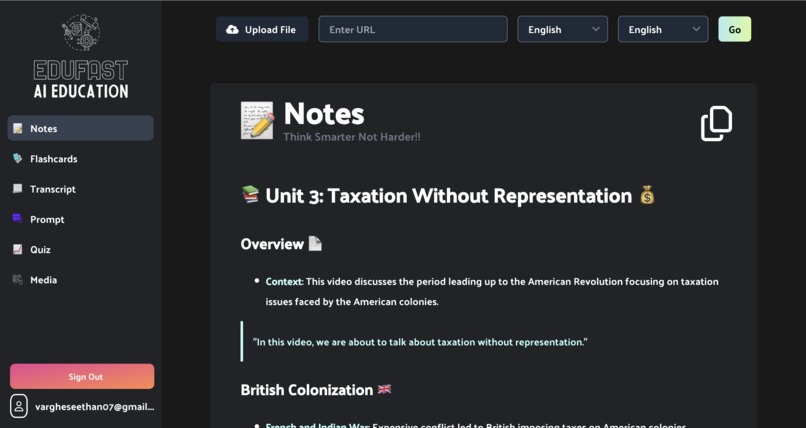
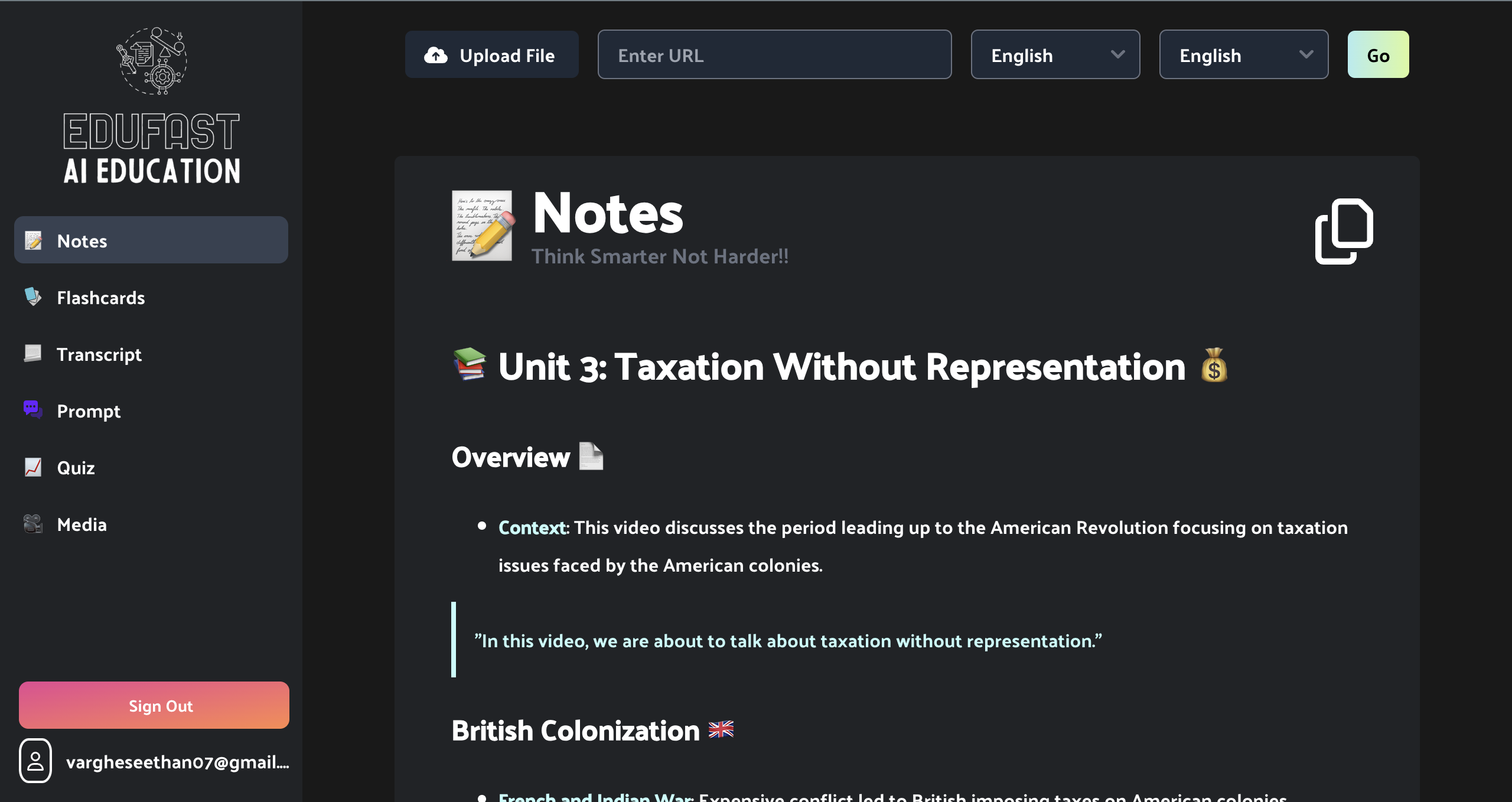
Generates notes
-
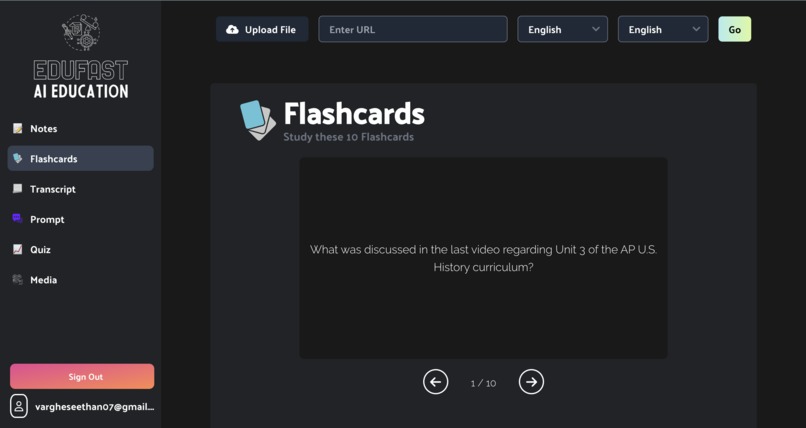
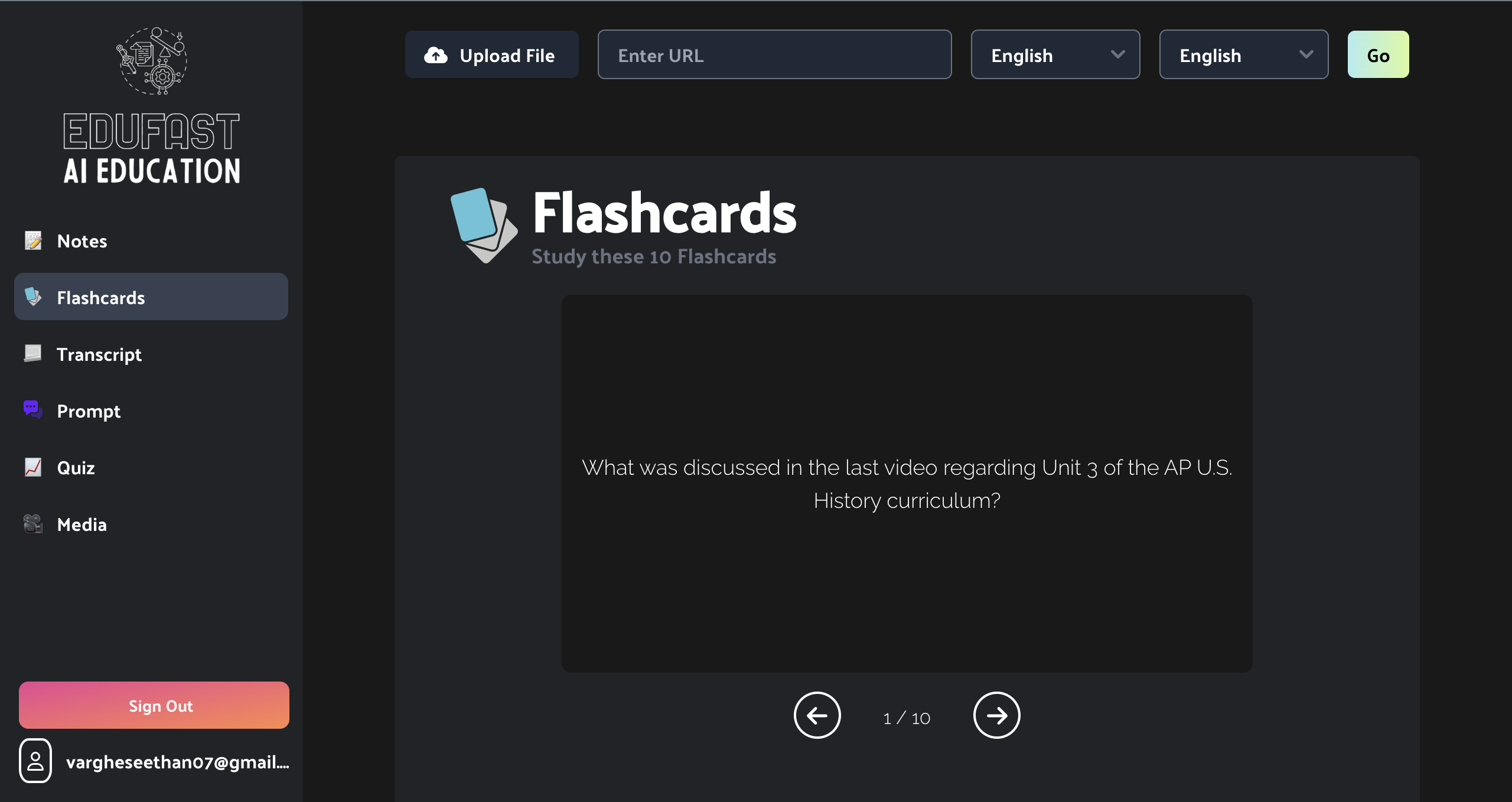
flashcards
-
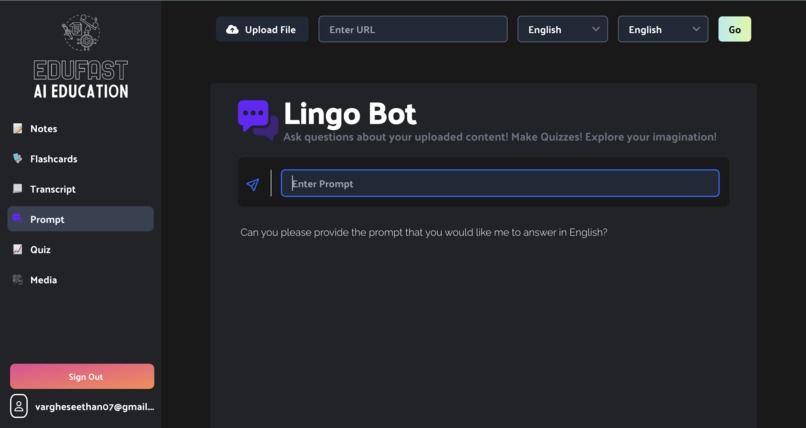
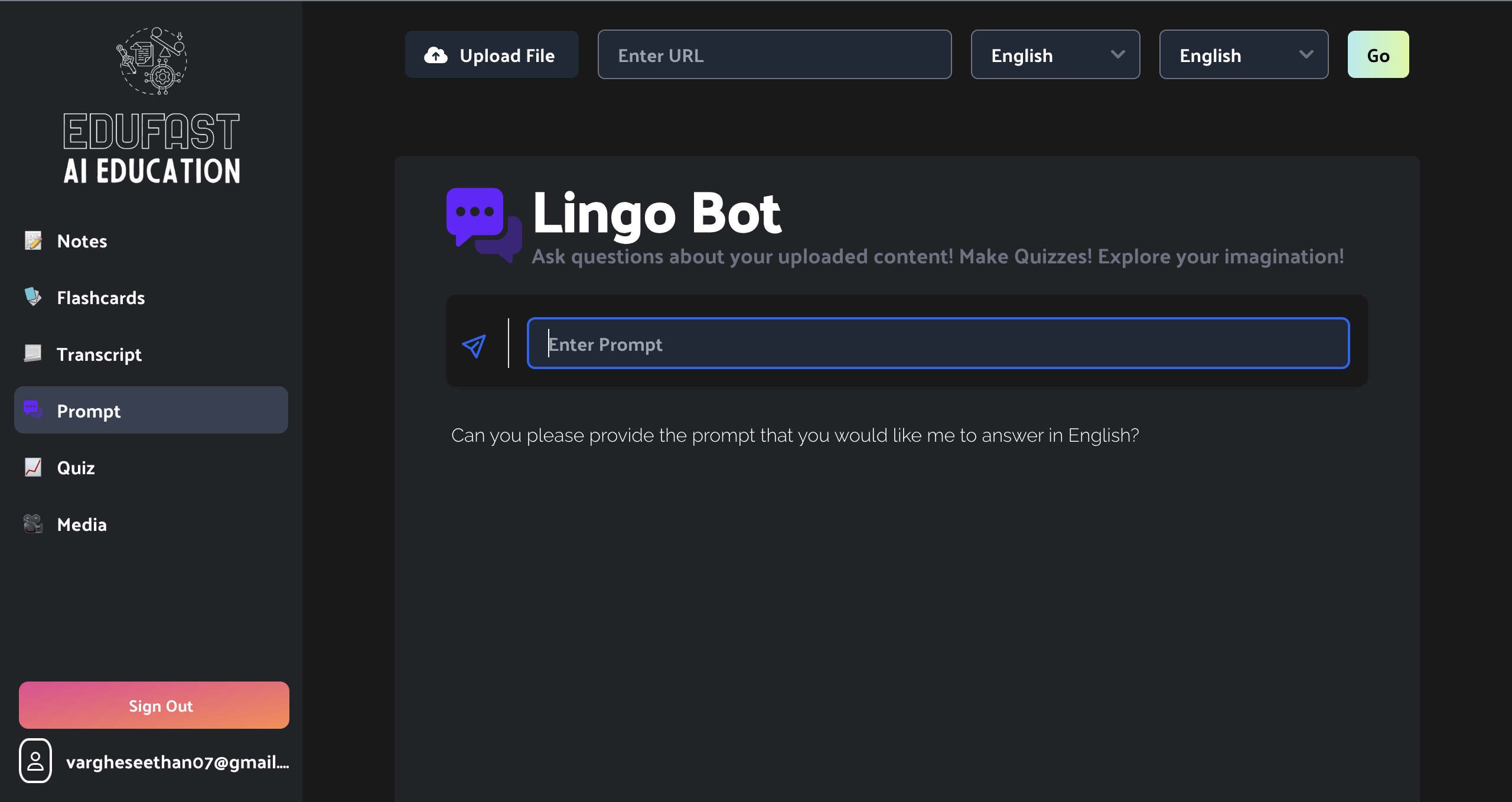
AI tutor
-
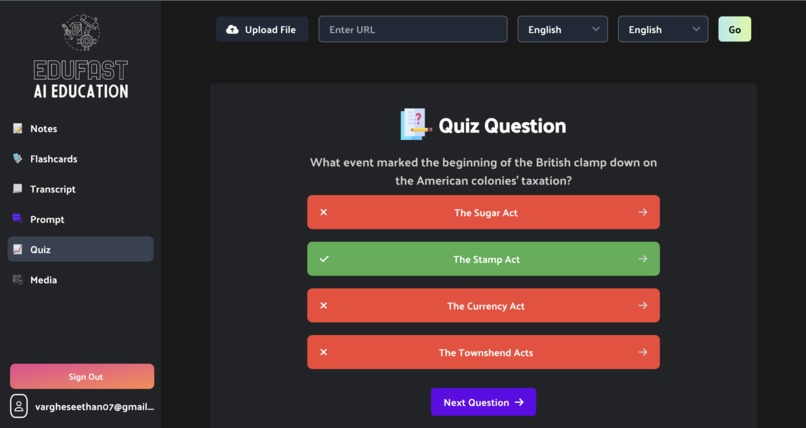
Quizzes
-
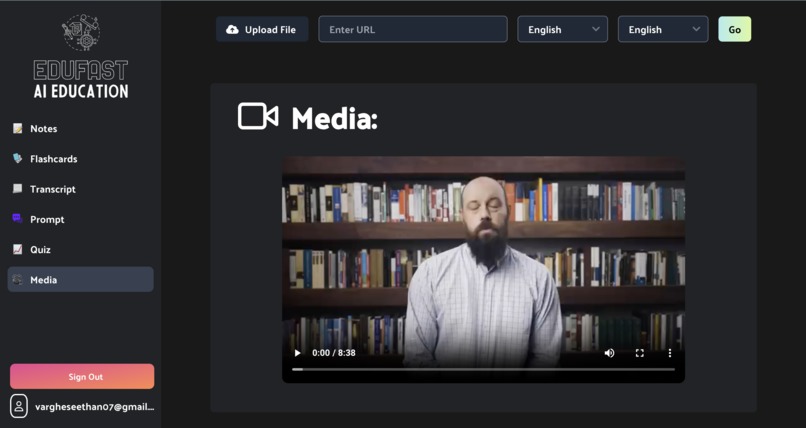
Dubbed content
Inspiration
The idea for eduFast came to us while browsing YouTube, where we stumbled upon a Django tutorial in Hindi. Despite our limited understanding of the language, we could see the content was valuable, but we struggled to follow along. That’s when we realized how much valuable knowledge is locked behind language barriers, preventing people from accessing information globally.
In that moment, we envisioned a solution—something that would make learning from any source, in any language, easy and accessible. That’s how eduFast was born. We imagined a platform that would break down language barriers, offering translated content in real time. eduFast would take resources from various formats, generate comprehensive notes similar to Quizlet flashcards, and provide interactive quizzes. It would even have a built-in AI tutor to guide users through complex topics, making learning smooth and effortless for everyone.
eduFast embodies the belief that knowledge should be available to everyone, regardless of where they are or what language they speak. It's a tool that uses technology to empower learners worldwide by making educational content truly universal.
What it does
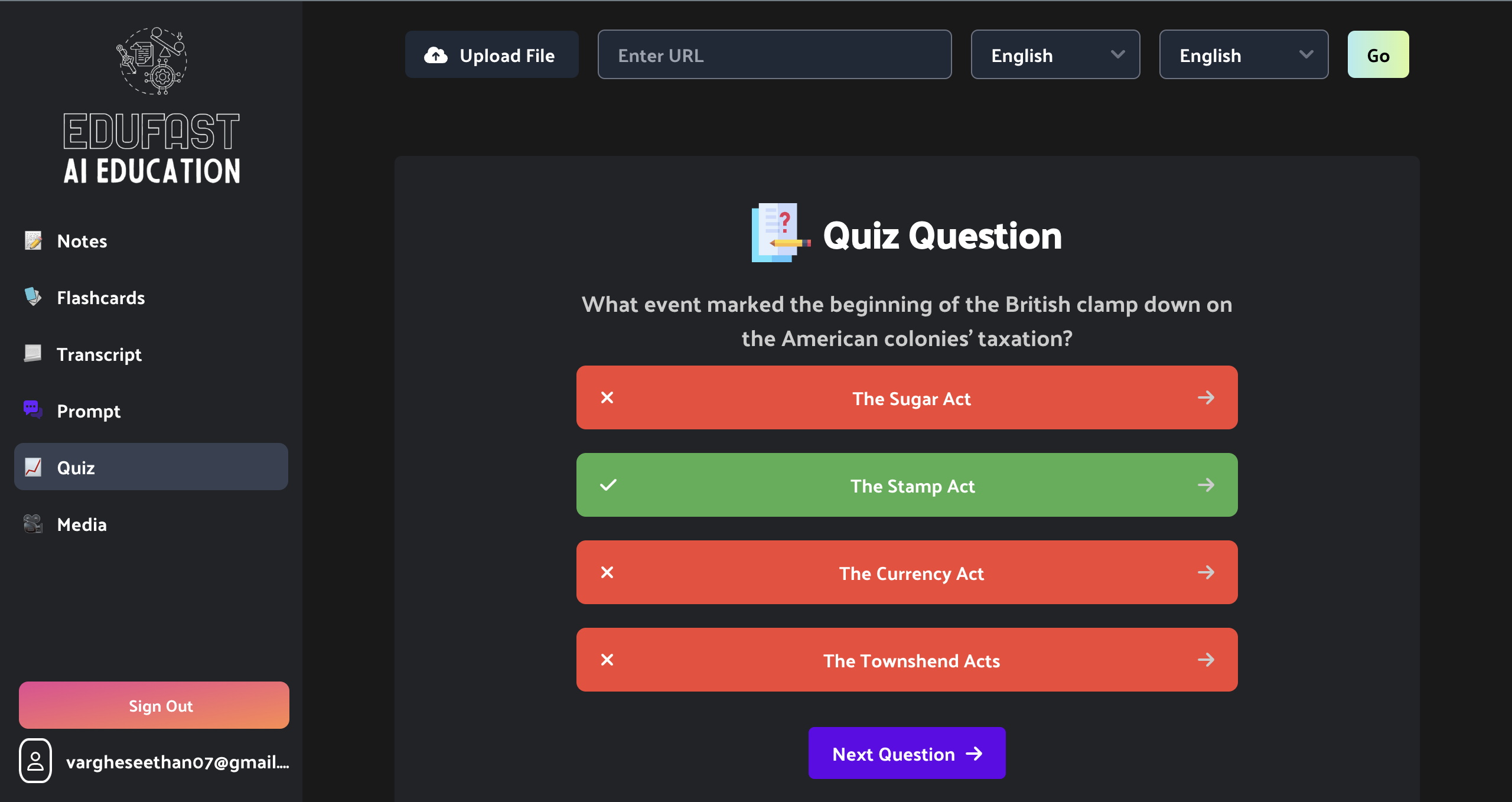
- Accepts input like video URLs, PDFs, .mp4, and .mp3 files.
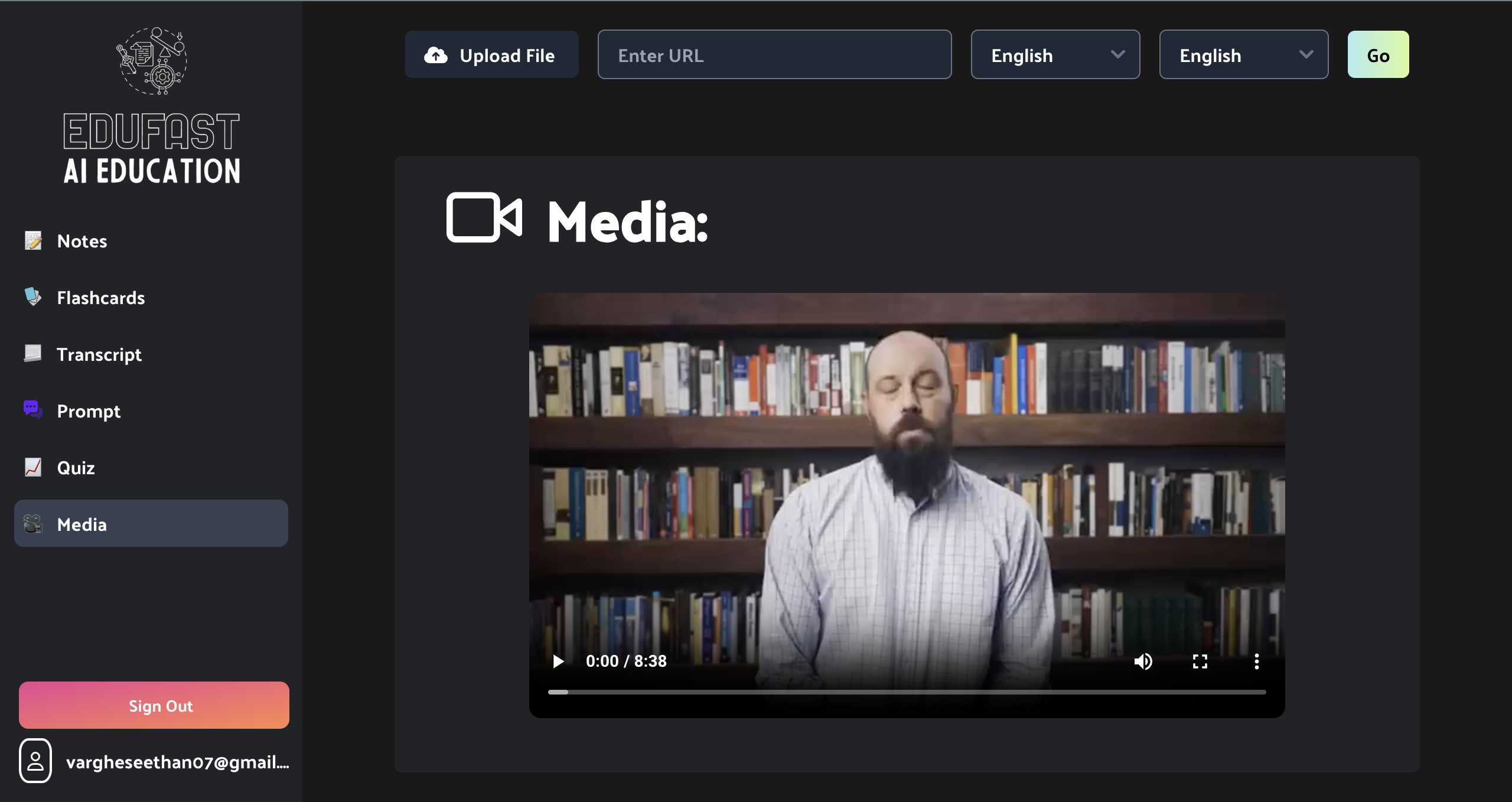
- Provides innovative AI dubbing (a novel feature that hasn’t been done before).
- Generates detailed notes based on the resource.
- Creates flashcards to help users master the subject.
- Offers an AI tutor, powered by ChatGPT, that uses the provided content to offer quizzes, answer questions, and provide feedback
- Generates interactive quizzes ## How we built it We built the frontend using the React framework for a clean user experience, while Flask and Python were used for backend processes. Videos are downloaded using YouTubeAPI, and Assembly AI API was employed to transcribe audio to text. The text was then translated using Google Translator and re-voiced using Microsoft Azure Text-to-Speech (TTS) for the dubbed audio. The dubbed audio was synced with the original video using moviePy.
The same process was applied to podcasts. From the transcript, we generated notes using the OpenAI GPT-3.5 Turbo API, followed by generating flashcard questions and answers, which were presented in JSON format. We also developed a GPT-like AI tutor, based on the transcript, to answer user questions and provide interactive quizzes. For PDFs, we used Convert API to convert them to text and followed the same process as with videos.
Challenges we ran into
Formatting flashcards into proper JSON structure. Using moviePy effectively to sync the audio with the video. Learning to connect the React frontend with the Flask backend. Finding affordable APIs, such as Microsoft Azure TTS, which offered excellent value. Handling English-to-English conversions, which required retaining the original video and posed storage issues. Planning for future scalability, such as storing videos efficiently based on user IDs.
Accomplishments that we're proud of
AI Dubbing Innovation: Developed a groundbreaking AI dubbing feature to translate and voice content in multiple languages. Comprehensive Learning Platform: Successfully integrated features like notes, flashcards, and an AI tutor for a robust educational experience. Seamless Backend-Frontend Integration: Connected React with Flask and Python, ensuring the platform operates smoothly. Strategic Use of APIs: Leveraged APIs like Assembly AI and Microsoft Azure TTS for optimal functionality at a low cost. Streamlined Workflows: Implemented an efficient process for transcription, translation, and content generation. User-Centric Design: Created an intuitive interface with accessibility in mind, making it easy to navigate. Problem-Solving Skills: Overcame technical challenges like JSON formatting and API integration through persistence. Clear Vision for Growth: Outlined a development roadmap, focusing on enhancing video processing, data pipelines, and deploying custom machine learning models.
What we learned
We learned how to integrate complex technologies and APIs, optimize workflows, and develop a platform that effectively addresses real-world educational needs. The experience also taught us the importance of user-friendly design and the challenges of scaling an innovative product.
What's next for EduFast
Optimized Video Processing: We aim to reduce processing times, enabling a 30-minute video to be transcribed and translated in seconds with custom-built machine learning models. Efficient Data Pipelines: Implement advanced data pipelines to quickly handle multimedia content and deliver translated material in near real-time. Edge Computing: Explore edge computing solutions for faster transcription and translation, even in low-bandwidth settings. Streamlined UI: Redesign the interface for quick and easy access to content, minimizing clicks and maximizing usability. Performance Monitoring: Implement real-time system monitoring to track user feedback and system efficiency, ensuring fast and reliable service. Building Custom Models: Develop proprietary machine learning models to enhance accuracy and speed, reducing reliance on third-party APIs. Deployment: Utilize Docker and Google Cloud services (with $300 in free credits) for scalable deployment.


Log in or sign up for Devpost to join the conversation.