-
-
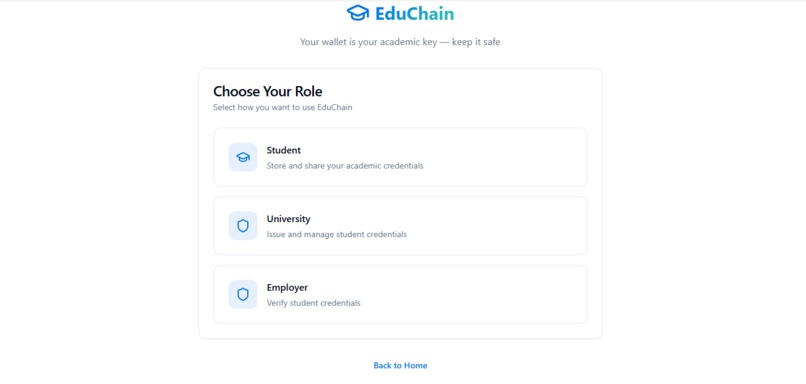
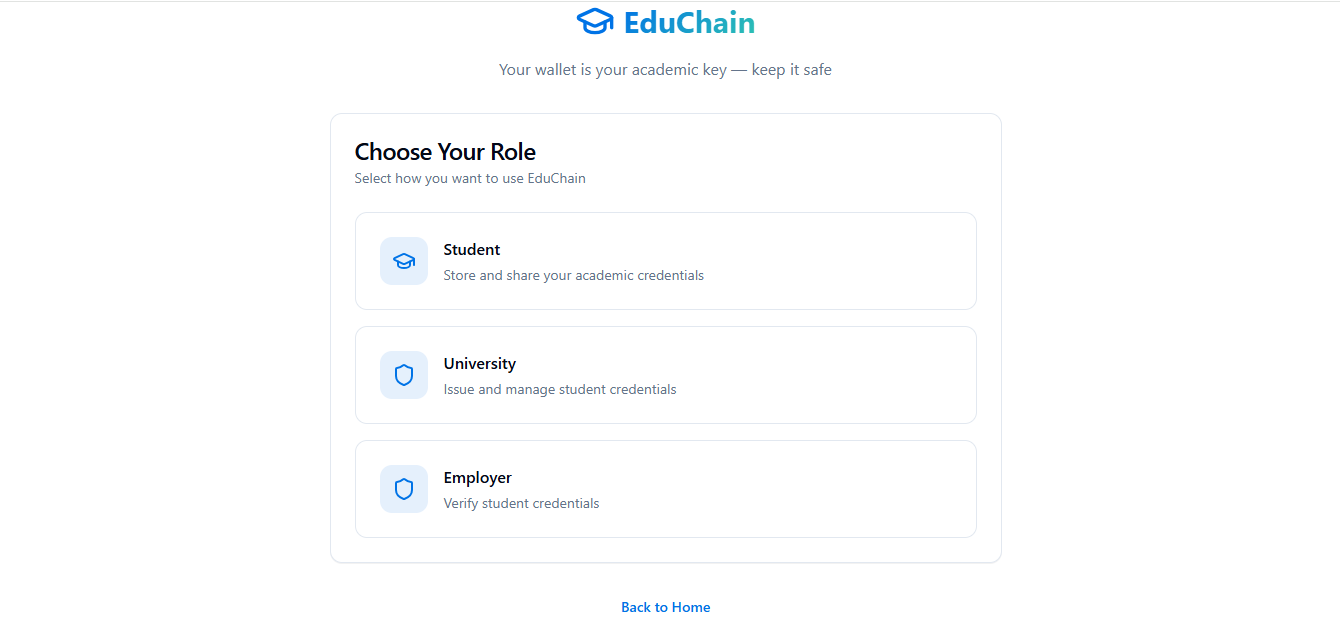
Dashboard-Light Mode
-
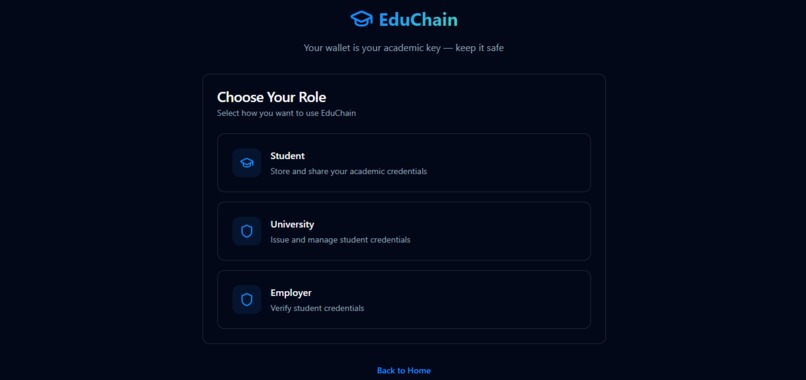
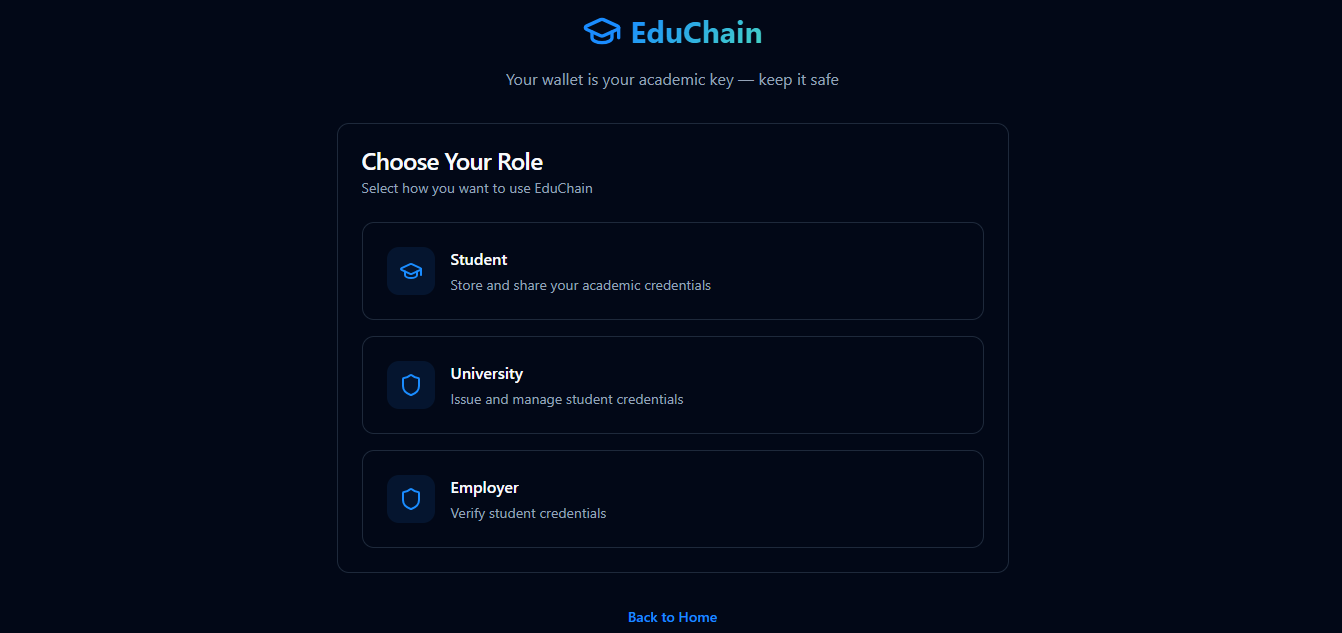
Dashboard-Dark Mode
-
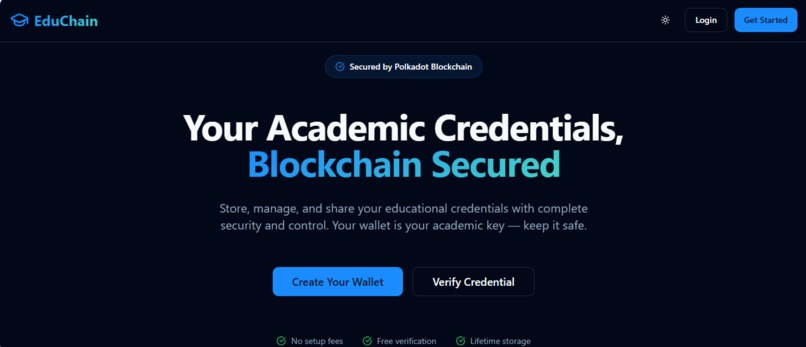
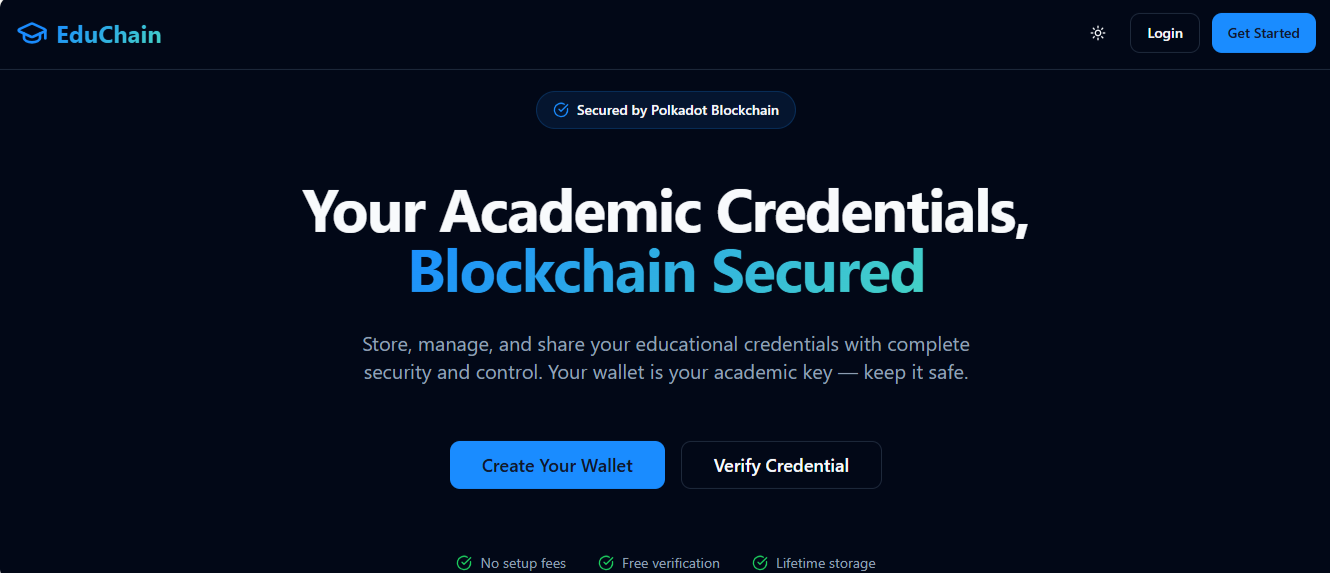
Home Page-Dark Mode
-
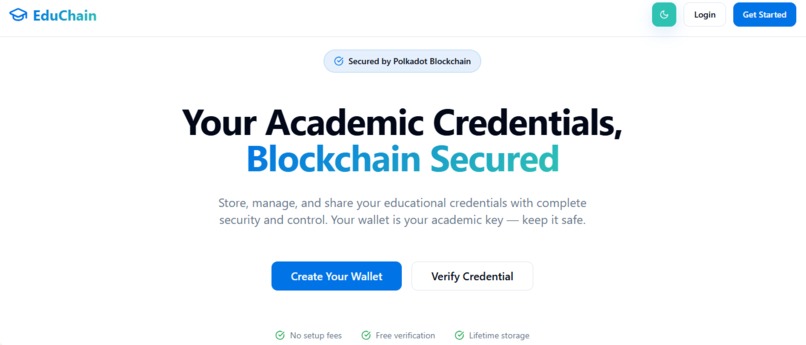
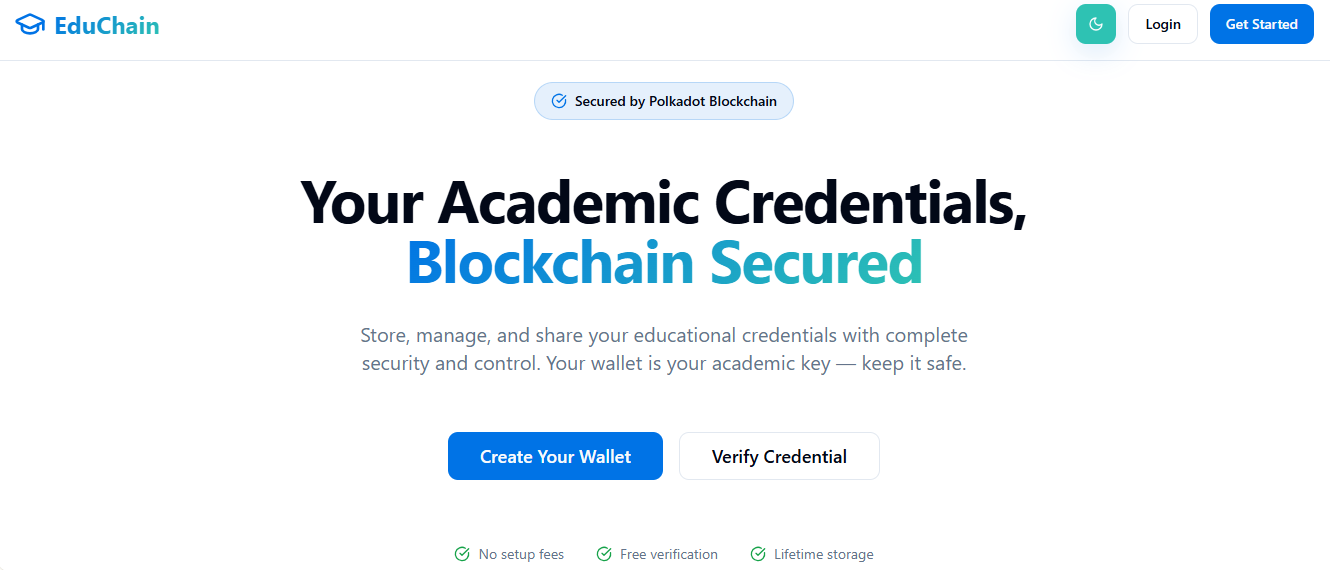
Homepage-Light Mode
Inspiration & Problem
I noticed that students often struggle to securely manage, share, and verify their academic credentials. Academic records are fragmented, easily lost, and sometimes forged. Employers and universities spend significant time manually verifying certificates, and academic fraud is a global issue. Existing centralized solutions are slow, insecure, or inaccessible.
This inspired me to create EduChain, a decentralized, student-owned credential wallet that puts students in full control of their academic identity while enabling instant, trustworthy verification.
What I Do & My Solution
EduChain is a secure, decentralized platform that allows students to store, verify, and share academic credentials — including grades, certificates, transcripts, and achievements — in a tamper-proof blockchain wallet. Students can instantly share verified credentials with employers, universities, or other institutions, while maintaining privacy and security.
I designed EduChain with the following key features:
Student Wallet: Secure storage for transcripts, certificates, and achievements; accessible via web or mobile interface.
Credential Verification: Institutions issue digitally signed credentials; anyone can verify authenticity instantly via QR code or verification link.
Decentralized Blockchain Storage: Credentials are stored on a blockchain (or simulated blockchain for MVP), ensuring tamper-proof, verifiable, and transparent records.
Shareable Academic Portfolio: Students can share verified credentials with customizable permissions.
Privacy-Preserving Design: Students control which credentials are shared; only the verified credential hash and issuer signature are visible publicly.
Optional Gamification / Badges: Students earn verified badges for achievements or skills, stored directly in their EduChain portfolio.
How It Works (MVP Workflow)
Institution issues credential → digitally signs it → sends to student’s wallet.
Student receives credential → stored securely in wallet.
Student shares credential → generates QR code or verification link.
Recipient scans QR / clicks link → verifies authenticity using blockchain hash and issuer signature.
This workflow ensures tamper-proof, globally verifiable credentials while giving students full control over their academic data.
How I Built It
I used blockchain technology to ensure secure, verifiable credential storage. My tech stack includes:
Frontend: React + Tailwind CSS with animated UI for wallet and credential display
Backend: Node.js + Express (or Python FastAPI)
Database: MongoDB (stores wallet metadata and issued credential hashes)
Blockchain Layer: Simulated or real blockchain (Ethereum testnet, Polygon, or Hyperledger for MVP)
Cryptography: Public/private key signatures for credential authenticity
QR Code & Verification: QR code generation library + verification endpoint
Challenges I Ran Into
Balancing security and usability
Ensuring fast credential verification without compromising tamper-proof integrity
Integrating blockchain features while keeping the interface intuitive
Accomplishments I'm Proud Of
Built a fully functional decentralized credential wallet
Enabled instant, tamper-proof verification of academic credentials
Created a scalable platform ready for real-world adoption
What I Learned
Hands-on experience with blockchain, smart contracts, and secure data management
The importance of user-centered design: balancing security with usability is critical
How to handle credential verification at scale
What's Next for EduChain
Expand support to more institutions
Integrate skill endorsements, micro-certifications, and AI-driven analytics
Make EduChain the go-to platform for secure, verifiable academic credentials worldwide
Built With
- html5
- javascript
- lovable.dev
- polkadot/substrate
- react.js
- tailwind

Log in or sign up for Devpost to join the conversation.