-
-
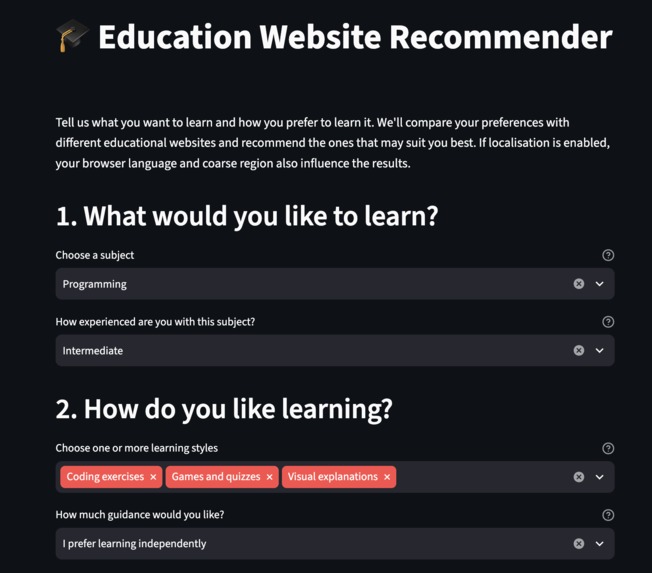
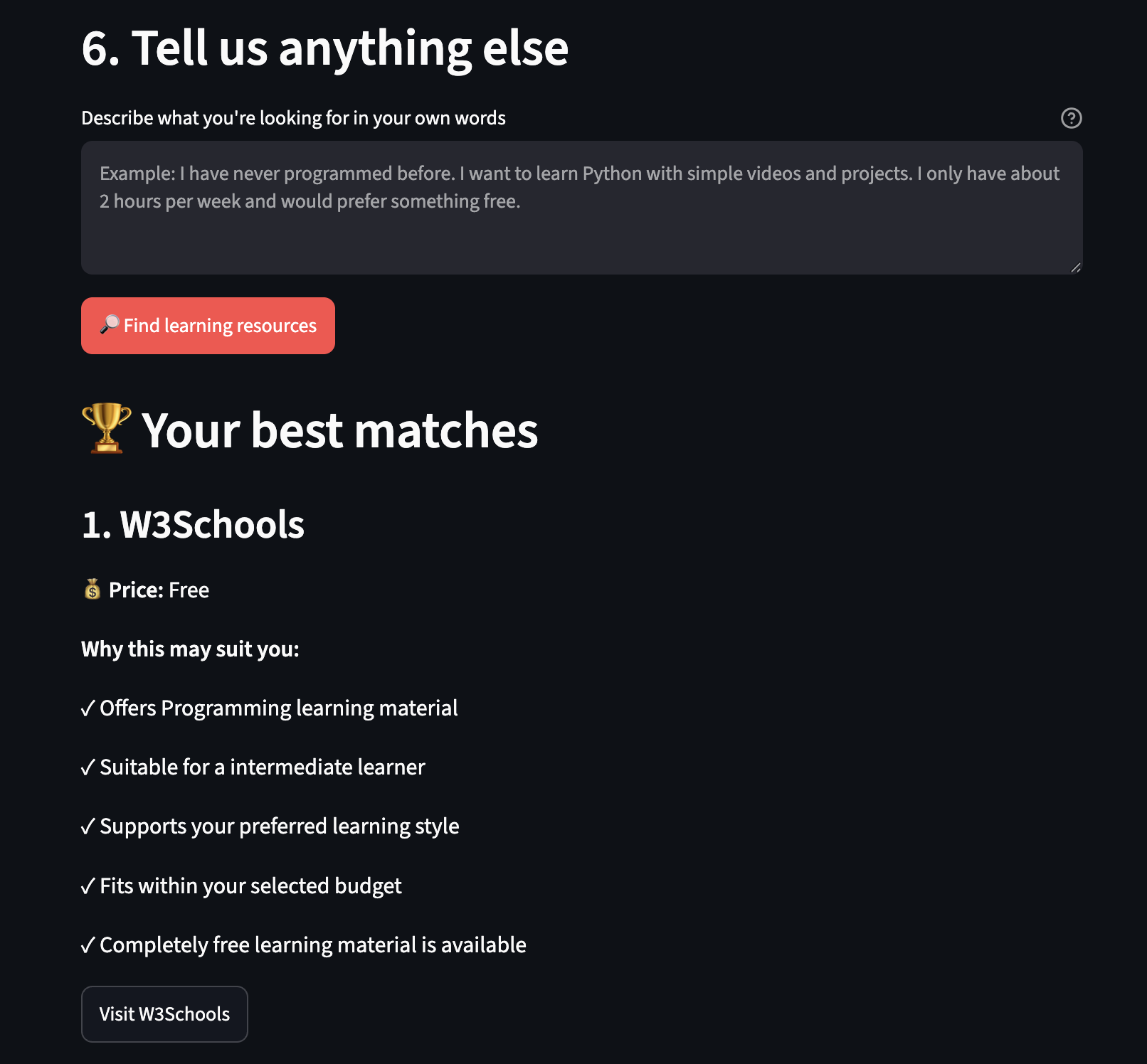
Website prompts and questions part 1
-
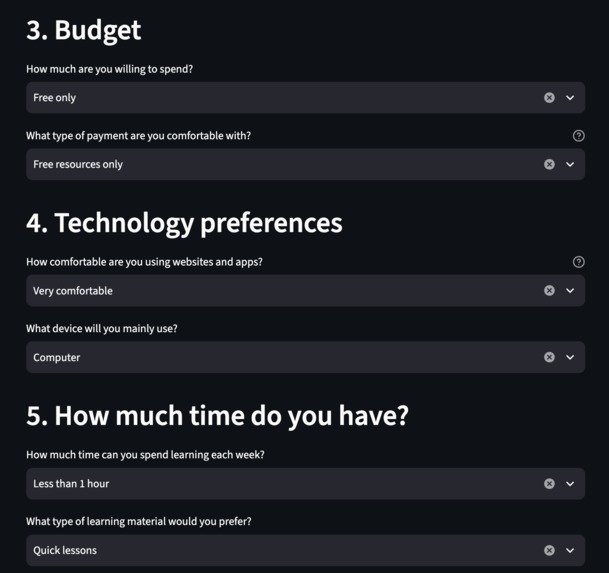
Website prompts and questions part 2
-
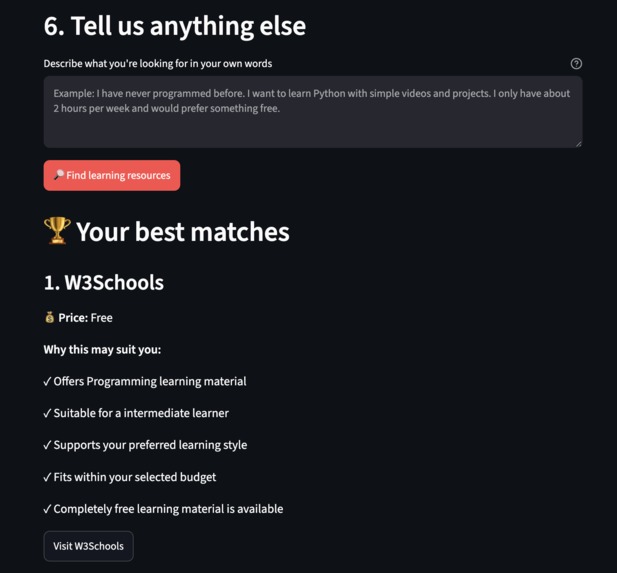
Website prompts and questions part 3
-
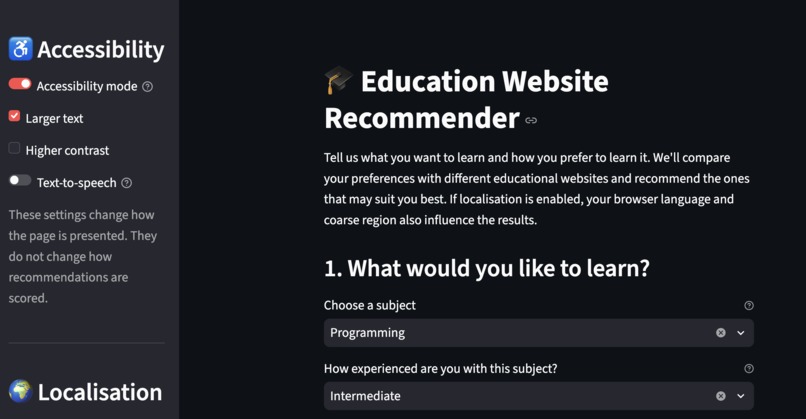
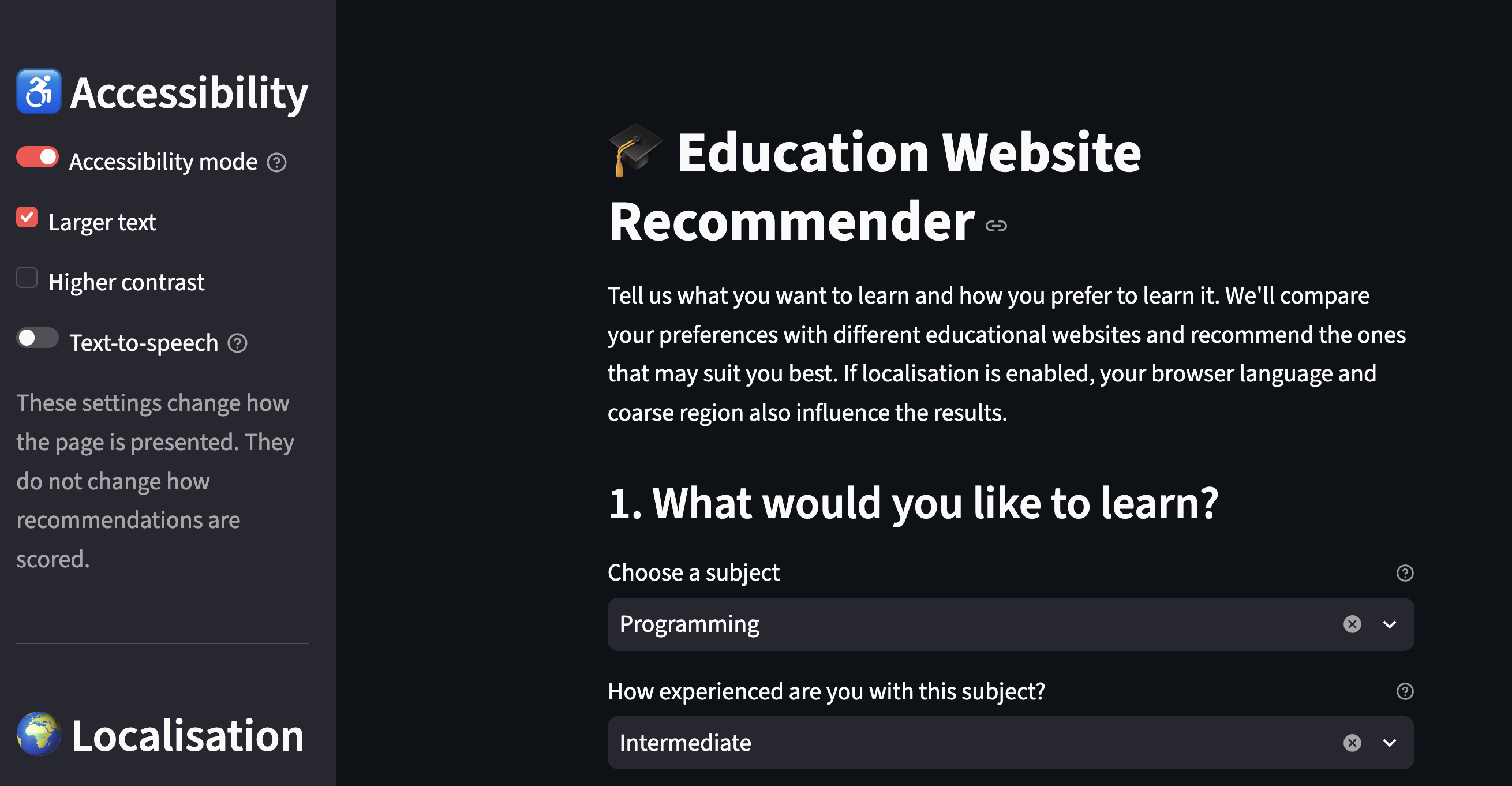
Large Text Feature
-
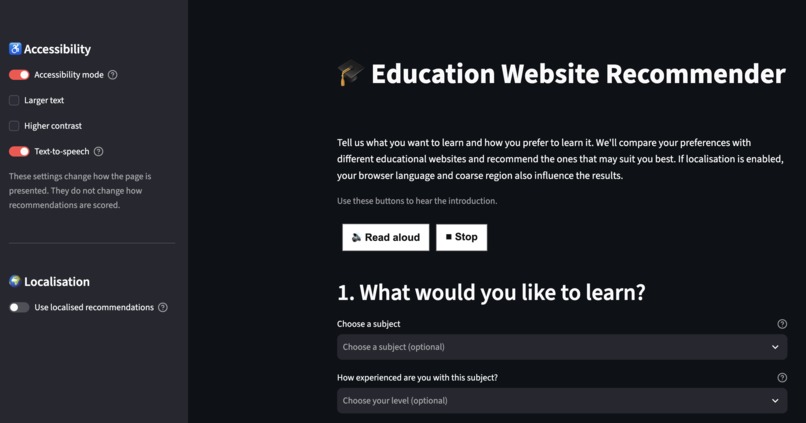
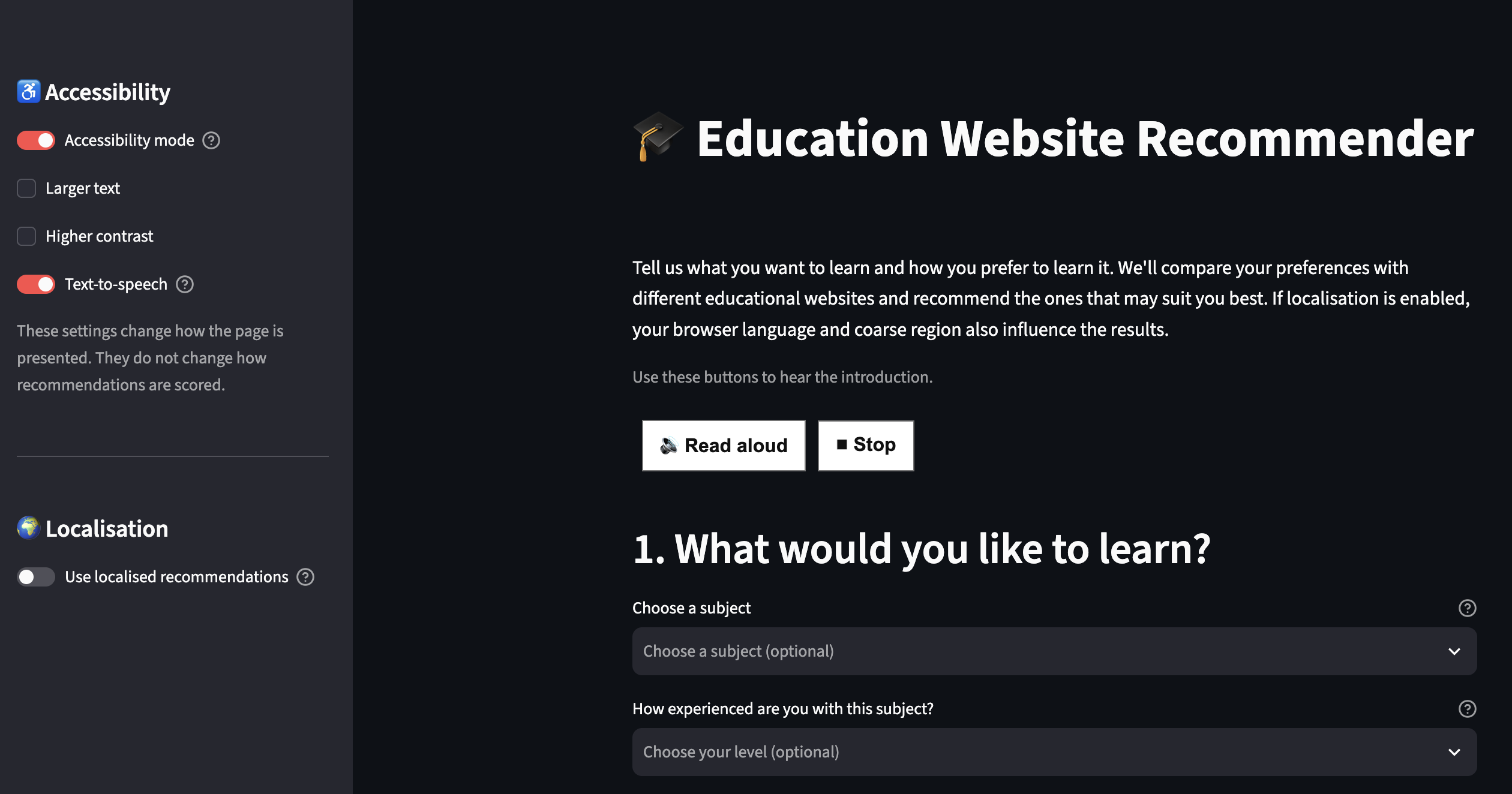
Text to speech option
-
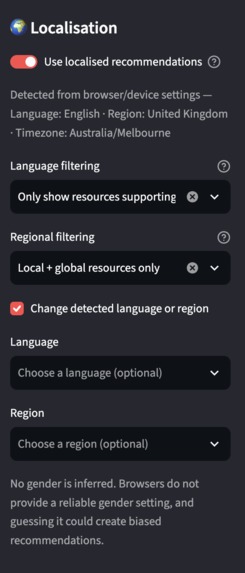
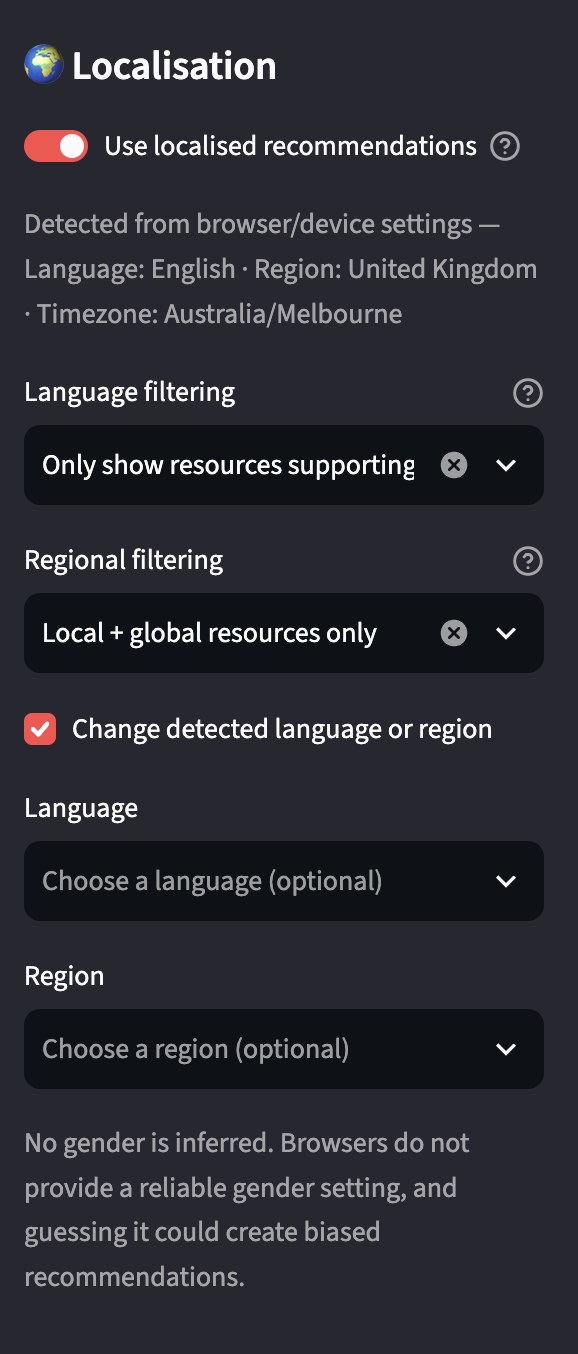
Localisation feature
Selected Track: Access to Education
AI acknowledgement: We have used ChatGPT in the development with the app to get a framework for the code and we made small adjustments to fit our personal preferences. We used the streamlit library for python to host our website.
Github Repository link: https://github.com/nicholastran716-lang/Recommendation_edication_site_website-HACKMELBOURNE-.git
Inspiration
We were inspired by the United Nations Sustainable Development Goals, which highlight that many children and young people still lack the digital skills needed to use the Internet effectively and safely. We wanted to help students more easily find educational resources that suit their individual needs, preferences, and circumstances.
What it does
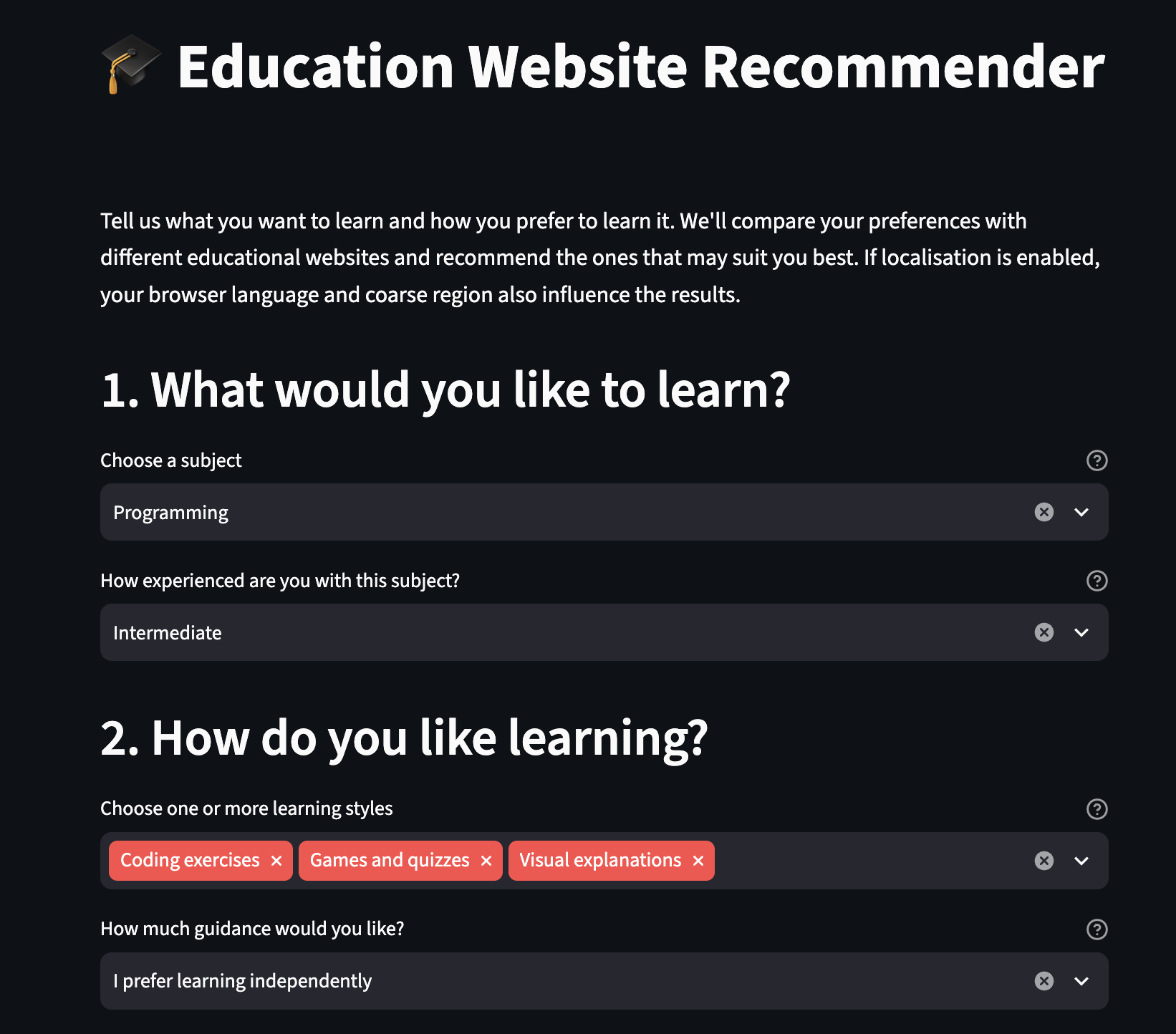
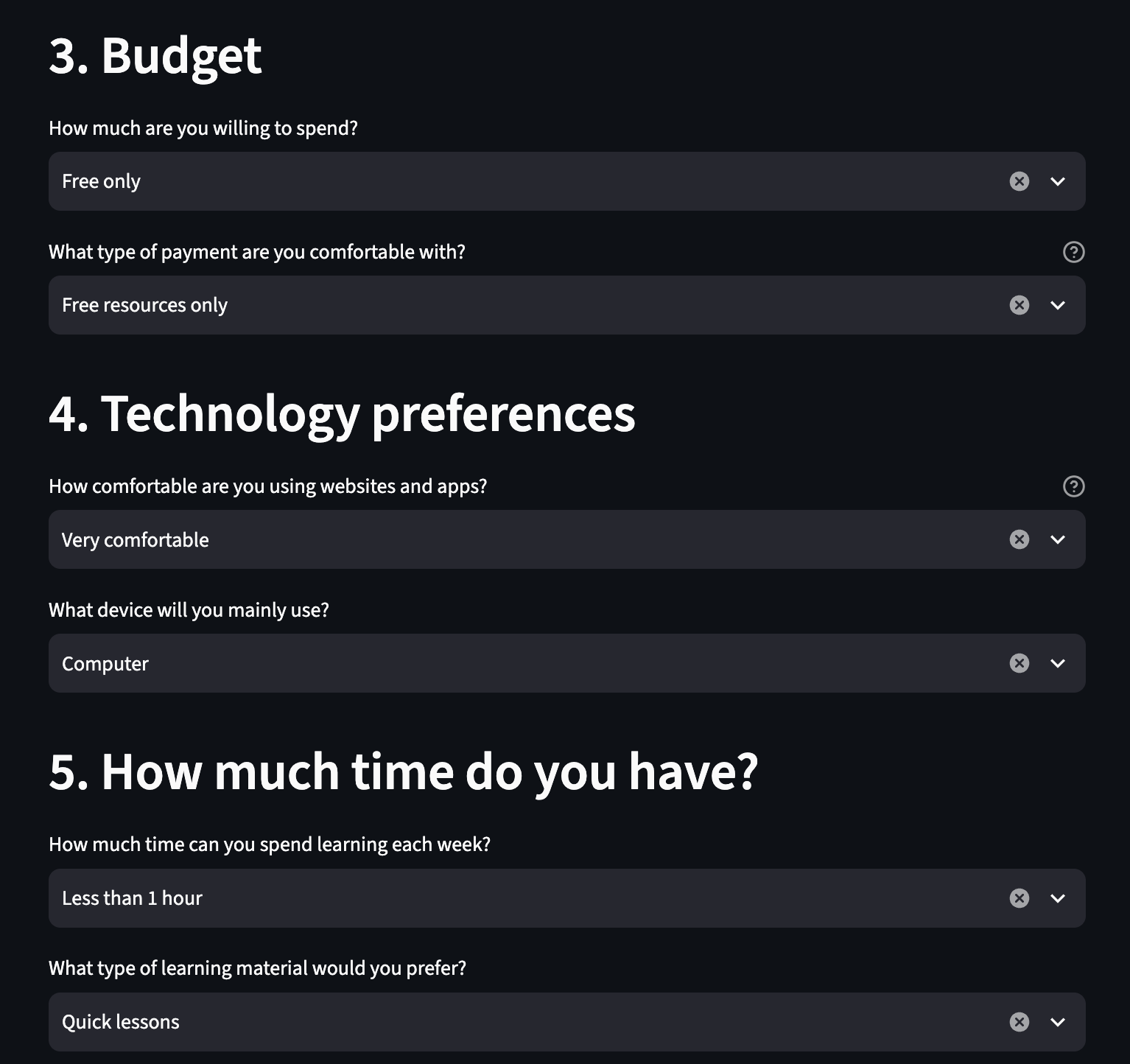
Our website allows students to enter preferences such as:
- Subject
- Learning style
- Language
- Region
- Accessibility needs
Based on these preferences, the website recommends educational resources that are most relevant to the student.
How we built it
We built our project using Python and Streamlit, with Visual Studio Code as our main development environment.
We created a recommendation system that compares the user's selected preferences with information stored about different educational websites. The system then returns the resources that best match the user's needs.
We also used GitHub for version control and collaboration, allowing multiple team members to work on the project while keeping track of changes.
Challenges we ran into
One of our first challenges was deciding on a project idea that meaningfully addressed the Accessible Education track.
After choosing our idea, we had to decide which features would provide the most value to students and how we could implement them within the limited time available. We also faced challenges while integrating different features and coordinating changes between team members using GitHub.
Accomplishments that we're proud of
We are proud that we were able to create a working recommendation system that suggests educational resources based on a student's individual preferences.
We were also able to include factors such as language, region, learning preferences, and accessibility needs, helping make the recommendations more relevant to different types of learners.
What we learned
Throughout the project, we learned how to:
- Build an interactive web application using Streamlit
- Develop a recommendation system using Python
- Use VS Code effectively for development
- Use GitHub for version control and team collaboration
- Manage tasks and work effectively as a small development team
Most importantly, we learned how to turn an initial problem into a functional prototype within the time constraints of a hackathon.
What's next for Education Recommendation Website
Our next goal is to significantly expand our database of educational resources.
Currently, the system mainly contains larger and more well-known educational websites. By adding more specialised and regional resources, we could provide more personalised recommendations for students with different subjects, languages, locations, accessibility requirements, and learning preferences.
In the future, we would also like to improve the recommendation system so that it can consider a wider range of factors and provide even more accurate results.

Log in or sign up for Devpost to join the conversation.