-
-
1
-
2
-
3
-
4
-
5
-
6
-
8
-
7
Building a Personalized Learning Platform: My Education Innovation Journey
Project Background
This project focuses on exploring how technology can improve the learning experience and make education more personalized, accessible, and effective.
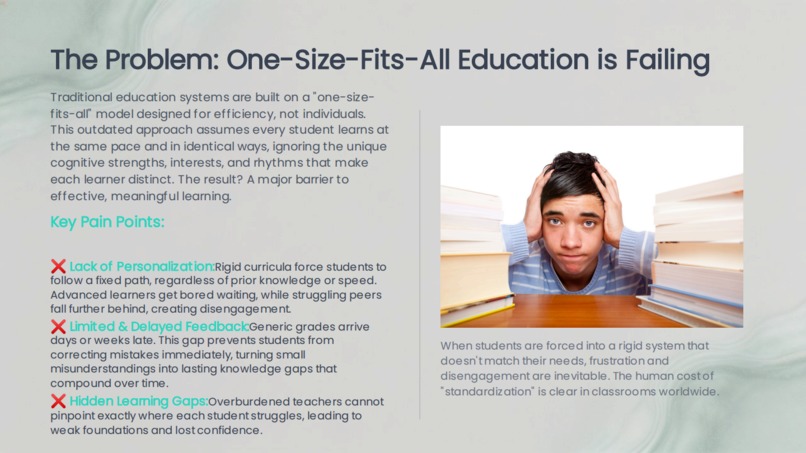
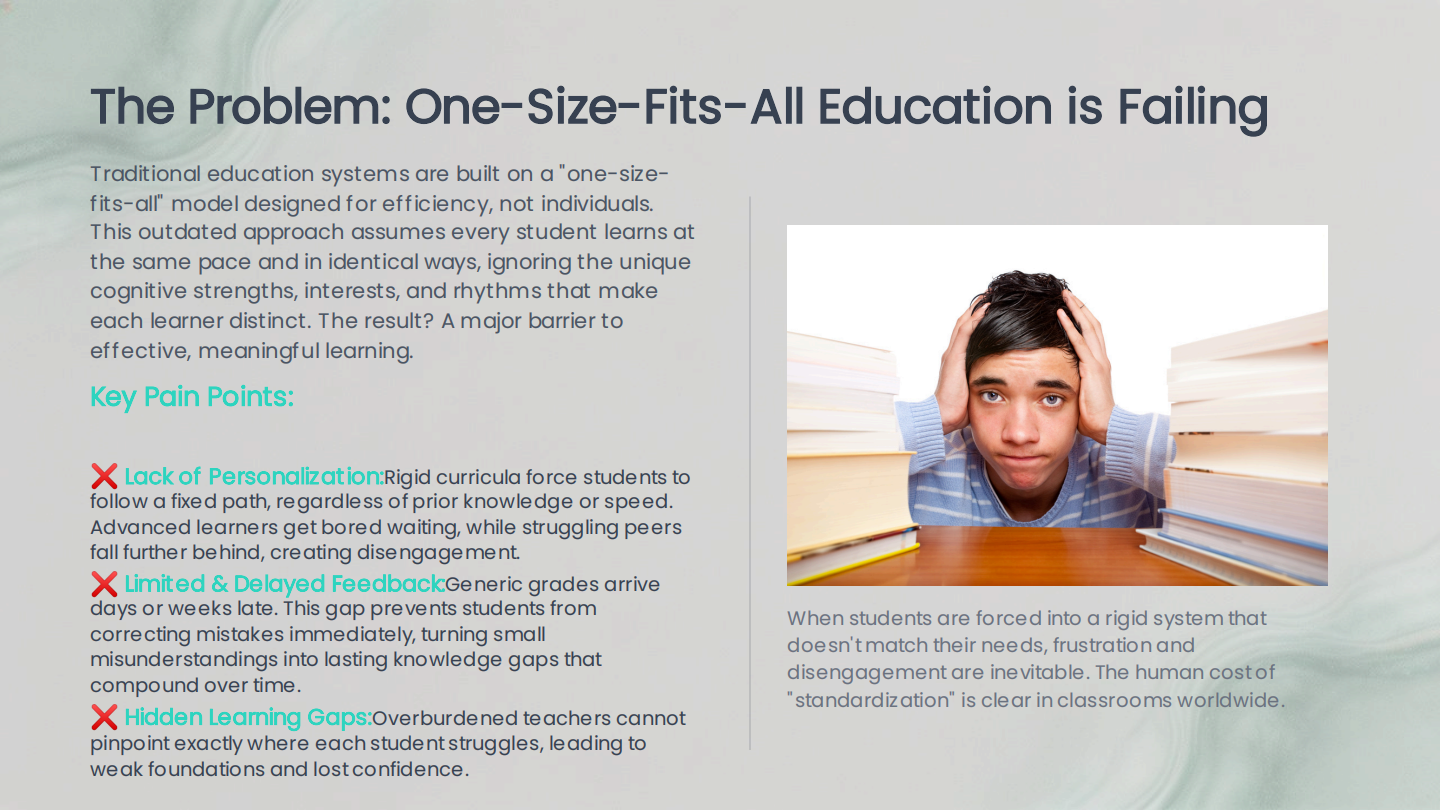
Traditional education often follows a "one-size-fits-all" approach, where students receive the same learning materials and pace regardless of their individual needs.
However, every student learns differently:
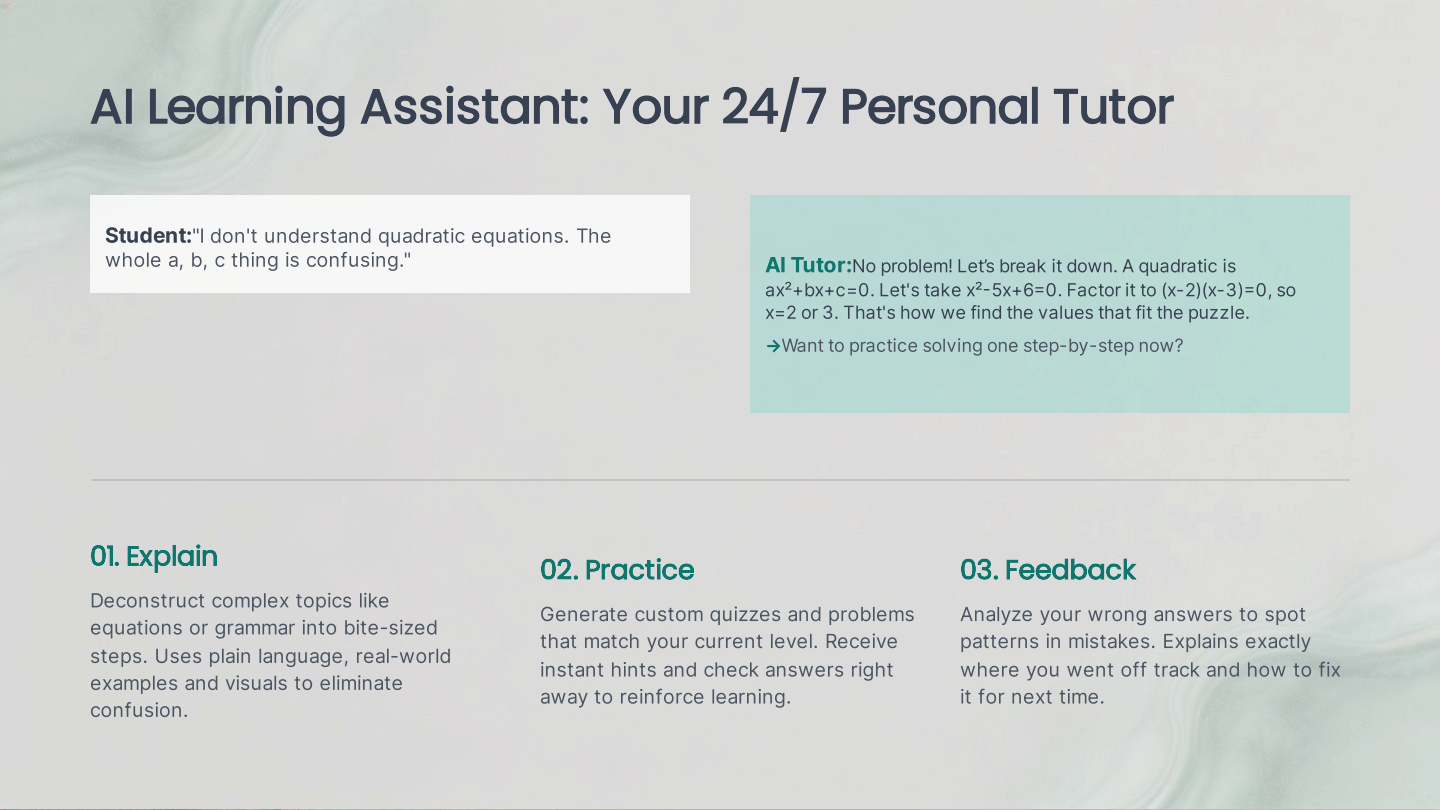
- Some students need more explanations.
- Some need more practice.
- Some learn better through visual examples.
- Some need personalized feedback.
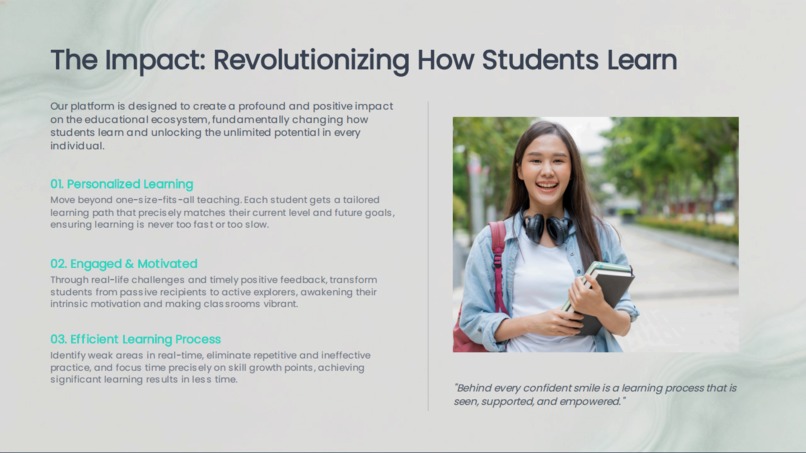
The goal of this project was to create a learning system that adapts to individual students and helps them achieve better learning outcomes.
The core idea was:
Use technology and data-driven methods to create a more personalized and student-centered learning experience.
1. My Inspiration
My inspiration came from observing a common problem in education:
Why do some students struggle even when they spend a lot of time studying?
I realized that the problem is not always a lack of effort. Often, students face challenges because traditional learning methods cannot fully address their individual differences.
For example:
- A fast learner may feel bored by repetitive lessons.
- A struggling learner may feel overwhelmed by difficult materials.
- Students may not know which areas they need to improve.
This inspired me to explore a solution that could:
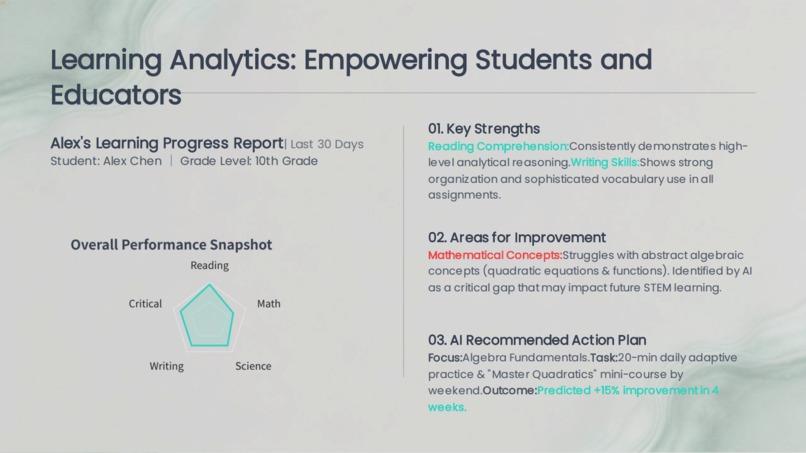
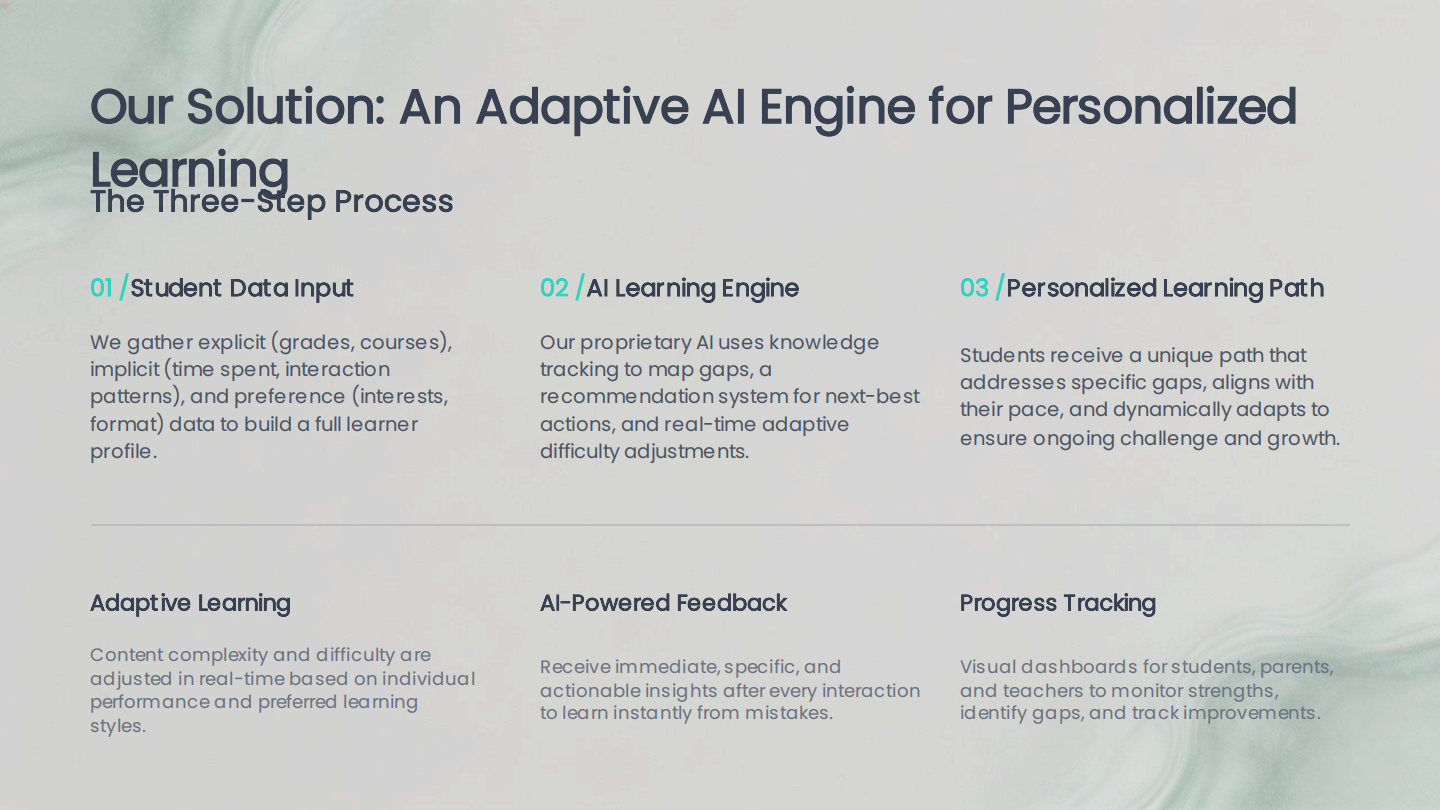
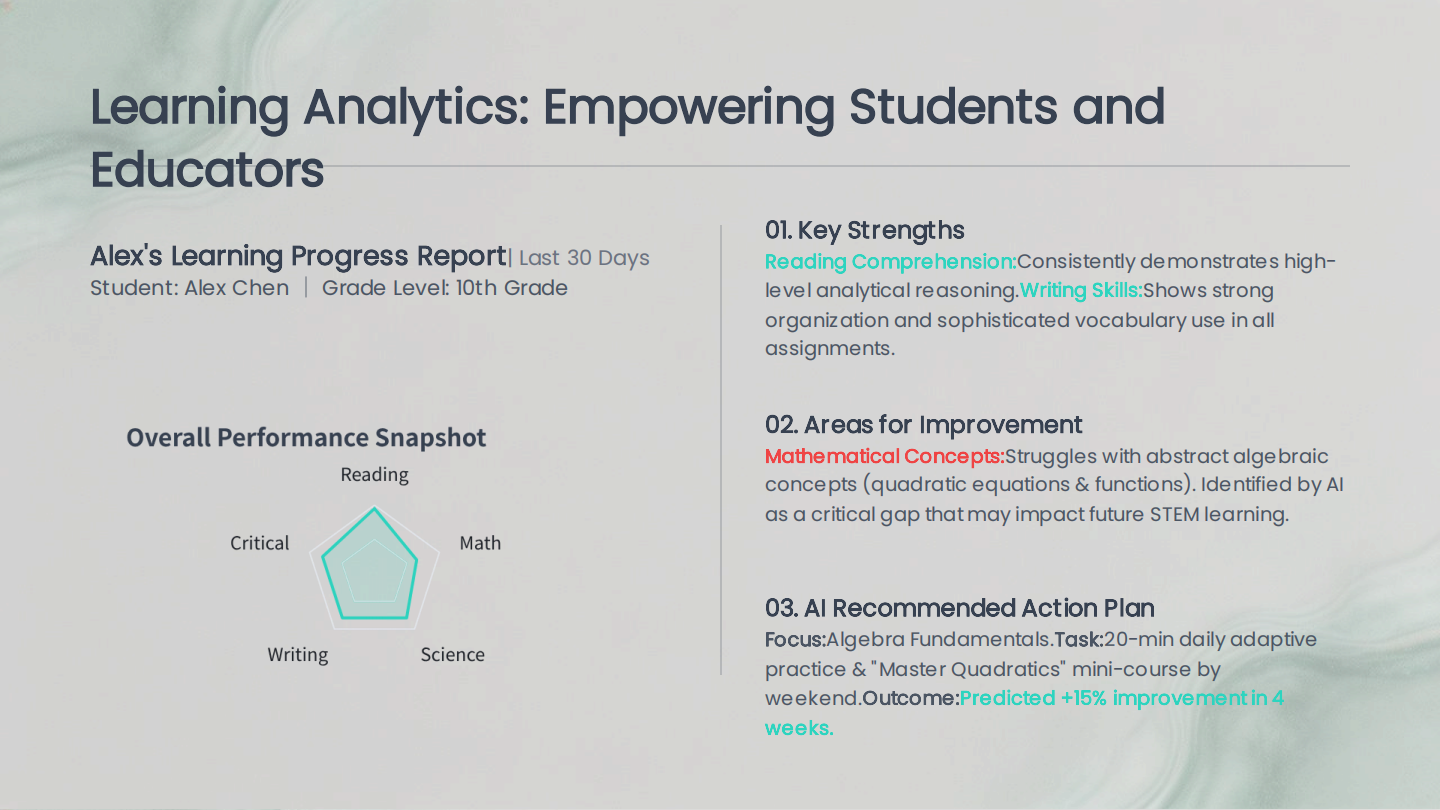
- Understand each student's learning progress
- Identify knowledge gaps
- Provide personalized learning recommendations
- Encourage continuous improvement
Instead of asking:
"How can we teach more?"
I started asking:
"How can we help every student learn better?"
2. What I Learned
2.1 Education Should Be Student-Centered
One of the biggest lessons I learned is that effective education is not only about delivering information.
It is about understanding learners.
A successful learning system should consider:
- Learning speed
- Knowledge level
- Learning habits
- Individual goals
The learning process can be represented as:
$$ Learning\ Outcome = Knowledge\ Input \times Practice \times Feedback \times Motivation $$
If one factor is missing, learning efficiency decreases.
2.2 Data Can Improve Learning Decisions
Before building this project, I thought education was mainly based on teaching experience.
However, I learned that learning data can provide valuable insights.
By analyzing:
- Quiz results
- Learning time
- Completion rates
- Mistake patterns
- Student feedback
we can better understand student needs.
For example:
If a student repeatedly makes mistakes in a specific topic, the system can identify a knowledge gap and recommend additional practice.
The improvement process becomes:
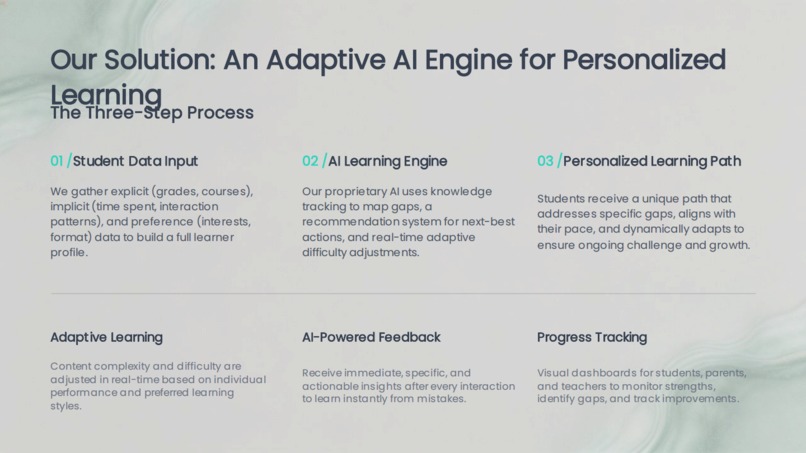
Collect Learning Data
        ↓
Analyze Student Performance
        ↓
Identify Knowledge Gaps
        ↓
Recommend Learning Activities
        ↓
Measure Improvement
2.3 Small Improvements Create Long-Term Growth
Education is not about instant results.
Real learning happens through continuous progress.
I learned that small improvements, repeated consistently, can create significant outcomes.
For example:
If a student improves by only 1% every day:
$$ (1+0.01)^{365}\approx37.8 $$
This demonstrates how consistent improvement can create powerful long-term growth.
3. How I Built the Project
Phase 1: Understanding Learning Problems
The first step was researching common challenges students face.
I collected information through:
- Student interviews
- Learning behavior analysis
- Educational research
- Feedback from teachers and learners
Key problems identified:
- Lack of personalized guidance
- Difficulty tracking progress
- Limited learning feedback
- Low motivation during self-study
Phase 2: Designing the Learning System
Based on these problems, I designed a personalized learning framework.
The system includes:
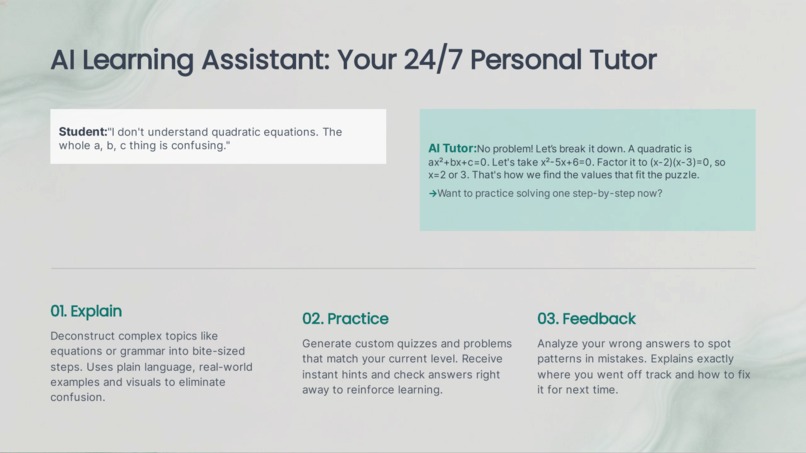
1. Student Profile
Each learner has a unique learning profile:
- Current knowledge level
- Learning goals
- Strengths and weaknesses
- Preferred learning methods
2. Learning Recommendation System
The system analyzes student performance and provides suggestions.
Example:
Student completes a quiz
        ↓
System analyzes mistakes
        ↓
Identifies weak concepts
        ↓
Provides targeted exercises
        ↓
Tracks improvement
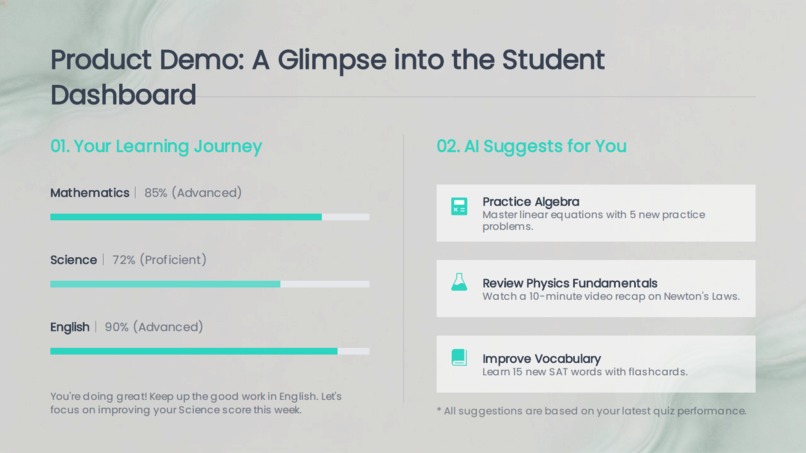
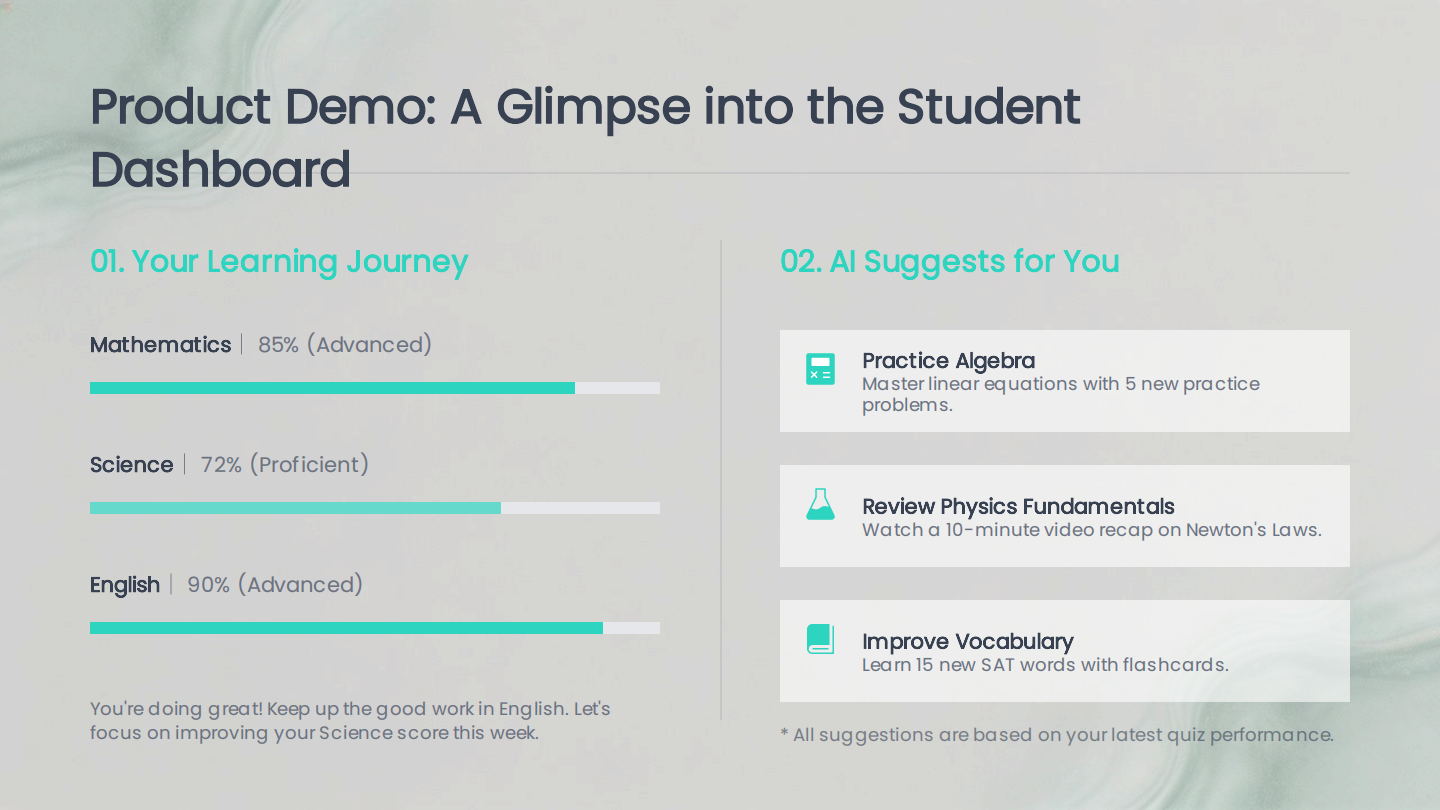
3. Progress Tracking Dashboard
Students can monitor:
- Learning progress
- Completed lessons
- Improvement areas
- Future learning goals
This helps students become more aware of their own learning process.
Phase 3: Testing and Improvement
After creating the first version, I tested the system with users.
I collected feedback about:
- User experience
- Learning effectiveness
- Interface design
- Recommendation accuracy
Based on feedback, I continuously improved the project.
The development cycle was:
Design
 ↓
Build
 ↓
Test
 ↓
Collect Feedback
 ↓
Improve
 ↓
Repeat
4. Challenges I Faced
Challenge 1: Understanding Different Learning Needs
One major challenge was that every student has different learning patterns.
A solution that works for one student may not work for another.
To solve this problem, I focused on:
- Flexible learning paths
- Personalized recommendations
- Continuous feedback collection
Challenge 2: Balancing Technology and Human Interaction
Technology can improve education, but it cannot completely replace teachers.
A major challenge was finding the right balance.
The goal was not:
Replace teachers with technology.
The goal was:
Help teachers and students make better learning decisions.
Technology should support human teaching, not remove the human element.
Challenge 3: Measuring Learning Improvement
Another challenge was defining success.
Learning improvement is difficult to measure because education involves many factors.
I created evaluation methods based on:
- Knowledge improvement
- Learning consistency
- Student engagement
- Feedback quality
A simple measurement model:
$$ Learning\ Growth= Before\ Assessment- After\ Assessment $$
5. Results and Future Direction
Through this project, I learned that education innovation is not only about creating new technology.
It is about understanding human learning.
The project helped me understand:
- How students learn
- How data can support education
- How technology can improve accessibility
- How personalized learning can create better outcomes
In the future, I hope to further develop this project by:
- Integrating more AI-powered learning tools
- Improving personalized recommendations
- Supporting more diverse learners
- Creating more accessible education opportunities
Conclusion
This project changed my understanding of education.
Education is not simply transferring knowledge from teachers to students.
It is a process of discovering potential, building confidence, and creating opportunities.
The future of education should not focus on teaching everyone the same way.
Instead, it should focus on helping every learner find the best way to succeed.
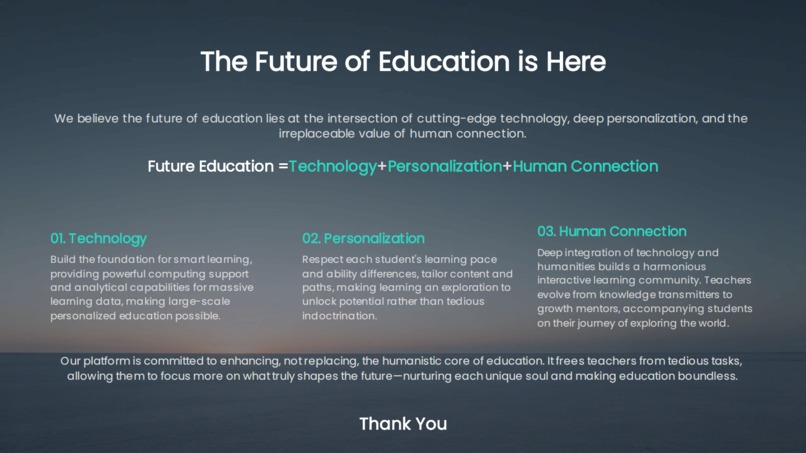
My vision is:
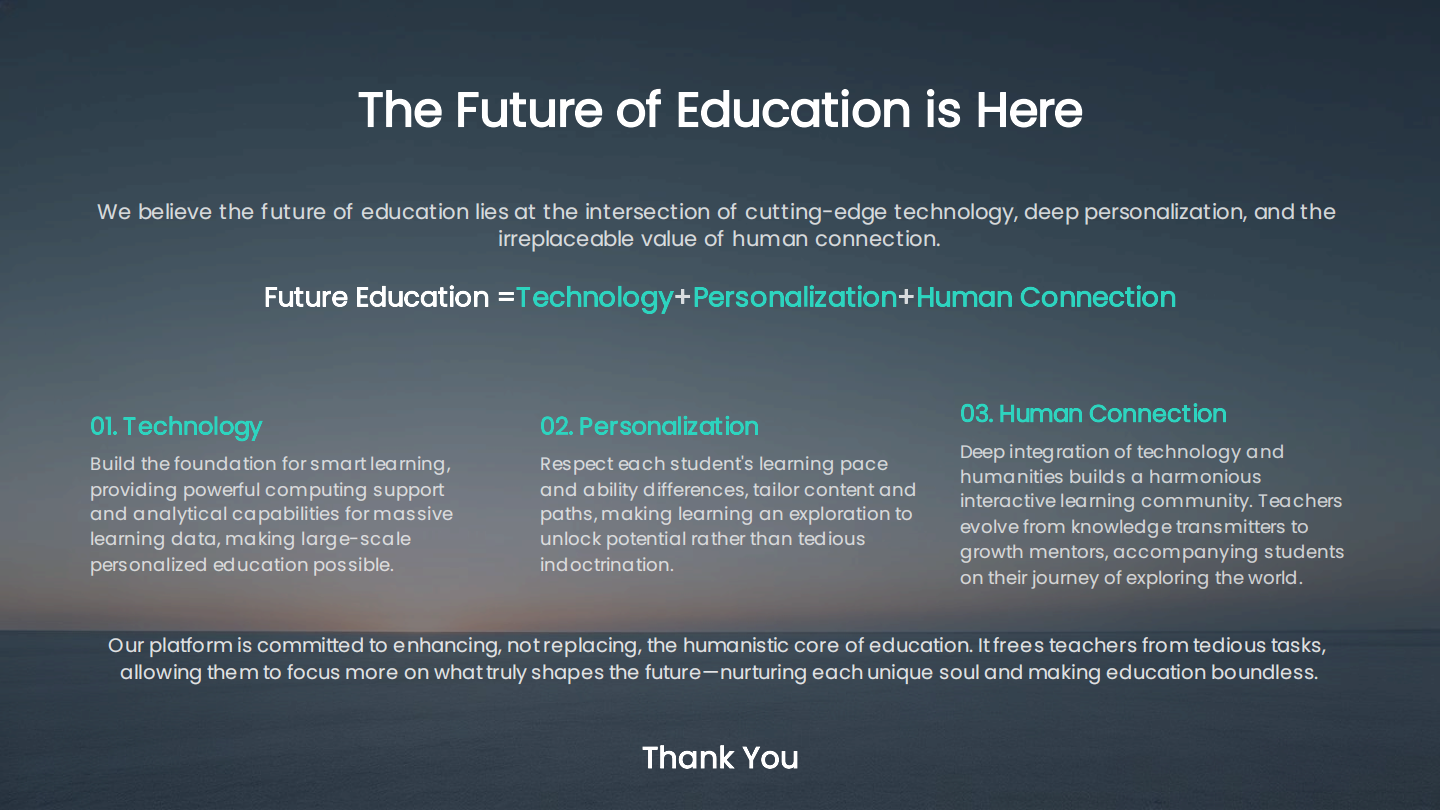
$$ Future\ Education= Technology + Personalization + Human\ Connection $$
By combining innovation with empathy, we can build a more effective and inclusive learning environment.
Built With
- adaptive
- ai
- analytics
- artificial
- curriculum
- design
- development
- digital
- edtech
- education
- educational
- experience
- in
- innovation
- intelligence
- learning
- methodology
- online
- personalized
- research
- student
- student-centered
- teaching

Log in or sign up for Devpost to join the conversation.