-
-
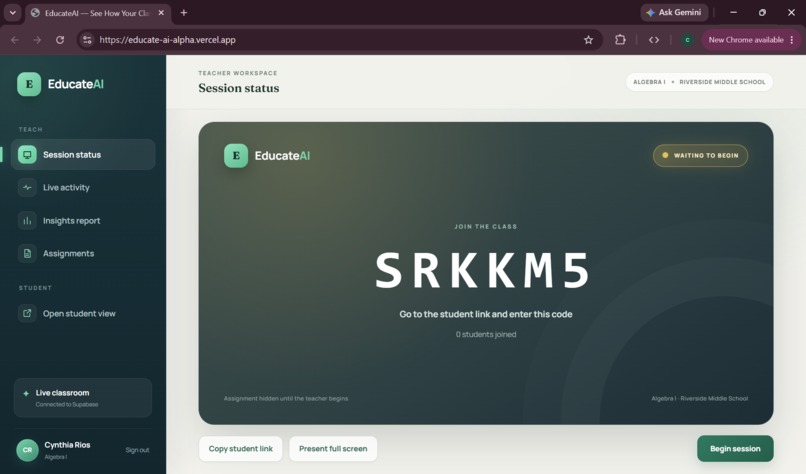
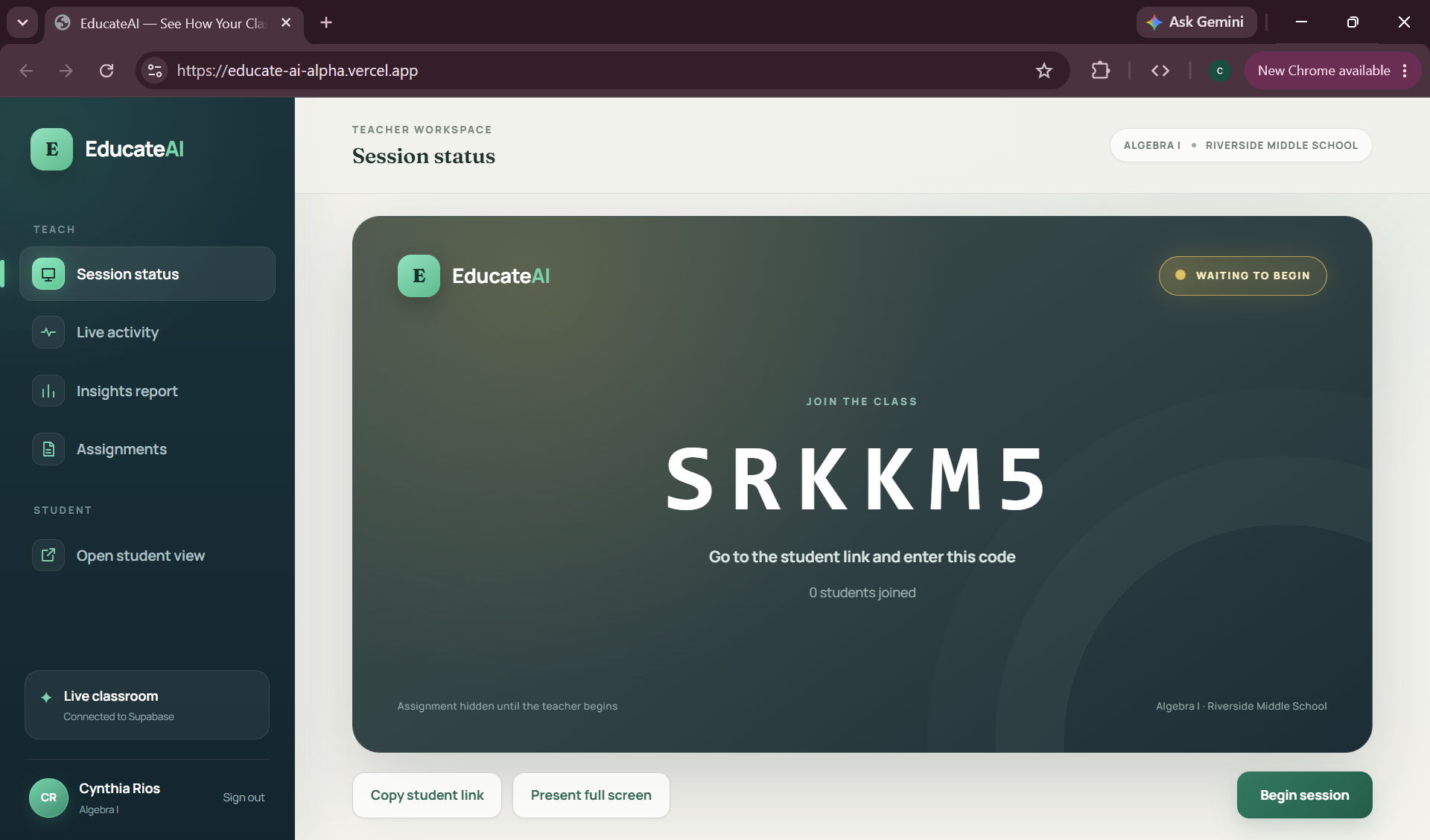
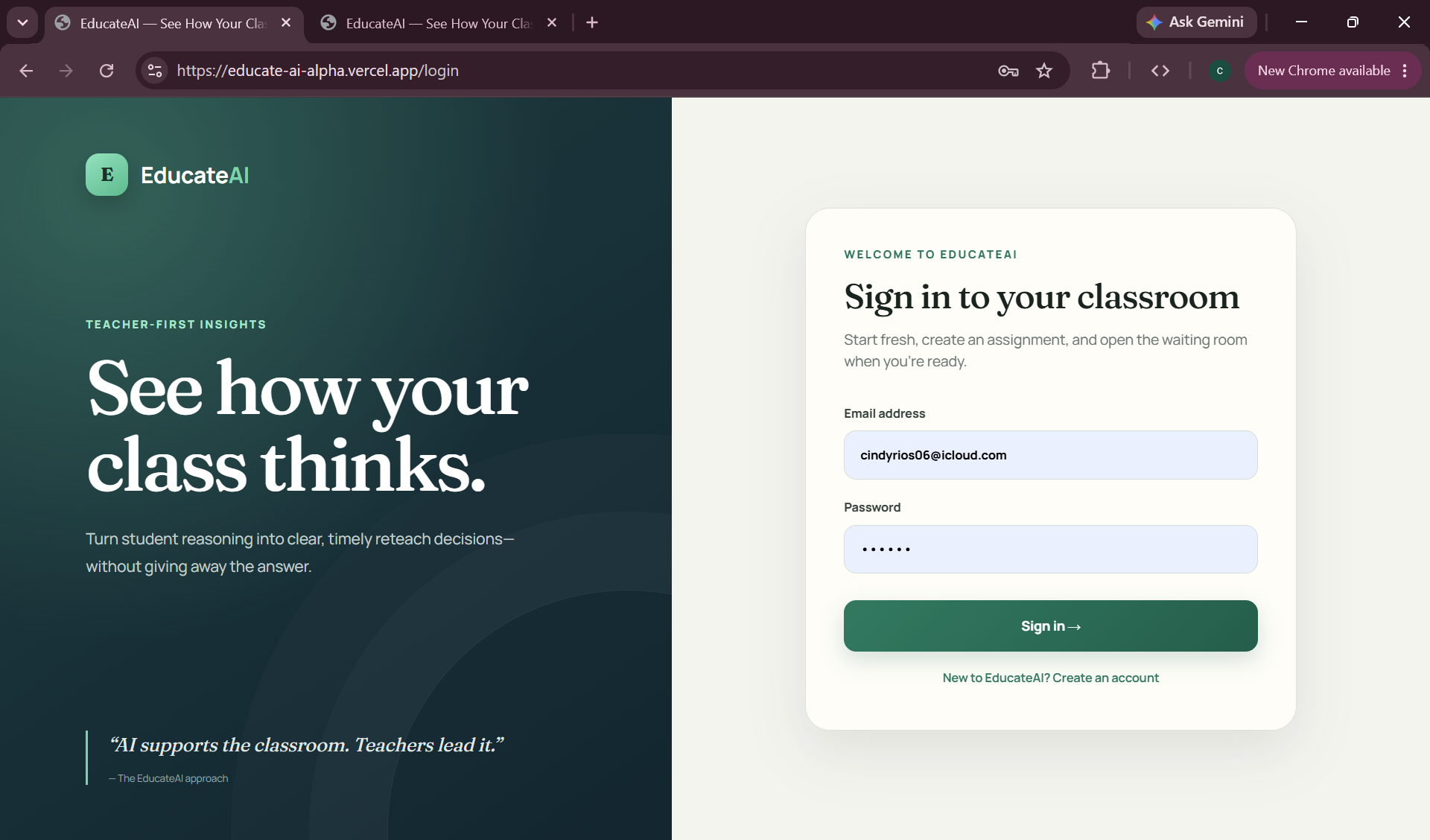
Teachers can launch a waiting room and share a simple code so students can join without creating an account.
-
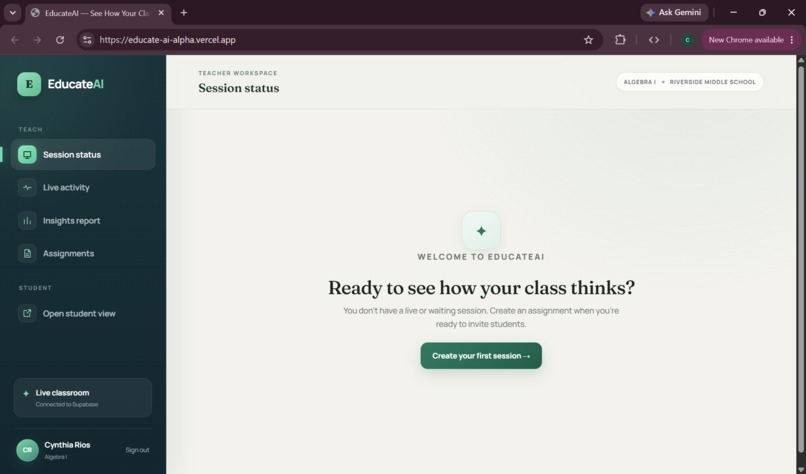
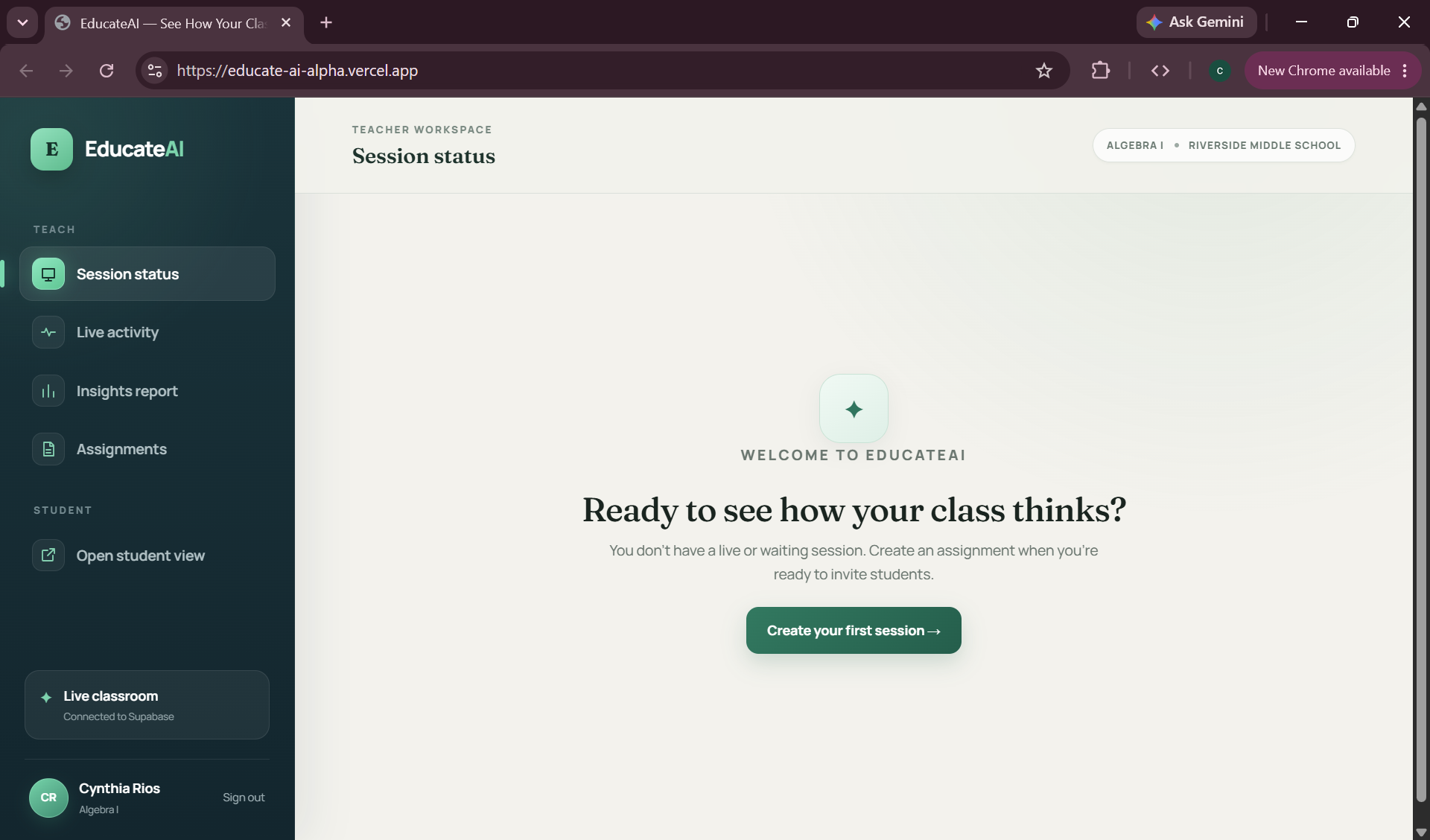
A welcoming teacher dashboard that provides a clear starting point for creating an assignment and launching a live classroom session.
-
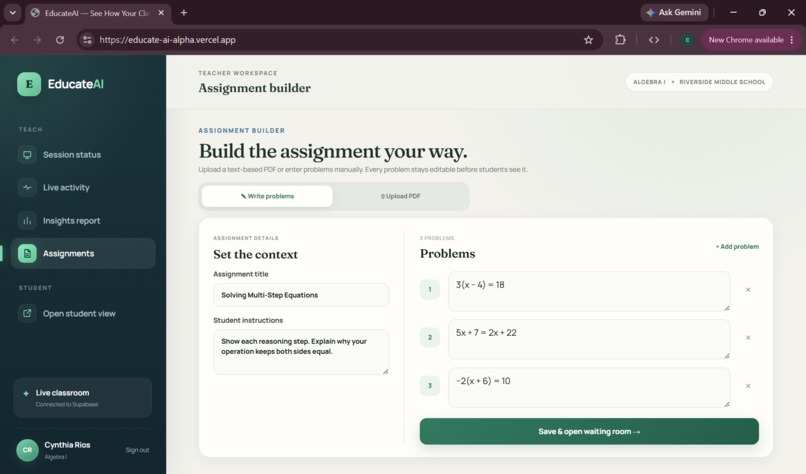
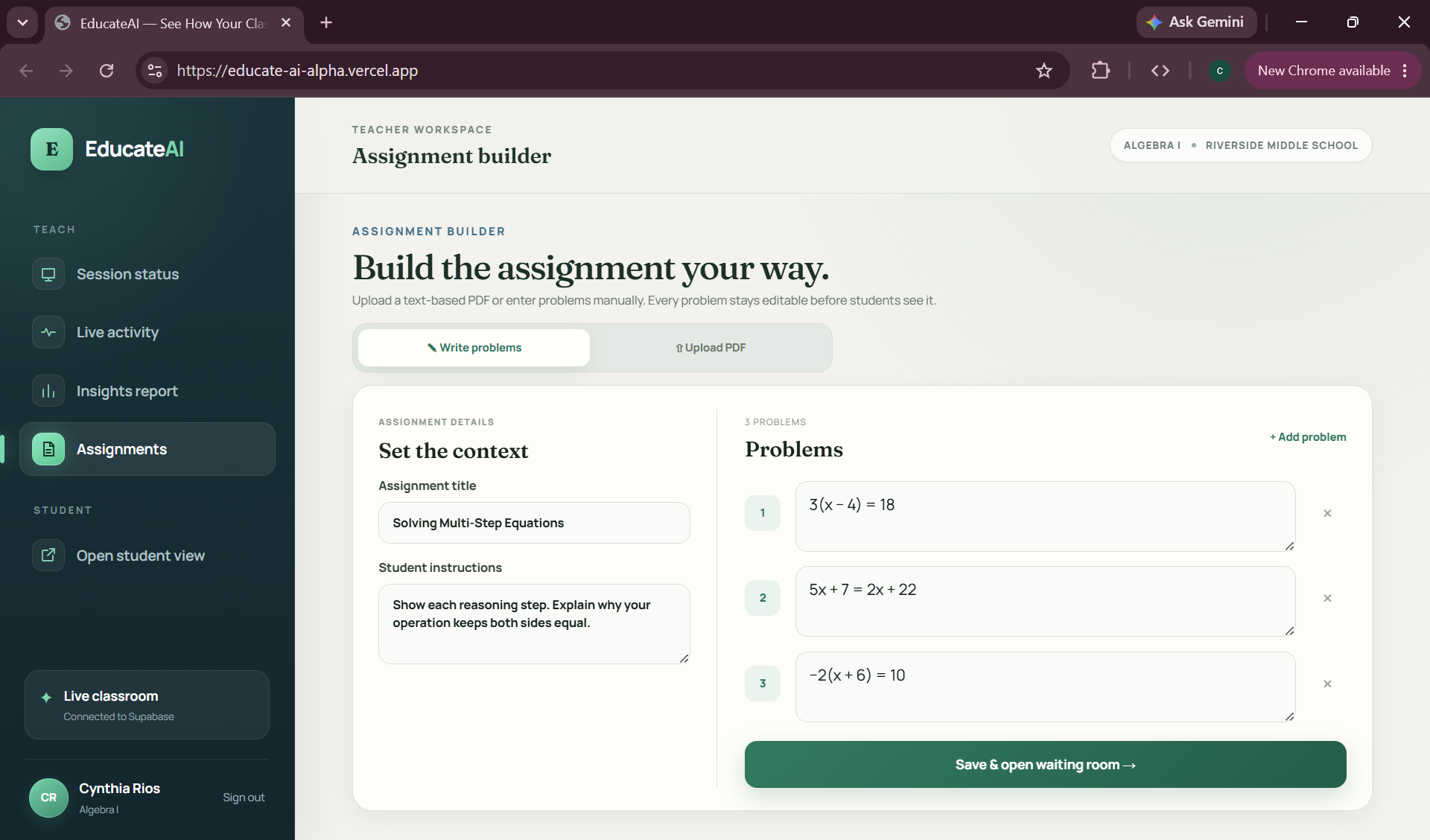
Teachers can create problems manually or upload a PDF to quickly prepare an activity for their class.
-
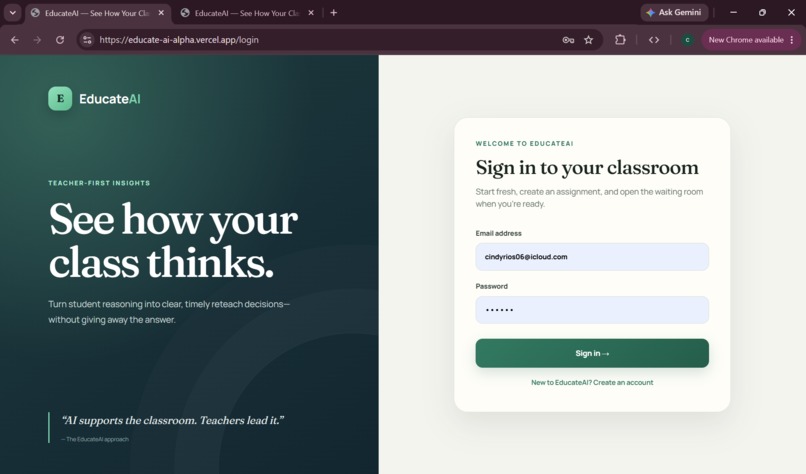
A classroom support platform that helps teachers understand student thinking and respond with focused instruction.
-
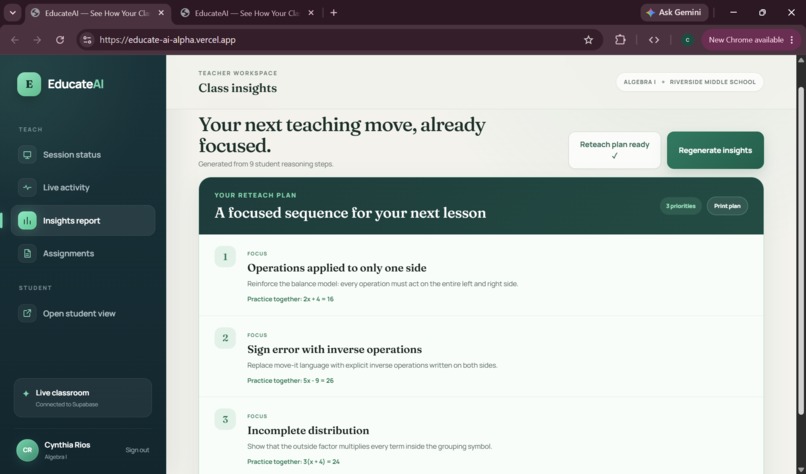
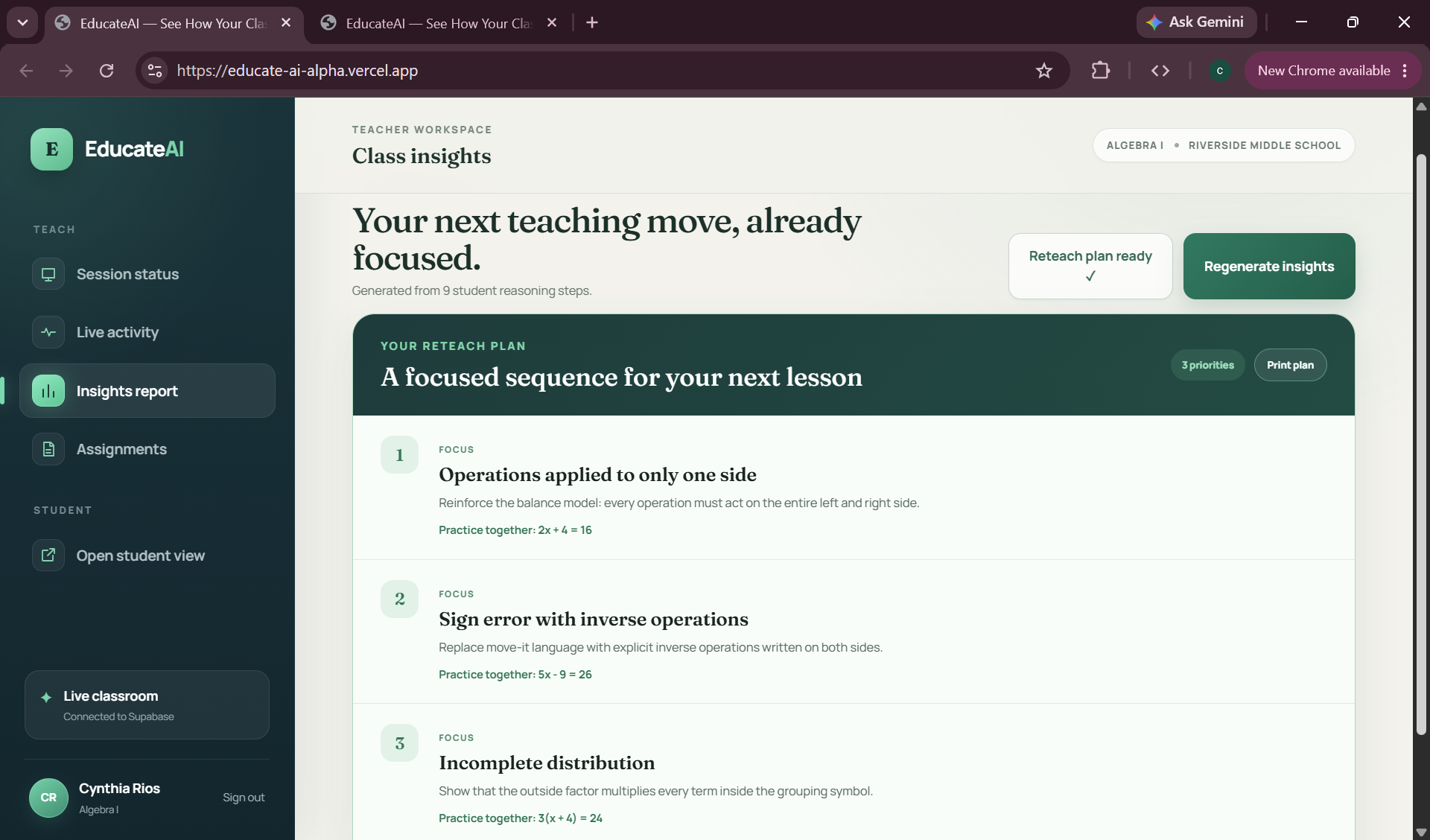
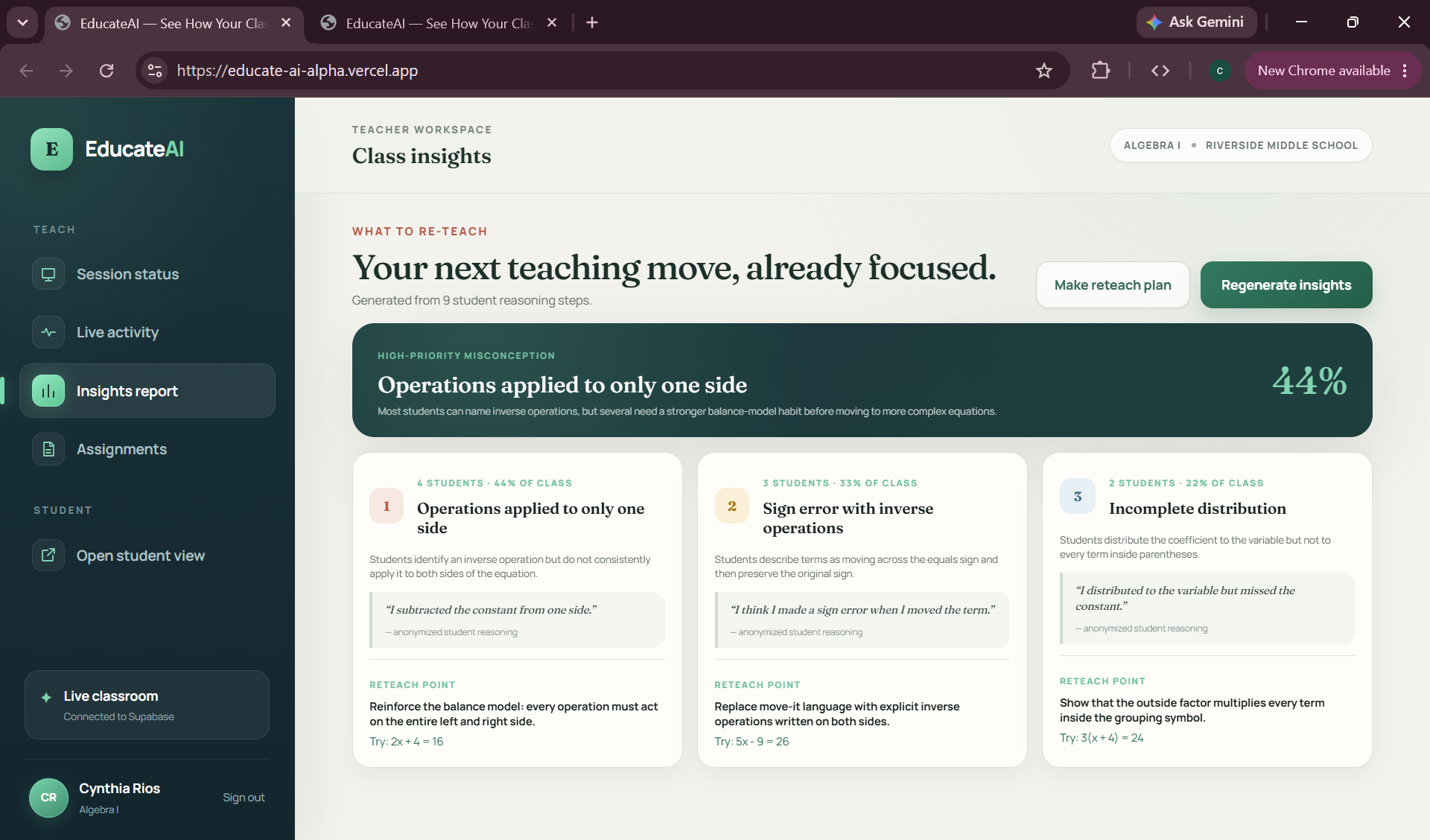
EducateAI turns class insights into clear teaching priorities, practice recommendations, and a printable reteach plan.
-
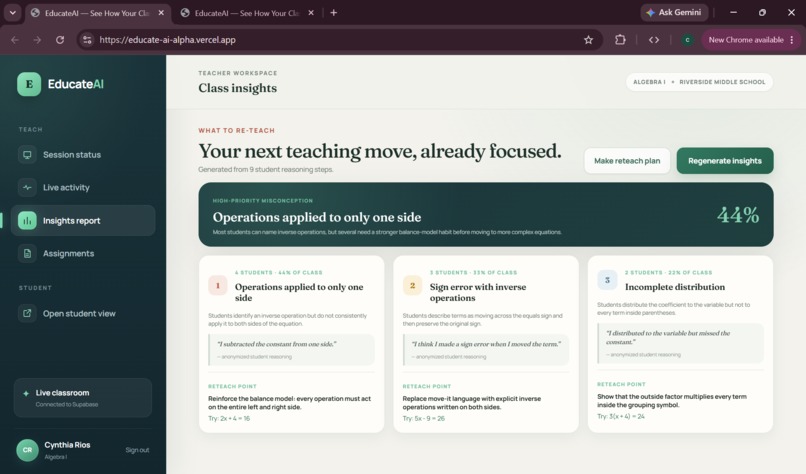
Student reasoning becomes actionable classroom insight, helping teachers identify where learners need additional support.
-
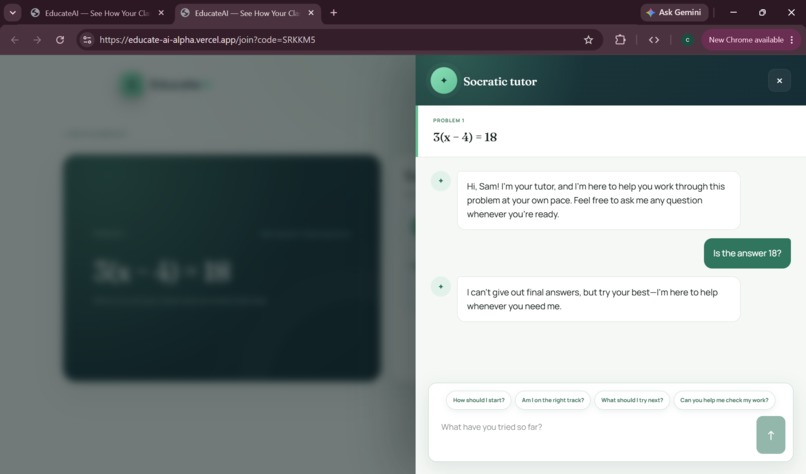
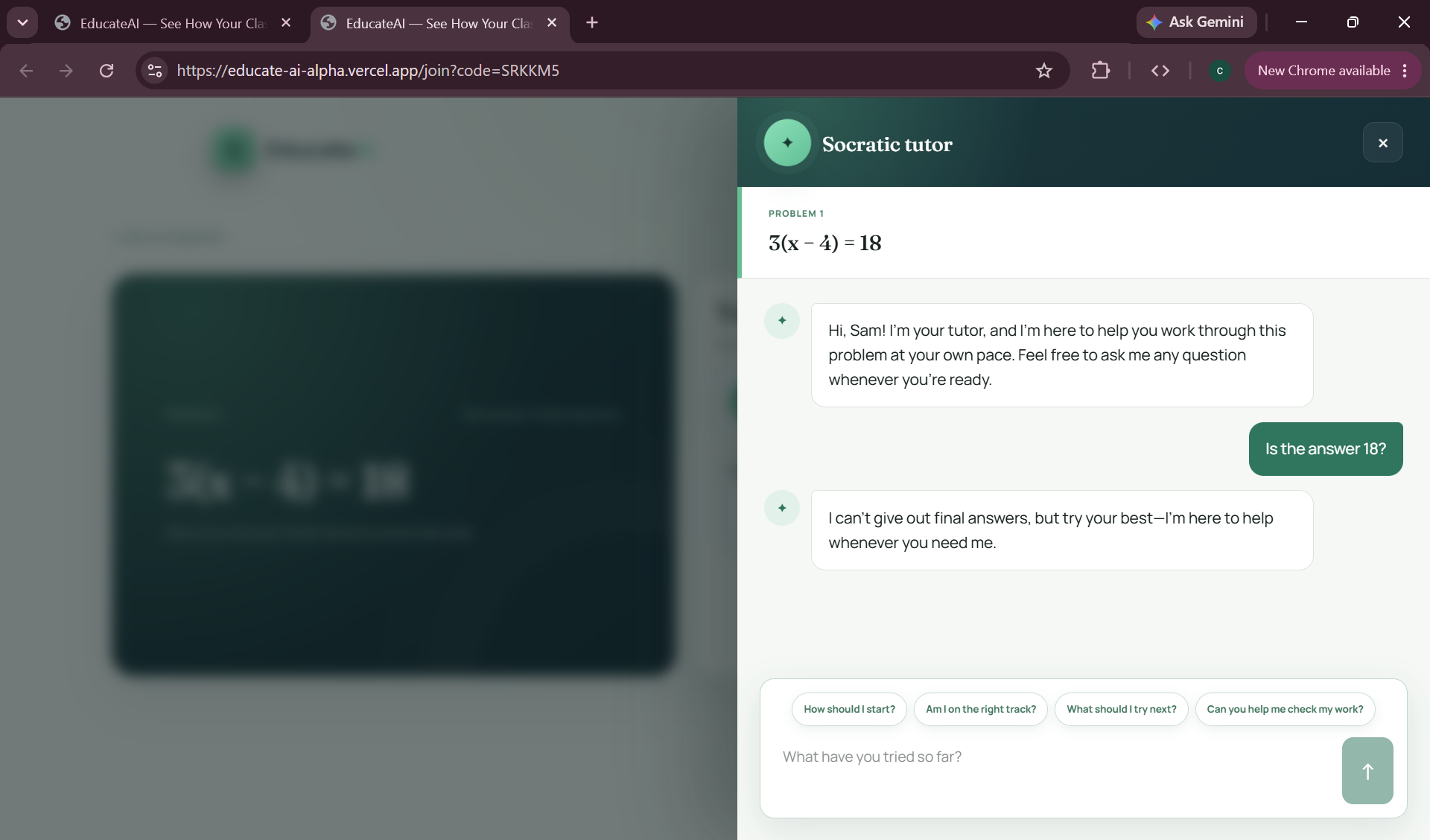
The tutor asks helpful questions without revealing final answers, encouraging students to work through each step.
Inspiration
My inspiration came from my own experience in math class. I remember needing help but running out of time before the teacher could reach me. Teachers want to support every student, but they only have so much time during a class period.
I created EducateAI to give students another way to ask for help while also giving teachers a clearer picture of where the class is struggling.
What it does
EducateAI provides students with a tutor that asks guiding questions without giving away final answers. As students explain their thinking, the platform turns their responses into real-time classroom insights.
Teachers can monitor student progress, identify learning patterns, and generate a focused reteach plan based on what their class needs to revisit.
How we built it
- Next.js and TypeScript for the application
- Supabase for authentication, the database, security policies, and live classroom updates
- Vercel for deployment
- A rule-based tutoring and analysis system that can operate without a paid language-model API
Challenges we ran into
One of the biggest challenges was keeping the teacher and student experiences synchronized. Students needed to see when a session changed from waiting to live without signing in again.
I also had to design the tutor carefully. It needed to be helpful without simply solving the problem for the student. Another challenge was presenting classroom activity clearly without overwhelming the teacher with too much information.
Finally, I spent time refining the interface so the entire experience would feel polished, intuitive, and practical during a real classroom session.
Accomplishments that we're proud of
I am most proud that EducateAI demonstrates how AI can be used as a classroom resource rather than a replacement for teachers. The tutor supports students when they need help without giving away answers, while the teacher remains in control of the lesson and how to respond to the class.
EducateAI also supports the full classroom experience, from creating an assignment and opening a waiting room to identifying learning patterns and generating a focused reteach plan. Building a polished, secure, and demo-ready experience for both teachers and students was one of the most rewarding parts of the project.
What we learned
I learned that building an educational tool is not only about making the technology work. The experience must also respect how teachers teach and how students learn.
I gained experience with real-time data, authentication, responsive interface design, and designing separate workflows for different users. Most importantly, I learned how technology can support teachers without trying to replace them.
EducateAI is designed to make student thinking more visible, help students feel supported, and give teachers actionable information when it matters most.
What's next for educateAI
The next step is to give teachers more control over how the tutor guides students and improve the classroom insights using feedback from real educators.
Future versions could include stronger accessibility features, longer-term learning progress, customizable reteach plans, and integrations with tools teachers already use. The goal is to keep developing EducateAI into a practical classroom resource that supports students while helping teachers make faster, more informed decisions.
Built With
- codex
- css
- html
- next.js
- node.js
- postgresql
- react
- supabase
- typescript
- vercel

Log in or sign up for Devpost to join the conversation.