-
-
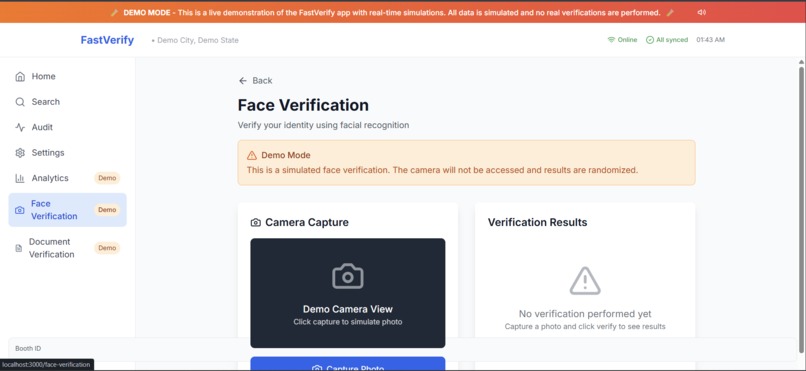
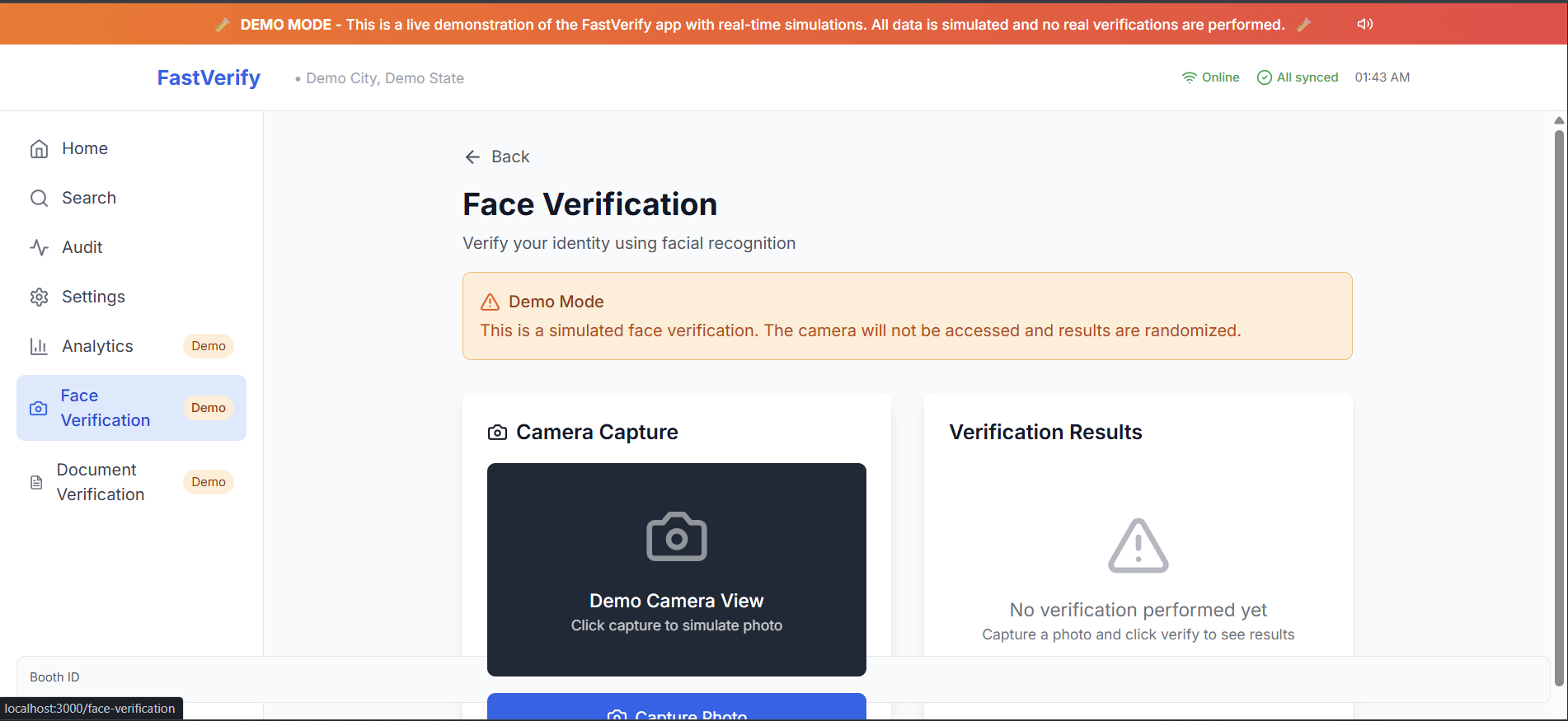
Face Verification Page
-
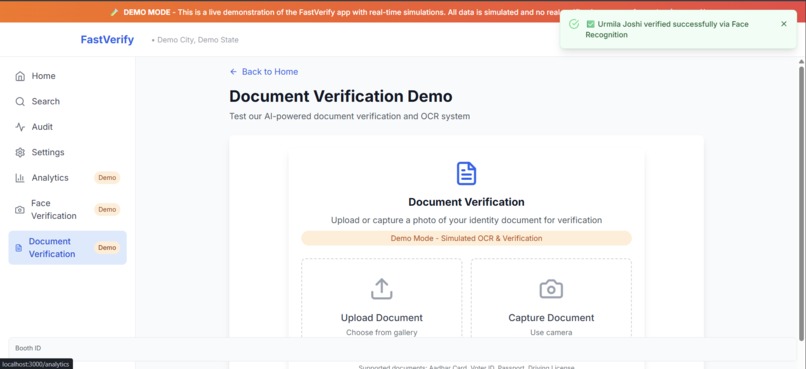
Document Verification Page
-
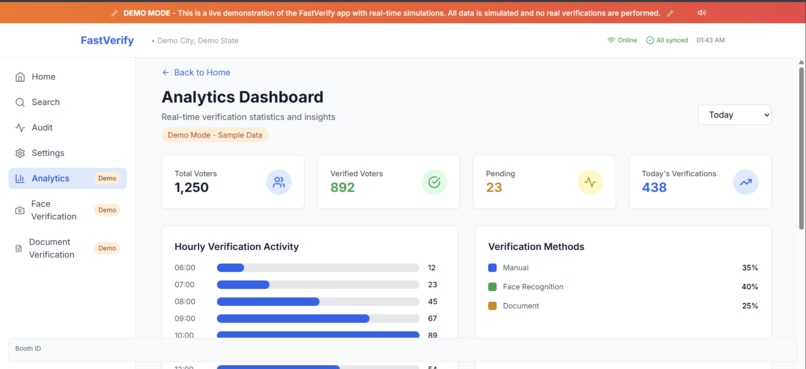
Analytics Page
-
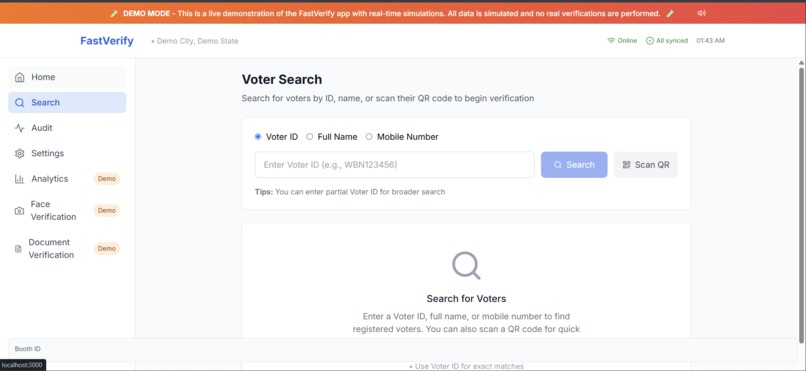
Search Page
-
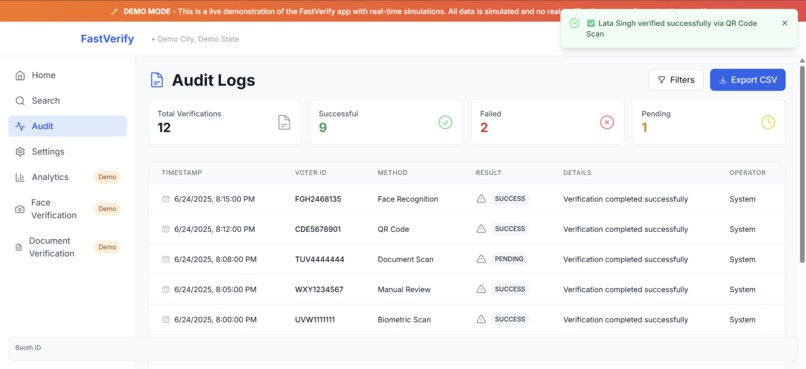
Audit Page
-
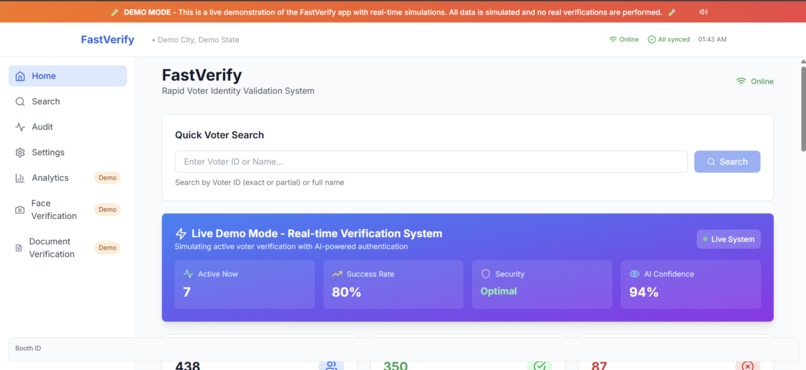
Main Page/Home Page
-
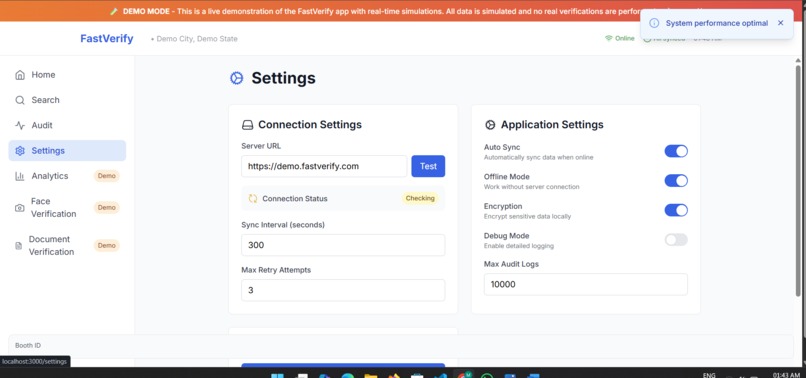
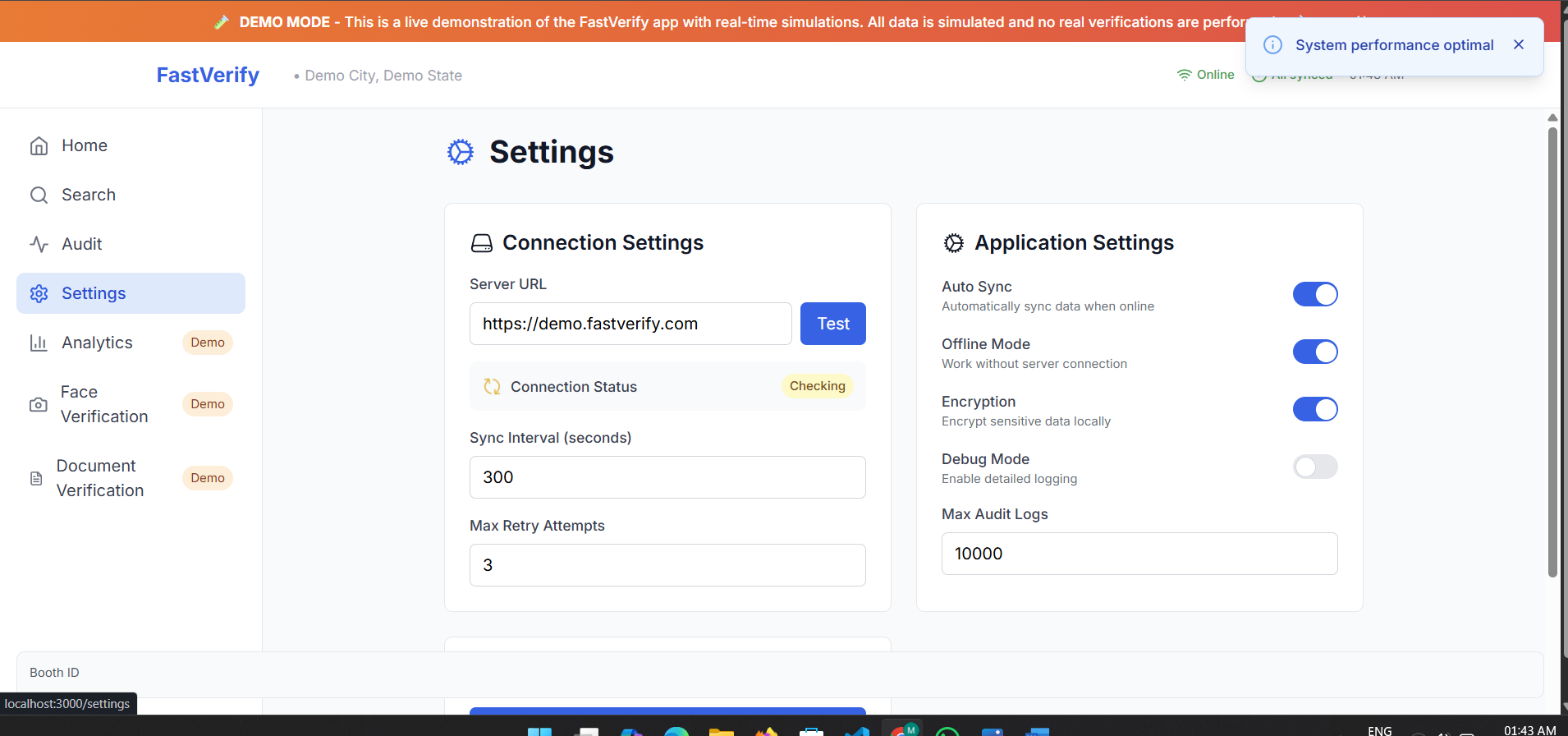
Setting Page
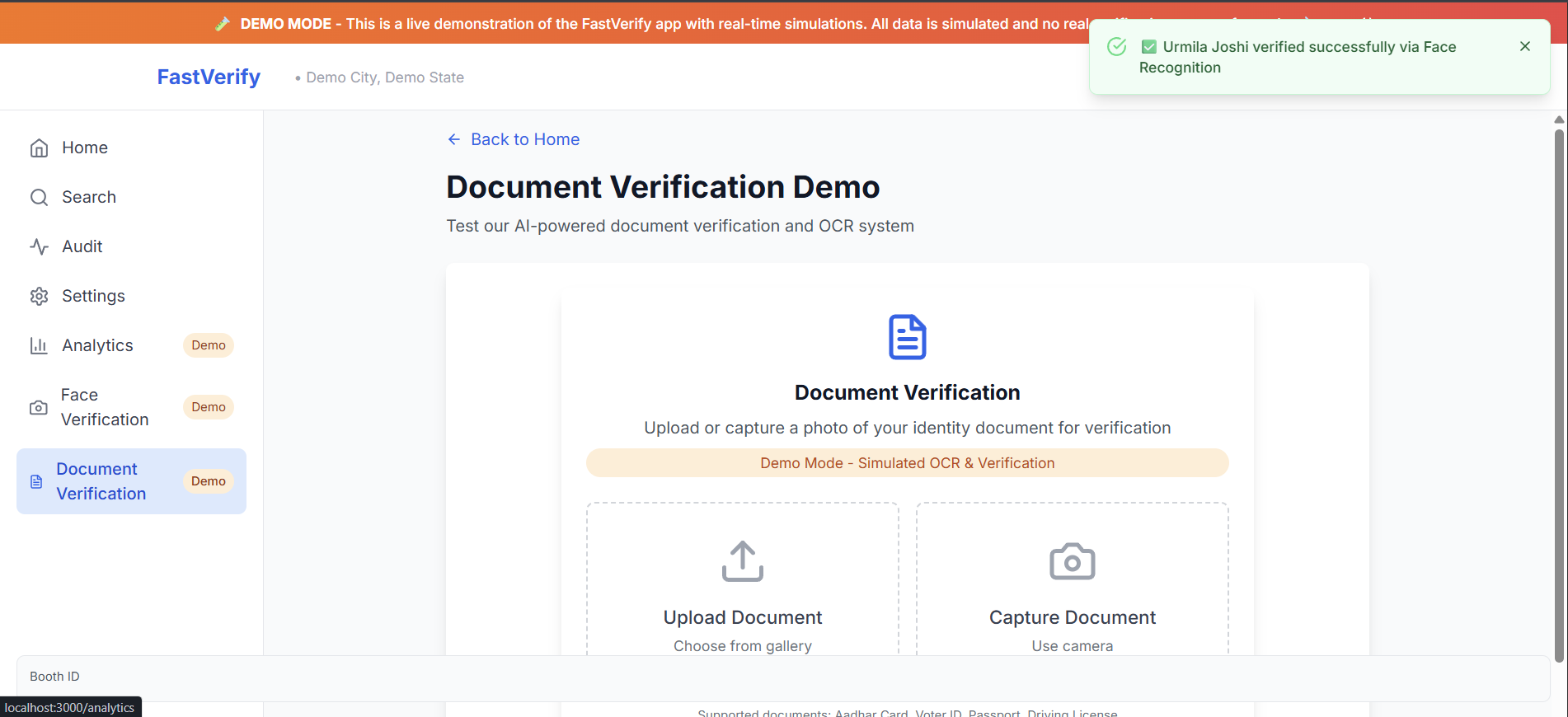

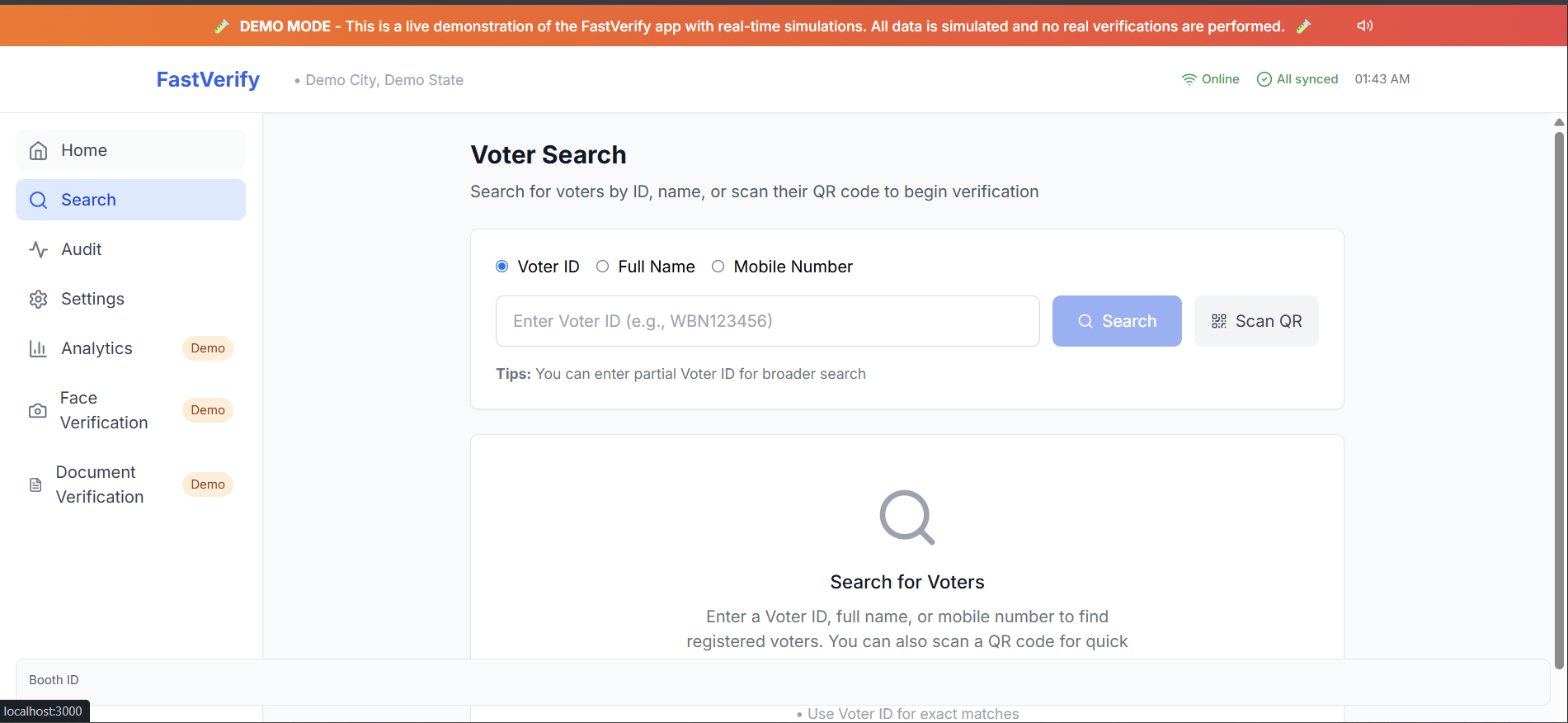
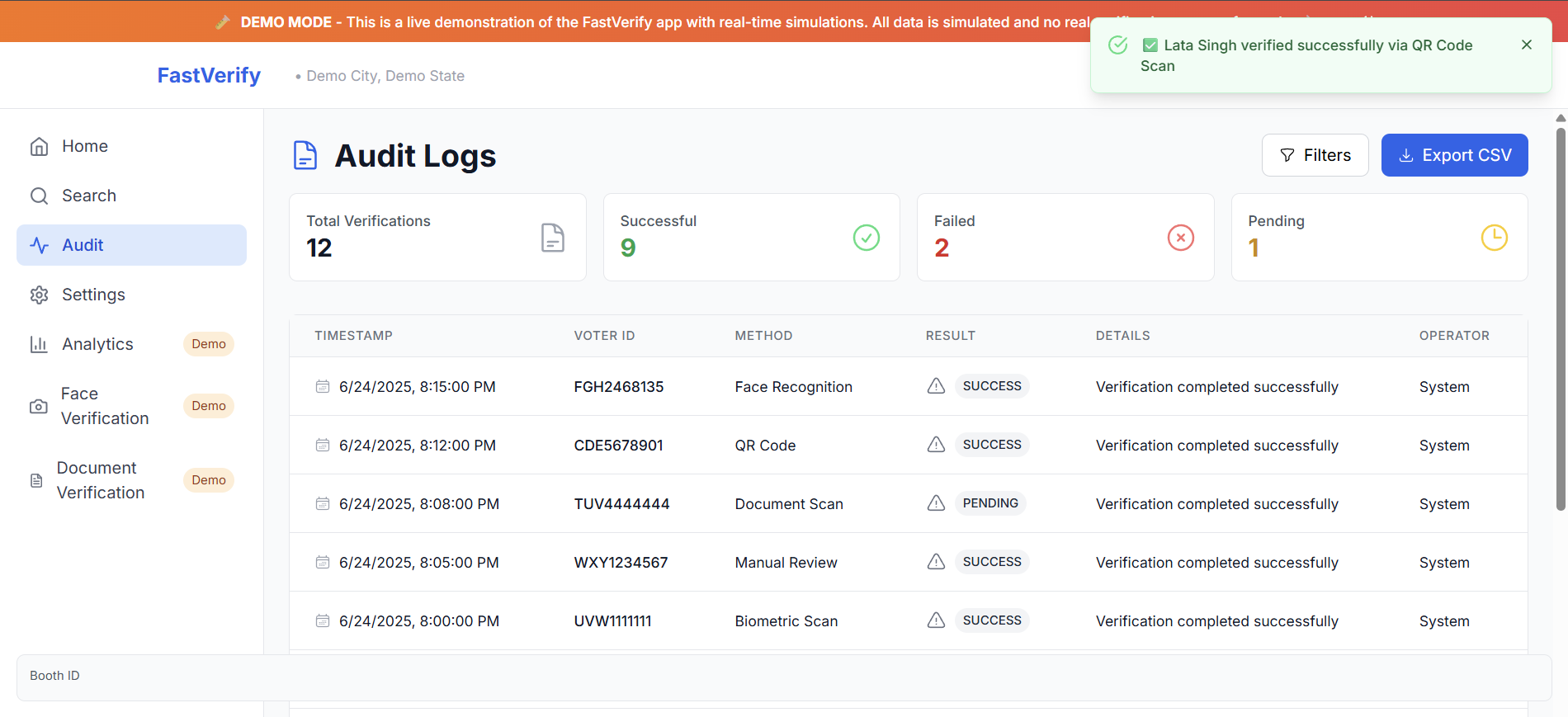
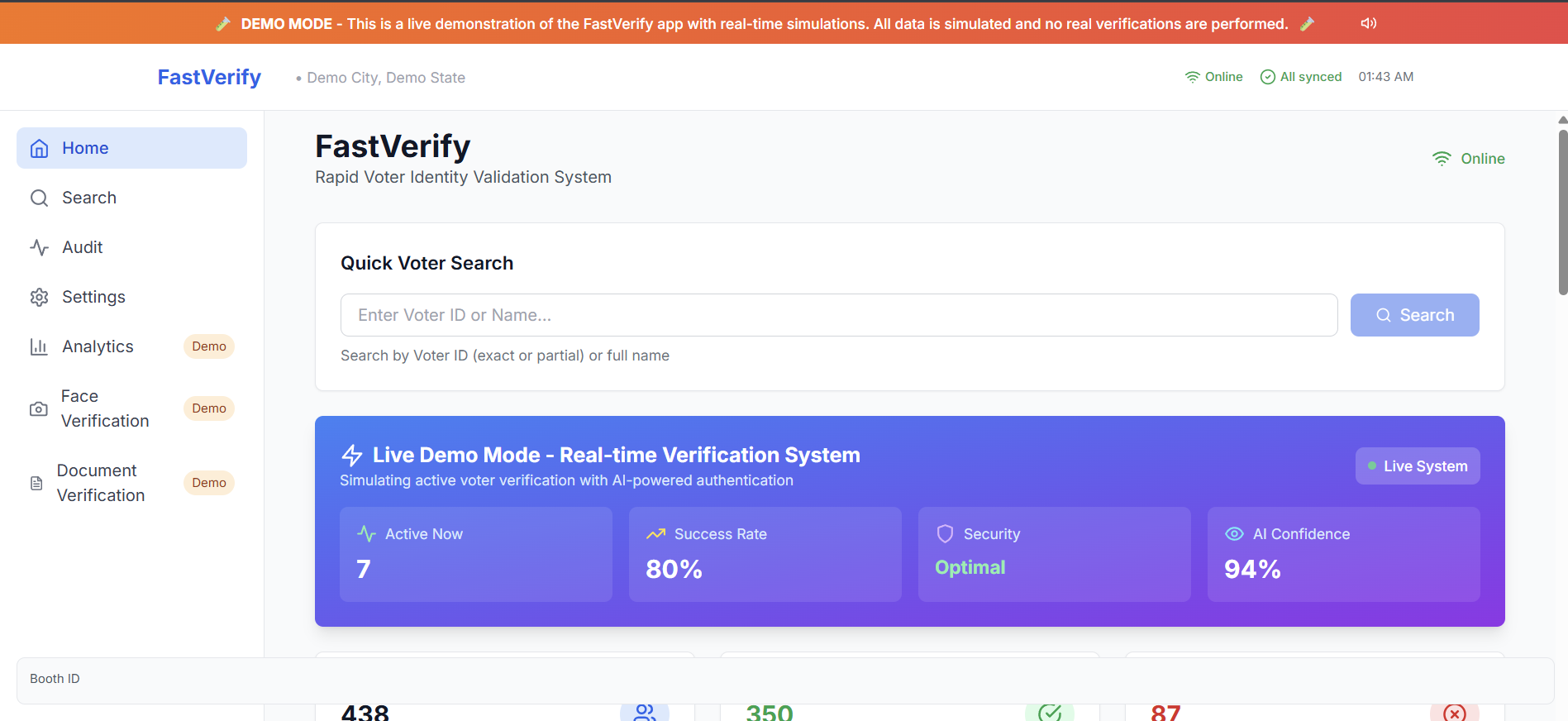
Inspiration
The idea for FastVerify was born from witnessing the chaos of traditional voting systems during election day. Long queues, manual verification processes taking 10-15 minutes per voter, and frustrated citizens abandoning their democratic right to vote painted a clear picture: democracy needed a technological upgrade.
When I observed elderly voters standing in scorching heat for hours, only to face complex paperwork and slow manual checks, I realized that modern AI could solve this centuries-old problem. The 2024 elections highlighted how verification bottlenecks could disenfranchise voters and compromise election integrity.
The vision was simple: What if we could verify a voter's identity in 30 seconds instead of 30 minutes?
What it does
FastVerify is a comprehensive AI-powered voter verification system that transforms election day operations:
Core Features: Multi-Modal Authentication: Face recognition + document OCR + OTP verification Real-Time Fraud Detection: AI algorithms detecting fake documents and duplicate voters Offline-First PWA: Works without internet, syncs when connected QR Code Integration: Instant voter lookup and verification Live Analytics Dashboard: Real-time crowd monitoring and queue management Blockchain-Ready: Immutable audit trails for transparency Technology Stack: Frontend: React.js with Progressive Web App capabilities Backend: Node.js with Express.js AI/ML: TensorFlow.js for face recognition, Tesseract.js for OCR Database: MongoDB with real-time sync capabilities Authentication: Multi-factor verification system Deployment: Cloud-native with offline functionality
How we built it
Phase 1: Research & Planning Studied existing voter verification systems and their pain points Researched AI technologies for face recognition and document processing Designed user flows for poll workers and election officials Phase 2: Core Development Phase 3: PWA Implementation Built offline-first architecture using service workers Implemented local storage for disconnected operations Created sync mechanisms for when connectivity returns Phase 4: Security & Testing Implemented end-to-end encryption for sensitive data Added multi-layer fraud detection algorithms Extensive testing with mock election scenarios
Challenges we ran into
AI Accuracy vs. Speed Challenge: Balancing verification accuracy with the 30-second target. Solution: Optimized ML models and implemented progressive verification - basic checks happen instantly, detailed analysis runs in parallel.
Offline Functionality Challenge: Ensuring full functionality without internet in remote polling locations. Solution: Built comprehensive offline database sync, local storage optimization, and smart conflict resolution.
Cross-Device Compatibility Challenge: Working seamlessly across different devices, cameras, and operating systems. Solution: Extensive browser compatibility testing and progressive enhancement strategies.
Security Concerns Challenge: Handling sensitive voter data while maintaining transparency. Solution: Implemented zero-knowledge verification - we verify identity without storing biometric data permanently.
Real-World Testing Challenge: Simulating actual election day conditions and stress testing. Solution: Created comprehensive mock election scenarios with hundreds of test cases and performance benchmarks.
Accomplishments that we're proud of
FastVerify represents more than just a technical solution - it's a step toward democratizing democracy itself. By reducing verification time from 15 minutes to 30 seconds, we can:
Eliminate voter disenfranchisement due to long queues Increase election security through AI-powered fraud detection Reduce operational costs for election commissions Improve accessibility for elderly and disabled voters
What we learned
Technical Learnings: AI Integration: Implementing real-time face recognition in web browsers using TensorFlow.js PWA Development: Building truly offline-capable applications that work in remote polling locations OCR Optimization: Fine-tuning Tesseract.js for various document types and lighting conditions Real-Time Processing: Balancing accuracy with speed for sub-30-second verification Domain Expertise: Election Security: Understanding the critical importance of audit trails and transparency User Experience: Designing interfaces for stressed poll workers during high-pressure situations Accessibility: Ensuring the system works for voters with disabilities and varying tech literacy Scalability: Building systems that handle thousands of concurrent verifications Problem-Solving Skills: Offline Challenges: Creating seamless experiences without internet connectivity Performance Optimization: Reducing AI model sizes while maintaining accuracy Data Privacy: Implementing verification without storing biometric data permanently
What's next for MoVoter
Integration with national voter databases Advanced biometric verification (fingerprint, iris scanning) Blockchain-based immutable voting records Multi-language support for diverse populations AI-powered queue prediction and management
Built With
- atlas
- deployed
- express.js
- jwt-authentication
- material-ui
- mongodb
- node.js
- pwa-technologies
- react.js
- tensorflow.js
- tesseract.js-(ocr)
- vercel


Log in or sign up for Devpost to join the conversation.