🌍 Inspiration
We were inspired by the learning struggles of students in underprivileged communities who often:
Don’t have reliable internet access.
Share a single device among many family members.
Struggle with literacy, being first-generation learners.
Most EdTech platforms assume good connectivity and reading skills — leaving these students behind. We wanted to rethink education from the ground up: offline-first, voice-first, and accessible to everyone.
✨ What it does
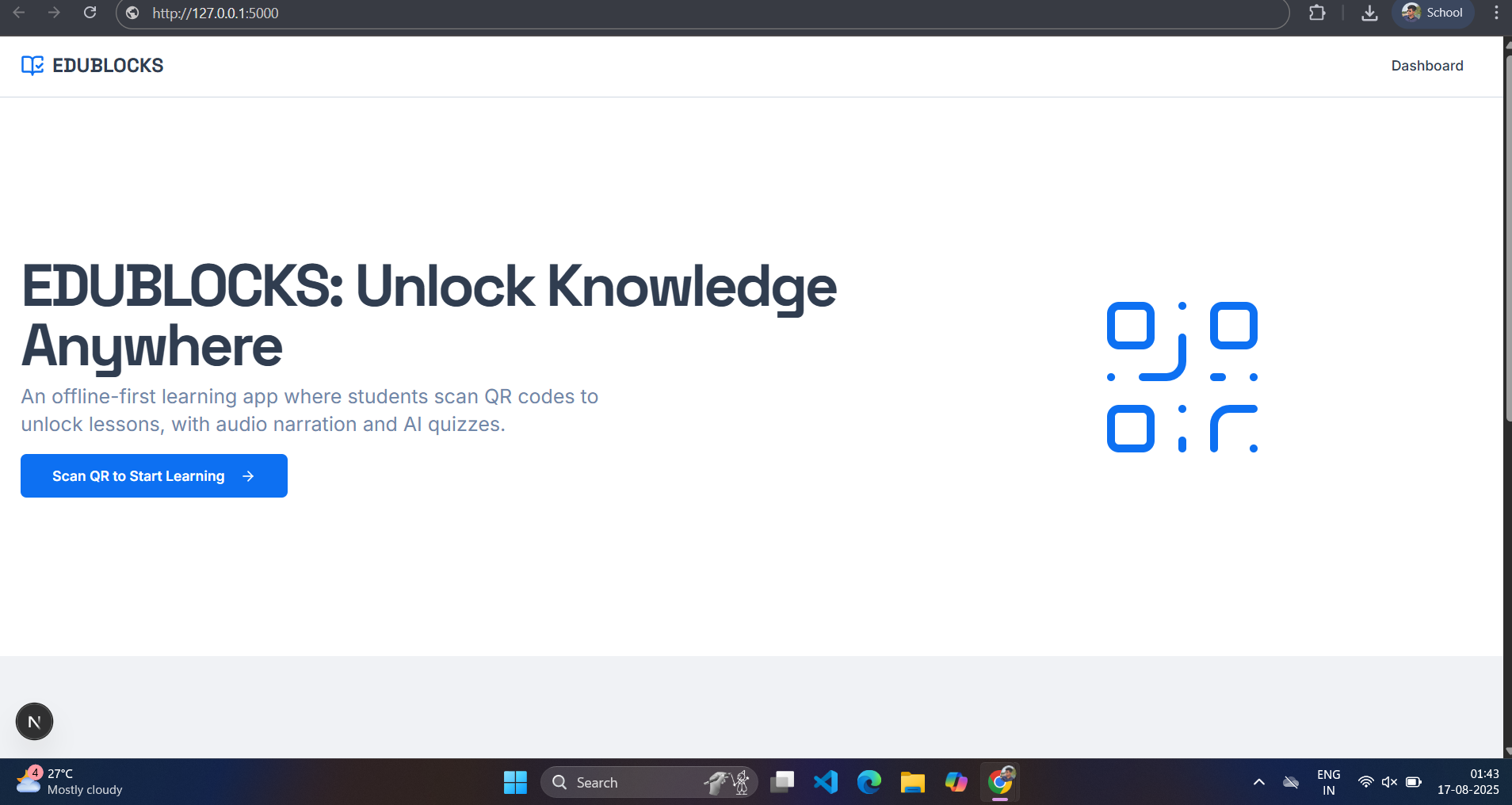
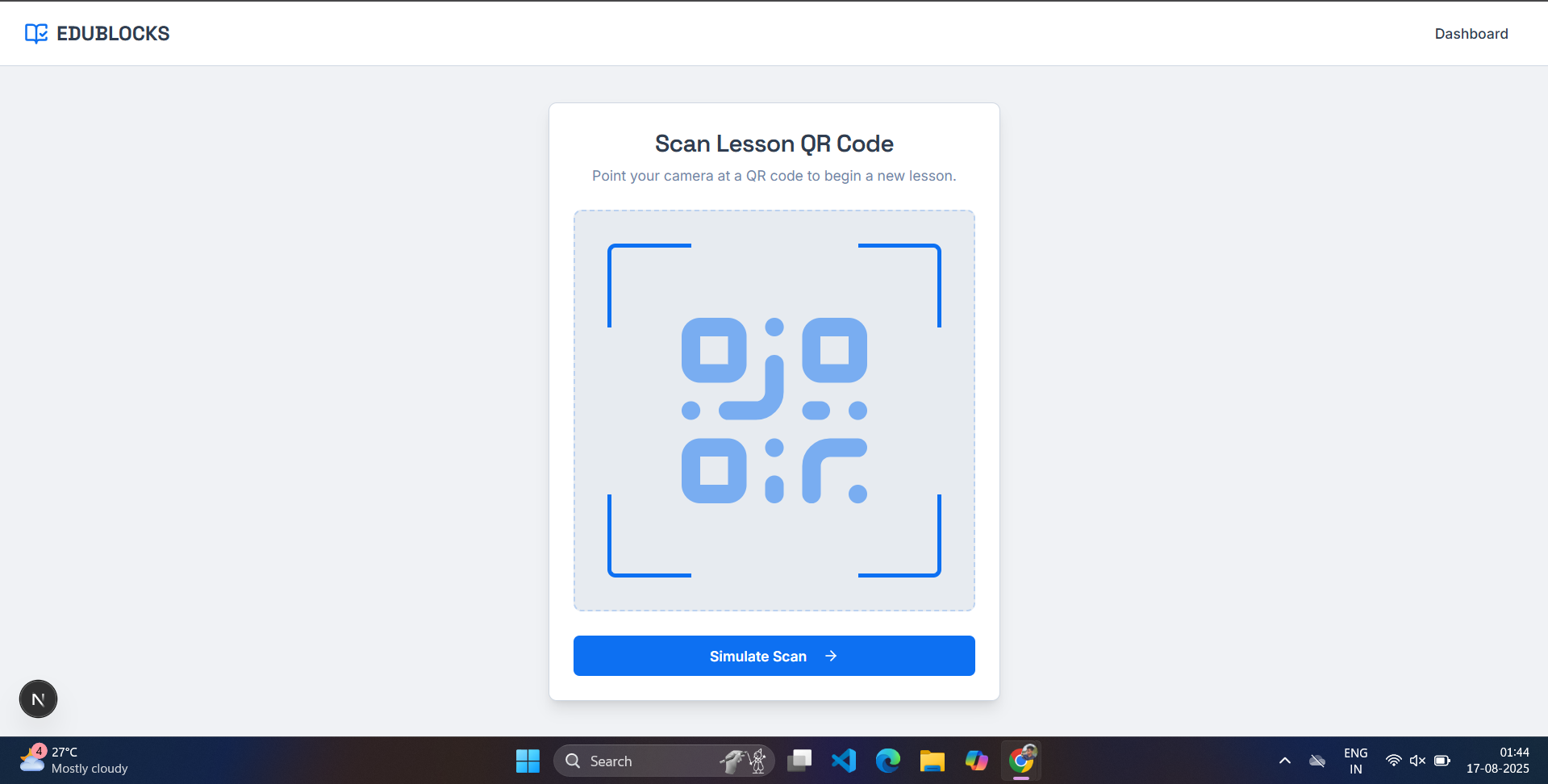
EduBlocks transforms everyday printed QR codes into learning gateways.
Students scan QR cards or blocks to unlock bite-sized lessons.
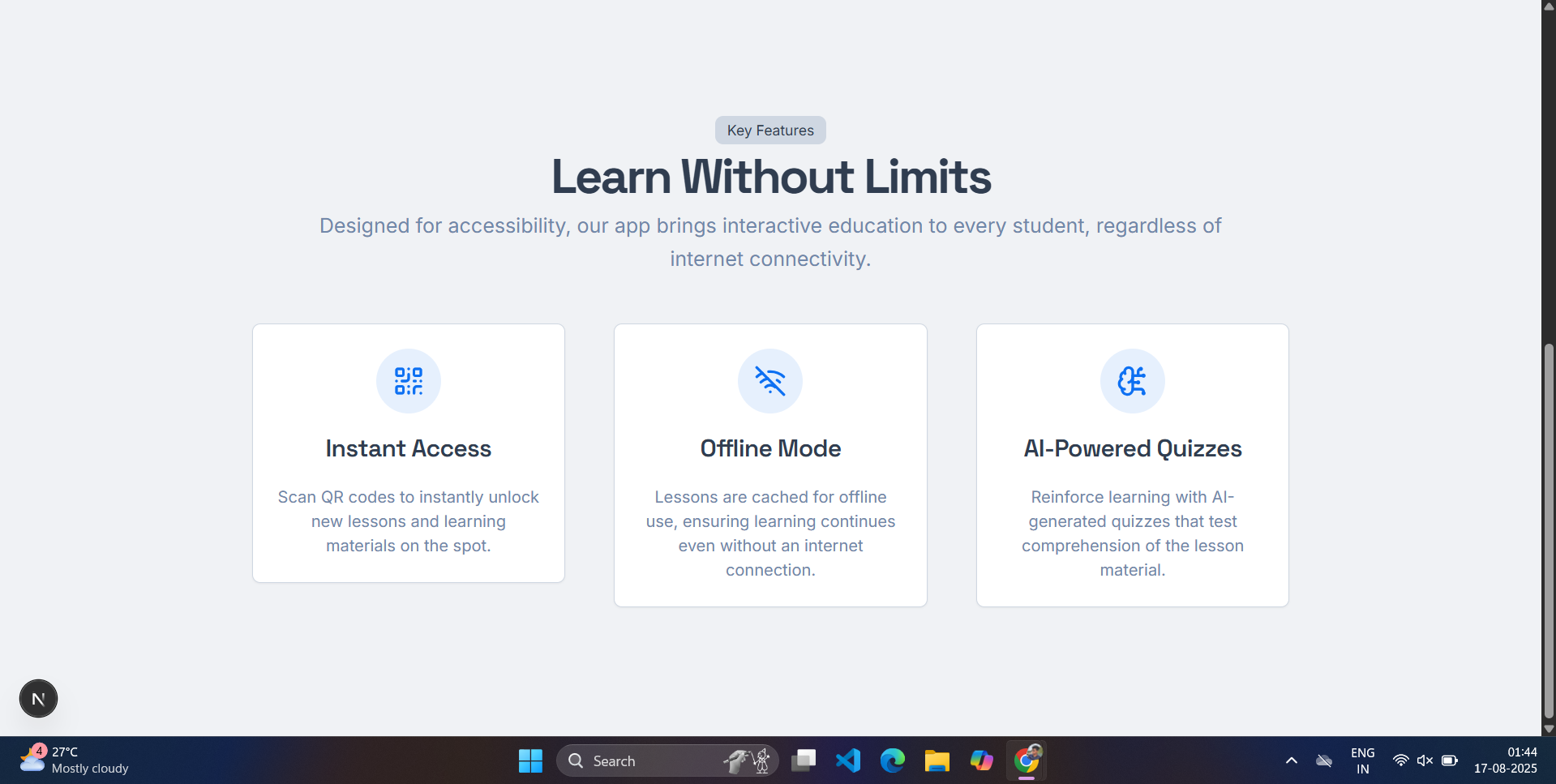
Lessons are available in multiple local languages with audio narration for children who cannot read fluently.
Content works offline-first, with updates syncing when internet is available.
Students can share lessons peer-to-peer using Bluetooth/Wi-Fi Direct.
A gamified storytelling mode turns learning into a fun journey, where completing lessons unlocks puzzle pieces or stories.
🛠 How we built it
Frontend: Built a mobile app with Flutter for cross-platform access.
Content delivery: Created micro-learning modules in math, science, life skills, and financial literacy.
Voice-first support: Integrated text-to-speech and pre-recorded audio in local languages.
Offline-first design: Used SQLite/local storage for lessons, with optional cloud sync.
Sharing: Enabled peer-to-peer content transfer (Bluetooth/Wi-Fi Direct).
Gamification: Designed a story/puzzle unlock system for engagement.
⚡ Challenges we ran into
Ensuring voice narrations sounded natural in different languages.
Designing offline-first architecture that still allows syncing when internet is available.
Keeping the app lightweight so it runs on low-end smartphones.
Making lessons fun and engaging without requiring heavy animations or constant data.
🏆 Accomplishments that we're proud of
Built a working prototype in limited hackathon time.
Successfully created offline QR-based lessons with voice narration.
Designed an inclusive learning experience for students who struggle with reading.
Made education shareable without internet — a big step for accessibility.
📚 What we learned
Designing for underprivileged communities means focusing on constraints first — no internet, low literacy, limited devices.
Voice-first learning is a game-changer for inclusivity.
Sometimes the simplest ideas — like a QR code on paper — can create the biggest impact when combined with the right tech.
Community-driven content makes the solution scalable and adaptable anywhere.
🚀 What's next for EduBlocks
Expand to more regional languages for wider adoption.
Partner with NGOs, schools, and local governments to distribute EduBlocks at scale.
Add an AI-powered “Ask a Question” mode, where students can get simple answers in their language.
Create teacher/parent dashboards for tracking progress.
Develop printable EduBlocks kits that schools and communities can easily deploy.

Log in or sign up for Devpost to join the conversation.