Inspiration
Education should be accessible to everyone, but many students struggle to understand complex topics without personalized guidance. We were inspired to build EduAssist AI to make learning simpler, faster, and more interactive using artificial intelligence.
Our goal was to create a lightweight and easy-to-use AI-powered study assistant that can explain difficult concepts in a simple and understandable way for students worldwide.
What it does
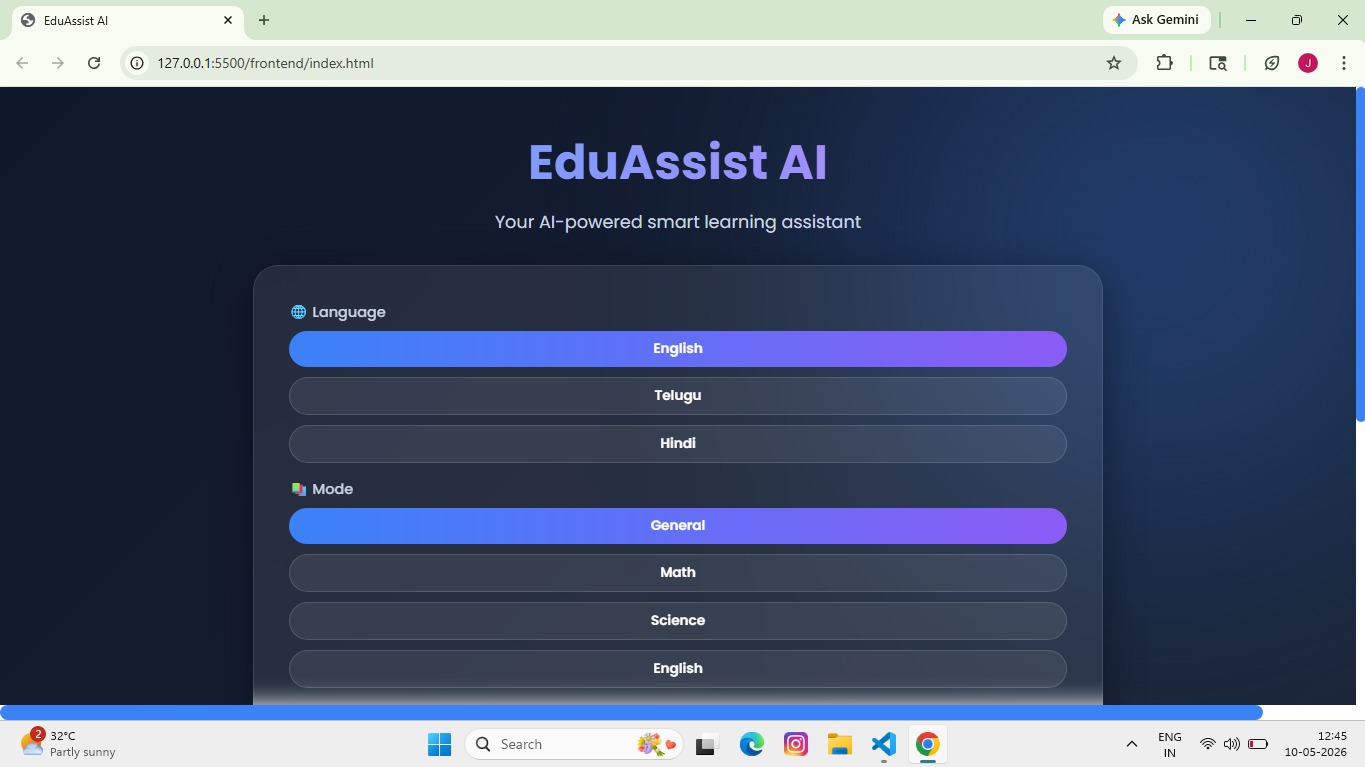
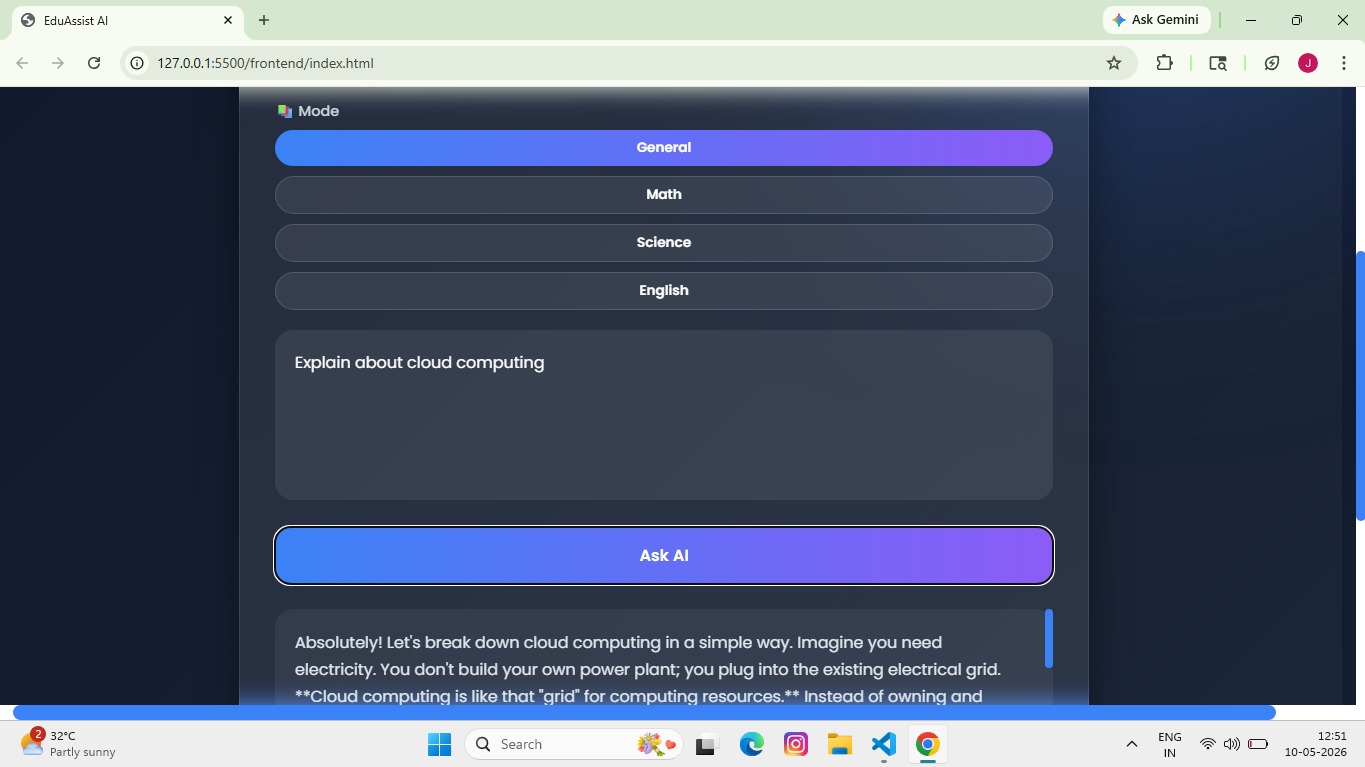
EduAssist AI is an AI-powered learning assistant that helps students by generating simplified explanations for academic questions instantly.
Users can:
- Ask study-related questions
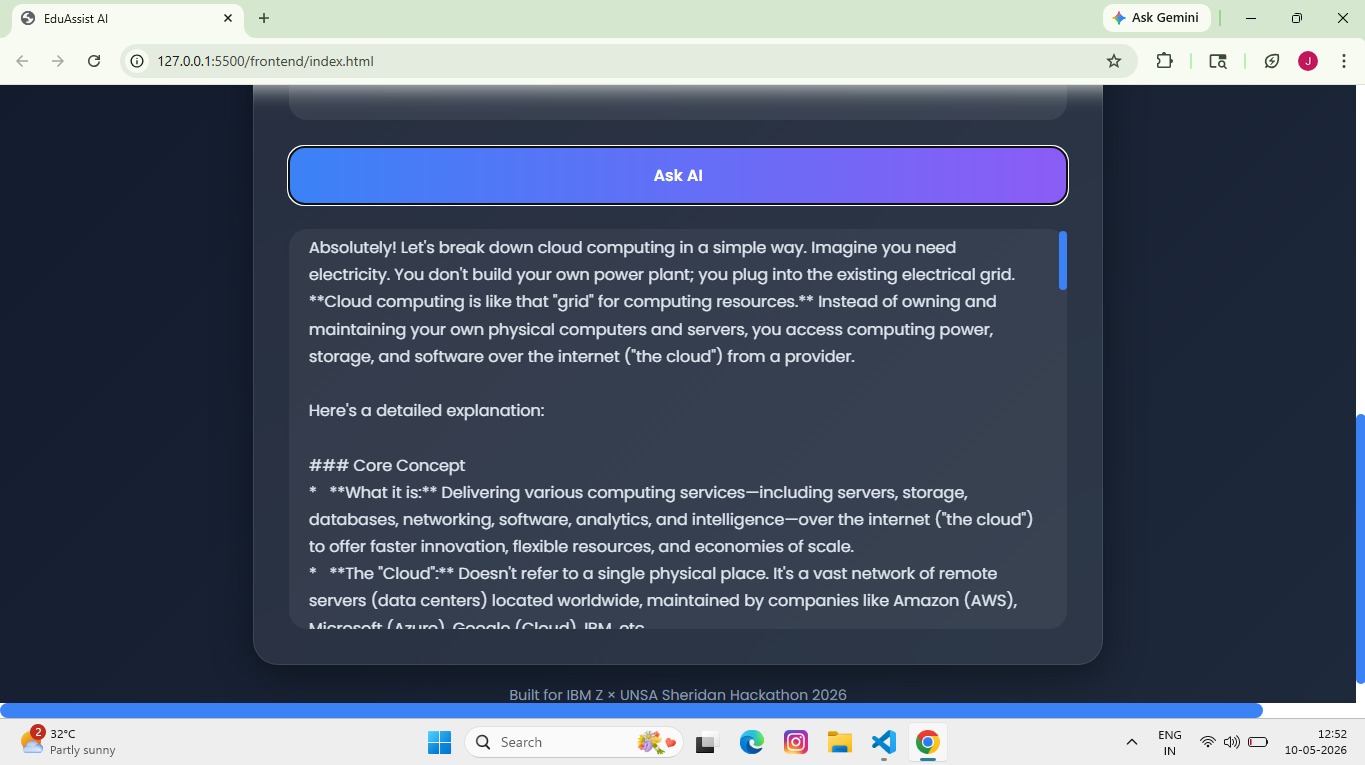
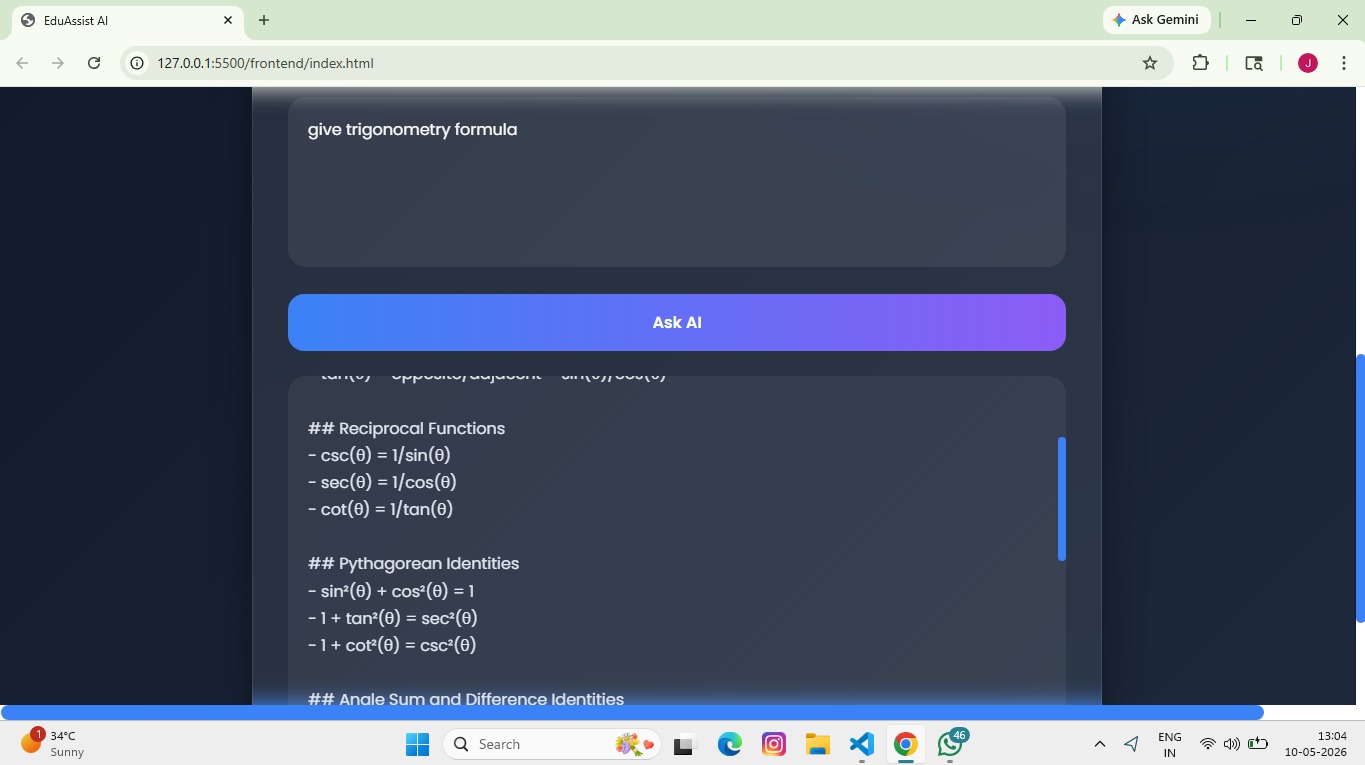
- Receive AI-generated explanations
- Understand complex concepts in simpler language
- Learn anytime through an easy-to-use interface
The platform is designed to support accessible and inclusive education aligned with UN SDG 4: Quality Education.
How we built it
We built EduAssist AI using a simple and scalable web architecture.
Frontend
- HTML
- CSS
- JavaScript
Backend
- Python Flask ## AI Integration
- OpenAI API / AI language model integration ## Deployment & Collaboration
- GitHub for version control
- Web deployment platforms # Application Flow User Question → Backend API → AI Model → Simplified Response → User Interface ## Challenges we ran into One of the biggest challenges was integrating the AI model and ensuring that responses were accurate, simple, and student-friendly.
We also focused on creating a clean and responsive user interface while keeping the project lightweight and easy to use.
Managing time effectively during the hackathon and prioritizing core features over unnecessary complexity was another important learning experience.
Accomplishments that we're proud of
Successfully built a working AI-powered educational assistant Created a simple and clean interface for students to use easily Developed a platform that simplifies complex concepts into understandable explanations Integrated AI capabilities into a lightweight web application Aligned the project with United Nations Sustainable Development Goal 4 — Quality Education Built the project within limited hackathon time while focusing on core impactful features Designed a solution that supports accessible and inclusive learning for students worldwide
What we learned
Integrating AI APIs into real-world web applications Backend development using Python Flask Frontend and backend communication using APIs Prompt engineering to generate better AI responses Building responsive and user-friendly interfaces Importance of teamwork, collaboration, and rapid prototyping during hackathons How to develop scalable and impactful AI-powered educational solutions
What's next for EduAssist AI
Add multi-language support for global accessibility Introduce voice-based AI interaction for better engagement Build personalized learning recommendations based on student performance Add subject-specific tutoring modes for areas like Math, Science, and Programming Enable offline accessibility for low-connectivity regions Improve AI accuracy and contextual understanding Develop mobile application support for Android and iOS Add student progress tracking and smart learning analytics Expand collaboration and classroom features for teachers and students


Log in or sign up for Devpost to join the conversation.