-
-
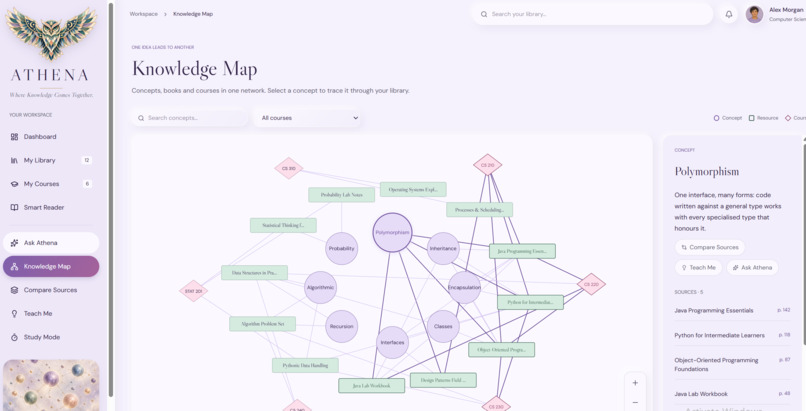
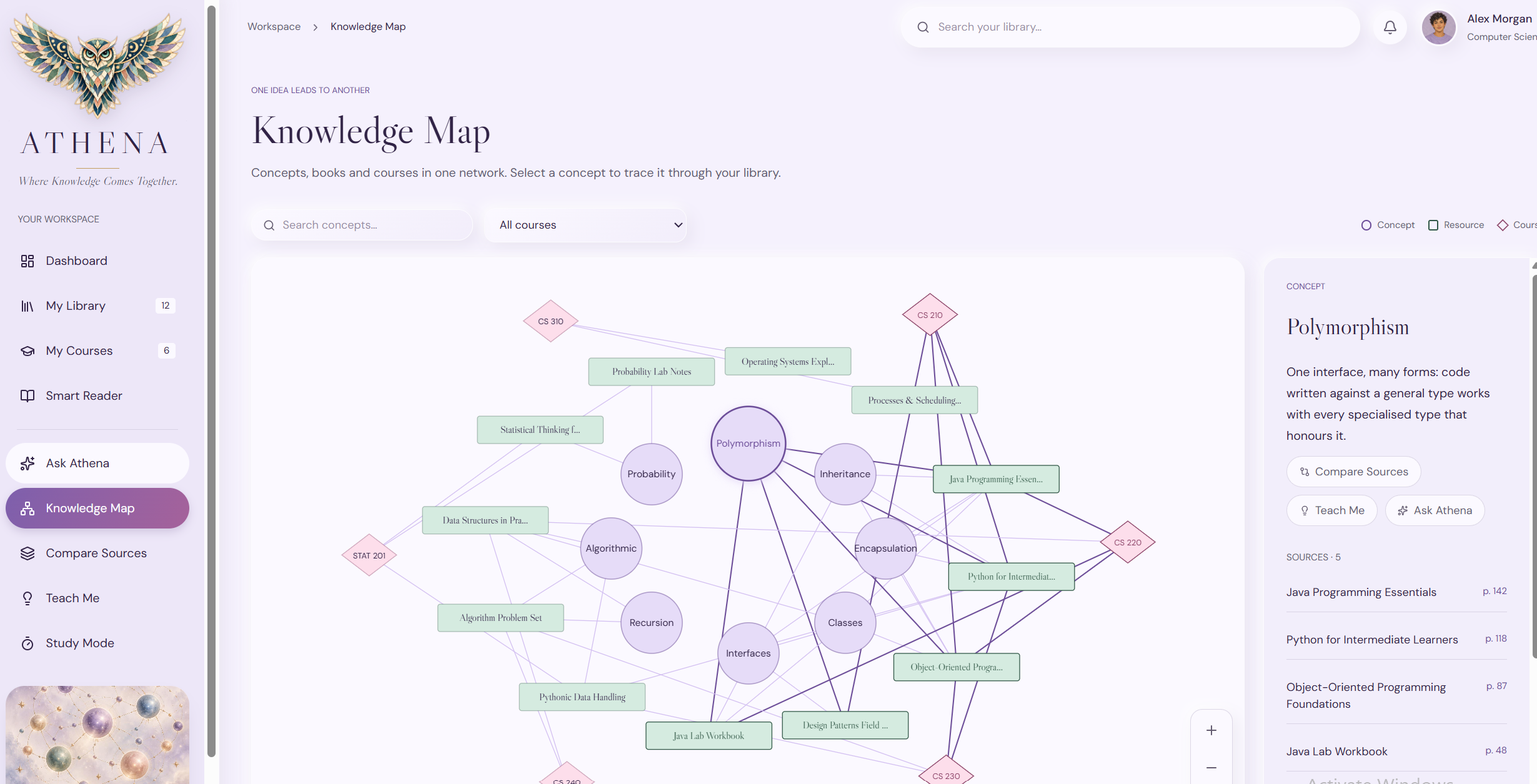
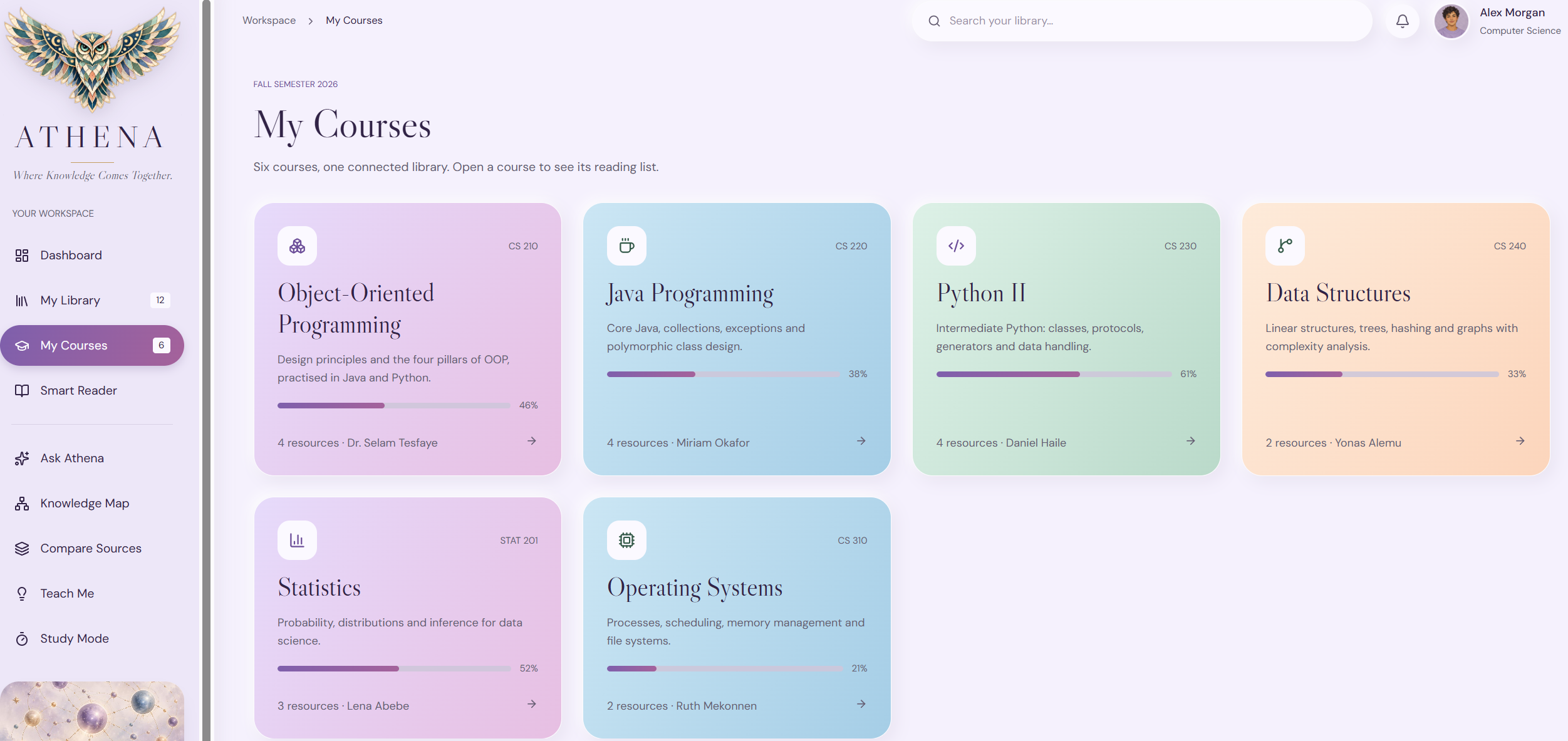
Knowledge Map
-
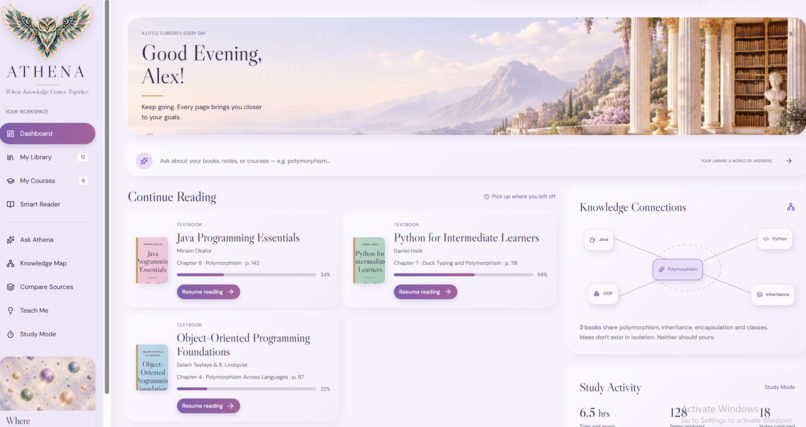
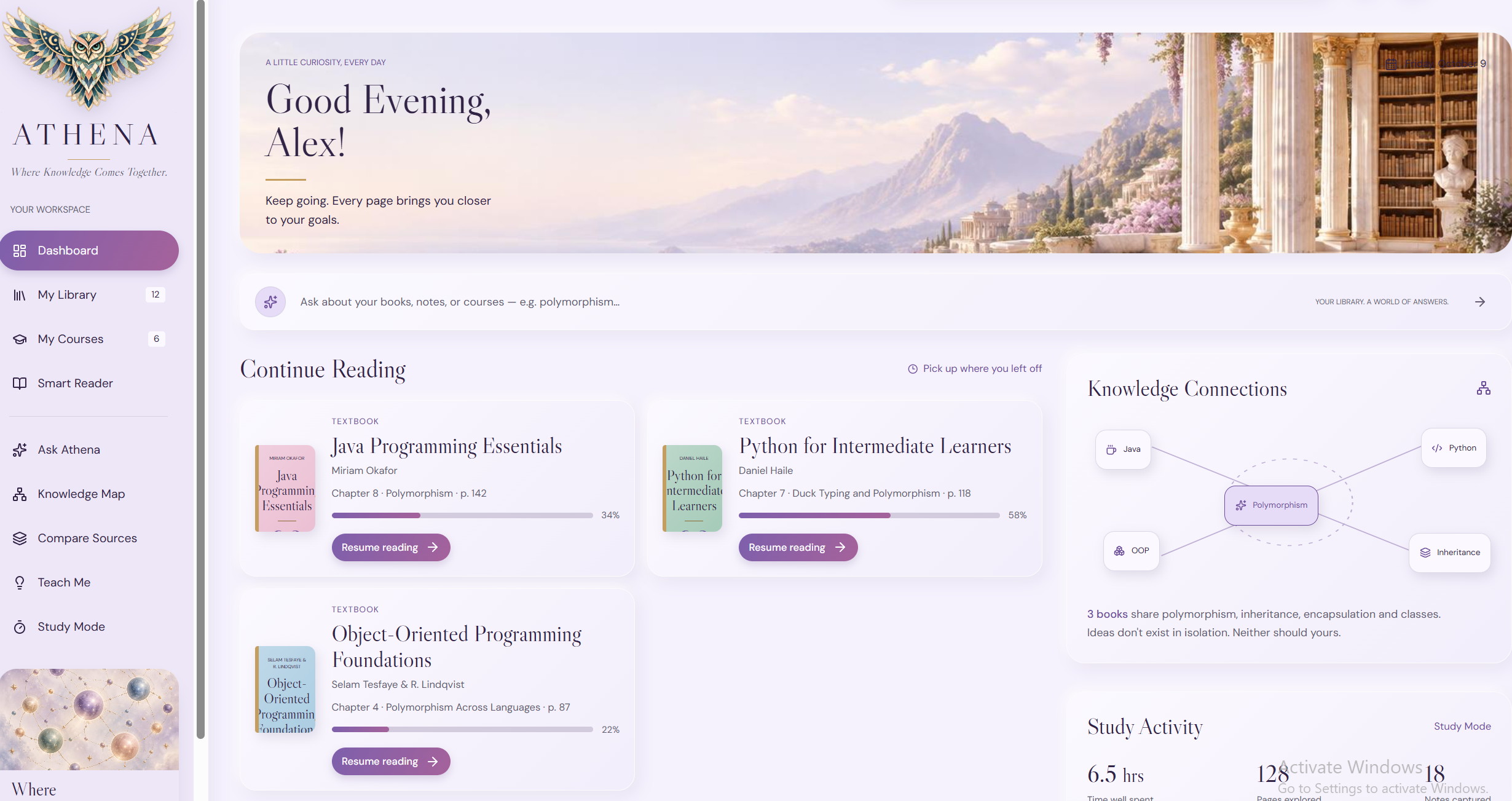
Athena's homepage — Cover image
-
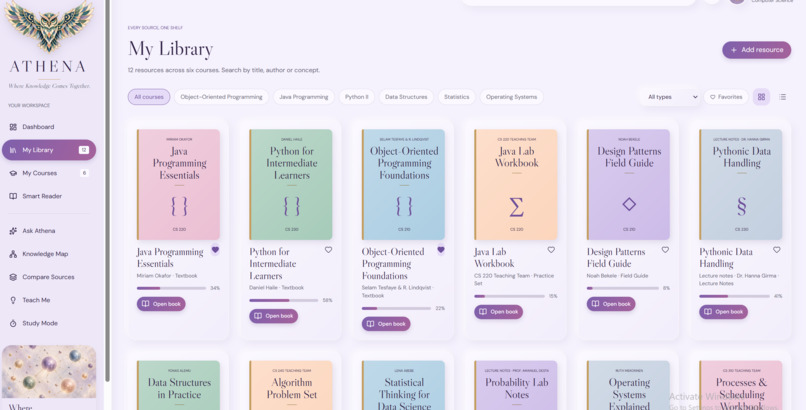
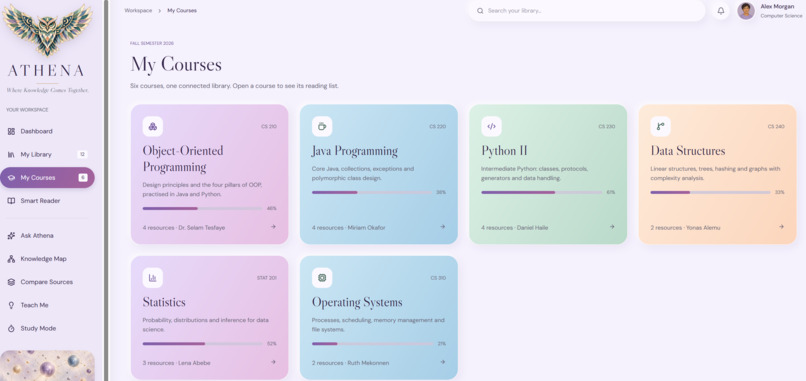
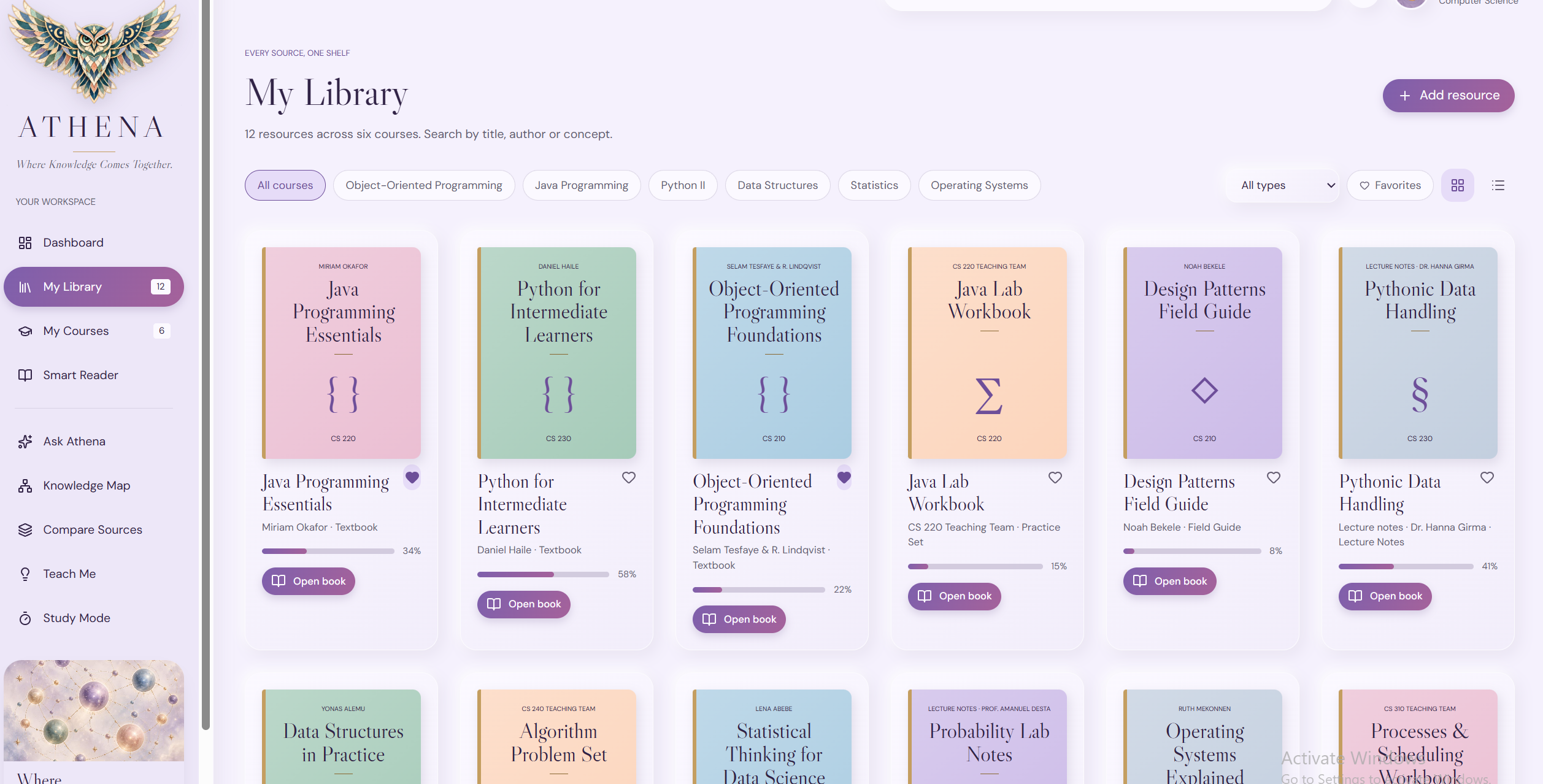
My Library
-
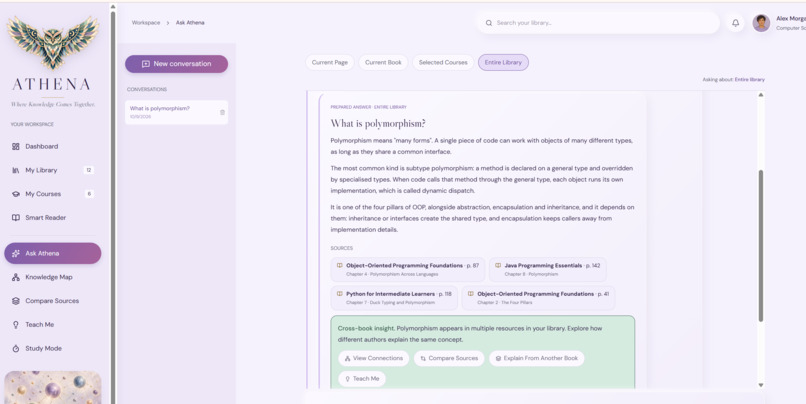
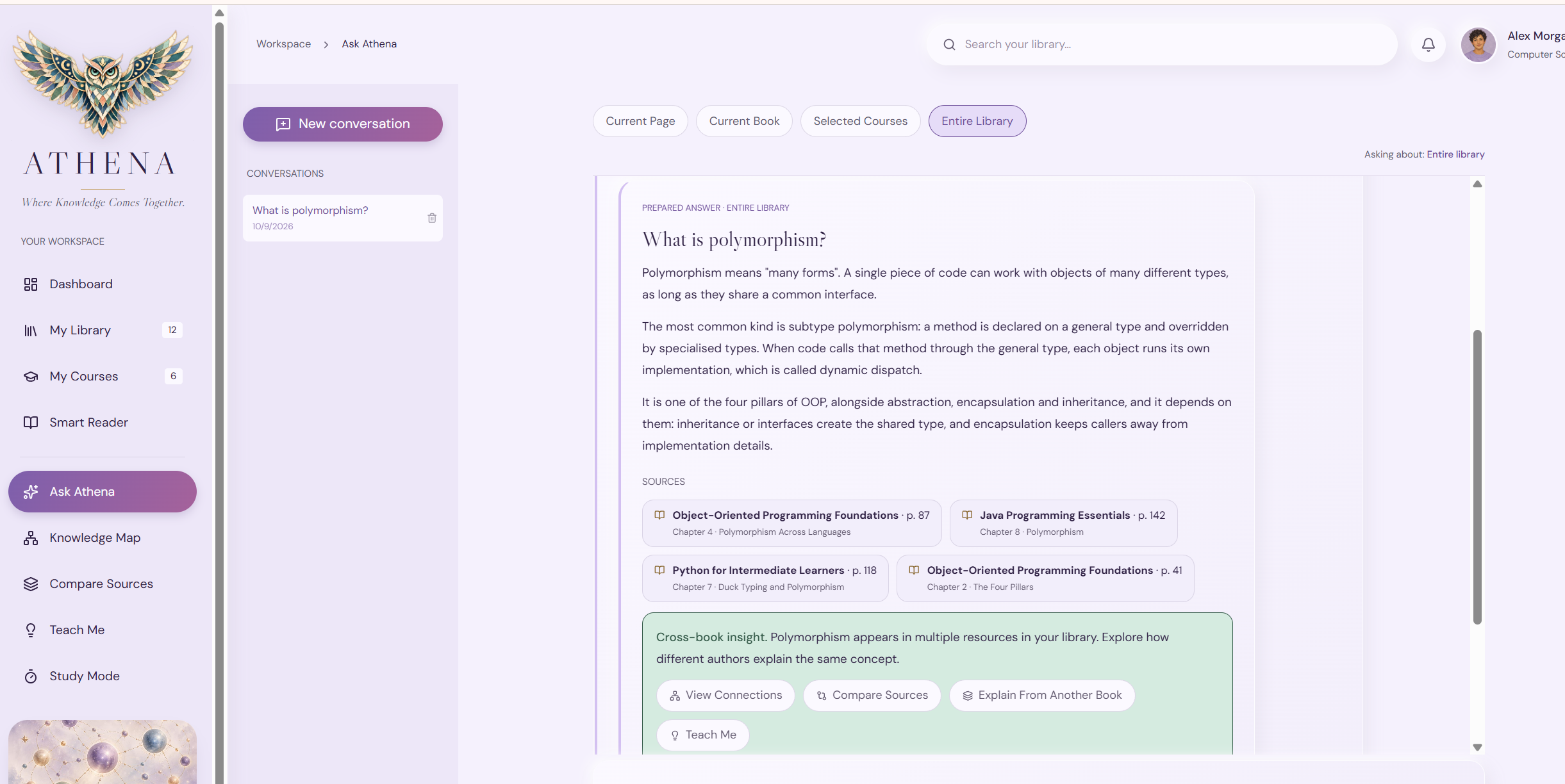
AI in action
-
-
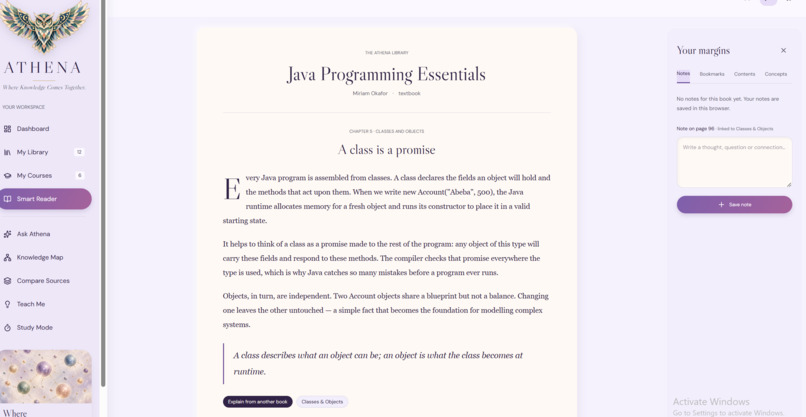
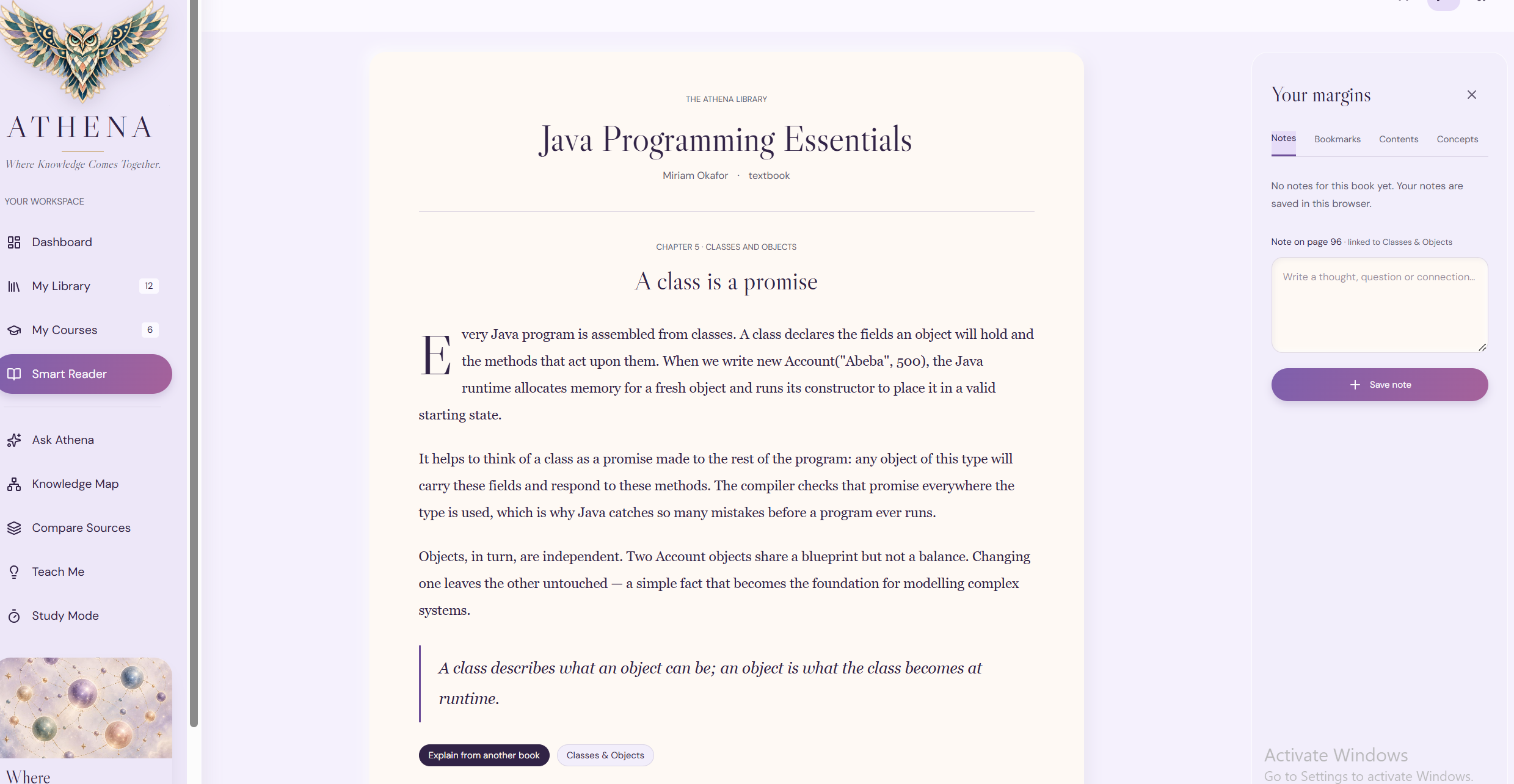
Smart Reader
Athena — What If Your Library Could Think With You?
Inspiration
Have you ever spent more time looking for the right information than actually learning it?
We have.
As university students, we're surrounded by information. We have textbooks, lecture slides, research papers, online libraries, and, of course, Google. We have access to more knowledge than students at any other point in history, yet somehow finding what we actually need can still be exhausting.
And then there's AI.
We can ask a chatbot almost anything and get an answer in seconds. That's amazing, but it made us wonder: Are we actually learning more, or are we just getting better at finding quick answers?
That question stayed with us.
We started thinking about libraries. Not just as buildings full of books, but as places where curiosity begins. Places where one question leads to another, where you discover something you weren't even looking for.
What if we could bring that feeling into the digital world?
What if we could combine the depth of a traditional academic library with the possibilities of artificial intelligence?
And that's where Athena began.
We named it after Athena, the Greek goddess of wisdom, because we wanted to build something that represents more than information. We wanted something that encourages understanding, curiosity, and independent thinking.
What It Does
The simplest way to explain Athena is this:
We're trying to make academic libraries feel a little less like databases and a lot more like learning companions.
Think about how we usually study. We open a textbook, get confused about something, open another tab, search for an explanation, find a research paper, ask AI a question, and suddenly we have fifteen tabs open and have forgotten what we were originally trying to understand.
Sound familiar?
Athena was inspired by that experience.
We wanted to explore what happens when academic resources and AI-assisted learning become part of the same experience.
But there's one thing we care about: we don't want Athena to do all the thinking for students.
We want it to help students think better.
To ask questions, explore unfamiliar subjects, discover connections, and approach difficult material with a little more confidence.
Because learning isn't just about finding the correct answer. Sometimes the most interesting part is everything you discover along the way.
How We Built It
We started with an idea that was honestly much bigger than what we could build during a hackathon.
An intelligent academic library sounds exciting, but turning that into an actual application is a completely different challenge.
So we had to make choices.
What matters most? What would make the experience genuinely useful? And how could we take the idea out of our heads and put something functional on a screen?
We spent time thinking about how students would interact with Athena, what the interface should feel like, and how to bring AI into the experience without making everything unnecessarily complicated.
Then came the actual building, testing, fixing, and occasionally wondering why something that worked five minutes ago had suddenly stopped working.
By the end, we had something we could actually demonstrate. And seeing an idea become something you can click, explore, and interact with is a pretty incredible feeling.
Challenges We Ran Into
Probably our biggest challenge was learning how to make a big idea fit into a small amount of time.
There were so many things we wanted Athena to do, and it was tempting to try to build everything at once.
But a hackathon forces you to ask an important question: What actually matters right now?
We also kept coming back to the same problem that inspired Athena in the first place.
How do we make AI genuinely helpful for learning without turning it into another shortcut?
We didn't want to build something that simply gives students answers and sends them on their way. We wanted the experience to encourage curiosity and engagement with academic material.
And, naturally, building software came with its own surprises.
What We're Proud Of
First, the fact that Athena exists outside of our imagination now.
There's something special about taking an idea you've spent time thinking about and finally seeing it come to life.
We're also proud that we didn't start with the question, "How can we add AI to something?"
We started with a problem we recognized from our own experiences as students.
AI became part of the solution, not the reason for building the project.
And while there's still a lot we'd love to improve, we're proud of what we managed to create within the time we had.
What We Learned
One thing this experience reminded us is that having an idea and building it are two very different things.
An idea can be limitless. A project has deadlines, bugs, technical limitations, and decisions you can't keep postponing.
We learned how important it is to focus on the essential parts of a product and keep moving forward, even when everything isn't perfect.
We also learned that building educational technology means thinking about more than code.
You have to think about the person sitting on the other side of the screen. What are they struggling with? What are they trying to understand? Will this actually make their day easier?
Those questions became just as important to us as the technology itself.
What's Next?
We don't really see Athena as something that ends when the hackathon does.
There are still so many ideas we want to explore.
We imagine a future where Athena can help students navigate larger collections of academic knowledge, discover connections between different subjects, and build learning experiences that adapt to their individual needs.
We know that's ambitious.
But most interesting things start out that way.
For now, we're happy that we took the first step.
And if there's one thought we'd like people to take away from Athena, it's this:
We don't think the future of learning should be about AI thinking for us. We think it should be about AI helping us discover just how much more we can think, question, and understand on our own.
That's the kind of future we'd like Athena to be part of.
Built With
- bun
- lucide-react
- nitro
- radix-ui
- react
- react-hook-form
- tailwind-css
- tanstack-query
- tanstack-router
- tanstack-start
- typescript
- vite
- vitest
- zod


Log in or sign up for Devpost to join the conversation.