Inspiration
We wanted to build an AI learning assistant that does more than simply answer questions. Real learning often requires planning, finding the right resources, practicing, and adapting when new information becomes available.
This inspired us to build EduAgent AI as an agentic learning assistant that can understand a learner's request, create a plan, use the appropriate tools, evaluate intermediate results, and produce a final response.
What We Built
EduAgent AI is an agentic AI learning assistant designed around an adaptive workflow.
Instead of following a fixed sequence for every request, the agent can:
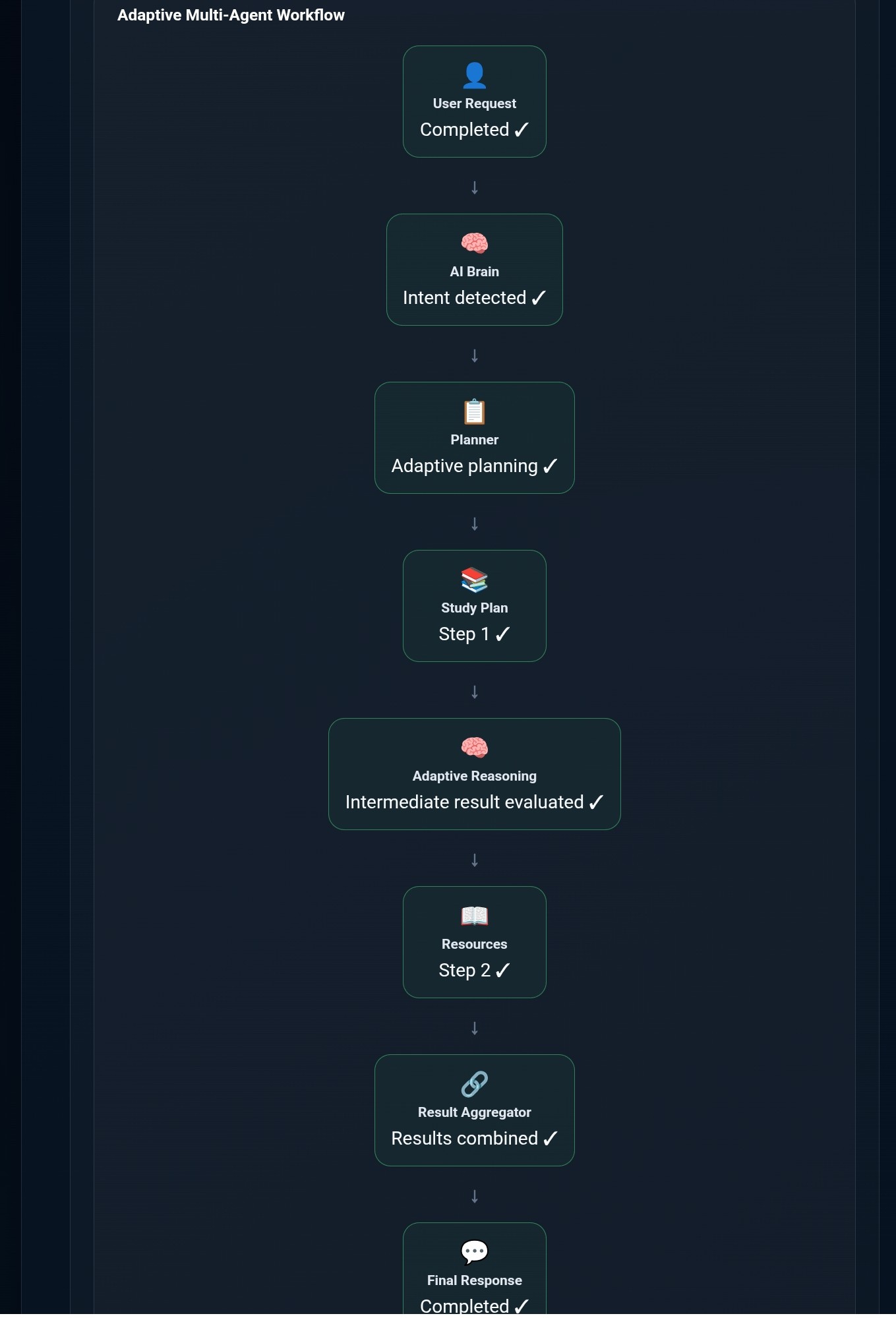
- Understand the user's request.
- Use an AI Brain to determine the appropriate workflow.
- Create a plan using the Planner.
- Execute specialized tools such as Study Plan, Learning Resources, Calculator, and Web Search.
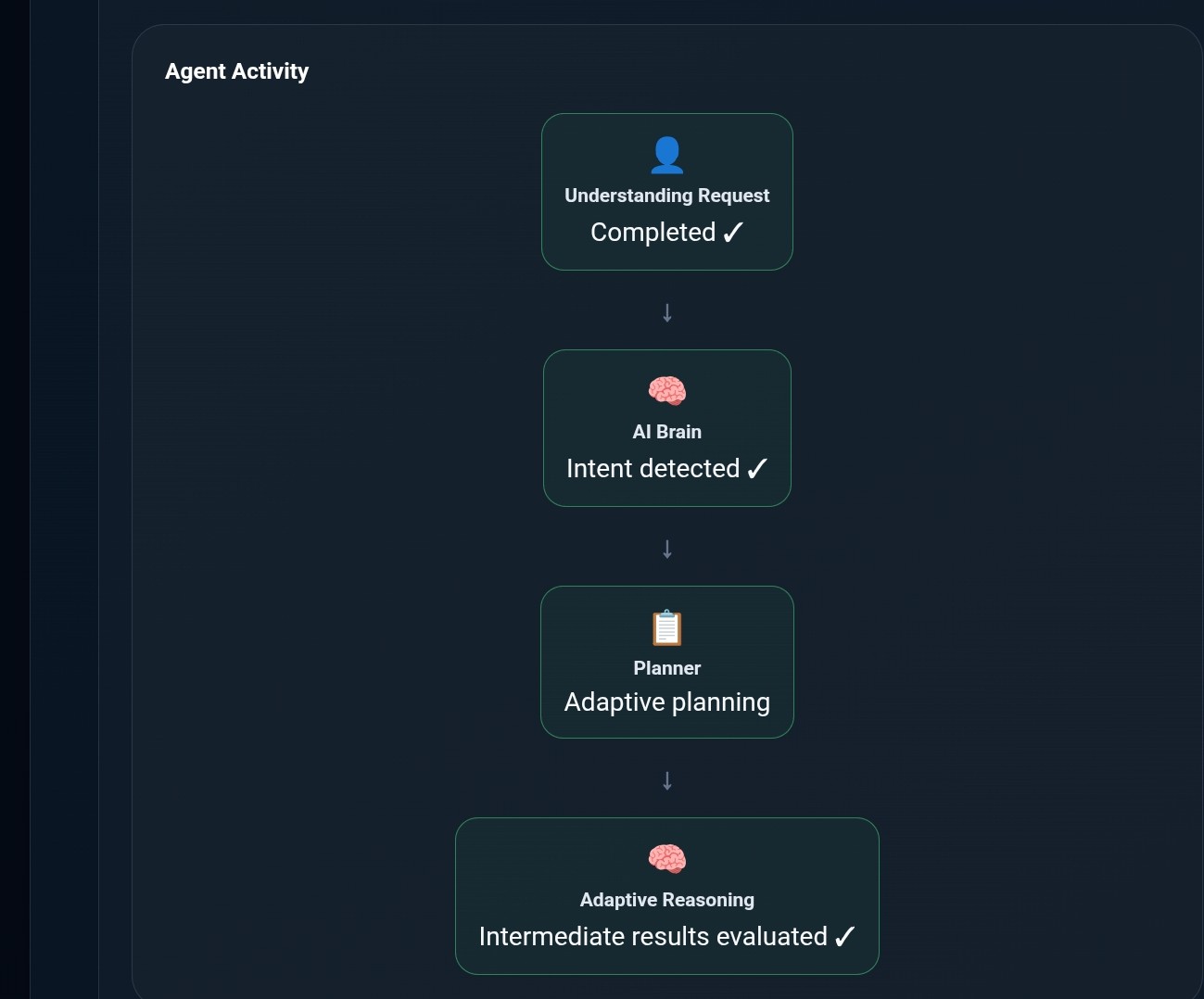
- Evaluate intermediate results through Adaptive Reasoning.
- Decide whether another tool is needed.
- Aggregate the results.
- Generate a final learner-friendly response.
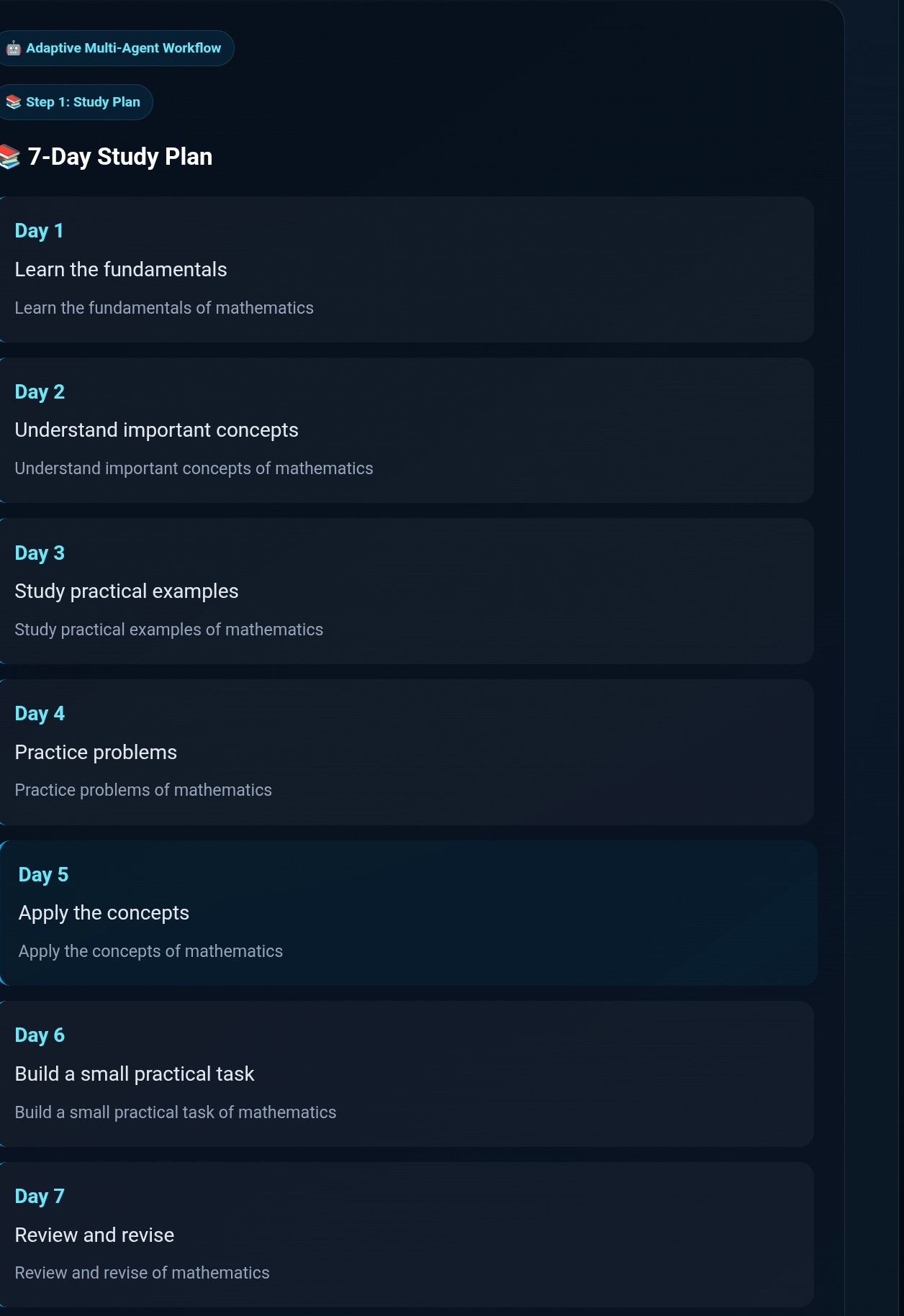
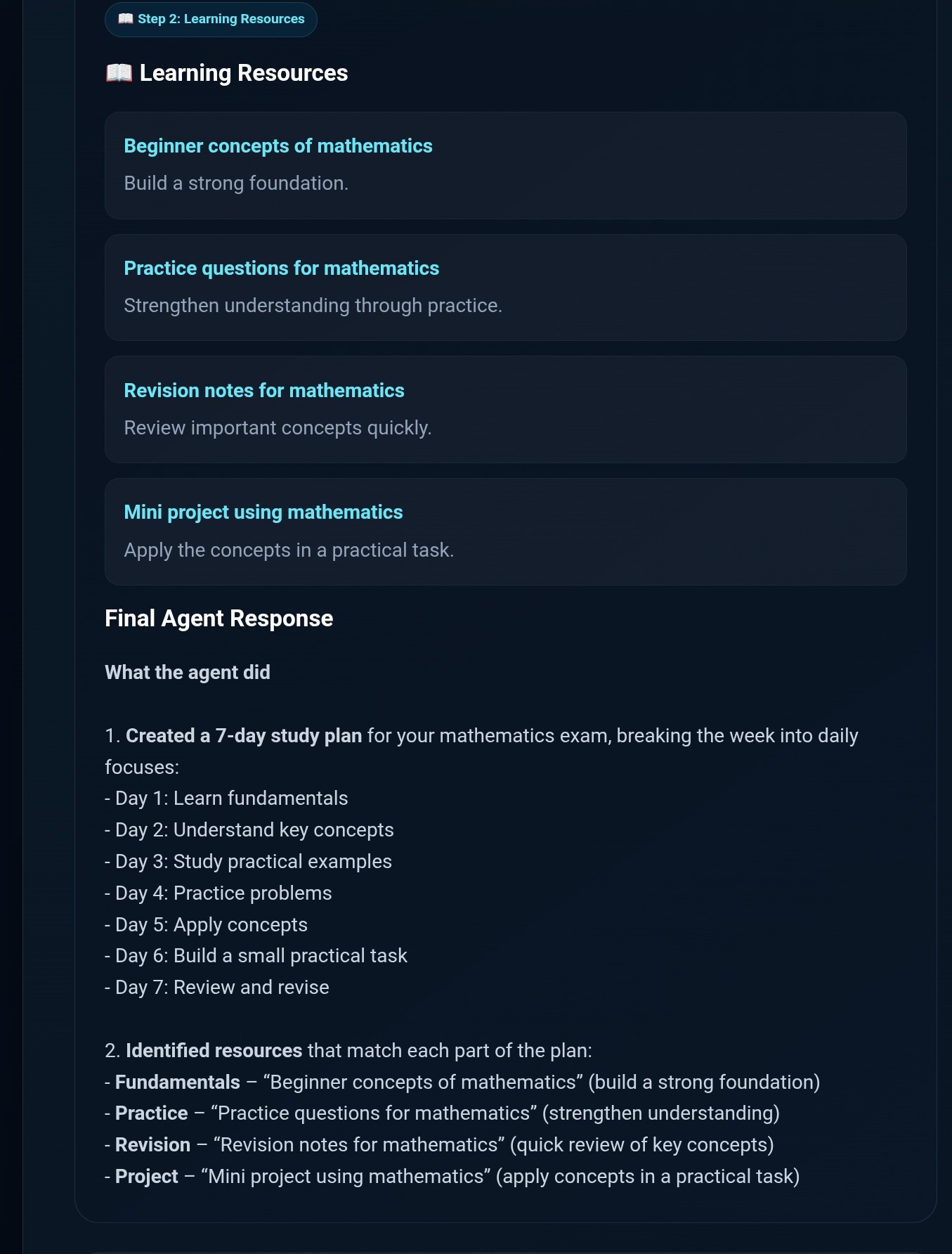
For example, when a learner asks for a 7-day mathematics exam plan and then asks what resources are needed, the agent first creates the study plan. It then evaluates that result and decides that learning resources are needed before producing the final response.
How We Built It
The backend was built with Python and FastAPI. Groq provides the LLM layer, while our custom agent architecture handles planning, tool selection, execution, adaptive reasoning, validation, and result aggregation.
The system includes:
- AI Brain for understanding requests
- Planner for workflow selection
- Tool Manager for tool execution
- Adaptive Reasoning for evaluating intermediate results
- Result Aggregator for combining outputs
- Response Builder for the final response
- Trace information for showing the agent's workflow
The frontend was built with HTML, CSS, and JavaScript and deployed as a web application. The backend is deployed separately as an API.
We also created an Alexa+ simulated experience in the web application to demonstrate how an agentic educational assistant could provide an interactive assistant-style experience without requiring Alexa hardware.
Challenges
One of the main challenges was moving from a simple tool-calling chatbot to a genuinely adaptive workflow.
A fixed workflow can execute predefined steps, but real user requests are not always predictable. We therefore added adaptive reasoning so the agent can inspect intermediate results and decide what should happen next.
Another challenge was making the agent reliable. We added tool validation, supported-tool checks, step limits, error handling, and workflow tracing to make the system easier to understand and debug.
We also wanted to make the agent's behavior visible rather than hiding everything behind a single AI response. The interface therefore shows the AI Brain, Planner, Adaptive Reasoning, tools, and final response as part of the simulated agent workflow.
What We Learned
This project helped us understand that agentic AI is not just about connecting an LLM to tools. The important part is designing a reliable loop around the model:
Understand → Plan → Act → Evaluate → Adapt → Aggregate → Respond
We learned how intermediate tool results can be used to make the next decision dynamically, and how validation and tracing can make agentic systems more reliable and easier to demonstrate.
Future Improvements
Future versions could support more educational tools, persistent learner context, richer personalization, voice interaction, additional agent skills, and more advanced resource retrieval.
The architecture is designed so new tools can be registered without redesigning the entire agent workflow. Inspiration
What it does
How we built it
Challenges we ran into
Accomplishments that we're proud of
What we learned
What's next for EduAgent AI
Built With
- agentic
- agents
- ai
- app
- artificial
- css
- edtech
- education
- fastapi
- generative
- groq
- html
- intelligence
- javascript
- language
- learning
- machine
- natural
- processing
- python
- web

Log in or sign up for Devpost to join the conversation.