-
-
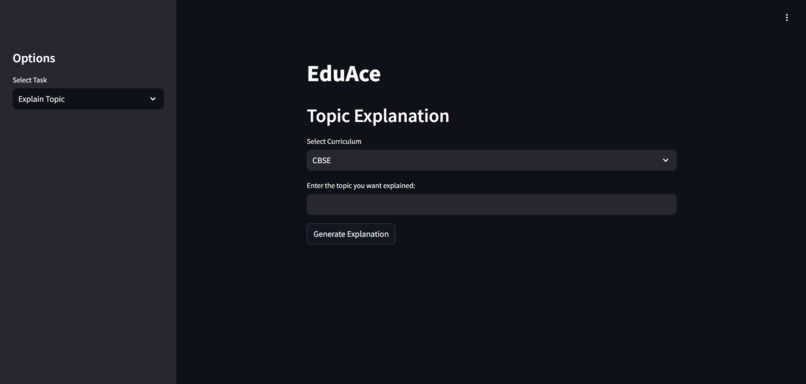
HomePage
-
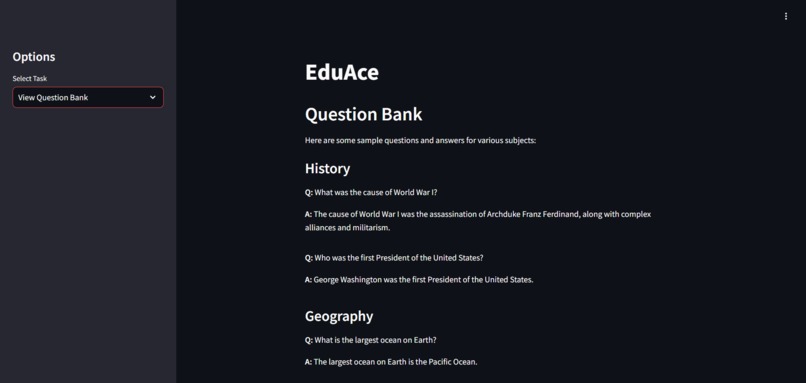
Question Bank
-
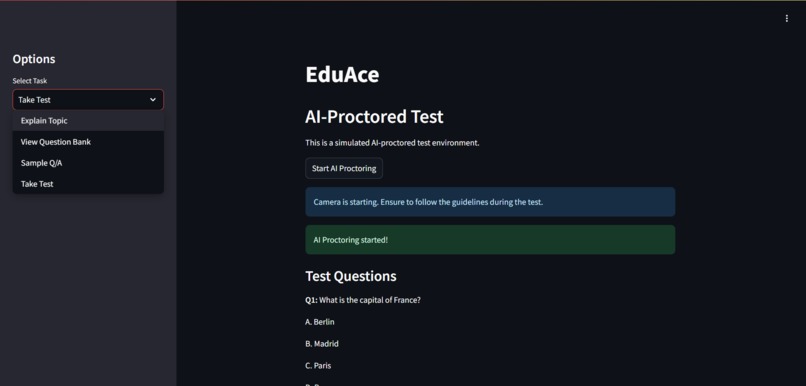
AI proctored environment
Inspiration
The inspiration for this project came from the need for a more advanced, AI-driven educational support system. With students and educators increasingly relying on digital tools, the idea was to create a platform that not only provides exam preparation but also ensures integrity during exams through AI proctoring. As online education becomes mainstream, there is a growing demand for systems that can offer personalized assistance and monitor exam sessions remotely. This need, coupled with my interest in combining AI with real-world applications, led to the development of this project.
What I Learned
Through this project, I delved into several exciting fields of AI and technology, including:
- Natural Language Processing (NLP): Using NLP models like GPT-2 for text generation, T5 for question generation, and BART for summarization, I learned how to apply advanced language models to solve educational challenges.
- Computer Vision: Implementing OpenCV to build a live AI proctoring system taught me how to work with real-time video feeds and integrate AI-based malpractice detection.
- Speech Synthesis: Integrating Google Text-to-Speech (gTTS) for voice explanations helped me understand how AI can enhance accessibility in learning platforms.
- User Interface: I furthered my skills with Streamlit, a Python framework for building interactive web applications, by designing an intuitive user interface for students and teachers.
How I Built the Project
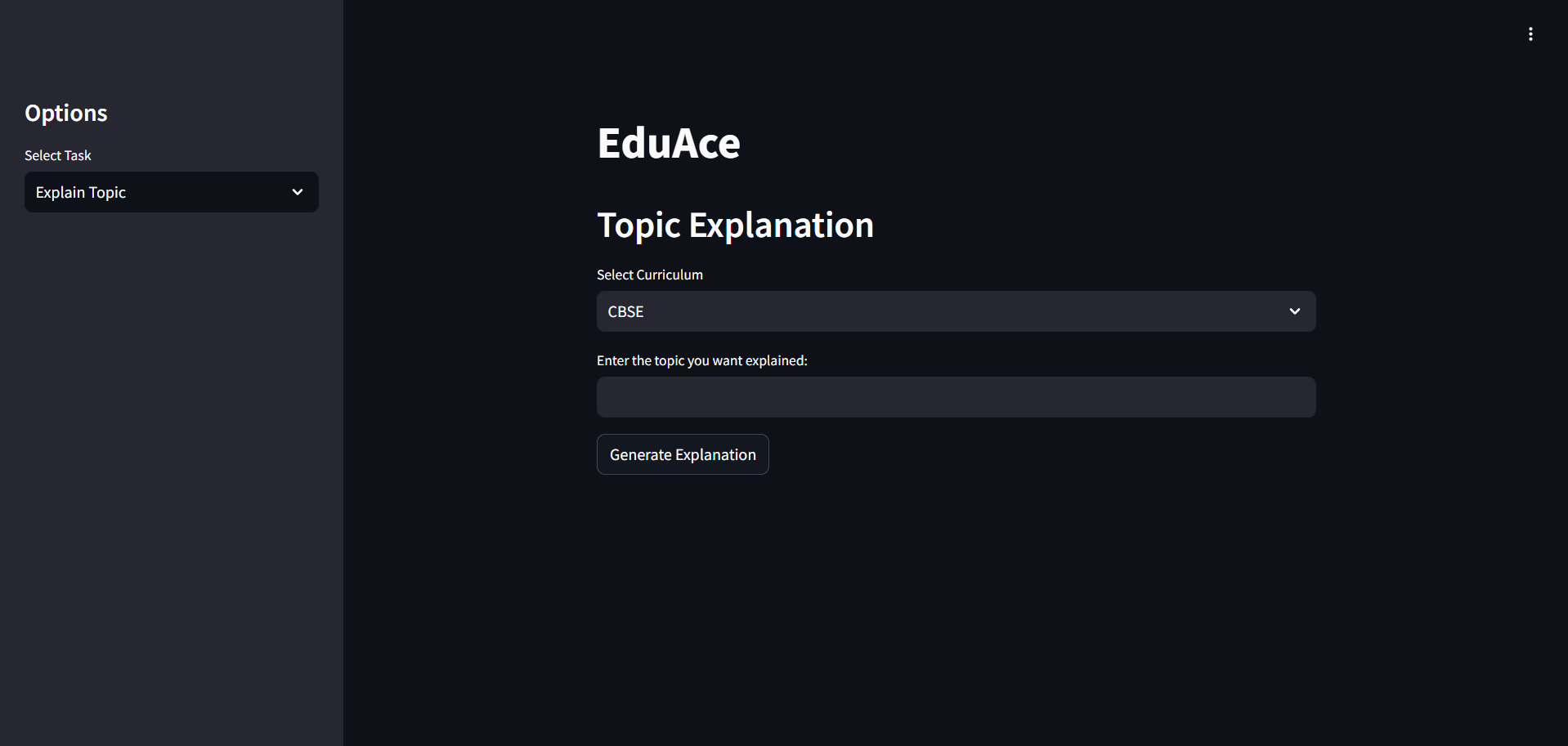
- Text Explanation and Quiz Generation: I used the GPT-2 model to generate detailed explanations for topics based on the selected curriculum (CBSE, TN-ST, ICSE, etc.)[these various curriculums followed in INDIA ]. For quiz generation, I integrated the T5 model, which created quiz questions based on the provided explanations.
- Voice Explanation: I employed Google Text-to-Speech (gTTS) to convert the generated text explanations into speech, enhancing the accessibility of the learning experience.
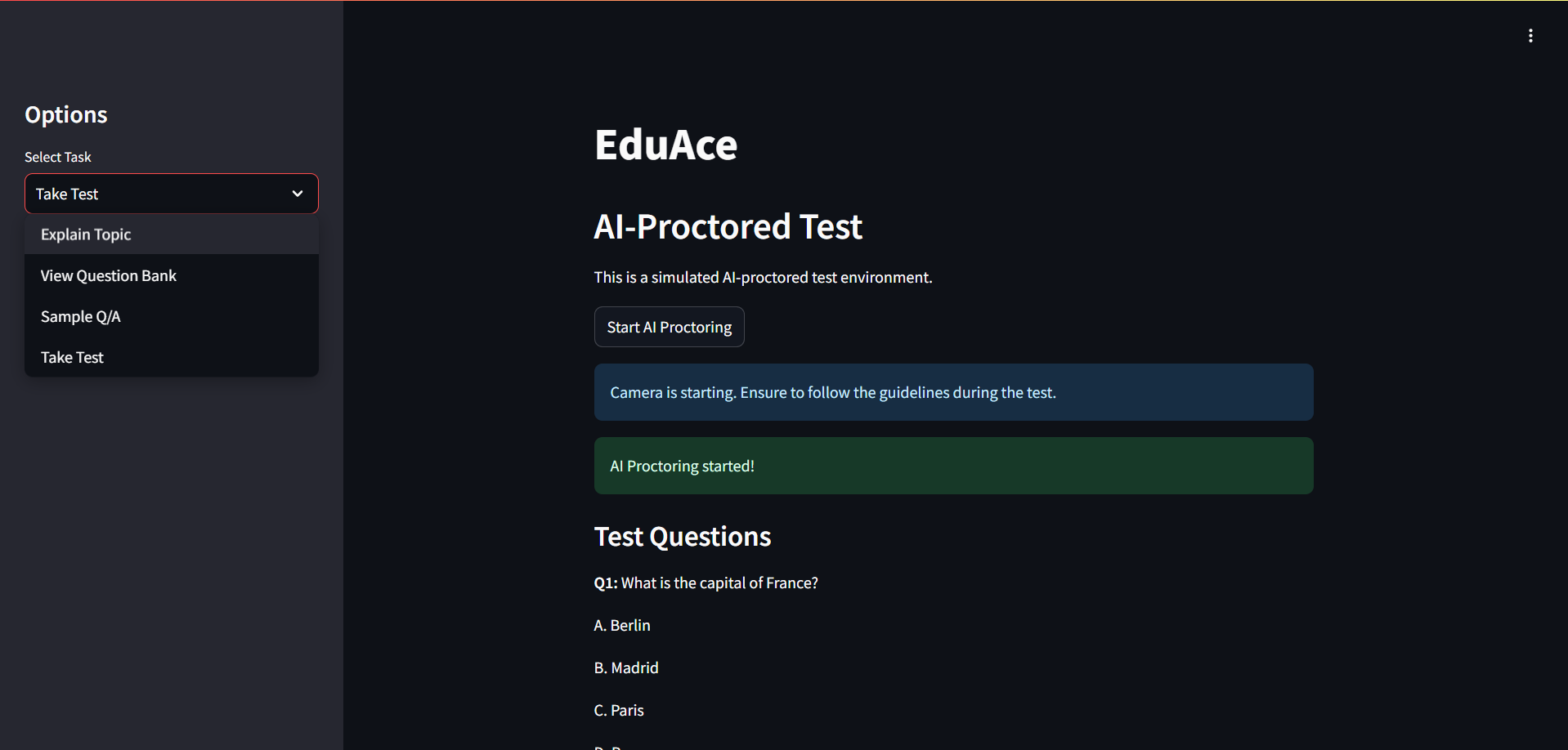
- AI Proctoring System: Using OpenCV and my trained AI model, I implemented a real-time proctoring system that activates the webcam and monitors the live feed for malpractice. Students take the test under supervision, with a set of multiple-choice questions presented only after the proctoring system is enabled.
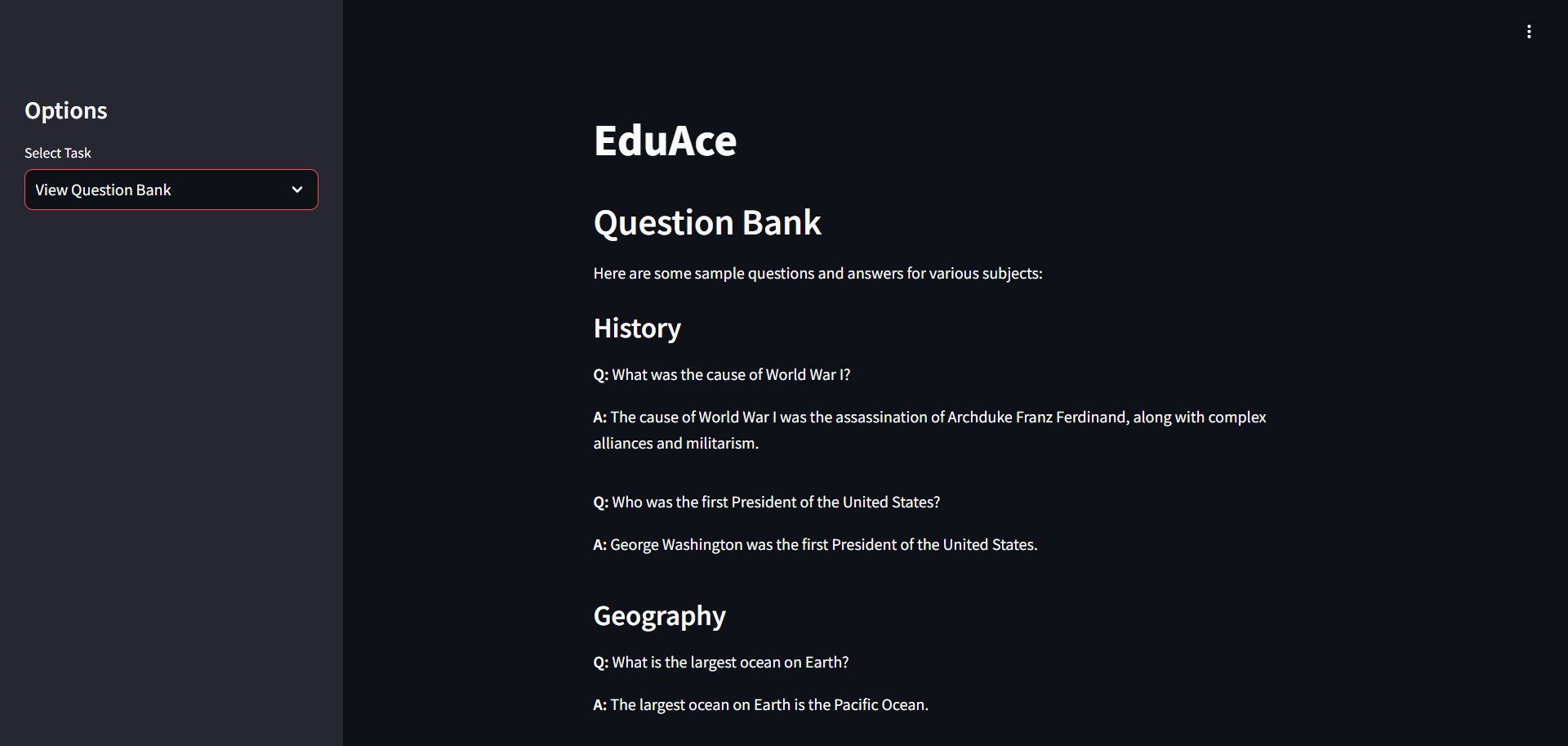
- User Interface: The entire app was built using Streamlit, making it easy for students to access options like explaining topics, viewing sample question banks, and taking AI-proctored exams. The sidebar contains options to view a sample question paper, select the curriculum, or start the AI-proctored test.
- PDF Submission: After the proctored test, students can upload their answer sheets as a PDF, ensuring a smooth submission process.
Challenges I Faced
Integrating Computer Vision with NLP: It was challenging to combine the NLP-driven exam preparation tools with the real-time proctoring system, especially when ensuring the live feed ran smoothly without interrupting the user experience. Proctoring Accuracy: Fine-tuning the AI model for detecting malpractice and ensuring accurate detection was one of the toughest parts of the project. Balancing sensitivity to avoid false positives while maintaining integrity was critical. Latency in Video Processing: When using OpenCV to access the live camera feed, handling latency and ensuring real-time analysis was tricky, especially when deployed in a web-based application.
Conclusion
This project gave me invaluable insights into merging AI-driven learning tools with real-time computer vision for practical applications. By combining cutting-edge NLP models with a user-friendly interface and AI-based proctoring, the project offers a robust solution for modern education needs, ensuring both quality preparation and exam integrity.
Built With
- computer-vision
- gpt2
- huggingface
- python
- streamlit
- tensorflow
- transformers


Log in or sign up for Devpost to join the conversation.