-
-
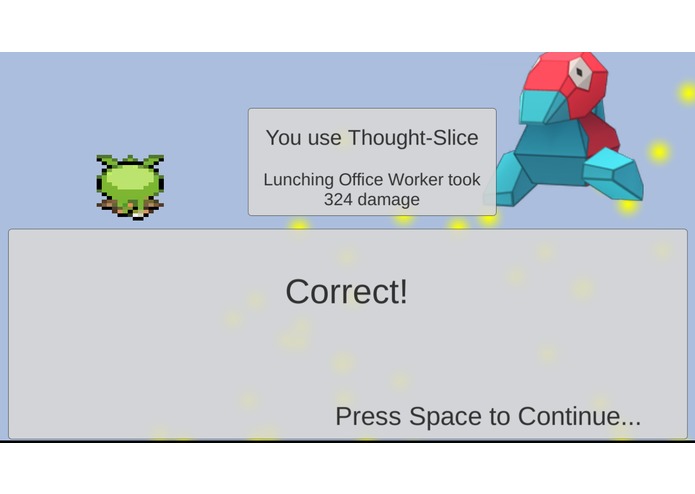
Use a number of Brilliant Attacks!
-
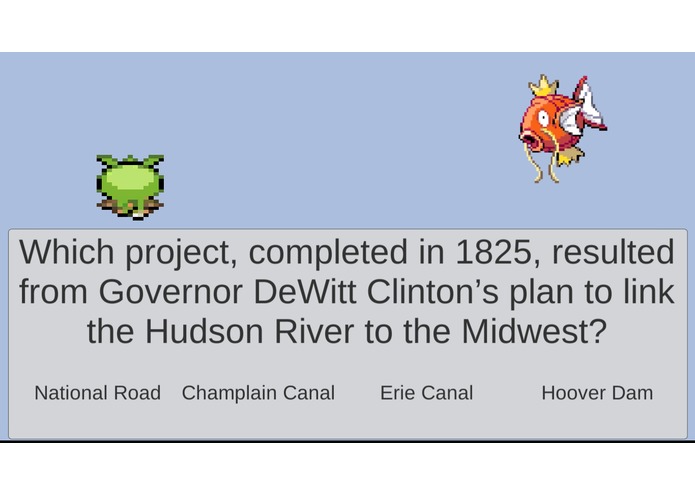
Example Question
-
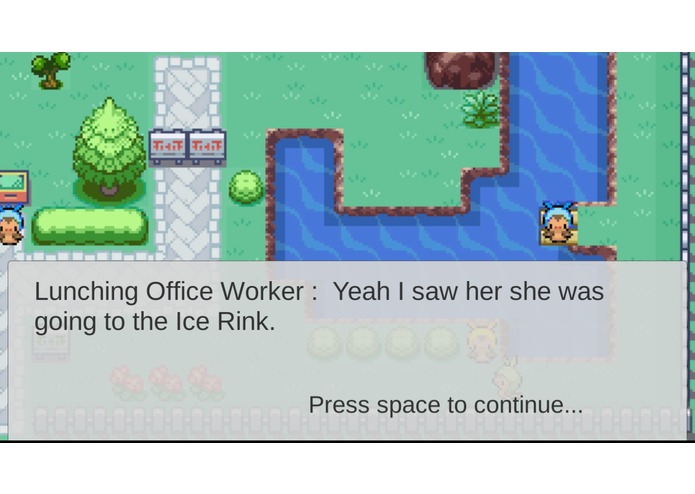
Search For Your Best Friend


Inspiration
We live in a new era of role playing games. From Fitocracy allowing us to level up from working out, to Pokemon GO bringing Pokemon and the outdoors to new-found popularity, games are pervading every aspect of society. With Midterms right around the corner, it can be hard to find the motivation to study. Thus was born the idea that if you could study the same way you played a video game, then maybe we wouldn't mind studying as much.
What it does
Track down your friend Connie, and prevent her from missing her exams!
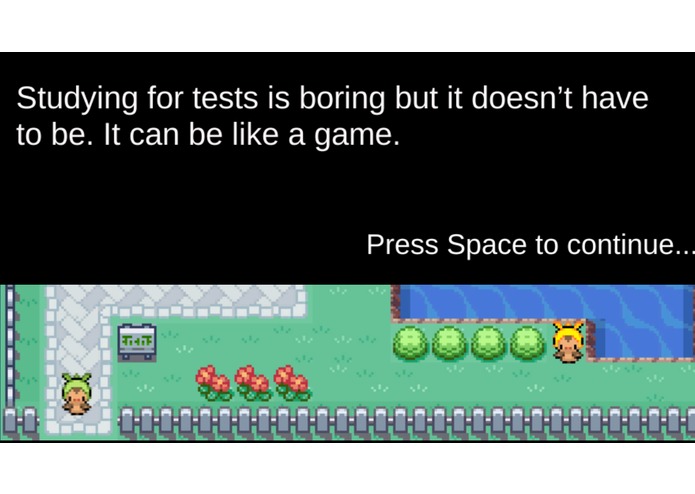
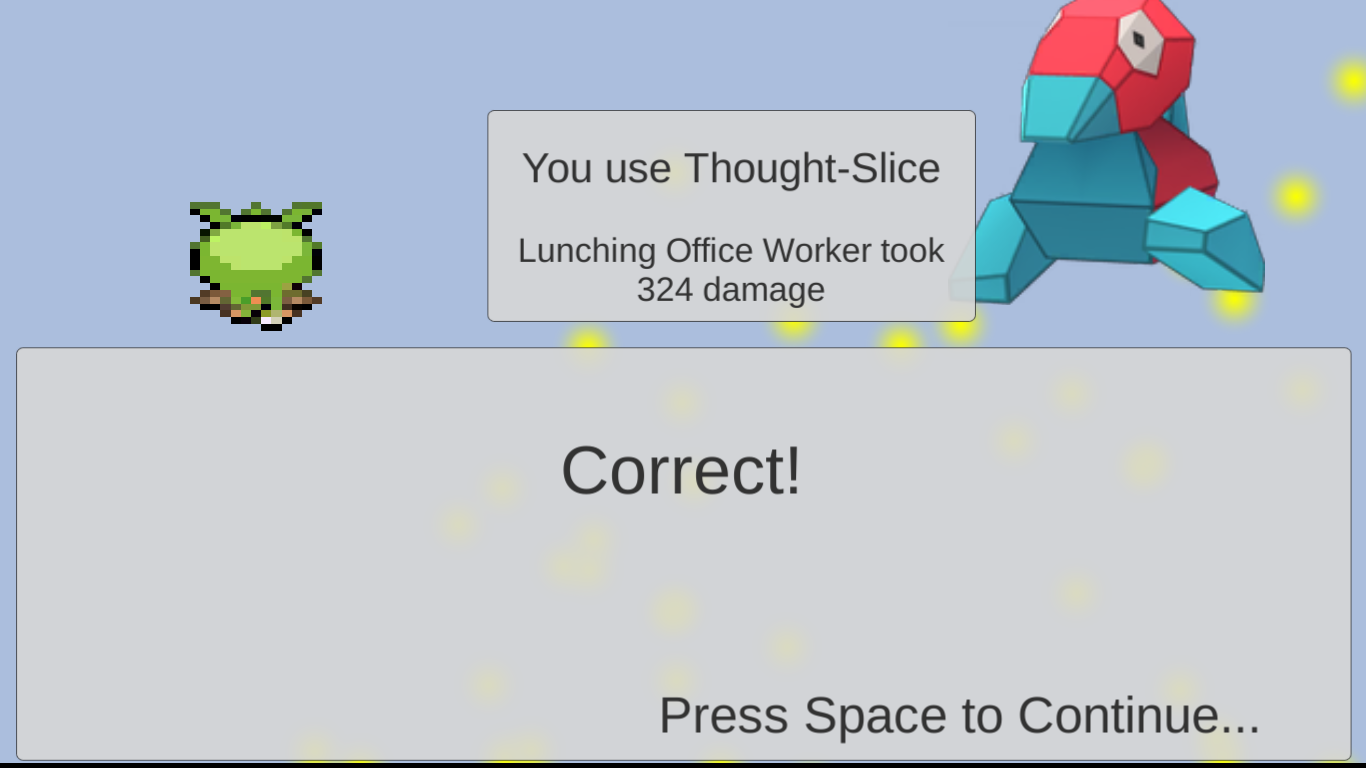
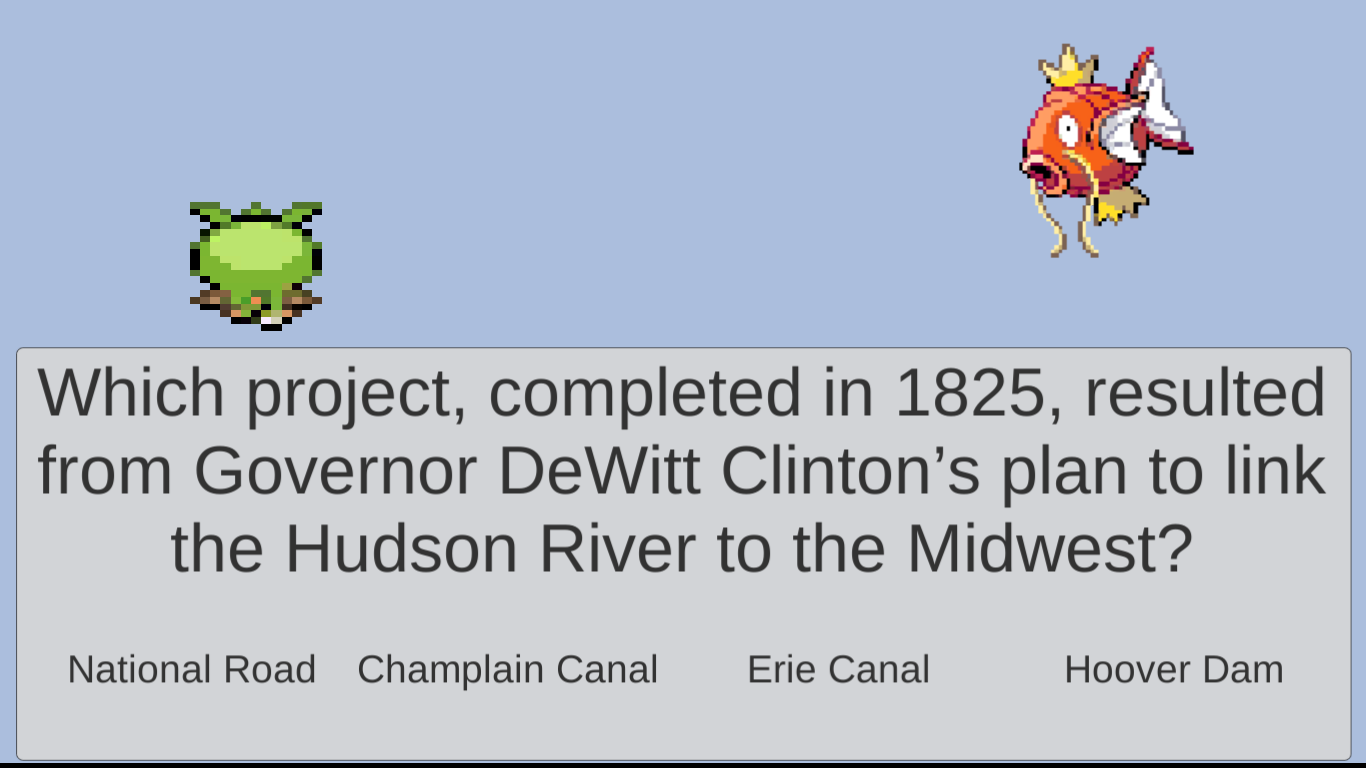
Edu-venture is a turn-based role playing game designed to use positive reinforcement learning and psychological rewards to encourage studying for a test or exam. In our current demo, it is targeted at New York middle school students who have to take their Regent exams. However, the current game model makes it easy to adapt to other subjects from the elementary to collegiate level. Not just a set of flash cards, the game takes players for a comedic and enjoyable story as they study for their tests in whatever subjects they may be.
How we built it/Challenges we ran into
We constructed Edu-venture using Unity (with C# as our scripting language). We started this project with 75% of the team almost completely new to both Unity and C#. The learning curve of the game engine was certainly an obstacle to overcome, but through teamwork, persistence, and all-star delegation, we were able to build a creative product.
We drew inspiration from many games like Pokemon, Mathblasters, Final-Fantasy, Zelda, and many others. We went through many drafts and ideas, from a Final Fantasy clone where the abilities would be keyed off of answering the questions associated with that ability, to a timer-based game, where attacks would become stronger based off of how many questions you could answer within the time limit. In the end, we decided on our current model because its simple user-experience makes it more accessible to younger students without additional complications such as tracking in-game attributes and experience points, or discriminating against students who would normally require extra time but perform just as well under actual test requirements.
Accomplishments that we're proud of
We started this project with 3/4 of the team almost completely new to Unity and C#, so we are very proud about how quickly we learned and adapted. We were not quite sure if we could aptly build a full game and include most of the planned features within the time limits, even if we all had mastery in Unity. We consider this our most impressive feat.
What we learned
Three of us had never used Unity before, so this was a huge learning experience. This was also the first hackathon for two of our members, with a third member having not participated in a hackathon in four years. We learned a new scripting language C#, which most had never touched. In addition, most of us had never designed a game before, from the brainstorm/storyboard process to level and game-mechanic design, all the way down to sprite and animation work. From start to finish, our team developed a fun, creative adventure RPG from scratch without having any experience in having done so before.
What's next for Edu-venture
There are many features that can be added to this program in the next iterations. Our team has a deep interest in assistive technology for people with disabilities, especially for students. One approach would be to set all in-game fonts to Dyslexie, a font that was created to be more easily read by people with Dyslexia. Another option would be to add a Beeline Reader to help people with Dysgraphia. Additionally, we can have better support for reader programs, to help people who are blind or have extreme cases of dyslexia. From a gameplay perspective, we could add more content. In the future we can take the time to develop art resources unique to this game instead of the current placeholders, and we can create new levels that can incorporate additional educational concepts like teaching and courses.


Log in or sign up for Devpost to join the conversation.