-
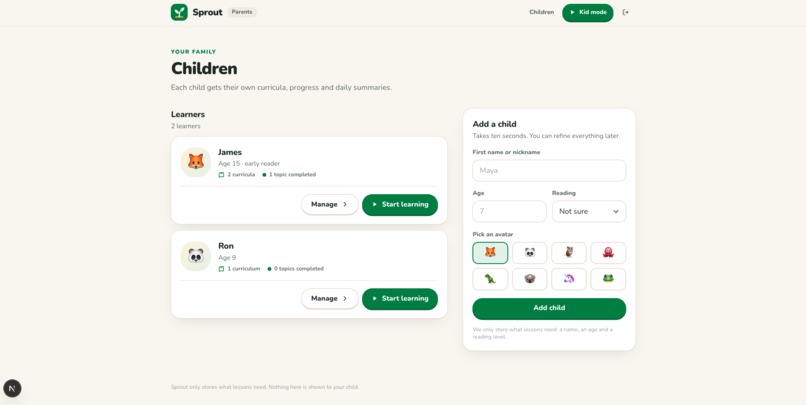
Parent View
-
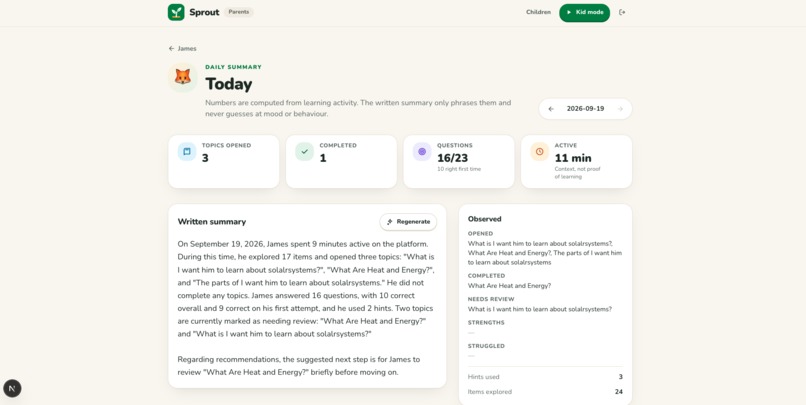
Child/parent view
-
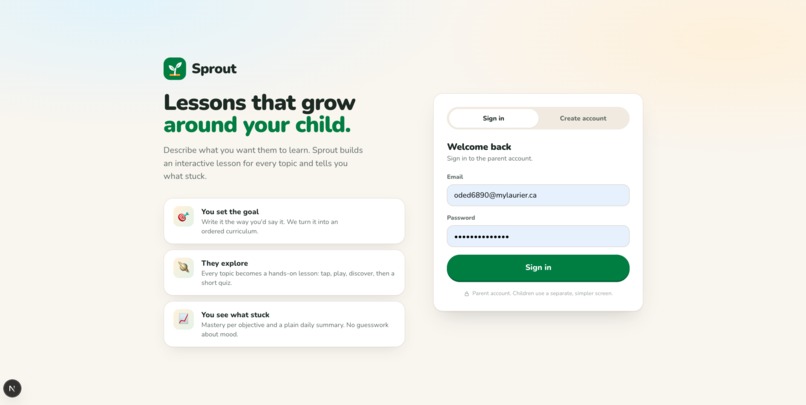
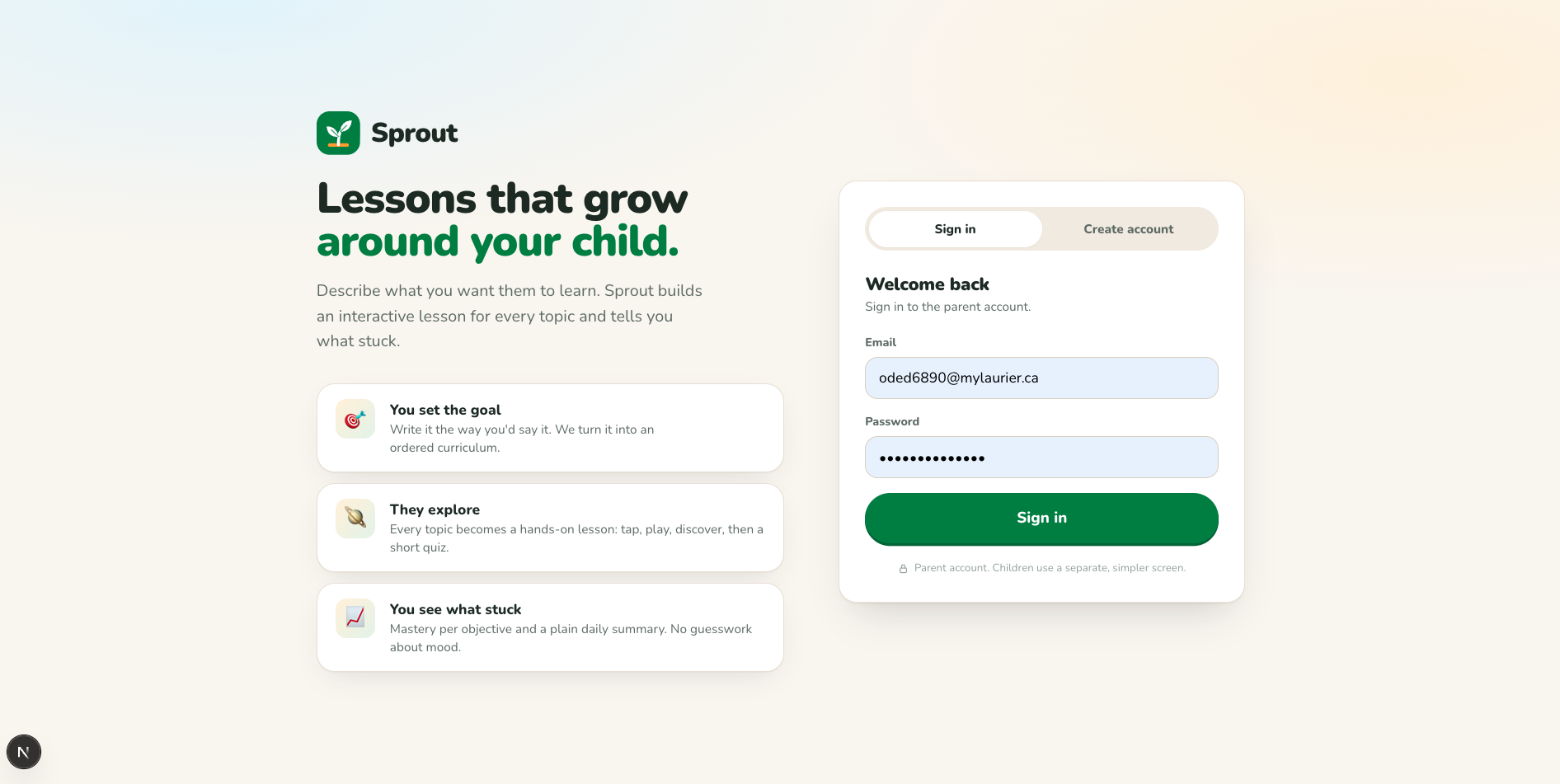
Landing page
-

Lesson Artifact
-
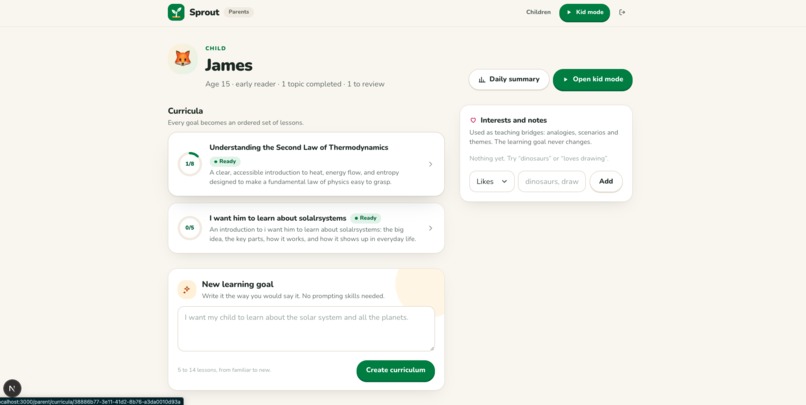
Child/parent view
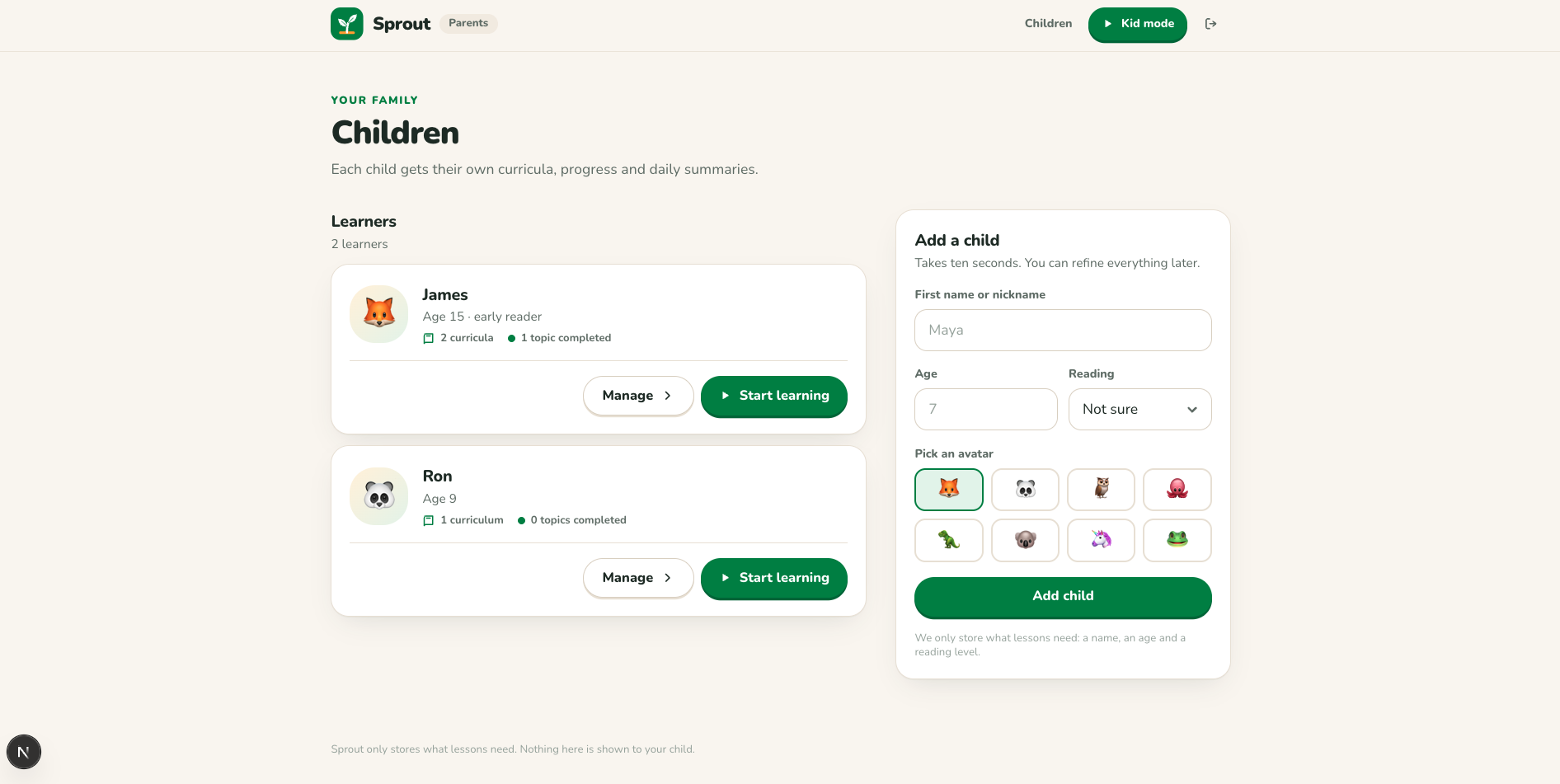

What problem are you solving?
Parents often know what their children are curious about but do not have the time or teaching experience to turn those interests into structured lessons. Finding reliable, age-appropriate resources, planning activities, and tracking whether a child understood the topic can be difficult.
Generic AI chat tools can provide explanations, but they do not automatically create a complete learning sequence, interactive activities, assessment, or useful progress feedback for parents.
Who is affected?
Sprout is designed for parents and guardians who want to support their children’s learning outside school. It also serves children who learn better through visual explanations, interactive activities, practice, and immediate feedback.
The project is particularly relevant to families that do not have regular access to private tutoring or educational enrichment. Educators and community organisations could also use the same model to create supplementary learning experiences.
Which SDGs does it address?
Sprout addresses SDG 4: Quality Education by making structured supplementary learning easier to create and access. Parents can describe a learning goal without needing to understand educational planning or AI prompting.
It also supports SDG 10: Reduced Inequalities by lowering technical and time barriers. Children can access focused learning experiences that adapt to their age, reading level, interests, and prior knowledge.
Sprout is not intended to replace schools, teachers, or specialist educational support. It is designed to make additional learning easier for families to start and monitor.
How does your solution work?
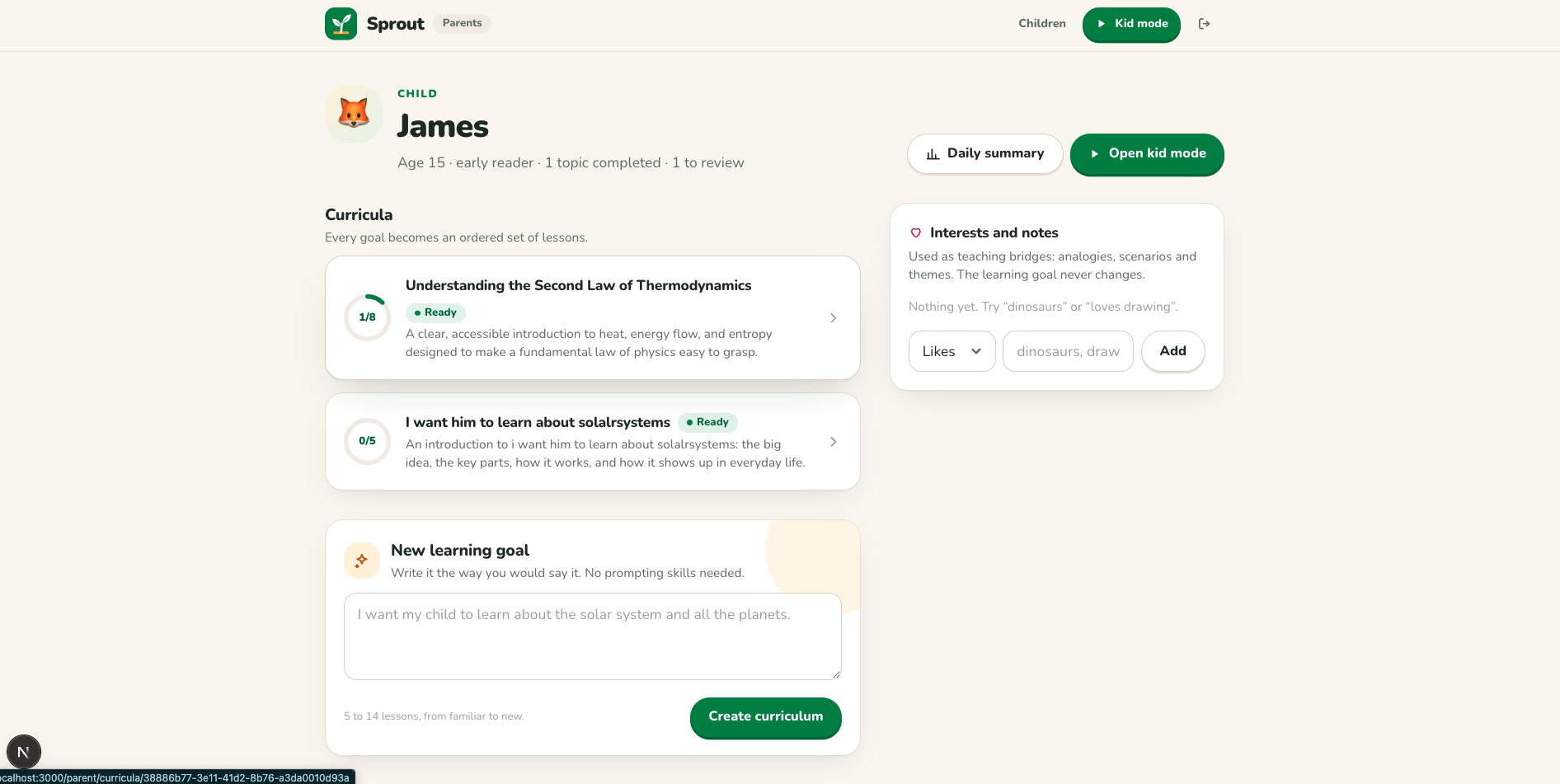
A parent describes what they want their child to learn in natural language, such as:
“I want my child to learn about the solar system.”
Sprout converts that request into a structured curriculum containing ordered topics, descriptions, prerequisites, and learning objectives. Each topic can then produce an interactive learning artifact designed specifically for that subject.
An artifact may include visual explanations, animations, flashcards, practice exercises, quizzes, corrective feedback, and review activities. Sprout can also use information about the child’s interests to adapt examples and analogies while keeping the educational objective unchanged.
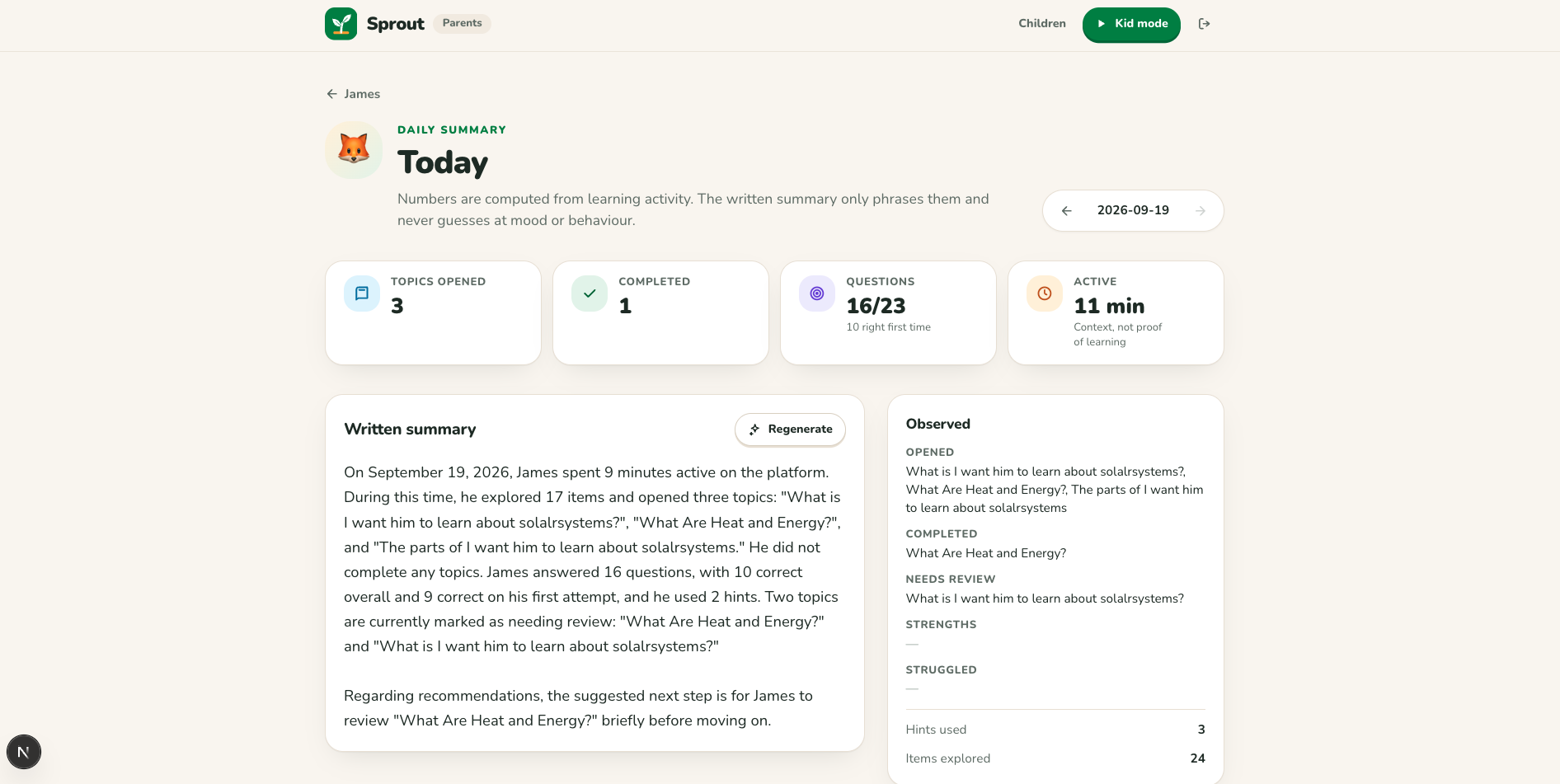
As the child learns, the system records structured events such as activities completed, answers submitted, attempts, hint usage, and topic completion. Progress is evaluated using multiple signals rather than a single quiz score. Parents can receive summaries showing what the child completed, demonstrated strengths, areas requiring review, and suggested next steps.
The technical design separates curriculum generation, lesson generation, lesson rendering, learning-event collection, progress calculation, and parent reporting. Generated lesson content is first represented as a structured blueprint with learning objectives, activities, answer keys, feedback, and mastery signals. This blueprint can then be validated before the interactive lesson is shown to the child.
What impact could it have?
Sprout could reduce the time parents spend searching for resources and preparing learning activities. It could also give parents better visibility into what their children actually completed and which concepts may require more practice.
Potential impact could be measured through lesson completion rates, quiz and activity performance, parent-reported usefulness, repeat learning sessions, and later performance on review activities.
The current project is a prototype, so it does not yet prove long-term learning outcomes. Further development would require testing with real families, stronger child-data privacy controls, content-quality review, accessibility testing, reliable background processing, and evaluation of whether the generated lessons improve knowledge retention.
Github link:
Built With
- edtech
- generative-ai
- google-ai
- next.js
- postgresql
- react
- supabase
- tailwind
- twilio
- typescript
- vercel


Log in or sign up for Devpost to join the conversation.