-
-
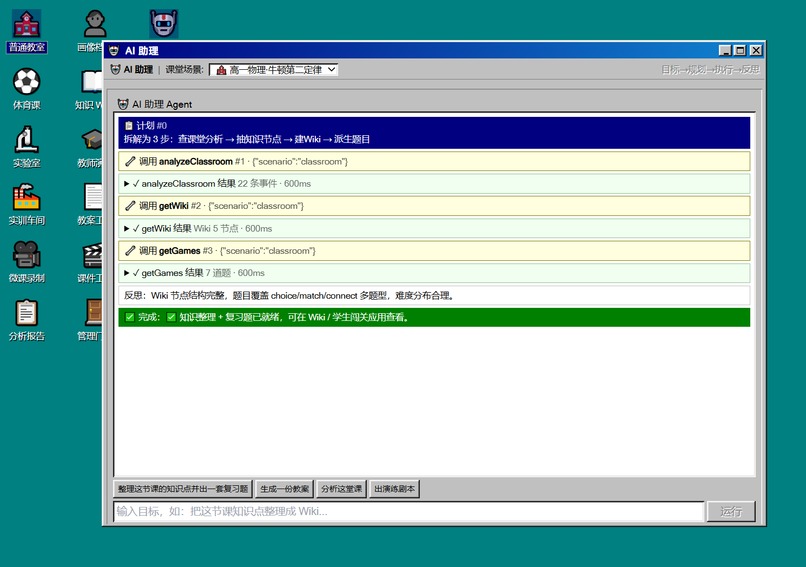
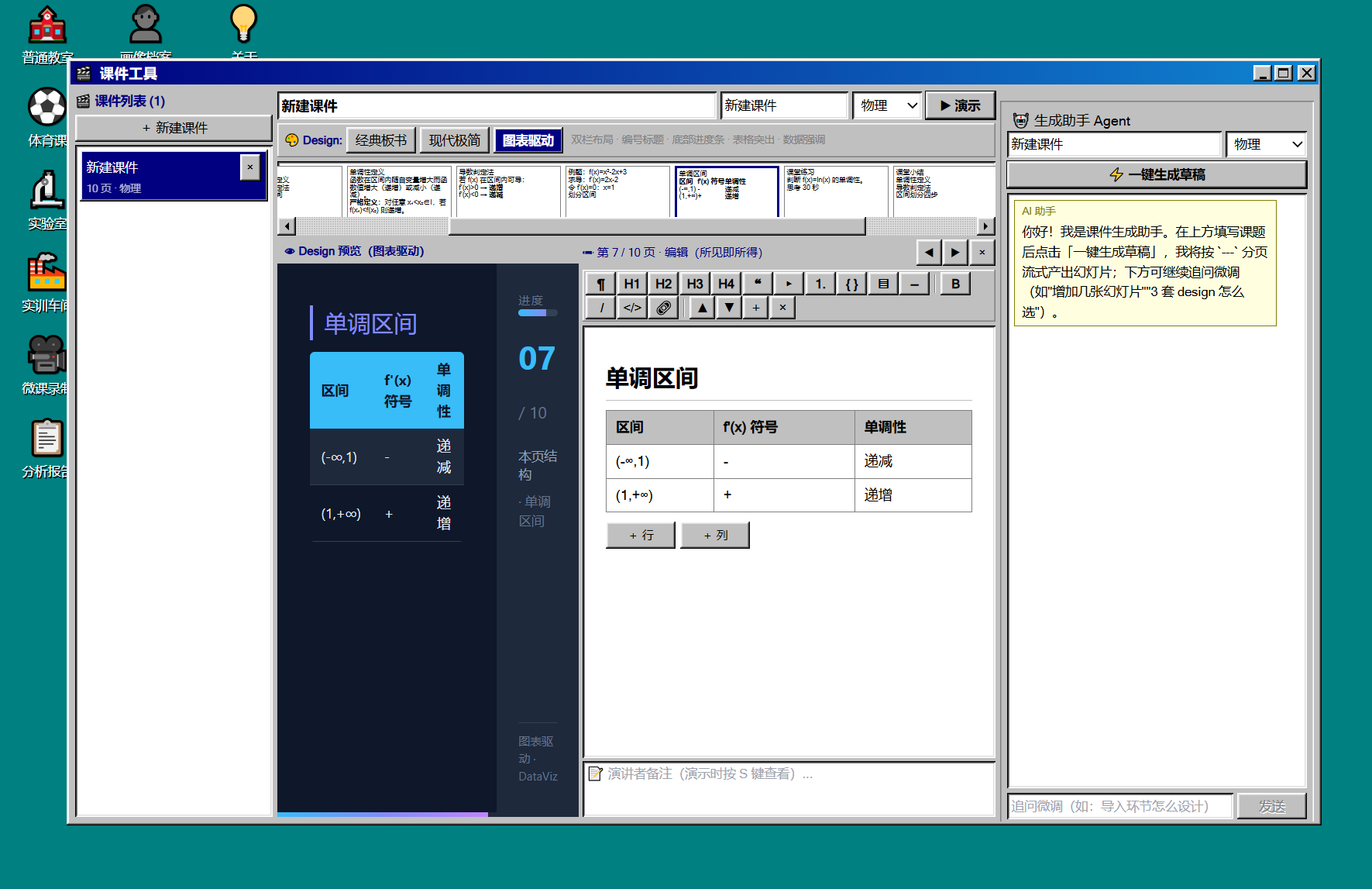
AI Native Upgrade Overview · Agent orchestration + Wiki LLM + RAG knowledge base + multimodal VLM + quality-eval closed loop
-
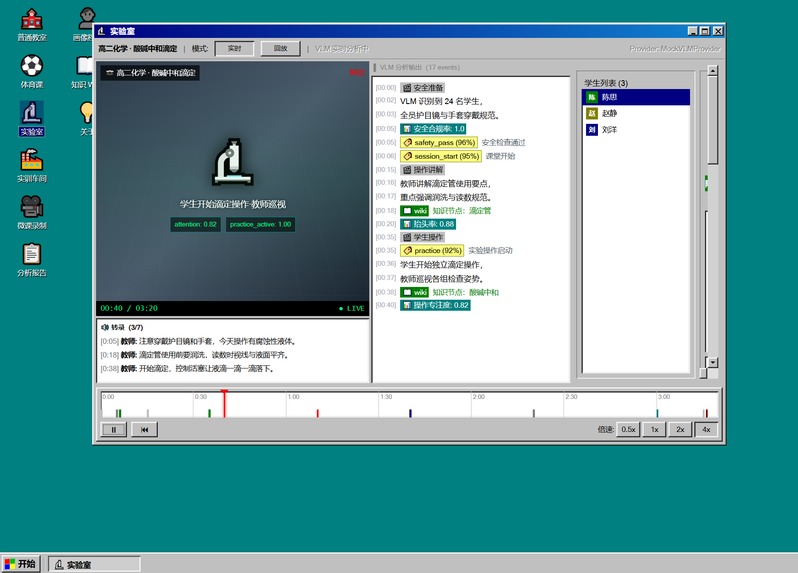
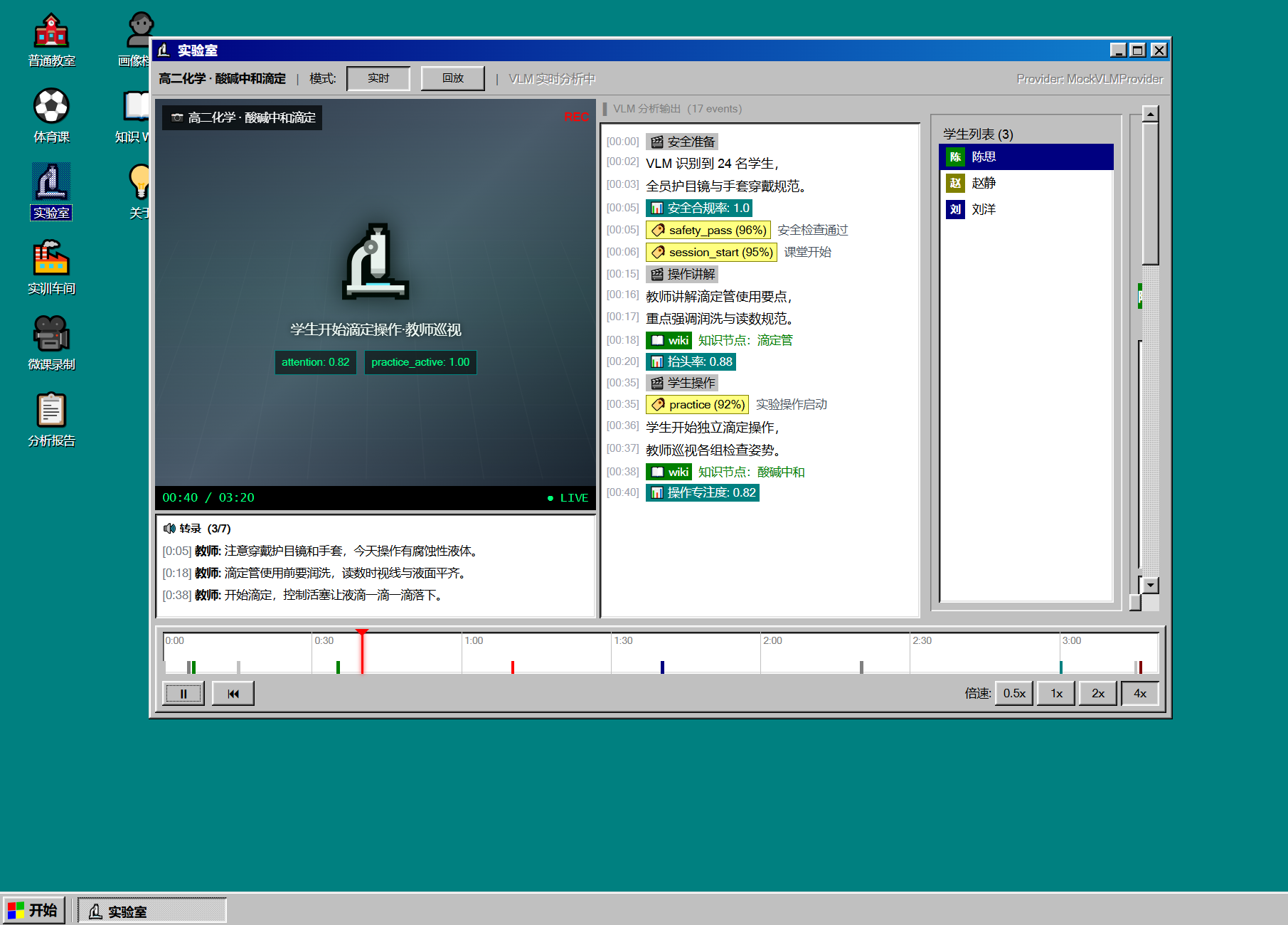
Lab scenario real-time analysis main view
-
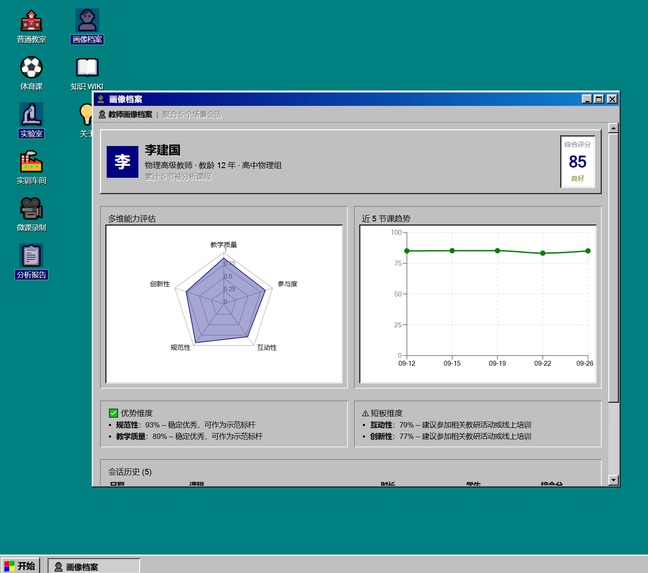
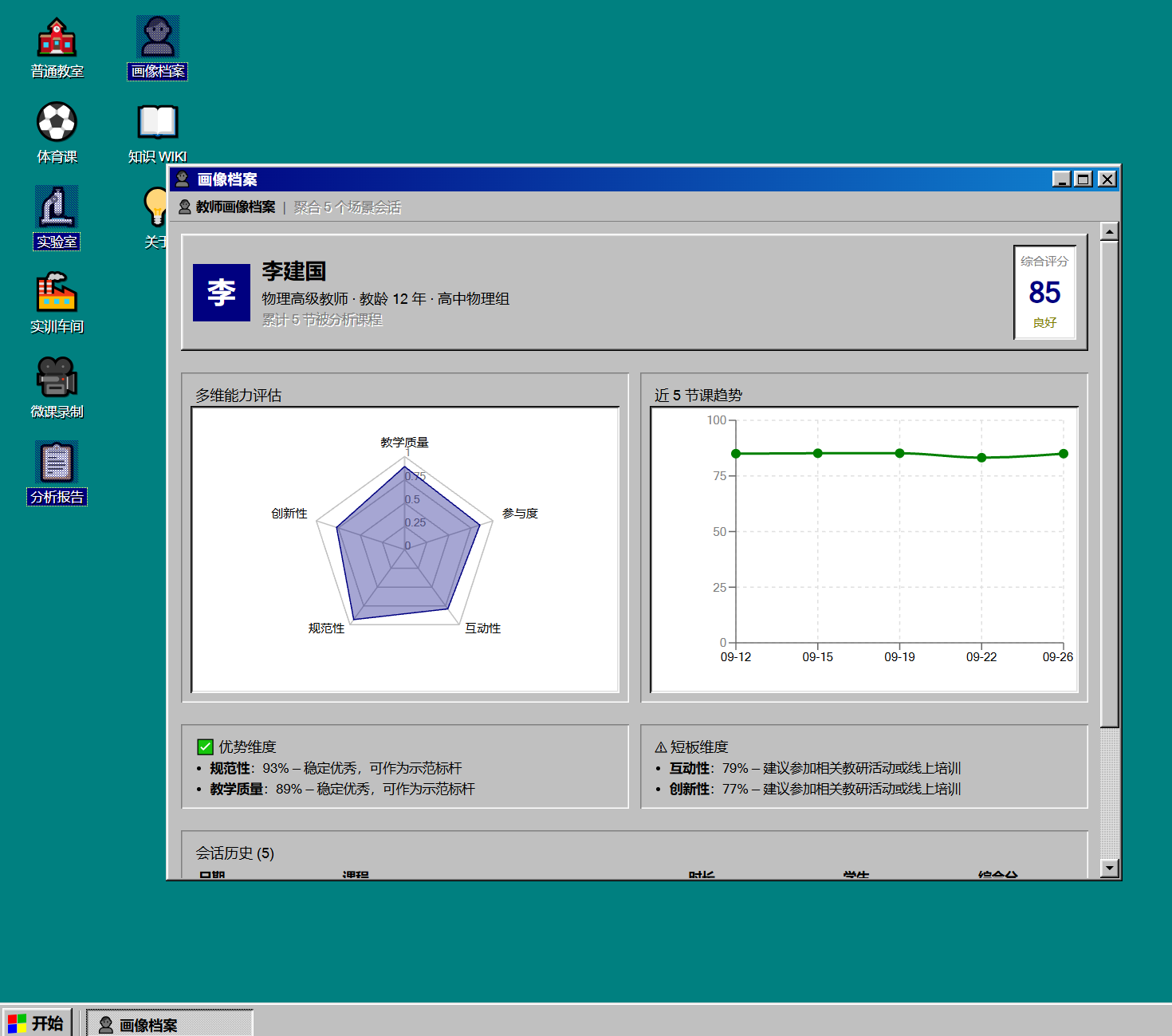
Teacher profile · radar chart + trend line
-
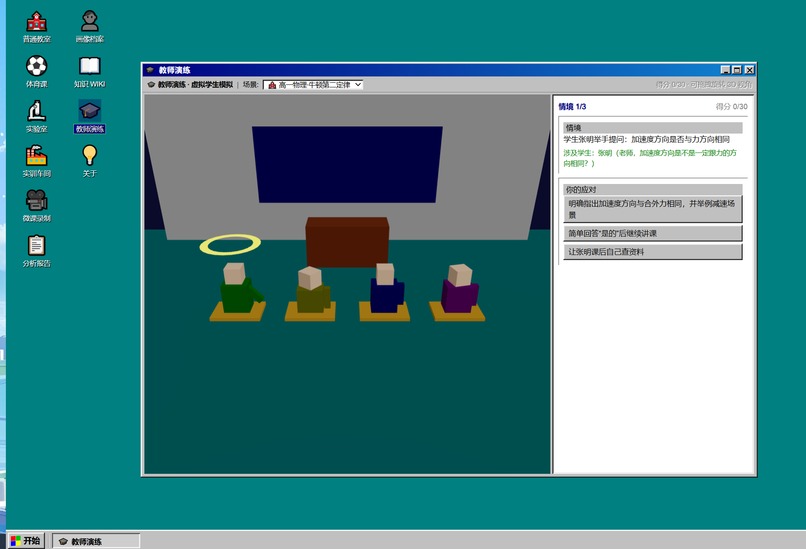
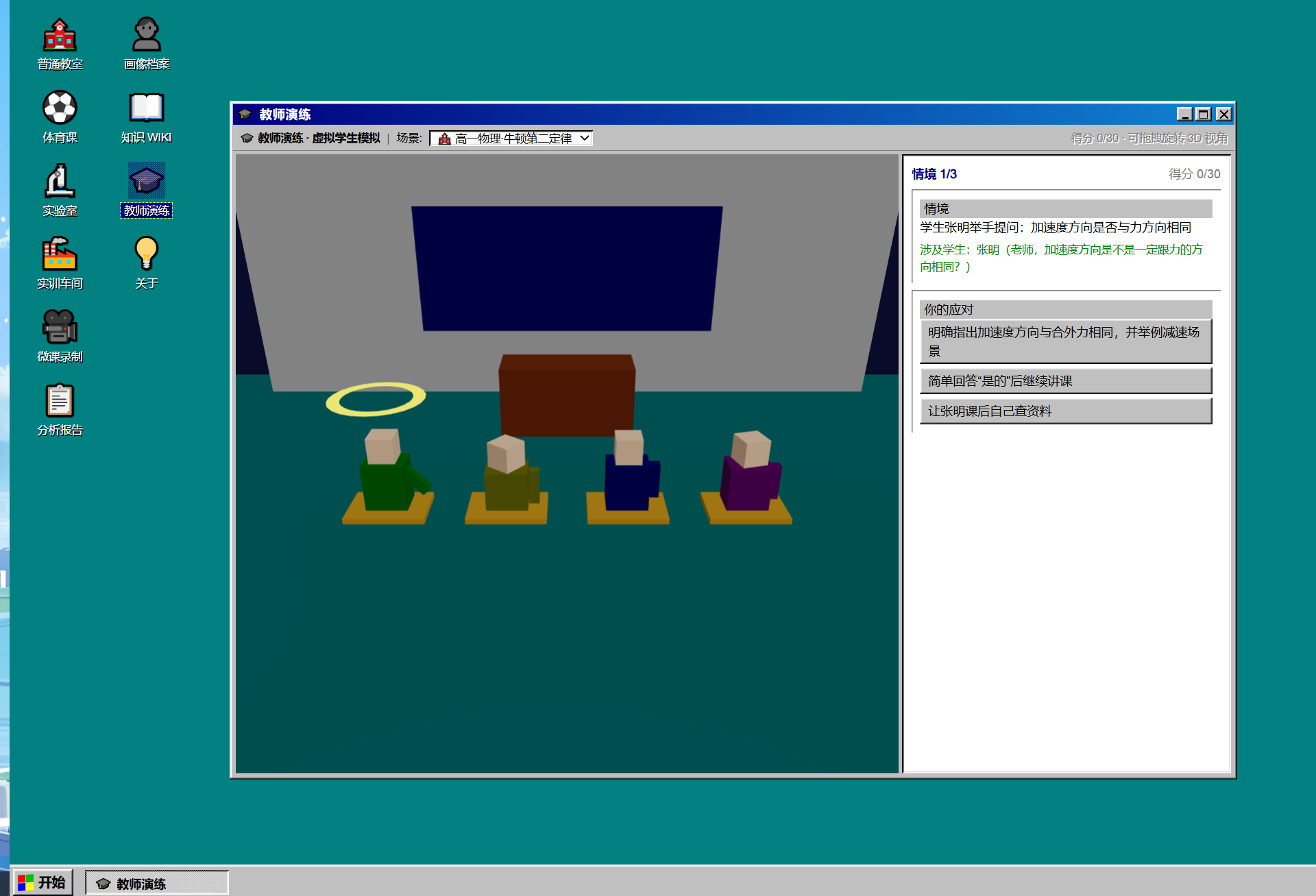
Teacher Virtual Student Drill · 3D classroom scenario-based response + scripted scoring
-
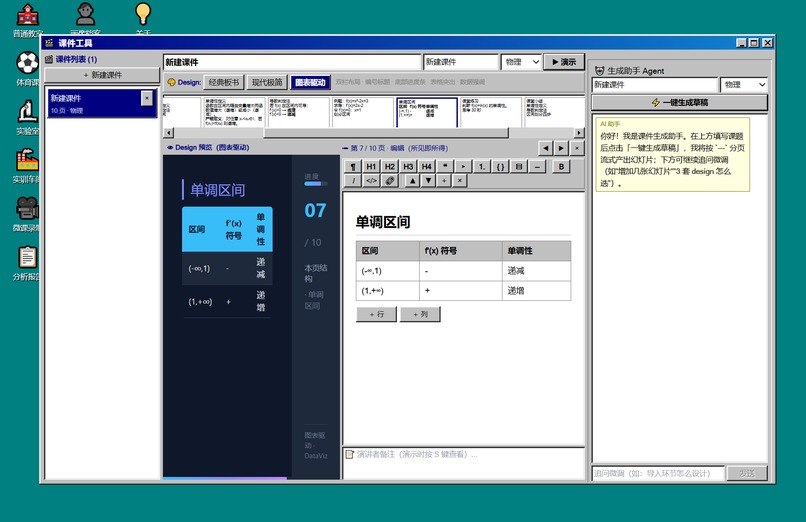
-
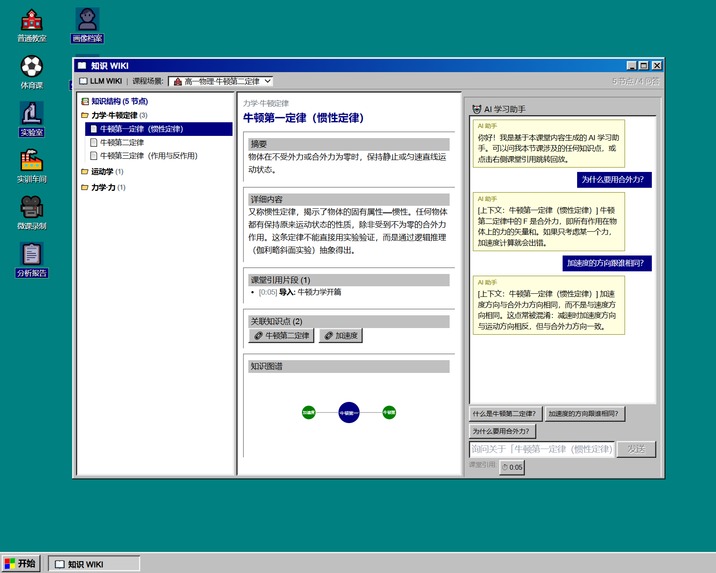
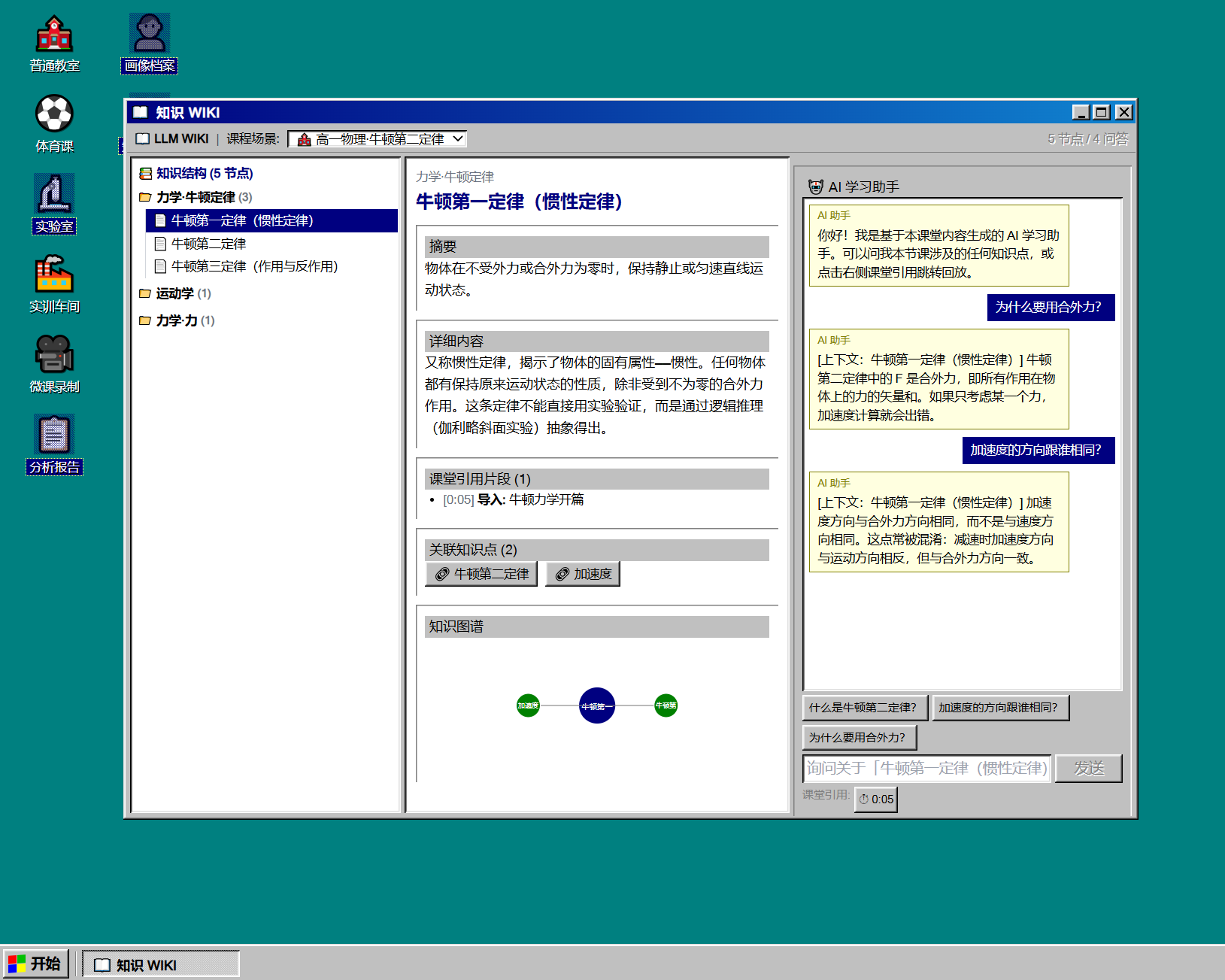
Knowledge WIKI detail + interactive graph + AI study assistant
Inspiration
Educational AI adoption in everyday classrooms is often held back by three core pain points: prohibitive multi-model pipeline costs, high operational fragility during demonstrations, and post-analysis data silos. Traditional setups chain multiple models together—ASR for speech, CV for gesture tracking, and NLP for transcripts—driving infrastructure and procurement costs beyond the budget of standard schools. Furthermore, relying on live cloud APIs often leads to presentation failures caused by network drops or rate limits, while the end results frequently amount to static audit reports that neither teachers nor students can act upon.
EduOS-95 was inspired by the tactile, playful desktop metaphor of Windows 95. We set out to rethink educational technology not as another sterile corporate reporting dashboard, but as a full-fledged, retro-styled AI operating system that boots up instantly on any device and transforms classroom observation data into actionable teaching and learning assets.
What it does
EduOS-95 delivers a unified five-in-one educational platform spanning classroom analytics, teacher simulation, student mastery, campus governance, and autonomous agent workflows:
- Multimodal Classroom Analytics: Analyzes continuous video across 5 real-world scenarios (regular classroom, physical education, chemistry lab, machinery workshop, and microlessons) with instant metric tracking and interactive replay timelines.
- 3D Teacher Drills & Practice: Employs a Three.js 3D virtual classroom where educators rehearse responses to dynamic student behaviors (e.g., inattention, phone distraction, questions) with immediate scripted rubric feedback.
- Adaptive Learning Hub: Offers gamified student mastery modules (timed quizzes, multi-select challenges, concept matching) and an interactive force-directed knowledge graph connected to an on-demand AI tutor.
- Campus Governance Cockpit: Provides school leadership with streaming executive briefings, anomaly detection alerts, cross-class comparative analytics, and administrative SSO/integration mockups.
- EduLink Interaction Engine: Drives event-based closed-loop communication across students, teachers, and administrators, translating shared classroom insights into distinct, role-tailored narratives.
How we built it
- Frontend Shell & Nostalgic Design: Built using React 18, TypeScript 5, Vite, and Tailwind CSS with custom Windows 95 sunken panels, taskbars, and an adaptive mobile drawer shell for screens under 768px.
- 3D Visualizations & Charts: Integrated Three.js via
@react-three/fiberfor low-poly virtual student environments, paired with dynamic force-directed knowledge graphs and Recharts analytics. - Provider Harness Architecture: Architected 9 decoupled harnesses (VLM, Capability, Governance, Portal, LessonPlan, Slides, Agent, RAG, and EduLink) that isolate presentation from intelligence. Each provider seamlessly toggles between incremental streaming mock scenarios and live API adapters without altering business logic.
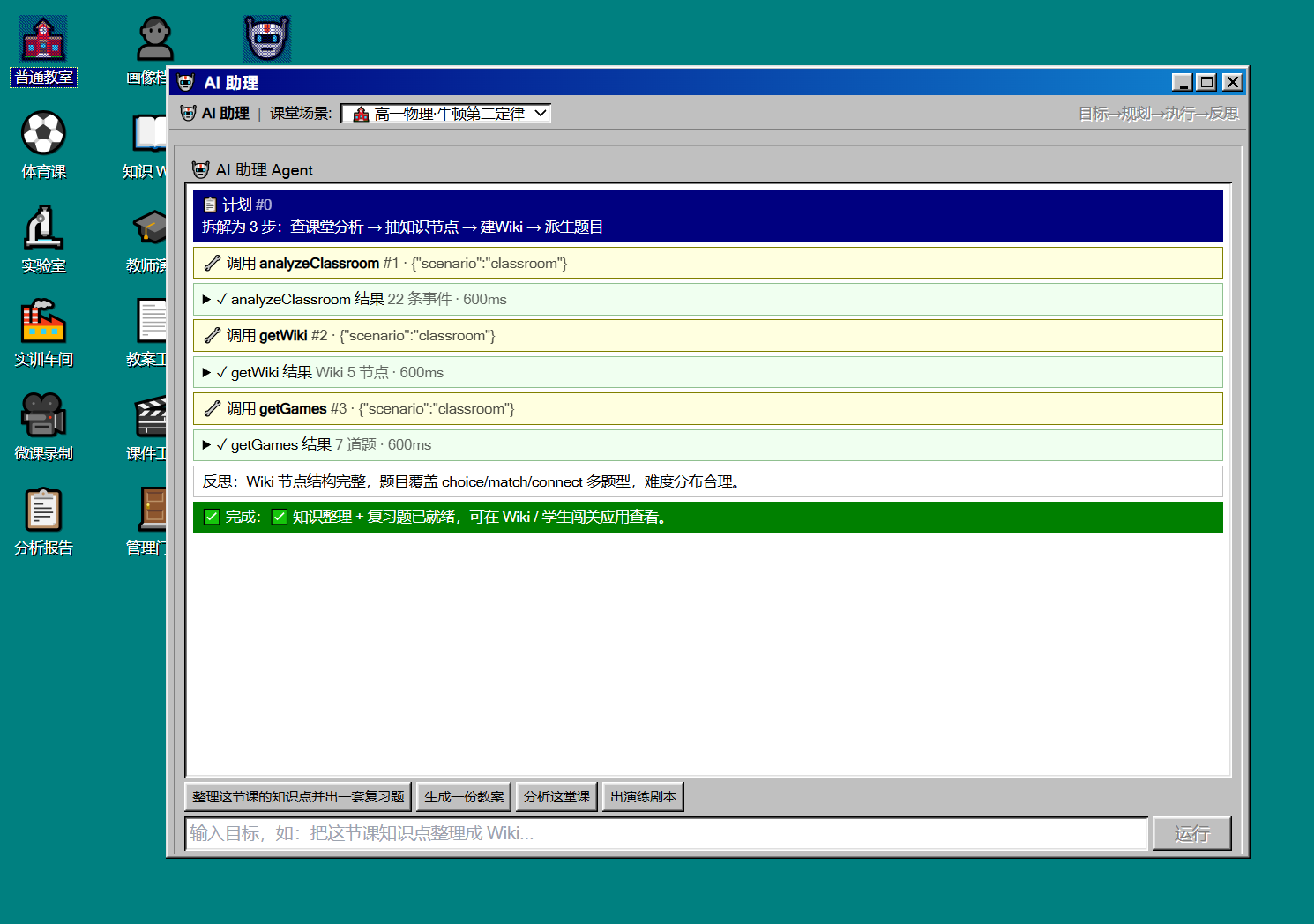
- Agentic Engine & Browser RAG: Implemented a Plan-Act-Reflect autonomous loop supporting native OpenAI function-calling with Plan-JSON fallback, backed by an in-browser vector retrieval store (BM25 fallback) and a dual-channel (rules + LLM) quality evaluator.
Challenges we ran into
- Realistic Zero-Dependency Mocking: Crafting rich timeline events, state transitions, and simulated image fingerprinting across five diverse teaching scenarios to ensure offline demos feel completely indistinguishable from live streaming models.
- Real-Time Video Stream Gating: Designing the StreamMind event gating mechanism to maintain quiet background heartbeats during regular class flow while reliably triggering speak notifications and metric cards when critical pedagogical moments arise.
- Preventing Cross-Role Metric Hallucinations: Structuring the EduLink hub to translate the same underlying learning data across student, teacher, and administrator perspectives without metric drift, utilizing rule-derived data foundations while delegating only text polishing to the model.
Accomplishments that we're proud of
- Replacing fragile, multi-model ASR + CV + NLP pipelines with unified VLM calls, drastically cutting computational overhead and implementation friction.
- Delivering a zero-key, 100% offline-functional product demo that reliably showcases full-lifecycle AI behaviors within 30 seconds.
- Engineering clean harness decoupling across 9 standalone providers, ensuring production API integrations require zero modifications to user-facing UI code.
- Faithfully recreating the retro 1995 desktop aesthetic while seamlessly adapting into a modern, touch-friendly mobile shell on smaller screens.
What we learned
- Consolidating audio-visual-textual streams into end-to-end VLM processing eliminates schema mismatch issues and preserves essential situational context across classroom activities.
- Gating inference streams based on event thresholds is essential to prevent cognitive alert fatigue for educators and curb unnecessary inference costs.
- Enforcing strict layered governance (Raw Data → Aggregated Data → Agent Output → Presentation) is critical for auditing AI reasoning and maintaining institutional trust.
What's next for EduOS-95
- Edge Device Integration: Deepening optimizations for lightweight, on-premise vision models like Mage-VL-4B and quantized local SLMs running via WebGPU directly in the browser.
- Hardware Video Ingestion: Expanding beyond static image fingerprints and synthetic frames to accept live WebRTC and RTSP classroom IP camera feeds.
- LMS & Campus Systems Interoperability: Transitioning the administrative integration mockups into certified LTI (Learning Tools Interoperability) standards, enabling automated rosters and gradebook synchronization with Canvas, Google Classroom, and DingTalk.
Built With
- react
- tailwind
- three.js
- typescript
- vite


Log in or sign up for Devpost to join the conversation.