Inspiration
NEURATEND AI was born from a simple but powerful idea — what if AI could truly “understand” users instead of just responding?
While working on multiple projects and observing how people interact with chatbots, I realized most AI tools feel robotic and disconnected. I wanted to build something that feels more intelligent, adaptive, and human-like, especially for students, developers, and creators.
The goal was to create an AI assistant that doesn’t just answer questions, but actually assists, guides, and evolves with the user.
🛠️ How We Built It
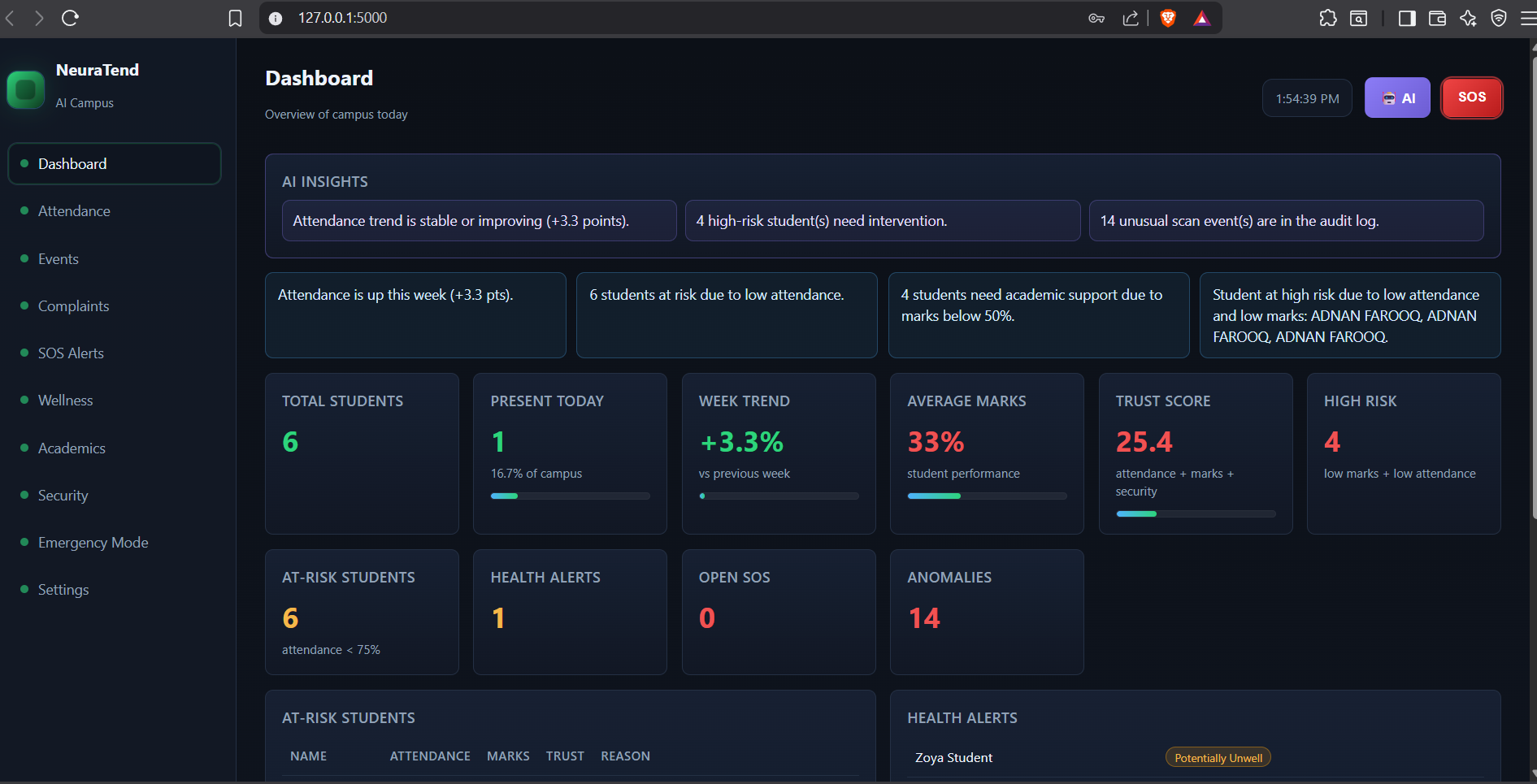
NEURATEND AI is built using a modern full-stack architecture:
A responsive frontend designed with clean UI/UX principles A powerful backend API handling AI interactions Integration with advanced AI models via APIs Real-time communication between frontend and backend
The system processes user queries, sends them to the AI engine, and returns contextual, intelligent responses — all in a smooth conversational interface.
🧠 What We Learned
Building NEURATEND AI taught us a lot:
How to design AI systems that feel natural Handling API latency and optimization Structuring scalable backend architecture Creating a balance between performance and user experience
We also learned that users don’t just want answers — they want clarity, speed, and reliability.
⚔️ Challenges We Faced
Some real challenges we tackled:
Managing AI response delays and improving speed Ensuring clean UI while handling complex logic Integrating APIs reliably without breaking the flow Making responses feel less robotic and more contextual
Each challenge pushed us to refine the system further.
🌟 What Makes NEURATEND AI Special Smart, context-aware responses Clean and responsive UI Developer-friendly architecture Scalable and adaptable system
This isn’t just another chatbot — it’s a step toward more human-centered AI interaction.
⚙️ Built With
HTML
CSS
JavaScript
Python
FastAPI / Flask
OpenRouter API (DeepSeek / AI Models)
NVIDIA AI APIs
GitHub
Render (Deployment)

Log in or sign up for Devpost to join the conversation.