-
-
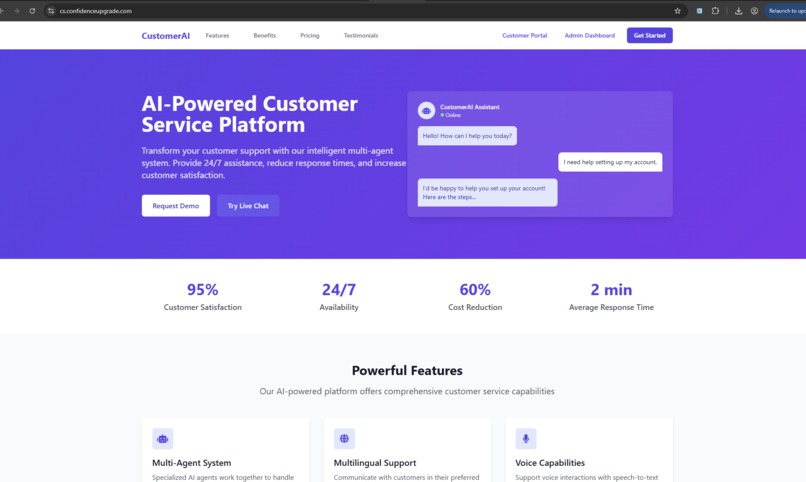
homepage
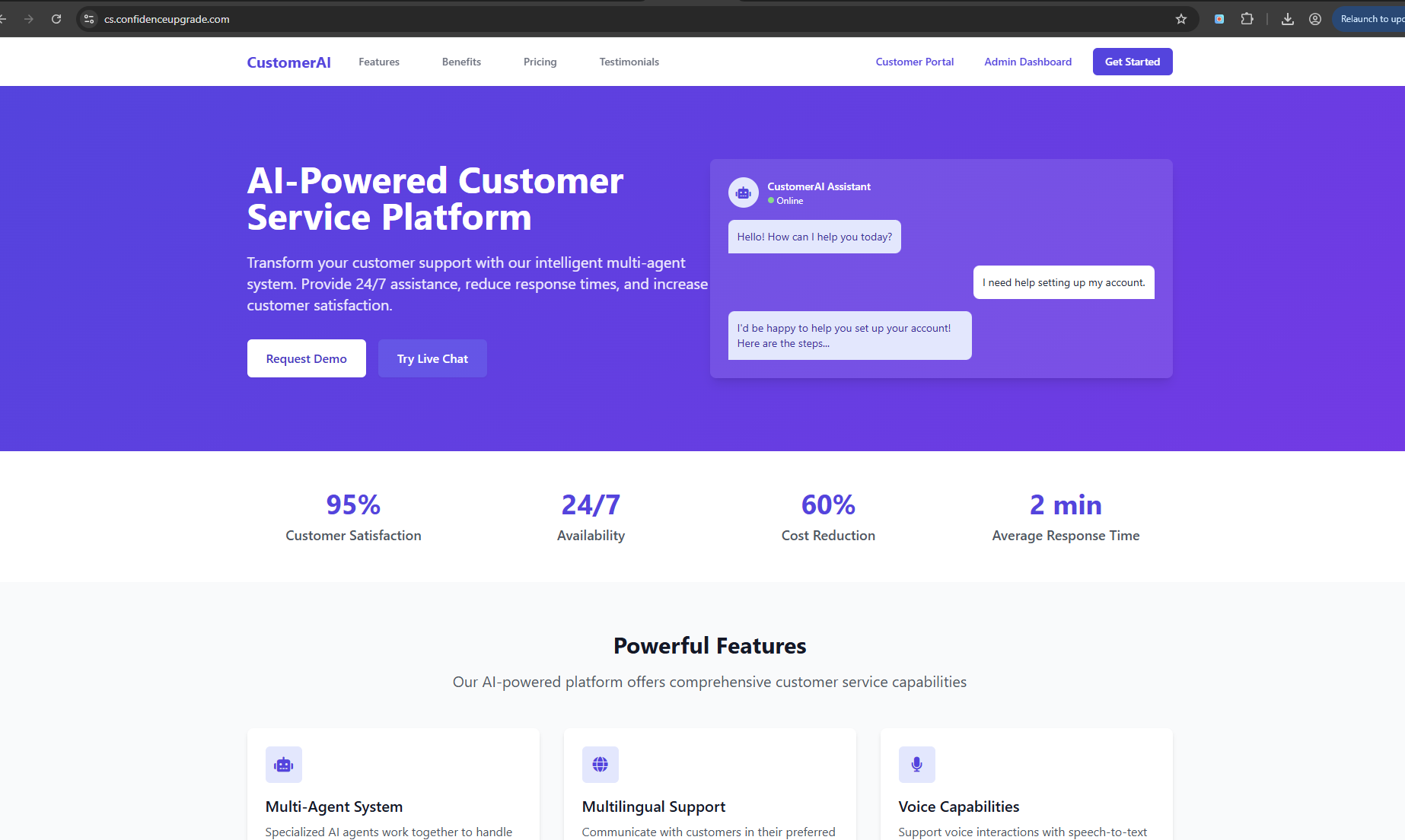
Inspiration
The inspiration for CustomerAI came from my personal experiences with customer service; both as a customer and as someone who has gained technical skills and looks forward to automating this service. I noticed that many businesses struggle with providing consistent, high-quality support while managing costs. The repetitive nature of many support inquiries seemed like a perfect opportunity for AI automation, but existing solutions often felt disconnected and impersonal.
I wanted to create a system that could handle routine inquiries efficiently while still maintaining a human touch, and seamlessly escalate complex issues to human agents when necessary. The goal was to build something that would benefit both businesses (through cost savings and efficiency) and customers (through faster, more consistent support).
What it does
The CustomerAI platform is an intelligent customer service ecosystem built with Google's Agent Development Kit (ADK). It's a comprehensive multi-agent system designed to automate and enhance customer support operations.
How I built it
The system architecture consists of several key components:
Core AI Engine: Built with Google's ADK, this includes specialized agents for different support functions:
- Reception Agent: Categorizes and prioritizes requests
- Knowledge Agent: Searches for relevant information
- Technical Agent: Provides troubleshooting steps
- Escalation Agent: Manages handoffs to human agents
- Follow-up Agent: Checks satisfaction and resolution
- Learning Agent: Analyzes interactions for improvement
Web Interfaces:
- Customer Portal: Self-service support center with knowledge base and live chat
- Agent Dashboard: Interface for human agents to handle escalated cases
- Admin Dashboard: Configuration and monitoring tools
API Layer: FastAPI endpoints for interacting with the AI agents, with WebSocket support for real-time chat.
Data Integration: Connectors for various CRM systems, helpdesk platforms, and e-commerce systems to provide comprehensive customer context.
Authentication: Supabase JWT-based authentication with secure session management.
The development process involved iterative prototyping, starting with core agent functionality and gradually adding more sophisticated features like multilingual support and voice processing.
Challenges I ran into
Building this system came with several significant challenges:
Agent Orchestration: Getting multiple specialized agents to work together coherently was complex. I had to carefully design the interaction patterns and ensure proper context preservation.
Authentication Persistence: Ensuring the authentication token was properly passed between client and server across different interfaces required careful implementation of headers, cookies, and local storage.
Session Management: Maintaining conversation state across multiple agent handoffs while keeping the system stateless for scalability was a delicate balance.
Integration Complexity: Creating a flexible system that could connect with various external systems (CRMs, helpdesks, etc.) while maintaining a consistent data model required careful abstraction.
Balancing Automation and Human Touch: Designing the system to know when to handle inquiries automatically versus when to escalate to humans required sophisticated heuristics and continuous tuning.
Performance Optimization: Ensuring quick response times while performing complex processing across multiple agents required careful optimization.
Despite these challenges, the end result is a powerful, flexible system that can transform how businesses handle customer support - reducing costs while improving customer satisfaction.
Accomplishments that I am happy with
Learned how to apply google-adk for custom use without relying on the adk web or cli to use the library.
What I learned
Building this project was an incredible learning journey that pushed me to explore several advanced technologies:
Google's Agent Development Kit (ADK): I learned how to orchestrate multiple specialized AI agents that work together to handle different aspects of customer support. Understanding how to properly implement ADK patterns was challenging but rewarding.
Multi-Agent Systems: I discovered the power of specialized agents working together - from triage to knowledge retrieval to technical troubleshooting. The way these agents can collaborate to solve complex problems is fascinating.
Session Management: Implementing proper state management across agent handoffs was crucial for maintaining conversation context. This was more complex than I initially expected.
Authentication Integration: Working with Supabase JWT authentication and ensuring secure, persistent sessions across requests taught me a lot about modern auth flows.
UI/UX Design: Creating intuitive interfaces for customers, agents, and administrators required thinking about different user needs and workflows.
What's next for Intelligent Customer Service Ecosystem
Looking ahead, I'm excited about several potential enhancements:
- Complete the integration of the data ingestion for seamless plugin into businesses.
- Use real data used for the web interface, for better user experience.
- Expanding the multilingual capabilities with more language-specific knowledge bases.
- Implementing more sophisticated voice processing for phone support.
- Adding proactive support features that can anticipate customer needs.
- Enhancing the analytics dashboard with more actionable insights.
- Developing industry-specific templates for different business types.
This project has been a labor of love, and I'm proud of what I've built. It represents not just a technical achievement, but a step toward making customer service better for everyone involved.
Built With
- css
- fastapi
- gemini
- google-adk
- google-compute-engine
- html5
- javascript
- jinja
- python
- sqlite
- web

Log in or sign up for Devpost to join the conversation.