-
-
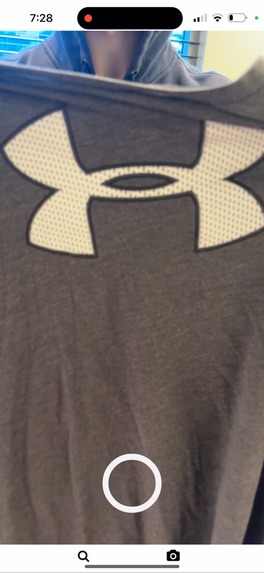
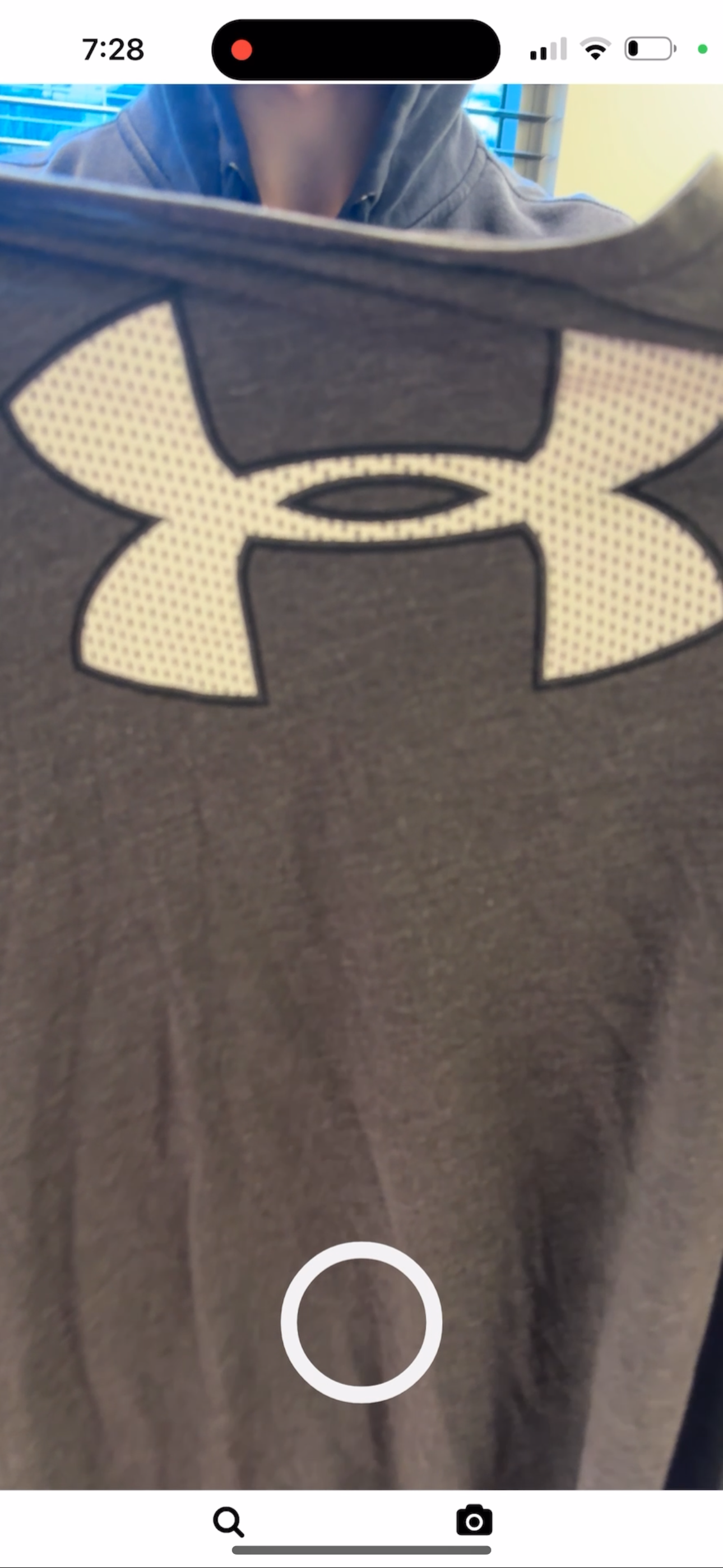
First, you take a picture of a clothing item you're curious about
-
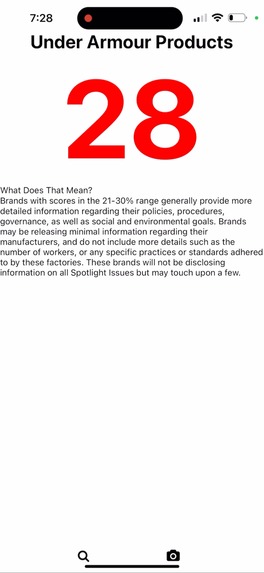
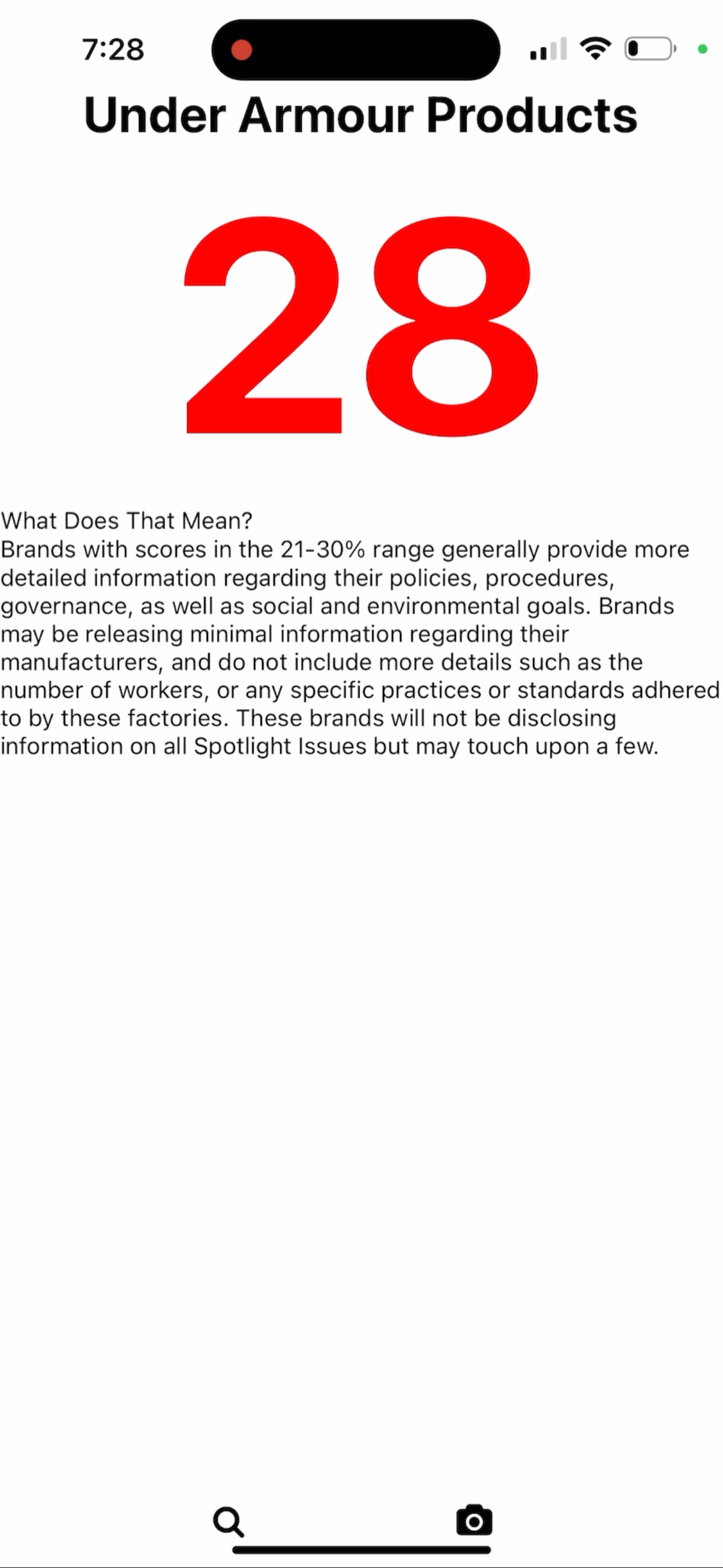
Then, the app displays some easy-to-digest information about the item's respective brand.
Inspiration
Many shoppers are unaware of the ecological footprints behind their purchases. Every item we buy, from shoes to hats, impacts our planet with the material and laborial cost of its production. Recognizing and informing customers about these hidden and often buried truths can empower us to make choices that support sustainability, turning routine shopping into an act of environmental stewardship. Because of the apparent disconnect between businesses and their consumers, we were inspired to develop EcoSnap, the start to a new movement of both consumer awareness and ethical business conduct.
According to the UN Environment Programme (UNEP), fast fashion is responsible for around 10% of global carbon emissions, more than all international flights and maritime shipping combined. Greater transparency into the practices and policies of numerous well-known corporations could significantly influence consumer choices–a step they might not take without such insight.
What it does
At EcoSnap, we hold companies accountable by uncovering and reporting their sustainability practices to the general public. Our mission is to empower consumers with the knowledge to make more environmentally responsible choices. We're committed to developing a fast and easy-to-use tool that increases transparency regarding the environmental practices of leading corporations. With your help, we strive to create a more informed and responsible community, driving positive change towards a sustainable future for our planet. All the user needs to do is take a photo of a clothing product they’re interested in learning more about, and our application will produce a score derived from a series of metrics, sourced from the 2023 Fashion Transparency Index, designed to inform consumers about industry practices.
How we built it
For our mobile application frontend, we used Expo, a framework for universal development. Our user interface and experience consists of HTML, CSS, and React. Our frontend retrieves image data from the user and sends it to our backend, a python Flask application, that then processes the image data and returns a series of metrics based on the manufacturer of the clothing item. The Flask application leverages Google Cloud Vision APIS to process and identify key features of the images using AI, and passes through an algorithm that correlates the image to our JSON database of industry statistics. The frontend then retrieves these statistics and displays them in an easily digestible format.
Challenges we ran into
The image processing component of our application was extremely difficult to work with. To send the photo from our mobile app to our python backend, we needed to encode the image data in Base64, a process that went through many iterations before we found a working solution. From there, the transition from an image of a brand logo to the name of the item’s respective company was an immense task as well. We discussed many strategies to accomplish this, decided that Google Cloud’s Vision API was the best way to handle the situation, and spent a great deal of time learning about their documentation and use cases. Despite how difficult it was to process our information, the result is extremely fluid and something we’re all proud of.
Accomplishments that we're proud of
For the majority of our team, this was our first experience developing a mobile app. Because our software is intended to be used during a shopping trip, a mobile application was ideal for demonstrating our concept. The fact that we developed a clean, functional app in spite of our inexperience with the field was very rewarding.
Additionally, only a portion of our team were directly involved in the development process, while others focused on the marketing and presentational aspect of the application. Our members come from several different backgrounds and majors and have a wide variety of skills, and bringing ourselves together for a unified cause made for a diverse and insightful development experience.
We are incredibly proud of the amount of effort and dedication that each of us put into this project. By combining our unique skills, discussing and implementing our different ideas, and employing strategies from each of our fields of interest, we really came together as a team to put together a project that we’re overjoyed to present to the judges.
What we learned
For many of us, this project marked our first experience building a comprehensive product that integrates both frontend and backend elements. Through this difficulty and unfamiliarity came a pressing need for communication, tight collaboration, and the cultivation of a healthy and productive working environment. Each of us learned about team composition and the challenges associated with it from developing EcoSnap, and our communication and collaborative learning abilities will forever be heightened. On the technical side, We refined our skills in fusing backend and frontend components, as well as utilizing third-party APIs. The value of proper communication made itself even more apparent during the development process as well, granting us the opportunity to practice our use of collaborative software such as Git. We collectively acknowledge that for our next Hackathon, we will be even more prepared to take on the challenge.
What's next for EcoSnap?
EcoSnap was designed with expansion in mind from the beginning. While our demonstration is focused primarily on the fashion industry, our concept could be scaled to any business given the proper data. Should we continue the development of EcoSnap we would obtain more information on various consumer goods and the practices within their respective industries, and use our software to make it as accessible as possible to shoppers everywhere. Uninformed shopping only serves to uphold many pressing social issues in the world of commerce, and with EcoSnap we can format and provide the knowledge necessary to break this cycle for consumers everywhere.


Log in or sign up for Devpost to join the conversation.