Inspiration
A first circuit almost never works, and usually no one's around to tell you why. Labs, parts, and mentors decide who gets to learn electronics, and for everyone else, the first broken board is where it ends.
Tech has many ways in, but this wall stands in front of almost all of them. We built Edison so it isn't there. Anyone should be able to start, whether they've never touched a circuit or they're already deep in the field.
What it does
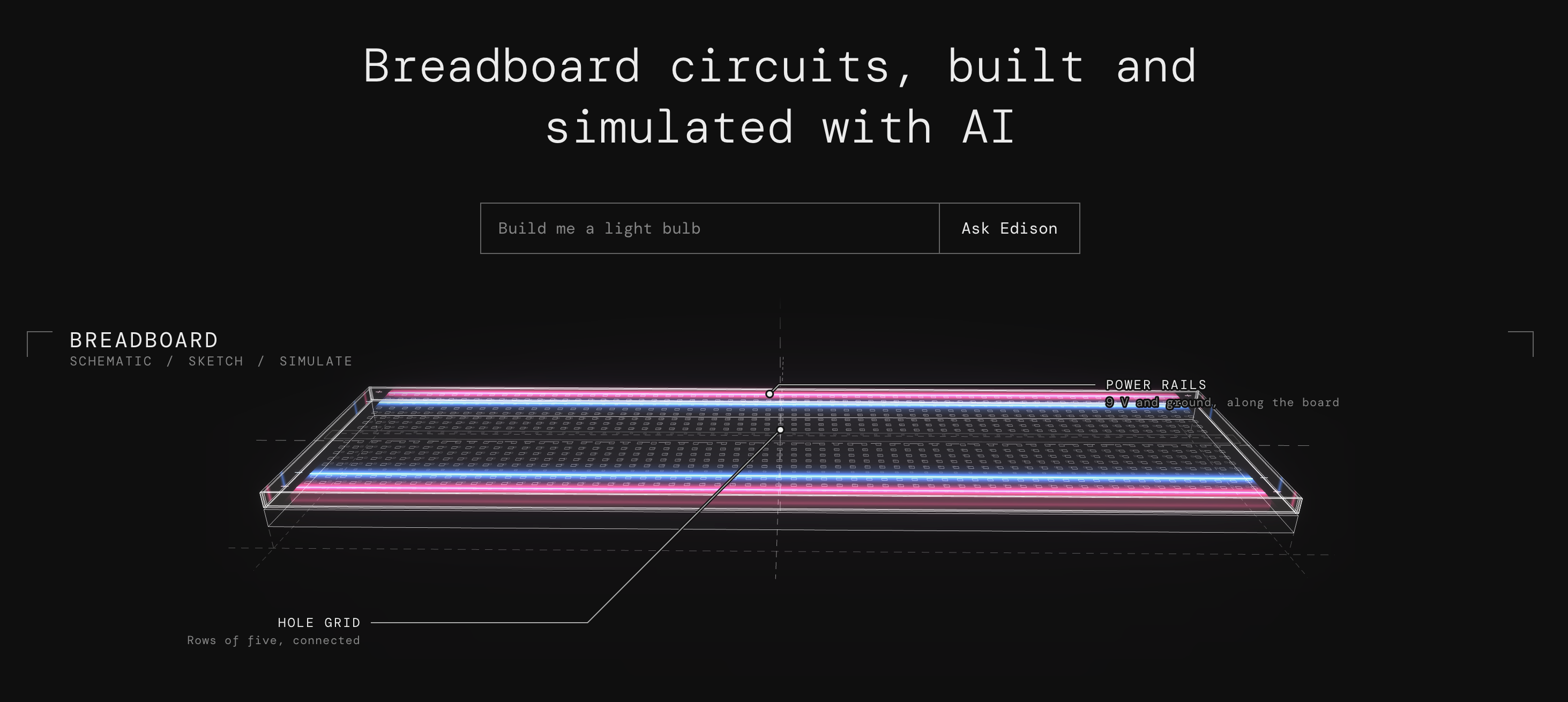
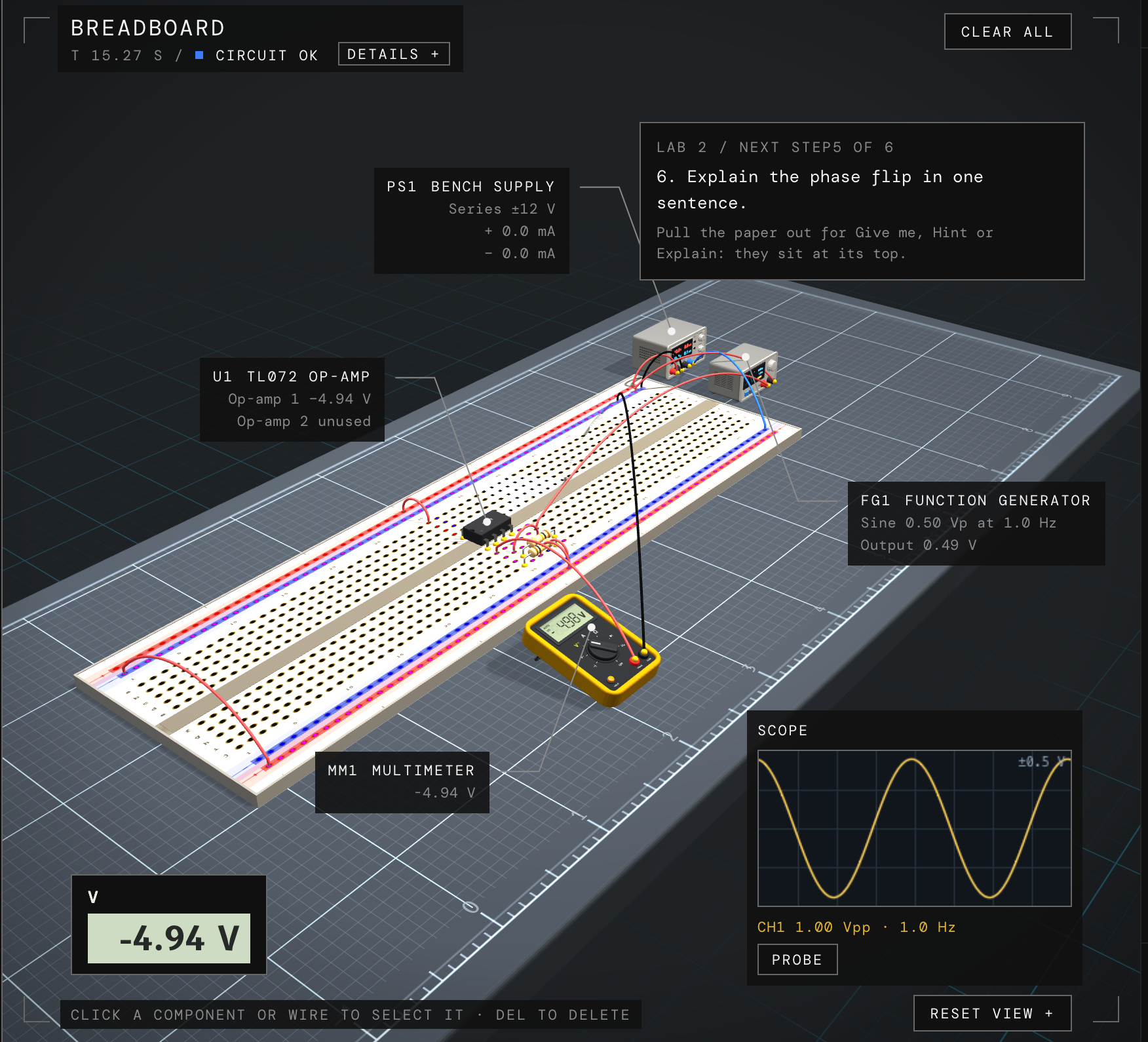
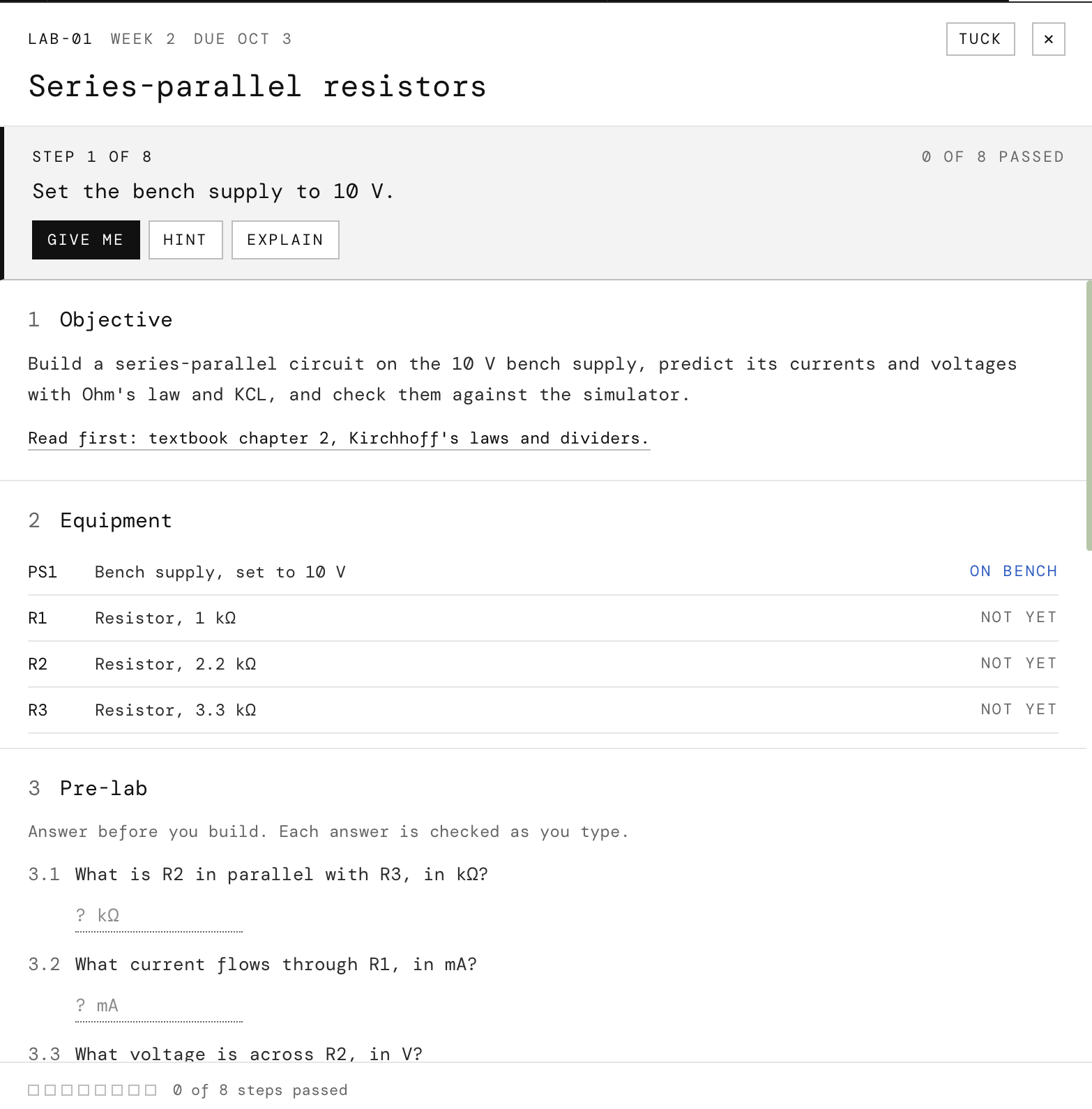
Edison is a virtual electrical engineering lab that opens the door to circuits for anyone, whether you're an engineering student or have no tech background at all. It has labs and textbooks built from real engineering course material, so students can work through their coursework, and anyone else can learn from the same content. It can guide you through labs, giving hints and building the circuits for you. It can also analyze a picture of a breadboard circuit, rebuild it in the virtual environment, and tell you what's wrong or how to improve it. The interactive textbook lets you change values and see how they affect the graphs in real time.
How we built it
Edison runs in the browser, built with plain HTML, CSS, and JavaScript, with Three.js drawing the 3D breadboard. We wrote our own circuit simulator that solves every voltage and current as you build.
A small Node.js server handles the AI. DeepSeek powers the tutor, and the server checks every suggested build against the simulator before you see it. For photos, Google's Gemini Robotics-ER 2 finds each part and wire, then works out which hole every leg goes into. Firebase handles sign-in and sharing, and about 3,450 automated tests keep it all working.
Challenges we ran into
Getting Edison to recognize real circuits was harder than we expected. Photo recognition struggled with op amps, and our wiring logic kept breaking. We also ran into token limits, and compute became a bottleneck.
Our biggest challenge was making the interface simple enough for anyone to use. Every time we simplified the UI for non-technical users, it broke the logic underneath, so we had to rework how the two fit together.
Accomplishments that we're proud of
We got the TL072 op amp working, which gave us trouble early on. We also added a function generator and a working oscilloscope, so you can see a circuit's behaviour the way you would on a real bench. We're proud that Edison generates clean, good-looking circuits, and that you can see whether a circuit is good or bad in real time. Best of all, someone with no tech background can open Edison and build their first circuit, while an engineering student can use the same tool for real coursework.
What we learned
We learned the full software development cycle, from planning and prototyping to testing and fixing what broke. Building Edison taught us that the plan only gets you so far, and the real progress comes from building, testing, and reworking.
What's next for EDISON
We want Edison to work for every school and every course, so anyone, anywhere can start learning electronics. Next, we're adding voice guidance with ElevenLabs, so Edison can talk you through a circuit instead of just showing it, and we're working on faster compute times so simulations and photo recognition respond quicker. We also want to keep growing the knowledge Edison draws on and make it easier for anyone to access. The door is open, and we want to keep widening it.
Built With
- firebase
- gemini
- gemini-robotics-2
- javascript
- node.js


Log in or sign up for Devpost to join the conversation.