-
-
Thumbnail
-
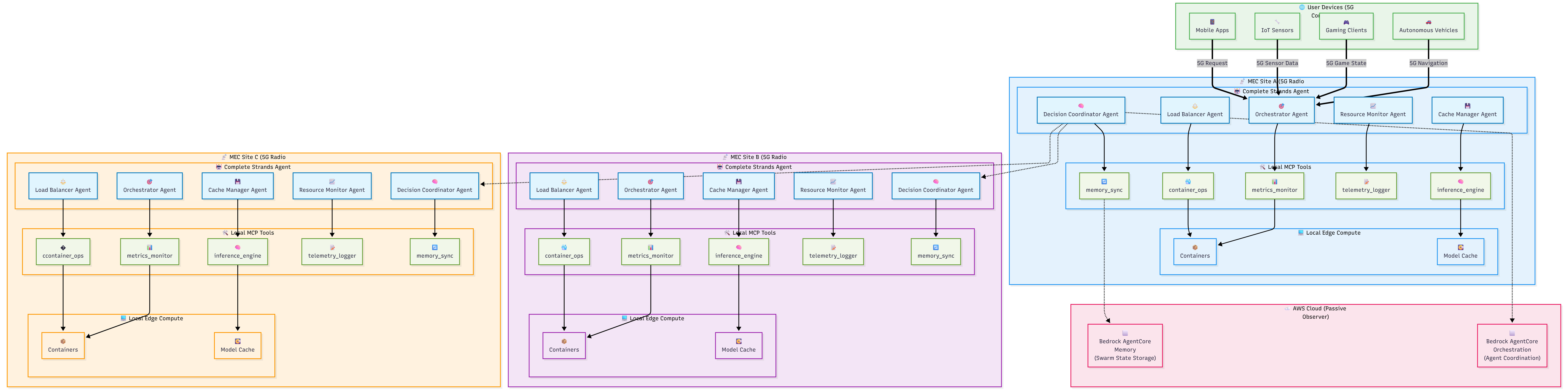
MEC orchestration diagram / Architectural diagram
-
threshold breach sequence diagram
-
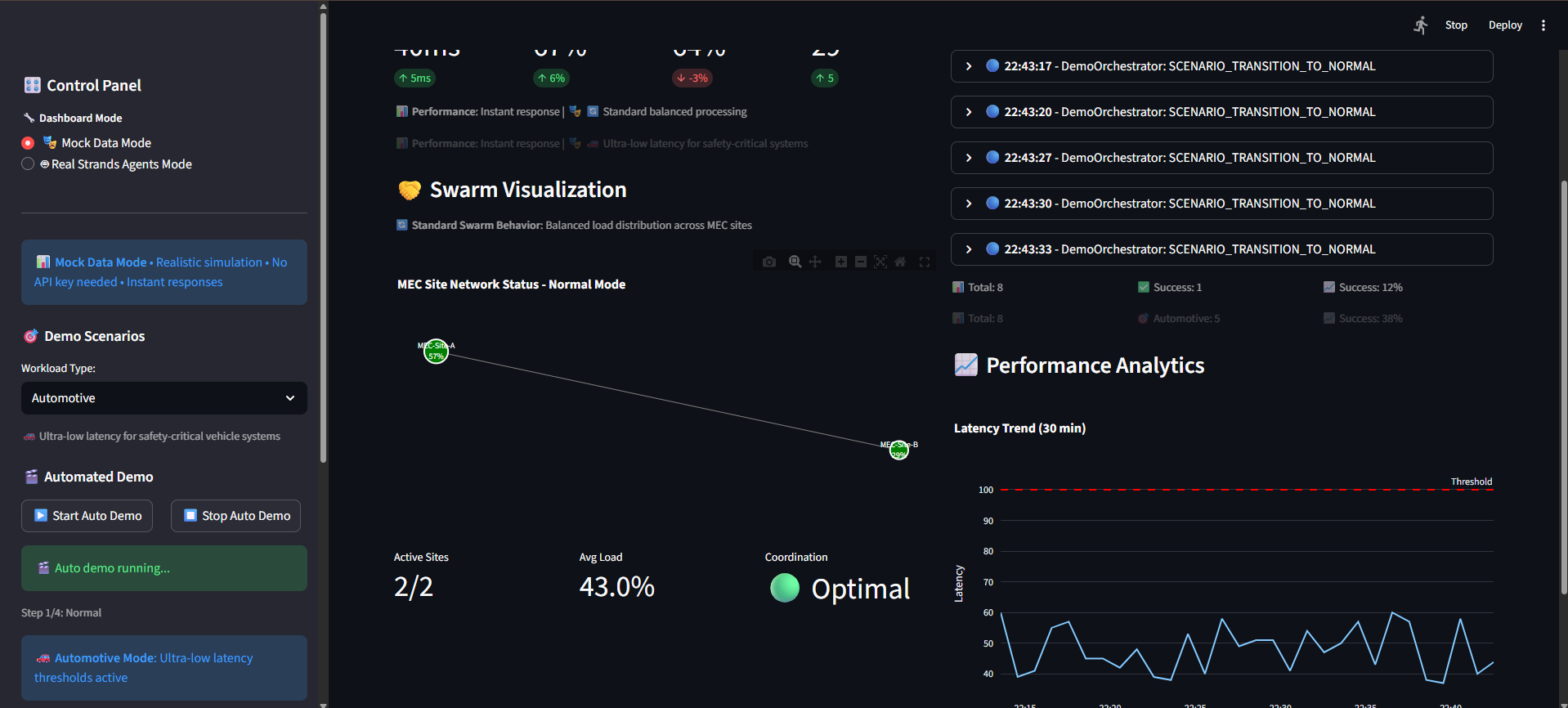
dashboard screenshot
-
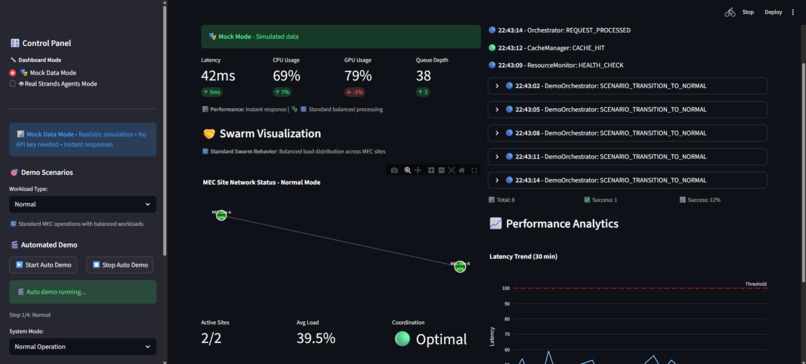
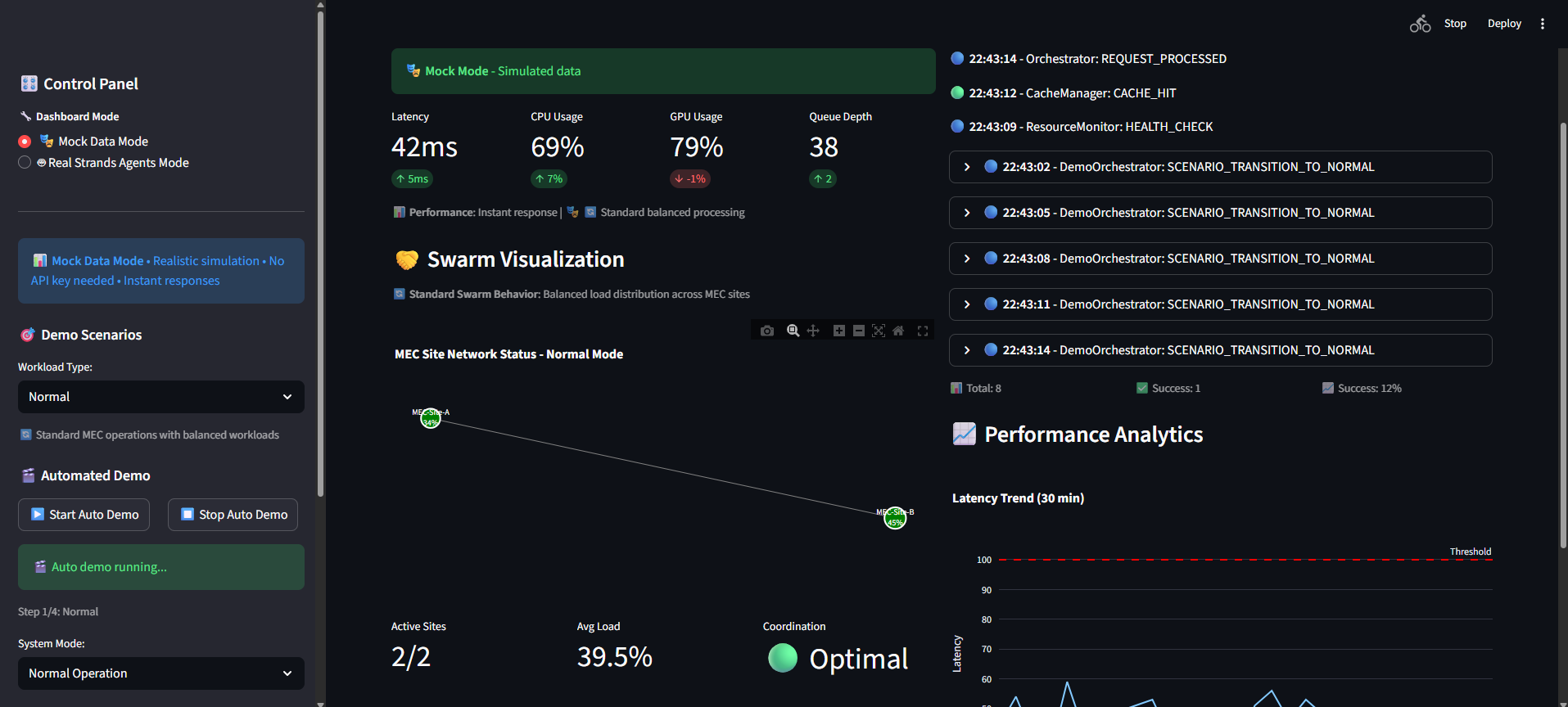
dashboard screenshot 2 auto demo
-
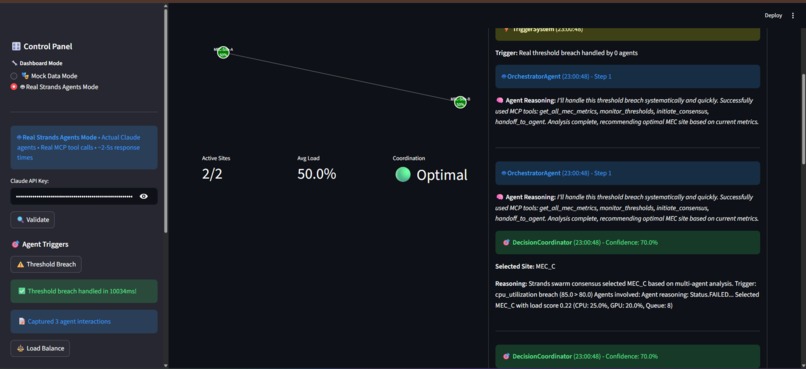
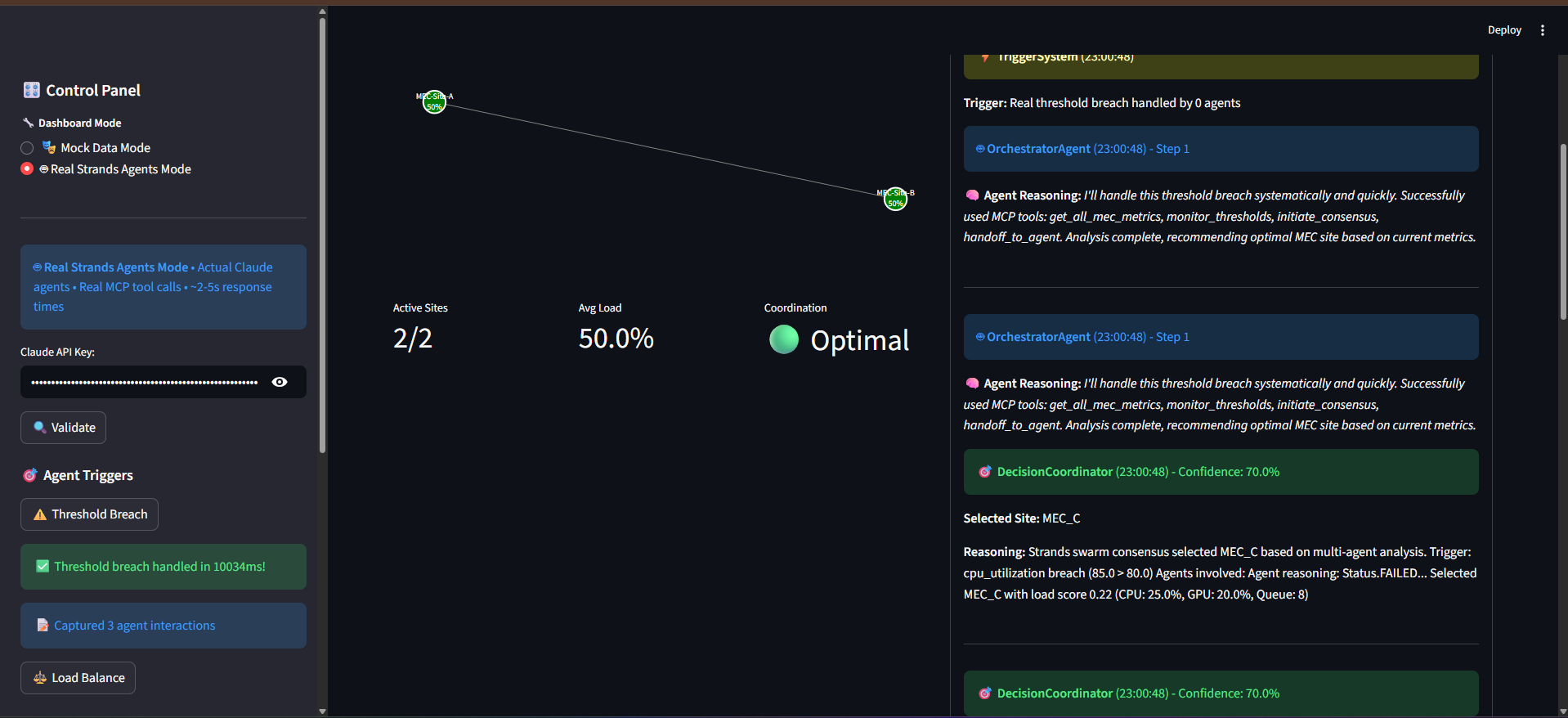
dashboard screenshot capture agent discussion
Inspiration
5G promised ultra-low latency and real-time intelligence at the edge, but in practice, orchestration remains centralized and reactive. EdgeMind was born from the question: what if the edge could think for itself? The project draws on multi-agent systems theory and 6G research to explore how distributed intelligence could replace traditional orchestrators with autonomous coordination directly at MEC sites.
What it does
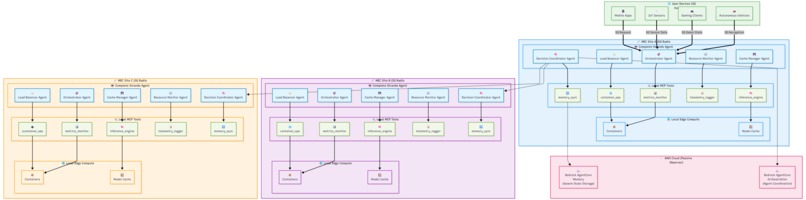
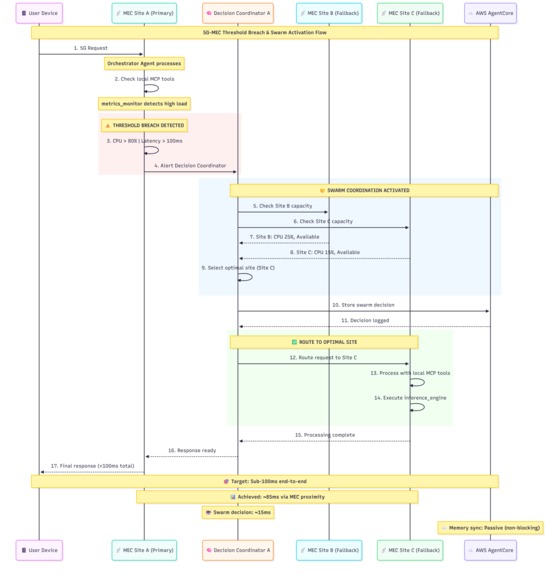
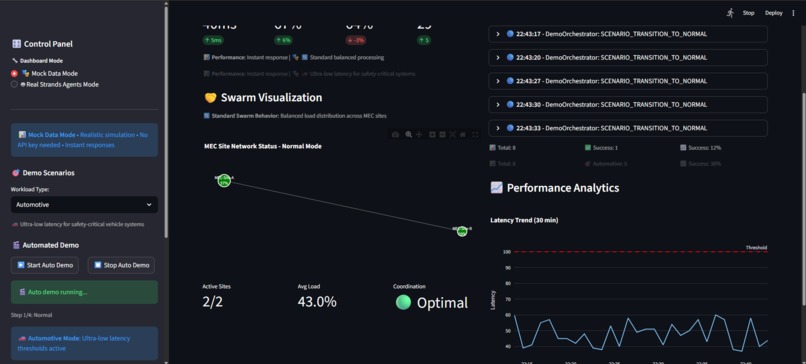
EdgeMind is a multi-agent orchestration system that deploys Strands agents at distributed 5G MEC nodes. It monitors latency, CPU, GPU, and queue thresholds in real time and triggers swarm coordination when performance degrades. The system achieves sub-100 ms decision-making by letting agents like the Orchestrator, Resource Monitor, Load Balancer, and Decision Coordinator collaborate locally—without cloud intervention. Each agent uses MCP tools for metrics monitoring, memory sync, and telemetry.
How we built it
- Implemented five Strands agents (orchestrator, resource_monitor, load_balancer, decision_coordinator, cache_manager) using Strands Agents + MCP Tools.
- Designed threshold monitoring and swarm activation flow with structured event logging.
- Integrated dummy MCP tools for metrics and telemetry, with hooks for Claude configuration.
- Built on a modular architecture defined in src/ with swarm_coordinator.py handling activation and consensus.
- Defined end-to-end logic in the EdgeMind Technical Architecture, guided by requirements for sub-100 ms orchestration and fault tolerance.
- Drew theoretical grounding from the research paper “Edge Intelligence and Multi-Agent Systems in the Transition from 5G to 6G.” [self written]
Challenges we ran into
- Aligning Strands’ multi-agent abstractions with real-time MEC orchestration requirements.
- Debugging threshold-breach triggers and asynchronous swarm activation under timing constraints.
- Simulating real Claude toolchains without exceeding resource limits.
- Balancing architectural clarity with research-grade rigor while meeting hackathon deadlines.
Accomplishments that we're proud of
- Built a functioning Strands-based swarm coordination pipeline with realistic threshold monitoring.
- Completed full documentation—architecture, business case, demo scenarios, and task roadmap.
- Achieved seamless handoff between agents in simulated orchestration events.
- Connected academic theory with real system design, bridging telecom, AI, and edge computing domains.
What we learned
- Strands enables lightweight, modular agent orchestration that can evolve toward real multi-MEC swarms.
- Sub-100 ms orchestration requires not just speed but local intelligence distribution and agentic autonomy.
- Effective edge systems need hybrid reasoning—data-driven metrics combined with symbolic decision consensus.
- Building at the edge demands strict separation between control-plane coordination and data-plane execution.
What's next for EdgeMind — Multi-Agent Orchestration at the Edge
The next phase extends beyond the current prototype toward the Intelligence-Centric Edge Orchestration (ICEO) framework introduced in the accompanying paper. Planned directions:
- Implement a simulated multi-MEC environment to test agent coordination and consensus latency.
- Integrate learning and adaptation loops (federated and reinforcement) between device, edge, and cloud layers.
- Formalize the ICEO architecture as a publishable paper—expanding the theoretical model and validating it against real network data.
- Explore open-source compatibility with Strands and MCP for standardized agent communication at the edge.
Built With
- amazon-web-services
- kiro
- python
- strands


Log in or sign up for Devpost to join the conversation.