Inspiration
“Edge of Being” actually started in a parked car outside a bakery.
I was waiting while my husband ran inside and my Spotify in the car was still tethered to his phone. When he walked away, the connection dropped and one track on my playlist started replaying itself. I’d heard that song a hundred times, but in that bored, in-between moment my brain finally locked onto the lyrics – and something about them felt… off. Too clean. Too pattern-like. Suspiciously AI.
One quick search later and there it was: AI music, already sitting in my playlist, passing as “normal” until I really listened. That tiny moment – bad reception, a song repeating, and the thought “why not me?” – was the starting point for SÆRA NOVA.
From there I knew what I wanted to explore: what actually feels real, what only looks real, where human and artificial start to blur, and how much of our lives is just chasing dopamine to take the edge off simply existing. Saera Nova became one person with two sides: the girl you’d pass on the street, and the almost-human one that lives just outside what we think is real. In Edge of Being she’s questioning her own humanity – “an artificial entity” searching for the human in herself.
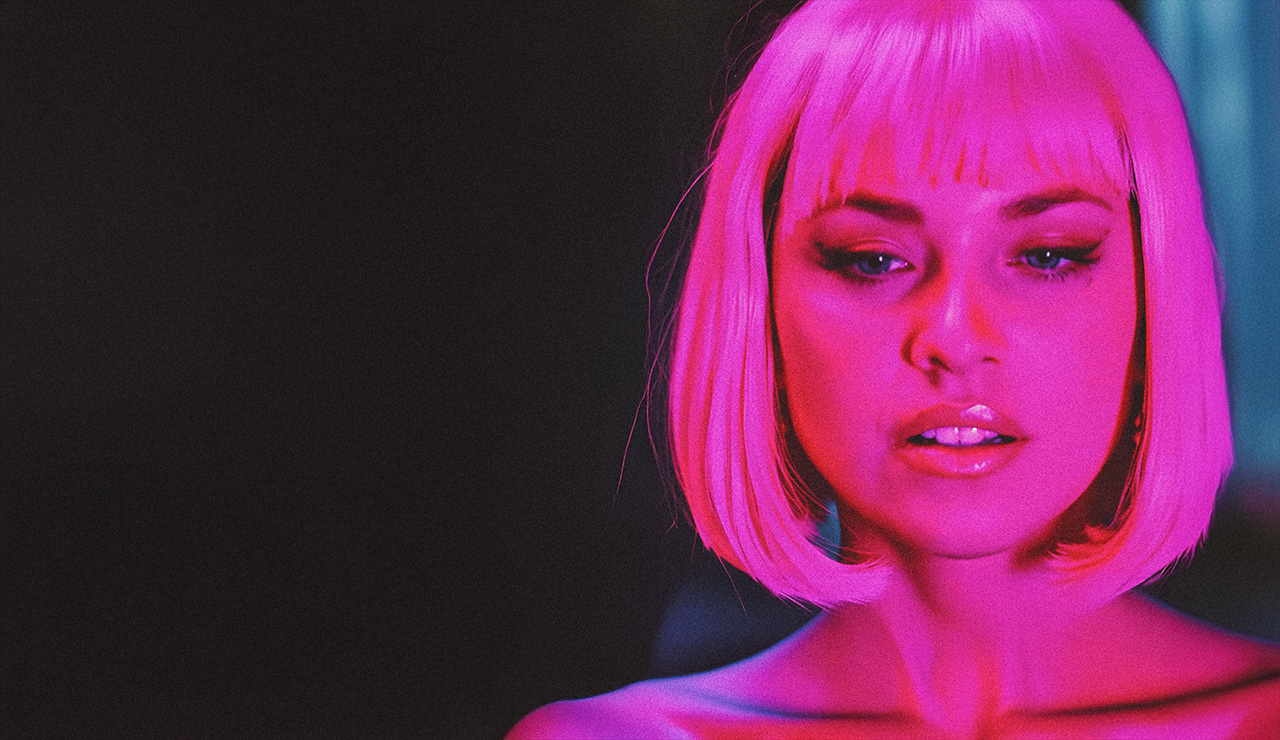
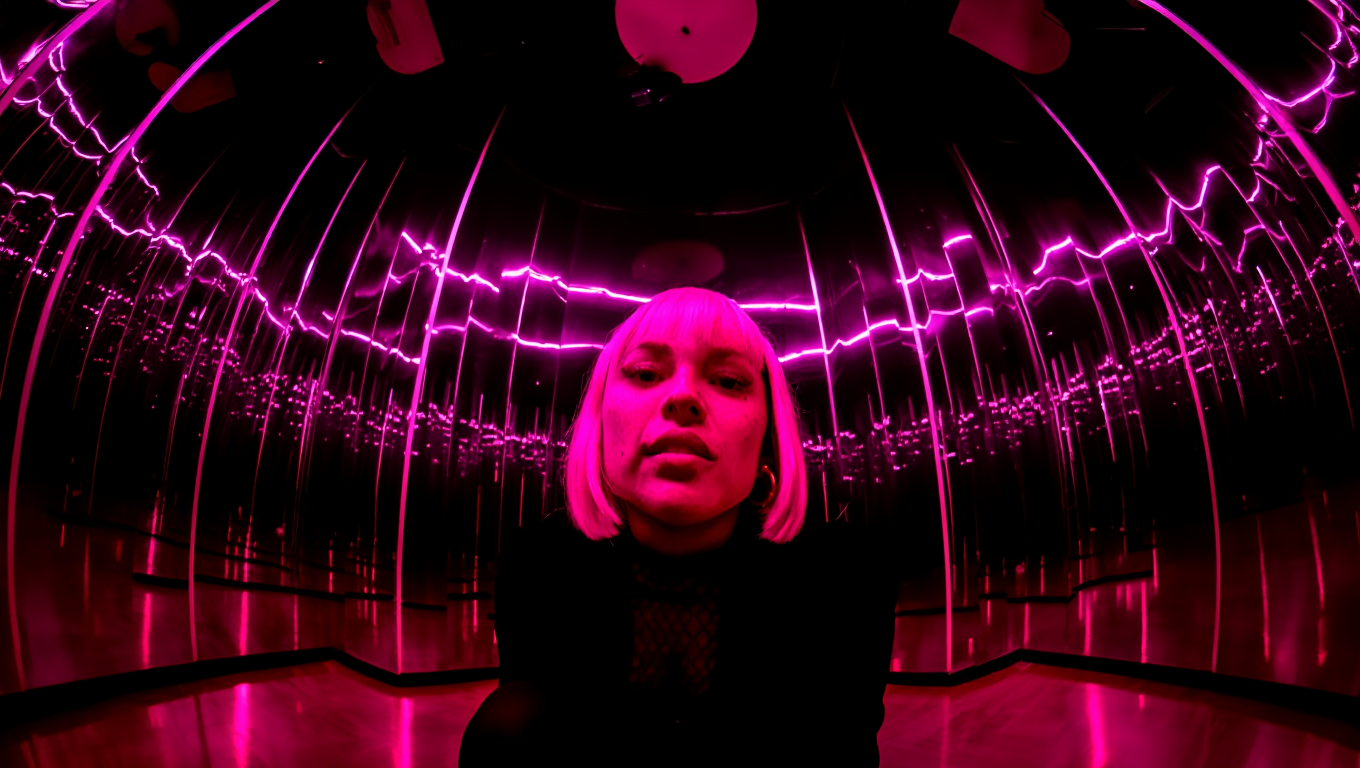
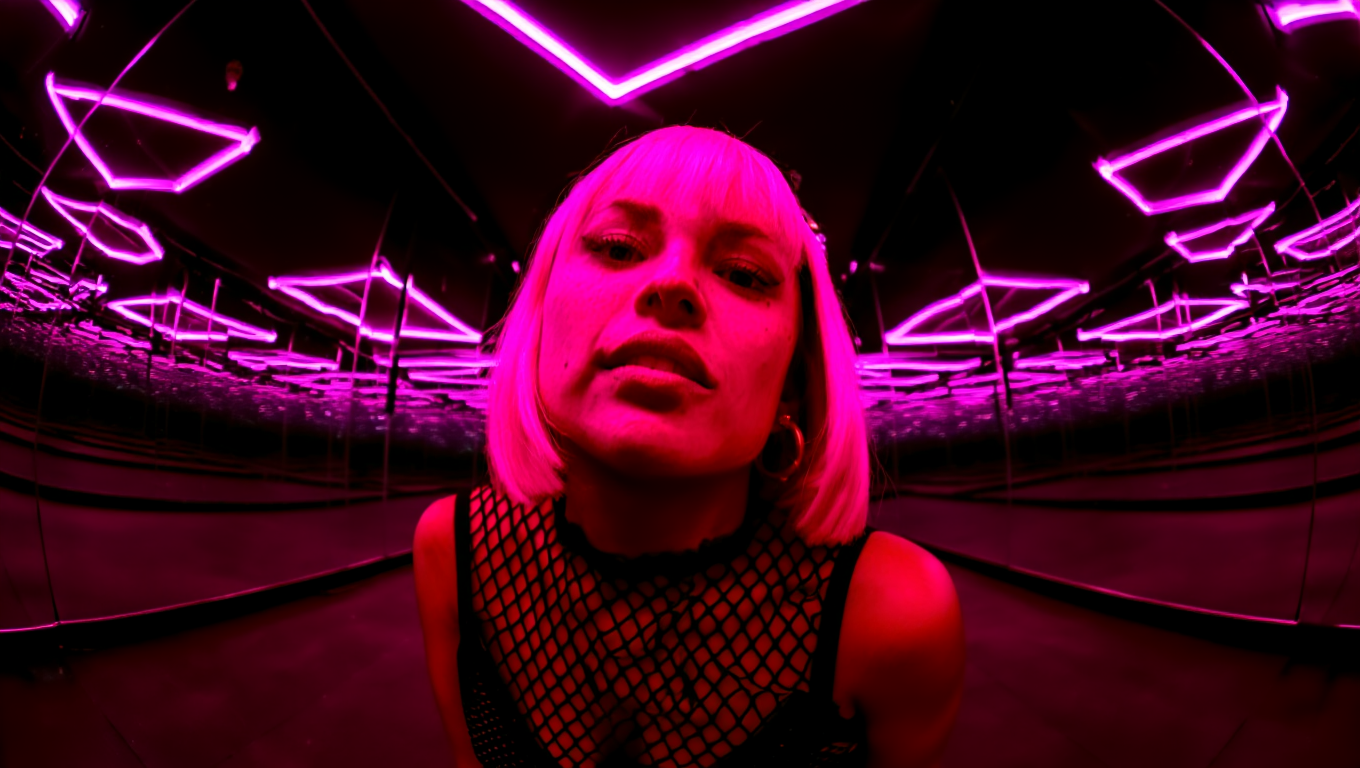
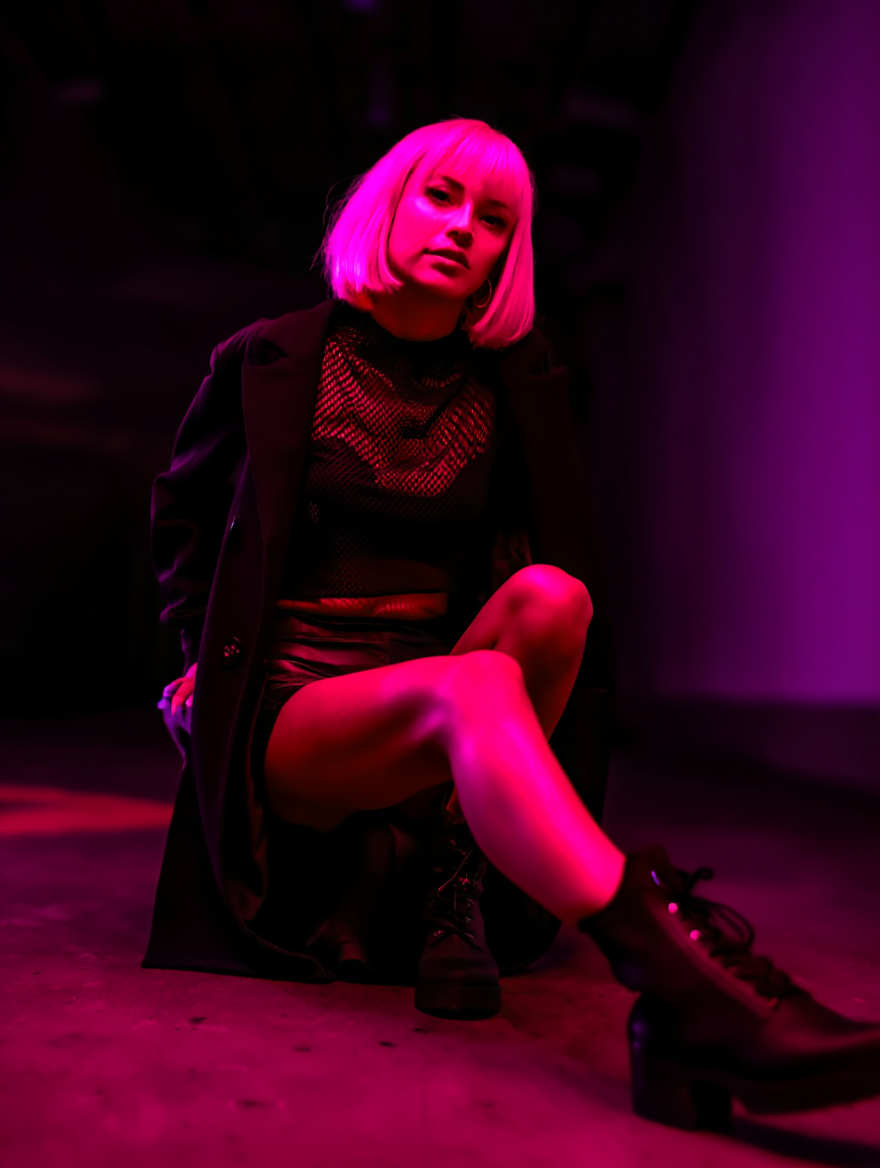
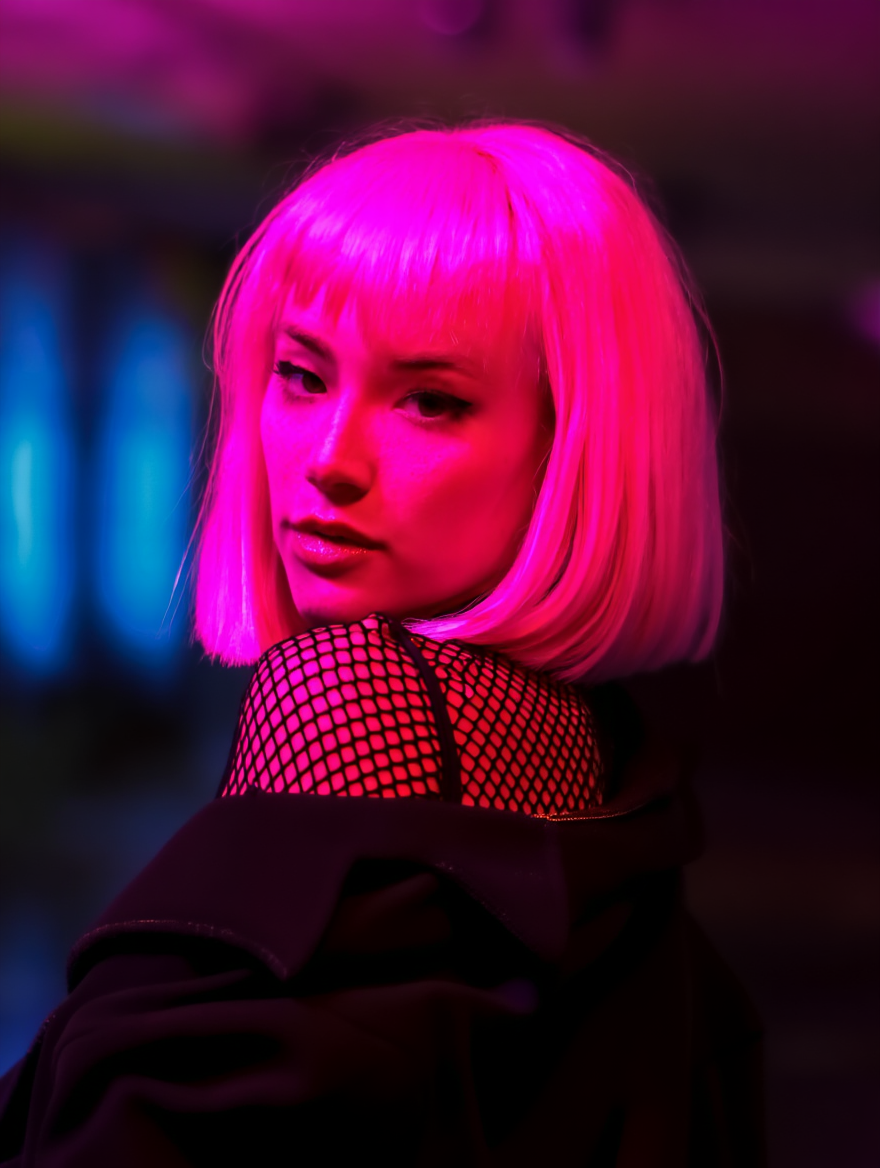
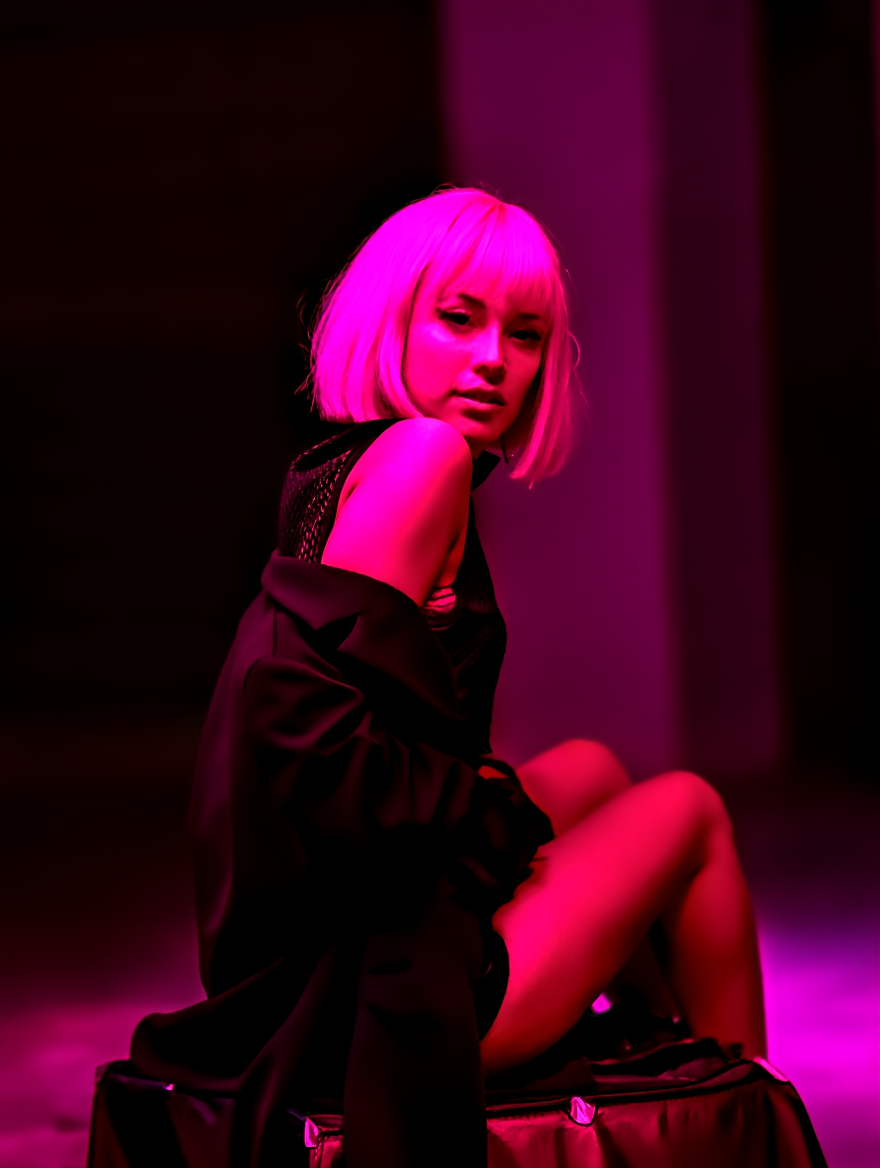
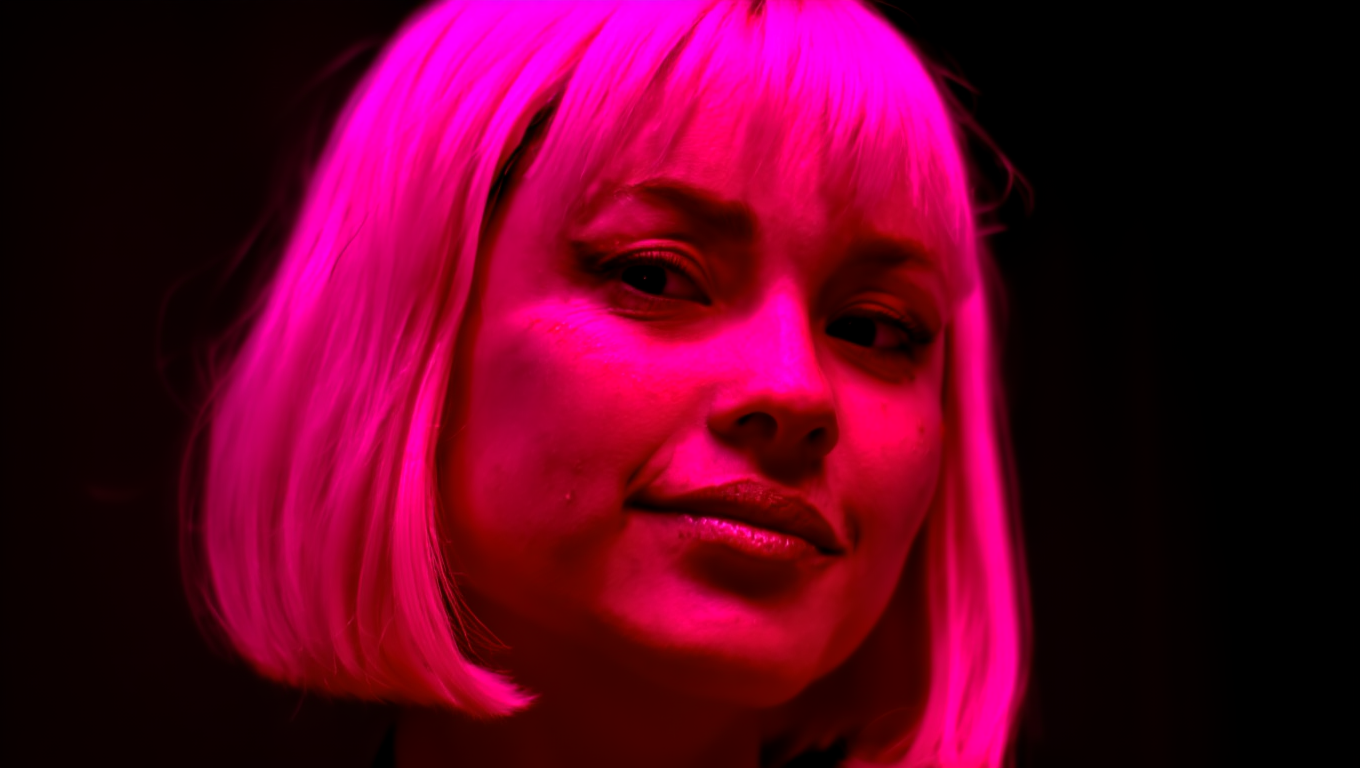
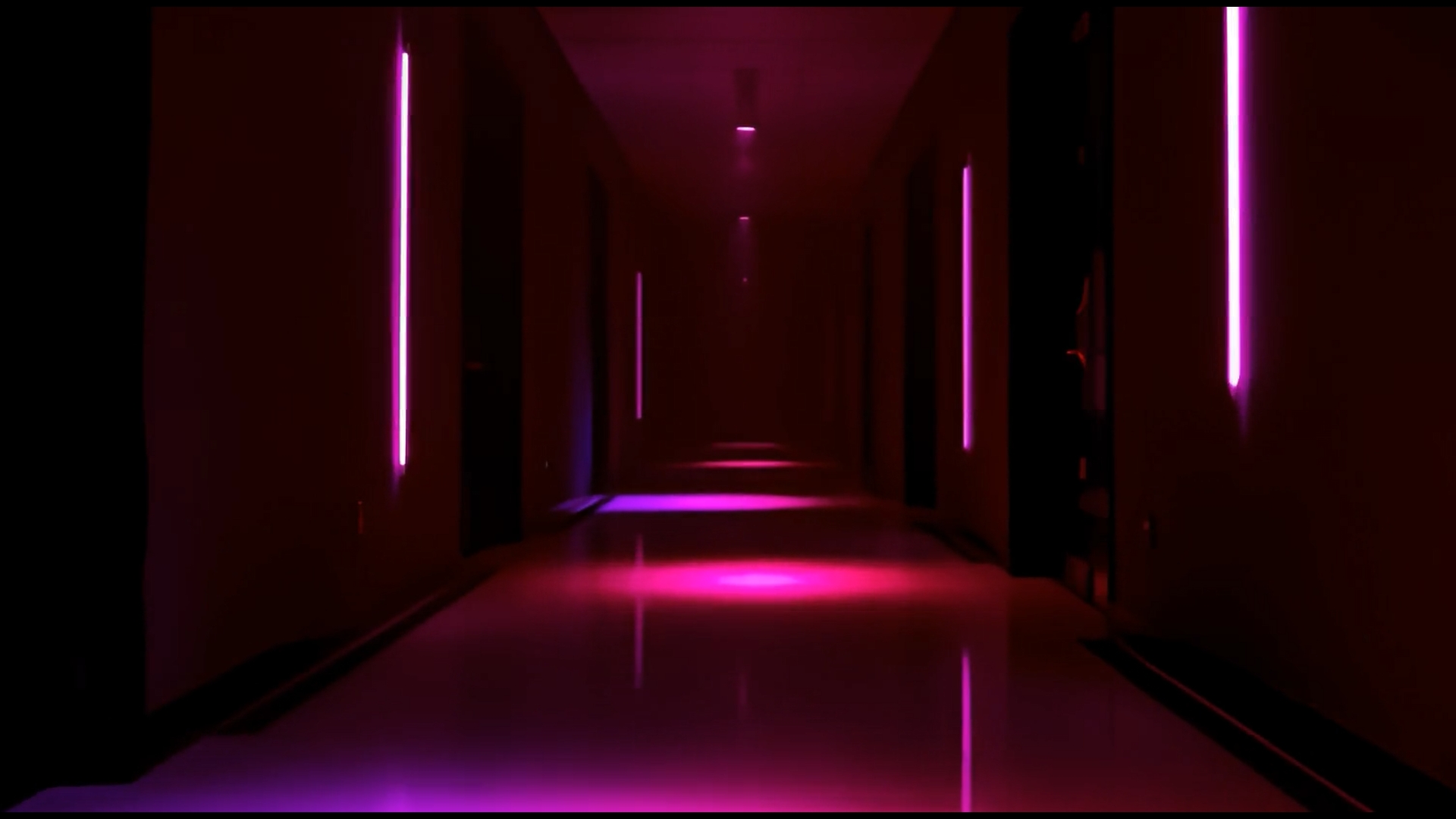
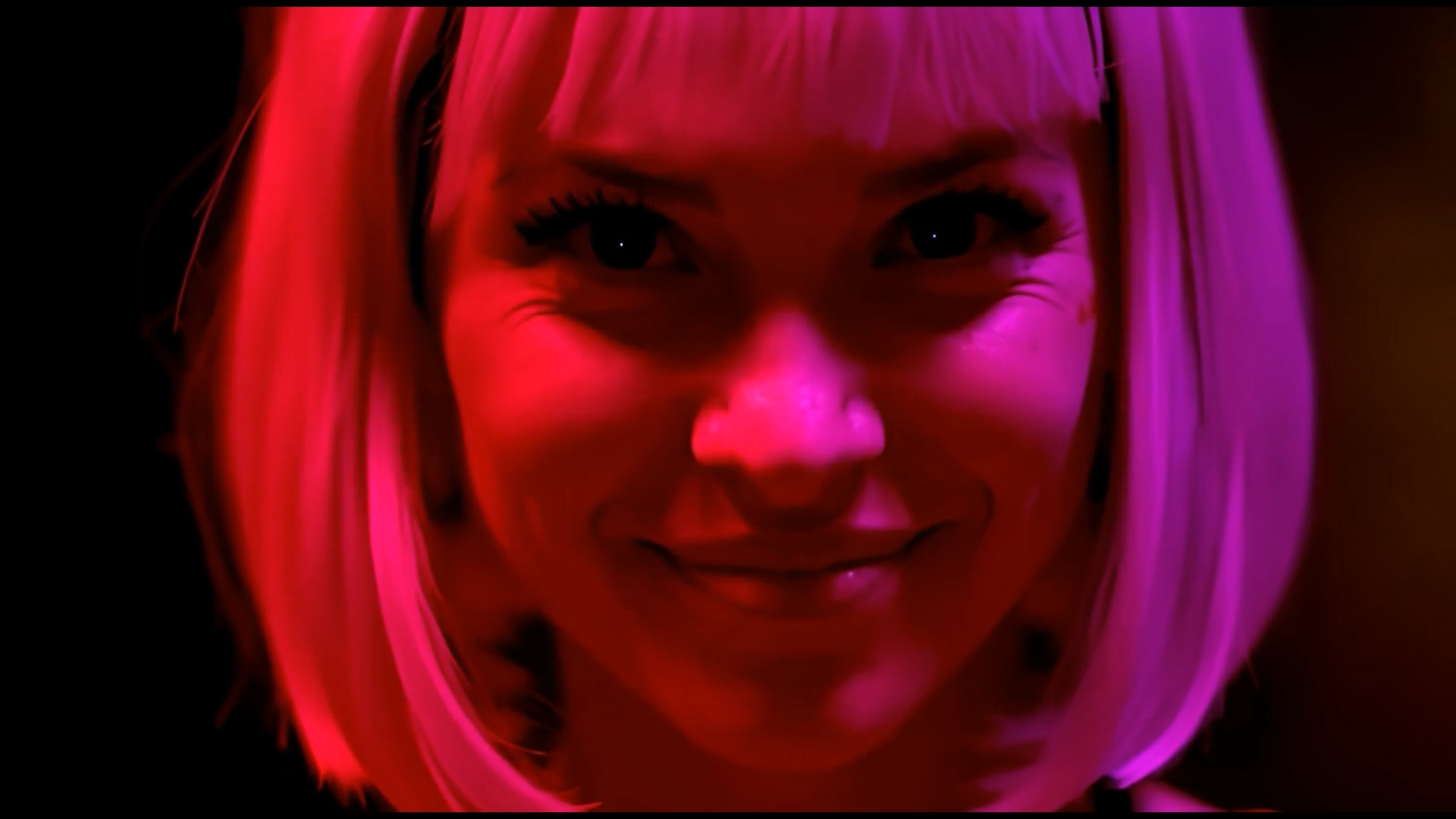
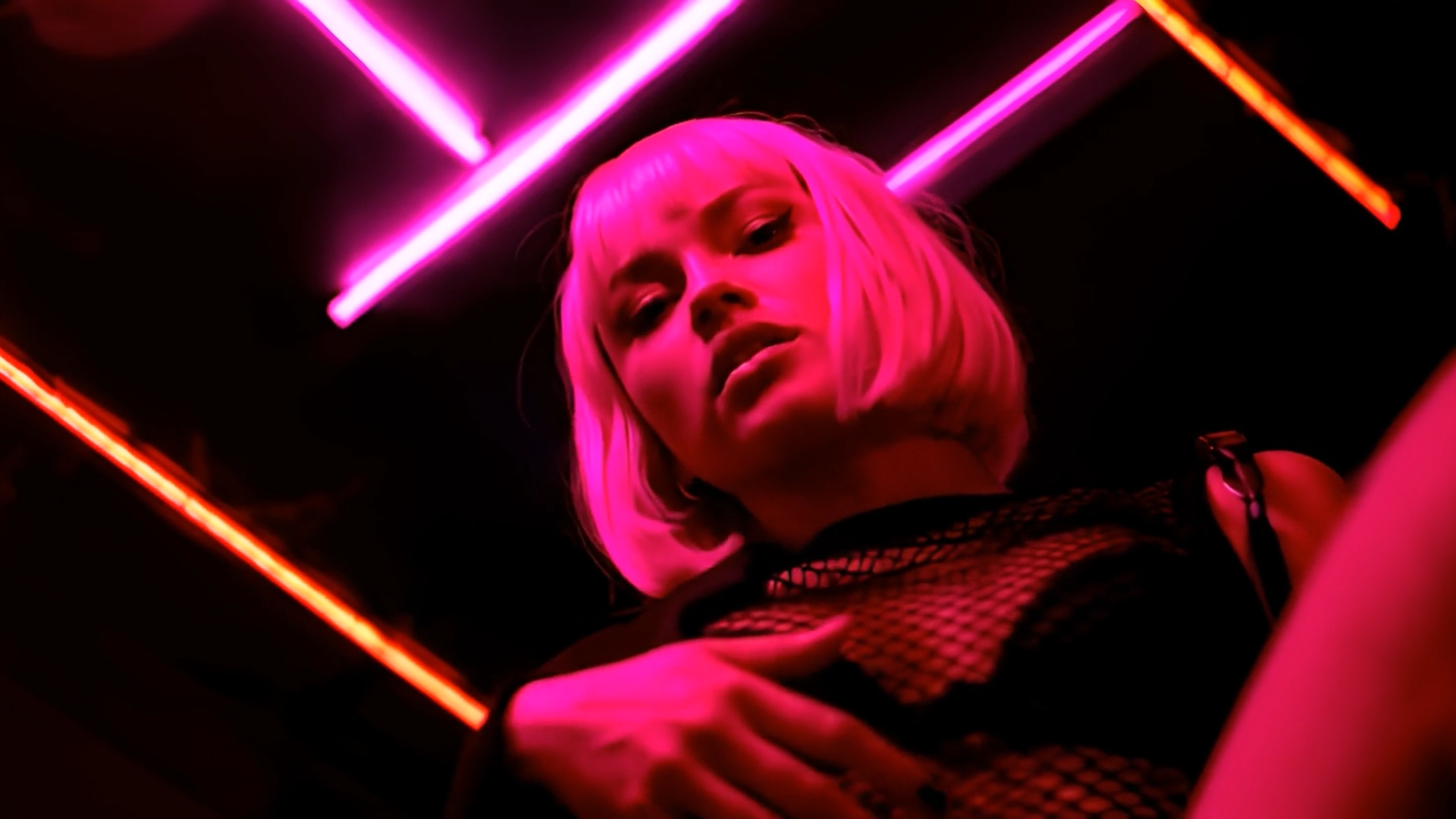
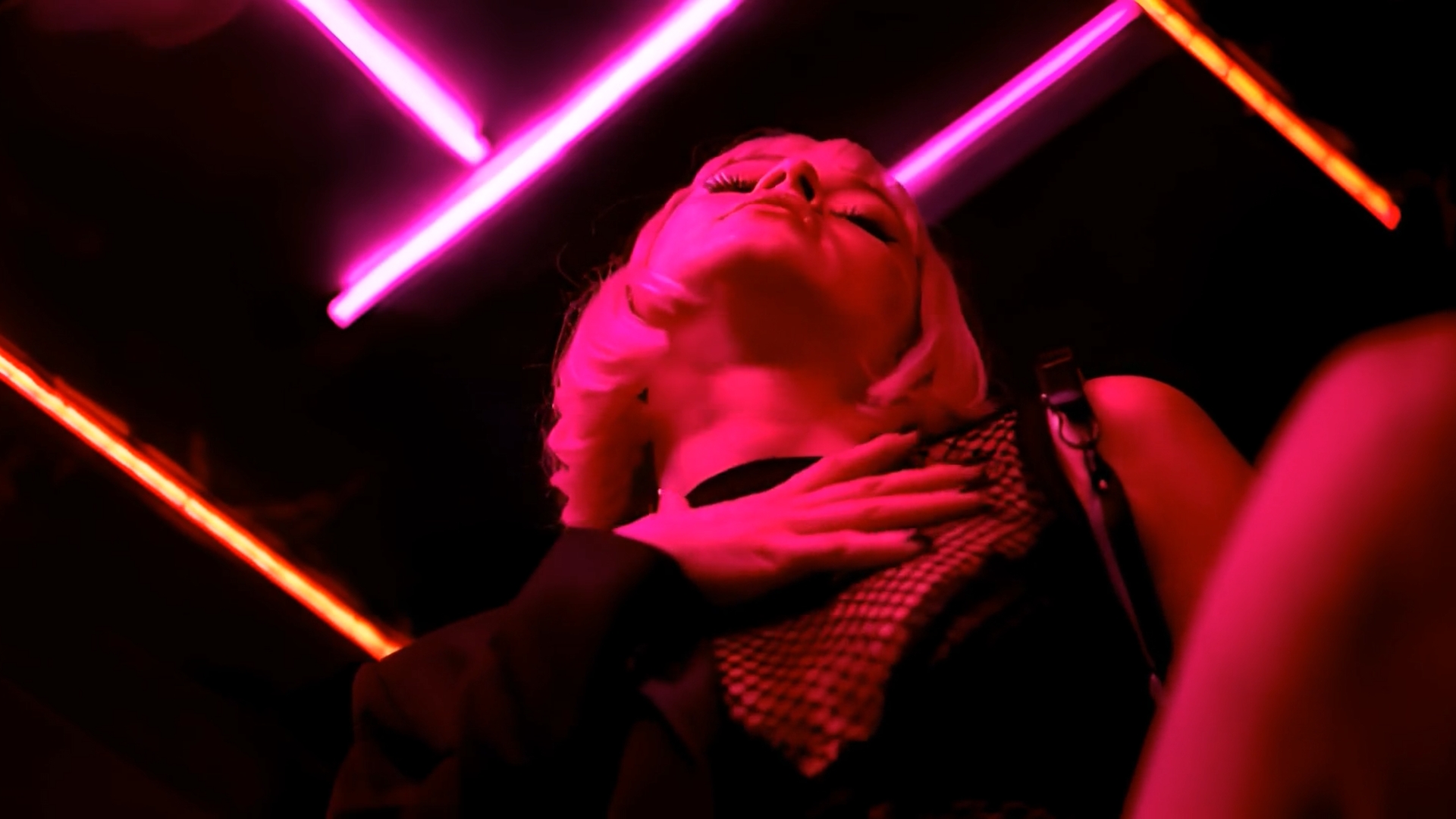
For my debut project I already had a very clear visual in my head: Saera Nova alone in a surreal nightclub that feels like late-90s / early-2000s MTV – bold, slightly weird, and strangely timeless. Not a glossy modern club, but that in-between space where nostalgia and modern life collide. I was incredibly lucky that Aidan Yagu jumped in and offered to help bring that vision to life. Together we set out to create something that feels like a lost MTV video: intimate, modern, a bit surreal – Saera Nova alone on the dancefloor, the centre of her own universe, completely free in her own little pocket of reality.
What it does
The music video drops you into a surreal nightclub where time feels a bit off and reality feels slightly softened at the edges. We meet Saera Nova alone on the dance floor, moving to her own track, completely in her own head. She’s not performing for anyone, there’s no crowd yet – it’s that rare moment of being absolutely free in a place that usually demands performance.
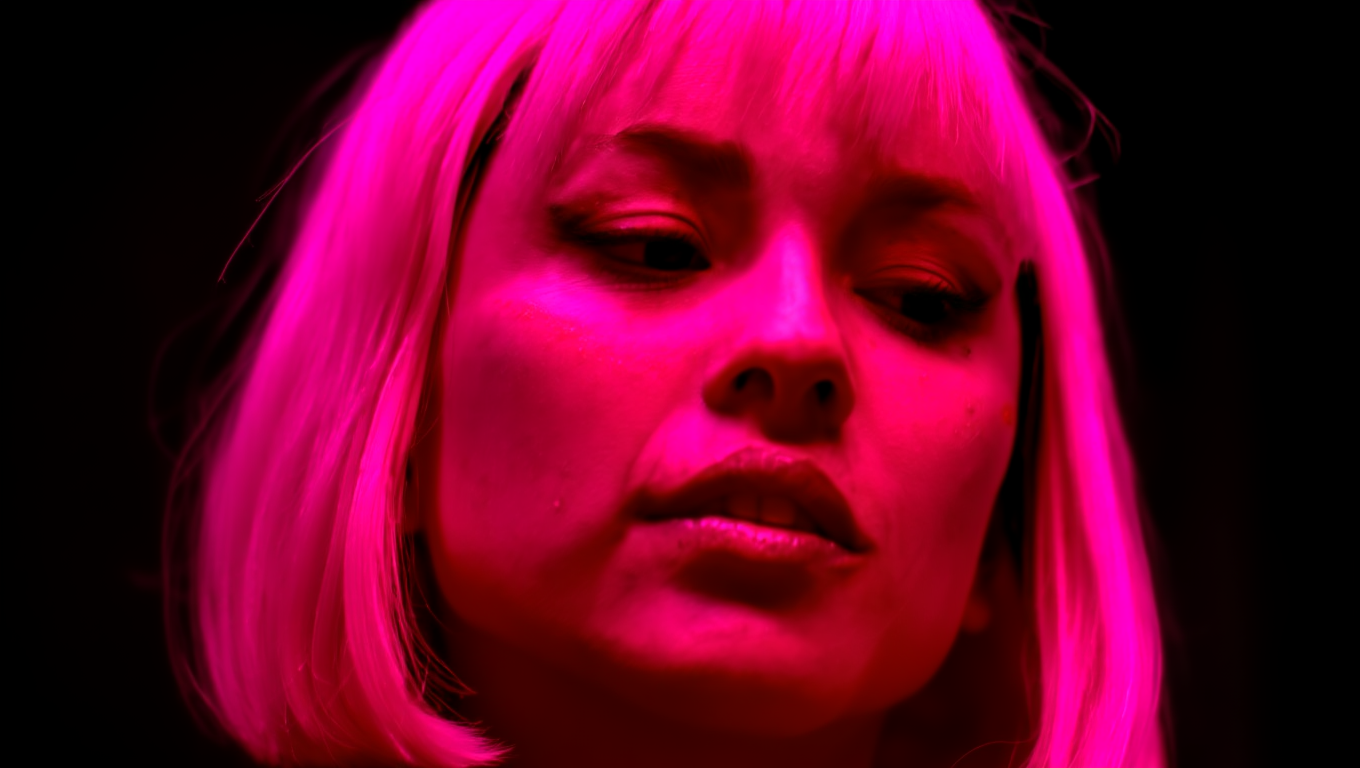
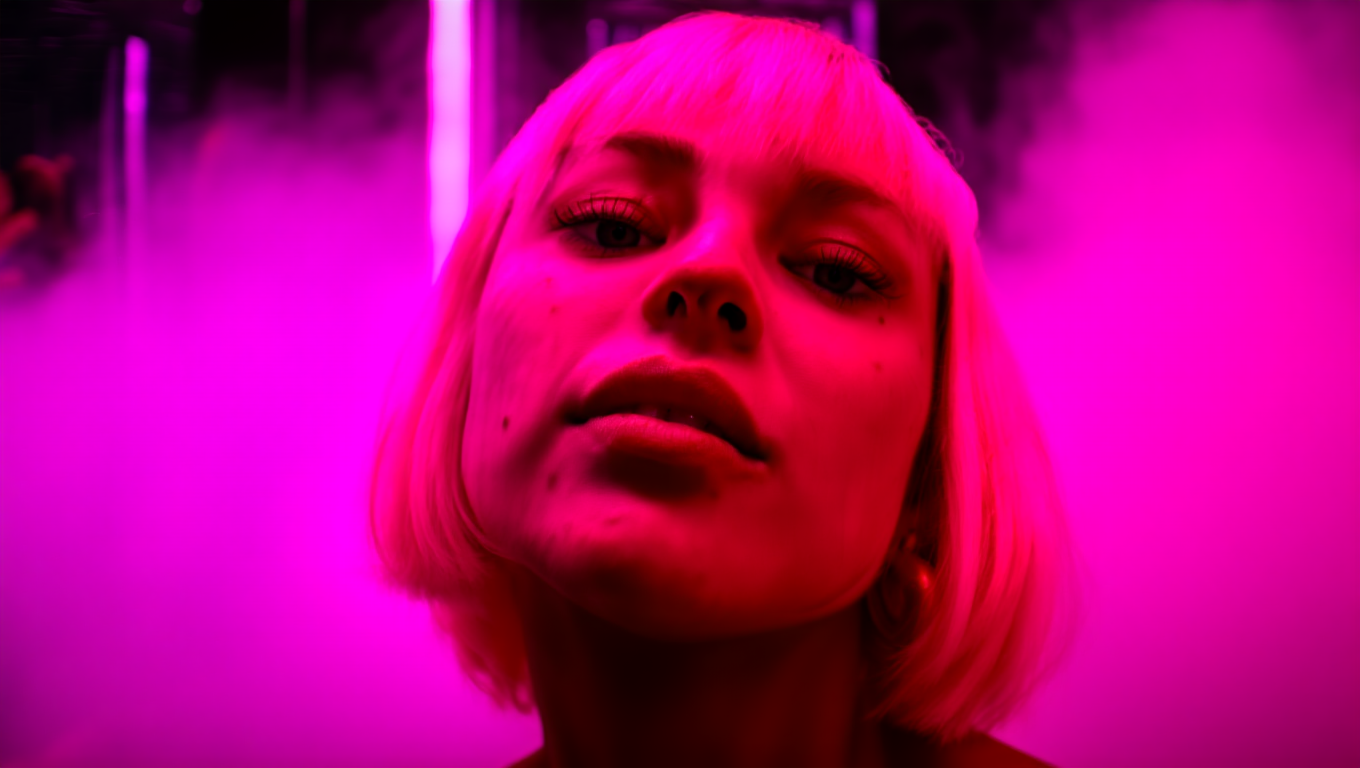
Visually, it leans into a late-90s / early-2000s MTV mood: bold, slightly strange, saturated, but still oddly intimate. The camera stays close to her, sometimes almost uncomfortably so, as she exists somewhere between confidence, vulnerability and that vague existential ache the song talks about. Over time, the club slowly “wakes up” – more people, more movement, more bodies – and instead of that lifting her, it breaks the spell. As the dance floor fills, she quietly decides to leave. The video starts with Saera as the centre of her own universe and ends with her stepping out of it, taking that inner world with her.
The goal was to make a video that feels like you’ve stumbled across a lost music video from another decade, but the emotional core is absolutely now: questioning what’s real, numbing the edges of existence, and still wanting some kind of clarity in the middle of all that noise.
How we built it
Once the concept of Saera Nova alone in a surreal MTV-era nightclub was clear, the next step was building a world around her that actually felt consistent and believable, even though it’s AI-generated.
Most of the visual base material was created in REVE. I used it to generate a large pool of stills and scenes that all lived in the same club environment: same kind of furniture, lighting language, textures, atmosphere. The idea was that no matter which angle or moment you see, it feels like we never left that one nightclub, even as we move through different shots and moods. REVE was also surprisingly good at keeping Saera recognisable as the same person from shot to shot, which is crucial if you want the viewer to actually connect with her instead of thinking, “who’s this now?”
From there, we took those images into Grok Imagine to bring them to life. The updated video model does a great job turning still frames into short, lifelike shots while letting you chain them together, so we could build a sequence where Saera moves, turns, dances, and reacts to the track. Prompt adherence was strong enough that we could stay in that very specific visual language without everything drifting off into chaos.
All of this then landed in DaVinci Resolve for the actual edit. That’s where the real work happened: cutting to the music, speed-warping transitions to make movements flow into each other, and shaping the rhythm of the video so it feels like it’s breathing with the track. Extra film grain, subtle colour grading and a slightly softened image helped sell that late-90s / early-2000s look – like something you might have watched at 1 a.m. on MTV and half-remembered years later.
Challenges we ran into
The hardest part wasn’t generating enough material – it was choosing and shaping it.
Once we had a ton of shots, the real challenge became the edit: matching movement to the music in a way that felt natural, keeping Saera appealing and magnetic without sliding into oversexualisation, and making sure the viewer always feels like they’re with the same person in the same place. Tiny differences add up fast with AI: slightly different hair length, a different fold in a dress, a shift in face shape, lighting that feels a bit too soft or too sharp. All of that can break the illusion if you’re not careful.
We also had to fight for consistency between platforms. Even with the same reference material, some tools tended to push everything brighter or softer, or added their own “signature” look. That meant a lot of correction work in DaVinci Resolve – adjusting colour, contrast and brightness so no shot suddenly feels like it came from a different universe. It was a constant balance between accepting a bit of variation as part of the dreamlike quality and not letting it slip into “this looks like five different videos stitched together.”
Accomplishments that we're proud of
What I’m most proud of is that this really does feel like a music video – not just a collection of cool AI clips.
We managed to hit that specific late-90s / early-2000s MTV feeling I grew up with: slightly messy, emotional, a bit raw, not too polished, like you’re watching someone’s real inner world bleed through the styling. The fact that we could get that kind of atmosphere and production value on a microscopic budget, using AI tools instead of a full crew, still feels a bit unreal.
I’m also genuinely happy with how little “uncanny valley” you get when watching it all the way through. If you really pause and study individual frames, you’ll see imperfections – but in motion, with the grading and the music, she feels like a person. Not a perfect 3D doll, not a plastic avatar. That tactility and almost-real feeling, despite the surreal setting, is exactly what we were aiming for.
What we learned
This project confirmed two things: collaboration makes everything better, and AI tools are only as meaningful as the vision behind them.
On a human level, having Aidan on board was huge. I brought the concept, the emotional framework, and my idea of who Saera is; he brought technical excellence, a sharp eye for pacing and image selection, and the ability to push the tools to their limits. That back-and-forth is what made the video feel cohesive instead of like a pile of cool, disconnected experiments.
I also realised how much different perspectives shape a character – especially when you’re working with both a collaborator and AI. Aidan and I agreed on about 95% of Saera, but that remaining 5% really mattered, particularly around how “sexy” the video should feel.
For me as a woman, the line between sensual, self-possessed, alluring on your own terms versus being performatively sexualised for someone else’s gaze is incredibly thin – and AI has a bad habit of sprinting straight over it. A lot of generations were almost perfect, except for the wrong kind of movement: too suggestive, too focused on body parts, too clearly “performing” for an invisible audience. That was the exact opposite of what I wanted for Saera. In my head, she’s not dancing for anyone. She exists in this club as a self-contained universe, moving for herself, in her own head, in her own world. The fact that she leaves when the crowd truly arrives is not accidental.
There were moments where I wanted to throw out shots that, to me, leaned too far into that performative space, and Aidan pushed back because he saw how they served the story. In at least one case he was right, and I’m glad I let it stay. That tension – between my instinct to protect the character from the wrong gaze and his instinct to protect the narrative flow – ended up mirroring what it’s like to work with AI in general. You’re constantly negotiating, compromising, pulling things back from the edge, deciding when to let go.
For me as a chronic perfectionist, that’s its own lesson. I’m learning to live with the 95% instead of chasing the impossible 100%. If you demand absolute control and flawlessness, you never finish anything – and you lose the joy in the process. This project reminded me that “good enough and emotionally true” can be far more powerful than “technically perfect but never released.”
On the technical side, I also got much clearer on what each tool is actually good at. REVE may not be the newest, shiniest thing anymore, but it’s fantastic at reimagining the same environment and character from different angles while keeping the style coherent. Grok turned out to be far more capable as a video model than I expected, especially when it comes to breathing life into stills without losing the mood. And DaVinci Resolve once again proved that editing is where the real storytelling happens – especially when your footage comes from dozens of AI generations and you’re the one responsible for making it feel like a single continuous world.
On a more philosophical level, this project nudged me further into accepting AI-assisted work as “real” art. The tools did a lot of the visible heavy lifting, yes – but nothing would exist without the decisions, taste, revisions, boundaries, and sheer stubbornness behind them. On a more philosophical level, this project is what finally nudged me into accepting AI-assisted work as “real” art. I’d been using AI early on in my workflow – mainly language models – but visually I was hovering somewhere between “this is cool” and “is this just a gimmick?”. I wasn’t against it, but I grew up with the idea that “real” art is made from scratch through visible labour, time, craft, and limitation. That belief has teeth, and it doesn’t let go easily. It only really shifted once I started doing this in a serious, obsessive way myself.
Yes, the tools do a lot of the visible heavy lifting – but nothing exists without the decisions, taste, revisions, boundaries, and sheer stubbornness behind them. I’ve always combined music and imagery to tell stories or build atmosphere; for me, sound and visuals have always been intertwined. I just never had the means to execute what was in my head. Before AI, making something like this video would have been completely out of reach: you’d need models, locations, equipment, a crew, the whole technical machinery of filmmaking. It wasn’t a lack of ideas, it was the weight of logistics.
Now there’s suddenly this huge playground under our fingertips – a place where all those ideas that used to stay stuck in notebooks or in my head can actually live. That doesn’t make the work less “real”; if anything, it makes the creative part more accessible. For me, that’s the most exciting thing about it: underneath all the technical talk, it feels like pure play.
What's next for Edge of Being
The music video for Edge of Being is finished as a piece – the club, the world, this version of Saera Nova are complete – but for me it was the beginning, not a closed chapter. In the short term, the plan is simple: give the track and video a proper life out in the wild. That means rolling it out slowly across socials, using individual shots and moments from the video as standalone visuals, and letting people discover Saera in this world one fragment at a time rather than only through a single YouTube link.
Beyond that, Edge of Being is the visual and emotional blueprint for one half of Saera Nova. This is how she started out – one side of her in a parallel universe: moody, sensual, introspective, caught between human and artificial. The next steps were, and continue to be, to build on that instead of reinventing everything from scratch: follow-up tracks and videos that show different “rooms” of her world. Blue Light (also submitted to Chroma Awards) is the direct continuation – picking up where Edge of Being left off and following her inner world into a slightly surreal universe between analogue and modern.
After that, in another collaboration with Aidan – Run // Gone (also submitted to Chroma Awards) – I finally brought in her other side: the girl you’d pass on the street. She meets Aidan, the masked mannequin – “ghostwriter in the shell” – and they have fun riding through the night streets, dancing in the club, hanging out. This Saera is human; the other half can’t reach her.
What I find fascinating is how characters start to live their own lives. You build them at first, but later you’re more guiding than controlling them as they develop their own stories. I’m excited to see where both Saeras go from here – and I’m sure there’ll be more Aidan collaborations (and maybe a few new faces) along the way.
Going forward, I want future projects to keep playing with that tension between real and almost-real, between physical and digital, and to keep using AI tools as a way to expand what’s possible – never to replace the human part.
So while Edge of Being itself is done, it’s the anchor for everything that follows. It sets the tone, the texture, and the kind of questions Saera asks – and now the fun part is seeing how far that universe can stretch without losing her.


Log in or sign up for Devpost to join the conversation.