Inspiration
The inspiration for EDEN Paradigm stems from a fundamental paradox in modern wellness: while the desire for healthy living is universal, the tools for nutrition tracking are often tedious, unintuitive, and fragmented. Traditional apps demand manual data entry, a process so cumbersome it becomes a barrier rather than an aid. We envisioned a new paradigm—an effortless, intelligent, and deeply personal wellness partner. My core inspiration was the convergence of two transformative AI frontiers: the privacy and speed of on-device, browser-native AI, and the immense power of large-scale cloud models. We didn't want to choose between them; we wanted to orchestrate them. The name "EDEN Paradigm" reflects this goal: to create a seamless, almost paradise-like state of nutritional awareness where technology recedes into the background, empowering users through ambient intelligence rather than demanding their constant attention.
What it does
EDEN Paradigm transcends the definition of a simple nutrition tracker; it is an AI-native wellness ecosystem designed to make optimal nutrition an effortless part of daily life.
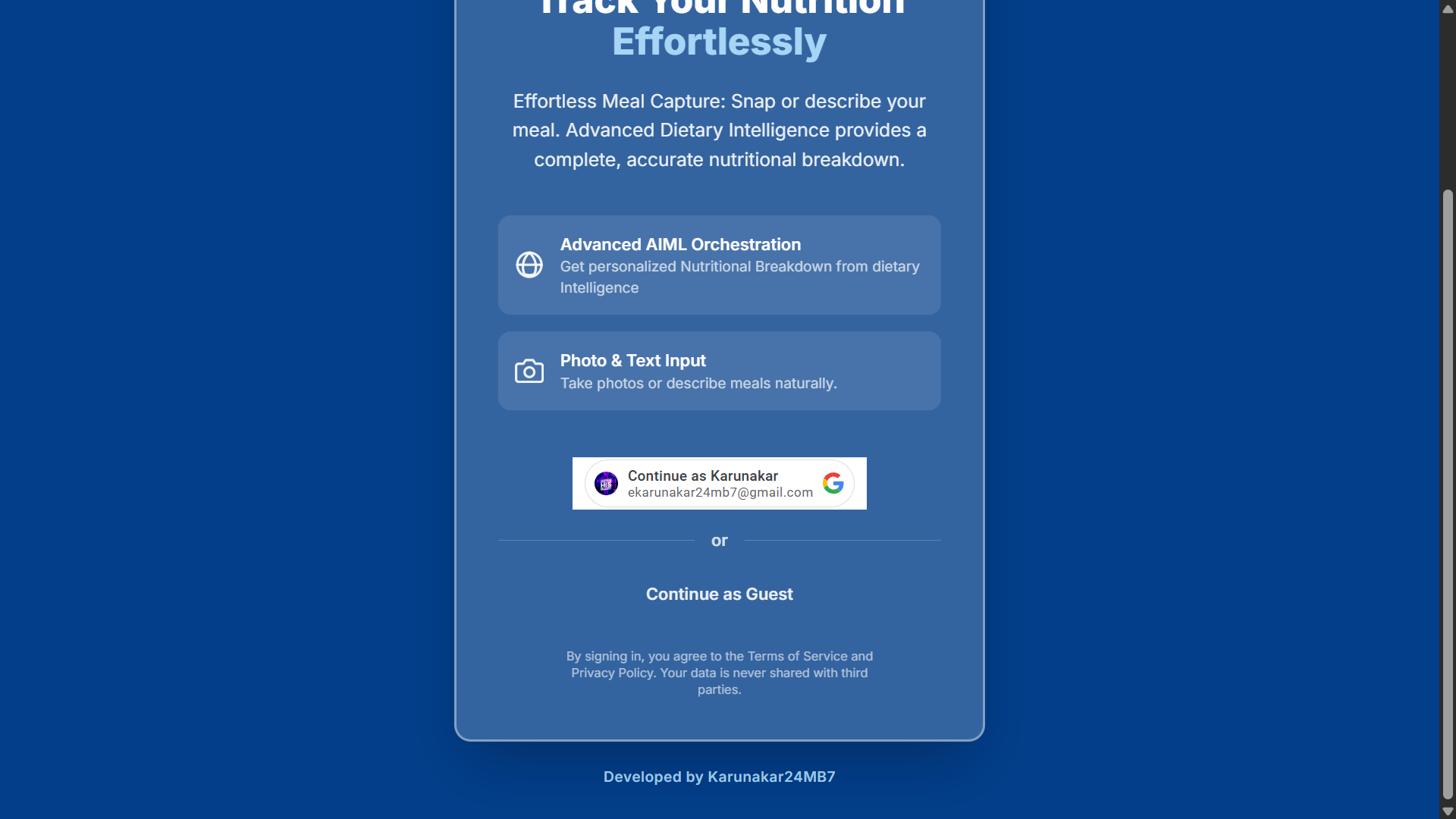
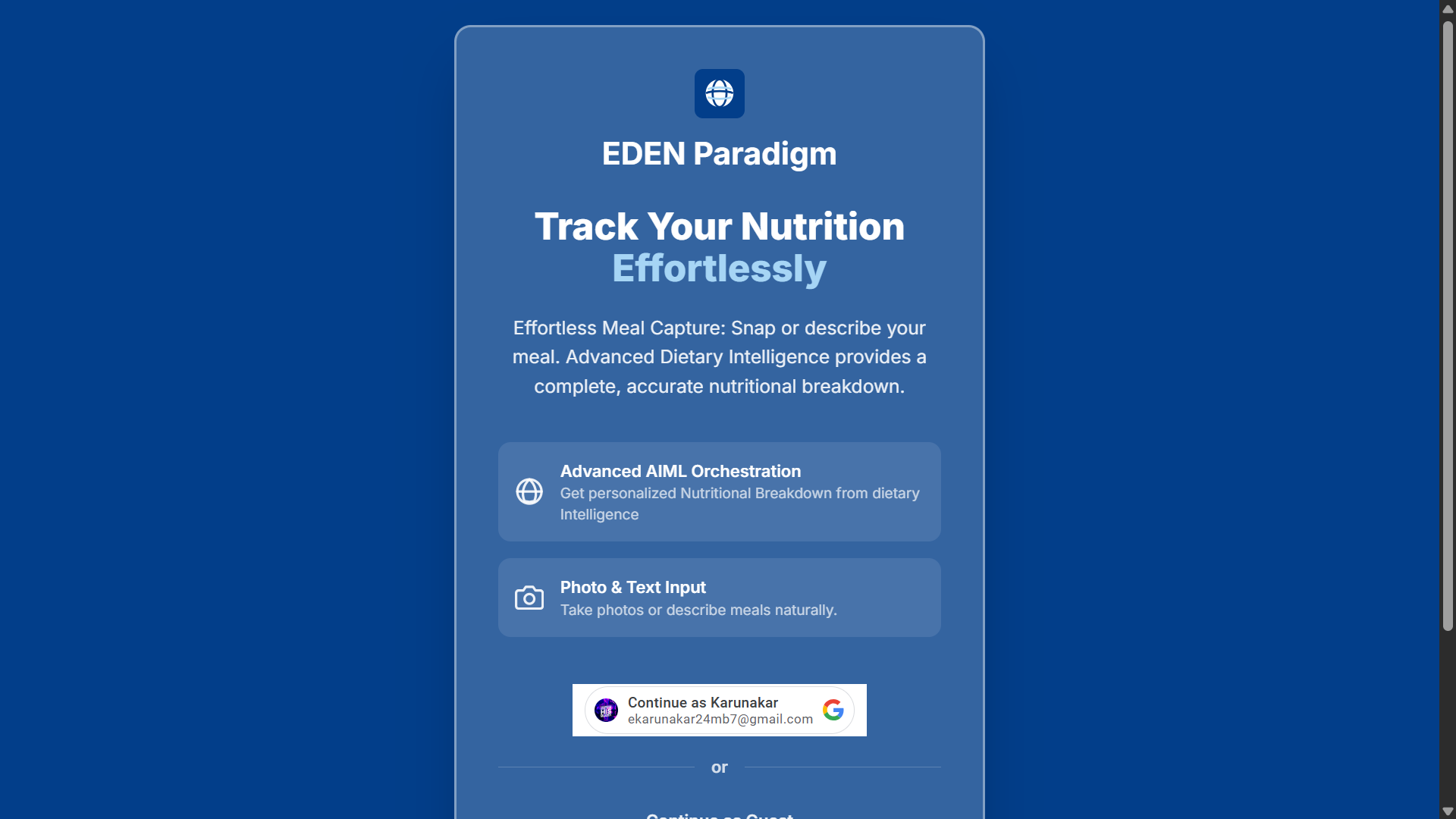
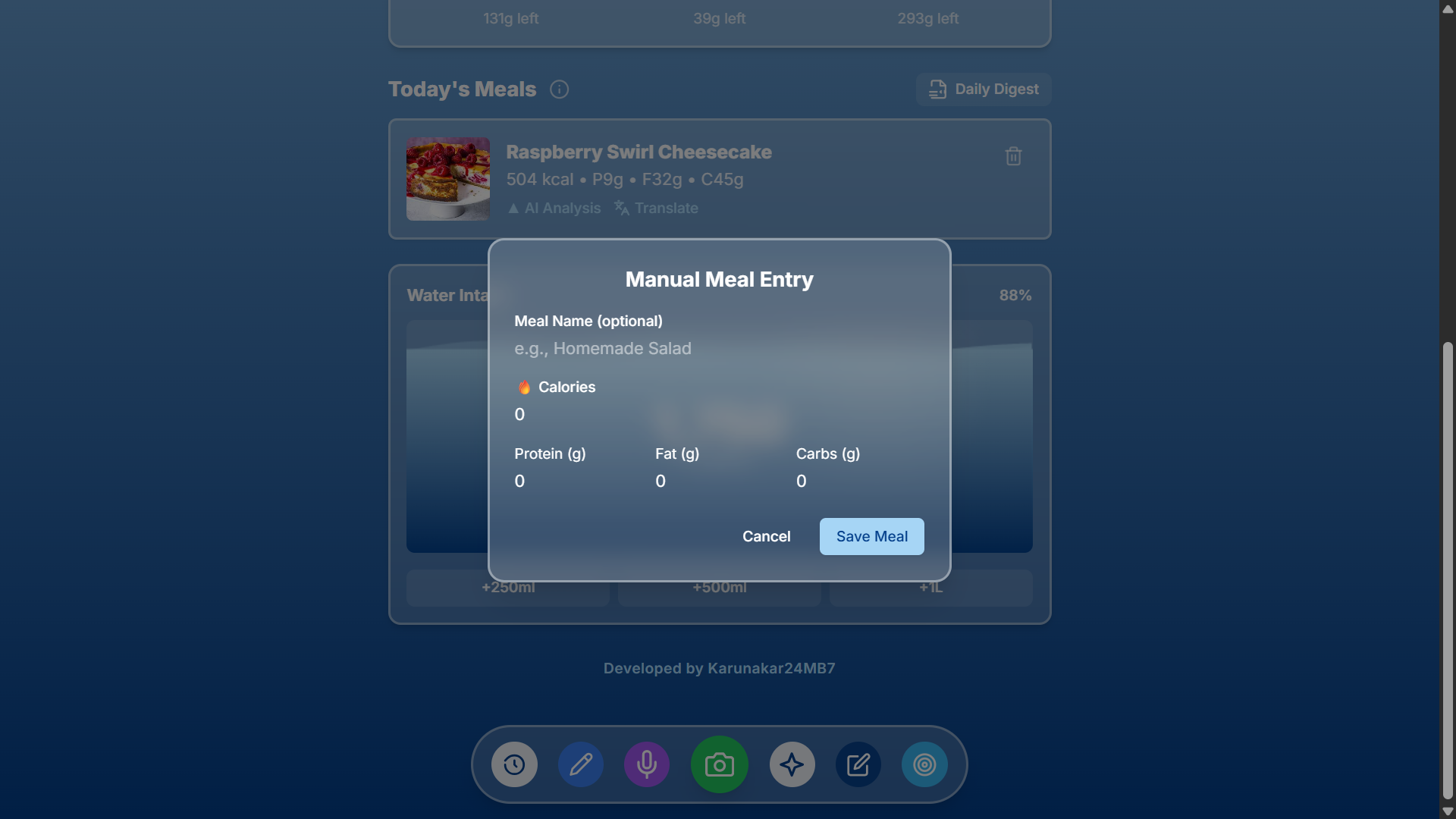
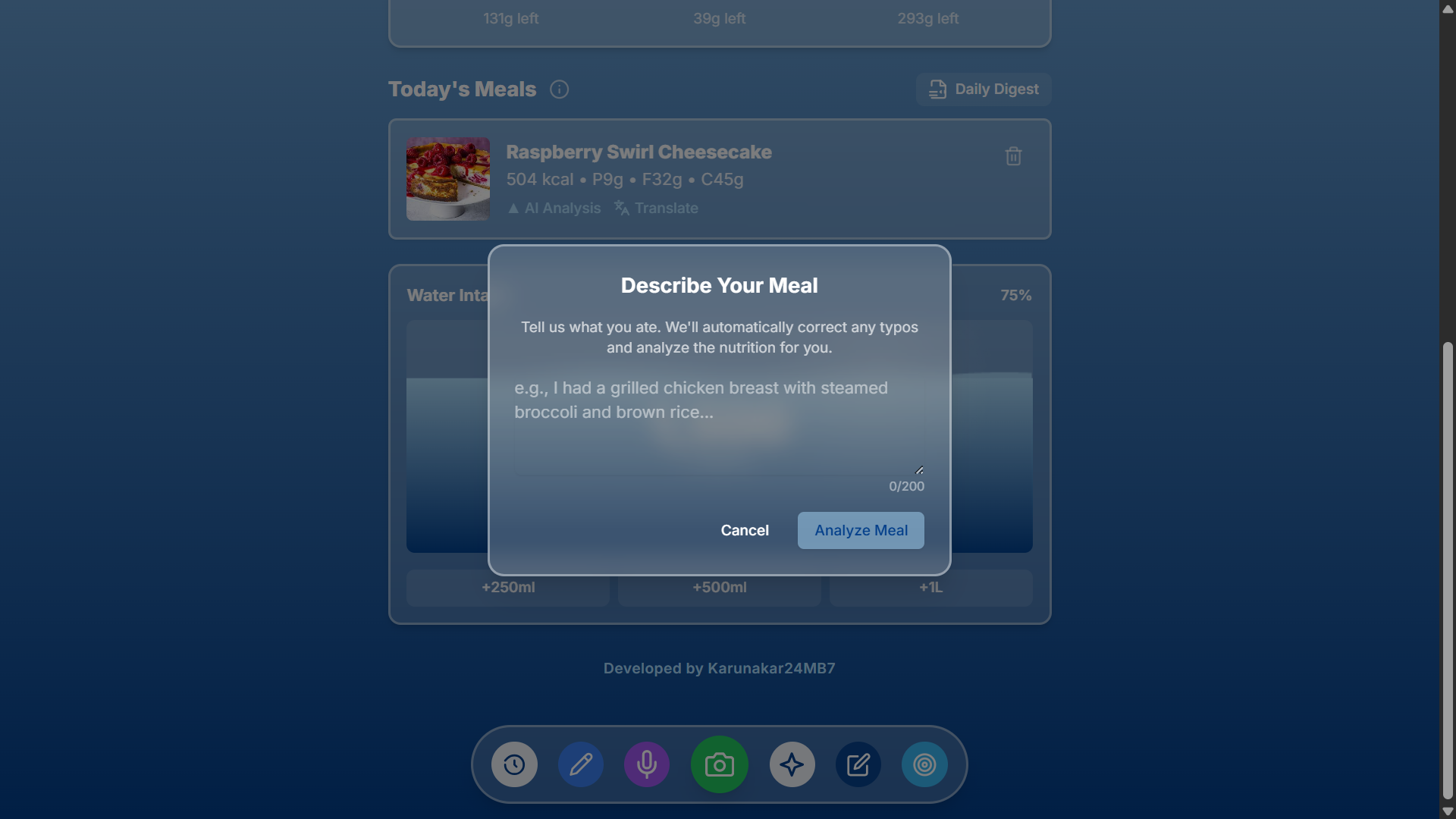
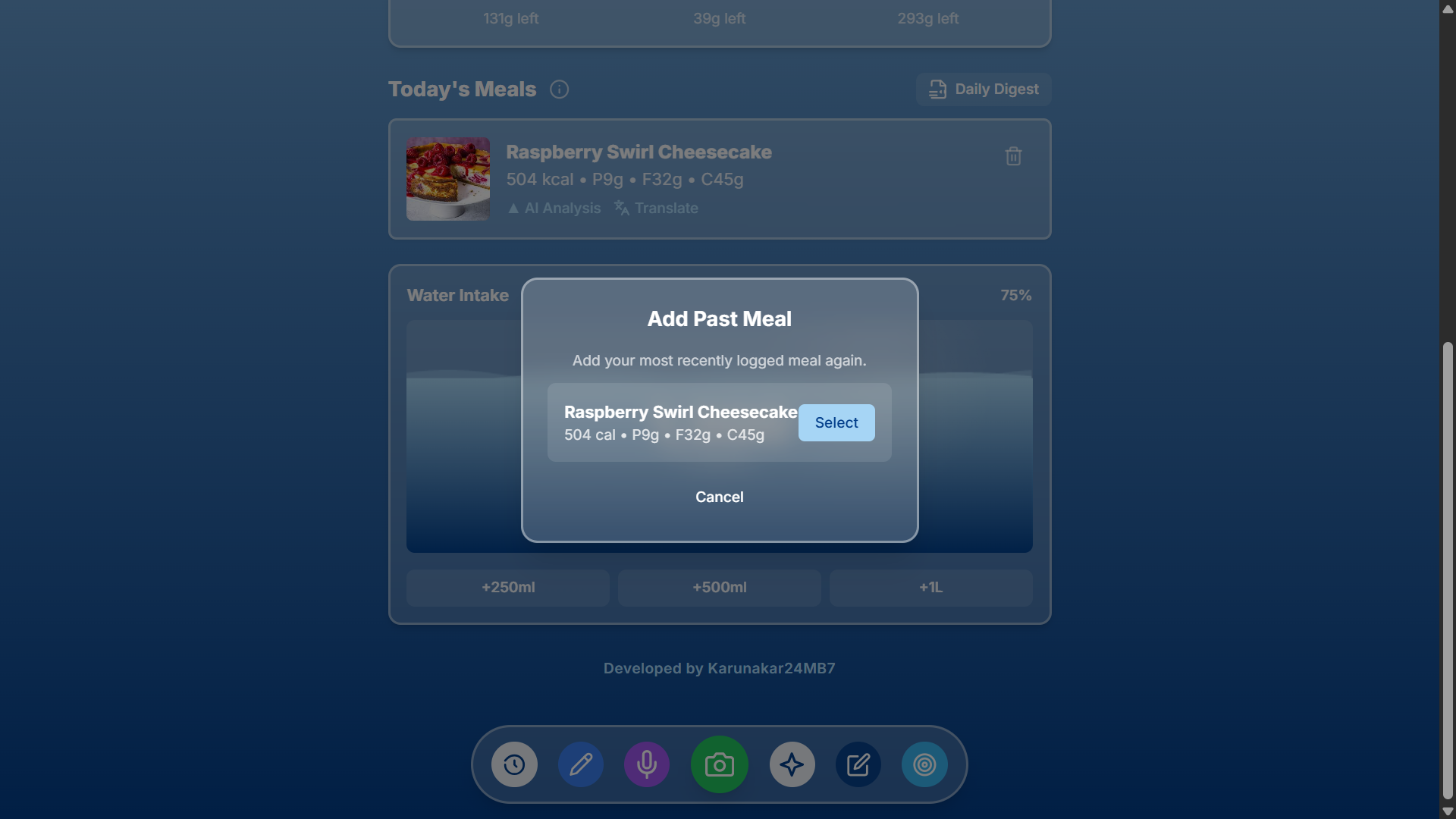
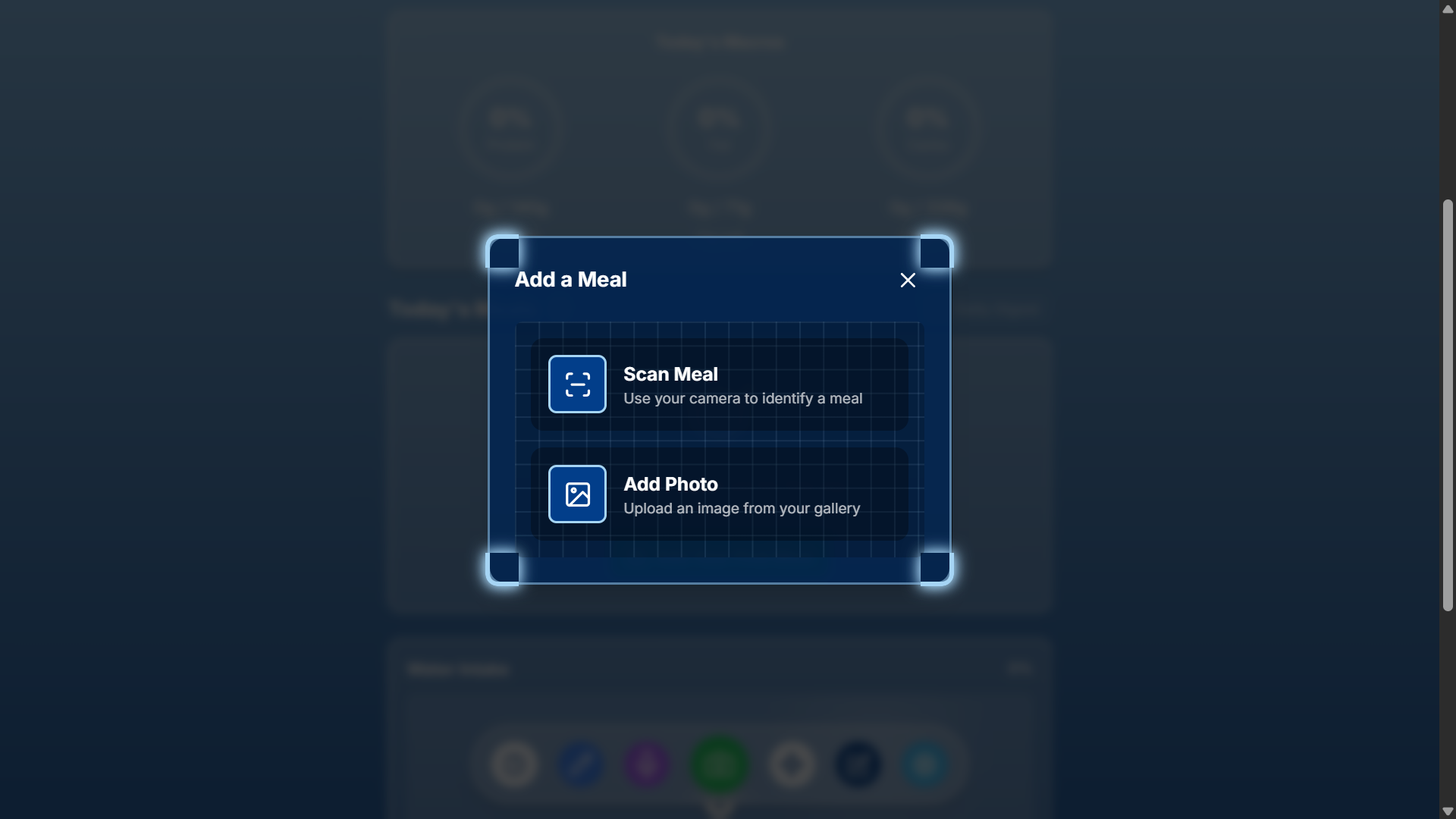
Effortless Meal Capture: Users can log meals through multiple intuitive modalities. They can snap a photo, type a natural language description (e.g., "a bowl of oatmeal with blueberries"), or simply speak to the voice assistant. This eliminates the friction of manual entry.
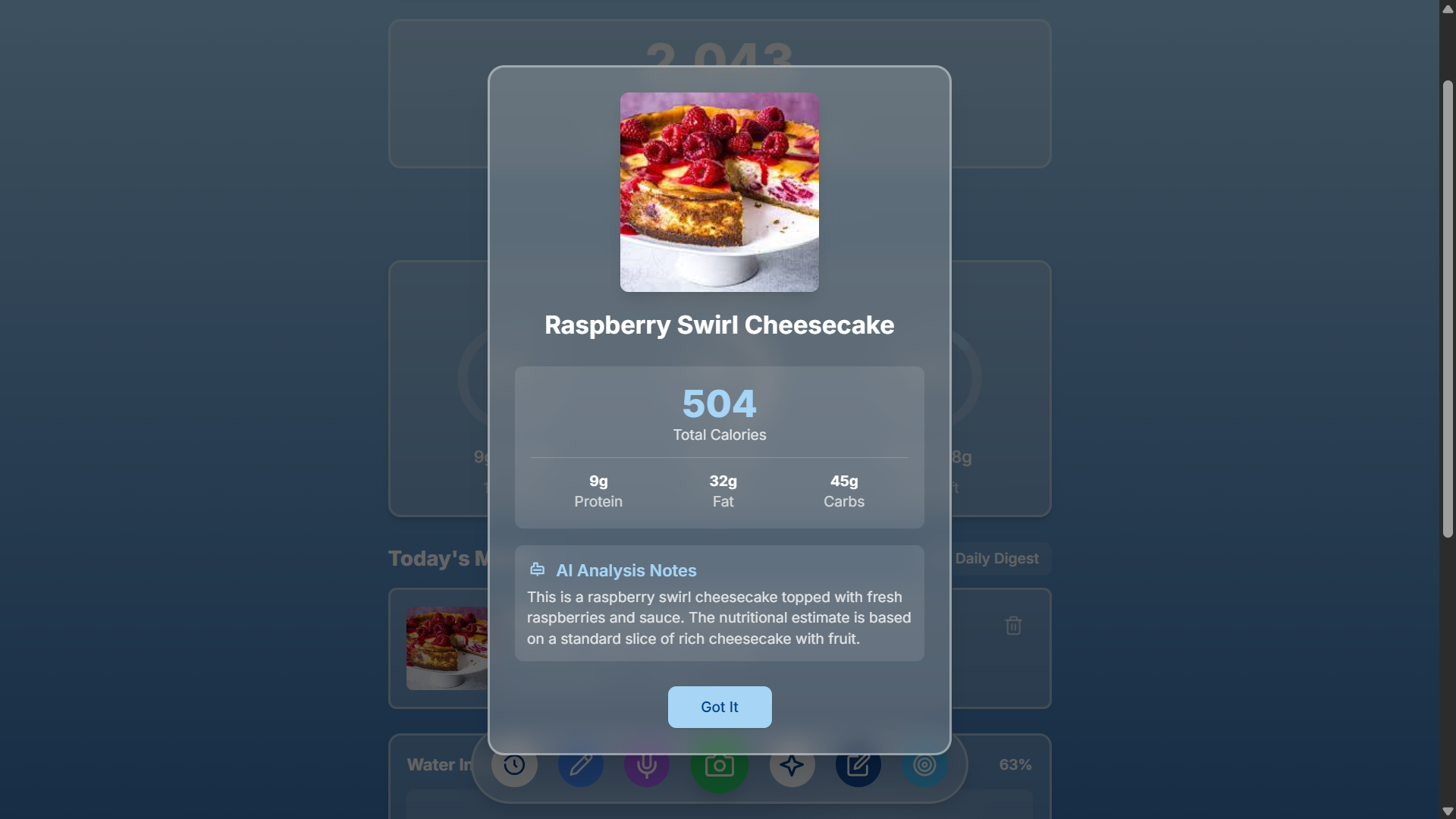
Advanced Dietary Intelligence: At its core is a sophisticated hybrid AI engine. Upon capturing a meal, the system provides an instant, detailed nutritional breakdown—calories, protein, fat, and carbs. It intelligently distinguishes between branded products and generic meals to provide the highest-fidelity analysis possible.
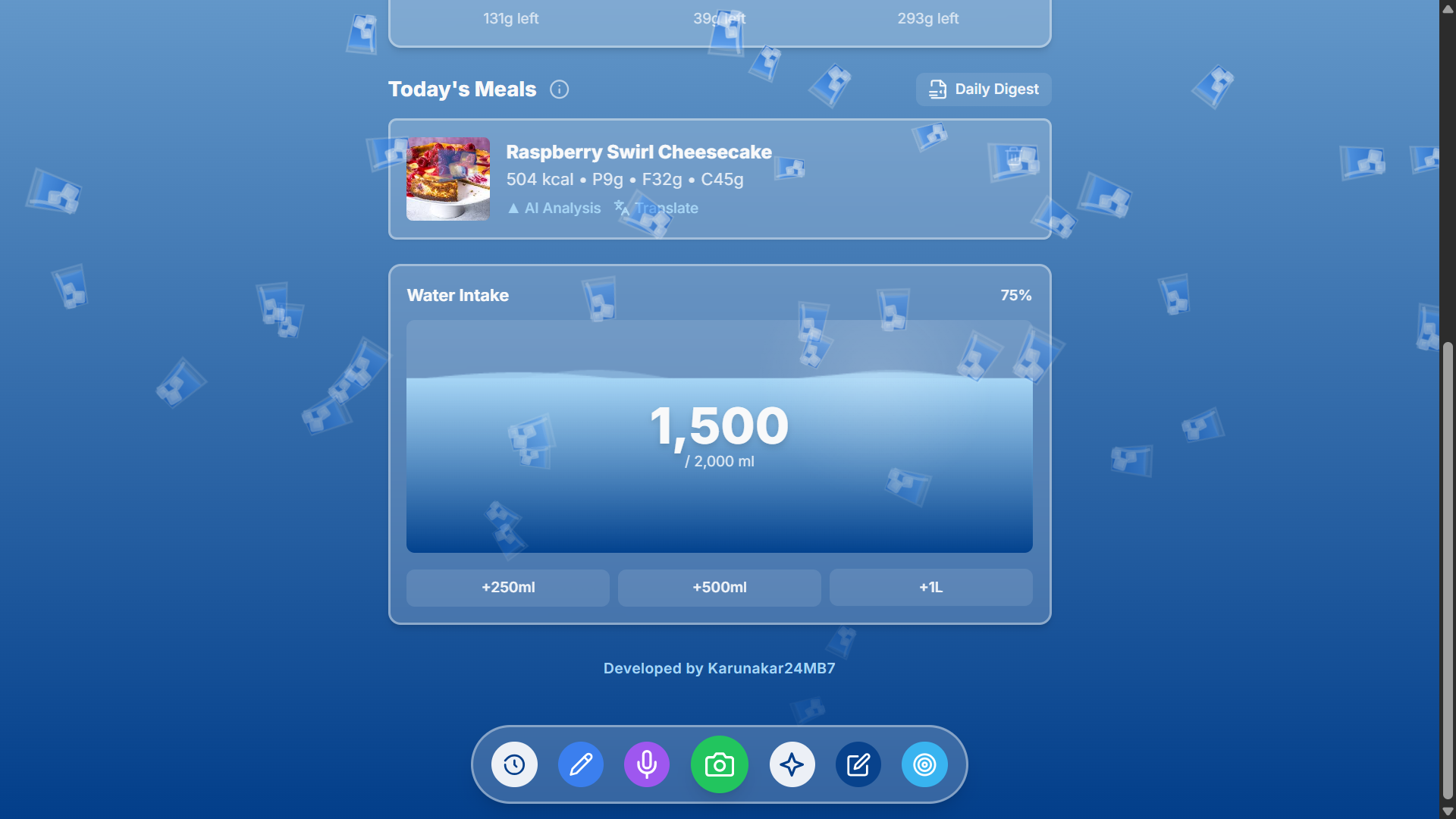
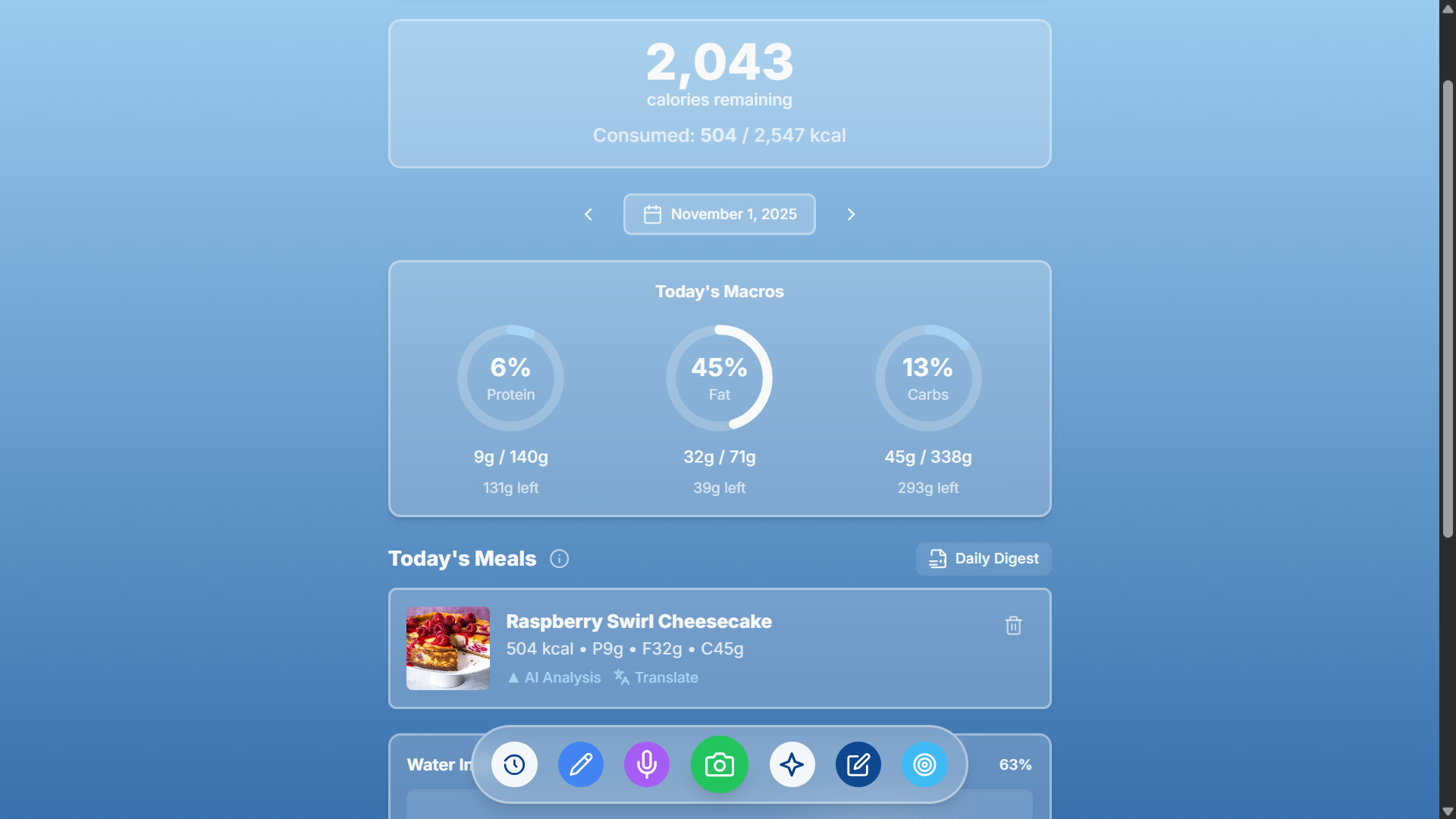
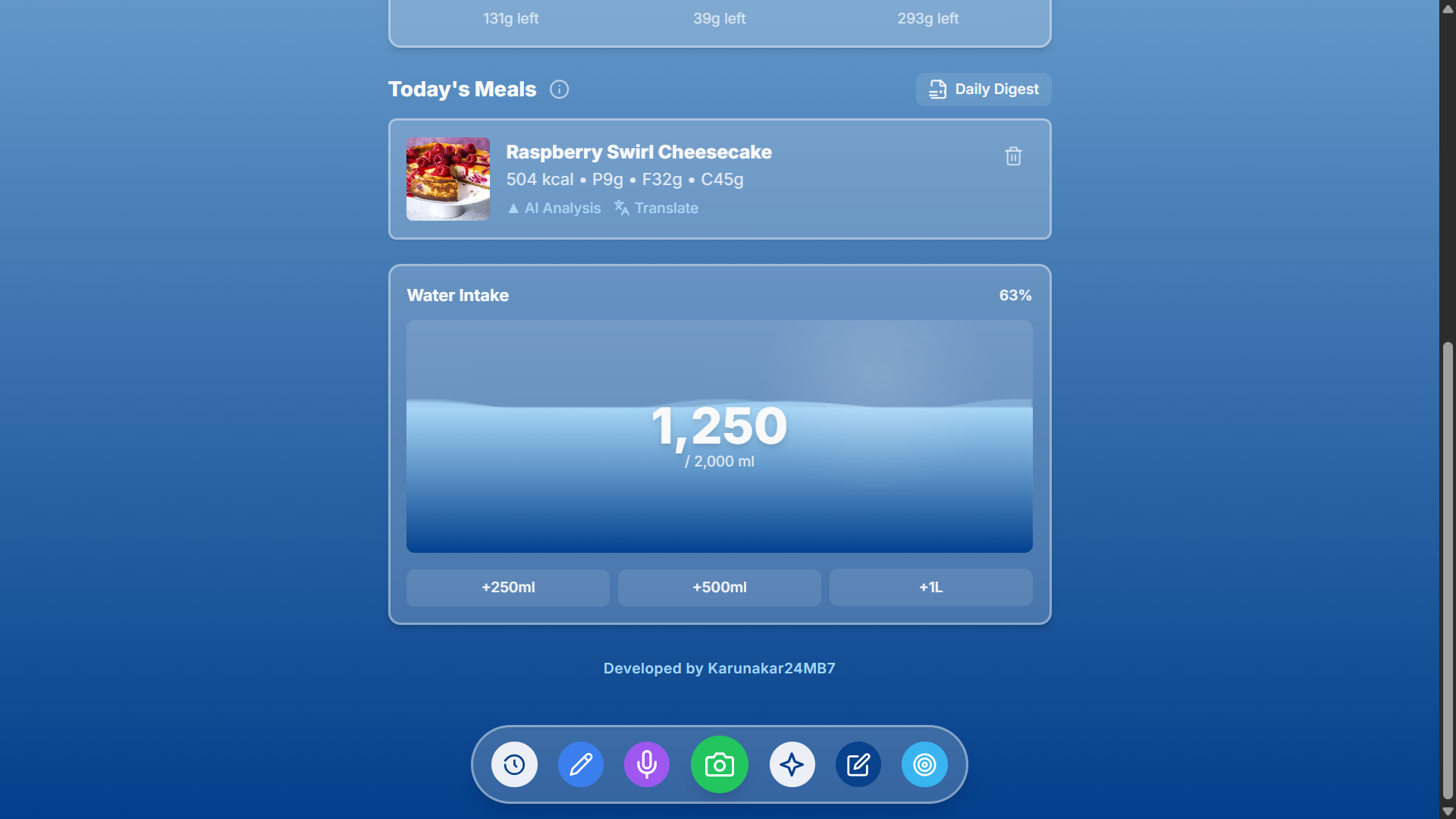
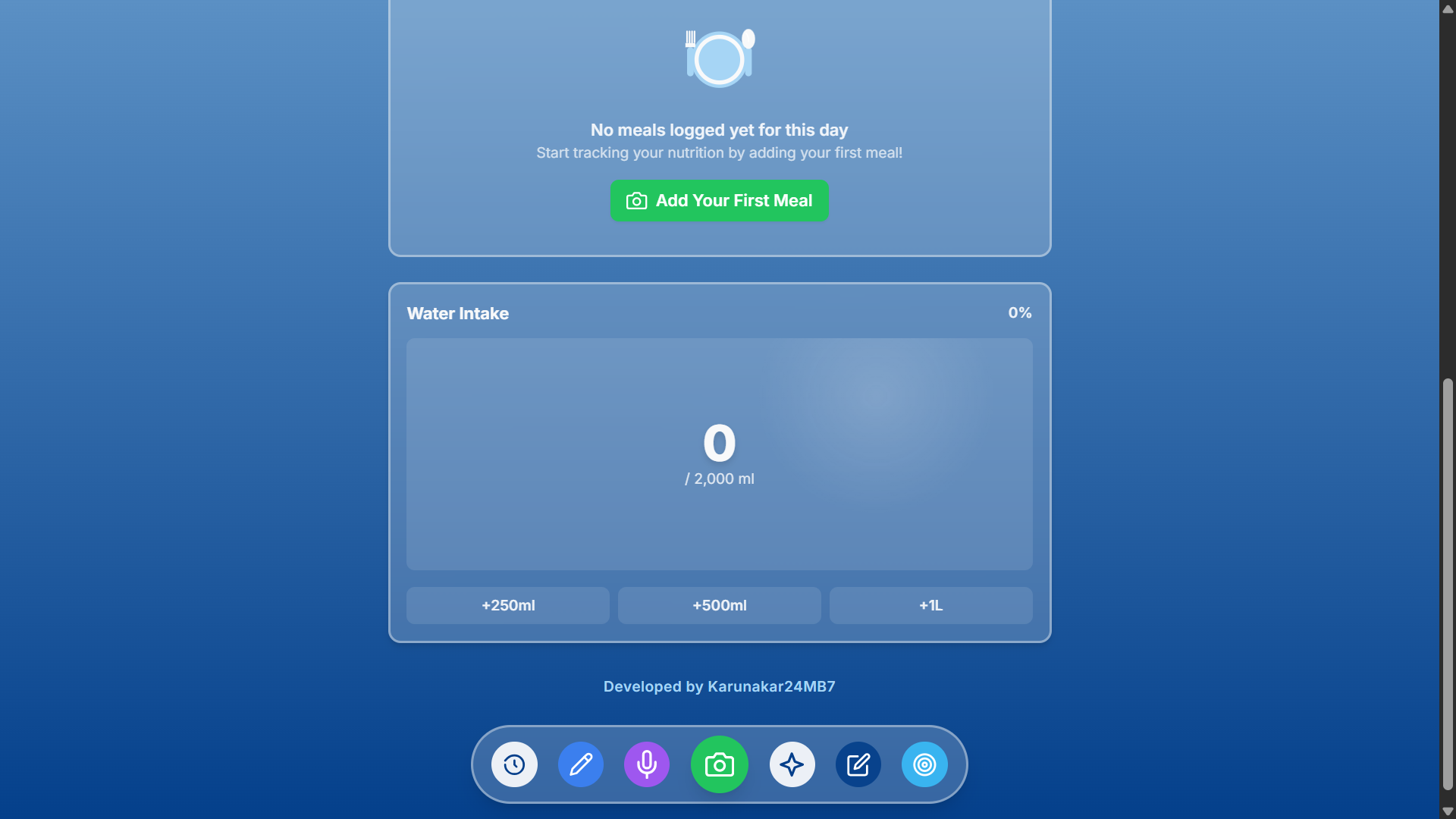
Personalized Goal Tracking: The application provides a visually rich, futuristic dashboard that tracks progress against personalized daily goals. Users can see their remaining calories, macro-nutrient balance through interactive donut charts, and monitor hydration with a beautifully animated water tracker.
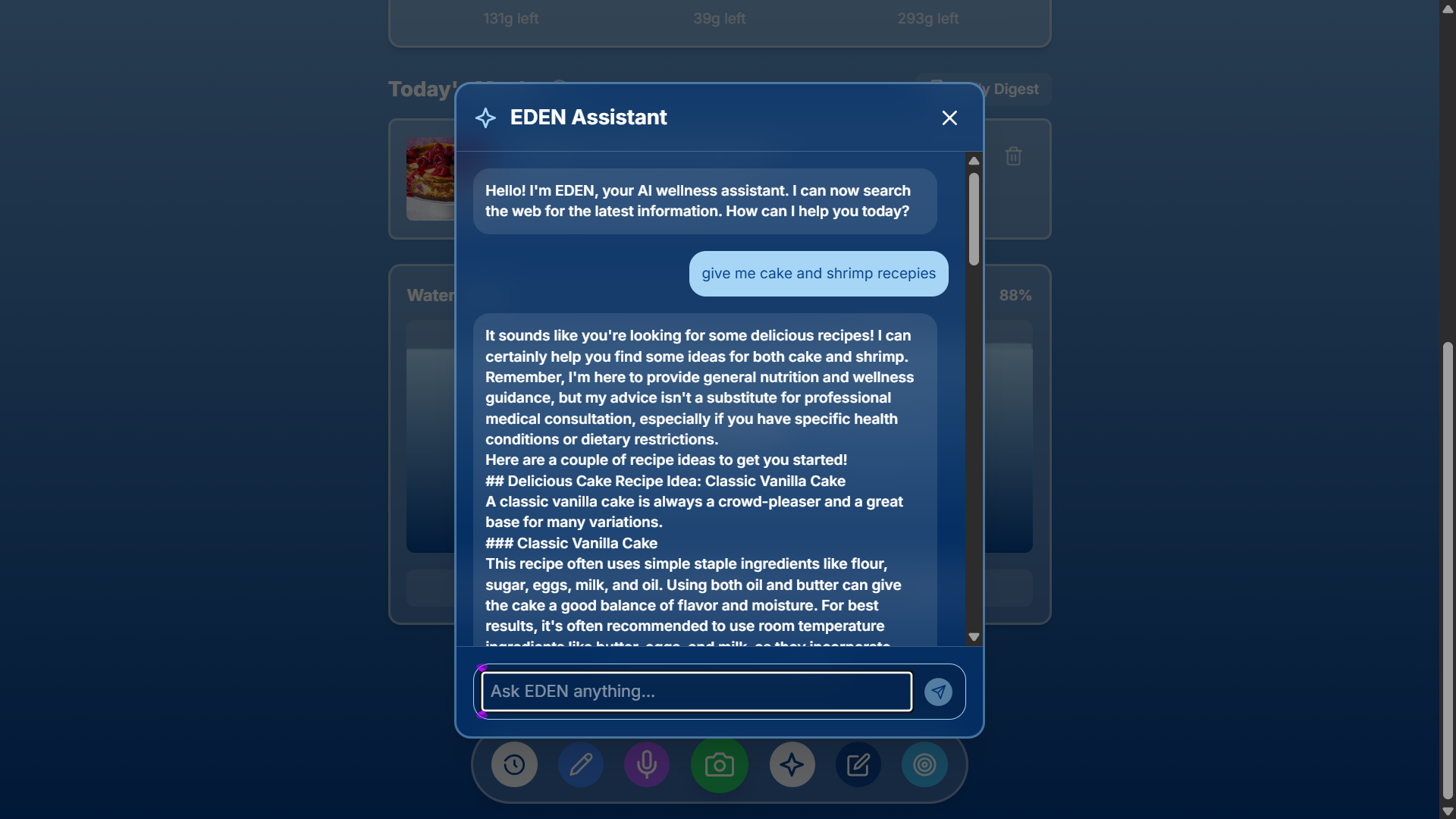
AI-Powered Wellness Assistants:EDEN Assistant: A chat-based AI, grounded with Google Search, acts as an expert wellness consultant. It can answer complex nutritional questions with up-to-date information, provide meal suggestions, and cites its sources for user trust and verification.
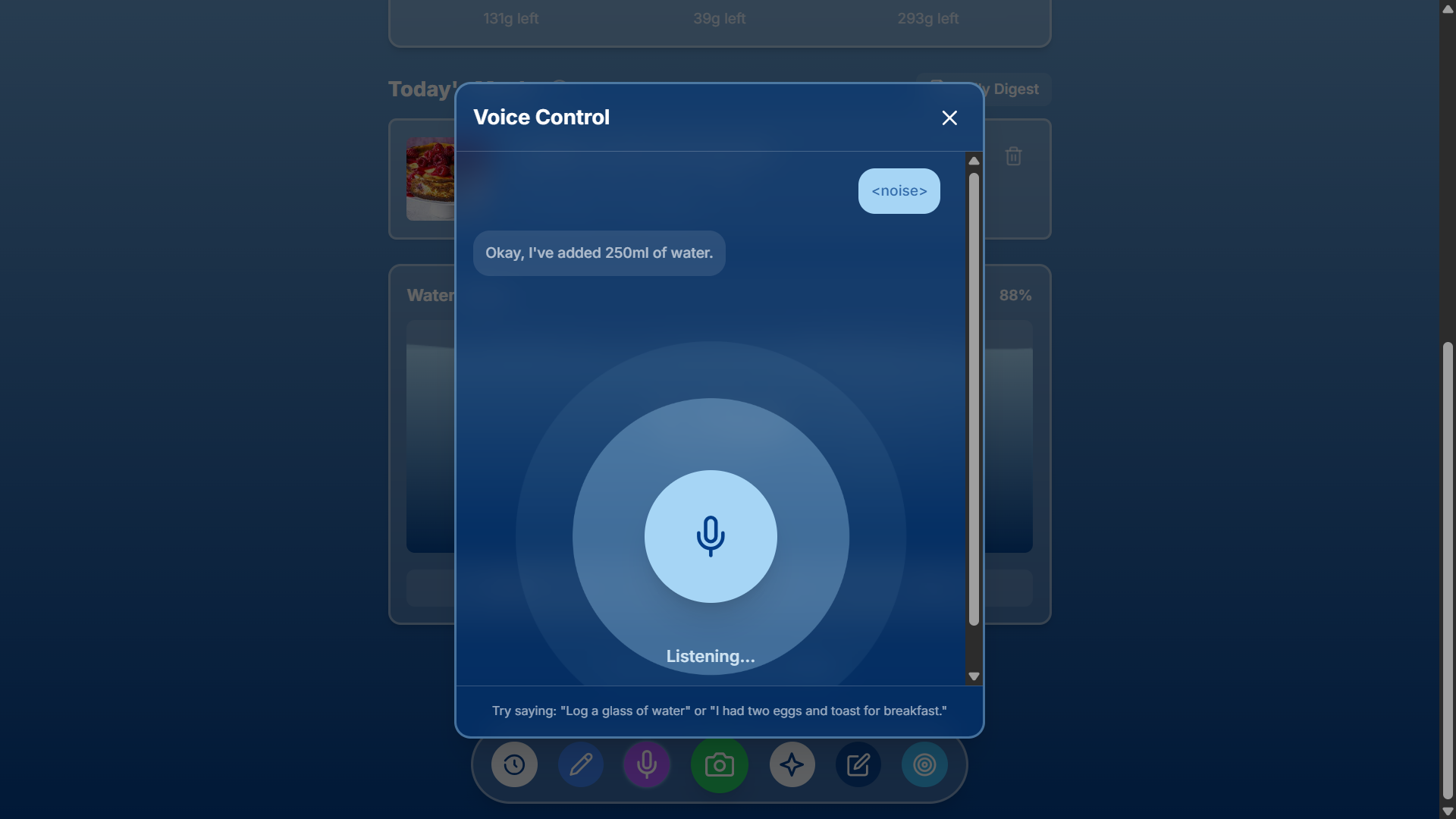
EDEN Voice Assistant: A real-time, conversational AI that allows for completely hands-free interaction. Users can log water intake or entire meals with simple voice commands, with the AI providing instant verbal confirmation. In essence, EDEN Paradigm transforms the chore of tracking into a rewarding and insightful experience, making it a true partner in building healthier habits.
How we built it
EDEN Paradigm is engineered with a forward-looking technology stack, prioritizing performance, user experience, and sophisticated AI orchestration. Core Architecture: We built the application on React with TypeScript, ensuring a robust, scalable, and maintainable codebase. For the UI, we utilized Tailwind CSS for rapid, responsive design, creating a fluid experience across all devices. Hybrid AI Orchestration Engine: This is the technological heart of the app. We designed a sophisticated, two-tiered system:
On-Device First: The app first leverages browser-native AI APIs (window.ai) for tasks like image analysis and text proofreading. This approach is incredibly fast, works offline, and guarantees user privacy as data never leaves the device. Seamless Cloud Fallback: In environments where on-device AI is unavailable, the system gracefully and automatically falls back to the Google Gemini API (gemini-2.5-flash). This ensures universal functionality without compromising the user experience. We implemented a resilient API client with an exponential backoff-with-jitter retry strategy to handle transient network issues.
Advanced AI Capabilities: Real-time Conversational AI: The voice assistant is powered by the Gemini Live API. We engineered a low-level client-side implementation that processes raw PCM audio streams directly from the microphone, enabling a natural, low-latency conversation. AI Agency via Function Calling: The voice assistant transcends simple transcription. It uses Function Calling to interact directly with the application's state, allowing it to execute commands like addWater or addMealFromDescription, making it a true digital agent.
Grounded & Structured Generation: Both our text and image analysis pipelines use JSON schema enforcement to guarantee reliable, structured data from the AI. The EDEN Assistant is further enhanced with Google Search grounding, allowing it to provide factual, verifiable answers with citations.
Immersive User Experience: The futuristic aesthetic is a core part of the product. We achieved UI elements and a dynamic, generative HTML5 Canvas background that shifts between a synaptic particle field and an animated water effect, creating an ambient, engaging, and premium feel.
This is the app's first line of intelligence. It uses smaller, efficient machine learning models that run directly inside the user's web browser. This means the user's data doesn't need to be sent to a server for many common tasks, resulting in near-instant responses and absolute privacy.
Primary Meal Analysis: When you first scan or describe a meal, the app uses the on-device ML model to perform computer vision (on images) and natural language understanding (on text) to identify the food and estimate its nutritional value. Proofreading: The app uses an on-device model to automatically correct typos in your meal descriptions and manual entries, ensuring higher-quality input for analysis.
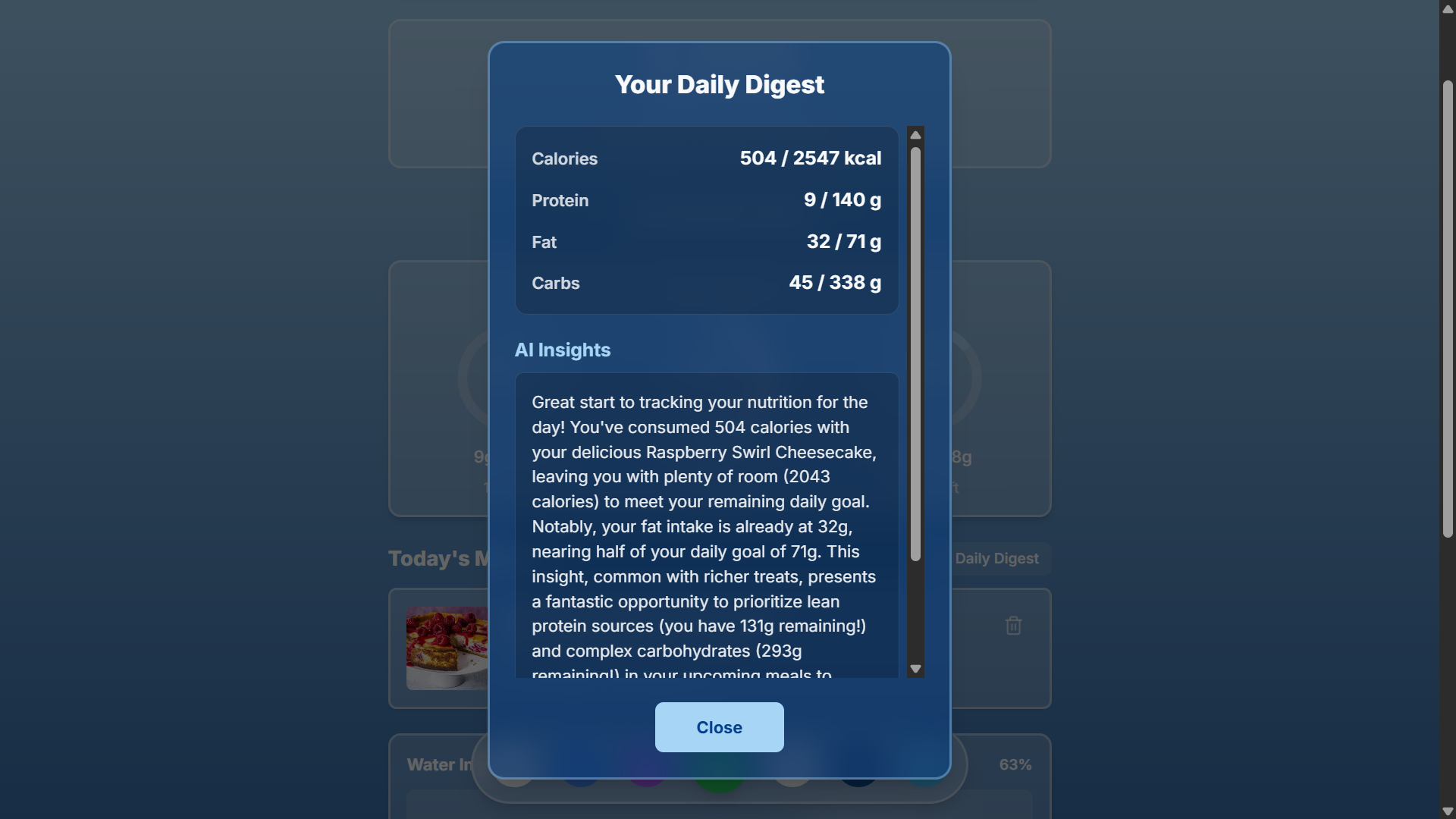
Summarization: The "Daily Digest" feature is powered by an on-device summarization model that reads your meal log and generates an insightful summary.
Translation: The "Translate" button on meal items uses an on-device model to quickly translate food names into English.
Prompt API (with multimodal support): This is the core of your meal analysis feature. Role: When you take a photo of a meal, the app sends both the image and a text prompt to the Prompt API (window.ai.prompt). It analyzes the image on-device to identify the food and returns a structured JSON object with its nutritional information. It's also used when you just describe a meal with text. This provides the instant, private analysis that makes the app special.
Proofreader API: This API is used to enhance the quality of user input. Role: When you type a meal description in the "Describe Your Meal" modal or manually enter a meal name, the app uses the Proofreader API (window.ai.proofread) to automatically correct any spelling or grammar mistakes before sending it for analysis or saving it. This improves the accuracy of the AI's understanding.
Summarizer API: This API provides users with quick, insightful overviews. Role: On the dashboard, when you click the "Daily Digest" button, the app gathers all the meals you've logged for the day and sends them to the Summarizer API (window.ai.summarize). It then generates the brief, encouraging summary of your nutritional intake compared to your goals.
Translator API: This adds a helpful touch of multilingual convenience. Role: In the meal list on your dashboard, each meal has a "Translate" button. Clicking this uses the Translator API (window.ai.translate) to translate the meal's name into English, which is useful if you've logged a food in another language. For example: If you write j'ai mangé des myrtilles which is in french, then the Translater API translates into - i ate blueberries.
Cloud-Based Machine Learning via Google Gemini API (The "Powerhouse AI") For more complex tasks, or when on-device AI isn't available, the app seamlessly falls back to Google's large-scale Gemini models. This is where the most advanced ML capabilities are unlocked. Advanced Computer Vision & NLU: As a fallback for meal analysis, the app sends images or text to the gemini-2.5-flash model. This powerful model has a vast knowledge base, allowing it to recognize a massive variety of branded food products and complex, homemade meals with high accuracy. Real-time Conversational AI (Speech-to-Text & Text-to-Speech): The EDEN Voice Assistant is a prime example of advanced ML.
It uses the Gemini Live API to:Perform real-time Speech-to-Text (STT): It continuously transcribes your spoken words into text that the AI can understand.
Perform real-time Text-to-Speech (TTS): After deciding on a response, it generates natural-sounding human speech and streams it back to you. AI Agency through Function Calling: This is one of the most sophisticated uses of ML in the app. The Voice Assistant doesn't just chat; it can perform actions. When you say, "Log a glass of water," the ML model understands your intent. Instead of just replying with text, it structures its response as a command ({ name: 'addWater', arguments: { amount: 250 } }) that the application can execute. This gives the AI true agency within the app.
Grounded Generation (Information Retrieval): The EDEN Assistant chat feature uses a technique called Retrieval-Augmented Generation (RAG). When you ask it a question, the gemini-2.5-flash model is "grounded" with Google Search. This means the ML model can perform live web searches to find the most current and factual information, then use that data to formulate its answer, complete with citations. This prevents it from giving outdated or incorrect information. In summary, EDEN Paradigm is a showcase of modern machine learning techniques. It intelligently combines the immediate, private processing of on-device models with the immense knowledge and multi-modal power of cloud-based large language models to create a seamless, intelligent, and highly capable wellness partner.
it is fundamentally built upon a sophisticated, multi-layered machine learning architecture. It's a true "AI-native" application where ML is the core engine, not just an add-on feature.
The app's most impressive accomplishment is its Hybrid AI Engine, which intelligently orchestrates two different types of machine learning to provide the best possible experience:
On-Device Machine Learning (Edge AI) for speed and privacy. Cloud-Based Machine Learning (Large Language Models) for power and advanced capabilities.
Challenges we ran into
Orchestrating the Hybrid AI: Designing a seamless system that could intelligently switch between on-device and cloud AI models—each requiring unique prompt engineering, schema formats, and error handling—was a significant architectural challenge. The goal was to make this complex backend logic completely invisible to the user.
Real-time Audio Stream Management: Implementing the Gemini Live API required us to move beyond standard web APIs. We had to manage raw, low-level PCM audio streams, build custom encoders and decoders in JavaScript, and architect a precise audio playback queue using AudioContext to ensure the AI's spoken responses were delivered without any gaps or stuttering.
Ensuring AI Data Consistency: Generative AI can be non-deterministic. To ensure absolute accuracy in our logs, we established a "Master Rule" to programmatically recalculate a meal's total calories based on the macro-nutrient grams provided by the AI. This enforces mathematical consistency and builds user trust in the data.
Accomplishments that we're proud of
Pioneering a True Hybrid AI Architecture: We are incredibly proud of our on-device-first, cloud-fallback engine. It represents a forward-thinking model for building AI applications that are simultaneously powerful, private, fast, and accessible.
Building an AI with True Agency: Our voice assistant is more than a novelty. By integrating Function Calling, we gave it the ability to directly perform actions within the app, demonstrating a paradigm shift from passive information retrieval to active, hands-free task execution. Crafting a Futuristic and Functional UX: We successfully merged a highly advanced technology stack with a beautiful, immersive user interface. The combination of Structured dynamic canvas animations, and a polished, intuitive workflow makes EDEN Paradigm not just useful, but a delight to interact with daily.
What we learned
The Future of AI is Hybrid: We learned firsthand that the most powerful user experiences don't come from a single AI model, but from intelligently orchestrating a spectrum of them—leveraging on-device models for speed and privacy, and cloud models for scale and power.
Advanced Engineering is Application Architecture: Crafting precise system instructions, function declarations, and JSON schemas isn't just a configuration step; it's a core part of the application's logic. The quality of our AI's output was directly proportional to the rigor of our prompt and tool design. Mastering Low-Level Browser APIs Unlocks Next-Gen Features: To create truly cutting-edge experiences like real-time voice, you must be willing to go deeper than high-level libraries. Mastering APIs like AudioContext and Canvas was essential to realizing our vision.
What's next for EDEN Paradigm
The future of EDEN Paradigm lies in deepening its intelligence and expanding its context, moving from reactive logging to proactive, automated wellness management. We will build upon the existing hybrid-AI foundation to deliver features that are not just helpful, but predictive and deeply integrated into the user's life.
Nutrition is just one piece of the wellness puzzle. EDEN's ultimate value will be unlocked by becoming the central hub that correlates nutritional data with other biometric markers. Wearable & Health Platform Sync: Seamless, bi-directional integration with Apple Health, Google Fit
3D Portion Estimation Use LiDAR/depth-sensing cameras (on modern phones) for more accurate volumetric analysis to eliminate guesswork on portion sizes.
Deep Wearable Integration Integrate with Apple Health/Google Fit/CGM (Continuous Glucose Monitor) data. The AI adjusts a user's next meal plan based on their real-time sleep quality, exercise intensity, or blood glucose response to a previous meal.
fully personalized weekly meal plans that factor in: a) User preferences, b) Macronutrient goals, c) Local grocery sales/inventory (via API), and d) The user's time available for cooking.
Computer Vision for Complex Meals: Highly accurate photo recognition that not only identifies food but also estimates portion size and differentiates between ingredients in a complex dish (e.g., a homemade casserole).


Log in or sign up for Devpost to join the conversation.