-
-
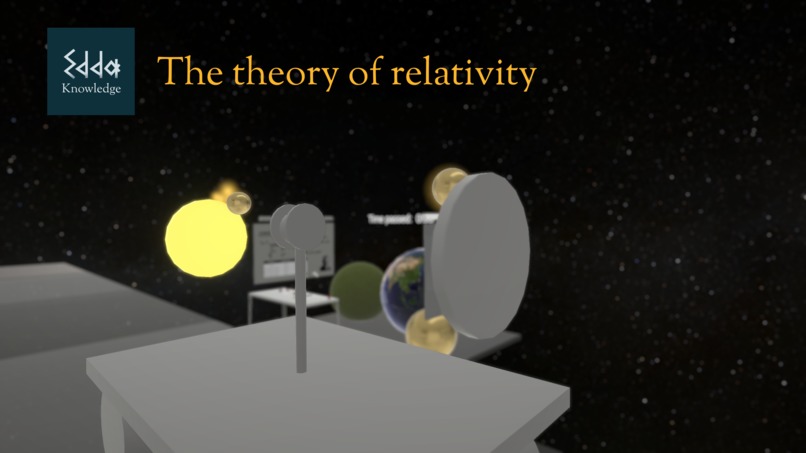
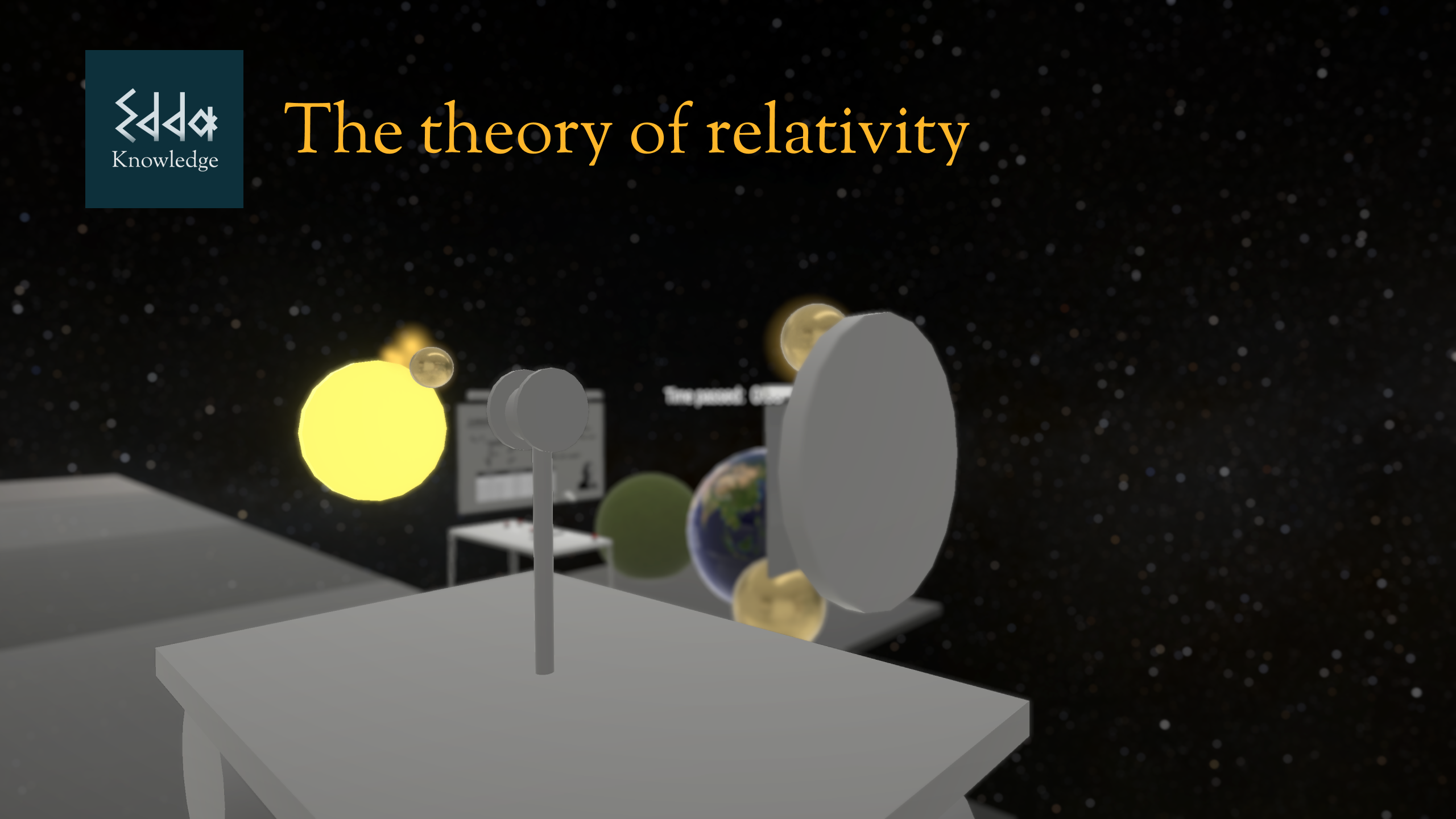
The theory of relativity
-
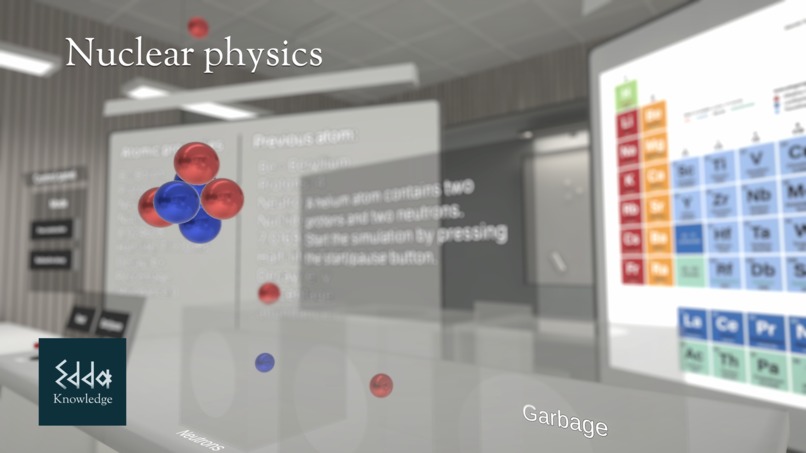
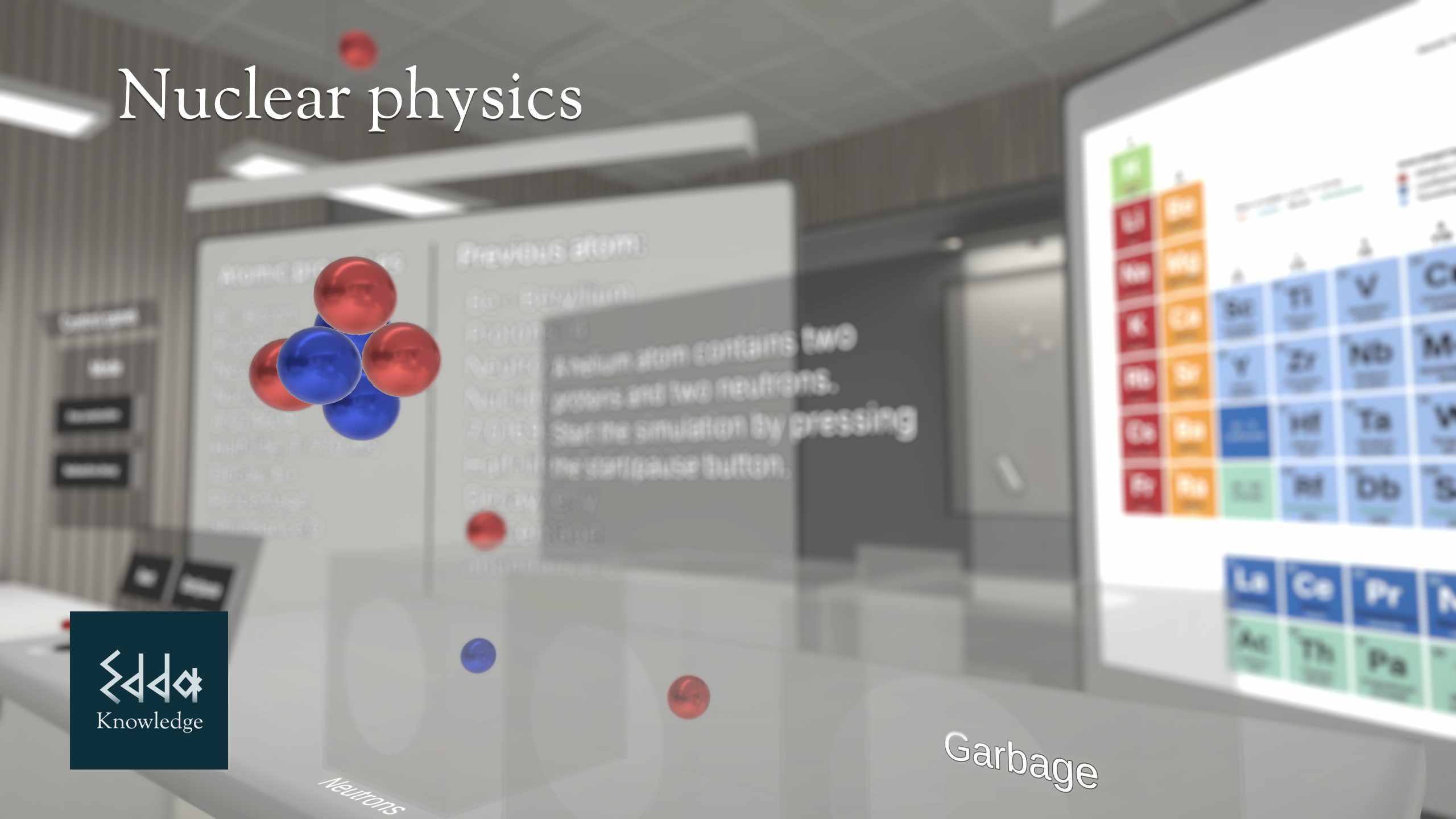
Nuclear physics
-
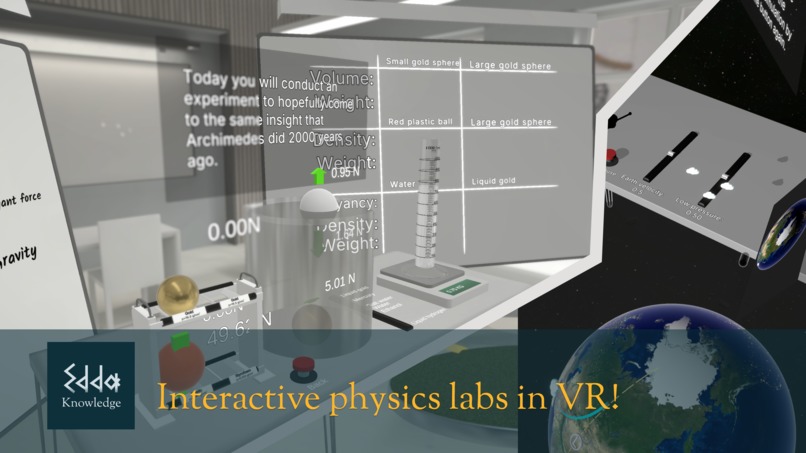
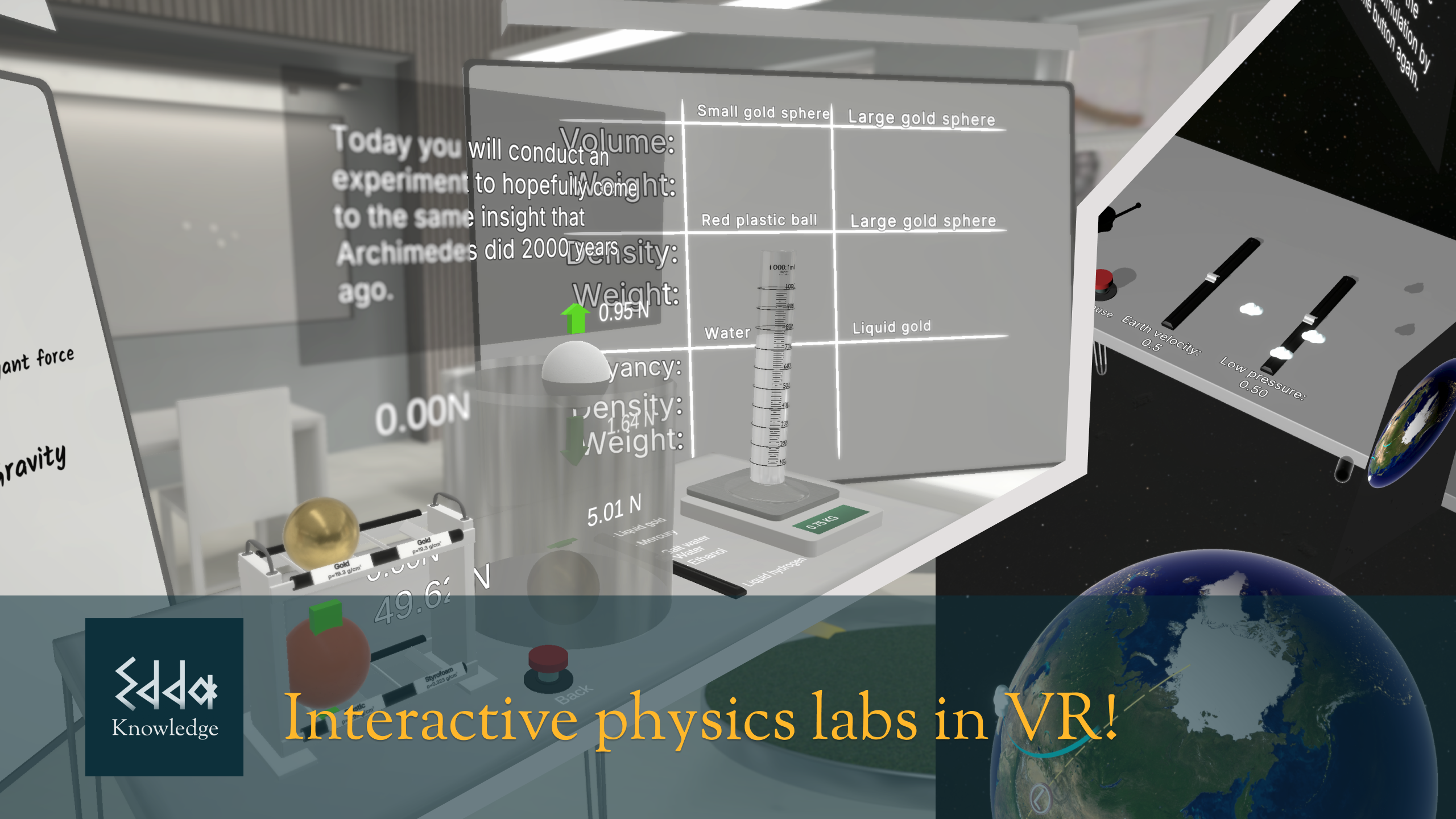
Archimedes, Coriolis
-
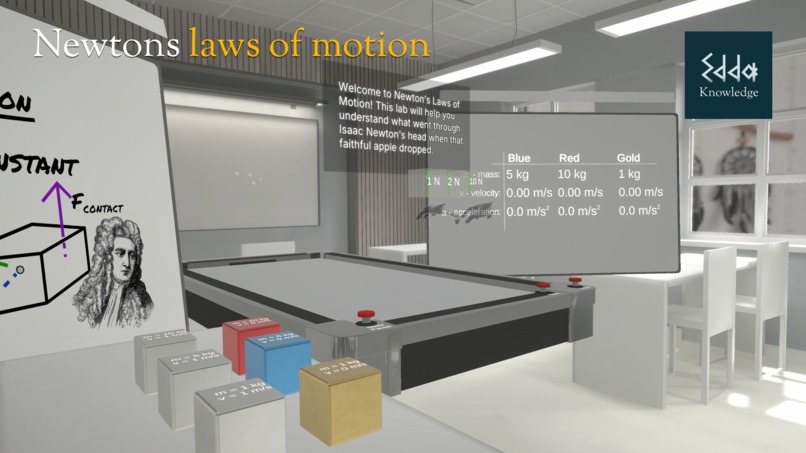
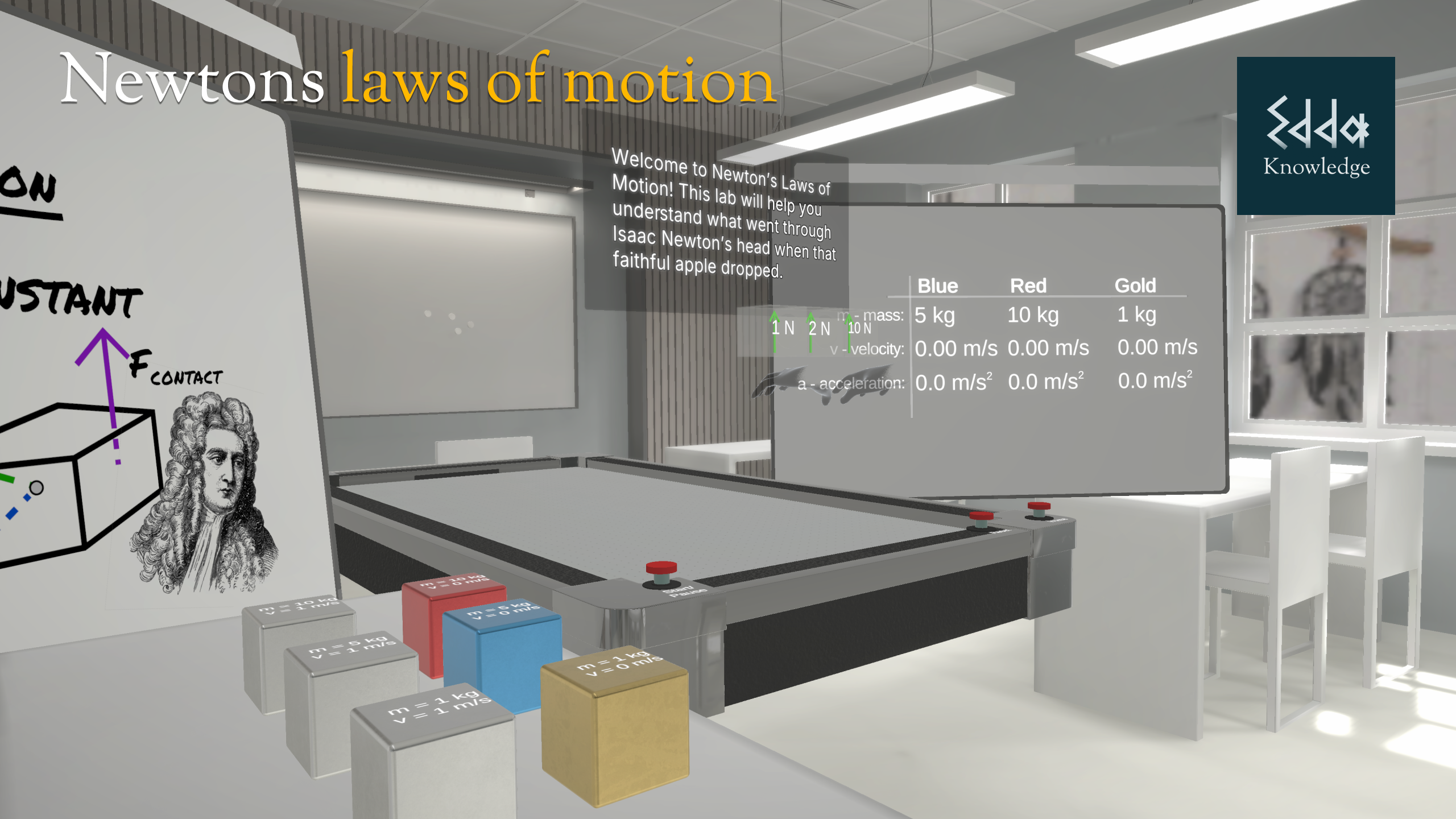
Newtons lab
-
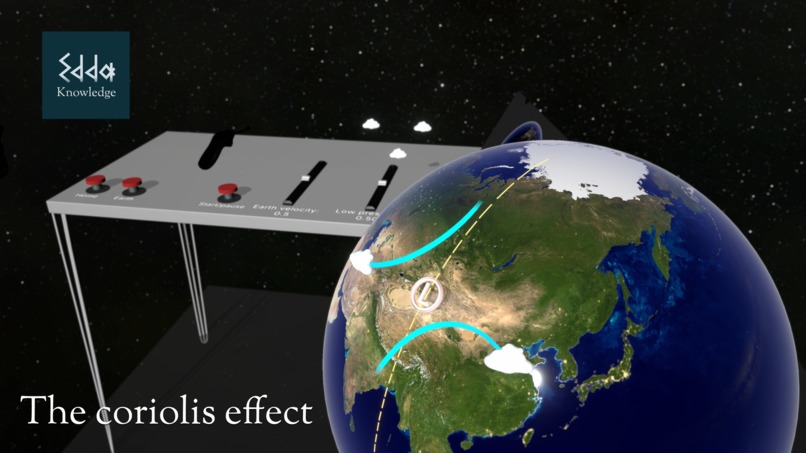
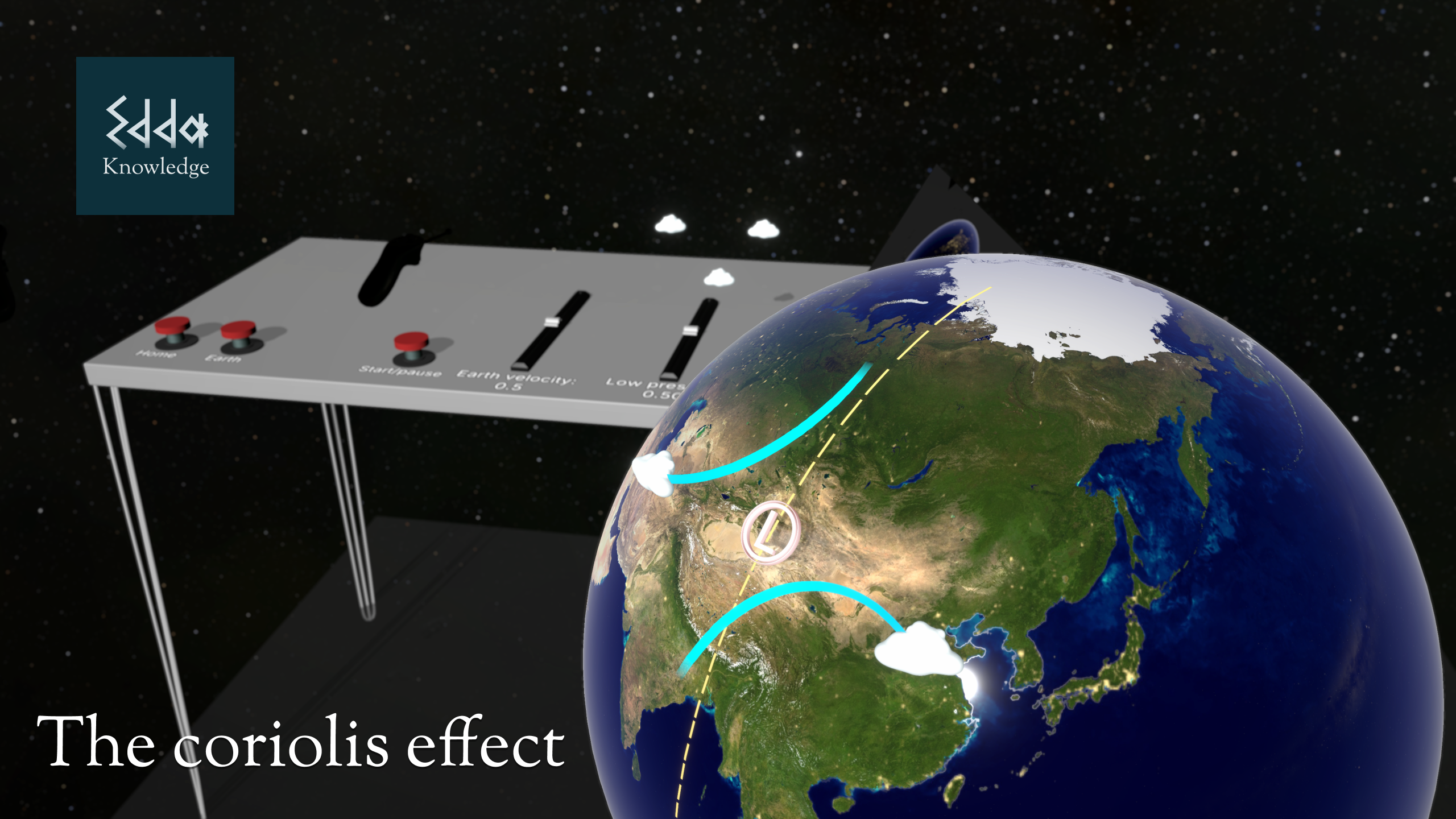
The coriolis effect
Edda Physics 1 - Mixed Reality
Inspiration
Partnering with a real school, we witnessed students struggling to connect abstract physics to reality. Teachers wanted experiments too dangerous, expensive, or impossible in traditional classrooms. Nuclear reactions, spacetime manipulation, invisible force visualization. Mixed reality solved this: overlay physics simulations directly onto classrooms, transforming any room into an advanced laboratory where scientific principles become tangible and visible in students' actual environment.
What it does
Edda Physics 1 brings six comprehensive physics labs into mixed reality on Meta Quest. Archimedes' Principle lets you place virtual objects in real containers and manipulate buoyancy. Newton's Laws launches cubes across your room with visible force vectors. Nuclear Physics explores atomic reactions safely anchored at real-world scale. Theory of Relativity bends spacetime around in space. Coriolis Effect visualizes rotating reference frames over your space. Coulomb's Law places charged particles with electric fields interacting with room geometry. Full hand tracking lets students grab and manipulate experiments naturally while grounded in their physical classroom.
How we built it
Updated our existing VR physics engine with Meta's Passthrough Camera Access and Scene Understanding APIs. Implemented spatial anchoring for persistent experiment placement across sessions. Added comprehensive hand interaction support for natural object manipulation. Integrated room mesh recognition so virtual physics respects real furniture and walls. Optimized rendering maintaining 72+ FPS while running complex physics simulations in passthrough mode.
Challenges we ran into
Balancing visual clarity in passthrough while maintaining scientific accuracy was difficult. Physics visualizations needed visibility against varied real-world backgrounds. Spatial anchoring occasionally drifted during long sessions, requiring robust recalibration. Hand tracking precision wasn't sufficient for small physics objects, needing careful interaction design. Physics simulation performance dropped significantly with passthrough overhead, demanding extensive optimization. UI design in mixed reality without obscuring critical real-world elements required multiple iterations.
Accomplishments that we're proud of
Successfully transitioned six complete physics labs from VR to MR without compromising scientific accuracy. Teachers reported students instantly understood concepts that previously took weeks. Achieved stable performance running complex simulations in passthrough. Hand interactions feel natural for scientific manipulation. Most importantly, we made abstract physics literally touchable in students' own environment.
What we learned
Mixed reality fundamentally changes pedagogy. Spatial anchoring transforms temporary demonstrations into permanent classroom fixtures. Passthrough quality dramatically affects learning outcomes; visual clarity is non-negotiable for scientific visualization. Hand tracking needs thoughtful design for precision work. Students engage differently when physics shares space with their real desks. Teacher feedback during actual classroom use revealed edge cases only emerging in real educational environments. The physicality of MR creates deeper understanding than isolated VR experiences.
What's next for Edda Physics 1 - Mixed Reality
Expand to Chemistry, Biology, and Mathematics labs. Add multiplayer collaboration for shared experiments. Implement AI tutoring providing real-time contextual hints. Create assessment tools tracking student interactions and understanding. Build teacher dashboard monitoring multiple students across labs. Partner with more schools for validated educational outcomes and curriculum integration. Develop smartphone AR mode bringing simplified experiments to any device, democratizing access beyond VR headsets.


Log in or sign up for Devpost to join the conversation.