-
-
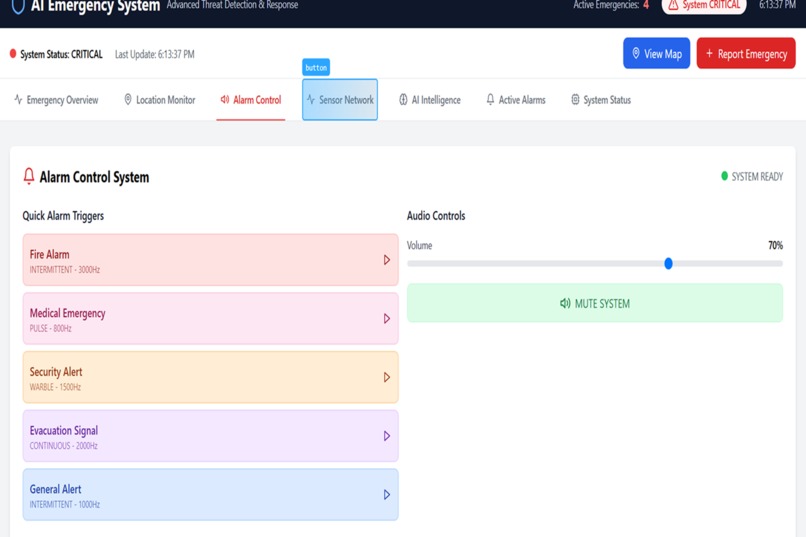
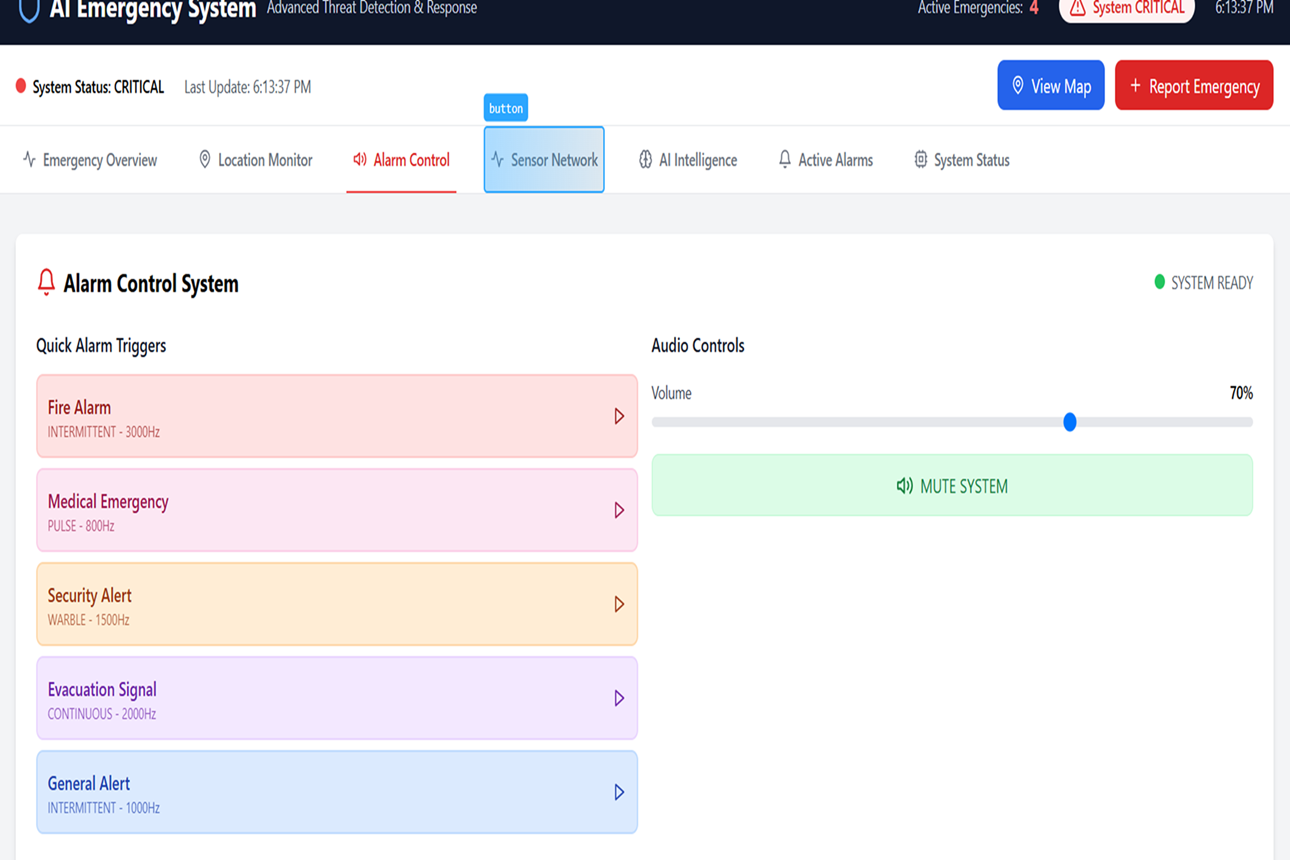
Alarm Control
-
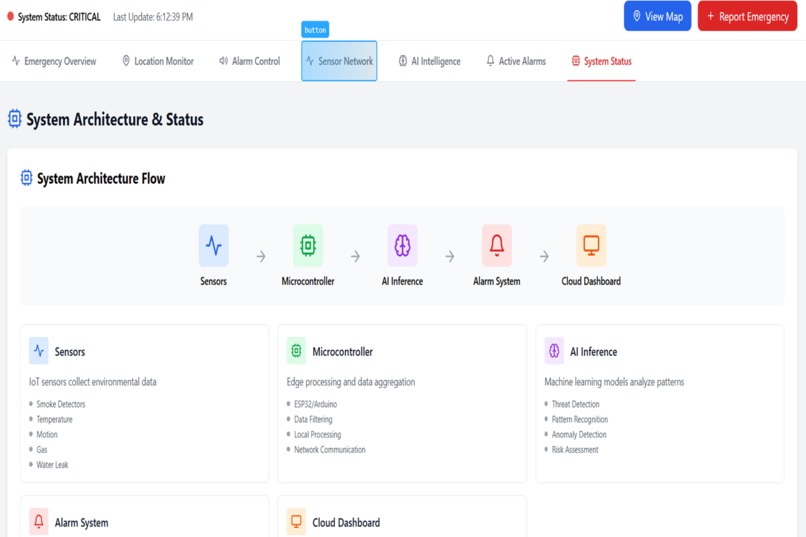
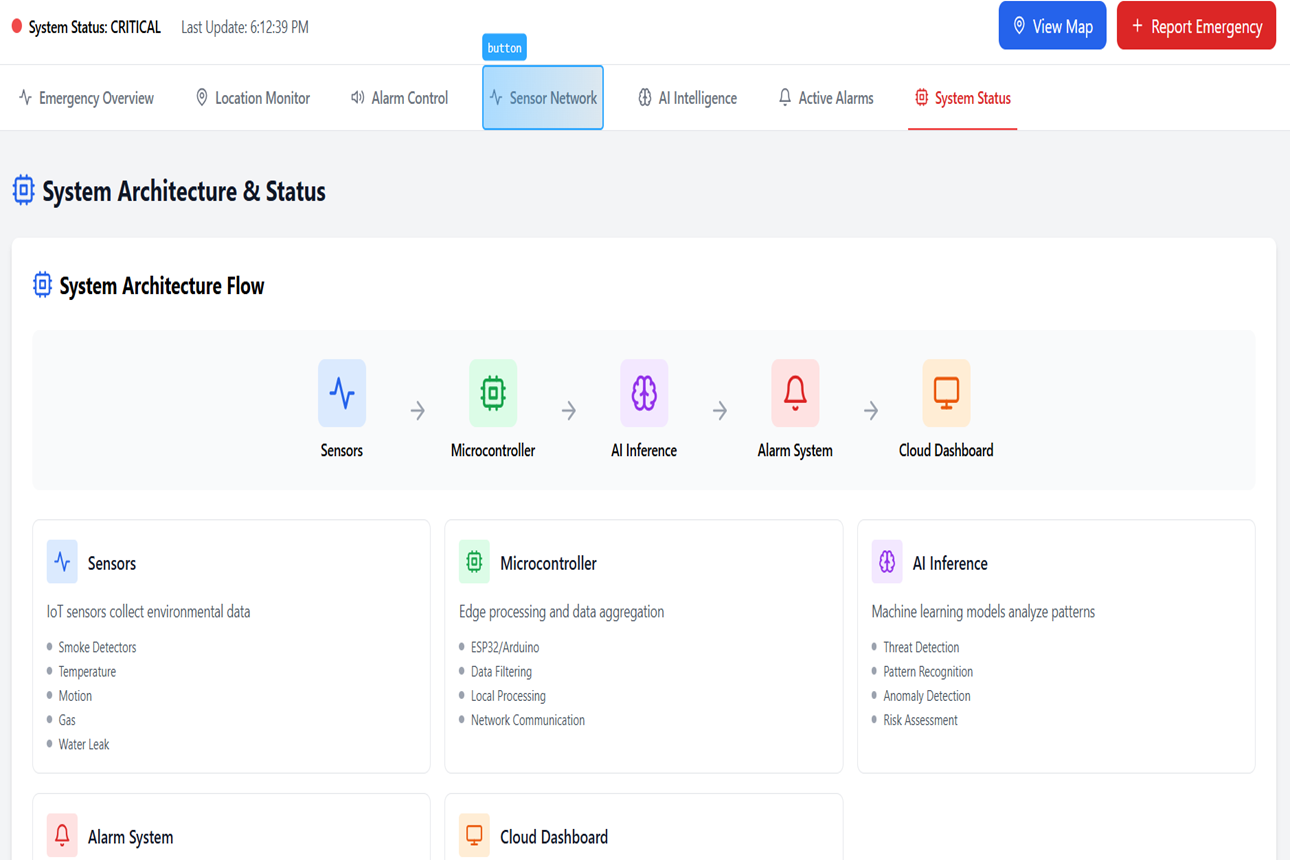
System Status
-
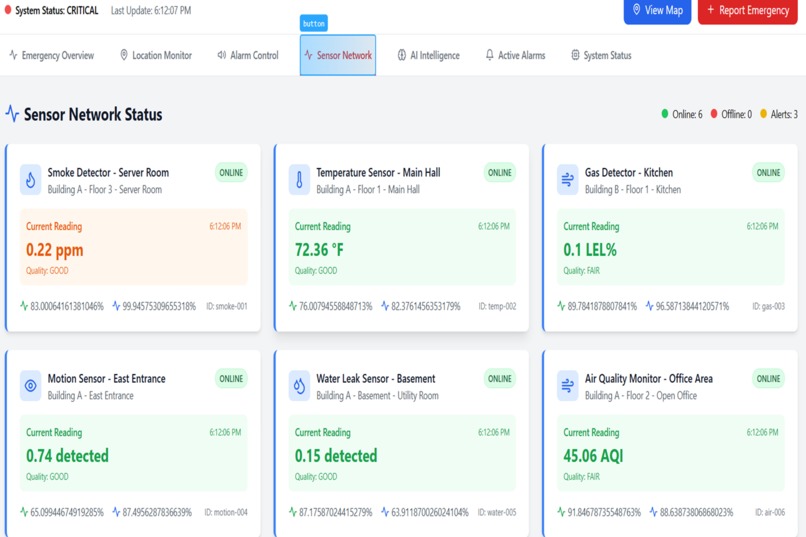
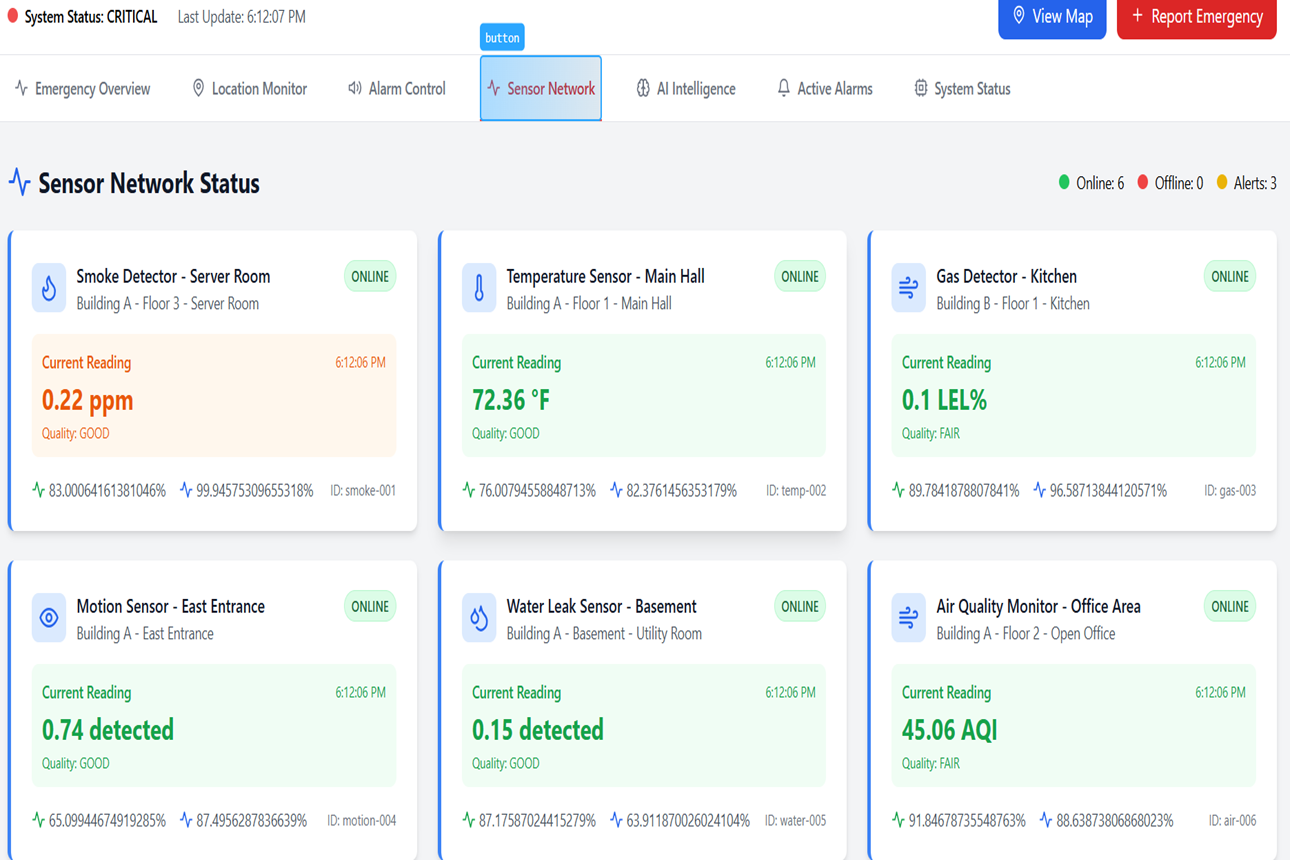
Sensor Network
-
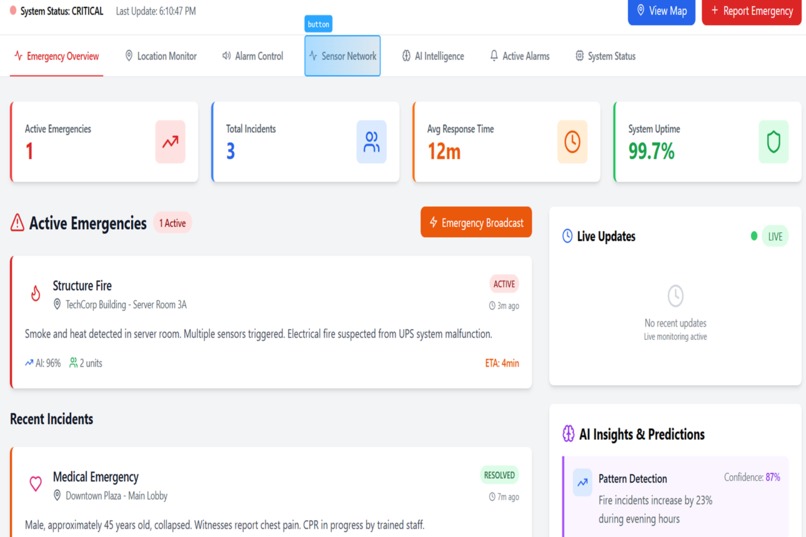
Emergency Overview
-
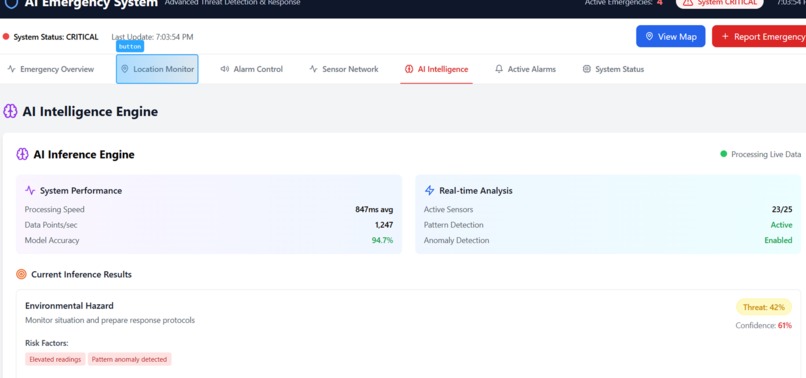
AI Intelligence
Inspiration
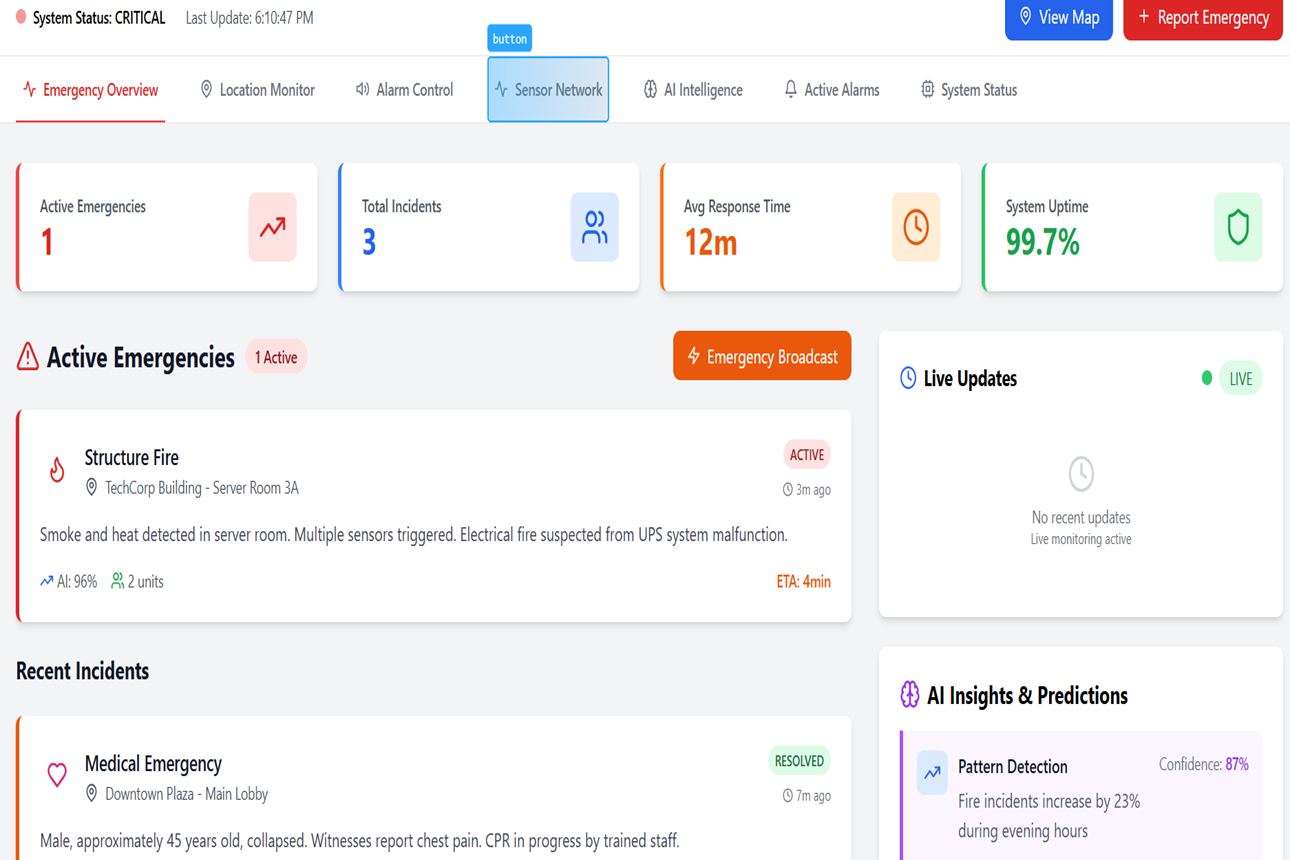
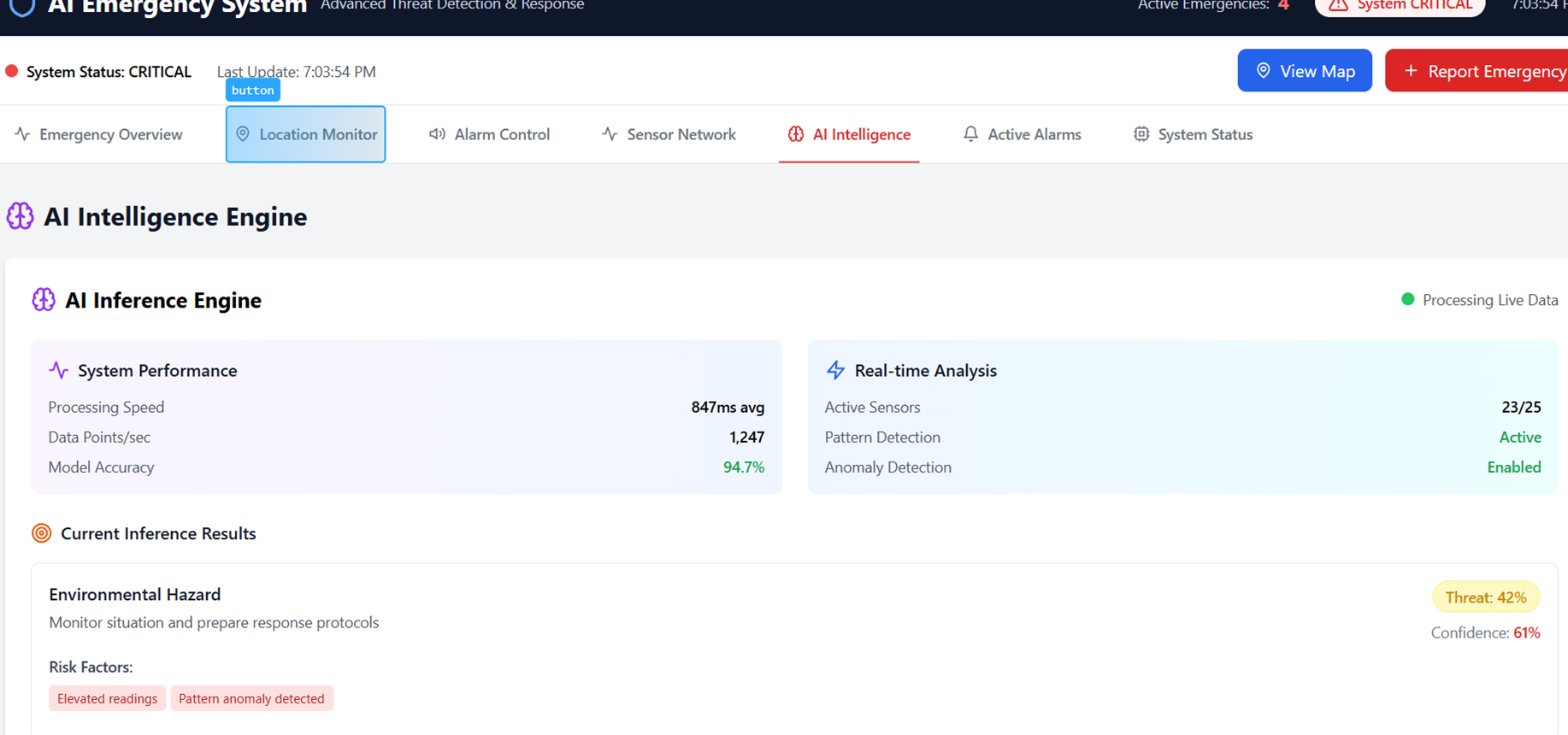
The inspiration for this project came from witnessing how delayed responses during emergencies—like fires, intrusions, or accidents—can lead to devastating consequences. We wanted to create a system that could detect such incidents in real-time and act instantly, without waiting for human intervention. By combining AI with smart sensors, we envisioned a solution that not only identifies emergencies early but also triggers immediate alerts, helping save lives and minimize damage.
What We Learned
Building this project taught us: How to integrate hardware sensors with AI-based decision systems. The basics of computer vision and sound pattern recognition. How real-time systems operate and communicate via IoT. The importance of minimizing false alarms in real-world emergency systems. Best practices for designing user alerts and safety protocols.
Challenges We Faced
Real-time processing delays: Making sure our system responded within seconds without heavy lag. False positives: Early versions of our system would trigger on non-threatening events (e.g., cooking smoke). Hardware compatibility: Integrating different sensors with a central microcontroller took significant troubleshooting. Alert fatigue: Balancing the system to send alerts only when truly necessary, avoiding alarm fatigue for users.


Log in or sign up for Devpost to join the conversation.