-
-
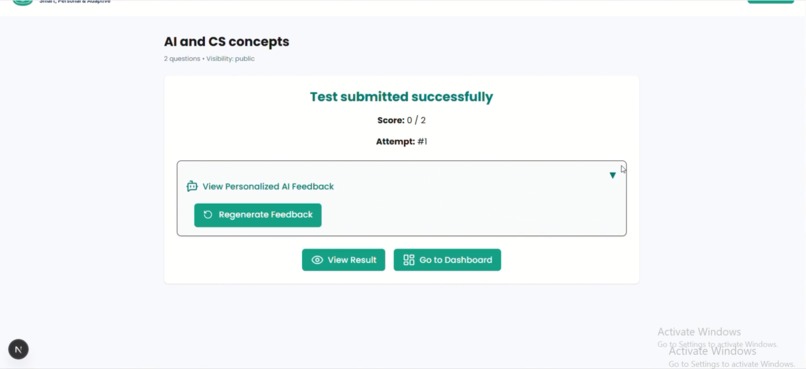
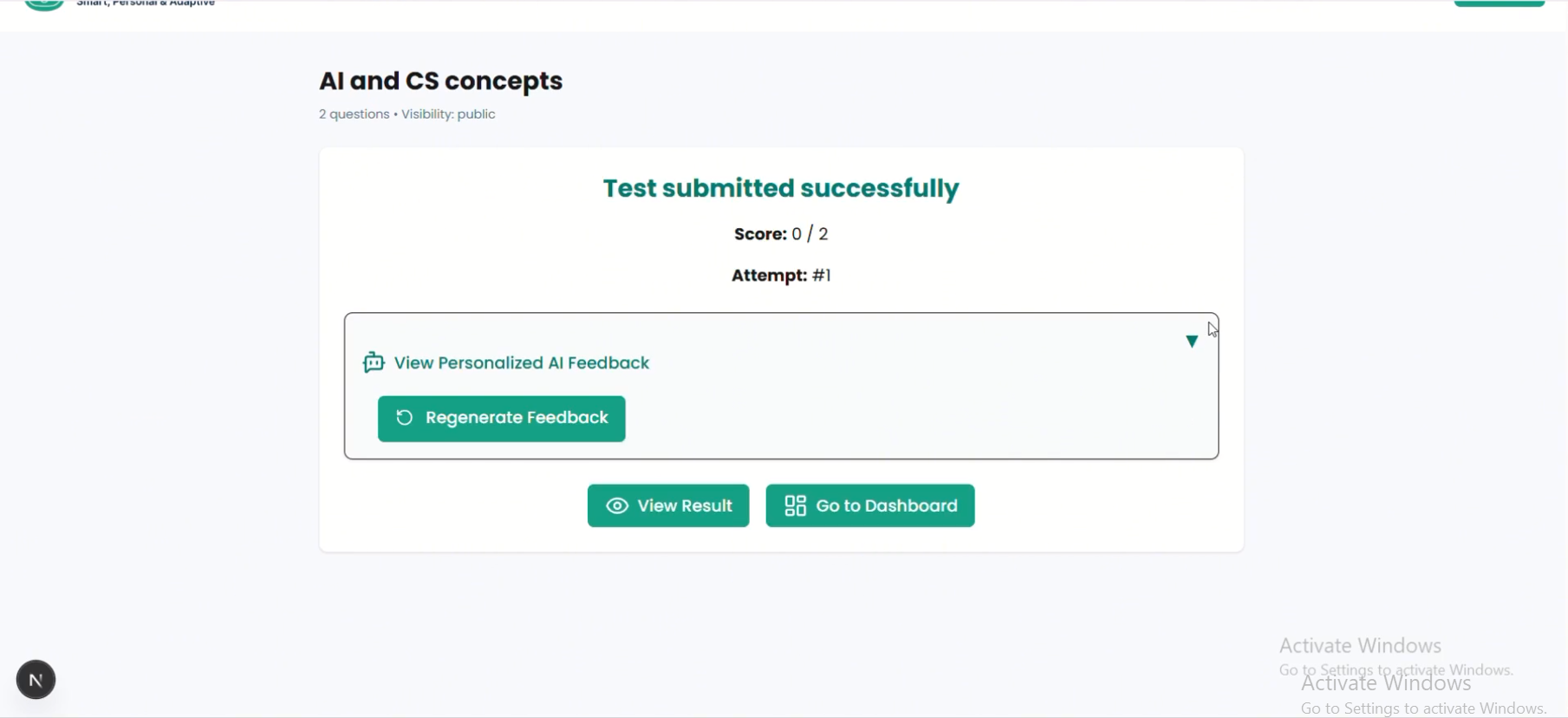
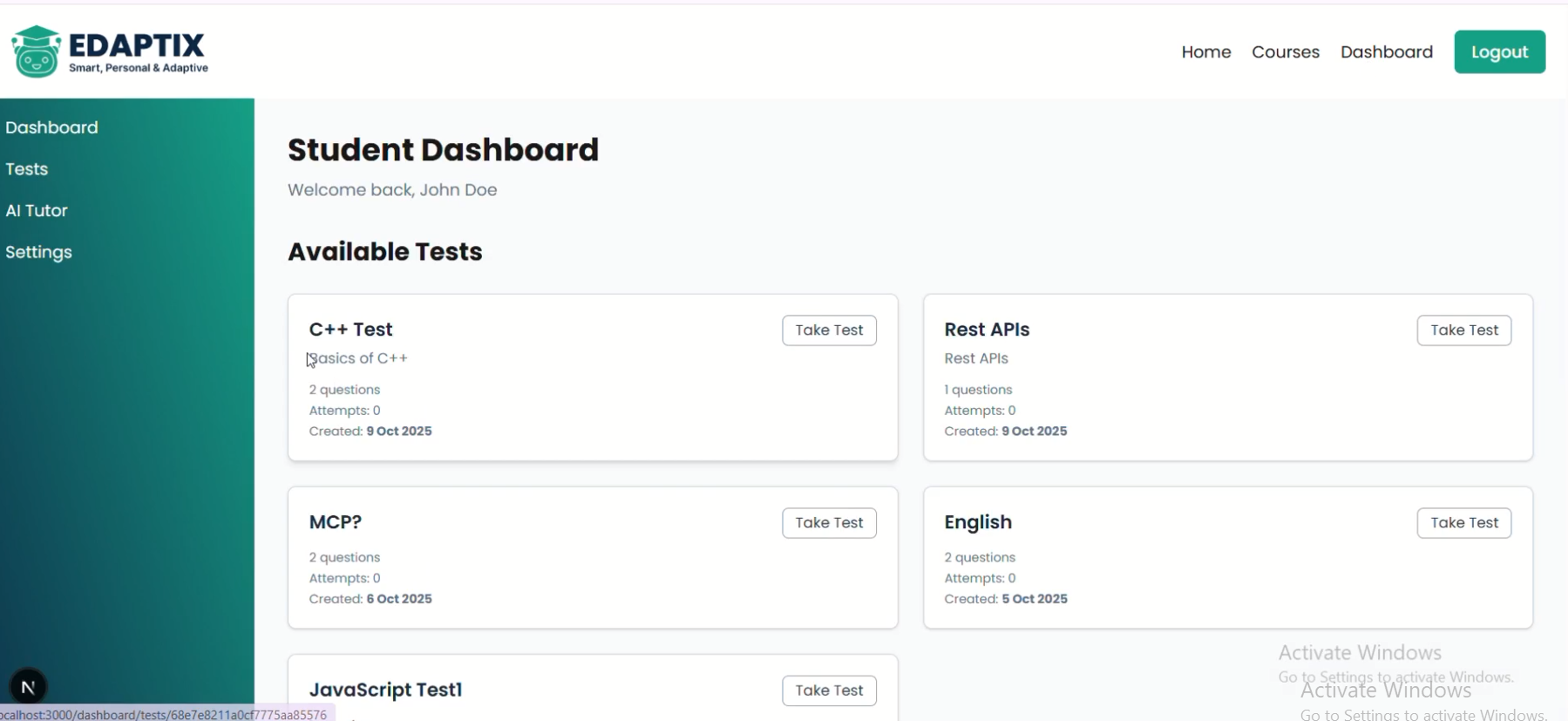
Student get instant feedback with no human in the loop.
-
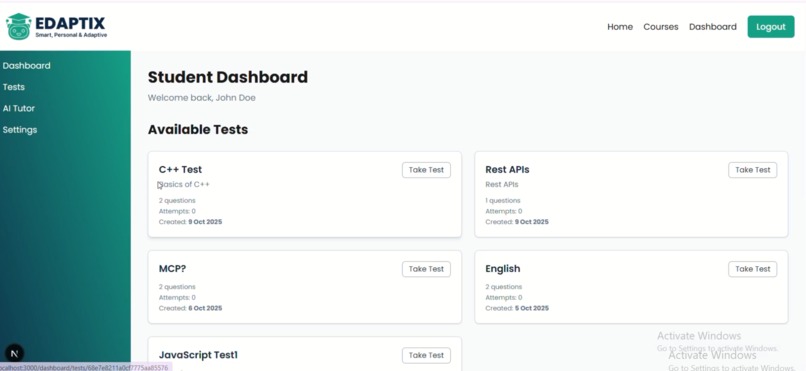
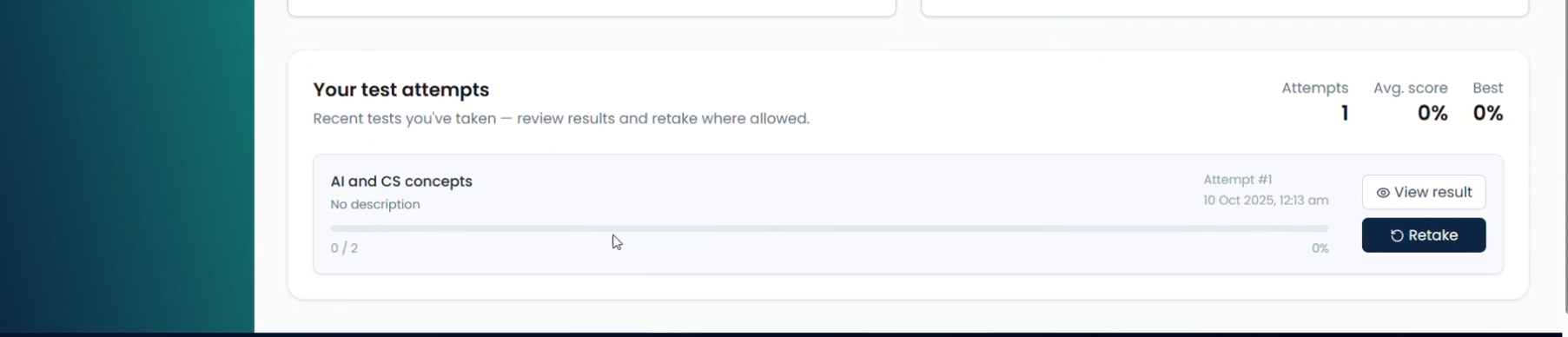
Students can take test and see their attempts.
-
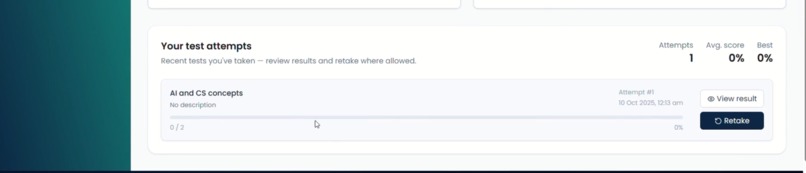
Every attempt and feedback is saved and can be reaccessed
Inspiration
Education system faces chronic challenges:
- Lack of Teaching Assistants (TA) and resource imbalance between teachers and students
- Inconsistent feedback and assessment quality
- Limited access to personalized tutoring and learning analytics
What it does
- Teachers to automate test creation, grading, and feedback
- Students to receive personalized AI guidance, adaptive feedback, and multimodal interaction
- Schools to monitor analytics and optimize resource use
How we built it
- Frontend (Next.js): Modern React-based UI with responsive dashboards for teachers and students
- Backend (Next.js API Routes): Handles test generation, student submissions, AI requests, and feedback pipelines
- AI Core (Wrapper Layer): GPT-4.1 nano powered reasoning engine with custom middleware for routing and refinement
- Voice Layer: Integrated speech recognition (input) and text-to-speech synthesis (output) for natural interaction
- Database (MongoDB): Stores user data, test responses, AI-generated feedback, and analytics
- Deployment: Cloud-native via Vercel, scalable and secure
- Analytics Dashboard: Lightweight metric cards display submission rates, feedback completion, and engagement trends
Challenges we ran into
- Grok's model were not able to handle web search to suggest relevant resources
Accomplishments that we're proud of
- Edaptix is a revolutionary idea, as edutech systems with automated summaries and feedback rarely exist. Even when they exist, they are quite general.
- We fixed the issue for relevant resources by deploying tavily's search agent and integrated that with Grok's Llama model.
What we learned
- One model/AI is often not enough/robust
- Building an AI workflow
What's next for Edaptix
- Plagiarism reports for students and teachers
- Ability to handle image data
- RAG for problems and syllabus bank
Built With
- gpt
- langchain
- nextjs


Log in or sign up for Devpost to join the conversation.