-
-
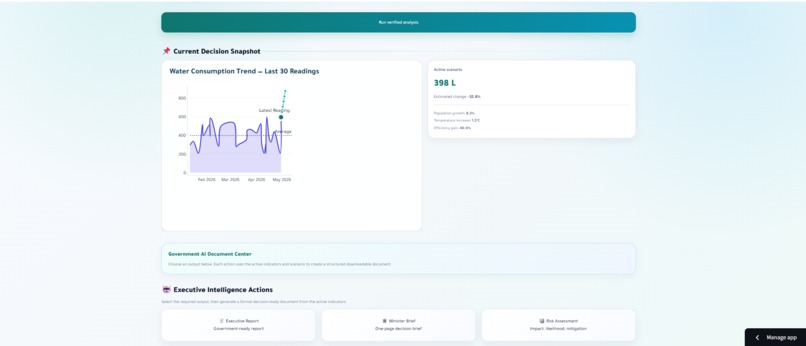
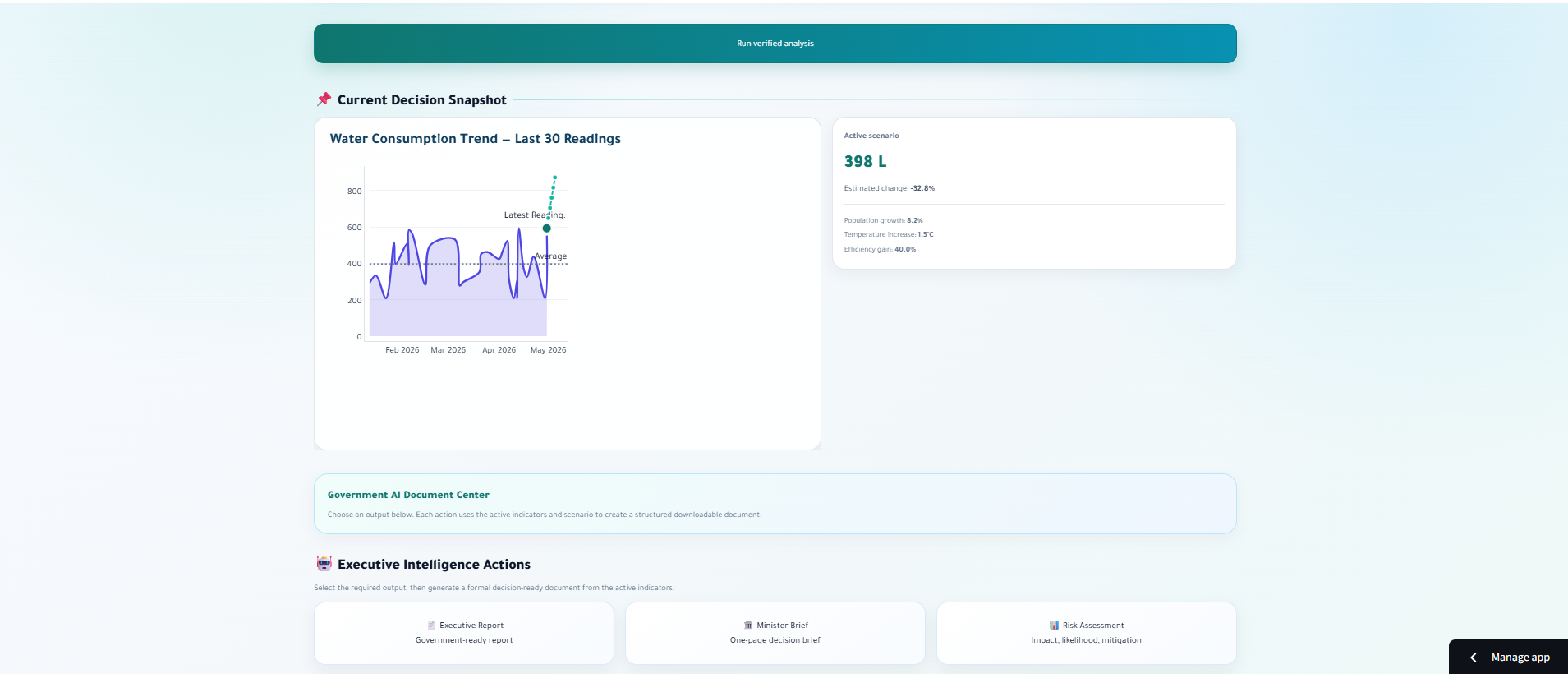
Interactive analytics dashboard displaying consumption trends, active scenarios, and executive actions for data-driven decisions.
-
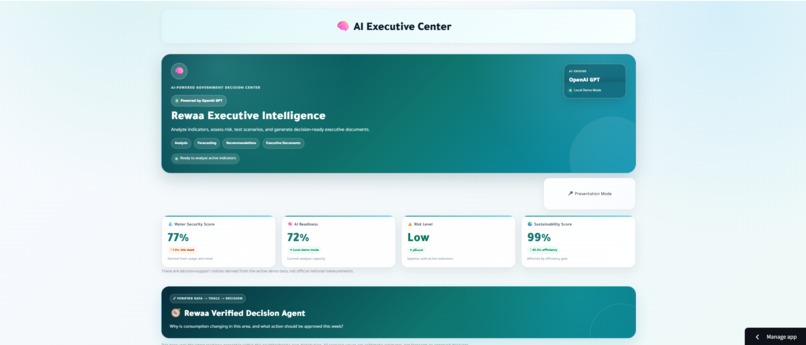
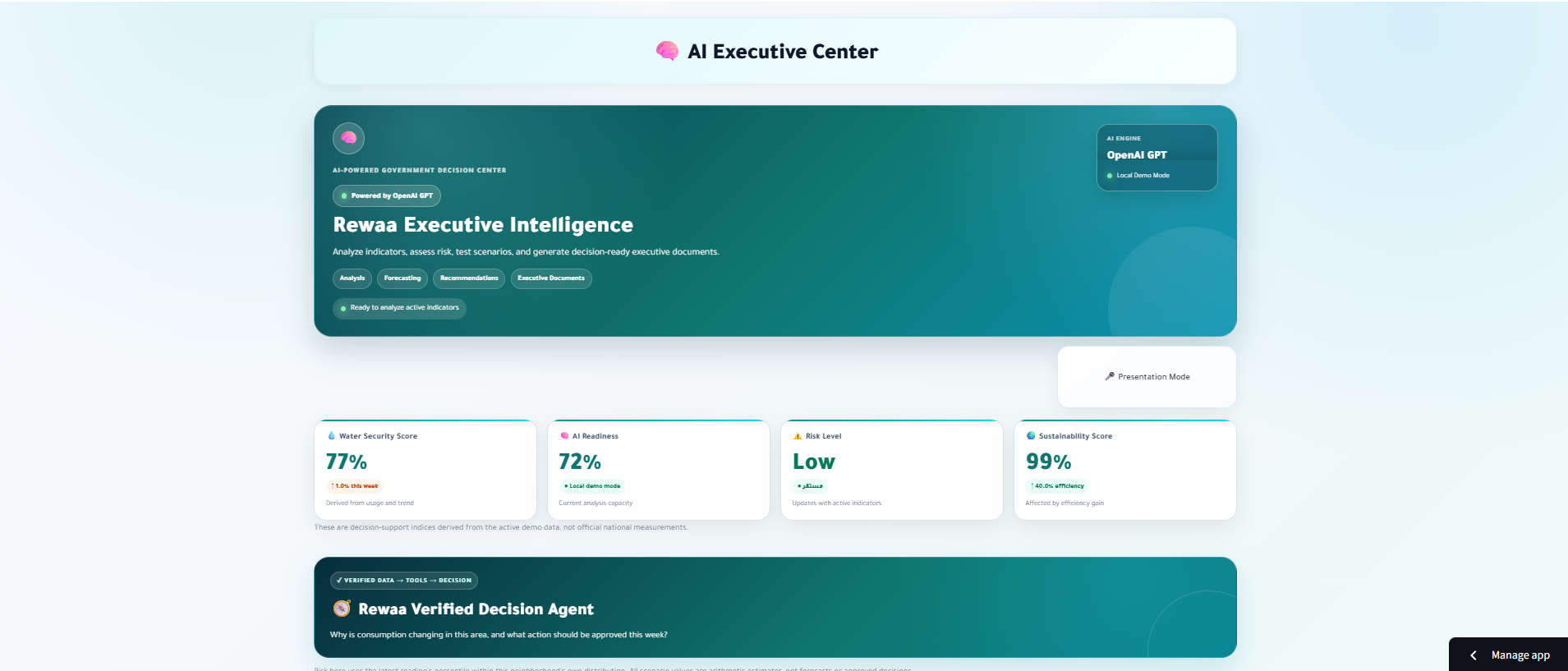
AI Executive Center delivering predictive insights, risk analysis, and decision-ready recommendations for smarter water management.
-
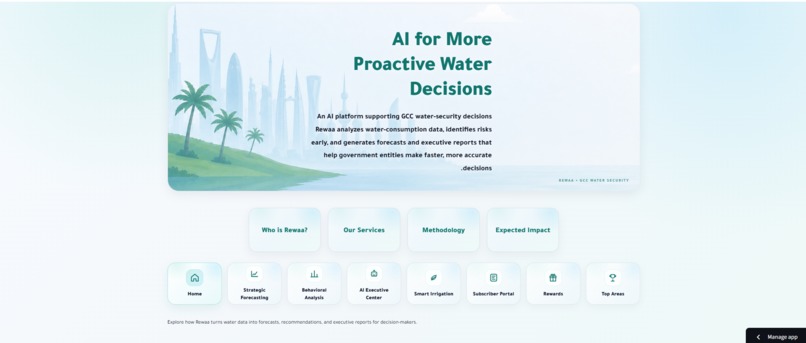
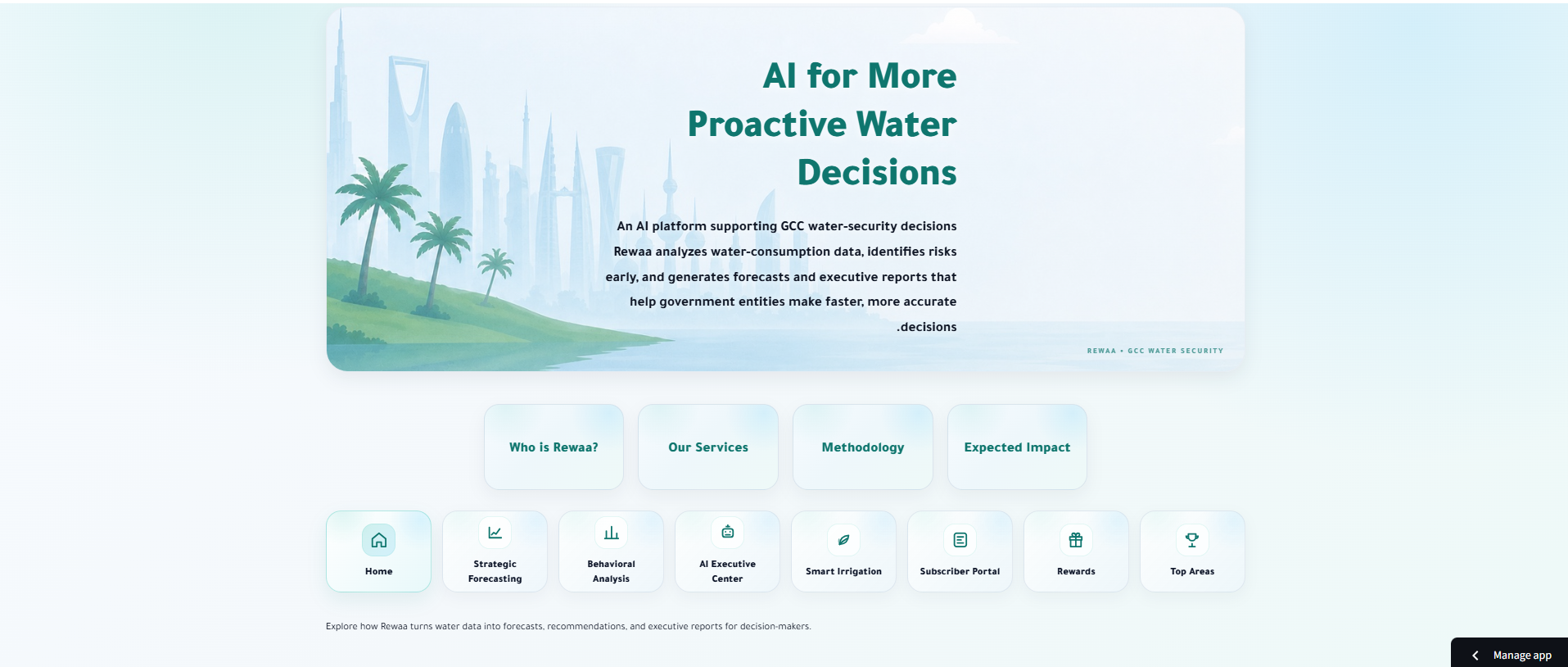
Rewaa's AI-powered home interface for proactive water security, predictive analytics, and executive decision support across the GCC.
-
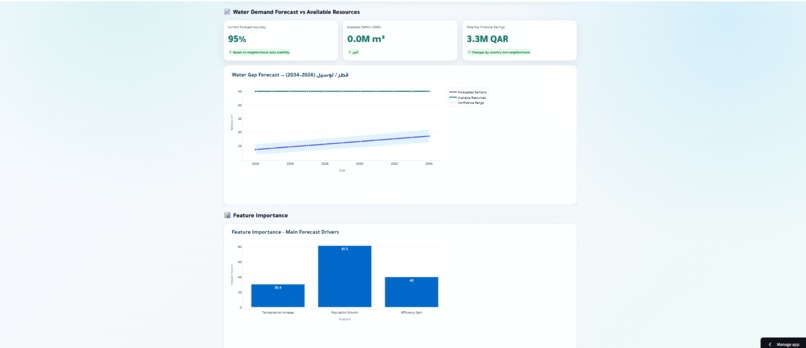
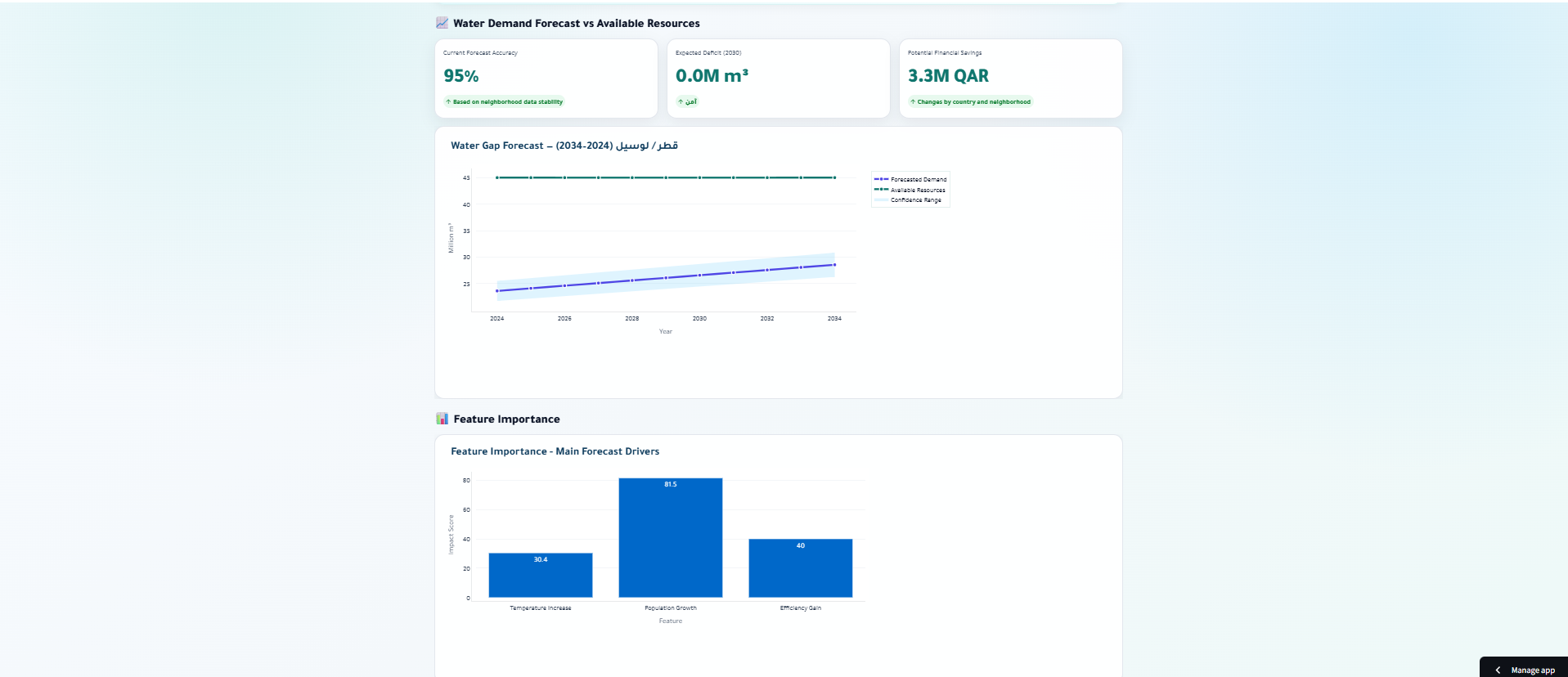
Forecasting future water demand with AI-powered predictions, resource analysis, and key decision-driving factors.
-
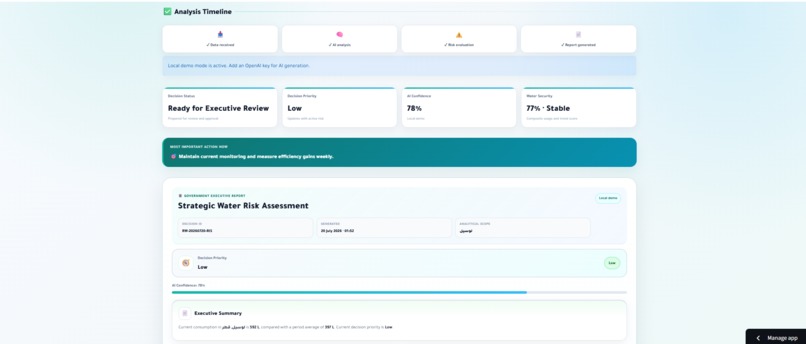
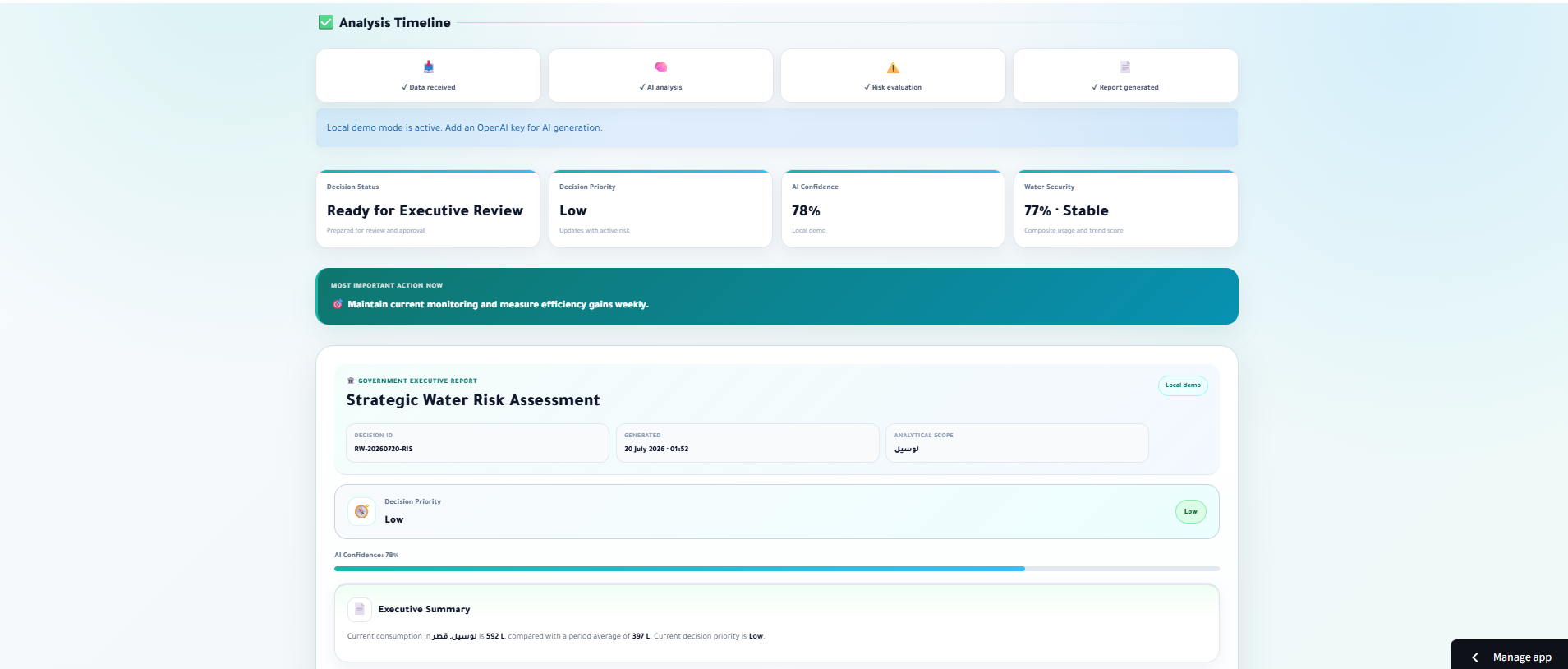
Verified AI executive report combining risk assessment, confidence scoring, and decision-ready recommendations.
Inspiration
Rewaa began as a water-security project that won second place in the Youth Creativity Competition in the World of Data, held in Qatar.
That achievement showed me that the idea had real potential, but I did not want the project to stop at the competition stage. Afterward, I continued developing Rewaa from an initial concept into a more complete decision-support platform for water management.
The project was inspired by a common challenge: water decisions are often based on scattered data, delayed reports, and limited visibility into future risks. My goal was to help authorities move from reacting to water challenges after they occur to anticipating them and planning ahead.
What it does
Rewaa turns local water data into clear forecasts, early warnings, and practical recommendations for decision-makers.
The platform brings together population growth, water demand, temperature changes, efficiency scenarios, and neighborhood-level indicators in one place. It helps users identify priority areas, compare future scenarios, explore smart irrigation opportunities, and generate executive reports that support faster and more confident decisions.
How we built it
Following the project’s success in Qatar, I redesigned and expanded Rewaa as an interactive web platform using Python and Streamlit.
I developed new capabilities including:
- Water-demand forecasting and scenario analysis
- Neighborhood-level risk and priority indicators
- Smart irrigation recommendations
- Decision-support dashboards and visual reports
- Arabic and English interfaces
- Exportable executive reports
- OpenAI GPT-5.6-powered analysis and decision-ready recommendations
- OpenAI Codex support throughout the platform’s development, testing, and implementation
I focused on transforming the original project into a clearer and more practical tool for government authorities and decision-makers who need actionable conclusions rather than complex raw data.
Challenges we ran into
One of the main challenges was turning different indicators into recommendations that were both useful and easy to understand.
Another challenge was presenting detailed analysis without overwhelming the user. I addressed this by organizing the platform into clear sections, using visual indicators, and keeping the recommendations focused on actions and priorities.
I also worked on making the platform bilingual while keeping the Arabic and English experiences consistent.
Accomplishments that we're proud of
Rewaa first gained recognition by winning second place in the Youth Creativity Competition in the World of Data in Qatar.
I am also proud of how the project evolved after the competition. I redesigned it into a bilingual, interactive decision-support platform with water-demand forecasting, scenario analysis, risk indicators, smart irrigation recommendations, executive reports, and OpenAI-powered insights.
During OpenAI Build Week, the platform was rebuilt and expanded into a more complete decision-intelligence experience designed to support practical water-management decisions.
The accomplishment I am most proud of is turning an initial competition project into a working platform designed to support real water-management decisions.
What we learned
Developing Rewaa taught me that a strong AI product is not only about generating predictions. It is also about presenting information in a way that helps users understand the results, trust them, and act on them.
I learned how to combine data analysis, interface design, scenario planning, OpenAI GPT-5.6, and Codex into one complete decision-support experience.
What's next for Rewaa
The next step is to connect Rewaa with live government, utility, weather, and IoT data.
This would allow the platform to provide real-time alerts, improve forecasting accuracy, support more regions, and grow into a scalable water-intelligence system for authorities and utilities.


Log in or sign up for Devpost to join the conversation.