Inspiration
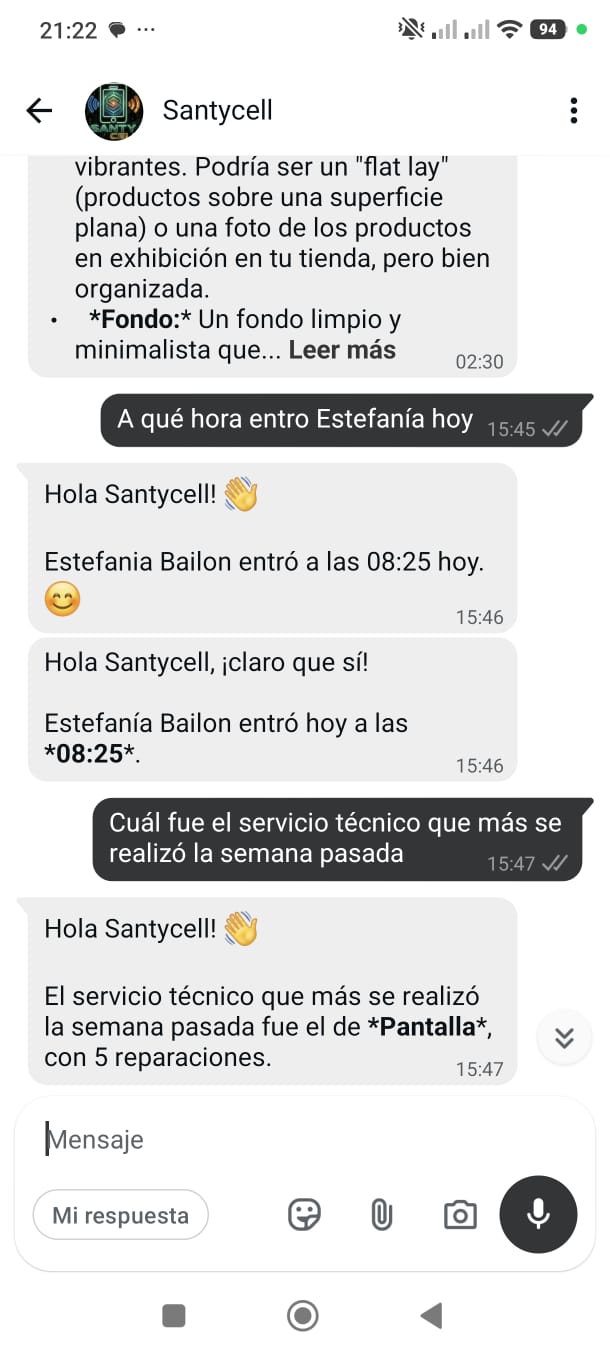
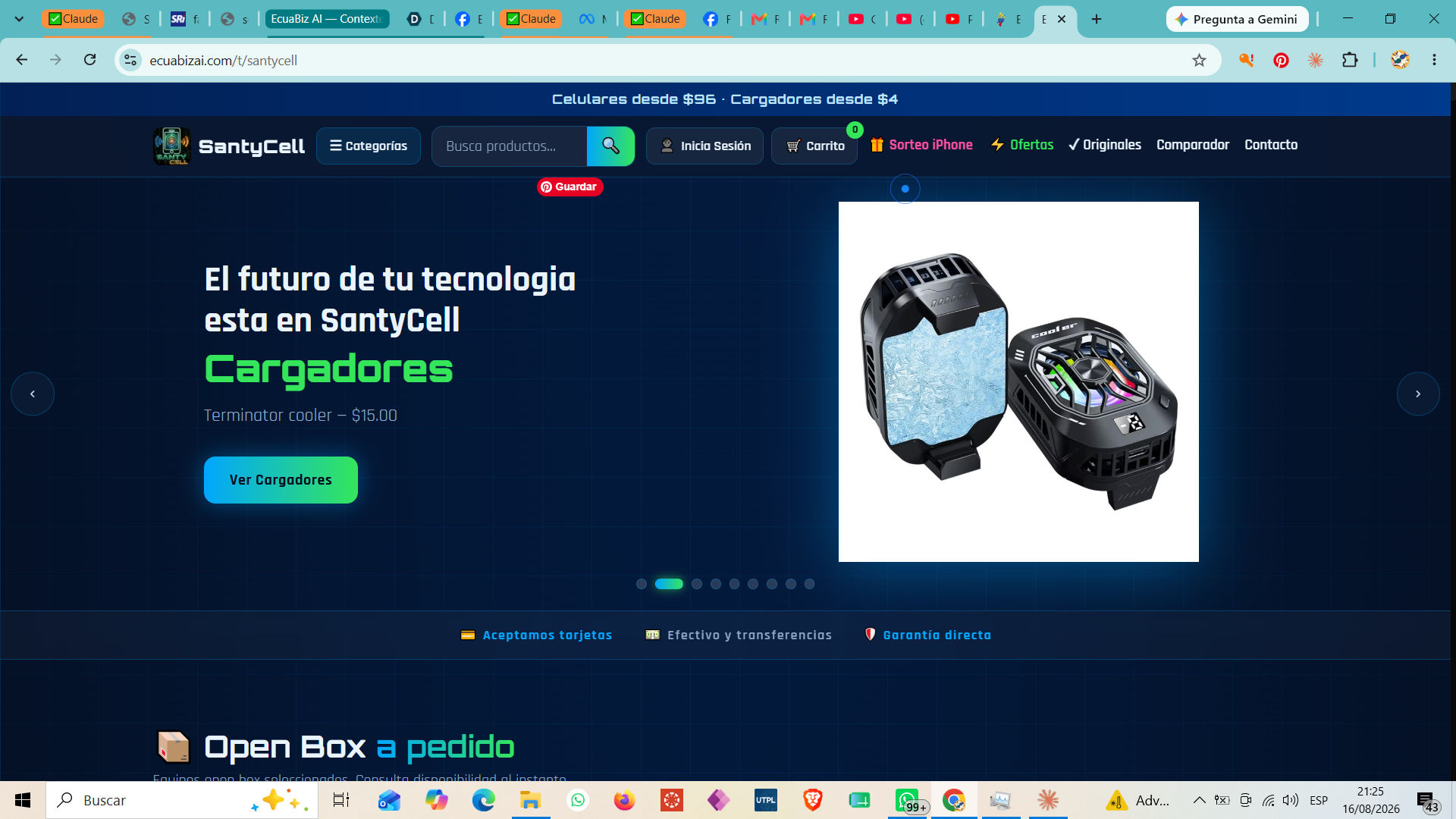
EcuaBiz AI started from a real business problem, not a hypothetical one. My wife runs SantyCell, a phone repair and retail shop in Ecuador, and I watched her lose hours every week to work that had nothing to do with actually running the business: answering the same WhatsApp questions over and over, writing product descriptions, chasing inventory counts, generating receipts, deciding what to post on social media. Small businesses in Ecuador (and across Latin America) can't afford a five-person ops team. They need software where AI is not a chatbot bolted onto a dashboard, but the thing actually doing the operational work.
What it does
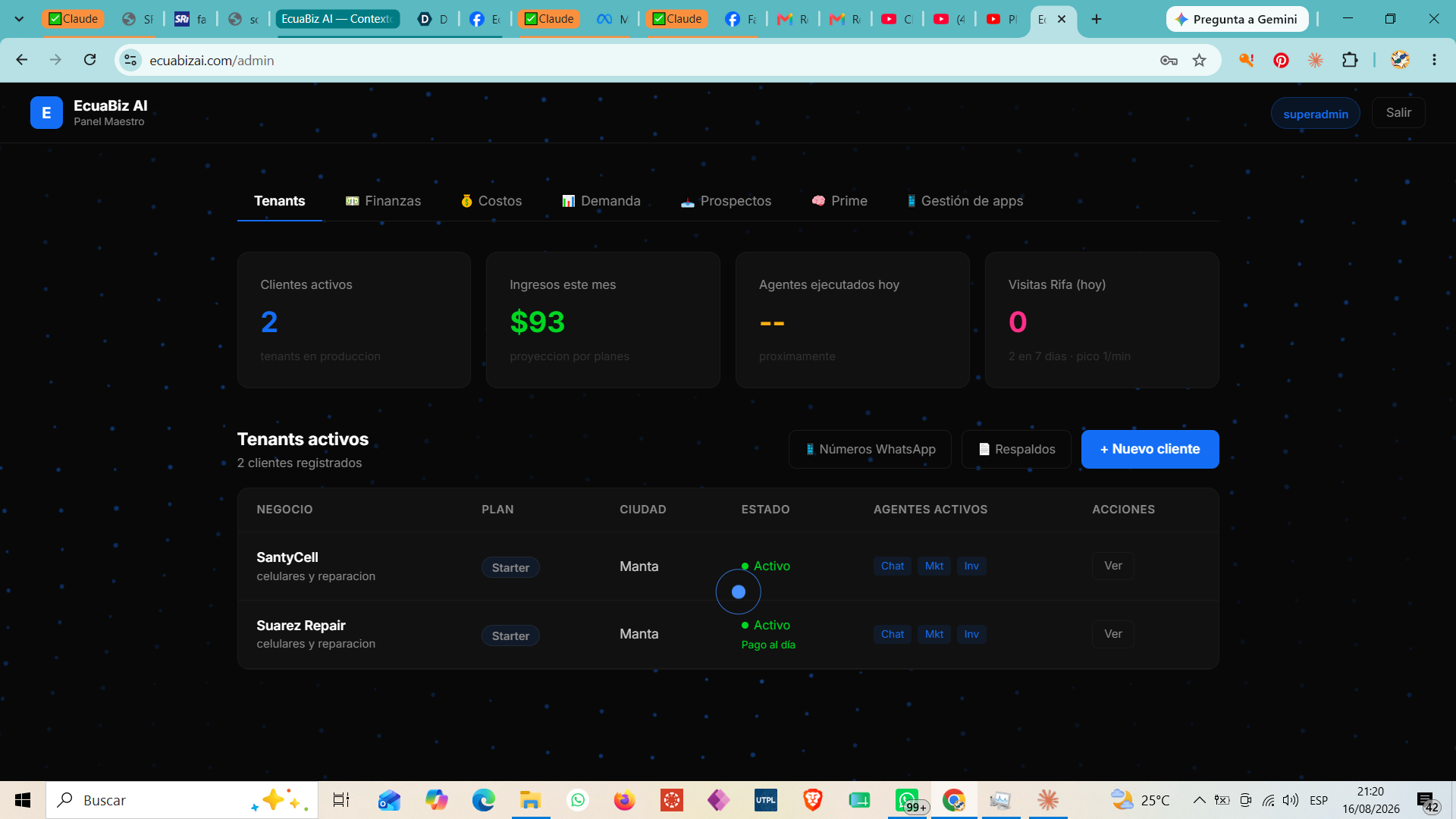
EcuaBiz AI is a multi-tenant, AI-native business platform for small and medium businesses. Each business ("tenant") gets its own isolated instance with:
- A WhatsApp AI agent that talks to customers directly — answering questions, taking orders, checking prices against supplier price lists (even from a photo of a printed list), and escalating to a human only when it needs to.
- Inventory, sales, and technical-service modules tailored to what each business actually needs, with role-based forms the owner can customize.
- An online store generated per tenant, with AI-assisted product photography and descriptions.
- A marketing agent that drafts and can publish social content and informational posts on the business's behalf.
- An onboarding consultant agent that meets a new business owner on day one, detects what's still missing in their setup (no logo, no employees, no store configured), and walks them through it conversationally instead of making them read a manual.
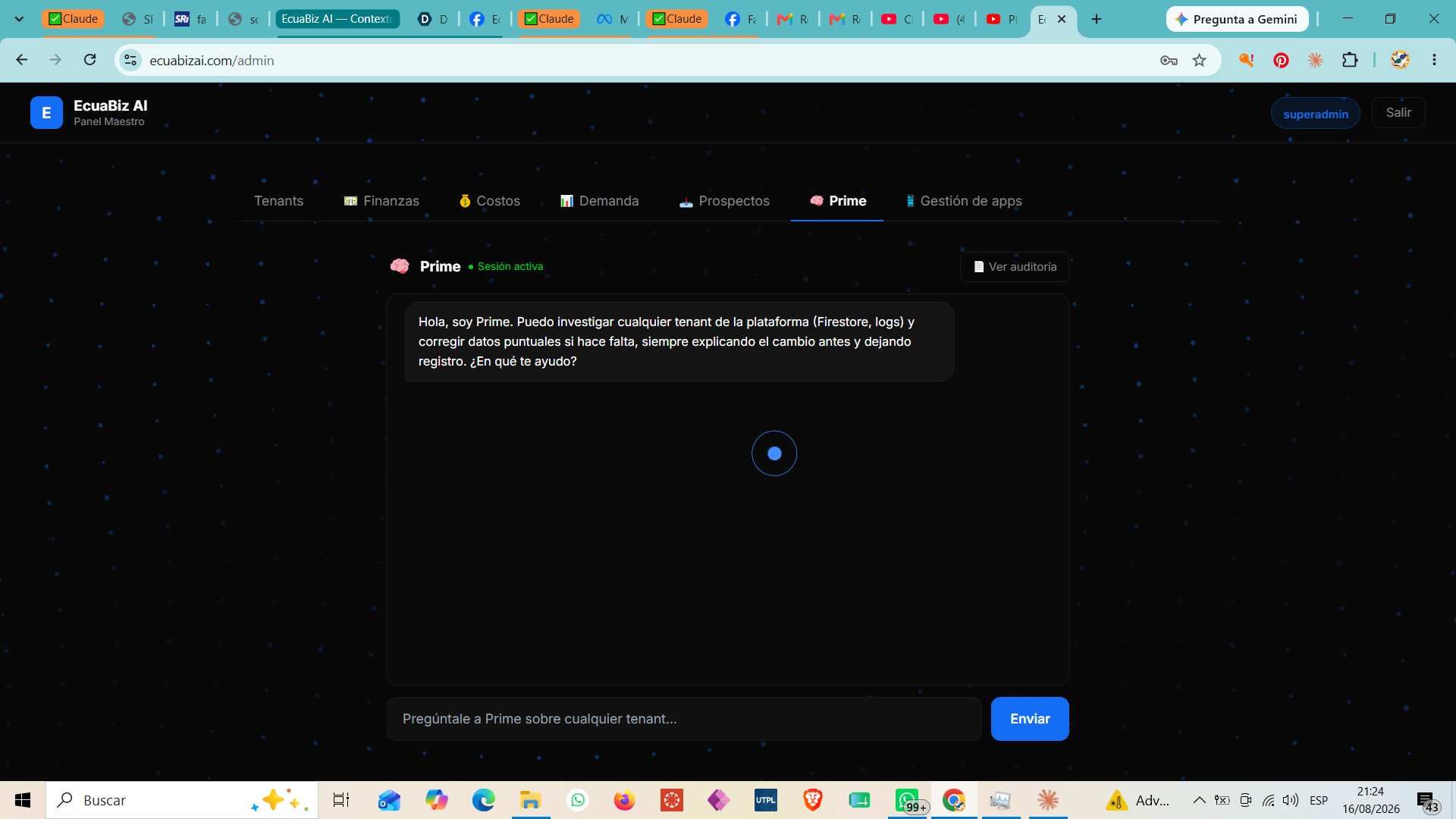
- Prime, an executive AI agent available only to me as the platform operator, that can inspect activity across every tenant, diagnose problems, and — with a PIN and a full audit trail — make cross-tenant corrections when something breaks.
How we built it
The backend is FastAPI on Google Cloud Run, with Firestore as the primary datastore and Firebase Storage for media. The frontend is React/Vite, deployed on Firebase Hosting. Every AI capability — the WhatsApp orchestrator, the marketing agent, the image generator, the onboarding consultant, and Prime — runs on Gemini through Vertex AI, each with its own scoped tools and system prompt rather than one generic assistant wearing different hats.
Because this is a real production system serving a real business, most of the "building" was actually operating it: fixing a Firestore document-existence bug that made a real second tenant invisible in its own dashboard, building a proper login-resolution endpoint after discovering that email-domain guessing broke for any tenant with a real (non-synthetic) email address, and adding a genuine image-upload path for logos after realizing the onboarding flow referenced a feature that didn't fully exist yet. None of this was staged — it was found and fixed while a paying customer was actively using the product.
Challenges we ran into
The hardest part wasn't the AI — it was multi-tenancy correctness under real usage. A tenant that only ever wrote to a subcollection and never to its own parent document was invisible to every .stream() query in the codebase, which silently broke five different admin surfaces at once until we traced it. Diagnosing production bugs for a real client's real login, without ever touching her password directly, also meant building a verification pattern using signed service tokens instead of manual testing in the browser.
Accomplishments that we're proud of
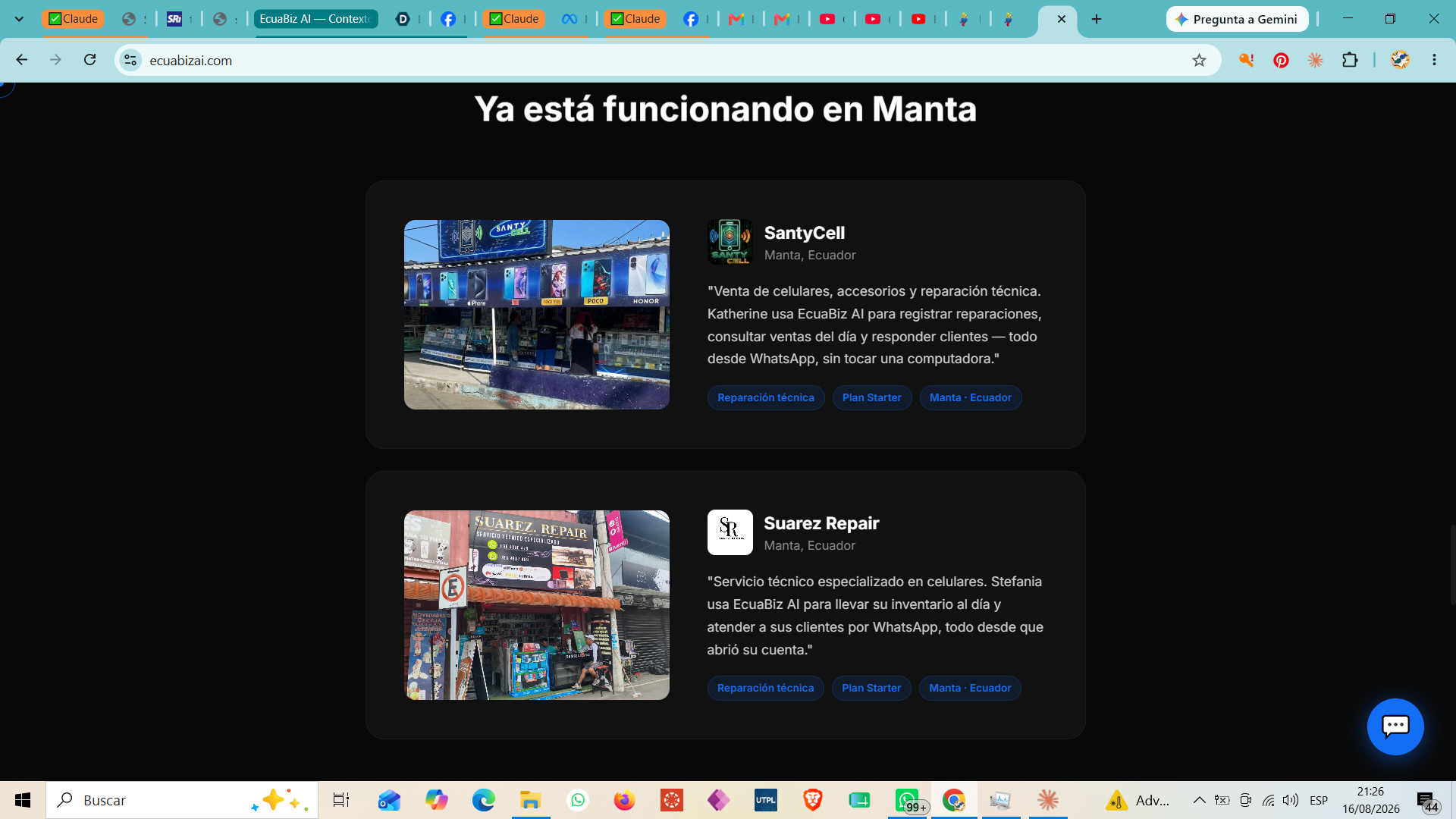
EcuaBiz AI is not a demo — it is in production with two independent small businesses paying monthly: SantyCell and Suarez Repair, an unrelated repair shop with no prior connection to us before onboarding. Both run their day-to-day operations partly through AI: WhatsApp-driven customer service, AI-assisted inventory, and an onboarding flow that is itself run by an AI agent.
What we learned
Real customers surface real edge cases no test plan would — from Firestore document semantics to how differently two small business owners with different technical comfort levels actually use a "simple" chat-based onboarding flow.
What's next for EcuaBiz AI
Migrating the AI layer to the newer Gemini 3.x model family, adding more tenants, and building out the scaling plan (CDN, caching) already drafted for when tenant demand grows past what the current shared infrastructure comfortably serves.


Log in or sign up for Devpost to join the conversation.