
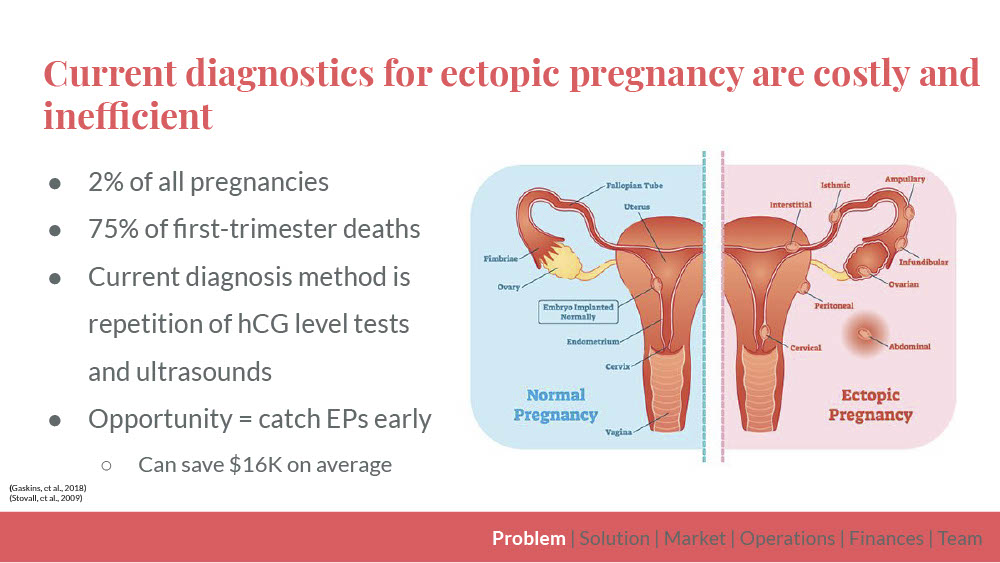
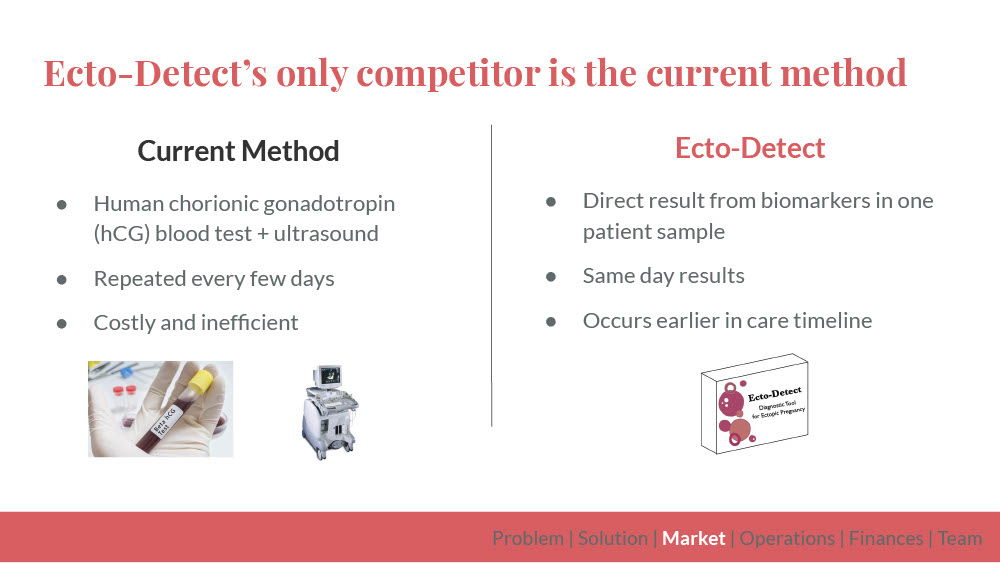
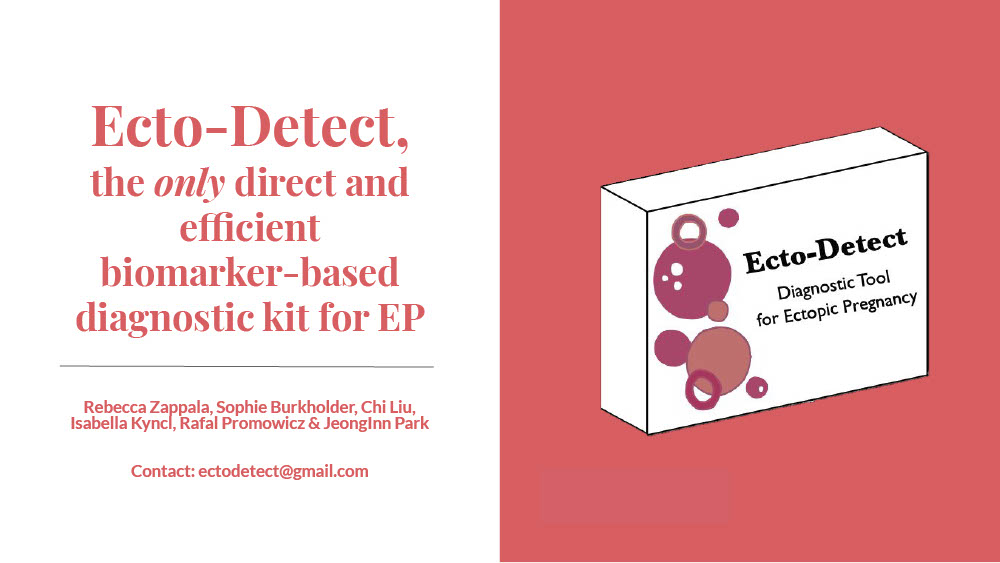
Ectopic pregnancy (EP) or the growth of extra-uterine fertilized eggs, affects 2% of pregnancies in North America (March of Dimes, 2017). When ruptured, it can cause 75% of first trimester deaths (Gaskins, et al., 2018). The longer an EP goes undiagnosed, and thus untreated, the greater the risk that it will rupture and cause life-threatening hemorrhaging. Currently, EPs are diagnosed on an inefficient basis through the use of human chorionic gonadotropin (hCG) level tests every two days and ultrasounds in response to symptoms during the first trimester (Michigan Medicine, 2020). This process can take up to three weeks which increases the risk of surgery or death (Telnore, 2000). Our company, Ecto-Detect, offers the only direct EP diagnostic technology that is more accurate, sensitive, and faster than current methods. With a faster diagnosis at week four of the pregnancy as opposed to what is typically the 6th in the current process, there is an opportunity cost of $16K on average per patient, by avoiding laparoscopic surgery and associated hospital fees (Stovall, et al., 2009). With our test, we aim to prevent the physical and emotional pain of women with ectopic pregnancies.
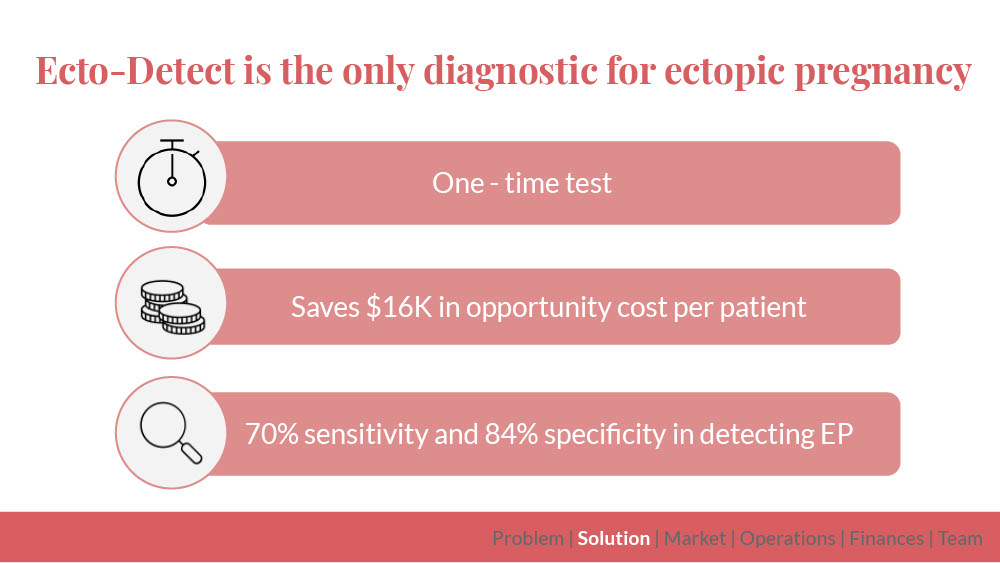
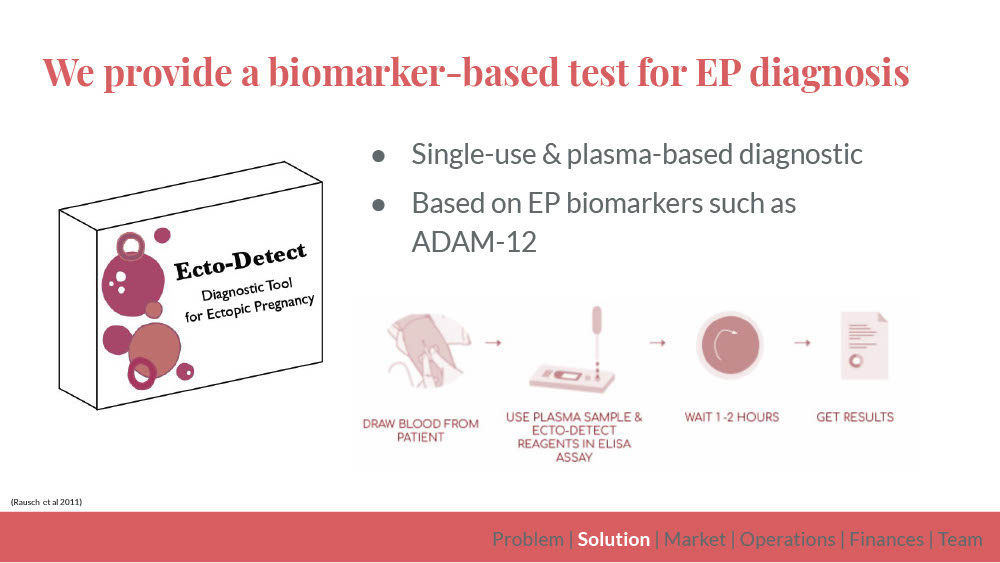
Ecto-Detect is a women’s health biotech company that improves ectopic pregnancy prognosis with an efficient biomarker-based diagnostic test. The diagnostic is plasma-based and provides the reagents for the different antibodies of EP-related biomarkers. The test is a simple ELISA assay which is a standard lab test. The diagnostic is currently in the biomarker validation research phase at the Wistar Institute. In early testing, the use of ADAM-12 as a biomarker has proven to have 70% sensitivity and 84% specificity in detecting EP compared to controls, and it is expected to be improved by further research and preclinical validation of a combined biomarker profile (The Wistar Institute, n.d.). Our target level for both sensitivity and specificity is 98% or greater in two years by identifying additional biomarkers.
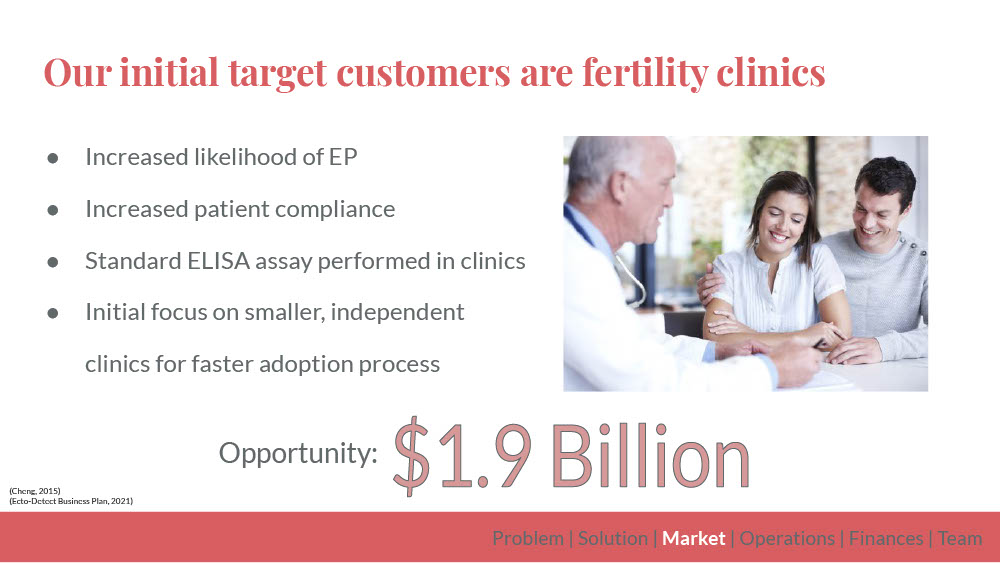
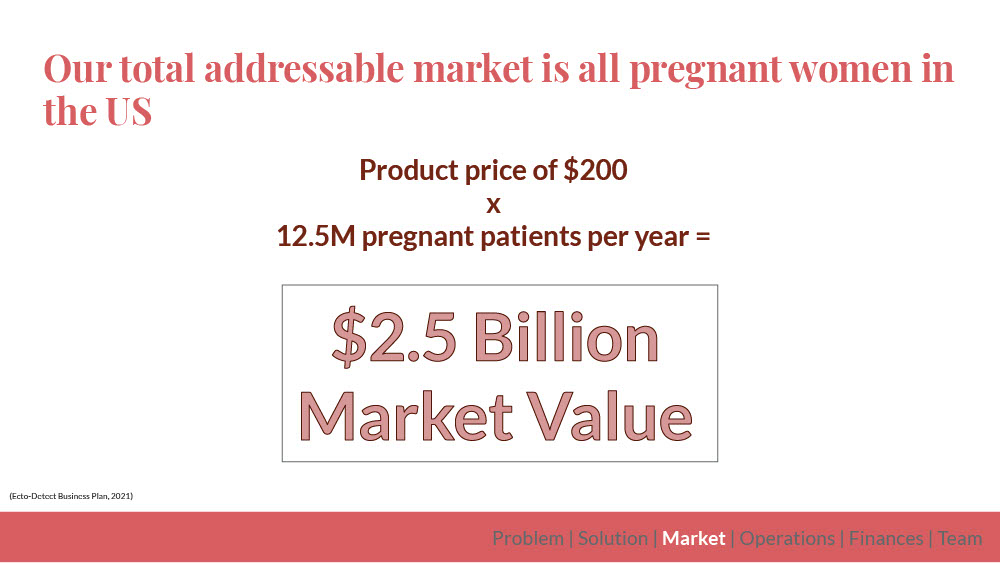
Once we reach these technical milestones, our product’s total addressable market is the 12.5 million pregnant women in the United States per year. Multiplied by our product price of $200, this gives us a total market value of $2.5 billion. Ideally, we would like our test to eventually be incorporated into the standard clinical protocol for all prenatal appointments. However, many women don’t make this first prenatal appointment until the eight-week mark (American Pregnancy Association, 2017), while EPs are at risk of rupturing at any point after the six-week mark (Dulay, 2020). Because of this, we plan to enter the market through fertility clinics—where patients are both more compliant and have medical issues that put them at higher risk of EP (Refaat, 2015)—to be able to deliver the test result at the four-week mark.
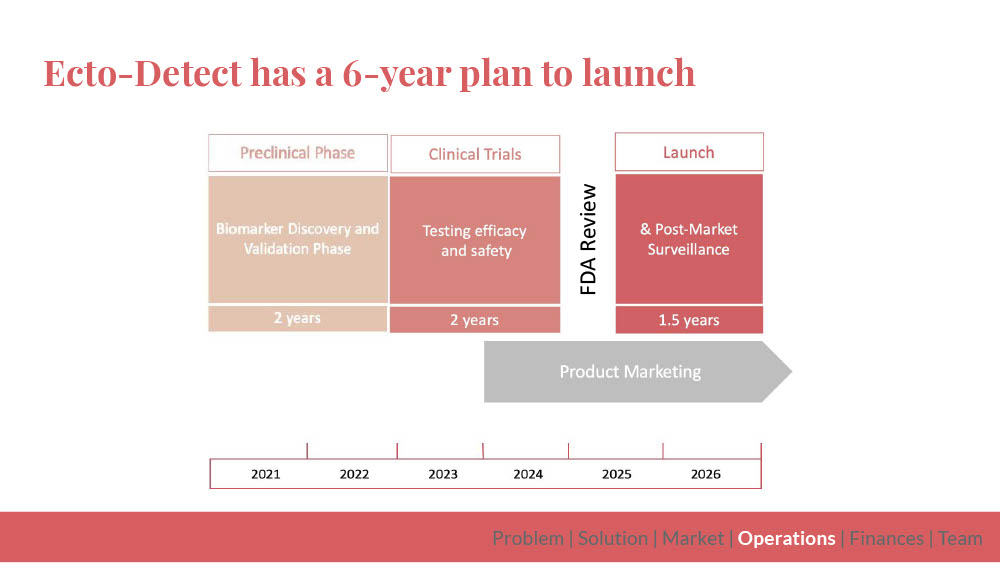
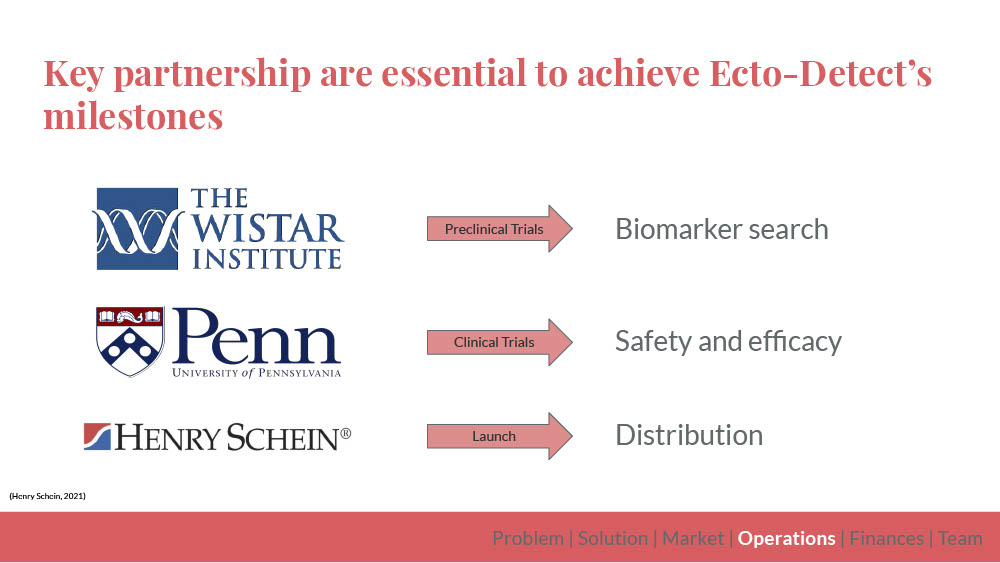
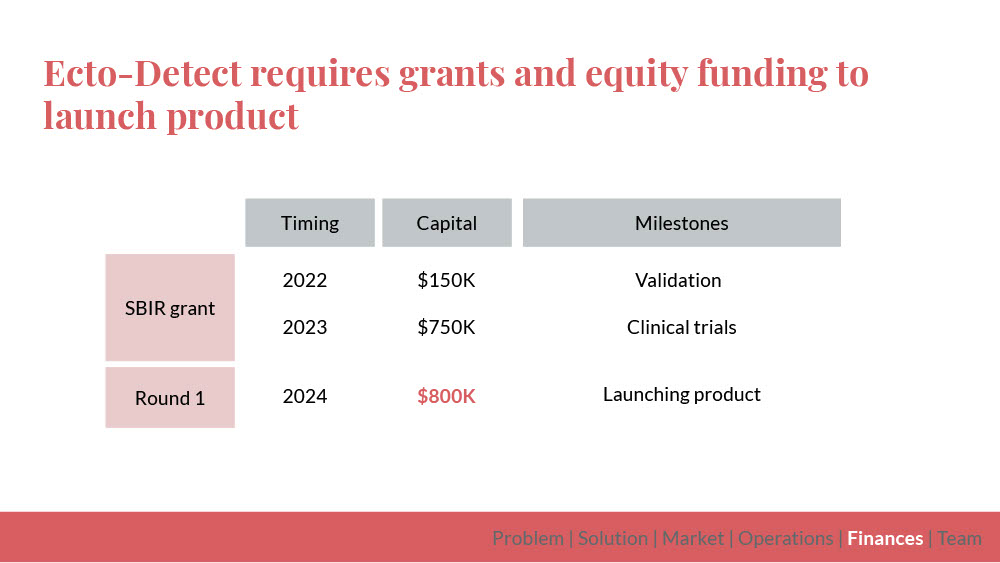
We plan to launch our product into this market in six years. This timeline is divided into three phases of preclinical validation, clinical trials, and sales and distribution, as shown the figure below. The preclinical validation stage will operate through a partnership with the Wistar Institute, whose researchers initially developed the platform for Ecto-Detect’s product. This stage involves finalizing the combined biomarker profile for the test. Following validation, Ecto-Detect will pursue clinical trials in 2023 through a partnership with the University of Pennsylvania Department of Obstetrics and Gynecology, who contributed research to the initial test platform. These partnerships will help us share the cost of labor associated with early research and validation stages for our product and ensure that we have access to scientific resources of distinguished institutions while we focus on the commercialization of the product.
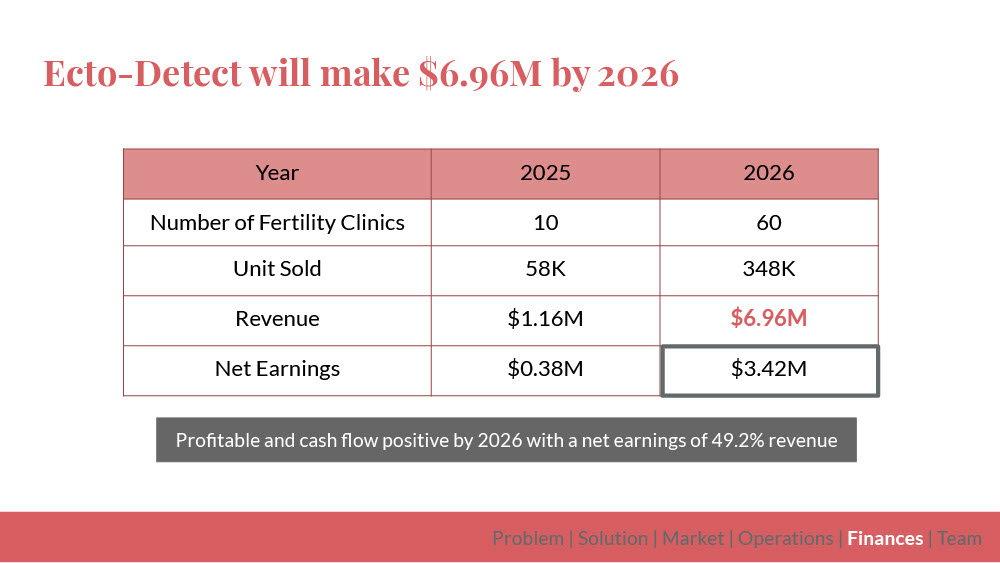
Our commercialization process will involve early marketing to OB-GYNs in 2024 through research publications, conference showcases, and direct relationships with fertility clinics. During FDA review, we will also establish partnerships with lab supply manufacturing and distribution companies, who can help deliver our product to our customers. Once the review is complete, we will expand our sales and marketing budgets to achieve 10 fertility clinics in 2025, and a total of 60 clinics in 2026.
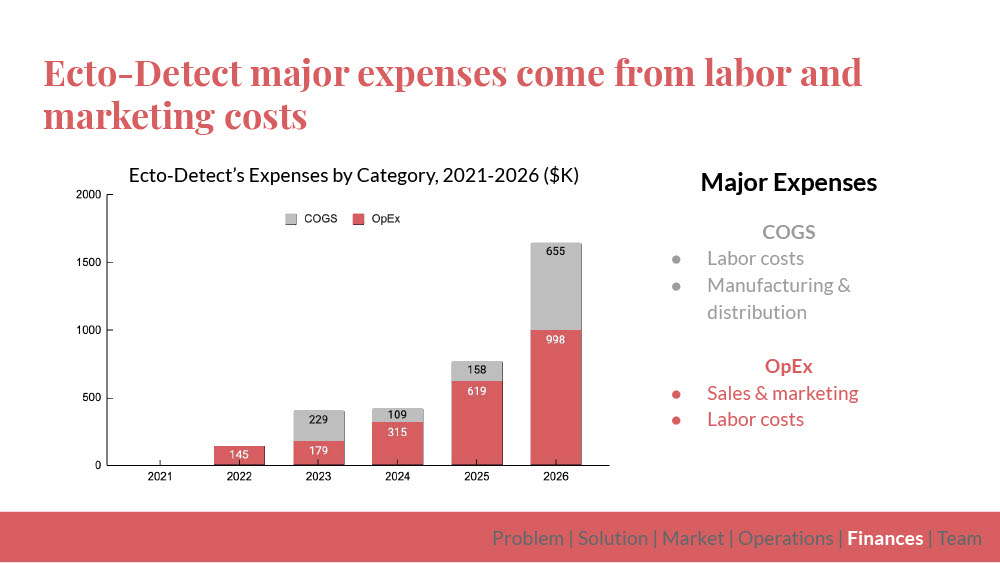
Because of our operational partnerships, our property, plant, and equipment stay at zero. We plan to fund the first three years with an initial preferred equity investment of $80,000 from our founders and two SBIR grants, totaling $900,000 (Small Business Administration, n.d.) for the development of Ecto-Detect. After clinical trials, we will also seek a $800,000 preferred equity investment to prepare for launch, which will represent a 10% ownership of Ecto-Detect. We expect to be profitable by 2025, and by 2026, we will have a total revenue of about $7 million. At this point, we are generating sufficient cash from sales to move forward without external capital, presenting an attractive exit opportunity for investors through an acquisition. Using comparable P/E ratios and revenue assumptions, our financial team came to a $109 million valuation at the time of acquisition by applying a 32x revenue multiple to our projected 2026 revenue.
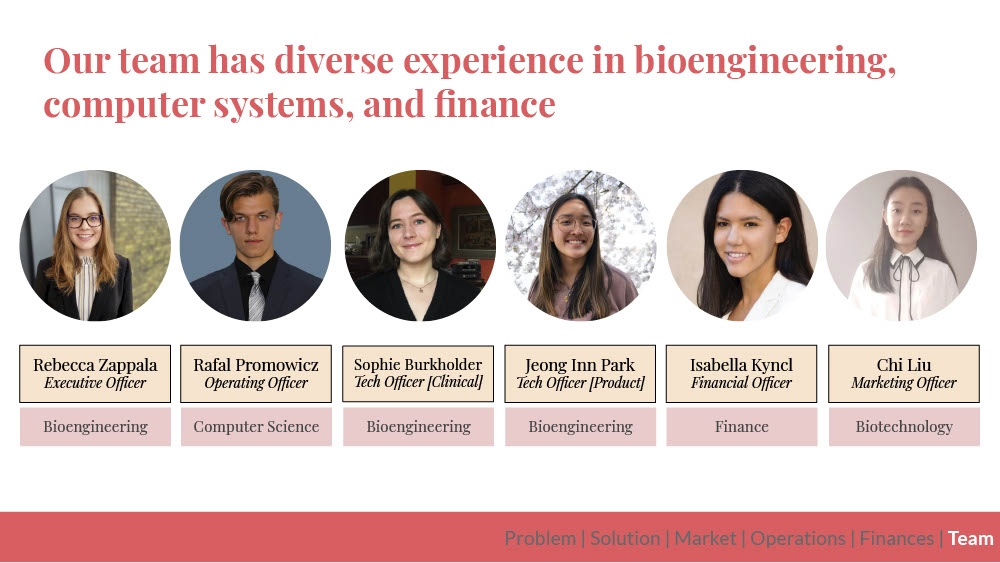
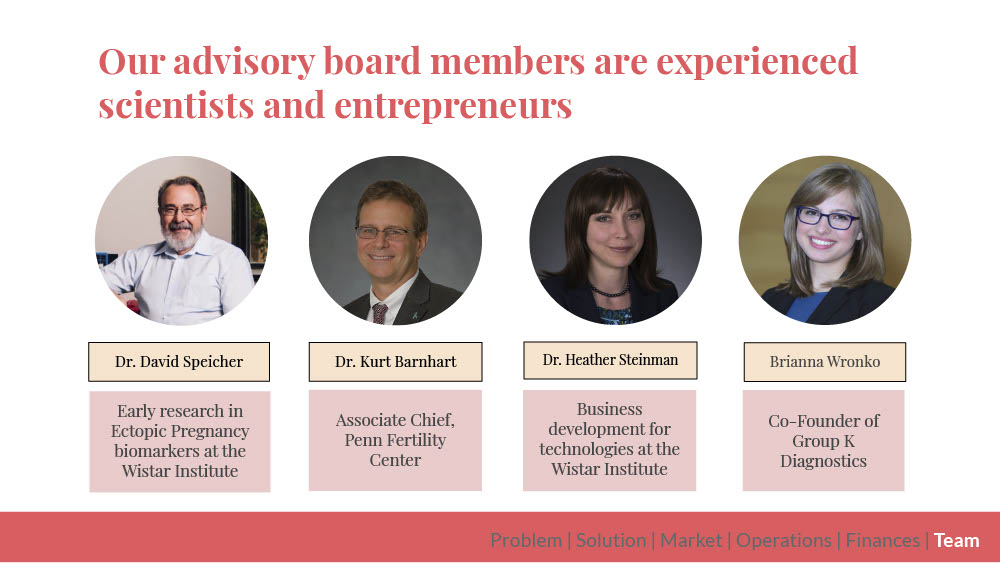
Behind the scenes, we will have a full C-suite team, including CEO (Rebecca Zappala), COO (Rafal Promowicz), CFO (Isabella Kyncl), CMO (Chi Liu), and both a CTO for the early product (JeongInn Park) and a CTO for clinical trial operations and compliance (Sophie Burkholder). Our management team has a wealth of academic and professional experience in bioengineering, computer systems, and financial operations. We will also regularly consult a board of advisors familiar with our product’s technology and customer adoption process. These include the researchers involved with the underlying technology, namely Dr. David Speicher of the Wistar Institute and Dr. Kurt Barnhart from the Penn Fertility Center, as well as Dr. Heather Steinman of the Wistar Institute and Brianna Wronko of Group K Diagnostics who will advise on the commercialization of medical devices and business development.
In conclusion, Ecto-Detect offers the only biomarker-based diagnostic test for ectopic pregnancies. It will transform the diagnostic process by performing a single, direct test, rather than a series of tests, saving both time and money for both patients and providers. Our active marketing strategy, huge market opportunities, experienced management team, and senior scientific consultants will all lay the foundation for our success. We hope you join us in carrying out Ecto-Detect’s mission to prevent the emotional and physical pain of ectopic pregnancies that thousands of women face each year.
Built With
- bioengineering
- powerpoint
- wistar

Log in or sign up for Devpost to join the conversation.