-
-
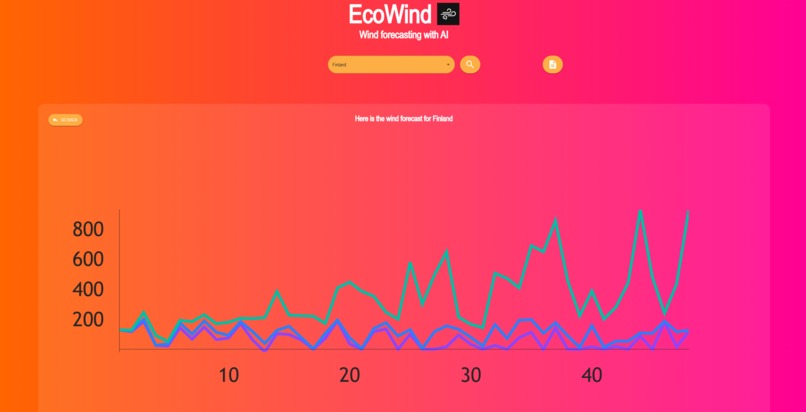
Web UI
EcoWind
Wind forecasting with AI
Inspiration
The idea for EcoWind started with a critical question: If wind is one of our cleanest energy sources, why can’t we rely on it?
Despite widespread wind turbine adoption, national grids often still depend on foreign electricity simply because current wind forecasting breaks down after a few hours. Long-term predictions become unreliable, or in AI terms, they start to hallucinate. That inefficiency inspired us to reimagine wind forecasting using advanced AI and cloud-native tools.
What We Learned
- Wind isn’t just direction and speed it's a complex, multidimensional phenomenon.
- Traditional models can’t keep up with the scale and complexity of real-world wind data.
- Modern AI and cloud tools enable faster, more accurate, and more scalable forecasting.
- Infrastructure choices (e.g., vector search, distributed computing) directly impact model usability and deployment.
How We Built It
Cloud Infrastructure with Google Cloud: EcoWind runs on Google Cloud, where we handle data processing, model training, and inference pipelines with scalable compute resources.
MongoDB Vector Search: We use MongoDB’s vector search to find and compare high-dimensional wind patterns, enabling fast retrieval of similar historical conditions across multiple turbine locations.
AI-Powered Forecasting:
Preprocessed rich wind data from a distributed network of virtual turbines.
Used temporal models for forecasting future wind behavior.
Employed clustering to detect repeating weather systems and transitions.
Applied classification to recognize the early signs of major wind shifts.
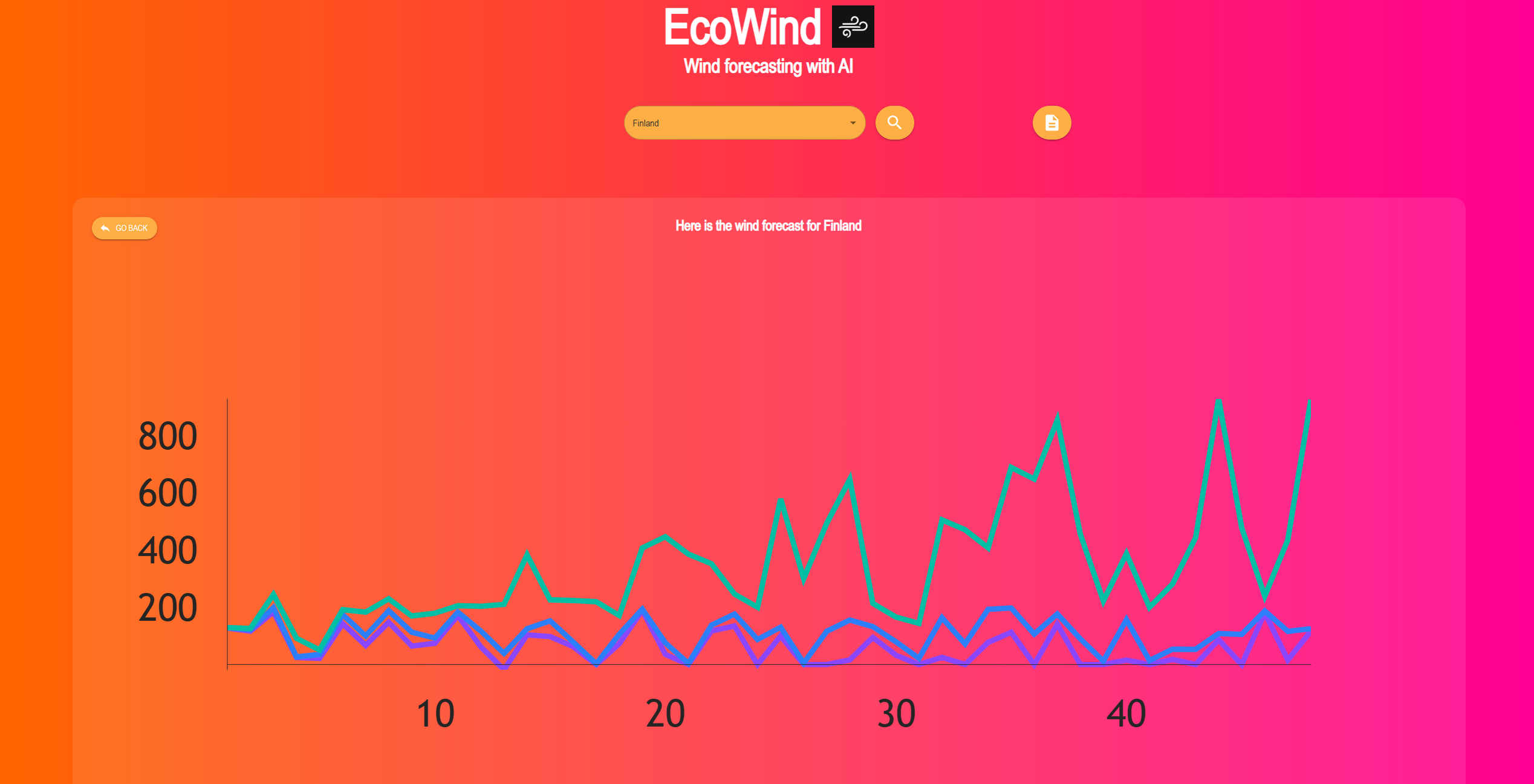
User-Friendly Visualization: Predictions are surfaced via visual dashboards that show regional wind forecasts helping stakeholders plan energy supply more effectively.
Challenges We Faced
- High-Dimensional Similarity Search: Efficiently finding patterns in multi-variable time series data required careful tuning of vector embeddings and search parameters.
- Balancing Latency and Accuracy: Real-time predictions need speed, but large models are slow we had to carefully optimize performance without compromising on insights.


Log in or sign up for Devpost to join the conversation.