Inspiration
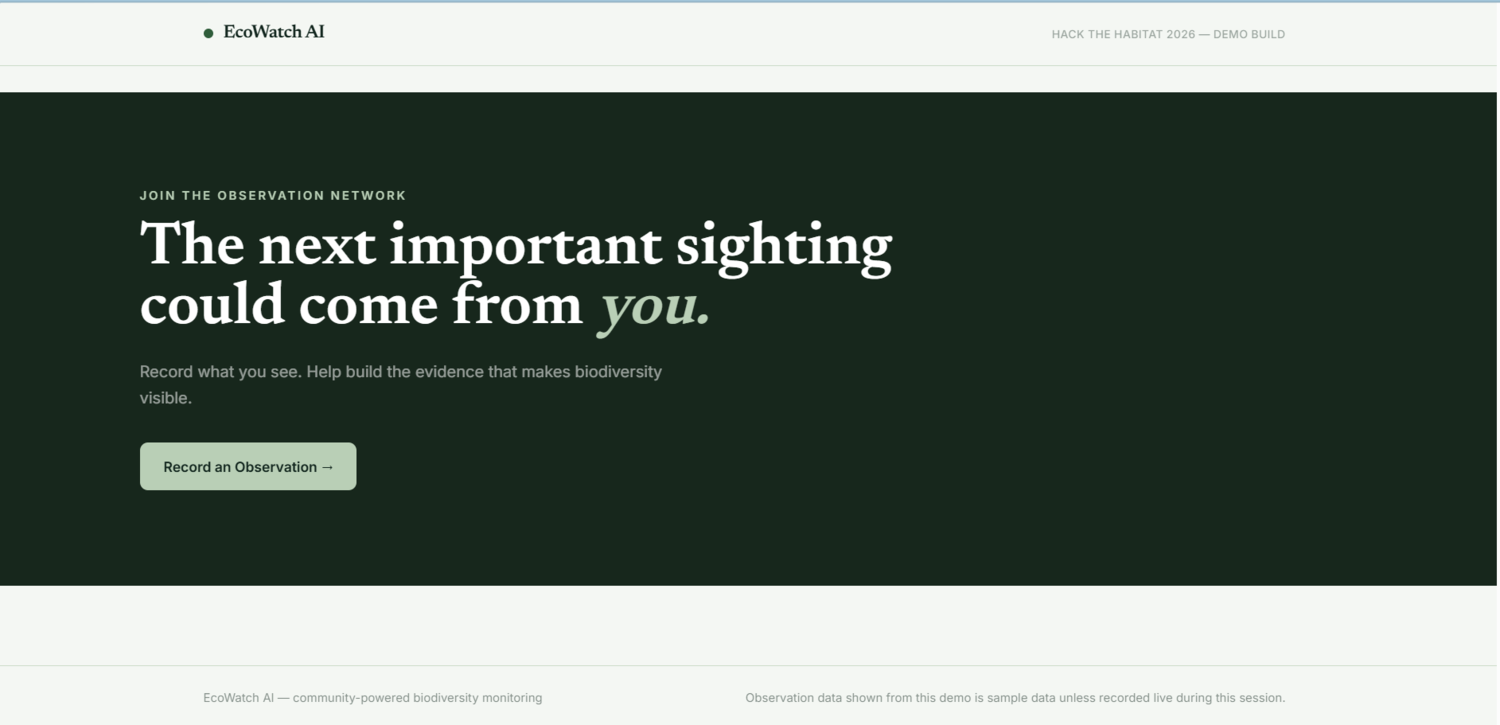
Wildlife observations are happening constantly, but many remain as isolated photos with little structure or follow-up. We wanted to make those observations useful for understanding how biodiversity changes across habitats over time.
What We Built
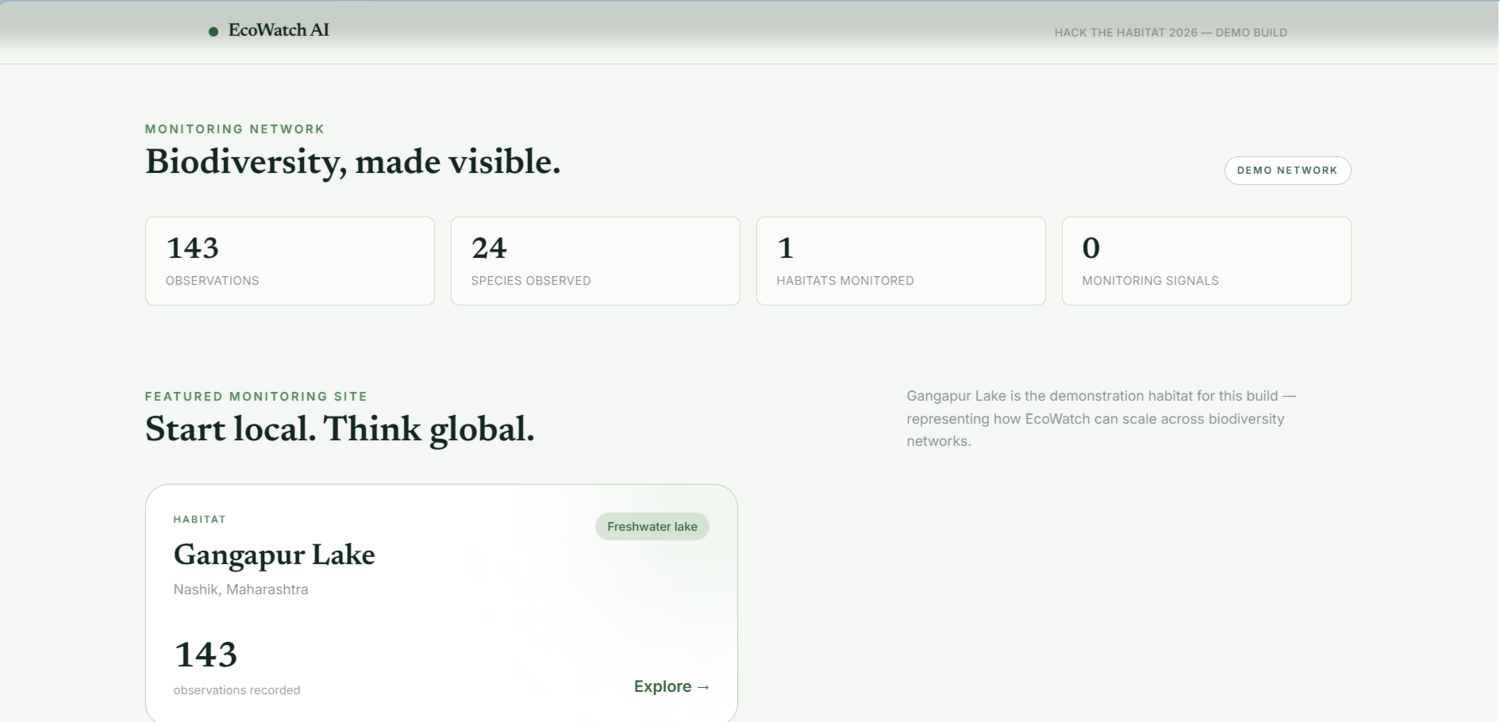
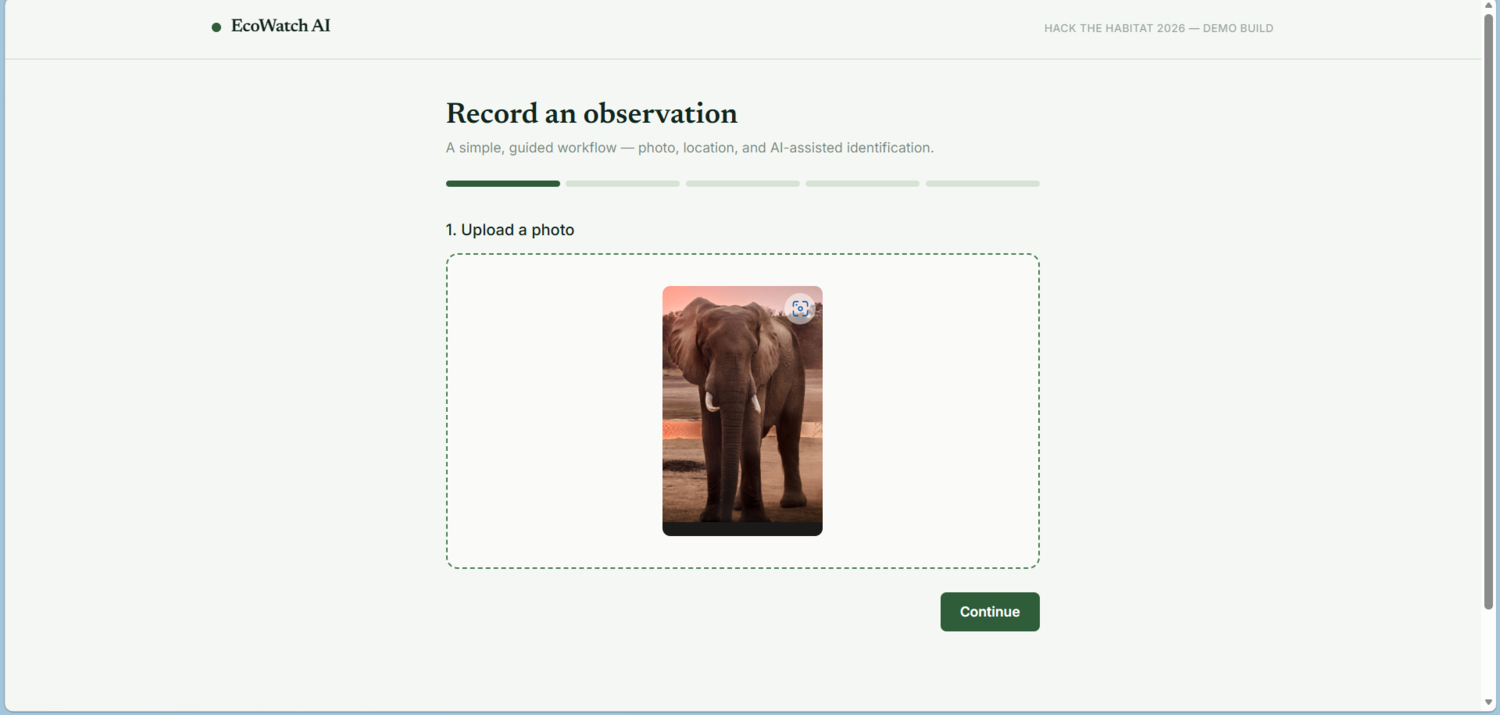
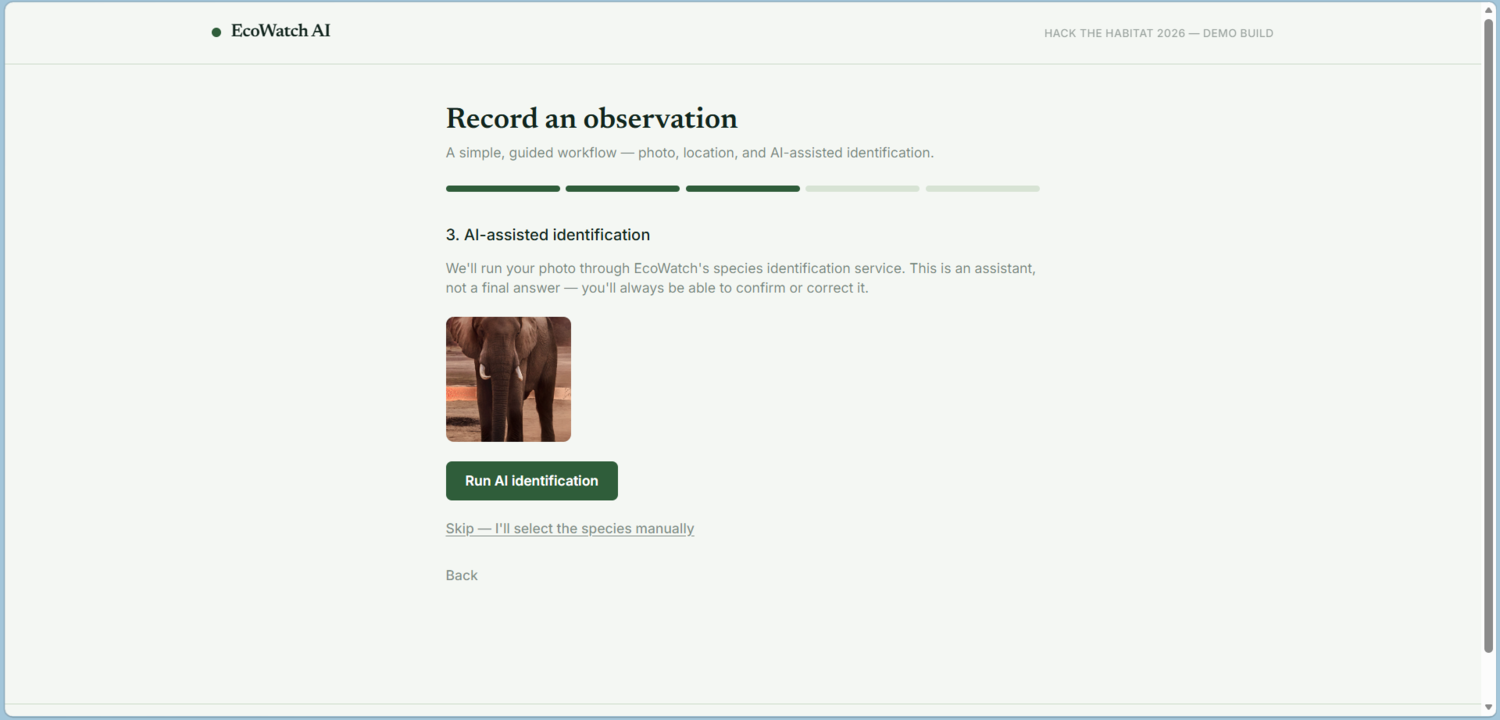
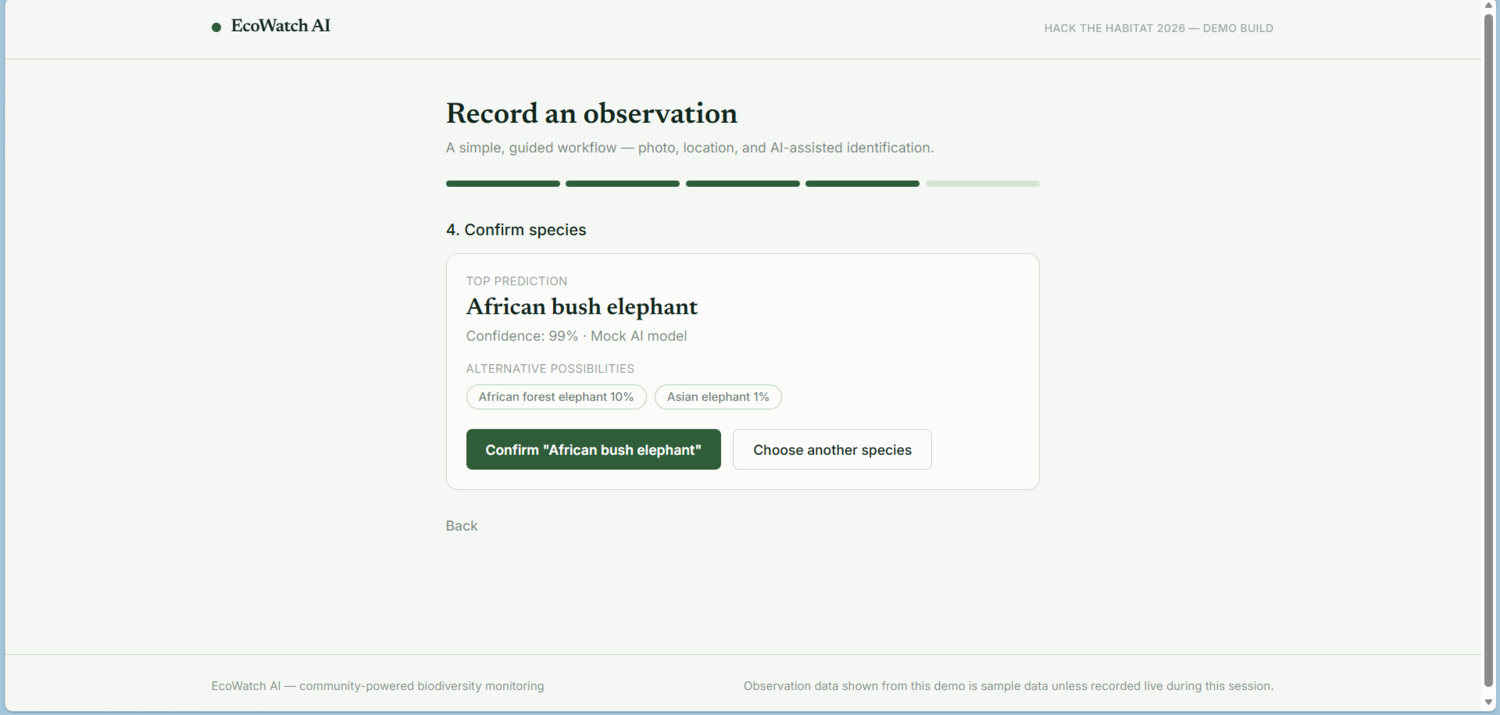
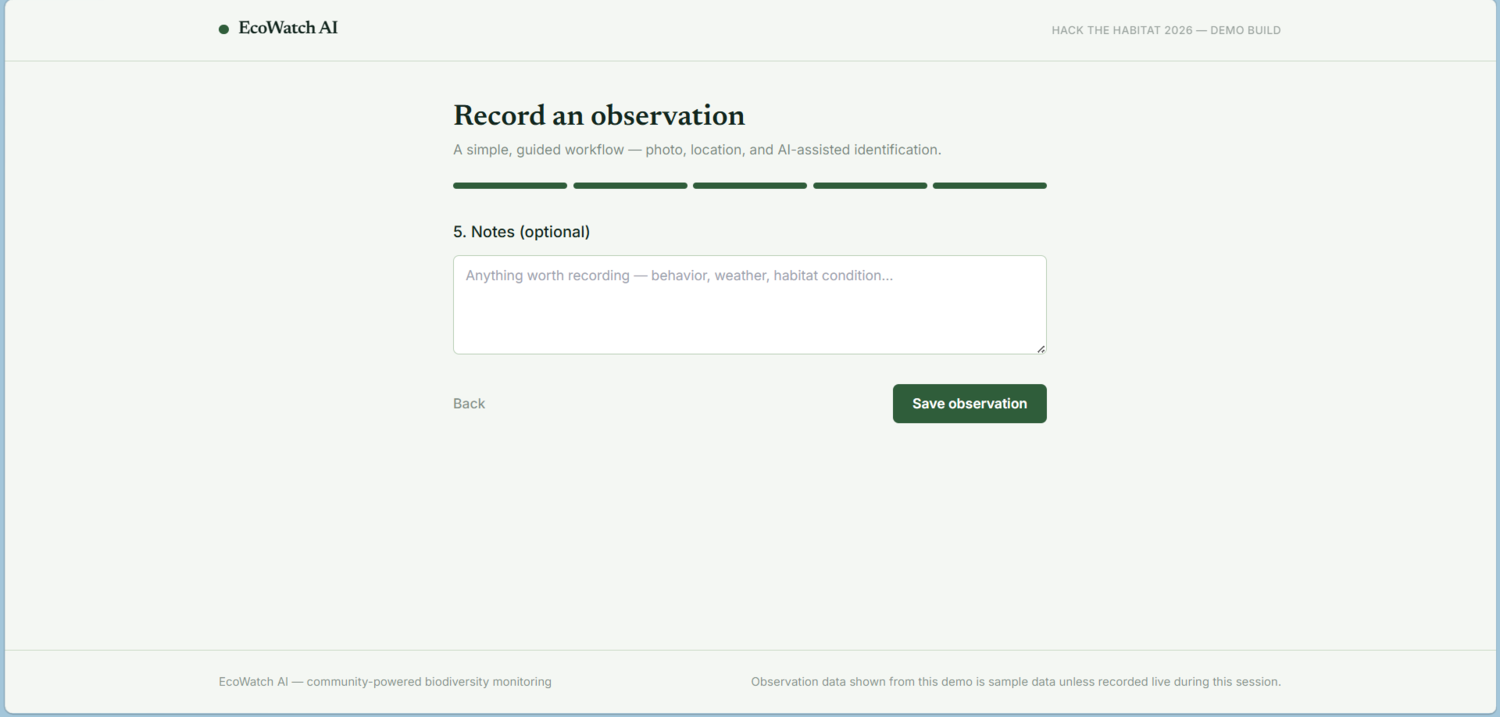
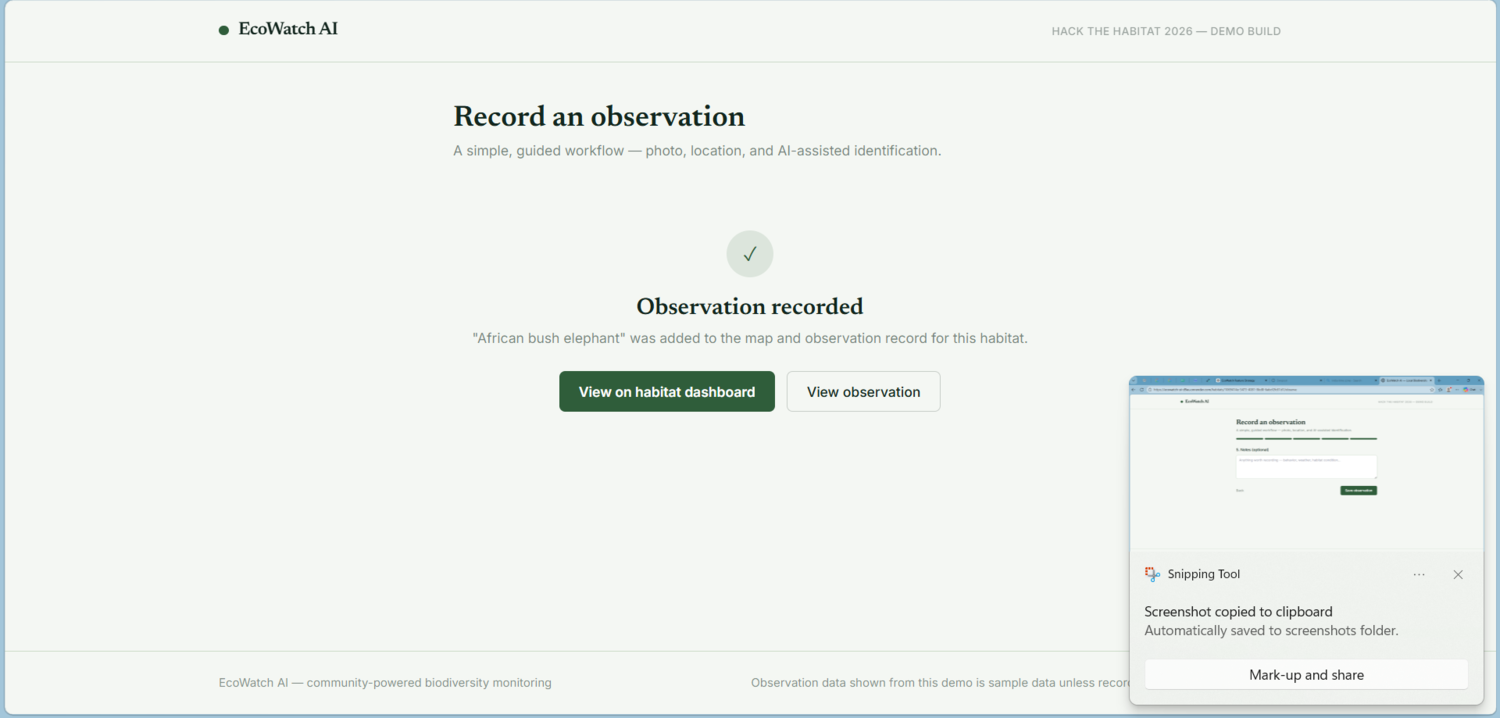
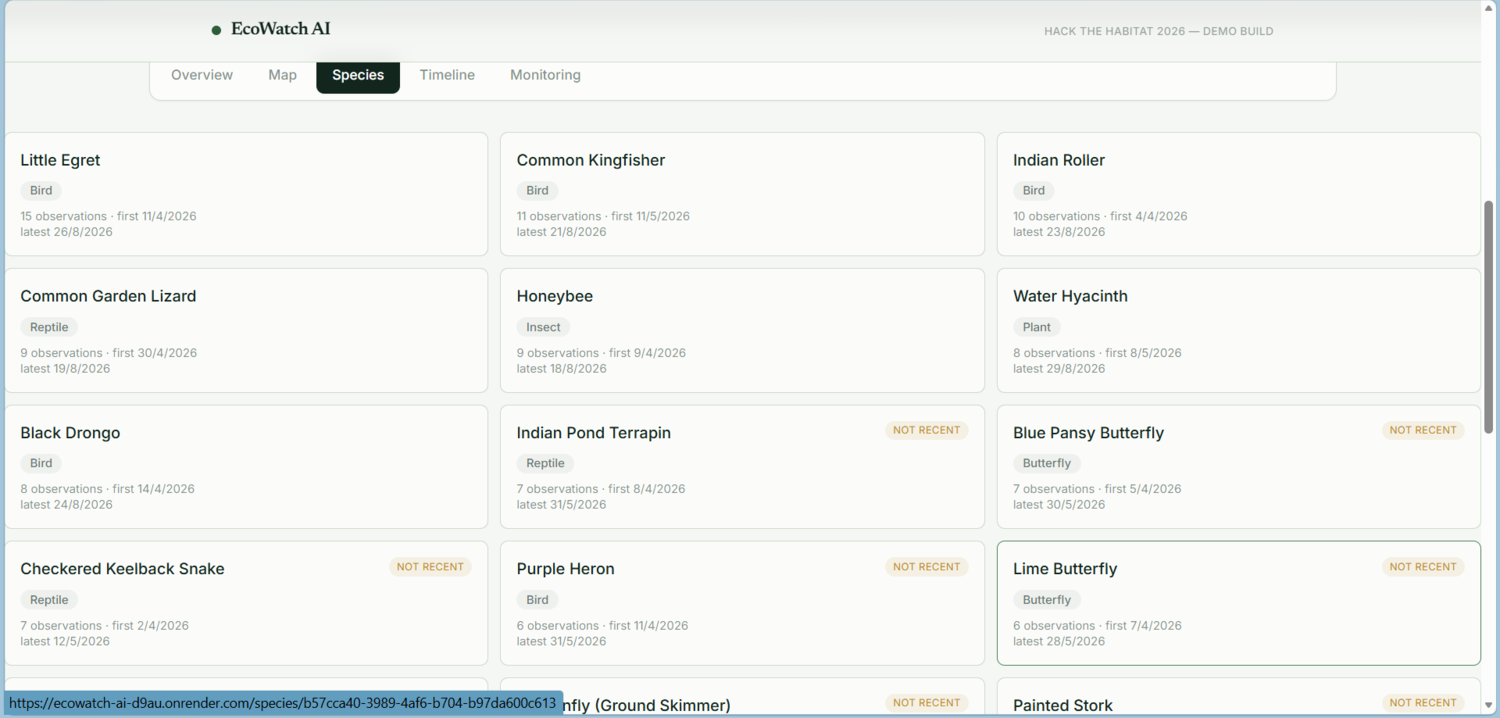
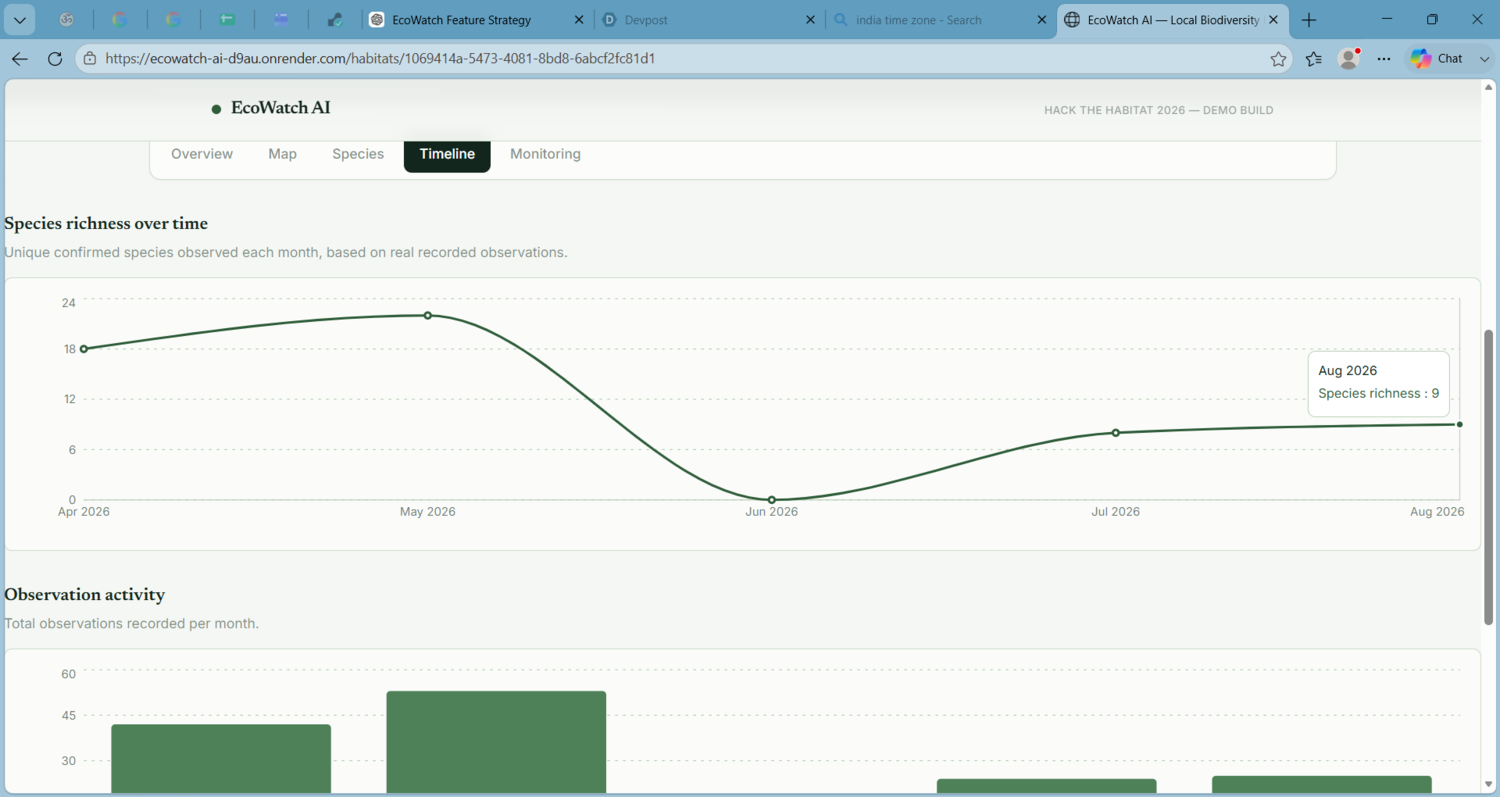
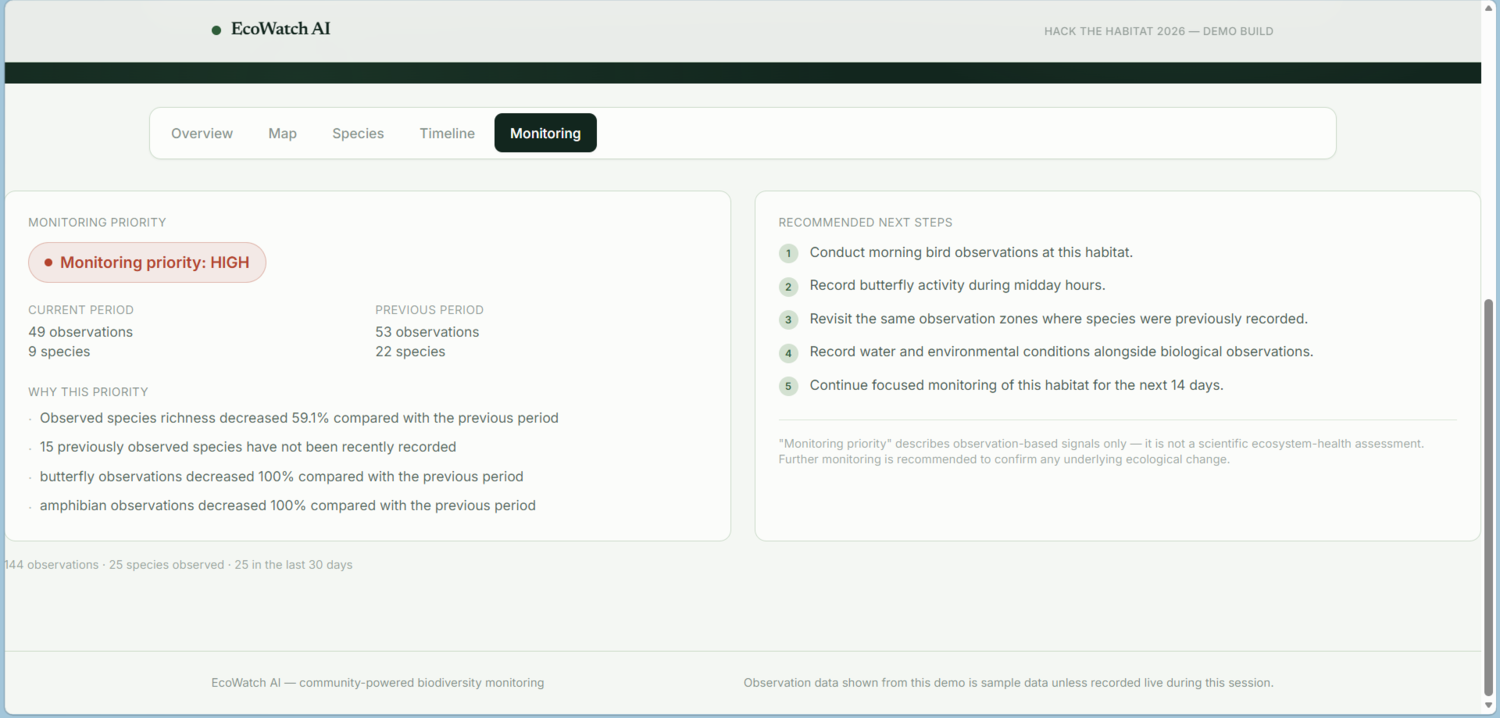
EcoWatch AI is an AI-powered biodiversity monitoring platform that turns wildlife photographs into structured, geotagged observations. It can identify organisms using computer vision, allow humans to verify the result, and store observations for habitat-level monitoring.
How We Built It
Frontend: React, TypeScript, Vite, Tailwind CSS Backend: Node.js, Express, TypeScript Database: SQLite AI: Google Gemini vision model Maps & monitoring: Geotagged observations, species history, timelines, and observation-based monitoring signals Deployment: Render
The system is designed with an AI adapter architecture, allowing the vision provider to be replaced without changing the rest of the application.
Challenges
One of our biggest challenges was making AI identification useful rather than simply displaying a prediction. We added human confirmation and data-quality scoring so observations become more reliable.
We also had to handle image uploads, AI responses, geolocation, historical observation data, and monitoring trends within a lightweight full-stack application.
What We Learned
We learned that biodiversity monitoring is not just about identifying a species. Reliable data, human verification, location, timestamps, and historical context are equally important.
EcoWatch AI brings these pieces together into one workflow—from photo → AI identification → human verification → structured observation → habitat-level insight.
Built With
- ai
- biodiversity-monitoring
- computer-vision
- data
- express.js
- geopspatial
- geospatial-data
- google-gemini
- node.js
- react
- sqlite
- tailwind
- tailwind-css
- typescript
- vite

Log in or sign up for Devpost to join the conversation.