-
-
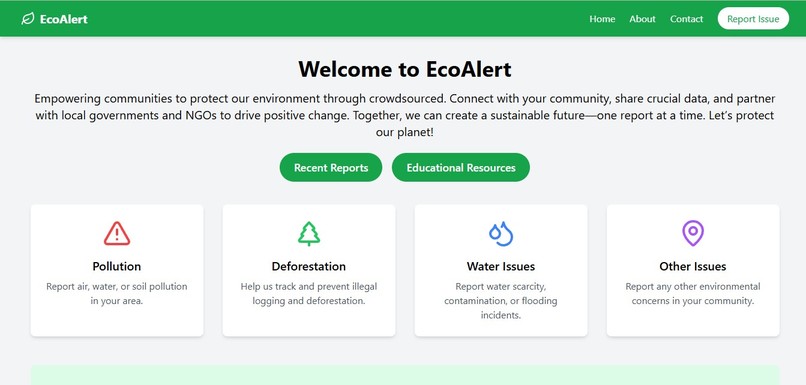
Echo-Alert
-
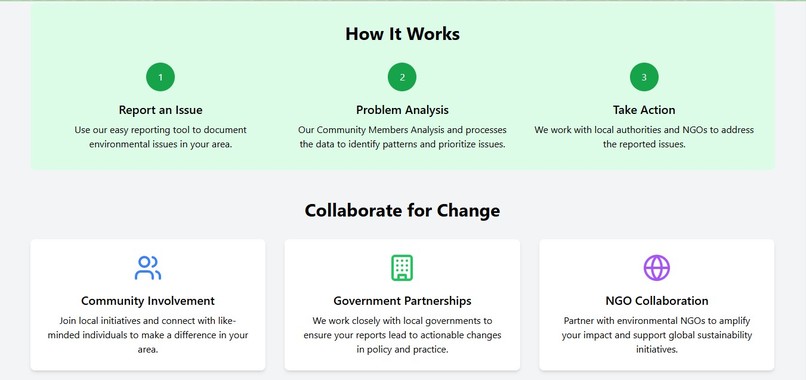
How it's work
-
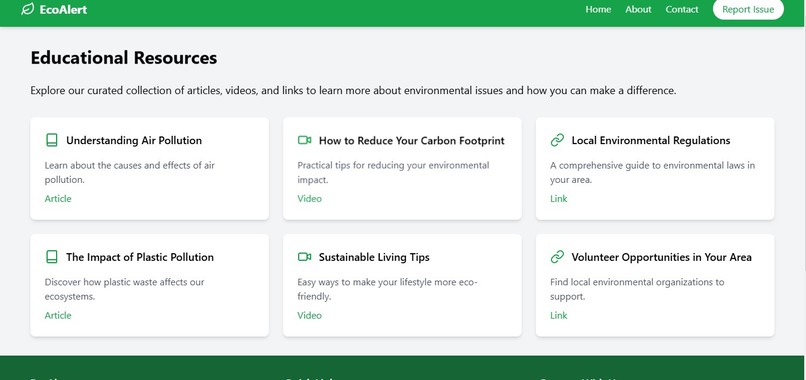
Educational Resources
-
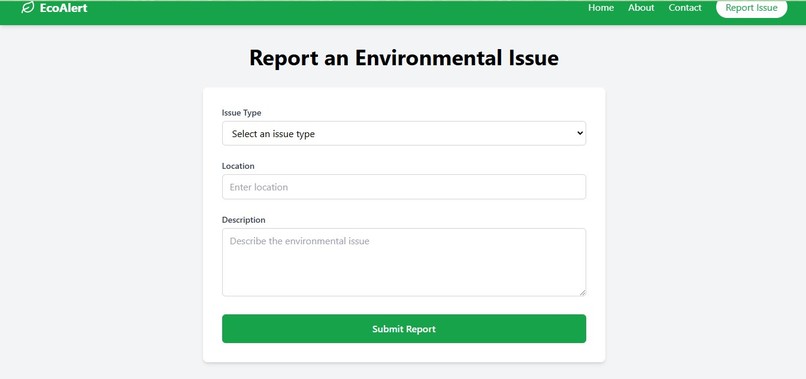
Report Issue


Inspiration
Environmental Urgency: The increasing frequency of environmental crises, from air and water pollution to deforestation, underscores the need for immediate action and local solutions. This platform can serve as a tool for rapid response and long-term sustainability efforts.
Educational Opportunities: The platform can also serve as an educational resource, helping users understand the environmental issues they report, thus fostering a more informed and engaged citizenry.
By combining technology and a focus on local issues, this project can inspire collective action and drive meaningful change in environmental stewardship.
What it does
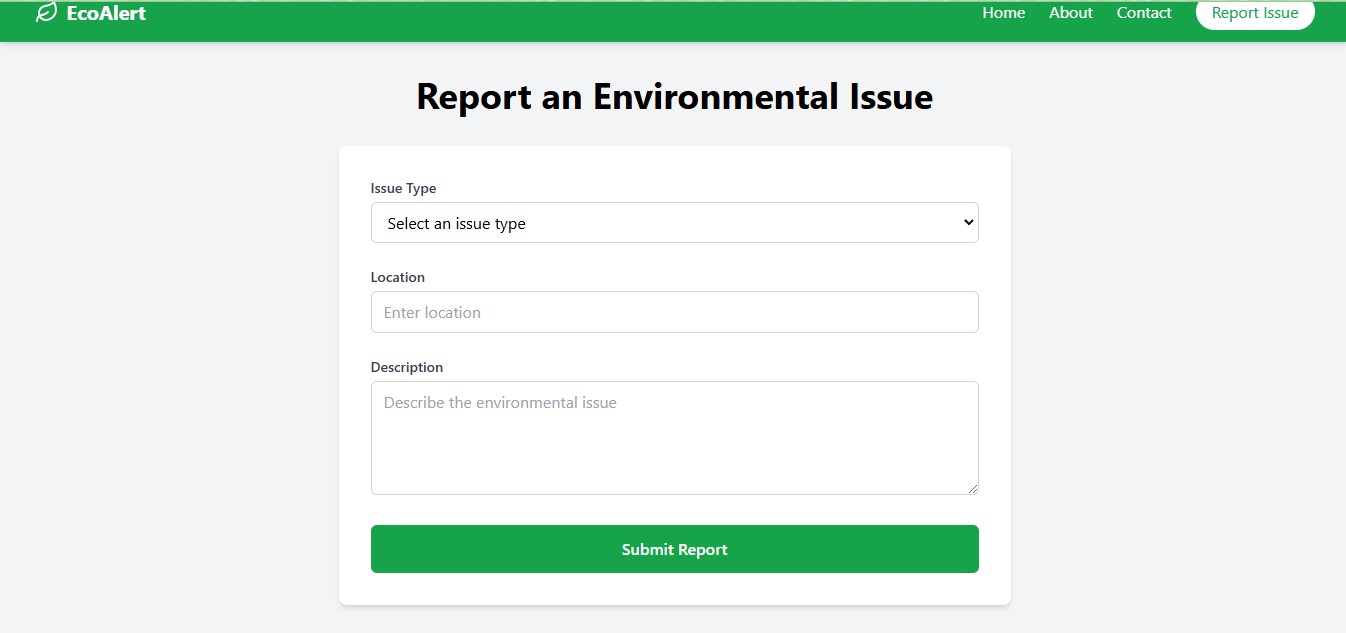
Reporting Issues: Users can easily report local environmental problems, such as pollution, illegal dumping, deforestation, or wildlife disturbances. They can provide details, upload photos, and pinpoint exact locations on a map.
Data Sharing: The platform aggregates and organizes the reported data, making it accessible to local governments, NGOs, and community organizations. This information can help them prioritize and address issues more effectively.
Awareness Raising: Users can view reported issues in their area, increasing awareness of local environmental challenges. The platform can feature stories, educational resources, and updates on initiatives related to sustainability.
How we built it
Frontend
- React: We chose React for its component-based architecture, allowing for reusable UI components and a dynamic user experience.
-TypeScript: Using TypeScript enhances our code quality and maintainability by providing strong typing, which helps catch errors during development.
Backend
Node.js: For the backend, we utilized Node.js, which enables us to build a fast and scalable server-side application. Its event-driven architecture is well-suited for handling multiple requests efficiently.
MongoDB: We opted for MongoDB as our database solution due to its flexibility and ability to handle unstructured data. This is particularly useful for storing diverse environmental issue reports from users.
Development Process
Planning and Design: We started with user research to understand the needs of our target audience, followed by designing wireframes and UI mockups.
API Development: We created RESTful APIs using Node.js to handle data requests between the frontend and backend, ensuring smooth communication.
Frontend Implementation: Using React, we built intuitive interfaces that allow users to easily report issues, view data, and engage with the community.
Database Integration: We set up MongoDB to store user reports, comments, and related data, allowing for efficient data retrieval and management.
Testing and Deployment: We conducted thorough testing to ensure functionality and user experience. Finally, we deployed the platform using a cloud service, making it accessible to users.
Challenges we ran into
- User Interface Design: Creating an intuitive and engaging user interface was challenging. We conducted multiple rounds of user testing to identify pain points and iteratively refined the design based on feedback, which was time-consuming but necessary.
Accomplishments that we're proud of
- User-Friendly Interface: We successfully designed an intuitive and engaging user interface that allows users to easily report environmental issues and navigate the platform, significantly enhancing user experience.
What we learned
Data Accuracy and Verification: Establishing methods for verifying user-reported data is vital to ensure reliability. This might include partnerships with local experts or employing algorithms to detect anomalies.
Sustainability: Developing a long-term strategy for funding and maintenance is crucial for the platform’s sustainability. This could include grants, partnerships, or community fundraising.
What's next for EcoAlert
Engage with Technology: Consider incorporating machine learning or AI to analyze trends in the data, providing insights for users and partners on pressing environmental challenges.
Partnerships: Collaborate with local governments, NGOs, and research institutions to enhance data credibility and facilitate quicker responses to reported issues.
Integration with Local Policies: The platform can be designed to align with local environmental policies and initiatives, providing a valuable tool for policymakers to gather public input and prioritize actions.


Log in or sign up for Devpost to join the conversation.