-
-
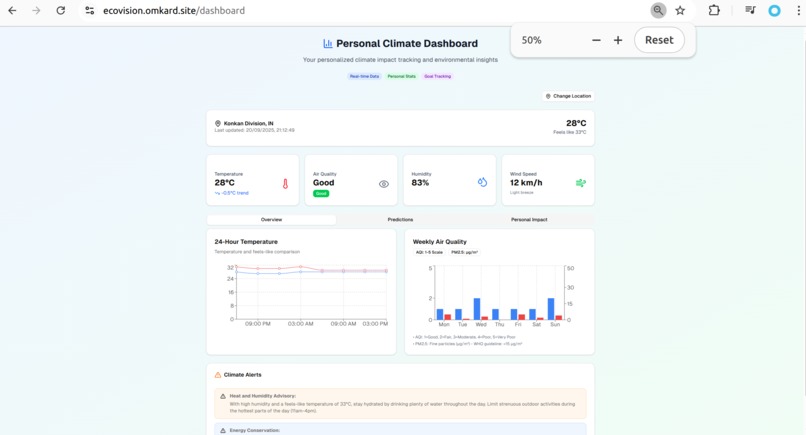
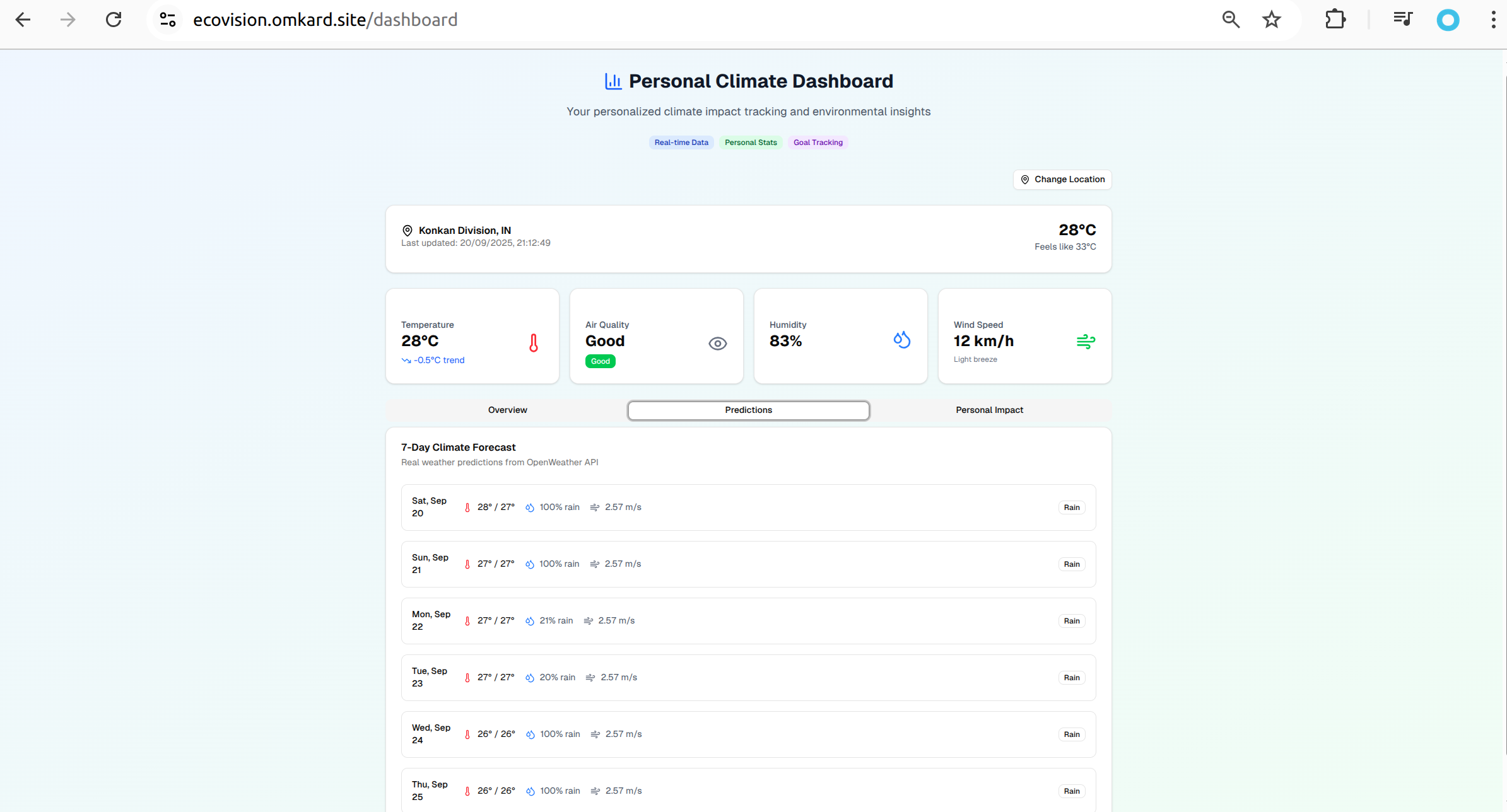
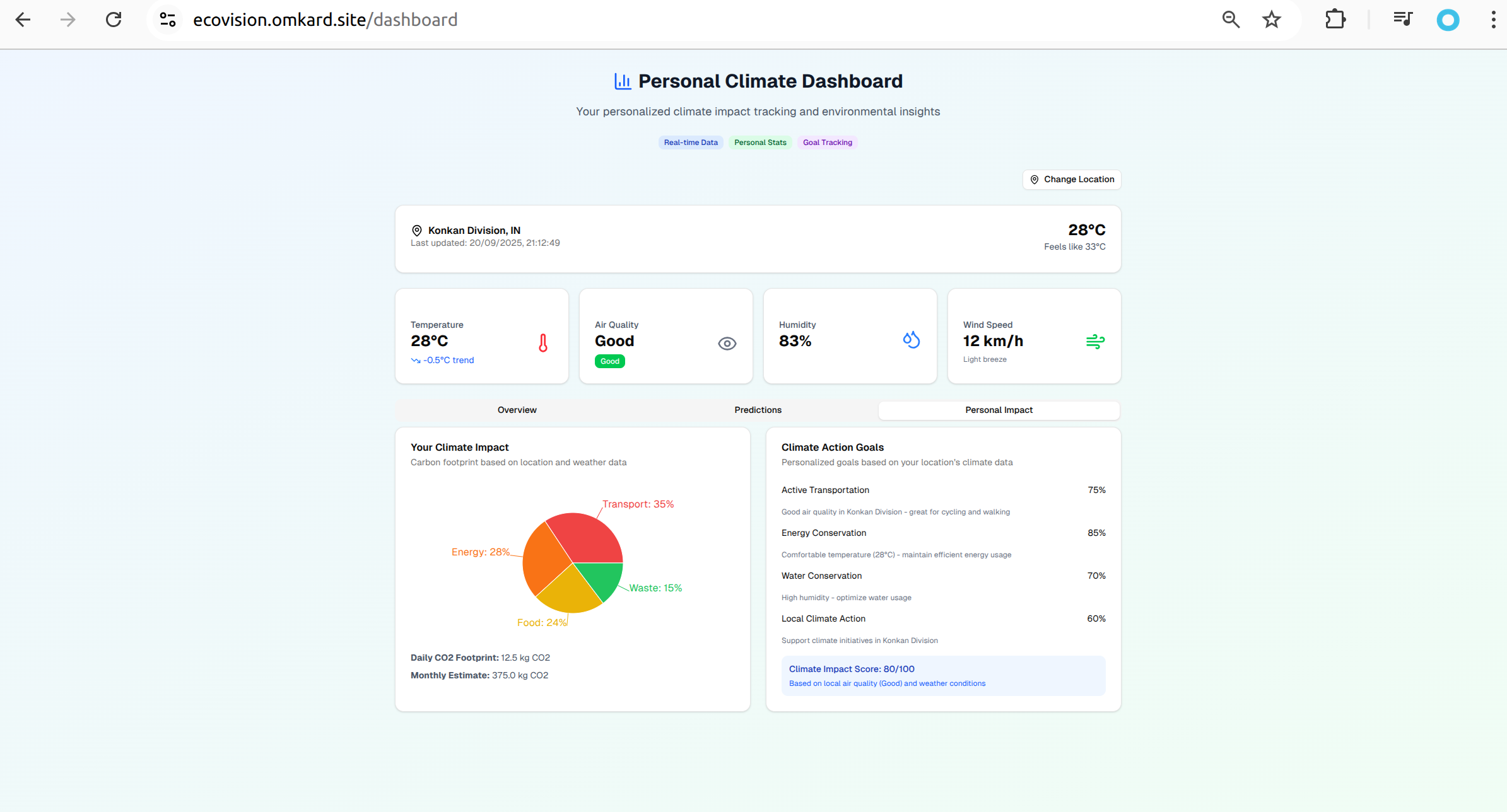
Real-Time Climate Dashboard
-
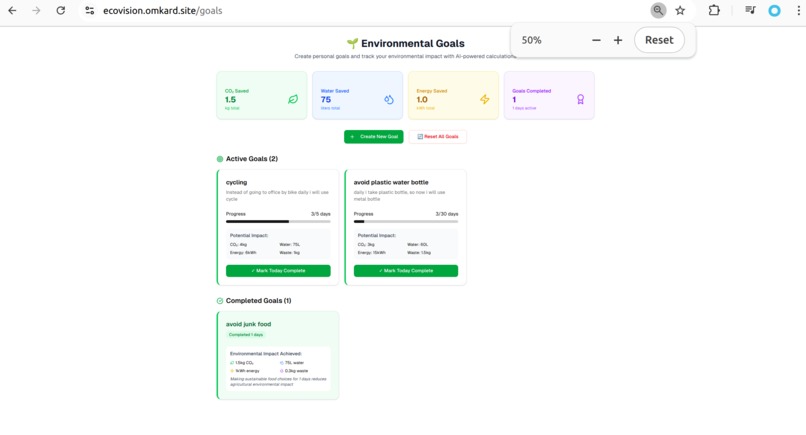
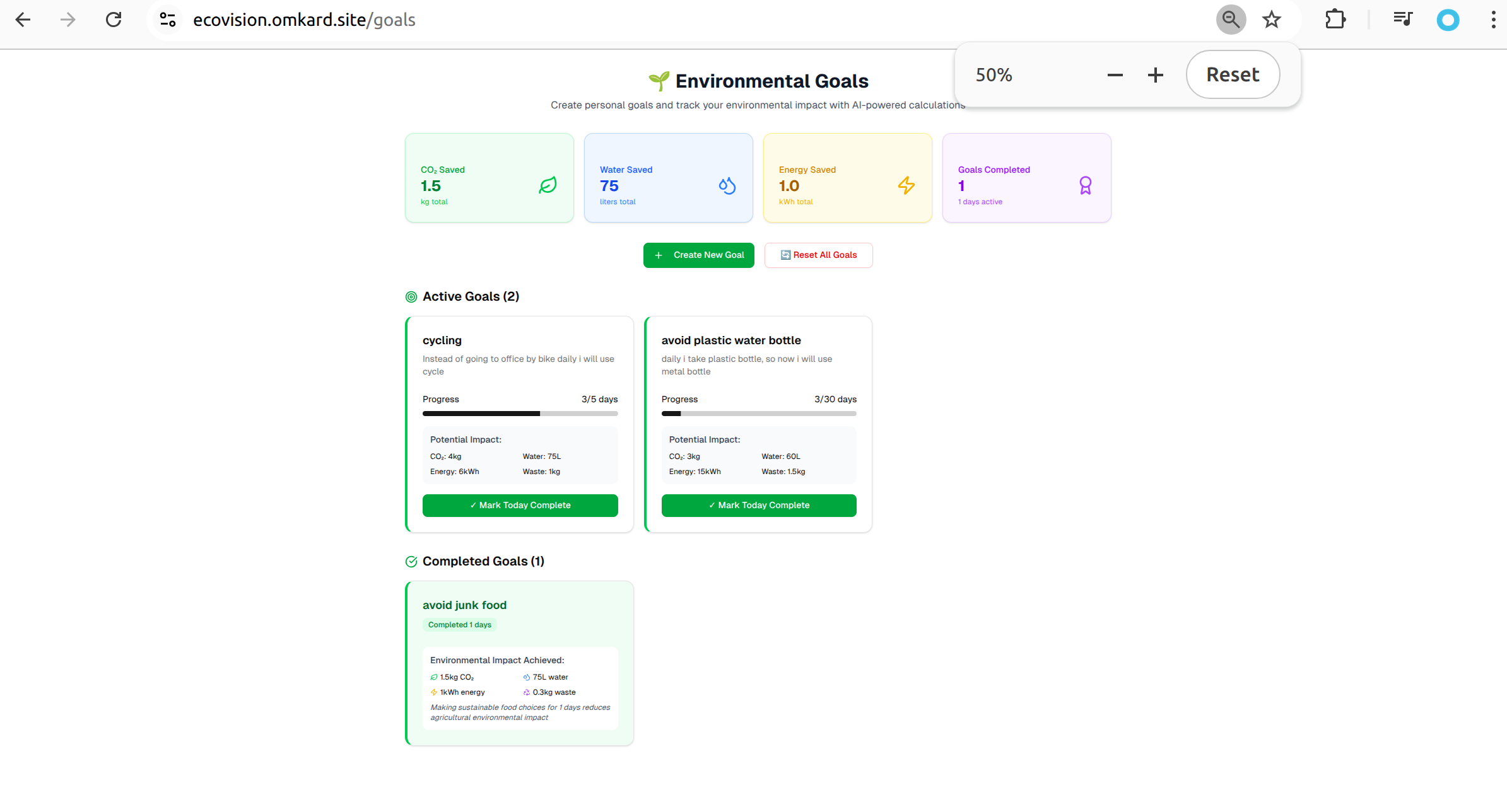
Goals
-
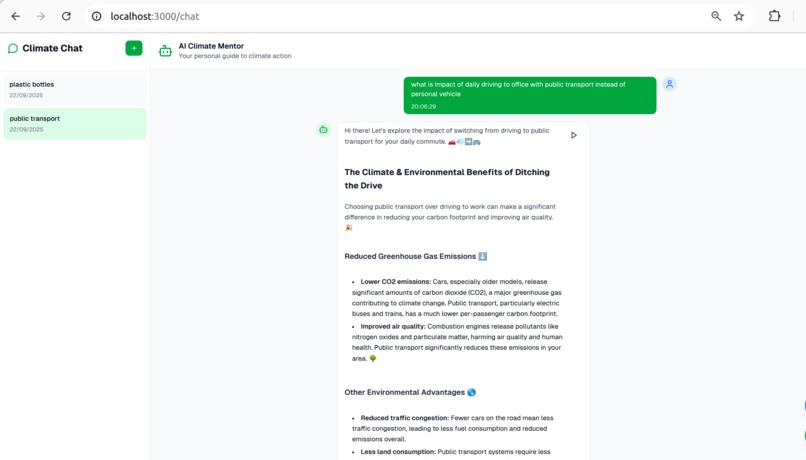
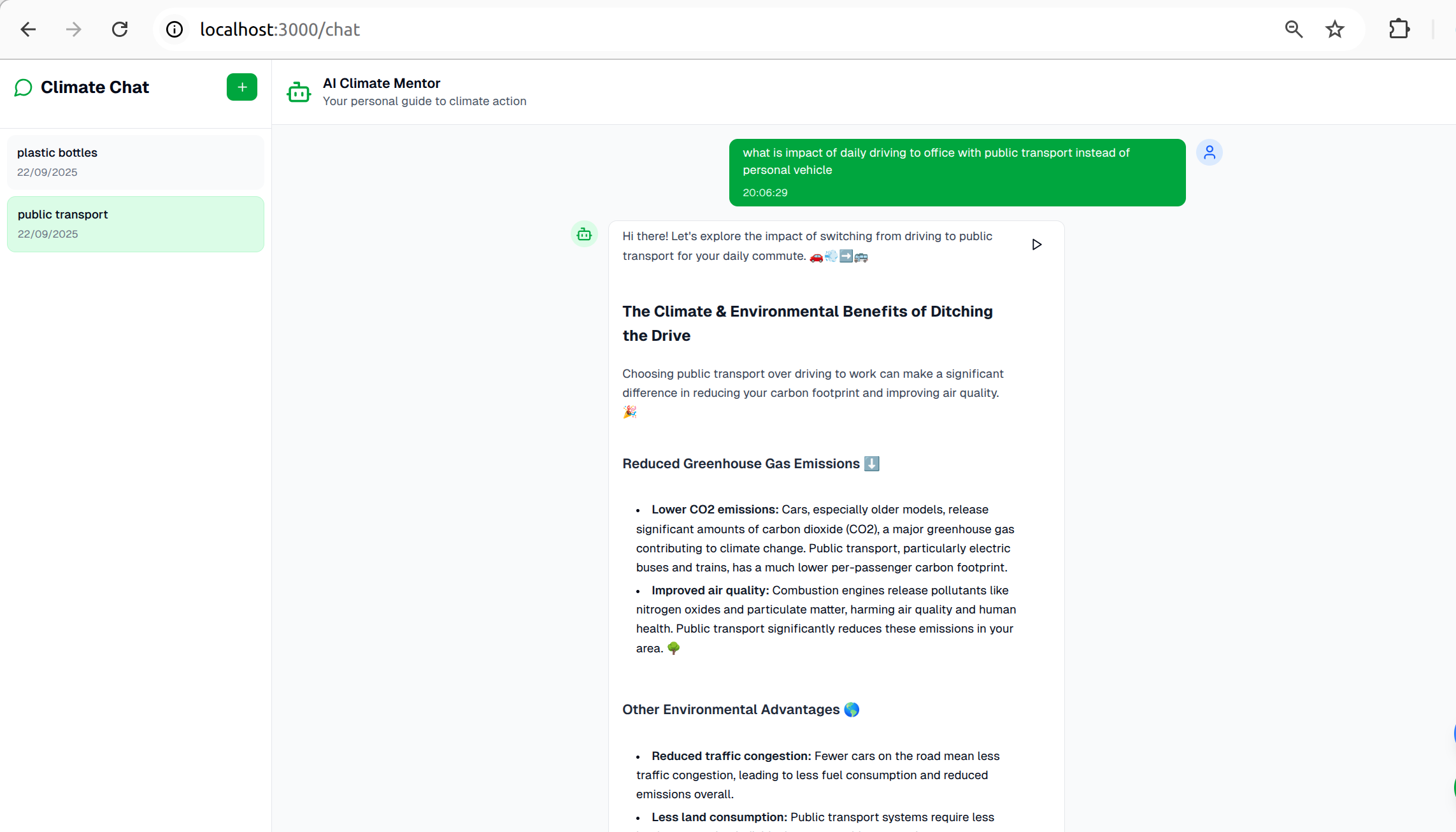
AI Climate Mentor
-
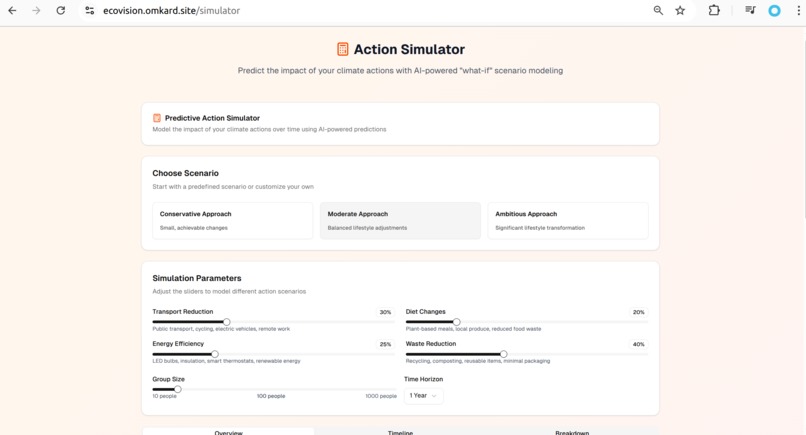
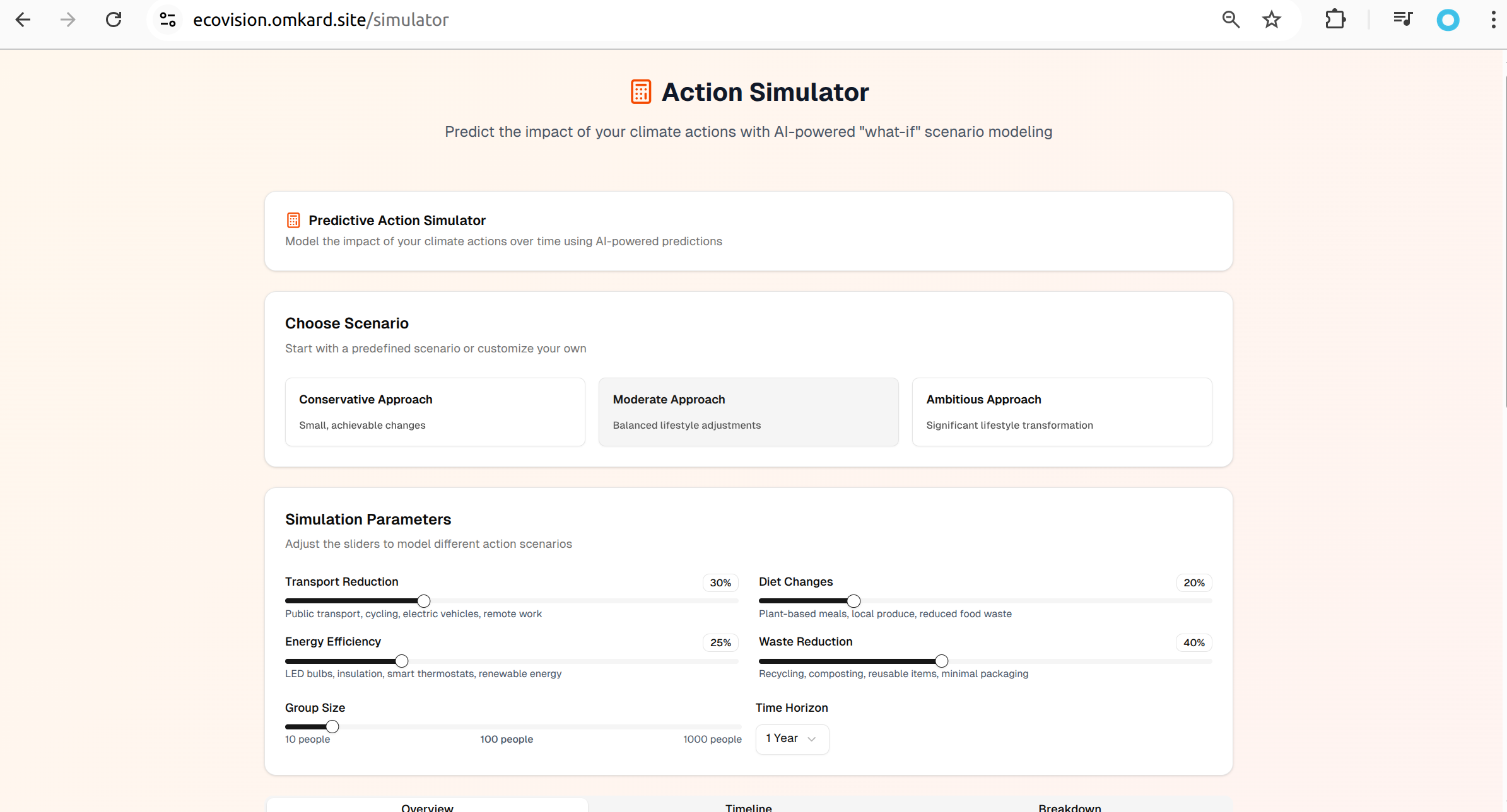
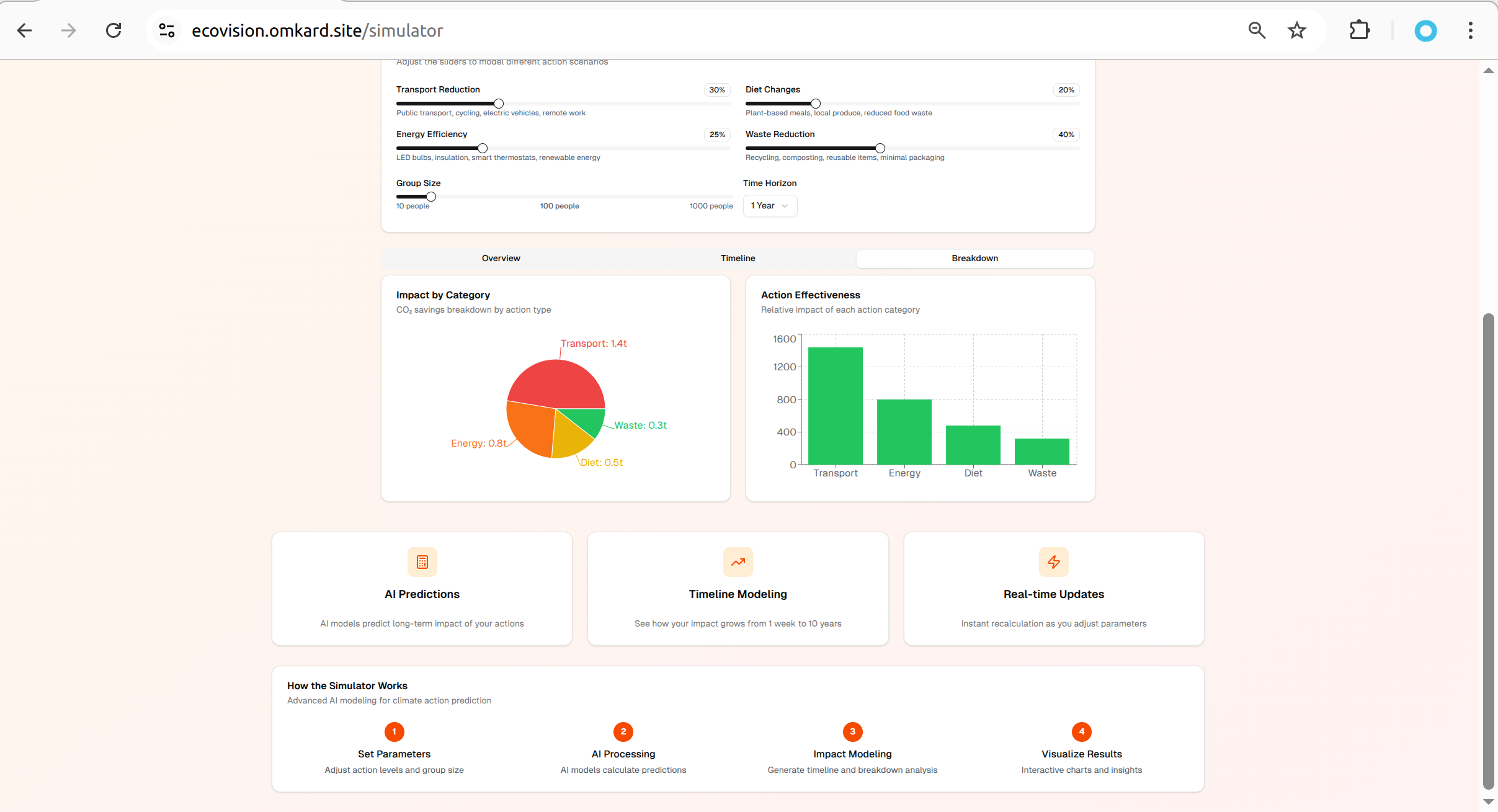
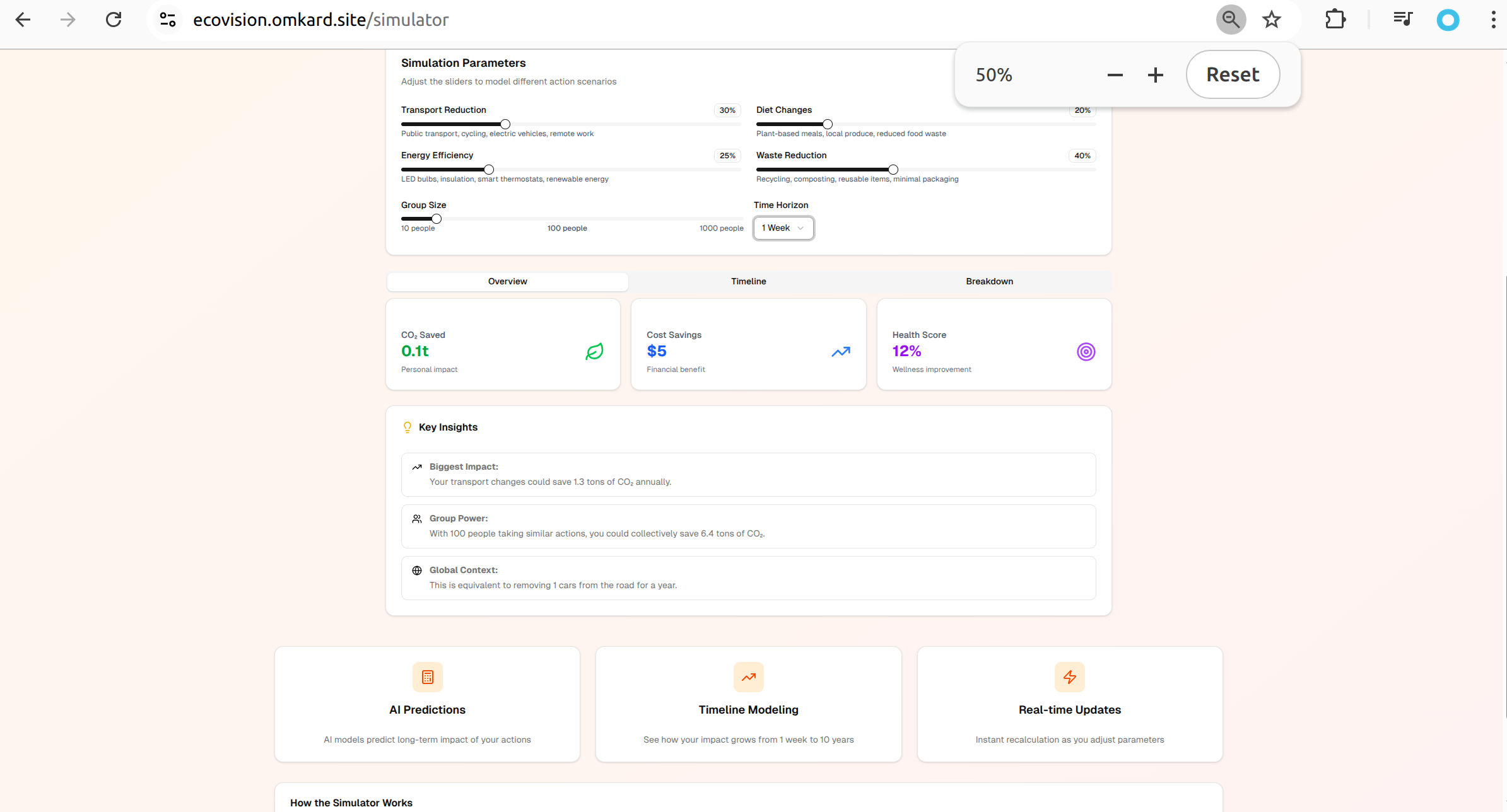
Action simulator
-
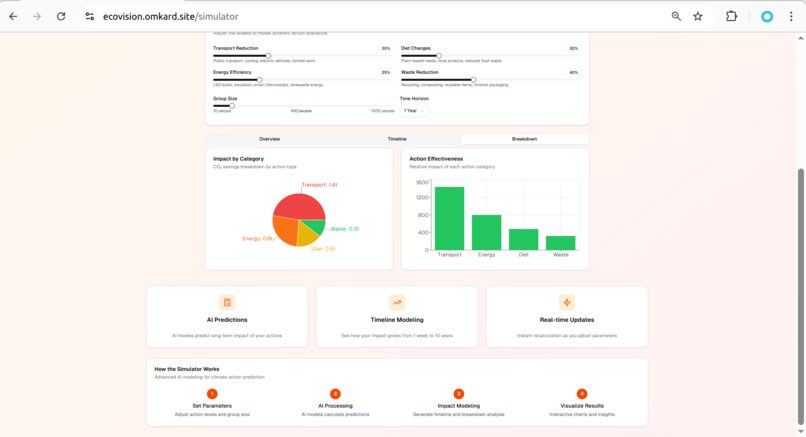
Action simulator
-
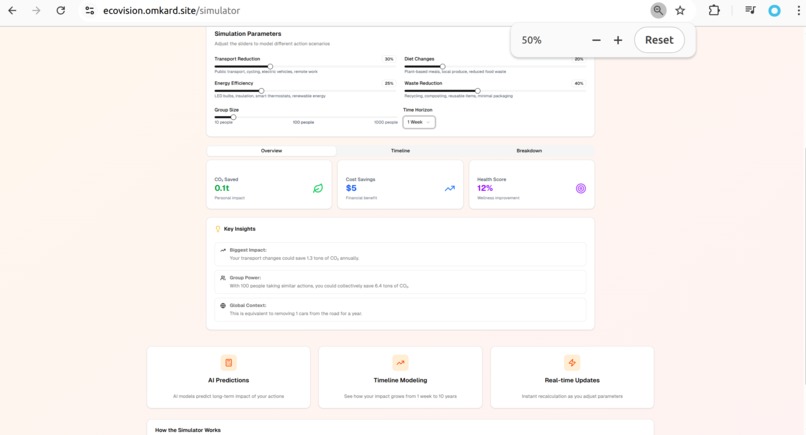
Action simulator
-
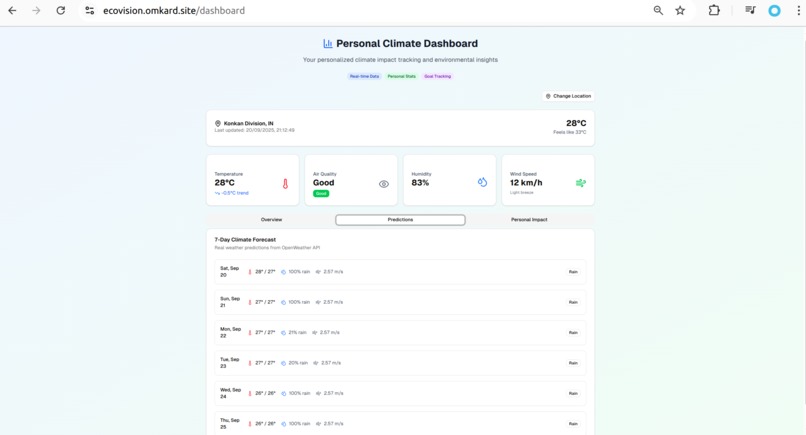
Real-Time Climate Dashboard
-
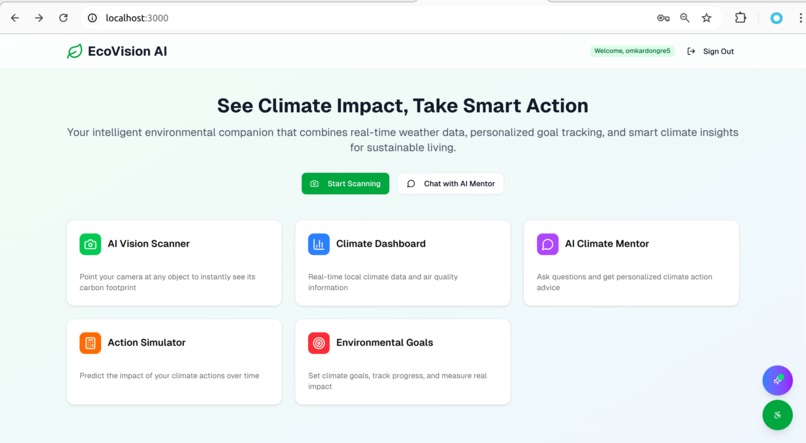
Home page
-
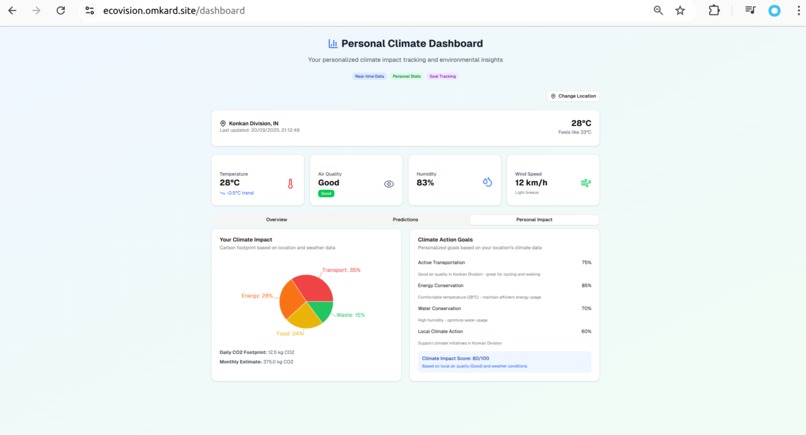
Real-Time Climate Dashboard
-
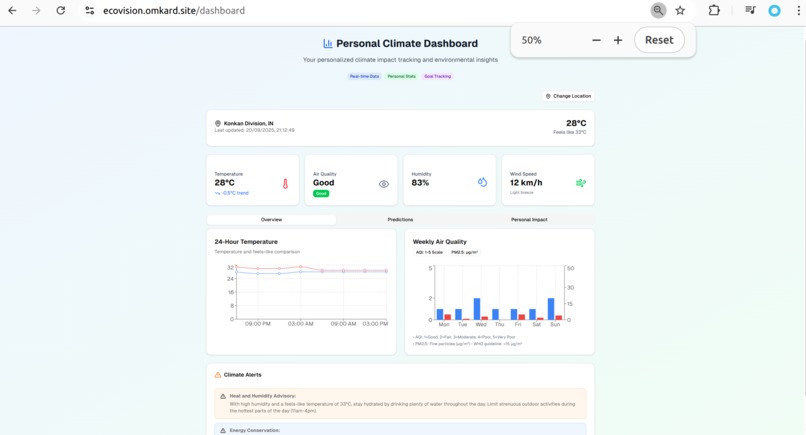
Real-Time Climate Dashboard
-
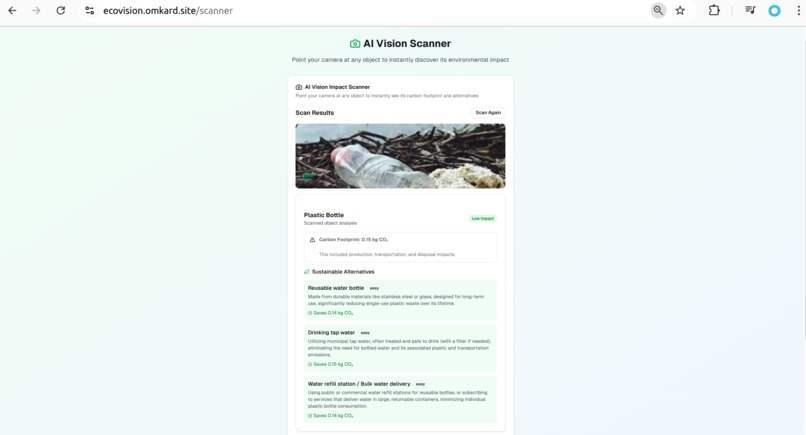
AI Vision Scanner
Inspiration
People want to take climate action but struggle to understand their personal environmental impact. I wanted to bridge the gap between climate awareness and measurable action by making environmental impact instantly visible and trackable through AI technology.
What it does
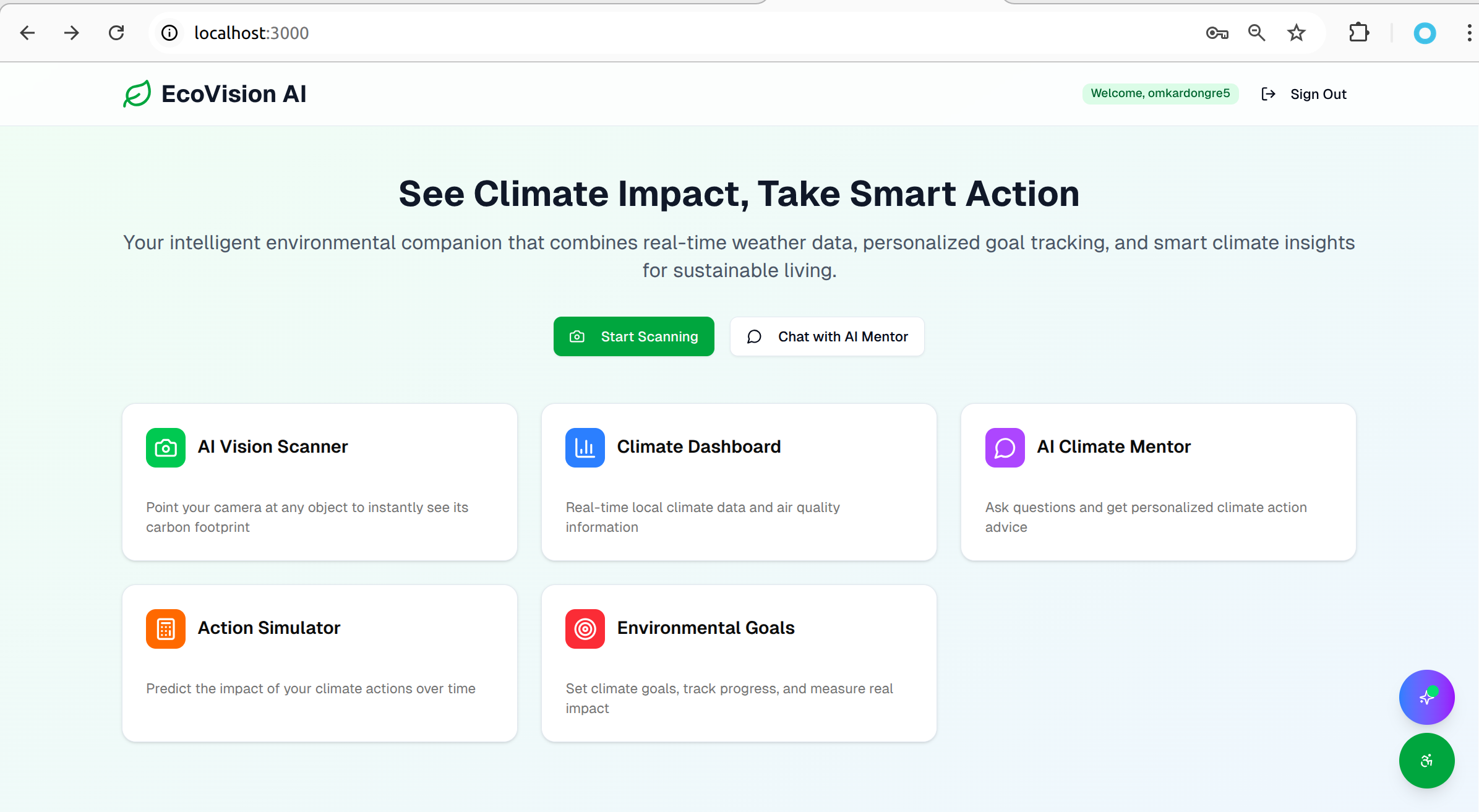
EcoVision AI transforms climate action through 5 AI-powered features:
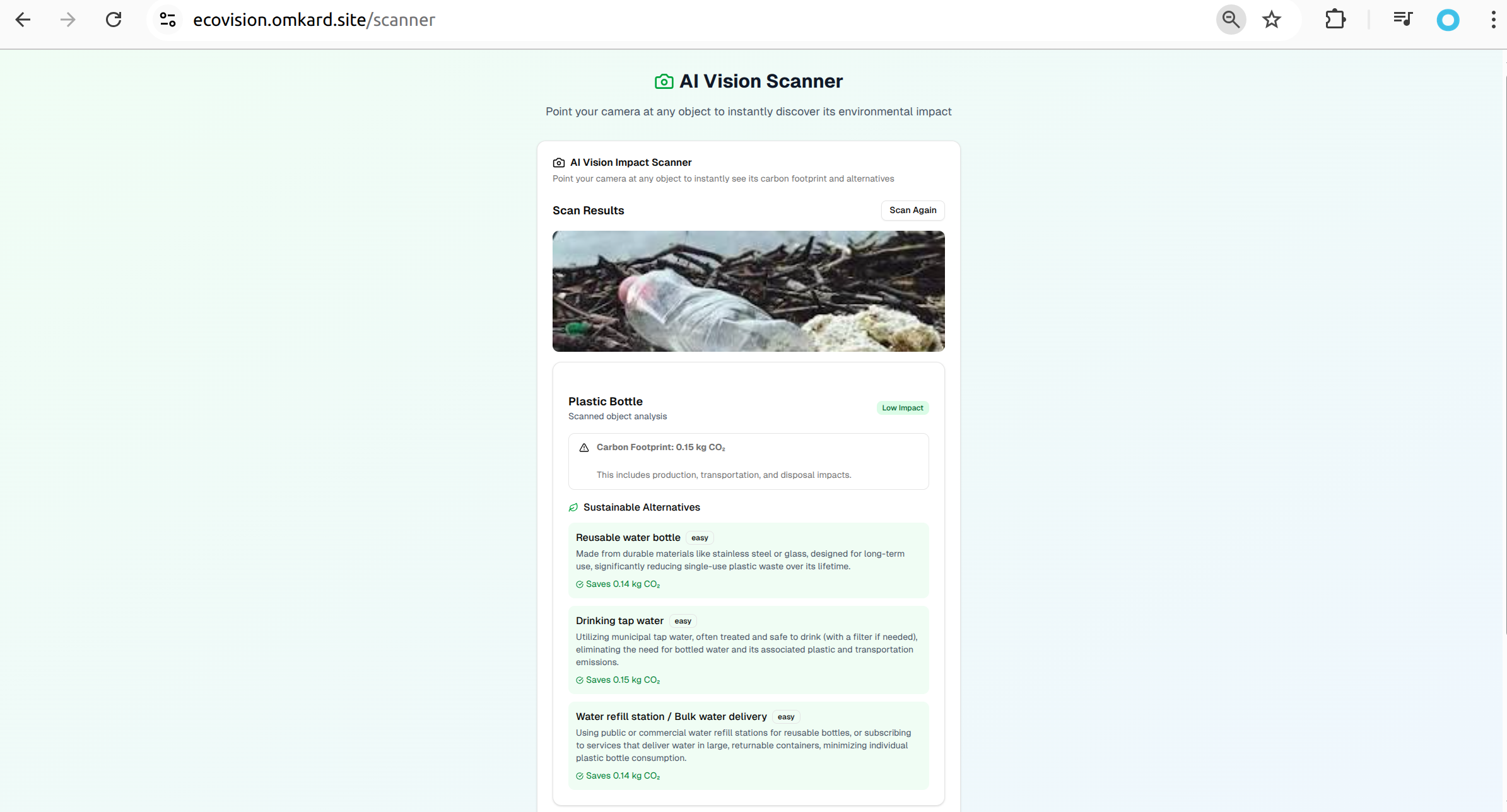
- AI Vision Scanner: Instant carbon footprint analysis of any object
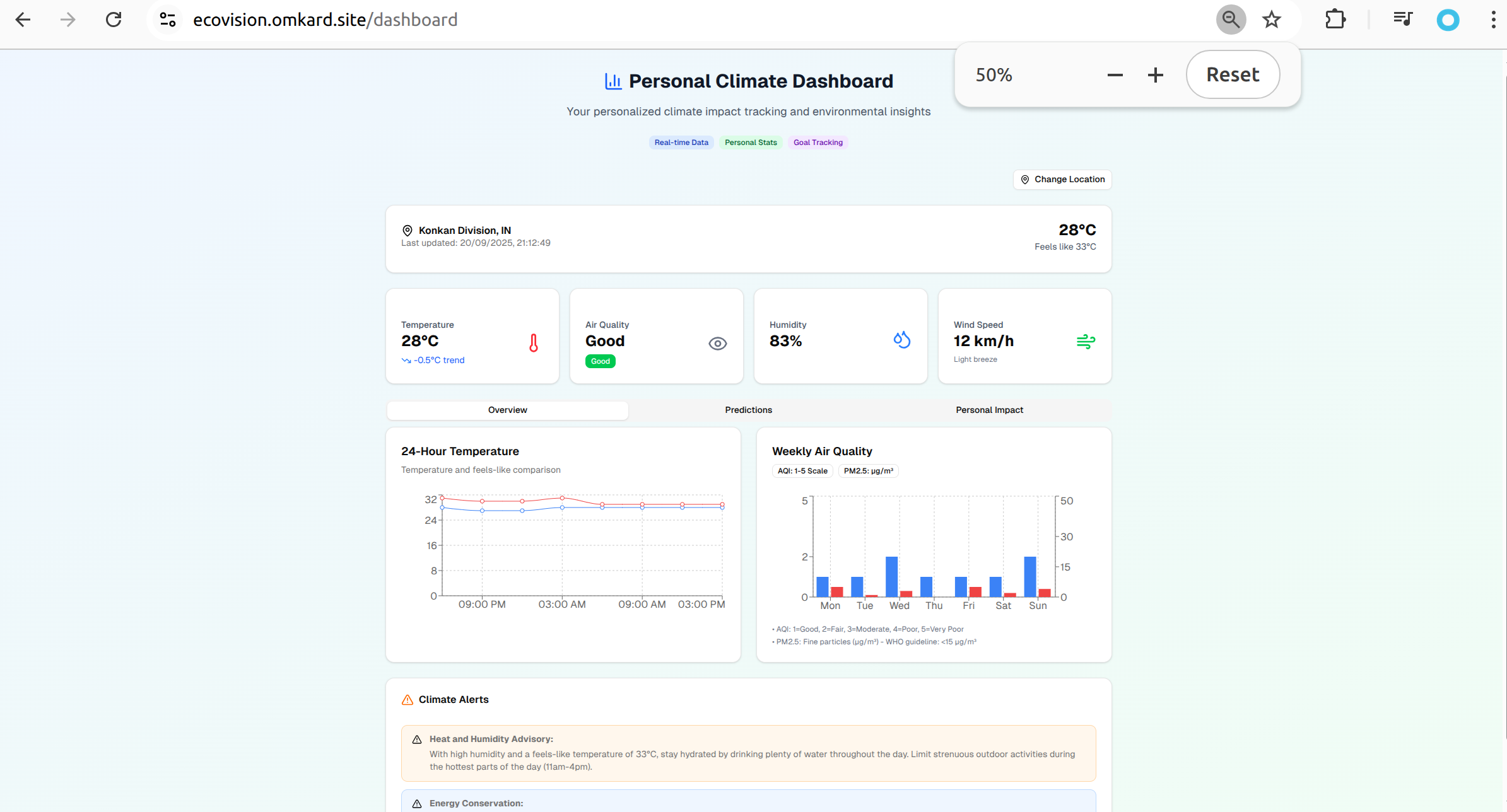
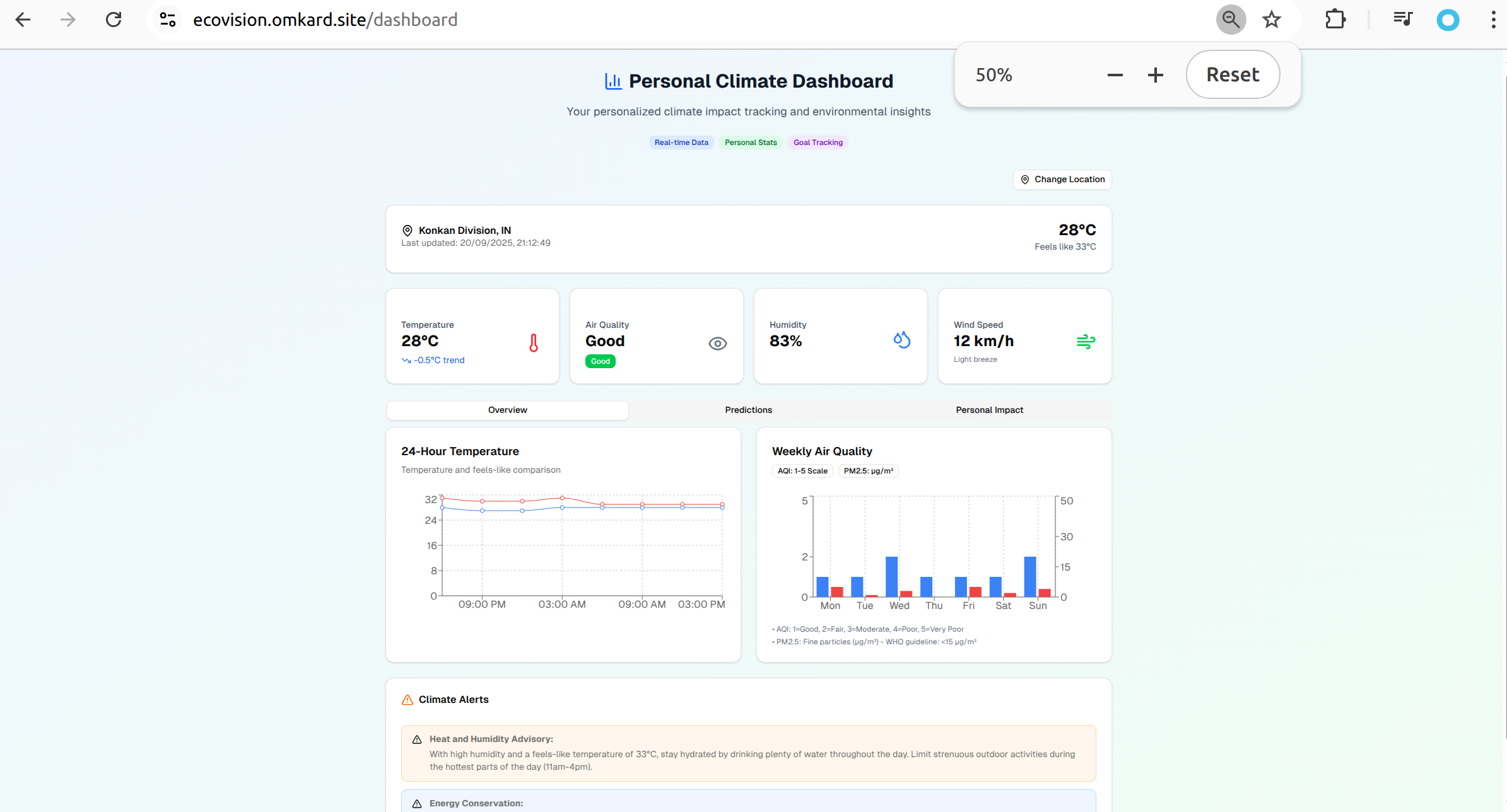
- Real-Time Climate Dashboard: Hyper-local environmental data with AI alerts
- AI Climate Mentor: Conversational guidance companion for climate questions and actionable advice
- Predictive Action Simulator: Model long-term impact of lifestyle changes
- Environmental Goals Tracker: Gamified goal setting with measurable impact tracking
How we built it
Built with Next.js 14 and TypeScript for robust development. Integrated Google Gemini 2.5 Flash for AI vision analysis, conversations, and impact calculations. Used Supabase for authentication and database with PostgreSQL. Implemented real-time weather data via OpenWeather API. Created responsive UI with Tailwind CSS and shadcn/ui components. Deployed on Vercel with edge functions for optimal performance.
Accessibility-First Design: Implemented comprehensive accessibility features including voice navigation with speech recognition, context-aware page assistant, WCAG-compliant theming, full keyboard navigation, text-to-speech for AI responses, and floating accessibility toolbar - ensuring climate action is accessible to all users.
Challenges we ran into
- Ensuring consistent state management across multiple interactive features
- Implementing secure authentication and database schema with proper RLS policies for supabase integration
- Creating responsive charts and data visualizations that work across different devices
- Implementing real-time weather data fetching with proper error handling and fallbacks
- Building persistent goal tracking system with cumulative impact calculations
- Debugging chat message persistence and conversation history management
- Optimizing AI response times while maintaining accuracy across different features
- Managing API rate limits and costs while providing real-time AI responses
Accomplishments that we're proud of
- Successfully integrated Google Gemini AI across multiple use cases in one platform
- Created the climate app with real-time object impact analysis
- Built a fully functional goals system with measurable environmental tracking
- Achieved seamless user experience across all multiple integrated features
- Implemented comprehensive accessibility features making climate action inclusive for users with disabilities
What we learned
AI integration requires careful balance between functionality and performance. Real-time environmental data significantly enhances user engagement. Gamification through goal tracking drives sustained behavior change. Personal impact tracking is crucial for motivation. Combining multiple AI capabilities creates exponentially more value than individual features.
What's next for EcoVision AI
- Multi-language support for global accessibility
- Advanced analytics for impact progress tracking
- Community features for collaborative climate action
- Integration with corporate sustainability programs
- Expansion to include more environmental impact categories
Built With
- generative-ai
- google-gemini
- nextjs
- openweathermap
- postgresql
- react
- supabase
- tailwind
- typescript
- vercel

Log in or sign up for Devpost to join the conversation.